

Christmas Bicycle Giveaway Held In Cantonment
December 16, 2018
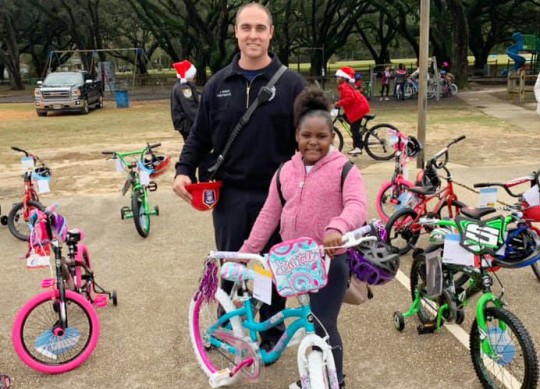
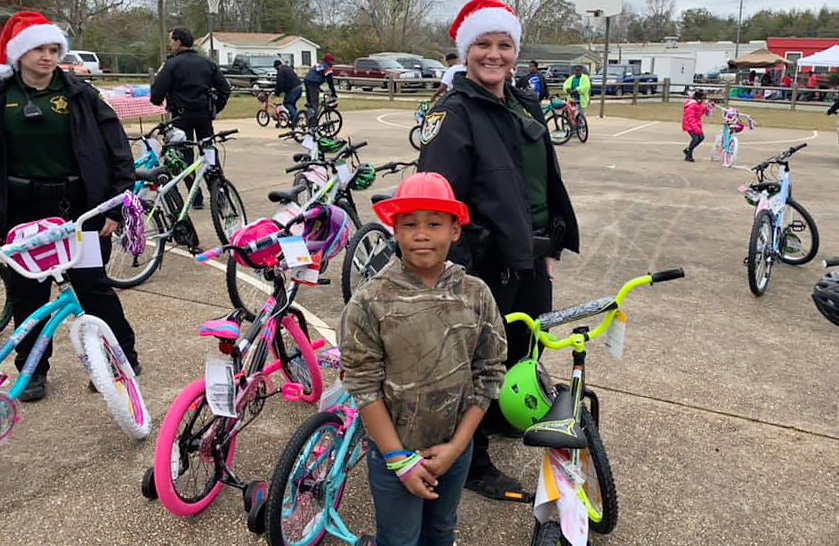
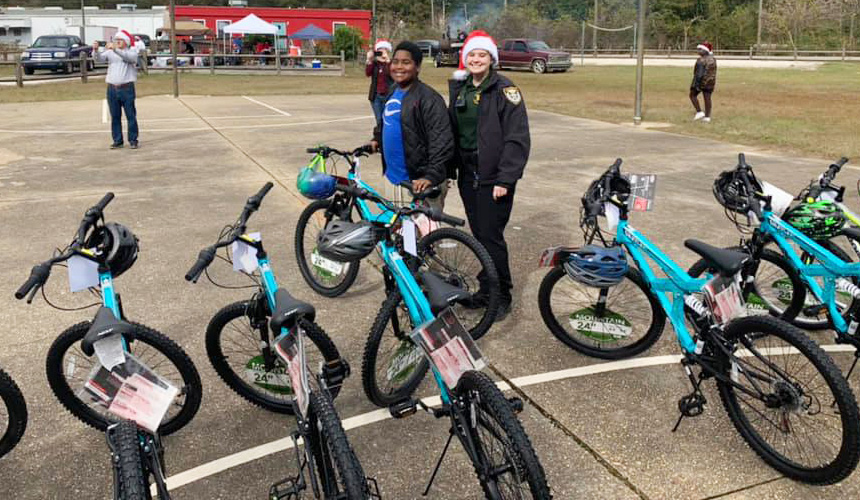
A bicycle giveaway was held Saturday in Cantonment with the Cantonment Rotary Club, Cantonment Improvement Committee, Escambia Fire Rescue and the Escambia County Sheriff’s Office. Photos for NorthEscambia.com, click to enlarge.
Jay High’s Edwards Signs Golf Scholarship
December 16, 2018
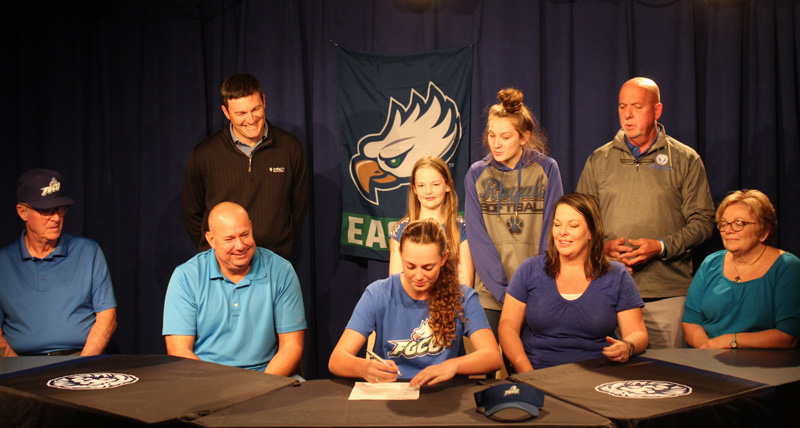
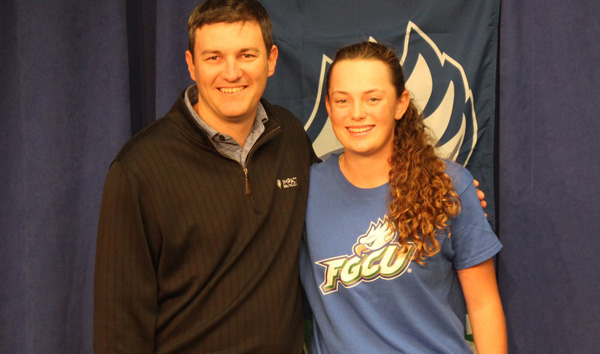
Jay High School senior Sarah Edwards has signed a golf scholarship with Florida Gulf Coast University. Courtesy photo for NorthEscambia.com, click to enlarge.
Florida Gov’t Weekly Roundup: Preparing For Florida Power Shift
December 16, 2018
With the November elections rapidly disappearing in the rearview mirror, Tallahassee this week started to turn to its attention to the future.
House and Senate members came to town for orientation and to start committee assignments under new legislative leadership. Senators began looking at financial challenges lawmakers will face when they prepare a new state budget in the 2019 session, which begins in March.
And preparations continued for the transition of power from Gov. Rick Scott, who heads to the U.S. Senate next month, to Gov.-elect Ron DeSantis, who takes office on Jan. 8.
 DeSantis, a three-term congressman from Ponte Vedra Beach, continued to fill out his administration’s new team.
Some familiar faces will help the new governor. He tapped state Rep. Halsey Beshears, R-Monticello, to head the state Department of Business Regulation. He selected Ken Lawson, head of Visit Florida, to lead his Department of Economic Opportunity.
Transition committees appointed by DeSantis to advise him on issues including health care, education, natural resources, public safety and the economy continued their work.
DeSantis outlined a fairly traditional schedule for his inauguration activities, including an inaugural day prayer breakfast at Florida A&M University and a ceremony on the east-side steps of the old Capitol building. He and his wife, Casey DeSantis, will host an inaugural ball at the Leon County Civic Center on the night of the inauguration.
But, adding his own touch, DeSantis said he also intends to give a separate speech to House and Senate members in the state Capitol, following the outdoor inauguration ceremonies.
GUN-TOTING TEACHERS
A controversial law that allows trained “guardians” to bring guns to public schools didn’t go far enough — gun-savvy teachers also should be able to have weapons in the classroom.
That’s the near-unanimous view of a state panel created to make recommendations to beef up school security in the wake of one of the country’s deadliest mass school shootings on Valentine’s Day in Broward County.
“You’ve got to have somebody there who can swiftly and effectively neutralize the threat, and that means killing the killer. The only way you are going to do that is if you have a good guy with a gun who can take that action,” Pinellas County Sheriff Bob Gualtieri, who chairs the Marjory Stoneman Douglas High School Public Safety Commission, said in an interview Thursday.
Max Schachter, whose 14-year-old son, Alex, was among the students slain at Marjory Stoneman Douglas and who serves on the panel, was the lone holdout in a 13-1 vote on the proposal Wednesday.
“I understand the sheriff’s point that we do need more good guys with a gun on campus,” Schachter said, adding, “nobody understands that wish … more than myself.”
But he said he doesn’t think teachers should carry guns.
“I think they have enough on their plate,” he said.
Broward County teacher Debbi Hixon agreed. Her husband, Chris, was the Parkland school’s athletics director and wrestling coach and was among the victims.
Teachers already have to prepare students for standardized tests and are responsible for their emotional and physical well-being, Hixon said.
“To add the burden of knowing that you’re responsible for taking out a shooter if they come into your room, even if a teacher thinks they are up to that task, I just think it is unfair to have that expectation for them,” she said Thursday.
Under the proposal, which would require legislative action, teachers who have concealed-weapons licenses — just like school “guardians” already authorized in the law — would be able to get extra training and bring guns to school.
The commission has spent months delving into the Feb. 14 catastrophe, in which 14 teenagers and three faculty members were killed and 17 others were injured.
Confessed killer Nikolas Cruz, a former student at the school, had a lengthy history of interactions with law enforcement and mental-health professionals.
The commission — which spent eight months delving into details about Cruz’s background, the response to the shooting by the Broward County Sheriff’s Office and local police departments and crafting recommendations — met Wednesday and Thursday in Tallahassee to finalize a sweeping report that deals with everything from failings in law-enforcement communications systems to the need for bullet-proof windows in school buildings.
The report was highly critical of the manner in which state, local and federal officials dealt with, or neglected to deal with, Cruz. The recommendations include a number of items focused on better coordination between mental-health, education and law-enforcement agencies, something that was also required in a 2018 law passed in response to the shooting.
ILL WINDS FOR BUDGET
Florida’s budget will face increased pressure from the impact of Hurricane Michael, a new report reviewed Wednesday by the Senate Appropriations Committee showed.
The state’s costs for emergency-relief and recovery efforts related to Michael, a major storm that struck the Panhandle in October, will exceed the costs for Hurricane Irma, a 2017 storm that damaged a larger portion of the state, the report said.
The hurricane impact and factors showing slower economic growth are enough for state analysts to now project that a potential $223 million budget surplus for 2019-2020 — outlined in a September report — “has likely disappeared.”
“The projected discretionary balance identified in September has gone to zero (in the best case scenario) or is negative by as much as $250 million (in the more realistic scenario), as a result of Hurricane Michael and the (revenue-estimating) conferences held to date,” according to the revised long-range financial outlook.
Senate Appropriations Chairman Rob Bradley, R-Fleming Island, said the new report means lawmakers will have to be “even more diligent in making sure that we are very, very conservative” in their approach to the new state budget and revenue projections. Lawmakers will work on a 2019-2020 budget during the annual session that starts in March.
The financial impact of Michael has been amplified because it struck a largely rural portion of the state that was already “economically challenged” prior to the storm, with lower wages and higher poverty than many areas in Florida, the report said.
“Their capacity to recover from Michael is probably less than counties that were most affected by Irma,” Amy Baker, coordinator for the Legislature’s Office of Economic and Demographic Research, told the Senate committee.
STORY OF THE WEEK: The Marjory Stoneman Douglas High School Public Safety Commission endorsed the concept of allowing armed classroom teachers to improve school security.
QUOTE OF THE WEEK: “The numbers speak for themselves. Hurricane Michael was devastating for the people of the Panhandle and the people of the state of Florida. But it also adds real enduring effects on our budget this year and in future years.” — Senate Appropriations Chairman Rob Bradley, R-Fleming Island.
by Lloyd Dunkelberger, The News Service of Florida
Photo Gallery: Flomaton Christmas Parade
December 16, 2018
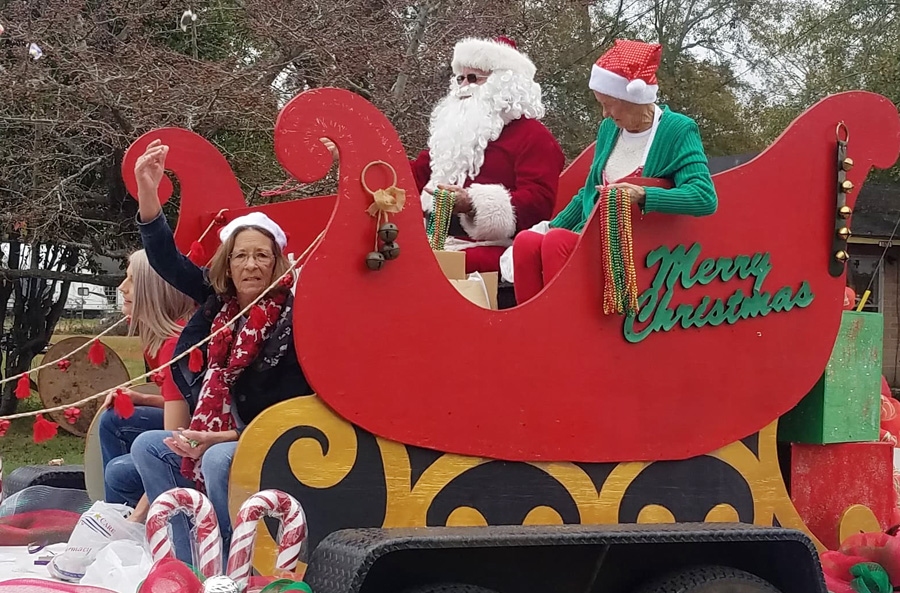
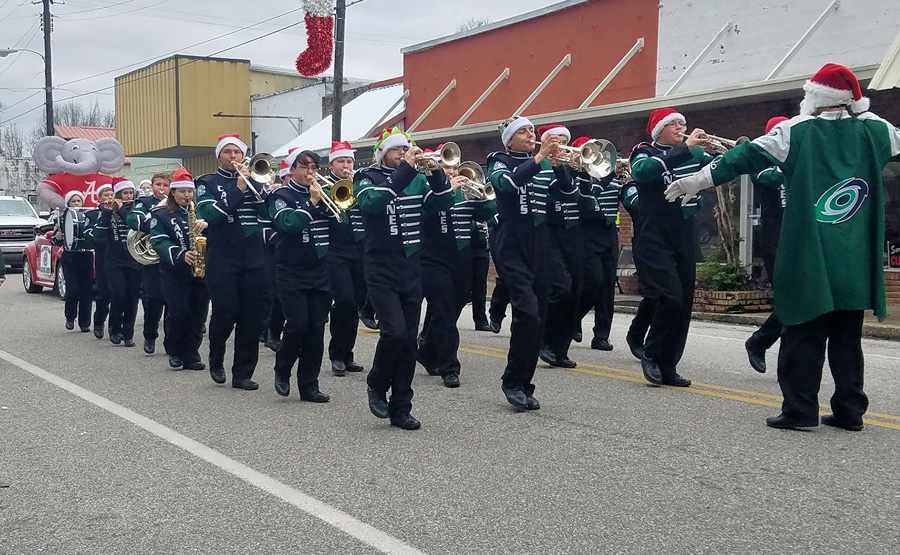
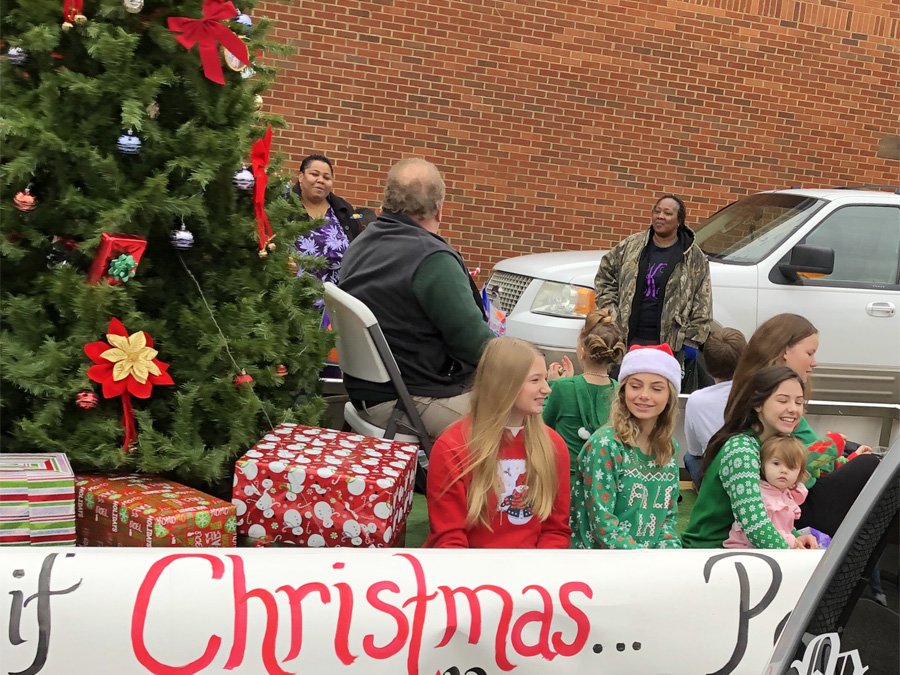
The annual Christmas Parade rolled through the streets of Flomaton Saturday morning. The parade featured floats, vehicles, the Flomaton High School cheerleaders and band, the 3A State Champion Flomaton Hurricane football team, plenty of candy throws and Santa Claus.
For a photo gallery, click here.
Photos by Kristi Barbour, Trudie Blackmon, BreAnna Sullivan, Erin Lambeth and others for NorthEscambia.com, click to enlarge.
Driver Crashes Into Tree In Cantonment
December 15, 2018
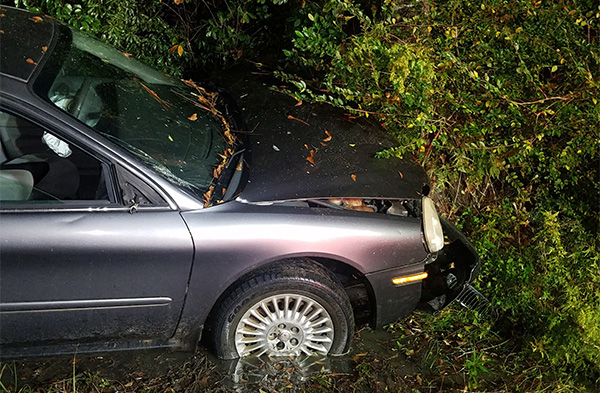
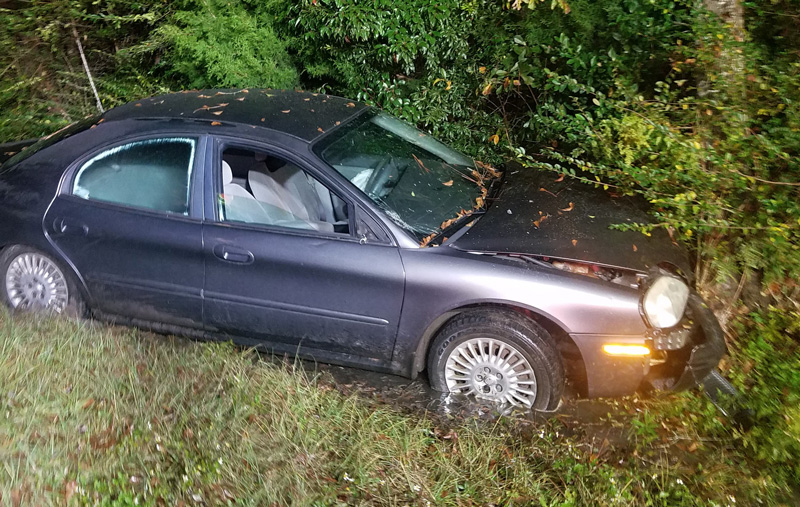
A driver collided with a tree early Saturday morning in Cantonment. The accident occurred about 1:50 a.m. on Muscogee Road near Cooper Road. The driver refused medical transport, and the crash is under investigation by the Florida Highway Patrol. NorthEscambia.com photos by Kristi Barbour, click to enlarge.
Driver Escapes Serious Injury In Highway 29 Rollover
December 15, 2018
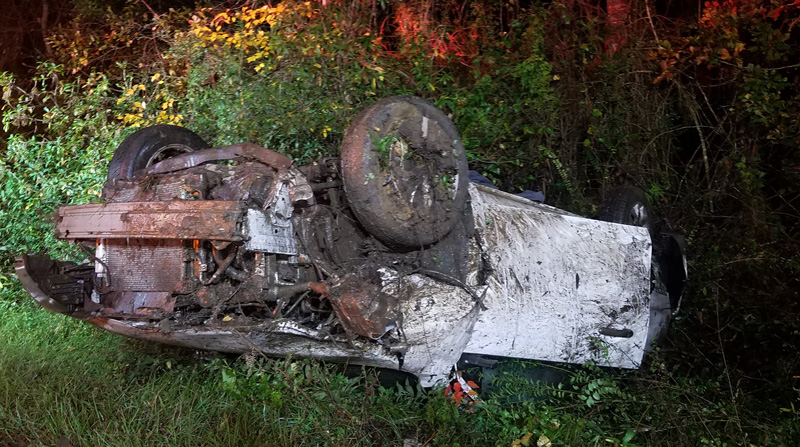
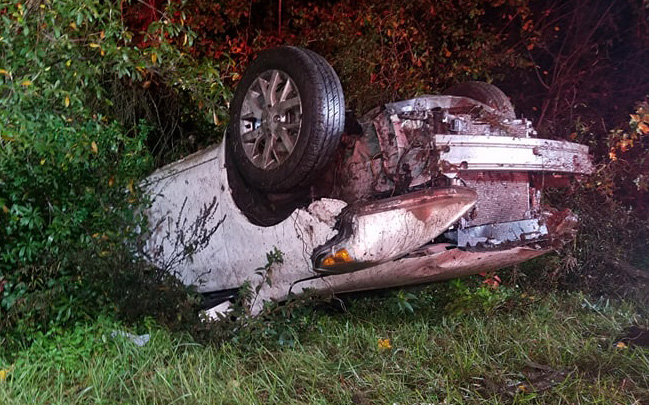
A driver escaped serious injury when he flipped his vehicle early Saturday morning on Highway 29 in Gonzalez. The accident happened on Highway 29 near Old Chemstrand Road about 12:45 a.m.. The driver refused medical transport from the scene. The accident is under investigation by the Florida Highway Patrol. Escambia Fire Rescue and Escambia County EMS also responded. Further information has not been released.
NorthEscambia.com photos by Kristi Barbour, click to enlarge.
Body Found In Escambia River Identified As Missing Pollard Woman
December 15, 2018
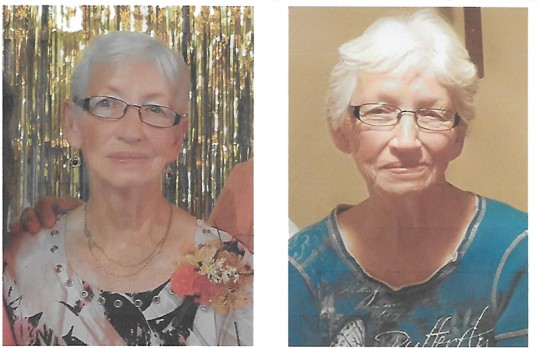
Authorities have positively identified a body found in the Escambia River as 74-year old Eva McBride of Pollard, AL.
McBride was last seen at her home on November 23 on McBride Circle, east of Flomaton and very near the Alabama/Florida line. Her home is located less than a mile from the Conecuh River, which becomes the Escambia River in Florida.
Her body was found December 9 in Santa Rosa County about a mile south of the Terrell’s Landing boat ramp off Oil Plant Road, upriver from Fischer Landing in Century.
No cause of death has been released. Read more
West Wins All Star Football Game; Killam Receives GPA Award
December 15, 2018
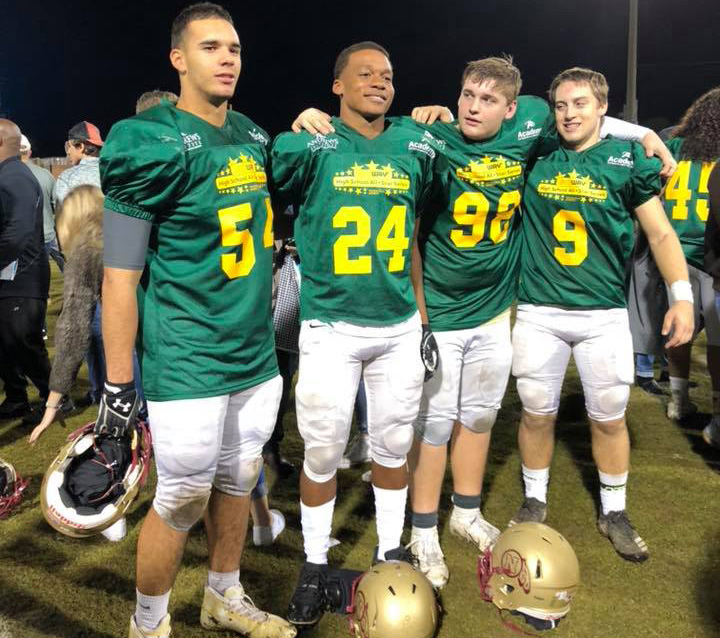
The West team from Escambia County beat the East team 9-0 Friday night the 15th annual Subway High School All-Star game at Blue Wahoos Stadium.
Northview High School quartback Seth Killam received the academic award for overall GPA.
Players taking part were:
West Team Roster (Escambia County):
Catholic - Tykies Hestle - DB
Catholic - Tyree Dunn - DL/ILB/OG
Catholic - Ryan Gay - OL
Escambia - Patrick Sanders - DB/S
Escambia - Jesse Saulsberry - DB/S
Escambia - Tadarius Dunn - LB
Escambia - Rodney Robinson - LB
Escambia - Ronnie Perez - K
Escambia - Isaac Barrow - OL/DL
Escambia - Aric Harris - OL
Escambia - Eric Jones - OL
Escambia - Noah Lord - LB
Northview - Lance McLaughlin - ILB
Northview - Seth Killam - ATH
Pensacola - Ernst Stallworth - WR/DB/St
Pensacola - Najahte King - LB
Pensacola - Ja’Rod Nobles - DB
Pensacola - Abram Smiley - RB
Pensacola - Greg Perkins - WR/TE
Pensacola - Hunter Rayburn - C/DL
Pensacola - James Kitt - DE/N
Pensacola - Jacobi Lyles - DE, N, OL
Pine Forest - Martin Emerson - CB/S
Pine Forest - Wyatt Gill - MLB
Pine Forest - Devon Witherspoon - CB/S
Pine Forest - Anwar Lewis - RB/Slot
Pine Forest - Taajhir McCall - DE
Pine Forest - John Gill - OT
Tate - Patrick Palmer - WR/DB/RB
Tate - Spencer Ruiz - WR
Tate - Hunter Riggan - QB
Washington - Julian Robinson - RB
Washington - Jordan Payne - DL
Washington - Tim Robinson - OL
Washington - Kysam Mohammed - FB/LB/LS
West Florida - Antarrius Moultrie - MLB
West Florida - Keyshawn Swanson - DB/WR
West Florida - Amir McDaniel - DB/WR
West Florida - Xavier Pugh-Davis - WR
West Florida - Taylor Meacham - DL
West Florida - Darius Washington - OT
West Florida - Tyler Sanders - OL
West Florida - Trevor Jordan - QB
The coaching staff for the west team will be head coach Rhett Summerford of West Florida High School assisted by a representative from each school in Escambia County.
East Team Roster (Okaloosa and Santa Rosa County):
Baker - Octavian Mclaughlin - RB
Baker - Derek Peoples - CB
Baker - Zach Mason - DT
Choctaw - Brady Peters - QB
Choctaw - Johnny Holquin - TE
Choctaw - Nathan Lewis - LB
Choctaw - Mason Bruns - P/OLB
Choctaw - Marketrius Warmble - Corner
Choctaw - Chris Beverly - C/Guard
Crestview - John Gillis - QB
Crestview - Bryson Norris - OL
Crestview - Luther Fagalima - OL
Crestview - Weston Tew - OL
Crestview - Marcus Maloy - WR
Fort Walton Beach - Shiloh Addo-Nobles - DE
Fort Walton Beach - Daquis Upshaw - CB
Fort Walton Beach - Ra’Shiek Hawthorne - DT
Gulf Breeze - Cooper Harris - WR
Gulf Breeze - London Parries - S/C
Gulf Breeze - Carl Taylor - LB/RB
Gulf Breeze - Harrison O’Daniel - LB
Jay - James Eddings - RB
Jay - Stone Brown - LB
Milton - Tavian Williams - LB
Milton - Marquise McRoy - WR
Milton - Xavier Robinson - DB
Milton - Justin Campbell - DL
Navarre - Alex Gilchrist - DL/TE
Navarre - Matthew Downey - SS/FS
Navarre - Kevin Taich - PK
Navarre - Bryson Garner - OL
Navarre - Mitchell Hunt - DT, OT, LS,
Niceville - Jack White - QB/Slot/FS
Niceville - T.J Pope - RB
Niceville - Eyin Cole - WR/FS
Niceville - Xavier Graham - OL/DL
Niceville - Aiden Ancog - OL/DL
Pace - Coltan Bennett - FS
Pace - Erin Holland - OLB
Pace - Robert Wright - OLB
Pace - Daniel Tate - OL
Pace - Jacob Lewis - OL
Rocky Bayou - Nick Bowers - OL
The coaching staff for the east team will be Greg Thomas of Choctaw High School assisted by a representative from each participating school in Okaloosa and Santa Rosa County.
Pictured: Northview’s Lance McLaughlin, Ray Bush, Keegun Johnston and Seth Killam at Friday night’s Subway All-Star Game at Blue Wahoos Stadium. Photo courtesy Lacey McLaughlin for NorthEscambia.com, click to enlarge.
New High School Football Classifications Announced; Tate Moves Up
December 15, 2018
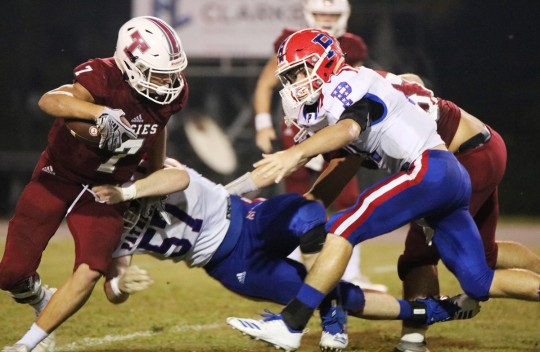
The Florida High School Athletic Association has announced new football classifications for the 2019 and 2020 seasons.
The big local change is in Class 6A with the three teams changing classes. Tate and Navarre move up to District 1-7A with Crestview, Chiles, Niceville, Leon and Lincoln.
Pine Forest will move down from 6A to District 1-5A with West Florida, Pensacola High, Arnold, Bay and Choctaw.
District 1-6A will still include Escambia, Washington, Pace, Gulf Breeze and Milton, with the addition of Mosley and Fort Walton Beach.
Northview and Jay will remain in the rural Class 1A with Baker, Chilpley, Cottondale, Freeport, Graceville, Holmes County and Vernon.
Pensacola Catholic remains in Class 3A.
Classifications were based solely on student enrollment, then geography. If a school disagrees with the classifications, they can become an independent for the two year classification cycle.
File photos by Jennifer Repine for NorthEscambia.com, click to enlarge.
Tate Band Offers Gift Wrapping
December 15, 2018
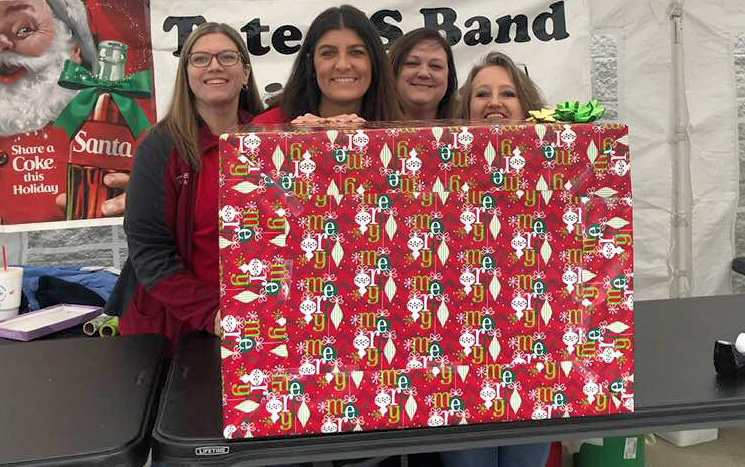
The Tate Band Showband of the South will be wrapping gifts for donations at Walmart on Highway 29 in Ensley through Christmas Eve. Look for the big white tent near the entrance.
Tate Band Gift Wrap Schedule:
Saturday, Dec. 22nd – 8 a.m. – 8 p.m.
Sunday, Dec. 23rd – 8 a.m. – 8 p.m.
Monday, Dec. 24th – 8 a.m. – 12 p.m.
Pictured. Tate band moms wrapping gifts outside Walmart in Ensley on Saturday. Photo for NorthEscambia.com, click to enlarge.