
Byrneville Elementary Releases First Nine Weeks Honor Roll
November 7, 2013
The following students were named to the first nine weeks honor roll at Byrneville Elementary School:
Mrs. Barberree, Kindergarten
All Satisfactory
Emily Adams
Savannah Barrow
Allie Bradley
Elizabeth Coleman
Luke Godwin
Sawyer Jackson
Katherine Johnson
Ryder Lee
Makenzie Levins
Mrs. Golson, Kindergarten
All Satisfactory
Mary-Clayton Dawson
John Glenn
Jaycee Harvell
Logan Jordan
Hanah Lambeth
D’Ericka Odom
Easten Odom
Andrew Plant
Brynlie Shaw
Layla Sims
Evelyn Smith
Christian Velazquez
Mrs. Dawson, First Grade
All A’s:
Raymie Brechin
A’s and B’s:
Madeleine Attalah
Layla Brown
Kerissa Dortch
Daisy Johnson
Hunter Johnson
Gage McCormick
Addisen Miller
Blake Shaw
Mallory Smith
Zi’don Smith
Nicholas Walston
Mrs. Thornton, First Grade
All A’s:
Madison Levins
Jayden White
Brian Yoder
A’s and B’s:
Ayden Attalah
Gavin Beasely
Maddie Mae Driskell
Tyler Gilmore
Jikeem Hall
Jaci Jackson
Kelan Jurey
Mia Kornegay
Evin Matlock
Allie Odom
Mrs. Gilmore, Second Grade
All A’s:
Riley Dawson
Tyson McBride
Tyler Riggs
A’s and B’s:
Jon Bolen
Kaylee Hamilton
Aydan Smith
Mrs. Marshman, Second Grade
All A’s:
Nolin Godwin
Madalyn Grimes
Meredith Johnston
A’s and B’s:
Caden Canaday
Alexa Castro
Tyler Davis
Takayla Lewis
Mrs. Dunsford, Third Grade
All A’s:
Emily Levins
Kaden Odom
Blake Yoder
A’s and B’s:
Leah Anderson
Hunter Barnes
Drake Allen Driskell
Dreama Wright
Mrs. Weaver, Third Grade
All A’s:
Aloysia Dortch
Bradley Hamilton
Kayla Johnson
A’s and B’s:
Briana Dunsford
Chase Hampton
Jessica Loftis
Tiana White
Mrs. Gilmore, Fourth Grade
All A’s:
Hunter Borelli
Torka Mills
A’s and B’s:
Cody Adams
Dusty Carnley
Tessa Flowers
Kaitlin Gafford
Jace Gifford
Harley Walker
David Ward
Mrs. Johnston, Fifth Grade
All A’s:
Maille Kilcrease
A’s and B’s:
Travon Brown
Logan Bryan
Brianna Colter
Heather Knowles
Justin Lambeth
Abigail Levins
Tyler Merchant
Jalexis Robinson
Ty Rolin
The Latest Buzz: Roadside Bees Garner Attention
November 7, 2013
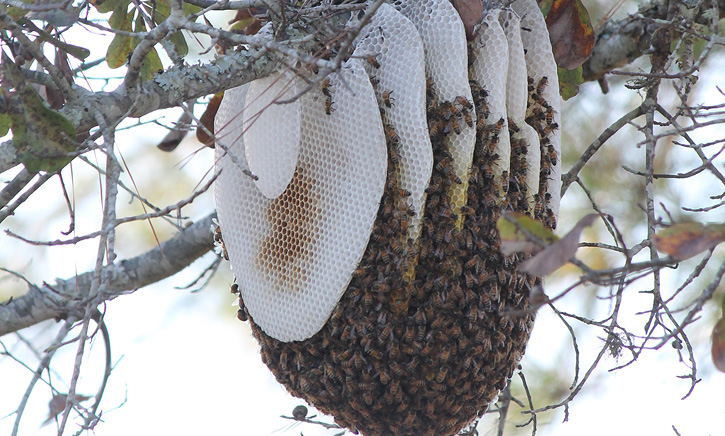
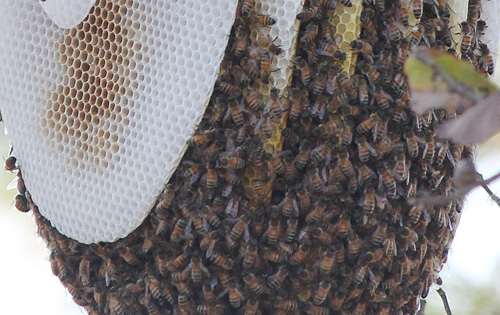
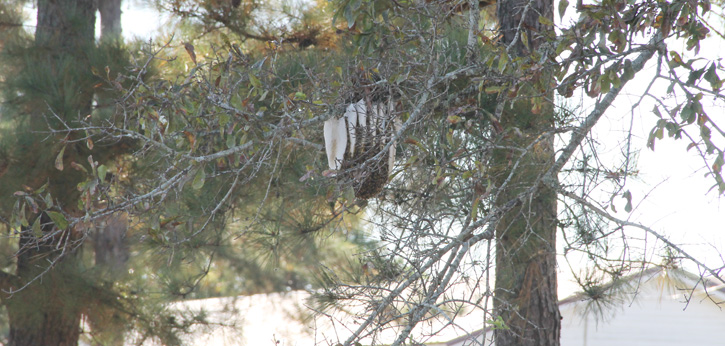
A roadside bee hive in Walnut Hill is catching the attention of passing motorists. The exposed hive is located in an oak tree alongside North Highway 99 near Highway 97. NorthEscambia.com photos, click to enlarge.
Update: The bees were removed by someone Thursday morning.
Tate Grad Hubbard Graduates From Basic Training
November 7, 2013
Air Force Airman 1st Class James A. Hubbard graduated from basic military training at Joint Base San Antonio-Lackland, San Antonio, Texas.
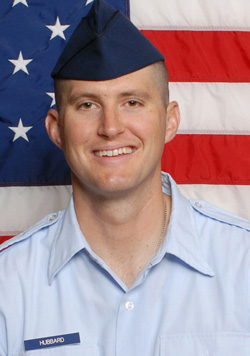 The airman completed an intensive, eight-week program that included training in military discipline and studies, Air Force core values, physical fitness, and basic warfare principles and skills.
Airmen who complete basic training earn four credits toward an associate in applied science degree through the Community College of the Air Force.
Hubbard earned distinction as an honor graduate.
He is the son of Lesley Hubbard of Deedra Avenue, Pensacola.
The airman is a 2002 graduate of Tate High School, Cantonment. He received a master’s degree in 2010 from Stony Brook University, New York, N.Y.
First Baptist Bratt Will Serve As Operation Christmas Child Central
November 6, 2013

Volunteers will soon be busy at the First Baptist Church of Bratt during “National Collection Week” for Operation Christmas Child. For the 20th year, the simple, gift-filled shoe boxes will bring Christmas joy and evangelistic materials to children in over 130 countries across the world.
 National Collection Week for OCC is November 18-25. The First Baptist Church of Bratt will be the official OCC Relay Center for the north end of Escambia County, Florida. The FBC Bratt will also accept boxes from individuals, groups or churches in and Escambia County, Alabama, again this year.
“This is not about the FBC of Bratt”, says Student Pastor Tim Hawsey, Relay Center coordinator. “This is about being a blessing and bringing God’s love and hope to children in poverty around the world that would not receive it otherwise. We have gone through the intense process of been approved as a church to be a Relay Center to collect the boxes from individuals, families, and churches of our area, document and pack them into special cartons and take them to the next level for Samaritan’s Purse, and we are blessed to do it.”
Collection hours at the First Baptist Church of Bratt will be:
- Monday, Nov. 18: 8 a.m. – noon, 4-6 p.m.
- Tuesday, Nov. 19: 8 a.m. – noon
- Wednesday, Nov. 20: 8 a.m. – noon, 4 PM – 6 PM
- Thursday, Nov. 21: 8 a.m. – noon
- Friday, Nov. 22: 8 a.m. – noon
- Saturday, Nov. 23: 8 a.m. – noon
- Sunday, Nov. 24: 8 a.m. – noon, 4-6 p.m.
- Monday, Nov. 25: 8 a.m. – 11 a.m.
The boxes collected this year at FBC Bratt will go through the Atlanta Processing Center then will be shipped to the countries of Belize, Botswana, Columbia, Dominican Republic, Gabon, Georgia, Ghana, Haiti, Macedonia, Madagascar, Niger, Seychelles, Suriname, Trinidad, Tobago, and the Ukraine.
Operation Christmas Child boxes should be packed in a specific manner, and there are changes this year. For more information, call Hawsey at the First Baptist Church of Bratt at (850) 327-6529, visit www.samaritanspurse.org/occ, or call (800) 353-5949. Resources are available for churches that wish to participate.
Students Dress To Impress
November 6, 2013

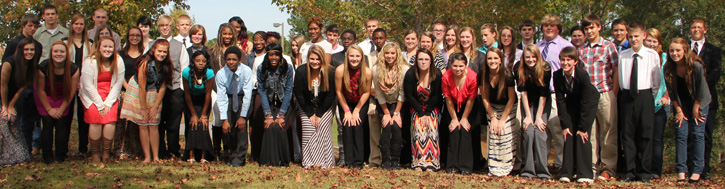
Northview High School recently held a “Dress To Impress” day, with students skipping jeans and t-shirts and wearing their favorite dress clothing instead. Submitted photos for NorhtEscambia.com, click to enlarge.


Veterans Day Programs Planned Across Area
November 5, 2013
Special Veterans Day programs are planned for next week at Ernest Ward Middle School in Walnut Hill and at the Veterans Wall in Century.
Jay High School Veterans Program
Jay High School’s SGA is inviting all local veterans and active duty personnel Wednesday for doughnuts and coffee in the Media Center at 10:00, to an assembly at 10:30 in the auditorium, and to free lunch in the cafeteria at 11:30. Matt Dobson will be the keynote speaker. Please come and allow us the chance to say “Thanks”.
Ernest Ward Veterans Program
The Ernest Ward Middle School Annual Veterans Day Program will be held Thursday, November 7, at 9:30 am. All the veterans in the community are invited. The program will include patriotic music, dance, and presentations. The guest speaker will be Robert Doss from the Escambia County School District. Refreshments will be served following the program. The program will be held in the school gym, with parking behind the gym due to construction.
Molino Park Elementary School
Molino Park Elementary School’s “Melodic Minors” will present “Of Thee I Sing.” Performance time is 6:00 p.m.; the event will be held in the school’s cafeteria.
Northview High School Veterans Program
Northview High School will have its annual Veterans Day program on Friday, November 8 in the school’s theater. There will be two programs with the first program starting at 9:35 a.m. The second program will start shortly after the completion of the first program at approximately 10:30 a.m.
The guest speaker will be Mr. Gary Welch, an Army Veteran who served in Vietnam. He is also a retired teacher from Northview High School.
Century Veterans Celebration
The Town of Century will hold a veterans celebration on Friday, November 8 at 10 a.m. The program will be held at the Veterans Wall in the Nadine McCaw Park on Highway 29. Seating will be provided. Guest speaker will be Congressman Jeff Miller.
Bratt Elementary Veterans Program
Bratt Elementary School will hold a Veterans Day Program on Friday, November 8 at 1 p.m.
Peanut Butter Drive Continues
November 4, 2013

The Escambia County Extension office, the University of Florida Institute of Food & Agricultural Sciences (UF/IFAS), the EscaRosa Young Farmers and Ranchers and the Florida Peanut Producer Association are collecting peanut butter now through mid-November to help take a bite out of hunger.
The groups are accepting donations of unopened jars of peanut butter to be donated to local food pantries during Farm-City Week.
“Let’s keep children eating locally grown peanuts in healthy, nutritious, and yummy peanut butter,” is a slogan being promoted for the drive. The extension service said the average child will eat 1,500 peanut butter and jelly sandwiches before graduating high school.
Unopened jars of peanut butter of any brand can be dropped off until November 15 at any of the following locations:
- Escambia County Extension office, 3740 Stefani Road, Cantonment
- Escambia Farm Bureau, 153 Highway 97, Molino
- Escambia County Public Safety, 6575 North W Street, Pensacola
- Escambia County Community & Environment Dept. 223 Palafox Place, 3rd Floor, Pensacola
- Gilmore Services, 31 East Fairfield Drive, Pensacola
For more information contact Escambia County Extension at (850) 475-5230.
Pictured top: Local peanut grower Rodney Helton and his granddaughters. Courtesy photo for NorthEscambia.com, click to enlarge.
Three Escambia Students Awarded Prestigous American FFA Degree
November 4, 2013
Three Escambia County students have been awarded the American FFA Degree, which is awarded to FFA members who have demonstrated the highest level of commitment to FFA. The award is presented after the FFA member graduates from high school.
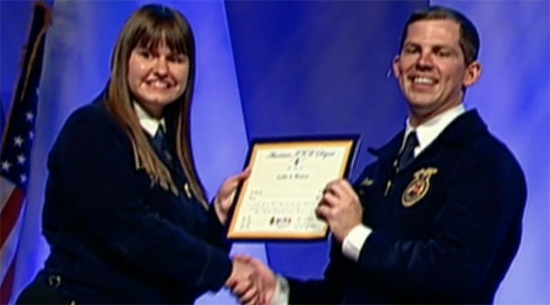 Northview High School FFA graduate Lydia Weaver accepted her degree on stage during the annual National FFA Convention Saturday morning in Louisville, KY. West Florida High School FFA graduates Jake Scott and Justin Ryan Hall were also awarded the American FFA Degree but did not attend the convention.
Less than half of one percent of all FFA members receive the American FFA Degree, making it one of the organization’s highest honors. The National FFA Organization provides leadership, personal growth and career success training through agricultural education to 579,678 student members in grades seven through 12 who belong to one of 7,570 local FFA chapters throughout the U.S., Puerto Rico and the Virgin Islands.
Pictured: Northview High School FFA graduate Lydia Weaver accepts her American FFA degree on stage during the annual National FFA Convention Saturday morning in Louisville, KY. Photo for NorthEscambia.com, click to enlarge.
Photos: Northview Senior Night; Band and Cheerleaders
November 4, 2013
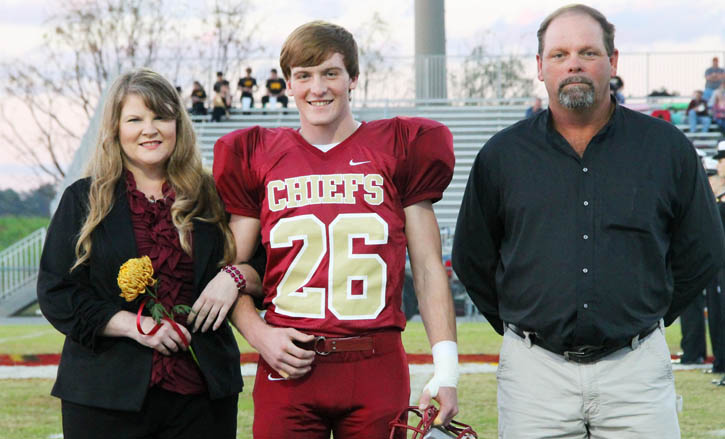
Friday night was Senior Night for the Northview Chiefs.
For a Senior Night, band and cheerleader photo gallery, click here.
(High quality prints are available of the Senior Night photos from the photo gallery, plus additional sword arch photos are available of most seniors. For information, email news@northescambia.com.)
Seniors honored Friday night were:
2013-2014 Northview Chief football Team
Tristan Creamer, Football, two years
Daulton Ray Daniel, Football, four years
Andrew Edwards, Football, four years
Brandon Freeman, Football, four years
Marvin A. Haynie, Jr., Football, four years
Holden Moore, Football, one year
Baccari Ramer, Football, one year
Neino Robinson, Football, two years
Nathan Ships, Football, two years
Danny Slay, Football, four years
Jeffrey Taylor II, Football, four years
LaQuan M Thomas, Football, two years
Daulton Tullis, Football, four years
2013-2014 Northview Cheerleading Team
Mariah Laine Albritton, Cheerleading, four years
Madison Brooke Arrington, Cheerleading, three years
Katelynne Nicole Calloway, Cheerleading, four years
Anna Elizabeth Fisher, Cheerleading, four years; Dance Team, three years
Chloe Vanessa Leonard, Cheerleading, four years; Dance Team, three years
Ali Martin, Cheerleading, four years
Olivia Neal, Cheerleading, one year
Courtney Weaver, Cheerleading, three years
2013 -2014 Tribal Beat Band
Donald Baity, Band, two years; ROTC, four years
Taylor Brook, Band, four years
Mashama Codrington, Band, one year
Hunter Dettling, Band, two years
Morgan Digmon, Dance Team, three years
Anna Elizabeth Donald, Band, one year
Cory Hester, Band, four years
Jessica Lowery, Dance Team, three years
Jasmine Maher, Band, two years
Brittany Nicole Martin, Band, two year; ROTC, four years
Shelby Nielsen, Band, three years
Rachel Presley, Dance Team, two years
Hilery Danielle Scott, Dance Team, three years
Rebekah Mary Sepulveda, Dance Team, one year
Kent Smith, Band, four years; ROTC, three years
Jeremy Logan Stacey, Band, three years
Lily Ann Townson, Dance Team, three years
Kendrick Walker, Band, two years; ROTC, four years
2013-2014 Northview NJROTC
Kasie Braun, ROTC, four years
Jessica Ann Brown, ROTC, four years
Kira Cartwright, ROTC, four years
Zacarra Davis, ROTC, four years
Casey Godwin, ROTC, three years
Courtney Jones, ROTC, three years
Shauna Walker, ROTC, four years
Victoria Wright, ROTC, four years
Blue Angels Fly Together Again
November 4, 2013
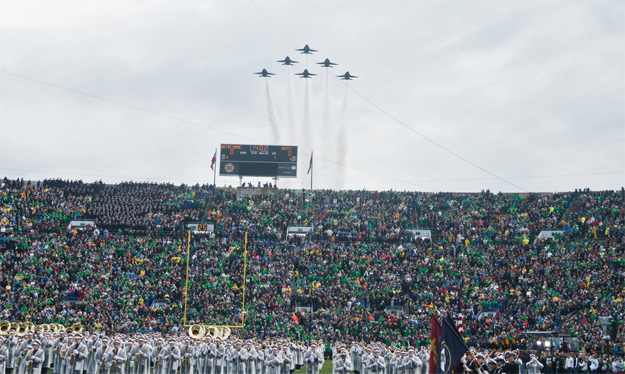
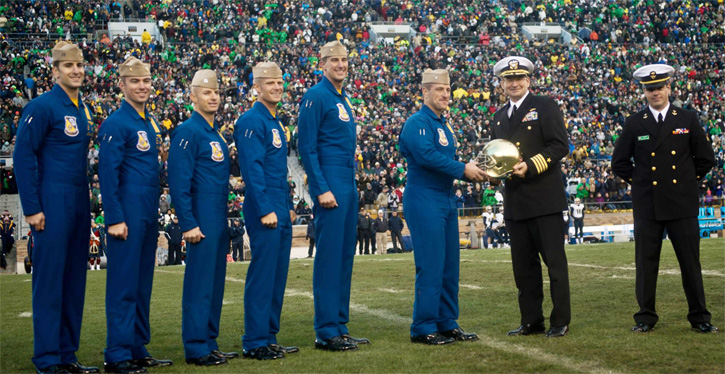
The Blue Angels returned to the air over the weekend for their first public flight appearance since their funding was cut back in April. They flew over Notre Dame Stadium in Indiana before Notre Dame edged Navy 38-34.
Capt. Michael Ryan, commanding officer of the University of Notre Dame’s Navy Reserve Officer Training Candidate (ROTC) unit, presented a University of Notre Dame football helmet to the Blues and Flight Leader Cmdr. Tom Frosch. The helmet was a gift from Notre Dame Football Head Coach Brian Kelly.
The Blues still have not announced any change to the cancellation of their Homecoming Show, originally set for this past weekend, at Pensacola Naval Air Station.
U.S. Navy photos for NorthEscambia.com, click to enlarge.