

Free Sacred Heart Health Screenings Thursday In Molino
June 16, 2010
Sacred Heart Health System will provide free health screenings Thursday in Molino for the poor, elderly and uninsured.
Sacred Heart staff will provide heart-health screenings to measure blood pressure, blood sugar and total cholesterol and to screen for anemia. The screenings are helpful in diagnosing conditions that put people at high risk for heart attack, stroke, diabetes and other health problems.
Sacred Heart’s Mission in Motion staff will provide screenings for adults from 9 a.m. to 11:30 a.m. on Thursday at Scott’s Pharmacy at 6505 North Highway 29 in Molino.
Mission in Motion is a community service provided by Sacred Heart Health System in Pensacola. For more information, call (850) 416-7826.
Tri-County 8-9 Year Olds Beat Niceville-American
June 16, 2010
The Tri-County All-Stars beat Niceville-American Tuesday night 11-4 in Chumuckla.
The 8 and 9-year old boys will advance to play the Niceville-National team at 7:30 Thursday as the All-Star tournament continues in Chumuckla. The Tri-County boys will be competing against five other teams for the tournament championship.
Obama In Pensacola: We Are Responding To Spill
June 16, 2010
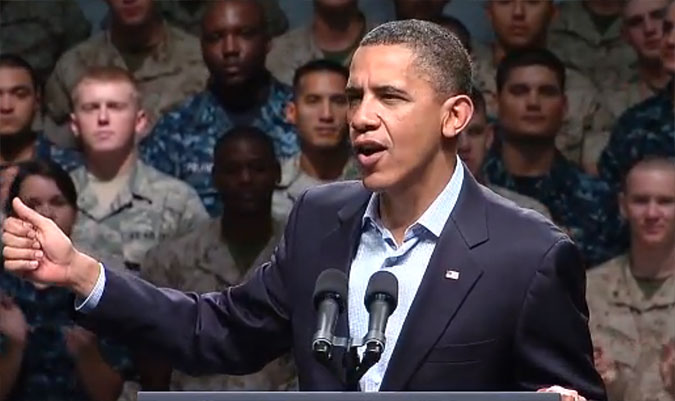
President Barack Obama defended his administration’s efforts in response to the Gulf of Mexico oil spill during a visit to the Florida Panhandle Tuesday and said it will do whatever it takes as long it takes to put the region back to normal.
Obama also put in a plug for the region he saw this week, turning tourism pitchman to help out the businesses that have seen a drop off in visits.
“Here in Pensacola, the beautiful beaches are still open,” Obama said during a speech to military personnel at Naval Air Station Pensacola that followed a morning visit to Pensacola Beach with Gov. Charlie Crist and other state officials and a bite from the Fish Sandwich Snack Bar at the Pensacola Beach pier. “The sand is white and the water is blue. So folks who are looking for a good vacation, they can still come down to Pensacola. People need to know that Pensacola is still open for business.”
But Obama said that didn’t mean there wasn’t a problem – and he acknowledged the anguish felt by many in a region so reliant on its beaches, its clean water and the fish that come out of it.
“That doesn’t mean that people aren’t angry,” Obama said. “That doesn’t mean that people aren’t scared. That doesn’t mean that people don’t have concerns about the future — we all have those concerns. And people have every right to be angry.”
But the administration, contrary to some criticism, is responding, the president said.
“When I say this is the largest response of its kind in American history, I mean it,” Obama said. “We’ve got more than 5,000 vessels on site — skimmers, tugs, barges, dozens of aircraft. More than 27,000 personnel are on the scene, fighting this every day, putting out millions of feet of boom and cleaning the shores.
“All told, we’ve authorized the deployment of 17,500 National Guardsmen to respond to this crisis,” Obama continued. “So far, only about 1,600 have been activated. That leaves a lot of Guardsmen ready to help. And if our governors call on them, I know they’ll be ready, because they’re always ready.”
The White House has come under heavy criticism, particularly from Republican politicians but also from local residents, about a response that has seemed lacking to some.
While praising Obama for listening to concerns in the region, Republican U.S. Sen. George LeMieux of Florida said the state didn’t have everything it needs.
o“There are only 32 skimmers off the coast of Florida and that’s not enough,” said LeMieux, who met with Obama on Tuesday. “President Obama pledged to help with the issue of skimmers, as well as pressing BP to expedite compensation for those suffering economic damage. I commended the president for his effort calling on BP to set up a fund for claims and encouraged him to seek an increased frequency of payments to affected individuals.”
LeMieux also said there was still a communication problem between federal officials, BP, and local leaders.
Florida Attorney General Bill McCollum has also criticized the government for not doing enough to help the state out. McCollum is a Republican candidate for governor.
The main Democrat in the governor’s race, state Chief Financial Officer Alex Sink, who joined the president on Tuesday, has focused her criticism on BP, whose oil it is that continues to leak out of the underwater pipe a mile under the Gulf.
Obama said he was committed to a full recovery in the area.
“I want the people of this region to know that my administration is going to do whatever it takes, for as long as it takes, to deal with this disaster,” Obama said. He also pledged that BP would pick up the tab.
“Here in Pensacola and the Panhandle, tourism is everything,” the president said. “And when the tourists stay home, it ripples out and hits folks across these communities — the charter boats, the hotels, the restaurants, the roadside stores, the shops, the suppliers, the dive shops. And if your inland waters are contaminated — if the bays and bayous are contaminated — it could be devastating, changing the way of life down here for years to come.
“But let me say to the people of Pensacola and the Gulf Coast: I am with you, my administration is with you for the long haul to make sure BP pays for the damage that it has done and to make sure that you are getting the help you need to protect this beautiful coast and to rehabilitate the damaged areas, to revitalize this region, and to make sure that nothing like this happens ever again,” Obama said. “That is a commitment I am making to the people of Florida and people all across this Gulf.”
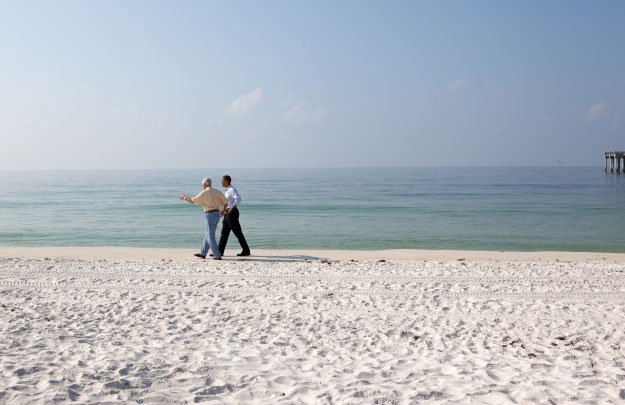
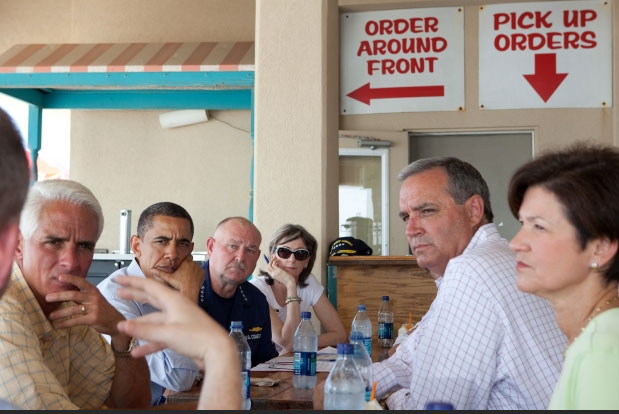
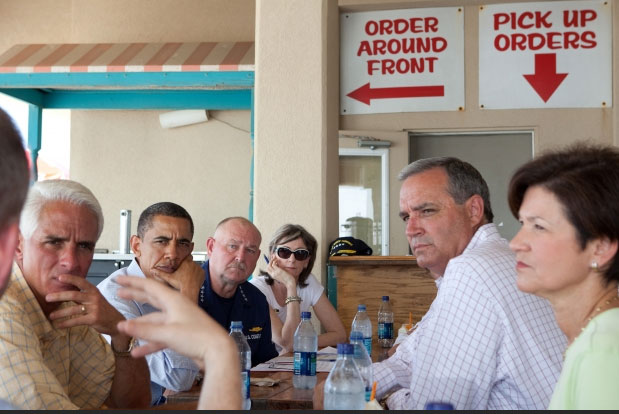
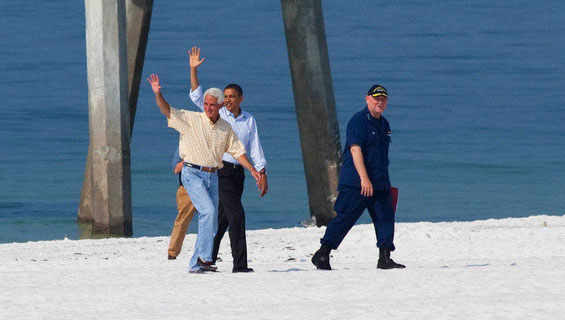
Pictured top: President Barack Obama address the military Tuesday at Pensacola Naval Air Station. Pictured inset: Obama and Gov. Charlie Christ on Pensacola Beach. Pictured below: Obama and Crist meet with other federal, state and local officials at Pensacola Beach. Photos for NorthEscambia.com, click to enlarge.
NorthEscambia.com Photo Gallery: President Obama In Pensacola
June 16, 2010
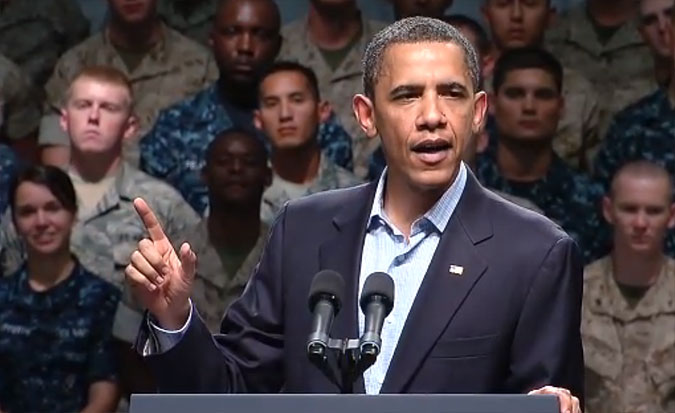
President Barack Obama was in Pensacola Tuesday, and NorthEscambia.com has complete photo coverage.
For a photo gallery from the president’s visit to Pensacola, click here.
Pictured above: President Barack Obama addresses the military Tuesday at Pensacola Naval Air Station. Pictured inset: Obama meets with Gov. Charlie Crist, Admiral Thad Allen, Congressman Jeff Miller, Florida CFO Alex Sink and other officials at the Fish Sandwich Snack Bar on Pensacola Beach. Pictured below: Florida Gov. Charlies Crist, President Barack Obama and Admiral Thad Allen walk on Pensacola Beach. Photos for NorthEscambia.com, click to enlarge.
VIDEO: Obama Meets With Local Officials On Pensacola Beach
June 16, 2010
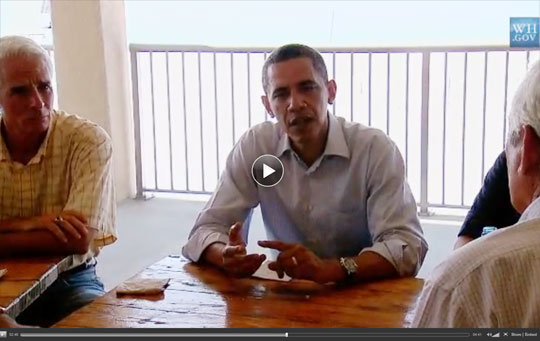
Tuesday morning on Pensacola Beach, President Barack Obama met with state and local officials to discuss the BP oil spill. This video is from that meeting at the Fish Sandwich Snack Bar with Pensacola Mayor Mike Wiggins, Florida CFO Alex Sink, Gov. Charlies Crist and others.
To watch the video, click play below. To read the full text of the speech, click here.
(If you do not see the video above, it is because your home, work or school firewall is block access to external videos.)
Photos: Fun And Wacky Science, Dr. Zap At The Library
June 16, 2010

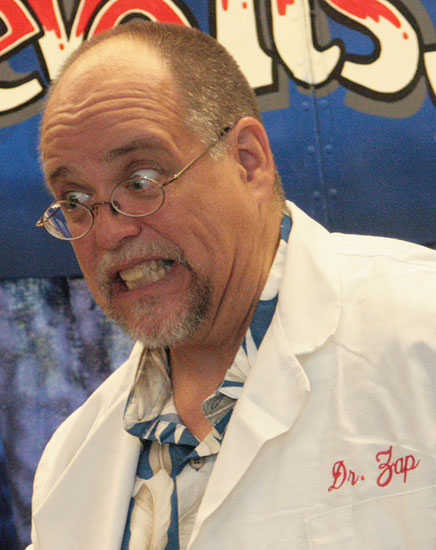 “Dr. Zap” presented his fun and wacky view on science Tuesday as the summer reading program series continued at the Century Branch Library.
From toilet paper arches, to children floating on air to the amazement of a young girl that learned she could effortless lift 200 pounds — Dr. Zap taught children about scientific theory in a fun and imaginable way.
(The young lady, by the way, used a level and fulcrum to lift three boys — including her astonished brother — into the air.)
For a NorthEscambia.com photo gallery from the event, click here.
The summer read series at the Century Branch Library will continue each Tuesday at noon as follows:
- June 22 – John Jaramillo, storyteller and dancer
- June 29 – David Stephens, puppetry
- July 6, Ross Mudge, singing patriotic songs
- July 13, Beau Broomall, magician
For more information, contact the Century Branch Library at (850) 256-6217.
Pictured top: Children enjoy learning about science from Dr. Zap Tuesday afternoon at the Century Branch Library. Pictured inset: Dr. Zap. Pictured below: A young lady (right) lifts three boys weighing a combined 200 pounds using a lever and fulcrum. NorthEscambia.com photos, click to enlarge.

VIDEO: Obama Speaks TO Military At Pensacola NAS
June 16, 2010
During a speech at Pensacola Naval Air Station, President Barack Obama thanked military personnel who have helped respond to the Deepwater BP oil spill.
To watch the video, click play below. To read the full text of the speech, click here.
(If you do not see the video above, it is because your home, work or school firewall is block access to external videos.)
VIDEO: Obama’s Oval Office Address On BP Spill
June 16, 2010
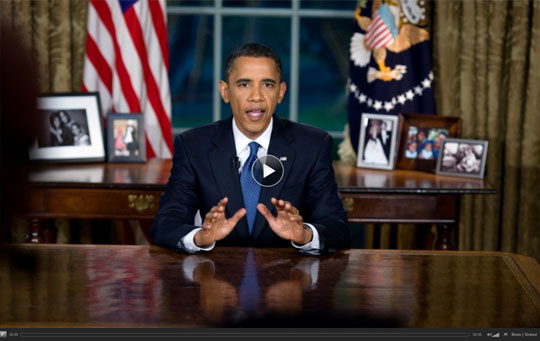
President Barack Obama addressed the nation Tuesday night from the Oval Office for the first time about his administration’s ongoing response to the BP oil spill and clean energy.
To watch the video, click play below. To read the full text of the speech, click here.
(If you do not see the video above, it is because your home, work or school firewall is block access to external videos.)
Watch Videos: Obama At Pensacola Beach; Pensacola NAS, Oval Office
June 16, 2010
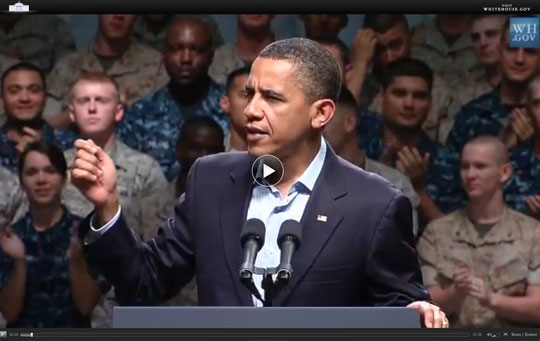
NorthEscambia.com has complete video coverage of President Barack Obama’s visit to Pensacola on Tuesday, as well as his speech from the Oval Office Tuesday night.
During a speech at Pensacola Naval Air Station, President Barack Obama thanked military personnel who have helped respond to the Deepwater BP oil spill. Click here to watch.
Tuesday morning on Pensacola Beach, President Barack Obama met with state and local officials to discuss the BP oil spill. This video is from that meeting at the Fish Sandwich Snack Bar with Pensacola Mayor Mike Wiggins, Florida CFO Alex Sink, Gov. Charlies Crist and others. Click here to watch.
President Barack Obama addressed the nation Tuesday night from the Oval Office for the first time about his administration’s ongoing response to the BP oil spill and clean energy. Click here to watch
.
Obama’s Oval Office Gulf Oil Plan: Read The Entire Address To The Nation
June 15, 2010
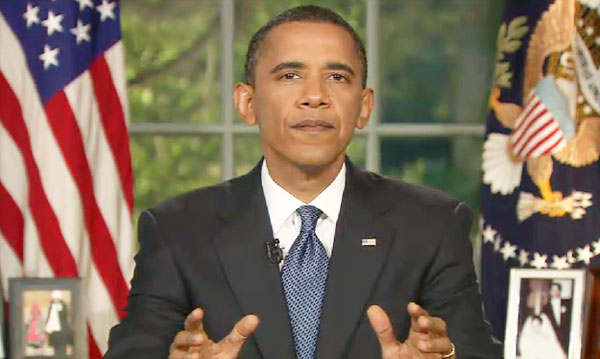
President Barack Obama laid out his Gulf oil spill strategy to the nation Tuesday night from the Oval Office, just hours after he toured Pensacola Beach.
(To see a video of the speech, click here.)
The following is the full text of Obama’s speech:
Good evening. As we speak, our nation faces a multitude of challenges. At home, our top priority is to recover and rebuild from a recession that has touched the lives of nearly every American. Abroad, our brave men and women in uniform are taking the fight to al Qaeda wherever it exists. And tonight, I’ve returned from a trip to the Gulf Coast to speak with you about the battle we’re waging against an oil spill that is assaulting our shores and our citizens.
On April 20, an explosion ripped through BP’s Deepwater Horizon drilling rig, about forty miles off the coast of Louisiana. Eleven workers lost their lives. Seventeen others were injured. And soon, nearly a mile beneath the surface of the ocean, oil began spewing into the water.
Because there has never been a leak of this size at this depth, stopping it has tested the limits of human technology. That is why just after the rig sank, I assembled a team of our nation’s best scientists and engineers to tackle this challenge — a team led by Dr. Steven Chu, a Nobel Prize-winning physicist and our nation’s Secretary of Energy. Scientists at our national labs and experts from academia and other oil companies have also provided ideas and advice.
As a result of these efforts, we have directed BP to mobilize additional equipment and technology. In the coming days and weeks, these efforts should capture up to 90 percent of the oil leaking out of the well. This is until the company finishes drilling a relief well later in the summer that is expected to stop the leak completely.
Already, this oil spill is the worst environmental disaster America has ever faced. And unlike an earthquake or a hurricane, it is not a single event that does its damage in a matter of minutes or days. The millions of gallons of oil that have spilled into the Gulf of Mexico are more like an epidemic, one that we will be fighting for months and even years.
But make no mistake: we will fight this spill with everything we’ve got for as long it takes. We will make BP pay for the damage their company has caused. And we will do whatever’s necessary to help the Gulf Coast and its people recover from this tragedy.
Tonight I’d like to lay out for you what our battle plan is going forward: what we’re doing to clean up the oil, what we’re doing to help our neighbors in the Gulf, and what we’re doing to make sure that a catastrophe like this never happens again.
First, the cleanup. From the very beginning of this crisis, the federal government has been in charge of the largest environmental cleanup effort in our nation’s history — an effort led by Admiral Thad Allen, who has almost forty years of experience responding to disasters. We now have nearly 30,000 personnel who are working across four states to contain and cleanup the oil. Thousands of ships and other vessels are responding in the Gulf. And I have authorized the deployment of over 17,000 National Guard members along the coast. These servicemen and women are ready to help stop the oil from coming ashore, clean beaches, train response workers, or even help with processing claims — and I urge the governors in the affected states to activate these troops as soon as possible.
Because of our efforts, millions of gallons of oil have already been removed from the water through burning, skimming, and other collection methods. Over five and a half million feet of boom has been laid across the water to block and absorb the approaching oil. We have approved the construction of new barrier islands in Louisiana to try and stop the oil before it reaches the shore, and we are working with Alabama, Mississippi, and Florida to implement creative approaches to their unique coastlines.
As the clean up continues, we will offer whatever additional resources and assistance our coastal states may need. Now, a mobilization of this speed and magnitude will never be perfect, and new challenges will always arise. I saw and heard evidence of that during this trip. So if something isn’t working, we want to hear about it. If there are problems in the operation, we will fix them.
But we have to recognize that despite our best efforts, oil has already caused damage to our coastline and its wildlife. And sadly, no matter how effective our response becomes, there will be more oil and more damage before this siege is done. That’s why the second thing we’re focused on is the recovery and restoration of the Gulf Coast.
You know, for generations, men and women who call this region home have made their living from the water. That living is now in jeopardy. I’ve talked to shrimpers and fishermen who don’t know how they’re going to support their families this year. I’ve seen empty docks and restaurants with fewer customers — even in areas where the beaches are not yet affected. I’ve talked to owners of shops and hotels who wonder when the tourists will start to come back. The sadness and anger they feel is not just about the money they’ve lost. It’s about a wrenching anxiety that their way of life may be lost.
I refuse to let that happen. Tomorrow, I will meet with the chairman of BP and inform him that he is to set aside whatever resources are required to compensate the workers and business owners who have been harmed as a result of his company’s recklessness. And this fund will not be controlled by BP. In order to ensure that all legitimate claims are paid out in a fair and timely manner, the account must and will be administered by an independent, third party.
Beyond compensating the people of the Gulf in the short-term, it’s also clear we need a long-term plan to restore the unique beauty and bounty of this region. The oil spill represents just the latest blow to a place that has already suffered multiple economic disasters and decades of environmental degradation that has led to disappearing wetlands and habitats. And the region still hasn’t recovered from Hurricanes Katrina and Rita. That’s why we must make a commitment to the Gulf Coast that goes beyond responding to the crisis of the moment.
I make that commitment tonight. Earlier, I asked Ray Mabus, the Secretary of the Navy, a former governor of Mississippi, and a son of the Gulf, to develop a long-term Gulf Coast Restoration Plan as soon as possible. The plan will be designed by states, local communities, tribes, fishermen, businesses, conservationists, and other Gulf residents. And BP will pay for the impact this spill has had on the region.
The third part of our response plan is the steps we’re taking to ensure that a disaster like this does not happen again. A few months ago, I approved a proposal to consider new, limited offshore drilling under the assurance that it would be absolutely safe — that the proper technology would be in place and the necessary precautions would be taken.
That was obviously not the case on the Deepwater Horizon rig, and I want to know why. The American people deserve to know why. The families I met with last week who lost their loved ones in the explosion — these families deserve to know why. And so I have established a National Commission to understand the causes of this disaster and offer recommendations on what additional safety and environmental standards we need to put in place. Already, I have issued a six-month moratorium on deepwater drilling. I know this creates difficulty for the people who work on these rigs, but for the sake of their safety, and for the sake of the entire region, we need to know the facts before we allow deepwater drilling to continue. And while I urge the Commission to complete its work as quickly as possible, I expect them to do that work thoroughly and impartially.
One place we have already begun to take action is at the agency in charge of regulating drilling and issuing permits, known as the Minerals Management Service. Over the last decade, this agency has become emblematic of a failed philosophy that views all regulation with hostility — a philosophy that says corporations should be allowed to play by their own rules and police themselves. At this agency, industry insiders were put in charge of industry oversight. Oil companies showered regulators with gifts and favors, and were essentially allowed to conduct their own safety inspections and write their own regulations.
When Ken Salazar became my Secretary of the Interior, one of his very first acts was to clean up the worst of the corruption at this agency. But it’s now clear that the problems there ran much deeper, and the pace of reform was just too slow. And so Secretary Salazar and I are bringing in new leadership at the agency — Michael Bromwich, who was a tough federal prosecutor and Inspector General. His charge over the next few months is to build an organization that acts as the oil industry’s watchdog — not its partner.
One of the lessons we’ve learned from this spill is that we need better regulations better safety standards, and better enforcement when it comes to offshore drilling. But a larger lesson is that no matter how much we improve our regulation of the industry, drilling for oil these days entails greater risk. After all, oil is a finite resource. We consume more than 20% of the world’s oil, but have less than 2% of the world’s oil reserves. And that’s part of the reason oil companies are drilling a mile beneath the surface of the ocean — because we’re running out of places to drill on land and in shallow water.
For decades, we have known the days of cheap and easily accessible oil were numbered. For decades, we have talked and talked about the need to end America’s century-long addiction to fossil fuels. And for decades, we have failed to act with the sense of urgency that this challenge requires. Time and again, the path forward has been blocked — not only by oil industry lobbyists, but also by a lack of political courage and candor.
The consequences of our inaction are now in plain sight. Countries like China are investing in clean energy jobs and industries that should be here in America. Each day, we send nearly $1 billion of our wealth to foreign countries for their oil. And today, as we look to the Gulf, we see an entire way of life being threatened by a menacing cloud of black crude.
We cannot consign our children to this future. The tragedy unfolding on our coast is the most painful and powerful reminder yet that the time to embrace a clean energy future is now. Now is the moment for this generation to embark on a national mission to unleash American innovation and seize control of our own destiny.
This is not some distant vision for America. The transition away from fossil fuels will take some time, but over the last year and a half, we have already taken unprecedented action to jumpstart the clean energy industry. As we speak, old factories are reopening to produce wind turbines, people are going back to work installing energy-efficient windows, and small businesses are making solar panels. Consumers are buying more efficient cars and trucks, and families are making their homes more energy-efficient. Scientists and researchers are discovering clean energy technologies that will someday lead to entire new industries.
Each of us has a part to play in a new future that will benefit all of us. As we recover from this recession, the transition to clean energy has the potential to grow our economy and create millions of good, middle-class jobs — but only if we accelerate that transition. Only if we seize the moment. And only if we rally together and act as one nation — workers and entrepreneurs; scientists and citizens; the public and private sectors.
When I was a candidate for this office, I laid out a set of principles that would move our country towards energy independence. Last year, the House of Representatives acted on these principles by passing a strong and comprehensive energy and climate bill — a bill that finally makes clean energy the profitable kind of energy for America’s businesses.
Now, there are costs associated with this transition. And some believe we can’t afford those costs right now. I say we can’t afford not to change how we produce and use energy — because the long-term costs to our economy, our national security, and our environment are far greater.
So I am happy to look at other ideas and approaches from either party — as long they seriously tackle our addiction to fossil fuels. Some have suggested raising efficiency standards in our buildings like we did in our cars and trucks. Some believe we should set standards to ensure that more of our electricity comes from wind and solar power. Others wonder why the energy industry only spends a fraction of what the high-tech industry does on research and development — and want to rapidly boost our investments in such research and development.
All of these approaches have merit, and deserve a fear hearing in the months ahead. But the one approach I will not accept is inaction. The one answer I will not settle for is the idea that this challenge is too big and too difficult to meet. You see, the same thing was said about our ability to produce enough planes and tanks in World War II. The same thing was said about our ability to harness the science and technology to land a man safely on the surface of the moon. And yet, time and again, we have refused to settle for the paltry limits of conventional wisdom. Instead, what has defined us as a nation since our founding is our capacity to shape our destiny — our determination to fight for the America we want for our children. Even if we’re unsure exactly what that looks like. Even if we don’t yet know precisely how to get there. We know we’ll get there.
It is a faith in the future that sustains us as a people. It is that same faith that sustains our neighbors in the Gulf right now.
Each year, at the beginning of shrimping season, the region’s fishermen take part in a tradition that was brought to America long ago by fishing immigrants from Europe. It’s called “The Blessing of the Fleet,” and today it’s a celebration where clergy from different religions gather to say a prayer for the safety and success of the men and women who will soon head out to sea — some for weeks at a time.
The ceremony goes on in good times and in bad. It took place after Katrina, and it took place a few weeks ago — at the beginning of the most difficult season these fishermen have ever faced.
And still, they came and they prayed. For as a priest and former fisherman once said of the tradition, “The blessing is not that God has promised to remove all obstacles and dangers. The blessing is that He is with us always,” a blessing that’s granted “…even in the midst of the storm.”
The oil spill is not the last crisis America will face. This nation has known hard times before and we will surely know them again. What sees us through — what has always seen us through — is our strength, our resilience, and our unyielding faith that something better awaits us if we summon the courage to reach for it. Tonight, we pray for that courage. We pray for the people of the Gulf. And we pray that a hand may guide us through the storm towards a brighter day. Thank you, God Bless You, and may God Bless the United States of America.