

Scott Team Wants School Vouchers, Teacher Merit Pay
December 22, 2010
Florida schools should enact a number of changes championed by former Gov. Jeb Bush, including expanding school choice, eliminating teacher job protection and basing educators’ pay on student performance, members of Gov.-elect Rick Scott’s transition team said Tuesday.
The governor-elect’s education transition team released briefing documents of recommendations that it was making to the incoming governor, who will take office in two weeks. The documents included ideas that have been tossed around by the Legislature for years, but have failed to gain traction or have been knocked down by the Florida Supreme Court.
One of the biggest priorities for elementary and high school education is letting children go to any school they want to, whether it be public, private, a charter or virtual school – and possibly even a school in another county’s school district. Scott, throughout the campaign, maintained his support for school choice efforts and also appeared recently with advocates for the Florida Tax Credit Scholarship program, which sends low income students to private schools.
The biggest issue is how to pay for it. Scott has proposed eliminating the corporate income tax, which funds the scholarship program. Corporations who give donations to the scholarship are given a tax credit. Scott’s team’s solution is to find a “constitutionally-defensible” funding source to continue and expand the program. In 2006, the Florida Supreme Court struck down Bush’s statewide voucher program creating an obstacle for school choice advocates.
One option being forwarded by Bush’s education foundation is an education savings account that allows parents to request and receive funds equal to 85 percent of what the state earmarks for students in the public system. Currently, the state’s per pupil funding rate is $6,843.
The money could be used for private school tuition and fees, online “virtual” school, tutoring, books and tuition for dual enrollment programs, textbooks or curriculum for a home schooling program or contributions to a child’s higher education savings plan.
Florida university system chancellor Frank Brogan, who is a former state education commissioner and school principal, told reporters last week that many people in the school system would see the school choice expansion as an “assault” on public education, but defended the transition team’s rudimentary plans, saying it was simply an “opportunity” for parents and children to go to better schools.
Brogan, who served as Bush’s lieutenant governor and is also on Scott’s transition team, said there was no way to know, however, it if a plan could be upheld in court.
“But I do believe the reality of the thing is it will be court tested if it is passed and signed into law,” he said.
Another major component of the Scott transition team’s proposal is a merit pay system for teachers that would base half of what teachers make on student performance. The issue was a major part of last spring’s legislative debate in which the Republican-led Legislature passed a merit pay bill only to have it vetoed by Gov. Charlie Crist.
Key lawmakers have already said that the bill will be reintroduced this coming spring with some changes from last year’s proposal. A draft is already being circulated by Bush’s Foundation for Excellence in Education and foundation director Patricia Levesque briefed the Senate Prek-12 Education committee on details this past month.
Levesque is the chairwoman of Scott’s education transition team.
“The transition team was a very wide variety of individuals from a teacher all the way to an education advocate,” said Bush foundation spokeswoman Jaryn Emhof. “And the report, we find most encouraging because it continues talking about the bold reforms he talked about on the campaign trail.”
A state teachers’ union spokesman said the organization would withhold comment until union officials can review the plan in more detail.
The report also contained several other suggestions including a broad, but still vague idea for developing a new funding system for public schools.
The transition team also suggests investing in mentoring initiatives, recruiting teachers in science and math and developing an autonomous charter school authorization body.
In higher education, the team suggested full support of the university system’s effort to ramp up degree production and increased emphasis on science and math. It also suggested a look at changes to the Bright Futures Scholarship program, including upping the SAT score requirement.
By Kathleen Haughney
The News Service Florida
Not Down The Drain: ECUA Offers Free Holiday Grease Pickup
December 22, 2010
The Emerald Coast Utilities Authority is offering free holiday grease pickup.
As the winter temperatures drop, waste water from homes and other sources tends to flow more slowly in sewer lines. The primary reason is because the fats, oils, and grease which are discharged into the sewer system tend to harden and collect in the relatively cold sewer pipes. As these blockages build, sewer lines can become clogged and back up into homes and businesses, causing an unsightly and unsanitary situation.
ECUA residential customers are asked to take used cooking grease, place it in a can, let it cool, and then throw it away. The grease, according to ECUA, should not be dumped down the sink.
“As the winter temperatures get colder, grease entering into the sewer system congeals in the interior of the pipes, which causes clogs or chokes. The pipe wall becomes so cold it solidifies the grease particles, requiring removal of the blockage and even sections of pipe,” said Jim Roberts, spokesperson for ECUA. During the first 11 months of 2010, almost 100 “grease chokes” requiring costly repairs were reported in the ECUA system.
ECUA will pick up used holiday cooking grease from sanitation customers for free as part of their Household Hazardous Waste recycling service. The service also includes free pickup of items like pool and household chemicals, automotive fluids, pesticides, paint, fertilizers and cleaners.
Household Hazardous Waste is normally collected on the first Saturday of the month, but due to the New Year’s holiday, the next pickup will be January 8. To request a pickup, ECUA sanitation customers should call the ECUA Customer Service Line at (850) 476-0480.
For more information on the Household Hazardous Waste program, click here.
All Of Alabama, Plus Escambia And Santa Rosa, Declared Natural Disaster Areas
December 22, 2010
The U.S. Department of Agriculture has designated the entire state of Alabama as a natural disaster area due to losses caused by drought and excessive heat that began March 1, 2010. The disaster declaration also qualifies farmers and ranchers in Escambia and Santa Rosa counties in Florida for natural disaster assistance.
“President Obama and I understand these conditions caused severe damage to a wide variety of crops and prevented farmers from harvesting these crops,” said Agriculture Secretary Tom Vilsack. “This action will provide help to hundreds of farmers who suffered significant production losses.”
All qualified farm operators in the designated areas are eligible for low interest emergency (EM) loans from USDA’s Farm Service Agency (FSA), provided eligibility requirements are met.
Farmers in eligible counties — including all counties in Alabama and Escambia and Santa Rosa in Florida — have eight months from the date of the declaration to apply for loans to help cover part of their actual losses. FSA will consider each loan application on its own merits, taking into account the extent of losses, security available and repayment ability. FSA has a variety of programs, in addition to the EM loan program, to help eligible farmers recover.
Person Of Interest Named In March Murder
December 22, 2010
 The Escambia County Sheriff’s Office is looking for a man for questioning in connection with a homicide on March 21.
Sheriff’s investigators are looking for Anthony Clayton Bell, Jr., 19, for interrogation about the death of Donald Diego Turner, 24. Turner was found shot to death inside a mobile home on Augusta Avenue near Gulf Beach Highway. There have been no arrests in the case.
Anyone with information about the whereabouts of Bell is asked to call the Sheriff’s Office at (850) 436-9620 or Crime Stoppers at (850) 433-STOP.
Florida Grew 17 Percent In Decade, Gains 2 New Seats In Congress
December 22, 2010
Even with the boom slowing, Florida still grew 17 percent in the last decade and will gain additional congressional clout, getting two more seats in Congress, Census officials announced Tuesday.
Now slated to hold 27 seats in the 435 member House, Florida continues a trend that began in 1930 by gaining at least one congressional seat during each of the past nine decennial redistributions of political power in a nation that continued to grow to the west and south.
Florida, with 18,801,310 residents as of April 1, remained the fourth most populous state. It will have the same number of seats in Congress as No. 3 New York, behind No. 2 Texas, which gained four seats – the most of any state – and California which saw no gain in congressional power, but remains the nation’s largest state.
The biggest growth over the decade was in Nevada, which grew 35.1 percent, Census Director Robert Groves said in a conference call. Michigan was at the other end of the spectrum, with declines in auto making and other industries making it the only state to decline in population in the decade, losing at 0.6 percent of its population.
Nationally, the population revelation looked like continuing good news for Republicans, who made major gains in the November election, and now will gain congressional seats in several Southern and Western states that are generally considered more red than blue. The states losing population are mostly northeastern and Rust Belt states that have traditionally voted more Democratic.
The exact location of Florida’s two new congressional seats – and what they will look like and who they will include – now will be up to state legislators, who are scheduled to redraw the districts during the 2012 legislative session. How, exactly, the process will work this time around isn’t totally clear because of a new constitutional requirement that lawmakers not create districts that favor incumbents or a particular political party.
“Now the work begins in the Florida Legislature as we draw new congressional districts as well as seats in the Florida House and Senate,” said Senate President Mike Haridopolos, R-Merritt Island. “This will be a deliberative process and all Floridians will have a voice.”
The change also has implications for future presidential elections, because it increases the clout of growing states – Southern and Western states – in the Electoral College, while reducing the strength of traditionally Democratic states like New Jersey, Michigan and New York.
Florida will now have 29 Electoral College votes.
“Already a ‘must win state’ for presidential candidates, Florida becomes even more important with the addition of two more electoral votes as a result of gaining two more U.S House seats,” Sen. Don Gaetz, R-Niceville, and the chairman of the Senate Reapportionment Committee, said in a statement.
The U.S. population on April 1 was reported as 308.7 million, reflecting a 9.7 percent increase since 2000. That’s the slowest growth since the 1930s, according to the Census Bureau.
New York and Ohio each lose two congressional. States losing single seats are Iowa, Illinois, Missouri, Pennsylvania, Louisiana, Massachusetts, Michigan and New Jersey.
The Census Bureau is constitutionally required to reapportion congressional seats every 10 years to give all 435 congressional districts roughly the same population. Under the new apportionment, the average population of a congressional district will be 710,767, compared with 646,942 in 2000.
By Michael Peltier
The News Service Florida
Arrest Made In Weekend Murder Case After Cantonment Traffic Stop
December 21, 2010
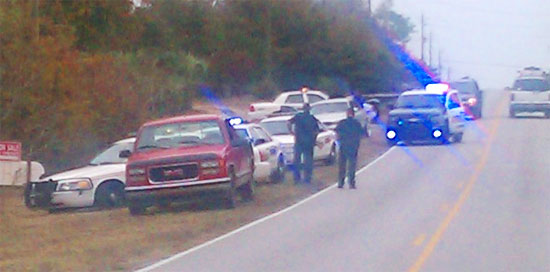
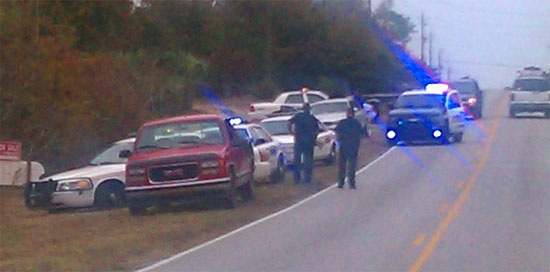
A Cantonment man has been arrested in connection with the weekend death of a Pensacola man.
 Jacob Gaulden, 25, of Turnberry Road, was charged with possession of cocaine, possession of drug equipment and hit and run, according to the Escambia County Sheriff’s Office, in connection with the death of Christopher James Holland, 22. Gaulden was taken into custody after a traffic stop near Cantonment late Tuesday morning.
A red truck involved in the weekend incident on Hollywood Avenue was spotted just after 11 a.m. near the Walmart on Highway 29 in Ensley. Witnesses said the red truck driven by Gaulden headed north on Old Palafox with another vehicle in pursuit. The chase headed north, crossed onto Highway 29 and ended when deputies stopped the truck on West Roberts Road near Pine Forest Road about 11:45 a.m.
Holland was found lying near Hollywood Avenue about 3:25 a.m. Sunday. He was transported to Baptist Hospital were he later died.
According to witnesses, Holland was last seen in a red, four door Chevrolet truck with dark green or black paint on the passenger side. A white male was said to be driving and they were traveling south on Hollywood Avenue from Massachusetts Drive.
Pictured above: The scene shortly after a traffic stop on West Roberts Road near Pine Forest Road Tuesday morning. The red truck in the photo was believed to possibly be the truck involved in a weekend homicide. NorthEscambia.com photo by Kristi Smith, click to enlarge.
Roadmap Emerging For New Governor Scott’s $1 Billion Prison Cuts
December 21, 2010
One of Governor-elect Rick Scott’s most high-profile campaign promises – to slash $1 billion from the state’s prison system – drew a powerful response when the union representing correctional officers aired television spots warning he would start releasing inmates to reduce spending.
But a lengthy list of less-stunning belt-tightening measures is quietly emerging. Many are likely to find their way into Scott’s February budget proposal to lawmakers, those close to the incoming administration say.
 “The plan was to find a billion in seven years,” said Scott spokesman Brian Burgess, disputing the Florida Police Benevolent Association’s TV spots, which implied the cut would be a first-year reduction that dramatically shrunk the Corrections Department’s $2.4 billion budget.
“We will do that and more by eliminating waste and improving efficiency,” Burgess said of the $1 billion savings claim. “Privatization isn’t necessary for us to achieve that goal, but nothing is off the table while we are still in the review and planning phase.”
The Florida Senate may be among those providing Scott with a roadmap to some savings. A recent study by the Criminal Justice Committee points out that state spending on inmate health care services hit $400 million last year – almost double the level of a decade ago. The study suggests that some of Scott’s cost-cutting could be reached by giving private vendors a bigger share of inmate care.
Meanwhile, the state’s Office of Program Policy Analysis and Government Accountability (OPPAGA) has sent to state legislative leaders a host of other potential prison savings, some of which mirror those also advanced by state business groups, led by Florida TaxWatch.
Expanding state drug courts to keep thousands of nonviolent criminals out of prison, expanding faith-based institutions to reduce recidivism, and expanding the use of electronic monitoring could save millions of dollars, analysts said.
But just as Scott is lining up such major repositories of cash as the Florida Retirement System and state worker health insurance for changes to extract savings, prison health care services are a big-ticket item that could rain dollars if revamped just right.
Still, done badly, the initiative could also backfire on the incoming governor.
With more than 103,915 inmates scattered across 55 prisons and 77 other lockups, the Corrections Department has had a checkered history with inmate health. A federal court in the milestone Costello v. Florida case in 1979 found that inadequate medical care amounted to cruel and unusual punishment in the state, prompting more than two decades of litigation and continued federal oversight of prison health care.
The Correctional Medical Authority was formed in 1986 to provide independent evaluation of the prison system’s health care services. CMA’s future also is in doubt, with allies of Scott and public health leaders recommending it be moved out of the Department of Health, as part of a likely overhaul of that agency.
About one-third of inmate health care dollars currently go to community providers. But the department has scaled back an ambitious, five-year privatized effort in South Florida after first having trouble with vendor, Wexford Health Sources, Inc., who failed to meet some of its contract requirements, and then later Prison Health Services, now PHS Correctional Healthcare, which dropped its state contract in 2006 after facing higher-than-expected hospitalization rates.
PHS, which has prison health contracts in 20 states, is headquartered in suburban Nashville, near where Scott’s former health care company, Columbia/HCA, was anchored. States with larger prison systems than Florida’s, Texas and California, contract privately for much of their inmate health care.
“We’d be excited at the prospect of putting in a proposal if the state moves in the direction of privatizing,” said Martha Harbin, a Florida spokeswoman for PHS. “Inmates are the only people with a constitutional guarantee of health care and it has to meet a community standard of care. That can be expensive. But with a private company, you’re getting a centralized management, saving on malpractice insurance…and you might even be able to have some inmates become eligible for Medicaid.”
Howard Simon, executive director of Florida’s ACLU, which has represented inmates in civil rights cases, said he hopes Scott puts as much emphasis on changing sentencing laws as he does on cutting prison costs through layoffs of correctional officers or privatizing health care.
“If you don’t have sentencing reform, drug treatment and the expanded use of drug courts to keep people out of prison, you are just adding to the inmate population that is exploding in the prison system,” Simon said.
Matt Puckett, a PBA spokesman, said it’s clear Scott’s $1 billion in corrections cuts may not involve wholesale inmate releases. But the changes may prove controversial on another level.
“I think you’re going to see more taxpayer money going to for-profit corporations providing care and treatment of inmates,” Puckett said.
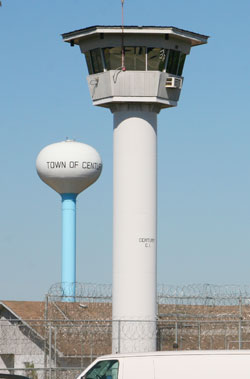
Pictured: A guard tower rises above Century Correctional Institution. NorthEscambia.com photos, click to enlarge.
By John Kennedy
The News Service Florida
Trial Delayed For Man In Police Chase, Deputy Death Threat
December 21, 2010
Trial was delayed Monday for a Century man that led police on a vehicle chase and then threatened to kill a deputy.
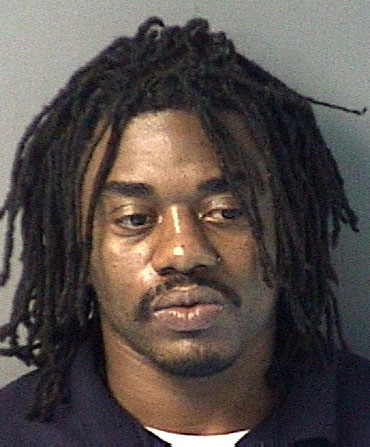
Christopher Angelo Phifer, 39, appeared in court Monday morning before Judge Joel Boles who reset his trial for January 10. Phifer was returned to the Escambia County Jail where he is being held without bond.
An Escambia County Circuit Court judge ordered a psychological evaluation of Phifer earlier this year and committed Phifer to a state institution. Following another psychological evaluation, Judge Joel Boles has ruled Phifer competent and set Monday’s trial date.
Phifer was charged with DUI, fleeing/eluding a law enforcement officer, registration/tag expired more than six months, driving while license suspended/revoked, threatening a public servant, two counts of resisting arrest, possession of weapon by a convicted felon and violation of probation. He is being held in the Escambia County Jail without bond.
According to the Escambia County Sheriff’s Department report, Deputy James Gilman spotted a Jeep Cherokee occupied by Phifer at McMurray Park in Century at 12:20 am September 6, 2009. When Gilman ordered Phifer to exit the vehicle, Phifer took off in the Jeep, according to the report.
Deputy Gilman gave chase, using his lights and siren as he pursued Phifer down Pond Street, onto Jefferson Street and onto Salters Lake Road. On Salters Lake Road, Phifer hit a washed out area in the road, according to the report, causing his vehicle to roll over. Phifer fled into a wooded area on foot, with Gilman giving chase, also on foot. Gilman tackled Phifer, the report says, and arrested Phifer with the help of deputies Jason Land and Scott Rivkin.
About 10 minutes after Phifer was placed in the back of Gilman’s patrol car, he told deputies he had pain in his arm. Atmore Ambulance was called to the scene, and Phifer was transported to Baptist Hospital where he was treated and released.
A search of Phifer’s Jeep turned up a .22 long rifle cartridge on the driver’s side floorboard.
At the hospital, Phifer told the deputy “Gilman I’m going to kill your a** and you know I have guns,” according to the ECSO report on the incident, and that he intended to kill or put a hit out on Gilman.
Fox Pen Ban Applauded By Humane Society; Last Was In Walnut Hill
December 21, 2010
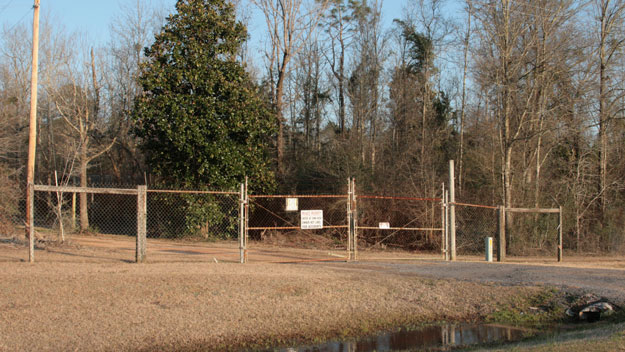
Florida’s move to permanently ban all fox pens — the last of which was in Walnut Hill – was named by The Humane Society of the United States as one of their Top Ten State Victories of 2010.
The rule approved by the Florida Fish and Wildlife Commission in September permanently prohibited the chasing of foxes and coyotes with dogs within an enclosure in Florida. The FWC had considered the issue for more than a year, and the practice was temporarily prohibited in February. At that time, the FWC ordered the Shady Oaks Fox Pen at 4000 South Highway 99 in Walnut Hill to cease any operations. The FWC did not accuse Shady Oaks — the last legal fox pen in Florida –or its owners of any wrongdoing.
Wayne Pacelle, president and CEO of The Humane Society of the United States, said his organization campaigned for years to ban the fox pens. He named the FWC’s actions on of the “10 most important policy gamins of the year at the state level”. The fox pen ban was one of two Florida actions making the top ten list — the group also applauded the ban on import, breeding, sale and possession of many large constricting snakes.
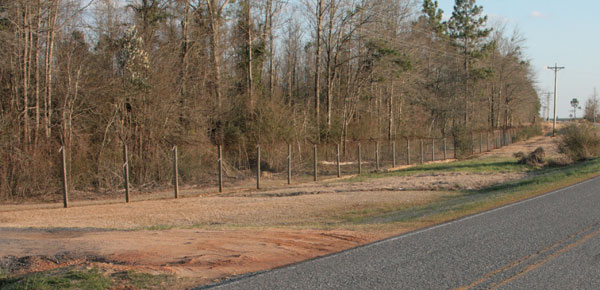 There were as many as six state permitted fox pens in Florida in 2009, but all had closed by the end of the year except for the approximately 200 acre Shady Oaks Fox Pen in Walnut Hill. At one time, there were about 50 fox and coyote pens from the Panhandle to Central Florida.
In a prepared statement, The Humane Society of the United States praised the unanimous decision by the FWC banning what the group termed a “cruel practice”.
“We thank Chairman Rodney Barreto and the Florida Fish and Wildlife Conservation Commissioners for their decisive leadership and thorough work to end the inherently cruel practice of fox penning that has no place in the 21st century,” said Jennifer Hobgood, Florida state director for The Humane Society of the United States.
“This is not about taking away hunting opportunities,” said FWC Chairman Rodney Barreto. “I’m a big believer in fair chase, and I have a list of places where hunters can still engage in those activities.”
“Coyotes and certain other nonprotected furbearers can still be taken year-round using several methods, including dogs,” Maj. Curtis Brown, head of the FWC’s Captive Wildlife and Investigations Section, said. “This can occur on open private lands and in specific wildlife management areas.”
Public input on the recommendation to permanently prohibit the enclosures varied from stating that “the prohibition preserves the true sportsmanship that hunting is all about” to saying that “legitimate fox and coyote hunters have been misrepresented on the issue”.
“This is not a referendum on hunting – we are a pro-hunting commission,” FWC Commissioner Brian Yablonski said Wednesday. “It is a question of fair chase and protecting the essence of hunting.”
Deliberations over this issue began last September, when Commissioners directed the agency’s law enforcement staff to review the permitting process and research the history and numbers of fox/coyote enclosures in the state.
At the February meeting, commissioners agreed to temporarily prohibit the practice. FWC staff was directed to work with stakeholders to address certain issues of concern regarding the enclosures and to draft proposed rules for the Commission’s consideration.
Pictured: A fence surrounds the former Shady Oaks Fox Pen on South Highway 99 near Walnut Hill. NorthEscambia.com file photos, click to enlarge.
Ernest Ward Names Students Of The Month
December 21, 2010

Ernest Ward Middle School has named Haley Weaver, Denise Floyd and Tristan Brown (pictured L-R) as Students of the Month for December. Submitted photo for NorthEscambia.com photo, click to enlarge.