

Convicted Sex Offender Busted
March 29, 2011
A convicted Alabama sex offender that was supposed to living in Flomaton has been arrested after deputies found him living at an address in Canoe, Alabama.
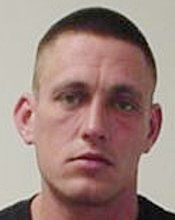 Escambia County (Ala.) Sheriff’s Department deputies found Marvin Earl Kimmons III, 32, living in the 400 block of Canoe Road – not far from Escambia Academy. Kimmons told authorities in January of this year that he was living at 543 Hollywood Drive in Flomaton, according to the Alabama Department of Public Safety.
Kimmons was also charged with possession of a controlled substance and conspiracy to commit a controlled substance crime.
Under Alabama law, sex offenders such as Kimmons are required to notify the state of their latest address at all times. Kimmons was convicted in 2002 of raping a 12-year old female, according to the Alabama Department of Public Safety.
FHSAA Announces New Districts For Cross Country, Golf, Weightlifting
March 29, 2011
Monday, the Florida High School Athletic Association announced new classifications and district assignments in cross country, golf and girls weightlifting for the 2011-12 and 2012-13 school years.
Schools have until April 18 to appeal their classifications before they become final.
The new classifications are (with the immediate North Escambia area schools in bold):
–CROSS COUNTRY–
Class 3A
Region 1 District 1
Choctawhatchee (Fort Walton Beach)
Crestview
Escambia (Pensacola)
Fort Walton Beach
Gulf Breeze
Milton
Mosley (Lynn Haven)
Navarre
Niceville
Pace
Pensacola
Pine Forest (Pensacola)
Tate (Cantonment)
Washington (Pensacola)
Class 2A
Region 1 District 1
Northview (Bratt)
Pensacola Catholic
West Florida (Pensacola)
Arnold (Panama City Beach)
Bay (Panama City)
Marianna
Rutherford (Springfield)
South Walton (Santa Rosa Beach)
Walton (DeFuniak Springs)
Class 1A
Region 1 District 1
Baker
Central (Milton)
Freeport
Jay
Laurel Hill
Paxton
Pensacola Christian
Rocky Bayou Christian (Niceville)
–GIRLS WEIGHTLIFTING–
Single Class
District 1
Baker
Choctawhatchee (Fort Walton Beach)
Crestview
Escambia (Pensacola)
Fort Walton Beach
Freeport – X
Gulf Breeze
Jay
Milton
Navarre
Niceville
Northview (Bratt)
Pace
Pensacola
Pine Forest (Pensacola)
South Walton (Santa Rosa Beach)
Tate (Gonzalez)
Walton (DeFuniak Springs)
Washington (Pensacola)
West Florida (Pensacola)
– BOYS AND GIRLS GOLF –
Class 2A
Region 1 District 1
Choctawhatchee (Fort Walton Beach)
Crestview
Escambia (Pensacola)
Fort Walton Beach
Gulf Breeze
Milton
Navarre
Niceville
Pace
Pensacola
Pine Forest (Pensacola)
Tate (Cantonment)
Washington (Pensacola)
Class 1A
Region 1 District 1
Central (Milton) [boys only]
Freeport
Northview (Bratt) [boys only]
Pensacola Catholic
Rocky Bayou Christian (Niceville) [boys only]
South Walton (Santa Rosa Beach)
Walton (DeFuniak Springs)
West Florida (Pensacola)
More Federal Charges Against Tax Preparer In 99-Count Indictment
March 29, 2011
 A federal grand jury has returned a third indictment against a former Alabama tax preparer, adding 19 more criminal counts against her.
Alice Mobley now faces a 99-count indictment of conspiracy, preparing and filing false tax returns, mortgage fraud, and wire fraud. The new indictment added a dozen additional counts of aggravated identity theft around four additional counts of filing false tax returns.
Mobley’s charges stem from alleged false tax returns filed from 2007 to 2009 through her business Preyear Tax and Check Cashing, LLC, located in Monroeville and its offices in Atmore and Thomasville.
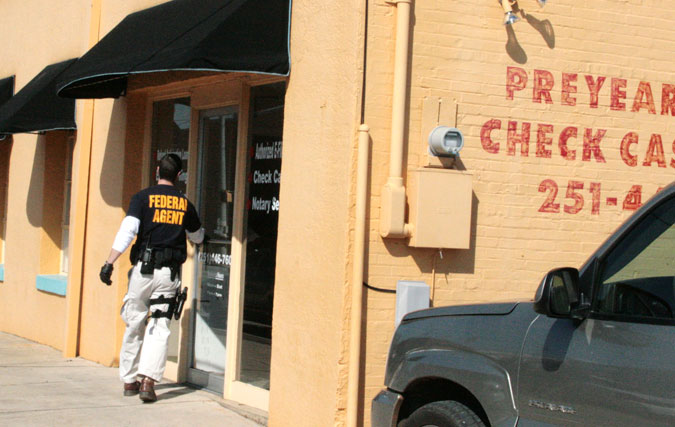
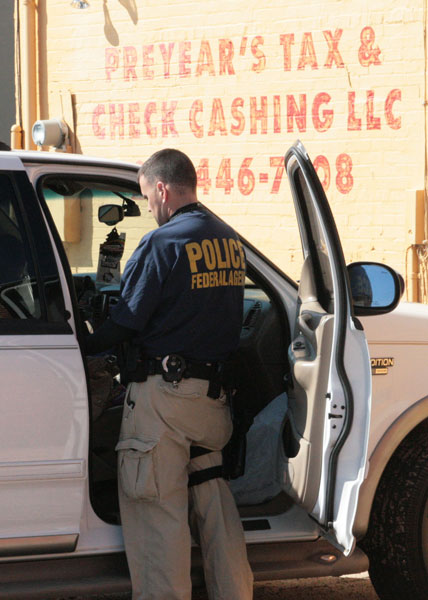
Federal agents raided Mobley’s Preyear’s Tax & Check Cashing, LLC on Ridgely Street in Atmore and other locations in March, 2010. Federal court documents show that FBI and IRS agents seized over $300,000, boxes of tax documents, computers, vehicles and even a stuffed teddy bear when they raided the businesses and Mobley’s Monroeville home.
Mobley’s scheme filed tax returns claiming some $68 million in tax refunds, largely for Earned Income Credit and other tax credits, according to the Department of Justice. Mobley would falsely claim various dependent credits, either charged her clients an extra fee for the using the false dependents or pocketing the extra funds herself.
Mobley also “split” dependents, using the identity of some children on one return to obtain Earned Income Credit, and on other returns to obtain Child Credit and Dependent Care Credit. Mobley’s firm also prepared returns which claimed business tax deductions for business which did not exist and farm tax deductions for clients who did not have farms, the DOJ said.
Mobley was also charged with mortgage fraud and wire fraud in connection with fraud in regard to applications she made for mortgages to CitiBank and Wells Fargo.
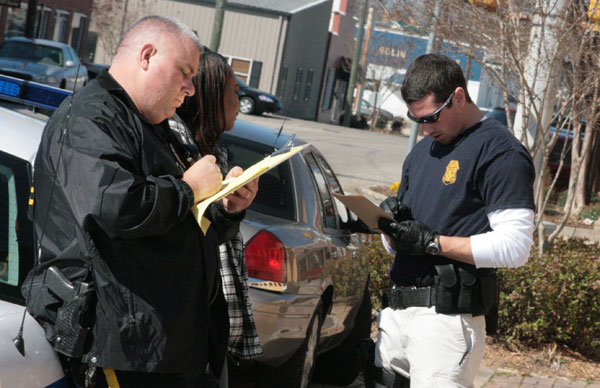
Pictured above: A federal agent enters Preyear’s Tax & Check Cashing, LLC in Atmore March 4, 2010. Pictured inset: Agents search a vehicle at the business. Pictured below: A federal agent and Atmore Police officer talk to an employee of the business during the raid. NorthEscambia.com file photos, click to enlarge.
Docs, Gun Groups Compromise On Evers Gun Bill
March 29, 2011
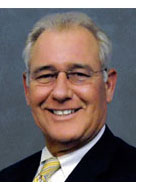
Doctors would still be able to ask patients questions about whether they have guns in many cases under a measure approved by a Senate committee on Monday, a result of a compromise between gun rights groups and the medical establishment on a bill sponsored by Sen. Greg Evers.
 The National Rifle Association and other gun rights groups had pushed for a much stronger bill that would have precluded doctors in many cases from asking patients about whether they own guns. Backers of the measure had said patients were being harassed over gun ownership.
But citing the confidentiality of what is said between doctors and patients, and a broader desire to protect other members of patients’ families, doctors had pushed back hard against the bill (SB 432). The issue had promised a fight between two of the most powerful lobbies at the Florida Capitol.
But an amendment adopted before the committee’s vote on Monday would now generally allow doctors to ask questions about gun ownership, as long as the physician doesn’t “harass” the patient, and doesn’t enter the information into the patient’s record without a good reason. That leaves enough room that doctors now support the measure, as does the NRA.
“We have an agreed-to, good bill here,” said Evers.
While the committee advanced the bill, four members, two Republicans and two Democrats, said they still were uncomfortable with anything that would give doctors pause about asking questions about safety issues, and voted against it.
“I am concerned this degrades and diminishes the doctor-patient relationship,” said Sen. Eleanor Sobel, D-Hollywood. “A doctor should ask about safety in the home whether it’s pool safety, helmet safety or gun safety.”
Sen. Mike Bennett said his opposition was personal – because of his own experience as a child with a father who “chased his wife around” the House with a gun.
“I’ve been there, done that,” said Bennett, R-Bradenton.
“What about the patients’ children? What about the patient’s wife getting a beating every Saturday night?” Bennett asked.
Evers said the new version of the legislation would take care of that concern – allowing doctors to ask questions now, if they feel there’s a valid reason.
“There has to be a justification (however),” said the sponsor of the compromise amendment, Sen. Thad Altman, R-Viera. “The doctor can’t do it arbitrarily.”
The bill also no longer carries any civil or criminal penalties, leaving it up to professional medical boards to police the requirement.
The compromise appeared necessary to get the proposal moving – the bill had been stalled in the Health Regulation Committee for more than two weeks, and even some who voted for it on Monday expressed some skepticism.
The bill still has two more committee stops in the Senate, but Evers gave the panel his commitment that only minor changes would be made in those committees, and that the bill wouldn’t revert to its former form. A similar House bill (HB 155) still has two committee stops there.
By David Royse
The News Service of Florida
Hearing Set In School Prayer Debate
March 29, 2011
A hearing has been scheduled for July in the lawsuit that challenges a consent decree that put an end to student and faculty-led prayer in Santa Rosa County schools.
Monday, U.S. District Judge Casey Rodgers gave the lawyers on both sides of the case 90 days to obtain the depositions from over 50 parties in the case prior to the two week bench trial — a trial before the judge without a jury — in July.
Last week, Rodgers clarified that school district employees are allowed to attend religious services such as baccalaureate, even on a school campus.
“This is the only claim involving allegations of school officials threatening discipline for private conduct outside of school or a school event,” Rodgers wrote. “A private religious service is not a school event, even if it takes place in rented school facilities.”
The court prohibited the Santa Rosa County School Board to “from enforcing any school policy that restrains in any way an employee’s participation in, or speech or conduct during, a private religious service, including baccalaureate” pending a full hearing this summer.
Senate Approves Ban On Public Funding For Abortions
March 29, 2011
The Senate Judiciary Committee approved on a party-line vote a measure that would amend the Florida Constitution to bar any public funding of abortions except in cases of rape, incest or when the life of the mother is endangered.
The measure (SJR 1538) originally called for public funding only to save the life of the mother, but was amended in committee to add the extra exceptions.
“This does not take away the right of a woman to have an abortion,” said Judiciary Chairwoman Anitere Flores, R-Miami, who sponsored the amendment. “It simply clarifies that public funds will not be used to pay for that abortion.”
Abortion-rights advocates argue that the measure would strip women who work for state or local governments from being able to get coverage for an abortion, potentially putting the procedure financially out of reach for some women.
“Regardless of your views on abortion, health insurance for abortion is needed,” said Helen Strain with Planned Parenthood.
The measure still has two committee stops.
March Students Of The Month Named
March 29, 2011
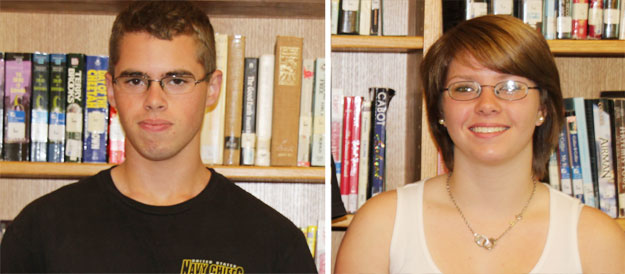
Escambia County Students of the Month for March have been named by the Escambia Association for Administrators in Education. The awards are presented monthly to two students from participating schools.
The following students were named from participating North Escambia area schools:
- Bratt Elementary: Madelin M. Sheedy, second grade; Brandy L. Wooten, fifth grade
- Molino Park Elementary: Reagan G. Daniels, first grade; Madelyn G. McAnally, first grade
- Jim Allen Elementary: Miranda L. Sanders, fifth grade; Lillian O. Sellers, fifth grade
- McArthur Elementary: Zane N. Sampey, second grade; Dys’iraye D. Booth-Martin, second grade
- Ransom Middle: Michael J. Brennan, sixth grade; Carmen E. McCrackin, sixth grade
- Northview High: Amber D. Francis, 11th grade; Jonathan A. Moretz, 10th grade
- Tate High: Ashley L. Bailey, 11th grade; Dillon C. Godwin, 11th grade
Pictured top: Northview High School Students of the Month for March Jonathan Moretz and Amber Francis. Submitted photo for NorthEscambia.com, click to enlarge.
Video, Full Text: Obama Defends Actions In Libya
March 29, 2011
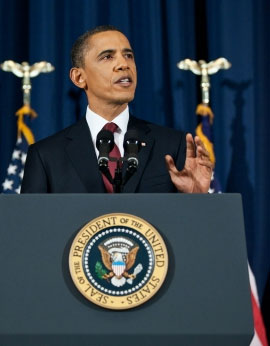
President Barack Obama defending U.S. actions in Libya during a nationally televised speech to the nation Monday night. He said the mission “stopped Gadhafi’s deadly advance” and announced that NATO will take the lead in the mission on Wednesday.
Here is the full text of Obama’s address Monday night:
Tonight, I’d like to update the American people on the international effort that we have led in Libya –- what we’ve done, what we plan to do, and why this matters to us.
I want to begin by paying tribute to our men and women in uniform who, once again, have acted with courage, professionalism and patriotism. They have moved with incredible speed and strength. Because of them and our dedicated diplomats, a coalition has been forged and countless lives have been saved.
Meanwhile, as we speak, our troops are supporting our ally Japan, leaving Iraq to its people, stopping the Taliban’s momentum in Afghanistan, and going after al Qaeda all across the globe. As Commander-in-Chief, I’m grateful to our soldiers, sailors, airmen, Marines, Coast Guardsmen, and to their families. And I know all Americans share in that sentiment.
For generations, the United States of America has played a unique role as an anchor of global security and as an advocate for human freedom. Mindful of the risks and costs of military action, we are naturally reluctant to use force to solve the world’s many challenges. But when our interests and values are at stake, we have a responsibility to act. That’s what happened in Libya over the course of these last six weeks.
Libya sits directly between Tunisia and Egypt -– two nations that inspired the world when their people rose up to take control of their own destiny. For more than four decades, the Libyan people have been ruled by a tyrant -– Muammar Qaddafi. He has denied his people freedom, exploited their wealth, murdered opponents at home and abroad, and terrorized innocent people around the world –- including Americans who were killed by Libyan agents.
 Last month, Qaddafi’s grip of fear appeared to give way to the promise of freedom. In cities and towns across the country, Libyans took to the streets to claim their basic human rights. As one Libyan said, “For the first time we finally have hope that our nightmare of 40 years will soon be over.”
Faced with this opposition, Qaddafi began attacking his people. As President, my immediate concern was the safety of our citizens, so we evacuated our embassy and all Americans who sought our assistance. Then we took a series of swift steps in a matter of days to answer Qaddafi’s aggression. We froze more than $33 billion of Qaddafi’s regime’s assets. Joining with other nations at the United Nations Security Council, we broadened our sanctions, imposed an arms embargo, and enabled Qaddafi and those around him to be held accountable for their crimes. I made it clear that Qaddafi had lost the confidence of his people and the legitimacy to lead, and I said that he needed to step down from power.
In the face of the world’s condemnation, Qaddafi chose to escalate his attacks, launching a military campaign against the Libyan people. Innocent people were targeted for killing. Hospitals and ambulances were attacked. Journalists were arrested, sexually assaulted, and killed. Supplies of food and fuel were choked off. Water for hundreds of thousands of people in Misurata was shut off. Cities and towns were shelled, mosques were destroyed, and apartment buildings reduced to rubble. Military jets and helicopter gunships were unleashed upon people who had no means to defend themselves against assaults from the air.
Confronted by this brutal repression and a looming humanitarian crisis, I ordered warships into the Mediterranean. European allies declared their willingness to commit resources to stop the killing. The Libyan opposition and the Arab League appealed to the world to save lives in Libya. And so at my direction, America led an effort with our allies at the United Nations Security Council to pass a historic resolution that authorized a no-fly zone to stop the regime’s attacks from the air, and further authorized all necessary measures to protect the Libyan people.
Ten days ago, having tried to end the violence without using force, the international community offered Qaddafi a final chance to stop his campaign of killing, or face the consequences. Rather than stand down, his forces continued their advance, bearing down on the city of Benghazi, home to nearly 700,000 men, women and children who sought their freedom from fear.
At this point, the United States and the world faced a choice. Qaddafi declared he would show “no mercy” to his own people. He compared them to rats, and threatened to go door to door to inflict punishment. In the past, we have seen him hang civilians in the streets, and kill over a thousand people in a single day. Now we saw regime forces on the outskirts of the city. We knew that if we wanted — if we waited one more day, Benghazi, a city nearly the size of Charlotte, could suffer a massacre that would have reverberated across the region and stained the conscience of the world.
It was not in our national interest to let that happen. I refused to let that happen. And so nine days ago, after consulting the bipartisan leadership of Congress, I authorized military action to stop the killing and enforce U.N. Security Council Resolution 1973.
We struck regime forces approaching Benghazi to save that city and the people within it. We hit Qaddafi’s troops in neighboring Ajdabiya, allowing the opposition to drive them out. We hit Qaddafi’s air defenses, which paved the way for a no-fly zone. We targeted tanks and military assets that had been choking off towns and cities, and we cut off much of their source of supply. And tonight, I can report that we have stopped Qaddafi’s deadly advance.
In this effort, the United States has not acted alone. Instead, we have been joined by a strong and growing coalition. This includes our closest allies -– nations like the United Kingdom, France, Canada, Denmark, Norway, Italy, Spain, Greece, and Turkey –- all of whom have fought by our sides for decades. And it includes Arab partners like Qatar and the United Arab Emirates, who have chosen to meet their responsibilities to defend the Libyan people.
To summarize, then: In just one month, the United States has worked with our international partners to mobilize a broad coalition, secure an international mandate to protect civilians, stop an advancing army, prevent a massacre, and establish a no-fly zone with our allies and partners. To lend some perspective on how rapidly this military and diplomatic response came together, when people were being brutalized in Bosnia in the 1990s, it took the international community more than a year to intervene with air power to protect civilians. It took us 31 days.
Moreover, we’ve accomplished these objectives consistent with the pledge that I made to the American people at the outset of our military operations. I said that America’s role would be limited; that we would not put ground troops into Libya; that we would focus our unique capabilities on the front end of the operation and that we would transfer responsibility to our allies and partners. Tonight, we are fulfilling that pledge.
Our most effective alliance, NATO, has taken command of the enforcement of the arms embargo and the no-fly zone. Last night, NATO decided to take on the additional responsibility of protecting Libyan civilians. This transfer from the United States to NATO will take place on Wednesday. Going forward, the lead in enforcing the no-fly zone and protecting civilians on the ground will transition to our allies and partners, and I am fully confident that our coalition will keep the pressure on Qaddafi’s remaining forces.
In that effort, the United States will play a supporting role — including intelligence, logistical support, search and rescue assistance, and capabilities to jam regime communications. Because of this transition to a broader, NATO-based coalition, the risk and cost of this operation — to our military and to American taxpayers — will be reduced significantly.
So for those who doubted our capacity to carry out this operation, I want to be clear: The United States of America has done what we said we would do.
That’s not to say that our work is complete. In addition to our NATO responsibilities, we will work with the international community to provide assistance to the people of Libya, who need food for the hungry and medical care for the wounded. We will safeguard the more than $33 billion that was frozen from the Qaddafi regime so that it’s available to rebuild Libya. After all, the money doesn’t belong to Qaddafi or to us — it belongs to the Libyan people. And we’ll make sure they receive it.
Tomorrow, Secretary Clinton will go to London, where she will meet with the Libyan opposition and consult with more than 30 nations. These discussions will focus on what kind of political effort is necessary to pressure Qaddafi, while also supporting a transition to the future that the Libyan people deserve — because while our military mission is narrowly focused on saving lives, we continue to pursue the broader goal of a Libya that belongs not to a dictator, but to its people.
Now, despite the success of our efforts over the past week, I know that some Americans continue to have questions about our efforts in Libya. Qaddafi has not yet stepped down from power, and until he does, Libya will remain dangerous. Moreover, even after Qaddafi does leave power, 40 years of tyranny has left Libya fractured and without strong civil institutions. The transition to a legitimate government that is responsive to the Libyan people will be a difficult task. And while the United States will do our part to help, it will be a task for the international community and –- more importantly –- a task for the Libyan people themselves.
In fact, much of the debate in Washington has put forward a false choice when it comes to Libya. On the one hand, some question why America should intervene at all -– even in limited ways –- in this distant land. They argue that there are many places in the world where innocent civilians face brutal violence at the hands of their government, and America should not be expected to police the world, particularly when we have so many pressing needs here at home.
It’s true that America cannot use our military wherever repression occurs. And given the costs and risks of intervention, we must always measure our interests against the need for action. But that cannot be an argument for never acting on behalf of what’s right. In this particular country -– Libya — at this particular moment, we were faced with the prospect of violence on a horrific scale. We had a unique ability to stop that violence: an international mandate for action, a broad coalition prepared to join us, the support of Arab countries, and a plea for help from the Libyan people themselves. We also had the ability to stop Qaddafi’s forces in their tracks without putting American troops on the ground.
To brush aside America’s responsibility as a leader and -– more profoundly -– our responsibilities to our fellow human beings under such circumstances would have been a betrayal of who we are. Some nations may be able to turn a blind eye to atrocities in other countries. The United States of America is different. And as President, I refused to wait for the images of slaughter and mass graves before taking action.
Moreover, America has an important strategic interest in preventing Qaddafi from overrunning those who oppose him. A massacre would have driven thousands of additional refugees across Libya’s borders, putting enormous strains on the peaceful –- yet fragile -– transitions in Egypt and Tunisia. The democratic impulses that are dawning across the region would be eclipsed by the darkest form of dictatorship, as repressive leaders concluded that violence is the best strategy to cling to power. The writ of the United Nations Security Council would have been shown to be little more than empty words, crippling that institution’s future credibility to uphold global peace and security. So while I will never minimize the costs involved in military action, I am convinced that a failure to act in Libya would have carried a far greater price for America.
Now, just as there are those who have argued against intervention in Libya, there are others who have suggested that we broaden our military mission beyond the task of protecting the Libyan people, and do whatever it takes to bring down Qaddafi and usher in a new government.
Of course, there is no question that Libya -– and the world –- would be better off with Qaddafi out of power. I, along with many other world leaders, have embraced that goal, and will actively pursue it through non-military means. But broadening our military mission to include regime change would be a mistake.
The task that I assigned our forces -– to protect the Libyan people from immediate danger, and to establish a no-fly zone -– carries with it a U.N. mandate and international support. It’s also what the Libyan opposition asked us to do. If we tried to overthrow Qaddafi by force, our coalition would splinter. We would likely have to put U.S. troops on the ground to accomplish that mission, or risk killing many civilians from the air. The dangers faced by our men and women in uniform would be far greater. So would the costs and our share of the responsibility for what comes next.
To be blunt, we went down that road in Iraq. Thanks to the extraordinary sacrifices of our troops and the determination of our diplomats, we are hopeful about Iraq’s future. But regime change there took eight years, thousands of American and Iraqi lives, and nearly a trillion dollars. That is not something we can afford to repeat in Libya.
As the bulk of our military effort ratchets down, what we can do — and will do — is support the aspirations of the Libyan people. We have intervened to stop a massacre, and we will work with our allies and partners to maintain the safety of civilians. We will deny the regime arms, cut off its supplies of cash, assist the opposition, and work with other nations to hasten the day when Qaddafi leaves power. It may not happen overnight, as a badly weakened Qaddafi tries desperately to hang on to power. But it should be clear to those around Qaddafi, and to every Libyan, that history is not on Qaddafi’s side. With the time and space that we have provided for the Libyan people, they will be able to determine their own destiny, and that is how it should be.
Let me close by addressing what this action says about the use of America’s military power, and America’s broader leadership in the world, under my presidency.
As Commander-in-Chief, I have no greater responsibility than keeping this country safe. And no decision weighs on me more than when to deploy our men and women in uniform. I’ve made it clear that I will never hesitate to use our military swiftly, decisively, and unilaterally when necessary to defend our people, our homeland, our allies and our core interests. That’s why we’re going after al Qaeda wherever they seek a foothold. That is why we continue to fight in Afghanistan, even as we have ended our combat mission in Iraq and removed more than 100,000 troops from that country.
There will be times, though, when our safety is not directly threatened, but our interests and our values are. Sometimes, the course of history poses challenges that threaten our common humanity and our common security -– responding to natural disasters, for example; or preventing genocide and keeping the peace; ensuring regional security, and maintaining the flow of commerce. These may not be America’s problems alone, but they are important to us. They’re problems worth solving. And in these circumstances, we know that the United States, as the world’s most powerful nation, will often be called upon to help.
In such cases, we should not be afraid to act -– but the burden of action should not be America’s alone. As we have in Libya, our task is instead to mobilize the international community for collective action. Because contrary to the claims of some, American leadership is not simply a matter of going it alone and bearing all of the burden ourselves. Real leadership creates the conditions and coalitions for others to step up as well; to work with allies and partners so that they bear their share of the burden and pay their share of the costs; and to see that the principles of justice and human dignity are upheld by all.
That’s the kind of leadership we’ve shown in Libya. Of course, even when we act as part of a coalition, the risks of any military action will be high. Those risks were realized when one of our planes malfunctioned over Libya. Yet when one of our airmen parachuted to the ground, in a country whose leader has so often demonized the United States –- in a region that has such a difficult history with our country –- this American did not find enemies. Instead, he was met by people who embraced him. One young Libyan who came to his aid said, “We are your friends. We are so grateful to those men who are protecting the skies.”
This voice is just one of many in a region where a new generation is refusing to be denied their rights and opportunities any longer.
Yes, this change will make the world more complicated for a time. Progress will be uneven, and change will come differently to different countries. There are places, like Egypt, where this change will inspire us and raise our hopes. And then there will be places, like Iran, where change is fiercely suppressed. The dark forces of civil conflict and sectarian war will have to be averted, and difficult political and economic concerns will have to be addressed.
The United States will not be able to dictate the pace and scope of this change. Only the people of the region can do that. But we can make a difference.
I believe that this movement of change cannot be turned back, and that we must stand alongside those who believe in the same core principles that have guided us through many storms: our opposition to violence directed at one’s own people; our support for a set of universal rights, including the freedom for people to express themselves and choose their leaders; our support for governments that are ultimately responsive to the aspirations of the people.
Born, as we are, out of a revolution by those who longed to be free, we welcome the fact that history is on the move in the Middle East and North Africa, and that young people are leading the way. Because wherever people long to be free, they will find a friend in the United States. Ultimately, it is that faith — those ideals — that are the true measure of American leadership.
My fellow Americans, I know that at a time of upheaval overseas — when the news is filled with conflict and change — it can be tempting to turn away from the world. And as I’ve said before, our strength abroad is anchored in our strength here at home. That must always be our North Star — the ability of our people to reach their potential, to make wise choices with our resources, to enlarge the prosperity that serves as a wellspring for our power, and to live the values that we hold so dear.
But let us also remember that for generations, we have done the hard work of protecting our own people, as well as millions around the globe. We have done so because we know that our own future is safer, our own future is brighter, if more of mankind can live with the bright light of freedom and dignity.
Tonight, let us give thanks for the Americans who are serving through these trying times, and the coalition that is carrying our effort forward. And let us look to the future with confidence and hope not only for our own country, but for all those yearning for freedom around the world.
Thank you. God bless you, and may God bless the United States of America. (Applause.) Thank you.
Bagdad Fire Chief Passes Away
March 28, 2011
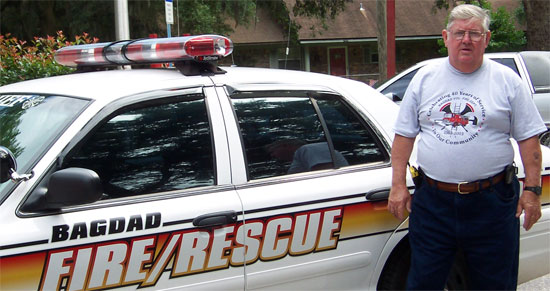
Chief Claude B. Dunlap Jr. of Bagdad Volunteer Fire Department passed away on Saturday, March 26. A volunteer fire fighter since 1972, he held the position of fire chief at the Santa Rosa department since 1995.
Born April 18, 1944 at Sacred Heart Hospital in Pensacola, Dunlap attended Bagdad Elementary School and later enlisted in the U.S. Army. He served as a combat engineer from August 1967 to August 1969 with two tours in Vietnam before returning home. He earned medals of Good Conduct, National Defense Service Medal, Vietnam Service Medal, Vietnam Campaign Medal, and Expert (rifle).
He followed in his father’s footsteps by joining Bagdad Volunteer Fire Department in 1973 and actively served the citizens of Bagdad and Santa Rosa County for 38 years. He worked his way up through the ranks as captain and assistant chief and in 1995 took the role as Fire Chief. Bagdad Fire Department grew tremendously under his direction.
He also coached little league baseball and football at the Bagdad ball field, and was an active member of the local CB Club. His dedication and service to Santa Rosa County will be honored and remembered by many for years to come. He was a loving husband, gather, grandpa, friend and fire chief and will be greatly missed.
He is survived by wife Brenda Dunlap and son David Dunlap who are also active members of Bagdad Fire Department.
Arrangements:
Viewing- Wednesday, March 30 from 5 p.m. to 7 p.m. at Lewis Funeral Home in Milton.
Burial services- Thursday, March 31 at 11 a.m. at Pace Assembly of God with procession and graveside services following at the Bagdad Cemetery.
Creative High School Students Honored With MIRA Awards
March 28, 2011
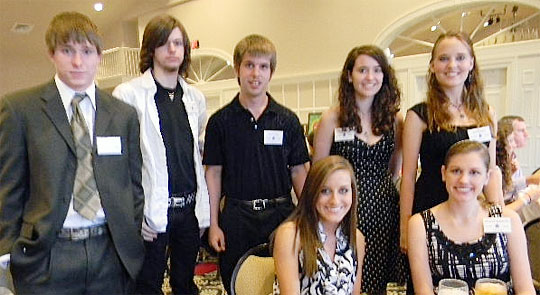
Ten of the most creative students from each high school in the county were honored recently as recipients of the 2011 MIRA Creative Arts Awards.
North Escambia area students honored during the dinner ceremony at the Mustin Beach Officers’ Club on Pensacola Naval Air Station were:
Northview High: Jared Adams, wood carving; Corry Baggett, woodworking; Mallory Bell, music; Caitlyn Brown, graphic arts; Dixie Carnley, digital graphic arts; Katelyn Garrison, digital graphic arts; Aaron Hammond, visual arts; Sarah Killam, music; Christina Sepulveda, graphic arts; Colton Sims, instrumental music.
Tate High: Maureen Crisco, pottery; Emily Danforth, chorus; Caitlyn Gallagher, instrumental music; Justin Gaylard, drama/choral music; Chloe Jackson, debate; Christopher L. James, instrumental music; Kim McCroan, drama/dance; Alexandria Quinn, visual art; Kayte Turner, dance; Caitlynn Walsh, jewelry design.
West Florida High: Cameron “Teddy” Bell, drama; Chelsea Driver, directing; Dominic Johnson, photography; Greg Lee, visual art; Nadia Mehriary, nonfiction writing; Forrestt Midkiff, television production; Brendan Trey Searcy, visual art; Diana Veitch, visual art; Ashley Vosmera-Mitchell, drama/costumes; Jashauna Williams, music.
Pine Forest High: Jennifer Barrett, journalism; Katherine Cooper, drama; Danielle Cotto, drama; Joshua Merced, instrumental music; Kimberly Raines, journalism; Chelsea Taylor, chorus; Zachary Woods, instrumental music; Joseph Wright, chorus; Christina Zarr, drama.
Pictured top: Northview High MIRA Award winners Corry Baggett, Aaron Hammond, Jared Adams, Katelyn Garrison, Dixie Carnley, Caitlyn Brown, and Christina Sepulveda. Not pictured: olton Sims, Mallory Bell and Sarah Killam. Submitted photo by Vicki Baggett for NorthEscambia.com, click to enlarge.