

Escambia Man Gets 25 Years For Burglary, Choking Police Dog
February 16, 2013
An Escambia County man is headed to state prison on burglary related charges.
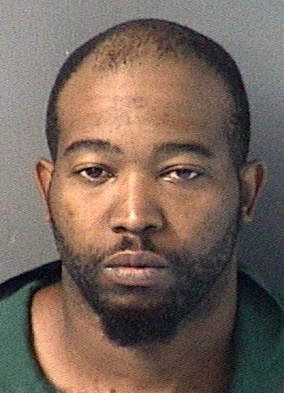 Marcus Lawaun Bryant was sentenced by Judge Gary Bergosh to 25 years in state prison with a minimum mandatory sentence of three years. Bryant plead straight up to the court to burglary of an unoccupied dwelling, burglary of an occupied dwelling, attempted burglary of an unoccupied dwelling, burglary of an unoccupied structure, dealing in stolen property, grand theft, petit theft, possession of firearm by a convicted felon, resisting officer without violence, criminal mischief, and battery upon a police dog.
On April 15, 2012, Victim Jill Jones called the Pensacola Police Department to report that her home had been burglarized and she saw Defendant Bryant in possession of her bicycle a short distance from her home. Officer David Rogers and his police dog, Darek, arrived at the scene, they saw Defendant Bryant on the bicycle, but when he attempted to flee the area, Bryant wrecked the bicycle. At that time, Officer Rogers and K-9 Darek struggled with Defendant Bryant and Bryant grabbed K-9 Darek by the neck and tried to choke him.
Bryant was taken into custody and charged with burglary, theft, causing harm to a police animal and resisting an officer. He had other outstanding warrants for burglaries, grand theft, possession of a weapon by a convicted felon, and dealing in stolen property. He had taken over $30,000 worth of jewelry from several homes in the area. He pawned many of the items to various pawn shops in Pensacola.
EREC Sends Area Juniors On Tallahassee Youth Tour
February 16, 2013
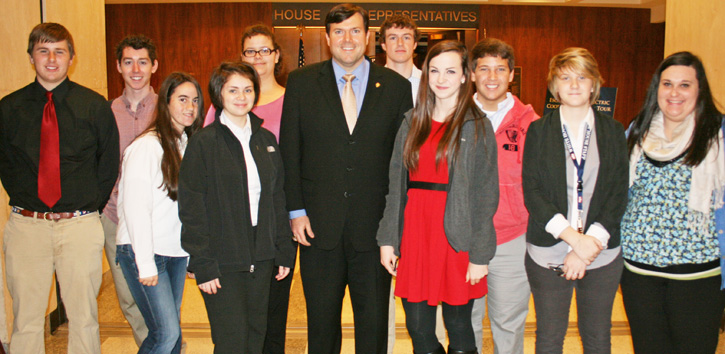
Ten area high school juniors were guests of Escambia River Electric Cooperative last week in Tallahassee as they learned more about their state legislature and electric cooperatives.
 Participants were Garrett Peirce from Central High School; Kayne Caraway, Kayla Flowers, Dakota Mack, Chassity McCranie, Tate Upton and Dylan Wolfe from Jay High School; and Taylor Brook, Shelena Dukes and Victoria Wright from Northview High School.
While in Tallahassee, the students met with nearly 120 other high school juniors from electric cooperatives throughout the state of Florida. EREC delegates enjoyed visiting the Challenger Museum and viewing the IMAX movie, Space Junk (3D). The group took part in a mock session in the Florida Supreme Court and participated in a mock session in the House chambers where various members of the Legislature addressed the group.
The Youth Tour program provided students an opportunity to learn more about their state government and electric cooperatives and also gives them a chance to interact
with other students from co-ops throughout the state.
“It was a great educational experience and a lot of fun for the entire group,” according to Sabrina Owens, EREC’s marketing director.
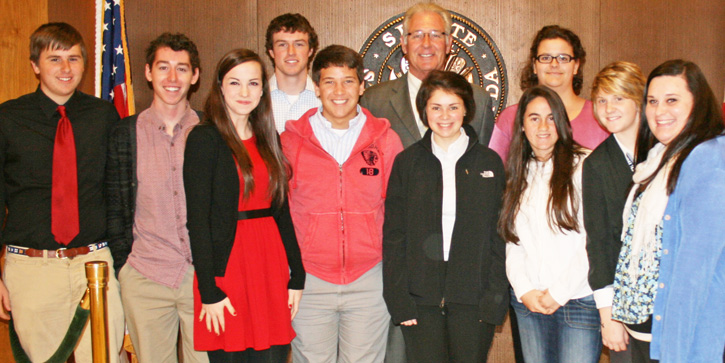
EREC Youth Tour delegates with Representative Clay Ingram. (L-R) Garrett Peirce, Dylan Wolfe, Chassity McCranie, Victoria Wright, Dakota Mack, Representative Clay Ingram, Tate Upton, Kayla Flowers, Kayne Caraway, Taylor Brook and Shelena Dukes. Pictured inset: Tate Upton enjoys the batting cage at Tallahassee’s Fun Station. Submitted photos for NorthEscambia.com, click to enlarge. Pictured below: The group with Sen. Greg Evers. Pictured bottom: Taylor Brook, Victoria Wright, and Shelena Dukes look for clues to the scavenger hunt in the Challenger Learning Center.

Firefighters: Retirement Of Florida Public Employees In Jeopardy
February 16, 2013
A proposal to change the retirement benefits of public employees, such as teachers and firefighters, is gaining momentum in the Florida House of Representatives.
House Bill 7011 would force all public employees hired by agencies participating in the Florida retirement system after next January into a 401(k)-style plan, instead of the current pension plan.
 Gary Rainey, president of Florida Professional Firefighters, says lawmakers are pushing this through without understanding all the consequences.
“Frankly, I don’t think they really care, for the most part,” he said. “The fact that nine Republicans on the committee would vote to do this without having the first numbers saying this is going to cost an exorbitant amount of money, or it’s going to save us money.”
Other states, including New Hampshire and Nevada, considered a similar plan recently, Rainey said, but abandoned it after they realized it would cost the state more instead of saving money. Part of the problem, he said, is that phasing out the pension plan also would reduce the money being paid into the plan for existing workers, and force the state and local municipalities to foot the bill.
Closing the current pension plan would also end benefits such as life insurance or death benefits if employees are hurt or killed in the line of duty. Rainey said death benefits of a newly hired firefighter killed in the line of duty under the 401(k) plan could offer his or her family less than $1,000.
“Not providing any type of disability or death benefit or survivor benefits for families is unconscionable by anyone who is proposing to do this,” he said.
According to the Florida Retirement Security Coalition, no tax increase is needed to fund the current system, which is 86 percent funded. If lawmakers move to the 401(k) plan, the coalition said, tax increases may be necessary.
Opponents of the current pension plan insist that it places a demand on the state budget.
By Stephanie Carroll Carson, Public News Service – FL
Weekend Gardening: Best Time to Prune is Now
February 16, 2013
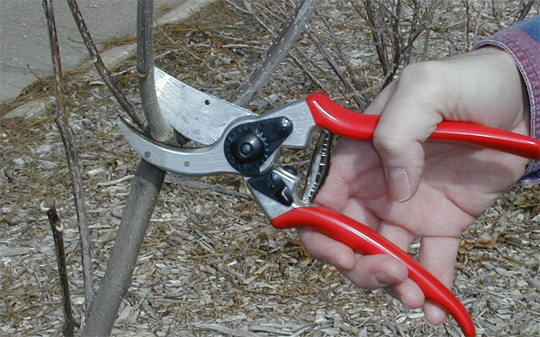
Now until buds break is the best time to prune, according to the UF/IF Extension Service.
Why Prune?
- Control plant size or form
- Remove damage (mechanical, disease, etc.)
- Prevent potential damage (overlapping branches, poor crotch angles, diseases, etc.
- Stimulate new growth (rejuvenate old plants, fill bare areas, increase flowering, etc.)
When to prune:
- Corrective pruning due to injury or dead tissue should be done as soon as evident.
- Avoid pruning from August 15 until plants are dormant.
- Most pruning should be done during the dormant season or immediately after flowering.
Rules of thumb – The “May Rule”:
- May defined if the plant blooms before May 1, prune immediately after flowering has ended (flowers produced on old wood or last year’s growth: Azaleas, Forsythia, etc.)
- If the plant blooms after May 1, prune during the dormant season (flowers produced on new growth: Crape Myrtles, Lilac Chaste tree, etc.).
- As with any rule there are exceptions: Oak leaf Hydrangea.
General rules of Pruning:Eddie Hand Pruners
- Local in affect (usually within 6” of cut).
- Cuts should be made ¼” above a bud or to a crotch (Lateral branch).
- Cuts should be made at angles.
Pruning Equipment: (Make sure blades are sharp)
- Hand Snips (for small branches)
- Loppers (branches > 0.75” in diameter)
- Pruning Saw (limbs > 1.5” in diameter)
- Shears (for a more formal look)
- Pruning Knife (for clean-up)
Safe Pruning Principles:
- Keep equipment clean and in good repair.
- Appropriate, properly fitted safety equipment for job (eye and ear protection, no loose fitting clothes, etc.)
- Keep equipment within your control zone. Don’t over extend, know the limitations of your equipment and yourself.
- Know your surroundings (overhead utilities, other workers, etc.).
- Be able to identify Poison Ivy, Poison Oak, and other skin irritants.
Quick Tips to Remember:
- Pruning: Remove dead wood and seed pods annually during the dormant season.
- Size control should be done by cultivar selection, not by pruning.
- To promote a second set of flowers, prune away faded or spent flowers throughout the season.
Plea Deal In Gulf Oil Spill Approved
February 16, 2013
The National Fish and Wildlife Foundation said it will manage the distribution of $150 million in settlement funds from Transocean Deepwater, Inc. for environmental restoration following a judge’s acceptance of a plea agreement.
 The money comes from a settlement with the U.S. Department of Justice to resolve certain criminal charges against Transocean as a result of the 2010 Deepwater Horizon explosion and oil spill in the Gulf of Mexico.
The Transocean funds will be paid over a two-year period.
The National Fish and Wildlife Foundation also will administer nearly $2.4 billion from a recently approved plea agreement between BP and the Justice Department. BP will pay those funds over a five-year period.
Funds from both settlements will be used for natural resource restoration projects in the five Gulf States, including Florida. Louisiana will get half, with Florida and the other three states splitting the rest.
By The News Service of Florida
Softball Wins For Tate, Pine Forest, Northview; WFHS Downs Tate In Baseball
February 16, 2013
Here is a look at baseball and softball results from around the area Friday night:
SOFTBALL
Tate 12, Navarre 4
The Tate Lady Aggies soundly defeated Navarre Friday night in Navarre, 12-4. The Lady Aggies will be on the road Thursday, February 21 against Pace and Tuesday, February 26 against Milton. The Lady Aggies will host Pine Forest on February 28.
Pine Forest 9, Washington 3
The Lady Eagles of Pine Forest High School beat Washington Friday night, 9-3. The Lady Eagles will travel to Jay on Saturday. The freshmen take the mound at 2 p.m. followed by the JV at 4 p.m. and the varsity at 6 p.m.
Northview 4, Chipley 3
The Northview Lady Chiefs opened district play with a 4-3 win over Chipley Friday night in Chipley. The Lady Chiefs will be on the road Thursday, February 21 at Baker; and Friday, February 22 at Holmes County. The next home game for the Northview Lady Chiefs will be Monday, February 25 as they host Escambia Academy in Bratt.
BASEBALL
West Florida 1, Tate 0
The West Florida Jaguars slipped past the Tate Aggies Friday night 1-0. The Aggies will host Navarre on Thursday, February 21 and travel to Washington on February 22. West Florida will head to Gulf Breeze on Tuesday, February 21 before hosting Panama City Rutherford on Friday, February 24.
Photos: What-A-Rock Stops Truck
February 15, 2013
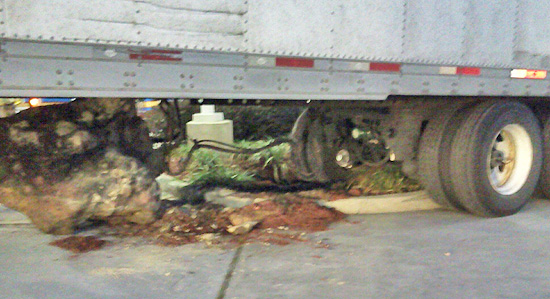
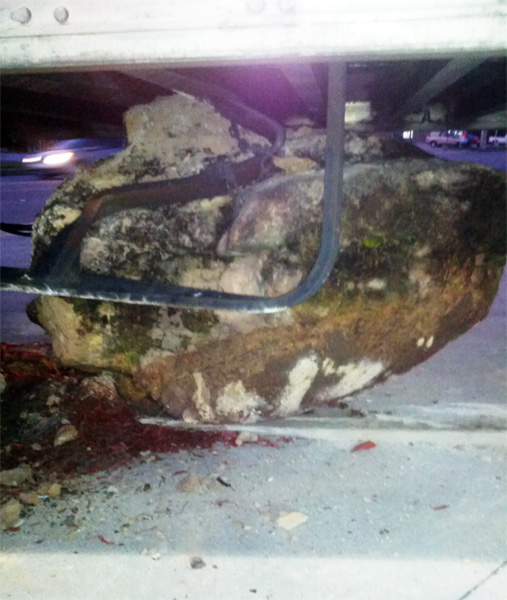 A truck driver found himself stuck between a rock and a hard place in Century Thursday afternoon.
The 18-wheeler driver turned too short, hitting a landscaping rock as he entered the truck parking lot at the Whataburger on North Century Boulevard just south of East Highway 4. The rock became lodged under the truck’s trailer.
The truck-rock combo were stopped for hours waiting for a wrecker.
The Century Station of Escambia Fire Rescue was called to the scene after an unfounded report that the truck was leaking fuel. The Escambia County Sheriff’s off also responded, helping direct traffic.
The accident is under investigation by the Florida Highway Patrol.
Submitted photos for NorthEscambia.com, click to enlarge.
Deputy Pursuit Ends With Crash, Two Injured
February 15, 2013
A high speed chase involving Escambia County Sheriff’s deputies ended with a crash on Michigan Avenue Thursday afternoon.
 The Florida Highway Patrol said 28-year old Antonio Emmanuel Moorer fled from Escambia County deputies at a high rate of speed for several miles. As he approached Memphis Avenue, he veered to the right from the inside lanes and appeared to be turning right when he struck another vehicle driven by 47-year old Tonya G. Madarena of Pensacola.
Madarena was transported to Sacred Heart Hospital in serious condition.
Moorer fled the accident scene on foot but was arrested a short time later at a nearby Tom Thumb. After being treated for his injuries at Sacred Heart, Moorer was arrested and transported to the Escambia County Jail.
Moorer was charged by the FHP with fleeing and eluding law enforcement resulting in a crash with serious bodily harm, driving while license suspended habitual traffic offender and driving with no license. He was charged by the Escambia County Sheriff’s Office with failure to appear in a felony drug case.
Escambia County Won’t Impose Additional Regulations On Chickens
February 15, 2013
The Escambia County Commission has chickened out of a new ordinance regulating the raising of chickens in the county, mostly because the cost would be more than just chicken feed.
Last year, the City of Pensacola passed an ordinance that regulated chickens within the city limits. After observing if the ordinance would fly in the city, the county commission took up the issue Thursday morning.
 “I don’t think they have detained, arrested or incarcerated any of them,” Lloyd Kerr, the county’s director of Development Services, said about chickens in the city since their ordinance went into effect.
The ordinance considered by the county would have regulated chickens to lots at least one acre is size, no more than eight chickens per residence, no roosters, required coops to protect the chickens from predators, and not allowed the sale of chickens.
County staff had estimated the cost to enforce the ordinance at $115,425 to hire three new animal control officers, $134,505 for three additional animal control vehicles and additional costs since the county animal shelter currently has no way to keep chickens.
“I’m not going to be for spending $300,000 to $400,000 so people can raise chickens in residential neighborhoods,” Commissioner Wilson Robertson said. “I will not support that kind of money to go out and worry about a loose chicken somewhere.”
District 5 Commissioner Steven Barry questioned if problem chickens were even a real issue in the county. He said his office has received literally just one call about chickens running wild in a neighborhood. He said he visited the area and found most neighbors were were aware of the feral chickens, some even feeding them, without any complaints.
Commissioners voted not to support a new chicken ordinance, instead sticking with the county’s current ordinance that allows chickens only in areas zoned agriculture or rural.
Red Light Camera Repeal Gets Narrow Committee OK
February 15, 2013
A relatively new state law allowing local governments to use cameras to catch red light runners would be repealed under a bill that narrowly passed in the House Economic Affairs Committee on Thursday.
The nearly two-hour debate ranged from drivers’ constitutional rights to the plight of ticketed tourists to studies showing reduced injuries at intersections after red-light cameras were installed.
 The law has been under attack almost since state lawmakers voted in 2010 to allow local governments to use the cameras.
This year’s repeal bill (HB 4011), a bipartisan effort sponsored by Reps. Daphne Campbell, D-Miami, and Carlos Trujillo, R-Miami, was approved 10-8 by the Economic Affairs panel, its first committee stop in the House.
Trujillo touched a chord with Republican lawmakers, most of whom voted for the bill, by arguing that public safety isn’t worth sacrificing constitutional rights.
“We’re willing to compromise the Fifth Amendment of the United States Constitution: the right against self-incrimination for self-perceived safety,” he said. “That’s the road we’re going down. We’re willing to tell somebody, ‘You are guilty until proven innocent.’”
Law enforcement interests and municipal governments, which get a portion of the fines paid by red light runners, are strongly opposed to the measure.
“I think it’s obvious that it does change people’s driving behaviors, and I think it is obvious that it also helps to save lives and prevent people from having serious injuries,” said Haines City Police Chief Rick Sloan.
Last month, the Department of Highway Safety and Motor Vehicles released a report showing that crashes were less frequent at intersections monitored by red light cameras. The report, based on data from 73 agencies, found accidents were less frequent at monitored intersections in 41 jurisdictions but more frequent at monitored intersections in 11 jurisdictions.
The panel also debated the question of local governments, law enforcement agencies and contractors making money from the fines.
“This law is strictly revenue driven,” Campbell said.
According to Kathleen Russell, a lobbyist for the City of Orlando, the city took in $6.1 million over the last two years and turned over $3.1 million to the state. After Orlando paid its costs, she said, its profit from the fines was $300,000.
“Whether we’re going to call it a fine, a tax or not, I feel like when we’re creating a system that … allows maybe excessive fines to be produced, I don’t think it is the best interests of what we should be doing for the citizens,” said Rep. Jimmy Patronis of Panama City. The Republican committee chairman, voted for the repeal bill.
Campbell alleged that having red light cameras at intersections discriminates against minorities, the elderly and the poor based on where they are placed, though law enforcement officials denied that was the case.
The Tampa Bay Times and Miami Herald reported last week that Campbell’s husband’s Honda Odyssey minivan had been caught on camera running a red light five times since the law passed. Campbell told the newspapers she only knew about one of those and doubted that others had occurred. She declined to be comment after Thursday’s committee hearing.
The bill now goes to the House Appropriations Committee, its last stop before reaching the House floor, but so far, the measure has no Senate sponsor.
By The News Service of Florida