
Wanted: Florida Foster Parents
May 28, 2013
With new legislation reforming Florida foster care, good foster parents will be more in demand than ever. And current foster parents say new ones will have a better experience than the old image of foster care might have led them to expect.
A so-called “normalcy” bill (SB 164) is already in law, giving foster parents more decision-making power when foster children want to take part in activities such as going to the prom or sleeping over at friends’ houses. Senate Bill 1036, which would give young adults the option of staying in foster care until age 21, passed the Legislature overwhelmingly but hasn’t gone to Gov. Rick Scott yet; he’s expected to sign it.
“Now we’re expecting to have teenagers stay in (foster care) longer, and possibly some teens that will re-enter,” said Lora Diaz, a foster and adoptive parent in Pasco County. “So we need more foster homes to be able to take care of this.”
Diaz is also a training coordinator with the Quality Parenting Initiative, which many credit with providing the push the bills needed by changing the perception of foster parents and how they’re treated by caseworkers and administrators.
“QPI has changed the culture of child welfare,” Diaz said.
The initiative is a joint project of the California-based Youth Law Center, the Florida Department of Children and Families, 15 of the state’s community-based care lead agencies and the Eckerd Family Foundation.
It sprang from a crisis in Florida in 2004, when foster homes were in such short supply that special-needs children were sleeping overnight in conference rooms at Big Bend Community Based Care, one of DCF’s lead agencies.
“It was children the shelter had rejected because they had such serious problems,” said Carole Schauffer of the Youth Law Center. “These were the highest-need kids who needed the most supervision.”
So Schauffer and Paolo Annino of the Florida State University College of Law sued DCF and Big Bend Community Based Care. By 2007, the case was settled and Bob Butterworth, who had dealt with the lawsuit while serving as attorney general, had become DCF secretary. He met with Schauffer and Jane Soltis of the Eckerd Family Foundation, agreeing that the need for more foster homes was statewide.
The Quality Parenting Initiative came out of that meeting, based on the idea that foster parenting was a brand with an image both negative and just plain wrong. And it was making it harder to recruit and retain good foster parents.
“People keep saying it’s that foster parents don’t get enough money,” Schauffer said. “But there are so many other things that people do that they don’t get enough money for, and they are lined up to do them.”
PARENT-CHILD BOND
The old normal was that foster children couldn’t go on family trips or sleep at a friend’s house without a security check. They couldn’t go to the beach or the prom. Such rules had their basis in liability law, but often damaged the foster child’s relations with the foster parents, especially for those children too young to understand why other kids had privileges they didn’t.
“They want to blame the parent because they don’t see the system,” said Thomas Fair, 23, a former foster youth who now works at Big Bend Community Based Care. “Sometimes they might take it out on that parent or on their group home or, you know, shut down. So that can really mess up that relationship.”
The child welfare authorities were prone to blame the parents, too, if the foster child made a typical mistake — falling out of a tree or wrecking the car.
“A child could be harmed at the beach, yes, and it has happened in the state,” agreed Mike Wakins, CEO of Big Bend Community Based Care. “But we also know those are the kinds of experiences that develop children and allow them to be part of a normal family.”
It cuts both ways. Schauffer said research shows the level of emotional attachment the foster parent feels for the foster child has direct consequences for the child’s ability to learn and succeed.
“If we put those kinds of limitations on, the foster parent is less likely to feel that emotional commitment,” Schauffer said. “And if they don’t feel that emotional commitment, it has a long-term impact on the kid.”
Soltis said brain-development research shows teenagers can still change their learning outcomes — with the right kind of parenting.
“Kids who age out (of foster care) at 18 generally have very poor outcomes,” Soltis said. “But if we listen to the research and provide age-appropriate learning experiences and opportunities for these kids, they can do better than we would have thought.”
John Fair, Thomas’s twin, offers himself as an example. He was troubled in foster care, he said.
“Especially coming from somewhere you can’t trust nobody, don’t have no one caring about you,” he said. “Seeing that difference in that exchange just opens a lot of doors for you as a person and opens yourself up to the world.”
John Fair will spend this summer in Washington, D.C., on a paid internship at the U.S. House of Representatives.
Schauffer praises the new legislation and says DCF and the community based care agencies have been responsive to Quality Parenting Initiative. But she warns the assumptions of the child welfare system are 100 years old, and — like racism — difficult to remove from institutional thinking.
“It’s hard to get people to think foster parents are full and respected partners on the team, not a baby-sitter,” she said
by The News Service of Florida
Blue Wahoos Lose Ninth Straight
May 28, 2013
The Chattanooga Lookouts scored in each of their first four at-bats en route to an 11-1 win over the Pensacola Blue Wahoos to finish off a five-game sweep on Monday evening at AT&T Field. Pensacola’s losing streak reached nine straight games.
 The Lookouts pounded four home runs to blow out the Wahoos in the series finale. Yasiel Puig belted two homers, a three-run shot in the first and a two-run blast in the fourth to account for five RBI. Griff Erickson added a pair himself, a solo dinger in the second and a rout-capping, two-run moonshot in the seventh.
Tim Crabbe (2-4) was roughed up in three innings for Pensacola, yielding six runs (all earned) on five hits while walking four. After giving up homers in the first two innings, Crabbe walked three batters in the third, including two with the bags packed to force in two runs.
Pensacola’s lone run came in the top of the seventh when Theo Bowe smacked a two-out, pinch-hit double to score David Vidal from first. The two-bagger extended Bowe’s modest hitting streak to four games.
The Wahoos now return home to try and snap the extended losing skid with the first of a six-game series with the Jacksonville Suns. Chad Rogers (2-2, 1.93) gets the ball for Pensacola against Jacksonville’s Jay Jackson (2-1, 2.56). First pitch is scheduled for 7:00 p.m.
story by Kevin Burke
Courtesy photo for NorthEscambia.com, click to enlarge.
Northview Class Of 2013 Holds Baccalaureate Service
May 27, 2013


The Northview High School Class of 2013 held their Baccalaureate service Sunday afternoon at the First Baptist Church of Bratt.
“Never forget that it matters to God what you do with what you have,” guest speaker Bro. Glenn Webber said during the student-led and organized program. The program included scripture, prayer and music provided by the Northview Senior Class Ensemble and students.
“Take time to appreciate what you have before time forces you to appreciate what you had,” Webber told the graduating seniors.
Graduation for the Northview High School Class of 2013 will be at 4 p.m. Saturday, June 1 at the school.
Pictured: The Northview High School Class of 2013 Baccalaureate service Sunday afternoon at the First Baptist Church of Bratt. NorthEscambia.com photos, click to enlarge.



Recipes: Flavorful, Festive and Fun
May 27, 2013
Memorial Day is often synonymous with a backyard barbecue to kick start the summer. You can have a delicious, grill-inspired meal ready in 45 minutes or less with these fun, flavorful recipe ideas.
 With mouthwatering grilled beef, high-quality ingredients like canned tomatoes and bold bursts of flavor from lime juice, chimichurri and barbecue sauces, your Memorial Day menu is sure to be a memorable hit.
Get your grill sizzling with recipes like Lime-Marinated Flank Steak with Stuffed Poblano Peppers and Chimichurri Steak Wraps. And don’t forget a refreshing salad to complete your grilling holiday menu. Spicy Barley and Black Bean Salad is a fast option with a flavorful twist – perfect for your Memorial Day table.
(Scroll down to see all three recipes)

Ingredients
- 1 can (14-1/2 ounces) Ro*Tel Original Diced Tomatoes & Green Chilies
- 3/4 cup chopped fresh cilantro, divided
- 1/3 cup fresh lime juice
- 2 tablespoons olive oil
- 1 beef flank steak (about 1-1/2 pounds)
- 2 cups cooked brown rice
- 1 can (15 ounces) reduced-sodium or regular black beans, drained and rinsed
- 6 medium poblano chili peppers (about 4 inches long)
Toppings
- Toasted shelled pepitas (pumpkin seeds), crumbled queso frescos and lime wedges (optional)
Preparation
- Drain tomatoes, reserving juice for marinade. Set aside diced tomatoes with green chiles.
- Combine reserved tomato juice, 1/2 cup cilantro, lime juice and olive oil in medium bowl. Cover and refrigerate 1/3 cup marinade for rice. Place beef steak and remaining marinade in food-safe plastic bag; turn steak to coat. Close bag securely and marinate in refrigerator 6 hours or as long as overnight, turning occasionally.
- Combine rice, reserved 1/3 cup marinade, diced tomatoes, black beans and remaining 1/4 cup cilantro in medium bowl. Season with salt and pepper, as desired. Set aside.
- Cut slit lengthwise down 1 side of each poblano pepper to create pocket, leaving stem and tip intact. Make another small crosswise cut just below the stem to form T-shaped opening. Remove and discard seeds and membranes, being careful to keep peppers intact. Spoon rice mixture evenly into peppers. Wrap each tightly in aluminum foil to seal.
- Remove steak from marinade; discard marinade. Place steak in center grid over medium, ash-covered coals; arrange peppers around steak. Grill steak, covered, 11 to 16 minutes (over medium heat on preheated gas grill 16 to 21 minutes) for medium rare to medium doneness, turning occasionally. Grill peppers, covered, 25 to 30 minutes (20 to 25 minutes on gas grill) or until peppers are tender and filling is heated through, turning occasionally.
- Carve steak across grain into thin slices. Remove peppers from foil. Serve peppers with steaks and toppings as desired.
Serves
Makes 6 servings
Total Time:
45 to 50 minutes
Marinate Time:
6 hours to overnight

Ingredients
Chimichurri Sauce
- 1 cup fresh parsley leaves
- 2 cloves garlic
- 3 tablespoons olive oil
- 1 tablespoon red wine vinegar
- 1/4 teaspoon salt
Steak Wraps
- 4 medium whole wheat tortillas (8 to 10-inch diameter)
- 3 cups fresh baby spinach
- 1/2 large red bell pepper, cut into thin strips
- 12 ounces grilled beef steak, cut into slices
Preparation
- Place parsley and garlic in food processor or blender container. Cover; process until finely chopped. Add oil, vinegar and salt; process just until blended.
- Spread each tortilla evenly with Chimichurri Sauce, leaving 1/4-inch border around edge. Top with equal amounts spinach, bell pepper slices and beef slices on top two-thirds of tortilla. Fold bottom of tortilla up over filling. Fold right and left sides to center overlapping edges; secure with wooden picks; if desired.
Serves
Makes 4 servings
Total Time:
15 to 20 minutes

Ingredients
- 1 cup quick cook barley, uncooked
- 1 1/2 cups frozen whole kernel corn, thawed
- 1/2 teaspoon garlic salt
- 1/4 teaspoon ground black pepper
- 1 can (15 ounces each) whole black beans, drained, rinsed
- 2 cans (10 ounces each) Ro*Tel Original Diced Tomatoes & Green Chilies, drained
- 1/4 cup sliced green onions, white and green parts
- 1/2 cup shredded cheddar or Mexican blend cheese
Preparation
- Cook barley according to package directions; drain if necessary. Place barley in large bowl.
- Add corn, garlic salt and pepper; toss to combine. Add black beans, drained tomatoes and onions.
- Sprinkle with cheese just before serving.
Serves
Makes 4 servings (1-1/2 cups each)
Total Time:
25 minutes
Cottage Hill Boil Water Notice Lifted
May 27, 2013
A precautionary boil water notice that was issued Friday for a portion of the Cottage Hill Water Works system in Cantonment has been rescinded.
The broken water main was repaired, and a bacteriological survey was completed that shows the water to be safe to drink. For more information, contact Cottage Hill Water Works at (850) 968-5485.
Blue Wahoos Drop Another One
May 27, 2013
The Blue Wahoos were unable to hang on to two separate leads as Pensacola dropped their eighth straight with a 6-4 loss to the Chattanooga Lookouts at AT&T Field on Sunday night.
 The Blue Wahoos put two runs on the board in the first inning with a sacrifice fly by Ryan LaMarre that scored Bryson Smith from third, and an RBI single from Tucker Barnhart scoring Theo Bowe from second. The Lookouts were quick to respond getting a solo home run from leadoff man Rafael Ynoa in the bottom of the frame. Chattanooga tied it when Angelo Songco homered in his first at bat with the Lookouts in the bottom of the second.
In the fifth, Pensacola reclaimed the lead on a bases loaded walk to Barnhart that forced in Smith. A batter later, the Wahoos got another run when reliever Luis Vasquez balked to bring home Bowe. Again, Chattanooga answered. The Lookouts scored three runs in the bottom of the sixth against Wahoo starter Josh Smith to go in front 5-4. The big blow was a two-run double by Yasiel Puig, giving him six RBI for the series. He scored the go-ahead run later in the inning on a base hit from Ozzie Martinez. The Lookouts added some insurance with a run in the seventh off Wahoos reliever Drew Hayes.
Smith (L, 3-5) was finished after six innings and took the loss. He struck out six batters in the game, but the five runs he allowed were the most since he gave up five to Mobile in his second start of the season back on 4/10. All four Blue Wahoos runs were charged to Lookouts starter Steve Smith. He was finished after 4.1 innings and didn’t qualify for the win. Vasquez (W, 3-2) picked up the win out of the bullpen. He worked 2.2 innings and struck out four. He allowed both inherited runners to score. They were charged to Smith. Yimi Garcia (S, 10) pitched the final five outs for Chattanooga to record the save.
Bryson Smith was the bright spot in the Blue Wahoos order with a 2-for-4 game. He added a pair of runs scored.
Pensacola will look to snap their eight game skid and avoid the first five-game series sweep in team history on Monday night in Chattanooga. The Blue Wahoos will turn to RHP Tim Crabbe (2-3, 2.88) against LHP Michael Thomas (1-0, 1.23). First pitch is slated for 6:15 p.m. CT at AT&T Field. Following the game, the Blue Wahoos will return home to open a five-game homestand with the Jacksonville Suns.
story by Kevin Burke
Resident Holds Home Invasion Suspect At Bay With Shotgun
May 26, 2013
A Brewton man held a home invasion suspect at bay with a shotgun early Sunday morning until deputies could arrive and make an arrest.
 The suspect, identified as 20-year old Glenn Phillips of East Brewton, was allegedly walking along Travis Road about 2 a.m. when he came to a house, kicked in the door and entered, according to Escambia County (AL) Chief Deputy Mike Lambert.
A dog inside the home cornered Phillips, giving the resident time to retrieve his shotgun and call 911. The victim held Phillips on the floor with the shotgun until deputies arrived and arrested Phillips without incident.
Lambert said Phillips was not armed.
Phillips was booked into the Escambia County Detention Center in Brewton on a charge of burglary.
Photos: Dancing At The Movies
May 26, 2013


Dozens of performers delighted hundreds of people Saturday night during the 18th annual Heather Leonard Danceworks recital at Northview High School.
“Dancing at the Movies” featured dance performances with favorite movie songs, like the “Beauty and the Beast” theme song, “Woody’s Roundup” from Toy Story, the Footloose theme song, “Glory Days” from The Incredibles, “Touch the Sky” from Brave and “Footloose”.
For a Facebook photo gallery, click here.
NorthEscambia.com photos, click to enlarge.

Woman Injured In Highway 4 Bratt Crash
May 26, 2013

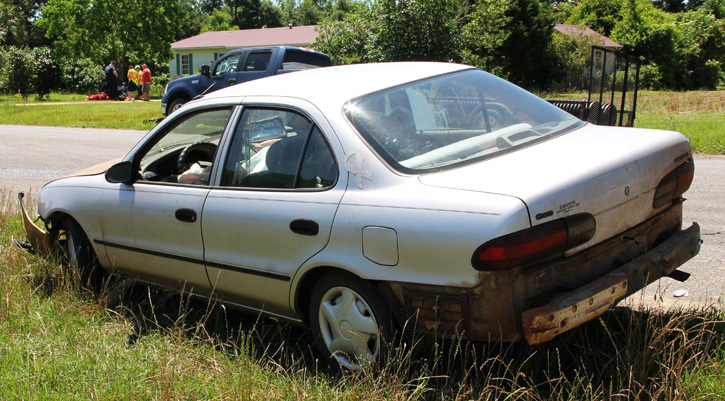
One person received minor injuries in a single vehicle wreck Saturday morning in Bratt.
The accident happened on West Highway 4 just east of North Highway 99 about 11 a.m. The elderly female driver of an eastbound Geo Prizm apparently lost control, ran off the roadway and struck a couple of culverts before sliding across the roadway.
The driver was transported by private vehicle to an area hospital. The accident remains under investigation by the Florida Highway Patrol. Further details, including the woman’s name and condition, have not been released.
NorthEscambia.com photos, click to enlarge.
Wildfire Prompts Road Closures, Evacuations
May 26, 2013
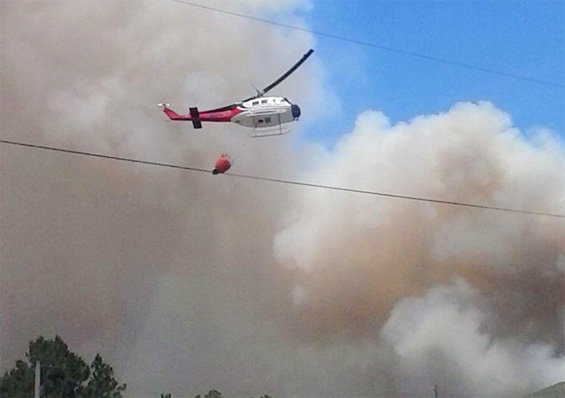
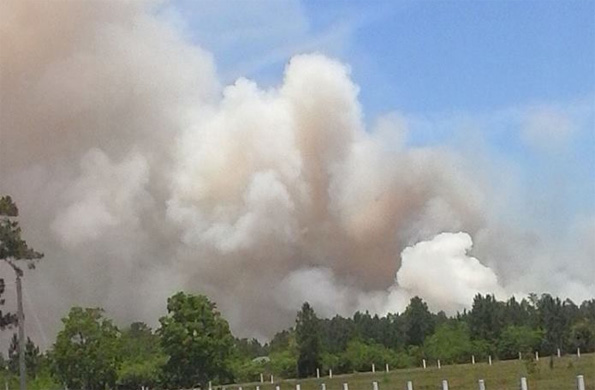
The second major wildire in as many days shut down a portion of southwestern Escambia County Saturday, forcing the temporary evacuation of several homes.
The brush fire consumed about 80 acres in all in the area of Blue Angel Parkway and Highway 98. Homes along Aleron Avenue, Rudder Lane, Foster Mills Lane and Rustic Road were evacuated for several hours. Residents were able to return to their homes by nightfall.
An emergency shelter was set up at the Perdido Bay United Methodist Church, but no one needing shelter showed.
There was no structure damage from the fire reported.
Pictured top: A Florida Forest Service helicopter dropped 300 gallons of water at a time on a wildfire in southwestern Escambia County Saturday afternoon. Pictured below: The fire consumed about 80 acres and forced evacuations of several homes. Reader photos by Kim Spring for NorthEscambia.com, click to enlarge.