

Photos: A Barrineau Park Sunset
January 18, 2015

Pictured: Saturday’s sunset as seen from near Barrineau Park School Road. Reader submitted photos by Kayla Bedell fro NorthEscambia.com, click to enlarge.
Have an interesting photo to share? Email news@northescambia.com.

Florida Chamber: Hurricane Taxes Less Likely Due To Citizens Insurance
January 18, 2015
Florida Chamber President and CEO Mark Wilson recently praised the continued efforts of Citizens Property Insurance Corporation to shed insurance policies and send them to the private market, thus decreasing the chance that Floridians would be saddled with hurricane taxes after a major hurricane.
 In the last three years, the Chamber reports, the number of Citizens’ policies have fallen by roughly 50 percent, from 1.5 million to 727,122, and exposure has fallen from $500 billion to $229 billion. Wilson believes the unprecedented drought of hurricanes to hit Florida — more than nine years to date — is the right time to look into private market solutions to prevent future taxes.
“While Florida’s storm-free years have benefited Floridians by eliminating hurricane tax assessments, it would be irresponsible to believe Florida will forever be spared from future costly storms,” Wilson said. “Now is the right time to prevent hurricane taxes from creeping back onto to insurance policies by looking to private market solutions to absorb Florida’s future hurricane risk.”
In the last decade, Floridians statewide have been paying more in their monthly automobile, homeowner, business and other insurance bills to account for billions in hurricane taxes. Members of Stronger Safer Florida, a nonpartisan coalition comprised of business, consumer and environmental groups, believe Citizens Property Insurance Corporation, which provides much of the coverage for coastal properties statewide — many of which are vacation homes of out-of-state and foreign citizens – must return to its proper role as the state’s “the insurer of last resort.”
Members also support reform to right-size the Cat Fund to a level where it can reliably keep its promises, reduce economically and environmentally unsound cross subsidies and incentives and prevent future hurricane taxes. Stronger Safer Florida also believes both of these reforms treat Florida residents and businesses more equitably, encourage storm proofing of homes and reduce the risk of growing state bonded indebtedness.
Airman Travis Deese Graduates From Basic Military Training
January 18, 2015
Air Force Reserve Airman Travis L. Deese graduated from basic military training at Joint Base San Antonio-Lackland, San Antonio, TX.
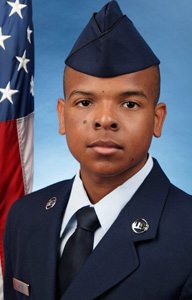 The airman completed an intensive, eight-week program that included training in military discipline and studies, Air Force core values, physical fitness, and basic warfare principles and skills.
Airmen who complete basic training earn four credits toward an associate in applied science degree through the Community College of the Air Force.
Deese is the son of Sewonya York of Atmore and grandson of Dan York of Mobile.
He is a 2013 graduate of Escambia County High School, Atmore.
Molino Man Sentenced For Attacking His Mom, 87, With Telephone
January 17, 2015
A Molino man has been sentenced for attacking his 87-year old mother with a telephone handset.
 Conrad Lee Micari was sentenced to 36 months probation, 50 hours of community service and ordered to pay $870 in court costs.
The elderly woman called 911 last October to report that her son, Micari, was drunk and tearing things up in her residence on Straughn Road in Molino. The 911 dispatcher reported that the phone went dead after she heard a scuffle.
When deputies arrived, the victim told them that Micari heard her on the phone with the 911 operator, snatched the phone out of her hand and used it to strike her several times on her leg. Escambia County EMS was called to the home to evaluate the 87-year old, who told deputies that she felt like she was going to have a heart attack.
Micari was “extremely intoxicated” and refused to discuss the incident with deputies, according to an arrest report.
FWC Law Enforcement Report
January 17, 2015
The Florida FWC Division of Law Enforcement reported the following activity during the weekly period ending January 15 in Escambia and Santa Rosa counties.
ESCAMBIA COUNTY
 Officer Pettey received several complaints from landowners in McDavid that someone had been illegally running deer dogs on their property. The landowners gave a detailed description of the dog and observed it chasing a deer. Officer Pettey responded to the area and encountered a hunter attempting to catch the dog off of private property. When Officer Pettey interviewed the subject, he admitted turning the dog loose in an attempt to kill a deer. The subject turned the dog loose on property he had permission to hunt on but it ran through four other pieces of property chasing deer. Officer Pettey issued the subject notice to appear citations for allowing his dog to run deer on unregistered private property and for allowing it to pursue wildlife without landowner permission.
SANTA ROSA COUNTY
Officer Jones was on patrol on the Eglin Wildlife Management Area near the community of Holley. He heard the sounds of a loud vehicle repeatedly being accelerated. He drove to the sounds and found an individual on a high performance ATV. The operator saw the officer approaching and fled. The officer followed through woodland trails with lights and siren activated. He found the ATV and its operator stopped near a neighborhood street. A barrier between him and the officer prevented the patrol vehicle from proceeding. The officer exited his vehicle and shouted for the operator to stop and the operator fled. The officer gave chase on foot. The fleeing operator attempted to make a turn onto another street and lost control of the ATV. The officer apprehended the suspect who then resisted arrest. The operator was charged with operating an ATV on the Eglin Wildlife Management Area, not having an Eglin Permit, fleeing from law enforcement on a motor vehicle, and resisting arrest. He was booked into the Santa Rosa County Jail.
This report represents some events the FWC handled over the past week;however, it does not include all actions taken by the Division of Law Enforcement. Information provided by FWC
Florida Gov’t Weekly Roundup: Changing The Narrative
January 17, 2015
The week started out about as well as Gov. Rick Scott could have expected.
On Monday, Scott made good on his campaign pledge to increase public education spending to the highest per-student level in state history. There were still caveats — local taxpayers would actually kick in most of the funding, and the figure wasn’t adjusted for inflation — but the headlines were mostly what the governor wanted.
 But the next day, the narrative took a turn. The Cabinet backed Scott’s new choice to run the Florida Department of Law Enforcement, but not before questions emerged about whether the former head of the agency left willingly, or was pushed. And by the end of the week, the governor’s office was responding to reports that the state’s longtime insurance commissioner could also be forced out.
Meanwhile, Florida State University worked to confront its own bad press, stoked by allegations against former star quarterback Jameis Winston, who is now headed to the NFL. Perhaps, if the university solves the damage-control puzzle, FSU could give Scott a few pointers.
BYE BYE BAILEY
There wasn’t much discussion this week about the Cabinet confirming Jonathan Steverson to head the Department of Environmental Protection. There might not have been in a normal week — his appointment by Scott had already been announced, and there was no controversy about Steverson or Herschel Vinyard, who left DEP in December.
But this wasn’t a normal week. Steverson was confirmed on the same day as new FDLE Commissioner Rick Swearingen, whose predecessor, Gerald Bailey, accused Scott of lying about whether he left the job willingly. Terry Rhodes was also confirmed as executive director of the Department of Highway Safety and Motor Vehicles, but she’d been on the job for several months.
Immediately after the Cabinet meeting, Scott continued to tell reporters that Bailey had “resigned.”
“Commissioner Bailey did a great job. Commissioner Swearingen, he’s going to do a very good job,” Scott said before essentially repeating the same statement two more times.
The former FDLE commissioner saw things differently. Informed of Scott’s comments, Bailey told the Tampa Bay Times that “I did not voluntarily do anything.”
That pushed Scott’s office to respond. Jackie Schutz, a spokeswoman for the governor, issued a statement late Tuesday saying Scott “thinks it’s important to frequently get new people into government positions of leadership.”
If the governor was looking for change, he got his wish.
The next day, news broke that Gray Swoope, Scott’s hand-picked business recruiter, would leave his post at the end of February. That decision was described by the governor’s office as a “departure.”
Swoope, who is Florida’s secretary of commerce as well as president and chief executive officer of Enterprise Florida, advised Scott on Dec. 2 that he intended to resign on a “mutually agreeable date” before his current contract expires on June 30.
Swoope didn’t offer a reason in the Dec 2 letter to Scott other than “it is time for me to move on” professionally.
In a statement Wednesday, Swoope noted he plans to remain in Florida and that “no matter what my future endeavors are, I will always work hard for the state.”
Thursday brought rumblings that Insurance Commissioner Kevin McCarty, who’s held his job since 2003, may be on the way out. The Tampa Bay Times and Miami Herald reported that McCarty is under pressure to resign as head of the Florida Office of Insurance Regulation.
The governor’s office said it did not have an announcement regarding McCarty but sounded like one was in the works. Schutz said in an email to The News Service of Florida that “just like in business — it is good to get fresh ideas and new leadership, especially as we move into a second term. Executive office positions are not lifetime appointments and for the same reason there are term limits in elected office — it is important to search for the best and newest ideas whenever possible.”
McCarty’s removal would require the approval of Scott and Chief Financial Officer Atwater, or a decision by three members of the Cabinet. The next Cabinet meeting is Feb. 5. Spokesmen for Atwater, Attorney General Pam Bondi and Agriculture Commissioner Adam Putnam all said there have been no discussions regarding McCarty or a change at OIR.
$CHOOL $PENDING
Before the state agency heads’ revolving door dominated the headlines, Scott made good on one of his major campaign promises, announcing Monday that he will ask lawmakers to provide the highest per-student funding for education in state history.
Scott said his “Keep Florida Working” budget would include $7,176 per student, about $50 above the previous high in the 2007-08 budget year. That spending plan was approved before the financial crisis that caused the worst economic downturn since the Great Depression.
“These record investments will continue to equip our students for the jobs of tomorrow and help us on our path to be the number one destination for jobs,” Scott said in a prepared statement.
The proposal won Scott a rare compliment from the state’s largest teachers union.
“FEA applauds the governor for keeping his campaign promise and increasing the state’s budget allotment for public school students,” Florida Education Association President Andy Ford said.
Overall, funding for public schools would rise by $842.5 million, to almost $19.8 billion. The state’s share would increase to a shade over $11 billion, meaning about $400 million of the new funding would come from the state. Local taxpayers would pick up the rest.
Democrats have signaled that they’re not impressed by Scott’s pitch.
“We need to do a whole lot more than that, because coming to Florida to live is more than about lower taxes and warm weather,” Senate Minority Leader Arthenia Joyner, D-Tampa, said last week. “It’s about the quality of life that you will have and the type jobs that we will offer these people.”
There was other fallout from the 2014 campaign season as well. An appeals court on Wednesday heard oral arguments in a challenge to the 2013 law allowing Florida elected officials to use blind trusts to shield their financial assets.
The 1st District Court of Appeal took up a case filed by Jim Apthorp, a former chief of staff to the late Democratic Gov. Reubin Askew, contending that blind trusts violate the “full and public” disclosure requirements of the open-government Sunshine Amendment.
“The Sunshine Amendment starts off with the words, ‘A public office is a public trust,’ ” said attorney Talbot “Sandy” D’Alemberte, a former Democratic lawmaker who helped pass the amendment and represents Apthorp. “So a public officer is going to be a public trustee, a trustee in the public interest.”
Apthorp originally filed the challenge in May in the Florida Supreme Court, asking the justices to ban Secretary of State Ken Detzner from accepting the qualifying papers of any candidate using a blind trust.
A blind trust gives someone else the ability to manage investments without a politician’s knowledge, which supporters of the law say prevents conflicts of interest between officials’ public duties and their financial interests. Blind trusts don’t require the same level of detail about officials’ holdings as are required by typical financial-disclosure forms.
“Our position is that (the law) is consistent with the overall purpose of the Sunshine Amendment, which was to enhance trust in government, enhance trust in public officials,” said state Solicitor General Allen Winsor, who represented Detzner.
Had the Supreme Court accepted the case in May, it could have had political implications for Republican governor Scott, the only Florida elected official using a blind trust during the 2014 election season.
But justices referred the case to Leon County circuit court, where a judge ruled in July that the 2013 law was constitutional. Apthorp appealed the ruling.
BLOW, BLOW (MORE FAVORABLE) SEMINOLE WIND?
There is no way to shield Florida State University’s athletics program from disclosure, so the school is instead planning a massive public-relations effort to counter negative press that has painted the school throughout the past year as favoring athletics over academics.
Meanwhile, members of the university’s Board of Trustees heard Monday that the school will “vigorously” fight a lawsuit filed last week by a former student who says FSU failed to properly investigate her allegation of being sexually assaulted by star football player Jameis Winston.
To counteract the negative attention heaped on the school, the trustees agreed during a conference call to establish a list of positive bullet points that a new “speakers bureau” can use in addressing the media, schools and civic organizations across the state.
The list of speakers will include members of the trustees, and Chairman Allan Bense said the focus of the speakers will not be on athletics.
“When I’m done with a speech I would say, until a couple of weeks ago — or actually it’s until tonight — that, by the way, we’re the defending national football champions,” Bense said several hours before Ohio State beat Oregon to win this year’s title. “We talk about everything else but athletics.”
Bense added that the impetus for “telling the world how great FSU is” was an unflattering editorial in the Los Angeles Times printed days before the school’s football team played in the Rose Bowl on New Year’s Day.
During the past year the school has been hammered by a number of national media outlets about whether law enforcement properly handled numerous incidents involving Seminole football players and whether the university is focused on athletics over academics.
Most of the attention has focused on off-the-field incidents involving Winston, the school’s Heisman Trophy-winning quarterback who announced last week he will skip his two remaining years of eligibility to enter the 2015 National Football League Draft.
Winston’s draft announcement came as the school was hit with a lawsuit that claims FSU violated a former student’s federal Title IX rights by refusing to properly investigate her rape accusation against Winston. The quarterback has argued the December 2012 encounter was consensual.
STORY OF THE WEEK: Gov. Rick Scott spent much of the week trying to explain the departure of FDLE Commissioner Gerald Bailey, who insisted he did not voluntarily resign as head of the law enforcement agency.
QUOTE OF THE WEEK: “The only way anybody’s ever going to get the right to marry is for somebody to kick their ass. And we’re the people who like to do that.”—Bill Sheppard, an attorney, on the decision by him and his wife, Betsy White, to take a case challenging the state’s ban on same-sex marriage. A federal judge struck down the ban last year, and it ended Jan. 5.
by Brandon Larrabee, The News Service of Florida
Century Reschedules Council Meeting Due To MLK Holiday
January 17, 2015
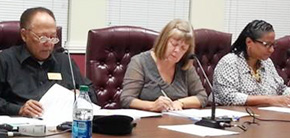 The Town of Century has rescheduled their next regular town council meeting due to the Martin Luther King Day holiday. The meeting has been moved from Monday, January 19 to Monday January 26 at 7 p.m.
The Century Town Hall will also be closed on Monday, January 19.
U.S. Supreme Court To Rule On Same Sex Marriage
January 17, 2015
In a move highly anticipated by advocates on both sides of the issue, the U.S. Supreme Court on Friday agreed to rule on four gay marriage cases, paving the way for what is expected to be among the high court’s landmark decisions.
The court agreed to hear four cases involving marriage bans in Kentucky, Michigan, Ohio and Tennessee, the focus of a U.S. Court of Appeals for the 6th Circuit decision that parted from other appellate courts which struck down state gay marriage prohibitions. The Supreme Court on Friday agreed to consider the question of whether state bans prohibiting same-sex marriages violate 14th Amendment guarantees of due process and equal protection by treating gay couples differently than heterosexual couples.
 The court ordered lawyers for the same-sex couples in the four cases must file their briefs by Feb. 27, and lawyers for the states must file their briefs by March 27. Reply briefs are due on April 17. Although the court did not specify when oral arguments would be held, the Supreme Court is scheduled to hold its final session of oral arguments from April 20 through April 29.
The court action will likely put on hold Florida’s appeal of a federal judge’s August decision that the state’s gay marriage ban is unconstitutional. That appeal is now pending before the 11th Circuit Court of Appeals.
Florida Attorney General General Pam Bondi, who has fiercely defended Florida’s voter-approved same-sex marriage ban, praised the Supreme Court on Friday.
“All along, I have maintained that the U.S. Supreme Court should decide the same sex marriage issue in order to provide uniformity in Florida and resolve the legal issue nationwide,” Bondi said in a statement. “I am pleased that the U.S. Supreme Court will hear the same sex marriage issue and provide finality on the matter.”
Hinkle’s hold on his August ruling expired on Jan. 6 after Bondi failed to convince the Supreme Court to extend it. Gay and lesbian couples throughout the state immediately began to have their unions solidified by marriage despite reluctance from some county clerks, especially in North Florida, who stopped performing weddings to avoid having to perform nuptials for same-sex duos.
The Supreme Court’s final decision won’t have an immediate impact on gay marriage in Florida but “could settle once and for all the matter of whether states can shut some people out of the institution of marriage simply for being gay or lesbian,” said ACLU of Florida lawyer Daniel Tilley, one of the attorneys involved in the Florida federal lawsuit.
“…These hurtful bans are unconstitutional, and (we) look forward to a final ruling that means that all loving couples throughout the country can finally have access to the protections and dignity that come with marriage.”
The upcoming court consideration also gave hope to opponents of gay marriage who argue that states should be able to decide on the matter.
“The issue is still very much an open question until the United States Supreme Court weighs in and determines whether states have a right to define marriage. It is very possible a five vote majority exists in favor of state’s rights and a decision of this nature would immediately reinvigorate the authority and enforceability of the Florida marriage amendment passed by just under five million voters,” said Florida Family Policy Council President John Stemberger, who was instrumental in pushing the constitutional gay marriage ban approved by Florida voters in 2008. “People should have the right to vote on defining marriage and we are very hopeful the high court will uphold that right.”
Three dozen states, including Florida, have legalized same-sex marriages.
by Dara Kam, The News Service of Florida
Northview Lady Chiefs Defeat Catholic
January 17, 2015
The Northview Lady Chiefs took the lead and never trailed Friday night as they defeated Catholic High 42-35.
 The Lady Chiefs were led by seniors E’Layzha Bates with 16 and Angel Lathan with 14 points. Sophomore Dimonique Davis scored 7, sophomore Autumn Albritton scored 3 and junior Abbie Johnson scored 2.
The Lady Crusaders were led by T. Flemings with 11 points and J. Falco with 7 points.
The two teams meet again Tuesday night at Northview at 7:00 p.m.
Scott Matches Bush For Most Florida Executions In Modern Era
January 17, 2015
Just starting his second term, Gov. Rick Scott has matched former Gov. Jeb Bush for the most executions in the modern era.
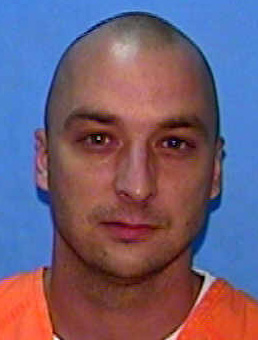 Death Row inmate Johnny Shane Kormondy was put to death by lethal injection Thursday night at Florida State Prison near Starke for the 1993 murder of an Escambia County man during a home-invasion robbery. Kormondy is the 90th person executed in Florida during the modern era of capital punishment. There are 395 people on Death Row in the state.
The number is the most for any Florida governor since the death penalty was reinstated in 1976. The most executions under the watch of any governor since 1924 is 35, coming while Spessard Holland, later a U.S. senator, was in office from January 7, 1941 through January 2, 1945.
The execution was the 21st since Scott took office in 2011, equaling the number overseen by Bush during an eight-year span. Scott was re-elected to a second term November 4.
“Capital punishment is a solemn duty of the governor,” Scott told reporters Tuesday. “I review all the cases. They’ve gone through all their appeals and the clemency process. But I review their cases, and it’s a solemn duty.”
by The News Service of Florida