

83-Year Old Charged With Friday Morning Stabbing Death
April 22, 2016
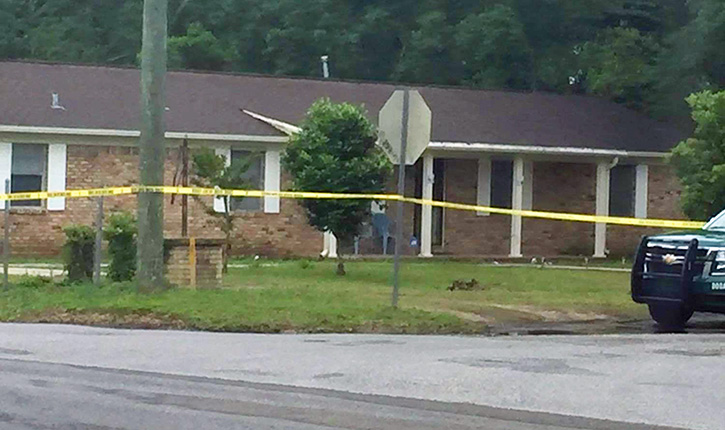
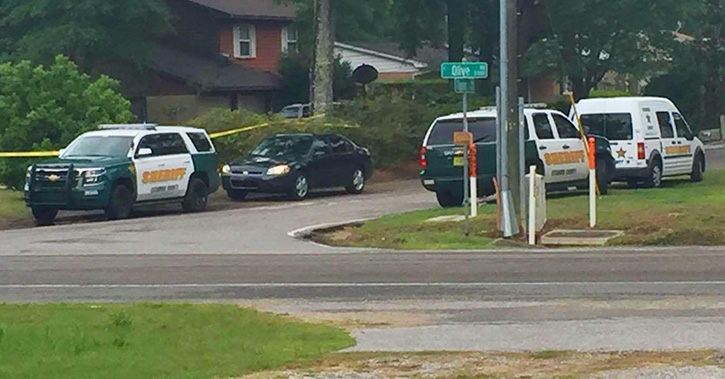
One person has been arrested in a Friday morning homicide in Escambia County.
At 5:30 a.m. someone reported that 29-year old Matthew Vaughn had been stabbed inside a home in the 8000 block of Tippin Avenue, according to the Escambia County Sheriff’s Office. When deputies arrived on scene they found Vaughn deceased from multiple stab wounds inside a bedroom in the home.
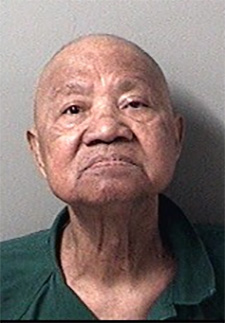 Felipe Gonzalez, 83, has been arrested and charged with homicide. He is being held in the Escambia County Jail without bond.
Further details have not yet been released.
Pictured above and below: The scene of a stabbing death Friday morning at the corner of Olive and Tippin. Reader submitted photos by Jennie Thompson for NorthEscambia.com, click to enlarge.
Man Robs Century Coin Laundry, Flees With Change In Plastic Pumpkin
April 22, 2016
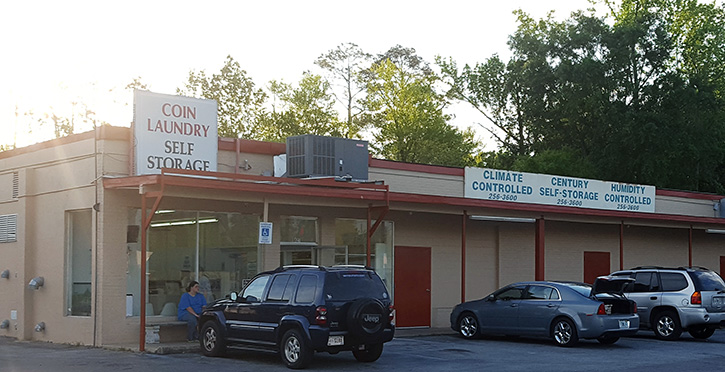
Authorities are on the hunt for a man that robbed a coin laundry in Century with a plastic pumpkin Thursday afternoon.
The man walked into the Century Coin Laundry and Self Storage with a children’s trick-or-treat Halloween pumpkin and demanded that it be filed with change, according to Sgt. Andrew Hobbs, spokesperson for the Escambia County Sheriff’s Office. He then fled, with the pumpkin, in an unknown direction.
The man did not produce a weapon, and there were no injuries reported, Hobbs said. The suspect was described as a white male about 50 to 60 years of age wearing camouflage pants and hat, and a dirty gray shirt.
The coin laundry and self storage facility is located on North Century Boulevard near the state line, next to the Food Giant grocery store.
Anyone with information about the robbery is asked to call the Escambia County Sheriff’s Office at (850) 436-9620 or Crime Stoppers at (850) 433-STOP.
NorthEscambia.com photo, click to enlarge.
Escambia Man Gets 15 Years For Stealing, Recycling Copper Wire
April 22, 2016
Edward Allen Long was sentenced by Circuit Judge Darlene Dickey to 15 years ins state prison as a habitual felony offender. Long was convicted of three counts of dealing in stolen property, three counts of fraud upon secondary metals recyclers and one count of organized fraud.
 Long was allowed to move into the living quarters of a Pensacola facility where he had been hired to do maintenance and odd jobs. Attached to the facility was a warehouse, which contained various parts that the victim had disassembled in another state and was relocating to Pensacola.
In December 2014, the victim noticed a substantial amount of copper wiring was missing from his warehouse. A subsequent investigation revealed the Long had sold copper wiring to a local scrap company on several occasions. The victim viewed the surveillance photographs from the scrap company and indicated the copper wire in question belonged to him.
Northview Dance Team Celebrates Successful Year
April 22, 2016

The Northview High School Dance Team recently celebrated a successful year. Dance Team members are: (front, L-R) Shelby Bashore, Delaney Reynolds, Anna Belle Barberree, Jerni Crabtree, (back) sponsor Heather Leonard, Madison Sherouse, Bethany Reynolds, Savanna Roux and Leah Fischer. NorthEscambia.com photo, click to enlarge.
Police Release Victim’s Name In Alabama-Florida State Line Suspicious Death
April 22, 2016
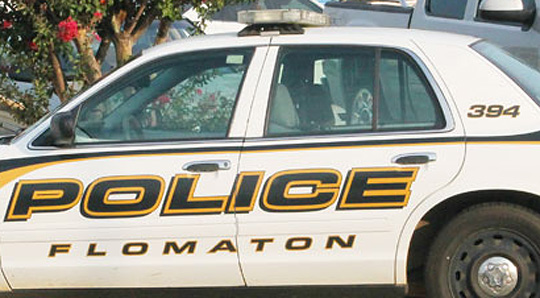
The Flomaton Police Department has released the name of a man found dead from a gunshot wound Tuesday afternoon.
He has been identified as 18-year old Kenneth Harris, Jr., of Flomaton. The death is still being classified as “suspicious”, according to Police Chief Bryan Davis.
About 12:45 p.m. Tuesday, the Flomaton Police Department received a 911 call that a person had been shot. Officers from the Flomaton Police Department and the Escambia County (FL) Sheriff’s Office responded to an address on Lender Street, off Alley 5, directly on the state line.
Officers arriving on the scene found Harris, suffering from a gunshot wound to the head. He was pronounced deceased at the scene at Escambia County (FL) EMS.
Authorities determined the home was in Alabama based upon property tax records, and the Flomaton Police Department took the lead on the case.
Police Chief Bryan Davis said the the Flomaton Police Department along with the Alabama Law Enforcement Agency State Bureau of Investigation are still conducting a death investigation.
Tate Wins District Championship
April 22, 2016

The Tate Aggies clinched the District 1-7A Championship with a 3-1 win over Pace Thursday night.
The game was scoreless for six innings, with Aggies going ahead in the seventh for three. The Patriots only score came on a wild pitch in the seventh.
Micheal Sherrill took the win in one inning, allowing one run, striking out none, walking none and giving up two hits.
Trace Penton was 1-2 with a run for Tate. Branden Fryman was 1-4, Logan Blackmon was 2-4, Josh Kea was 2-3 with a run, and Reid Halfacre also scored one run.
Both teams advance to the regional quarterfinals next Wednesday night at 7:00. Navarre will be at Tate, while Milton will host Pace.
Pickup Truck Driver Collides With Log Truck
April 22, 2016
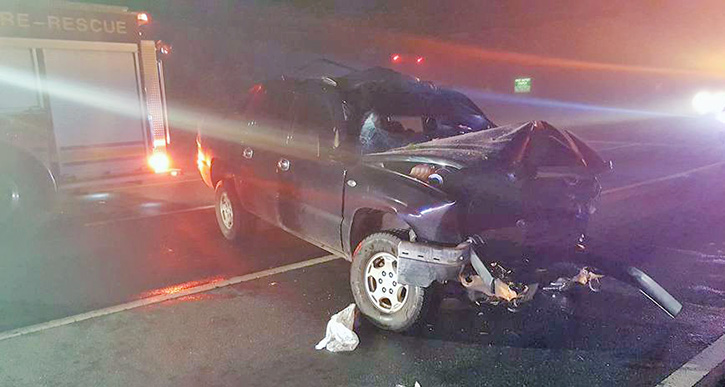
A driver was critically injured in a collision with a log truck in Cantonment early Thursday morning.
The man’s pickup apparently hit the log truck on Highway 29 north of Muscogee Road about 5:00 a.m. The driver was transported to a Pensacola hospital by ambulance as a trauma alert. Further details have not been released by the Florida Highway Patrol.
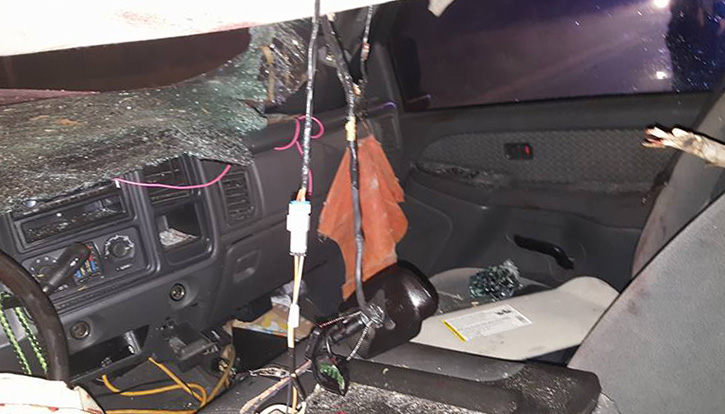
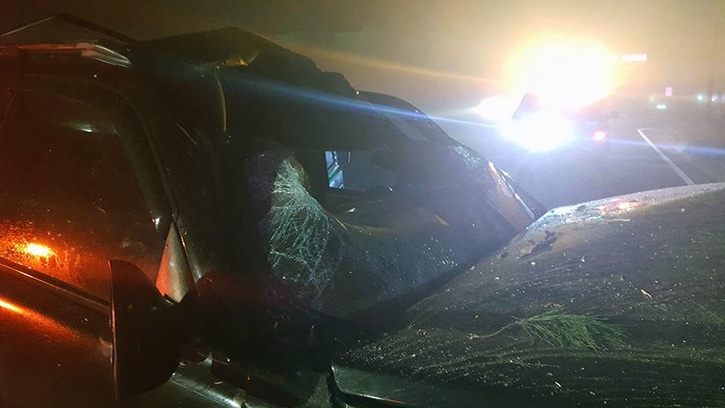
Pictured above and below: A pickup truck driver collided with a log truck in Cantonment. Pictured top photo below: Logs entered the cab of the truck, note the stick in the driver’s seat. Courtesy photos for NorthEscambia.com, click to enlarge.
Shuckers Shutout Blue Wahoos
April 22, 2016
After winning its first two series against the Mississippi Braves and Jacksonville Suns, 4-1, and getting off to its hottest start in its five-year history, the Biloxi Shuckers turned the tables on the Pensacola Blue Wahoos.
 The Shuckers Tyrone Taylor hit a two-out home run to left center field in the third inning and its pitchers blanked the Blue Wahoos, 1-0, on five hits Thursday to win the series, 4-1, at MGM Park.
Pensacola lost its fourth game in a row despite pitcher Rookie Davis, who dropped to 2-1, throwing a seven-inning gem. Davis allowed just four hits, gave up no walks and struck out five. His ERA remains at one run per game.
Besides giving up the homer to Taylor, Biloxi threatened to score one other time. In the bottom of the fourth inning, Biloxi got its first two batters to second and third with one out when Brett Phillips was hit by a pitch and Jacob Nottingham singled to center. But Davis worked out of the jam by striking out the next two batters and getting a pop out to exit the inning unscathed.
Pensacola had runners on first and second with no outs in the fifth inning but Blue Wahoos third baseman Eric Jagielo grounded out into a double play to end Pensacola’s only viable threat to score in the game.
Wei-Chung Wang improved to 2-0 on the year by allowing just two hits, two walks and striking out five. Biloxi then used three relievers who spread out the Blue Wahoos other three hits over the last four innings.
Pensacola scored seven runs in its last four losses to Biloxi, which improved to 11-3 and is in first place in the Southern League South Division. Meanwhile, Pensacola dropped to 9-6 in second place 2.5 games back.
One offensive bright spot in the series was center fielder Beau Amaral, who went 1-4, and now has a six-game hitting streak. Batting .288, he was the Blue Wahoos best hitter against Biloxi, going 6-18 in the series (.333) with one home run, four RBIs, a triple and one run scored.
Starting pitchers Jackson Stephens and Davis have gone 6.2 and 7.0 innings, respectively, without giving up a walk.
Driver Trapped In Highway 97 Rollover, Power Cut To Molino
April 21, 2016
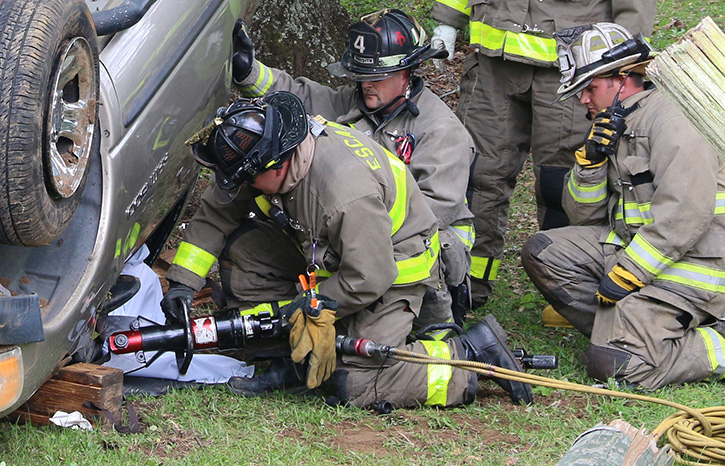
One person was injured in a single vehicle rollover crash on Highway 97 in Walnut Hill Thursday afternoon.
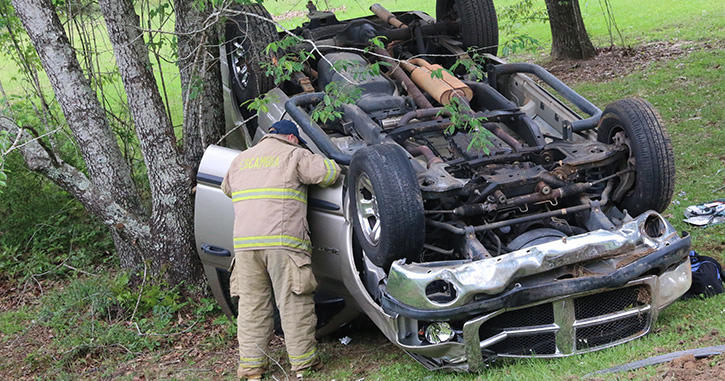
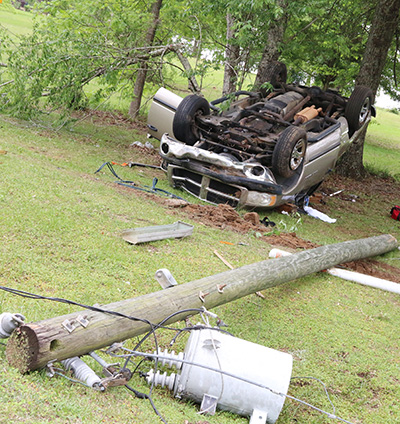 The driver of a pickup truck lost control for an unknown reason on Highway 97 north of Gibson Road, ran off the roadway, clipped a power pole and rolled the vehicle upside down into several trees. The driver was partially ejected from the pickup and trapped. Firefighters were forced to use the Jaws of Life to free the man from the overturned truck. He was transported by ambulance to a Pensacola hospital in unknown condition.
Gulf Power cut power to a large area of Molino temporarily so firefighters could safely rescue the man from the pickup.
The accident remains under investigation by the Florida Highway Patrol. Further details have not been released.
Pictured above and below: Firefighters use the Jaws of Life to free a driver following a crash on Highway 97 in Molino. The white sheet is protecting the occupant of of the truck from glass and debris. Pictured below: The accident trapped the driver and caused power to be cut for part of the Molino area. NorthEscambia.com photos, click to enlarge.

Alabama Man Claims $90K Lottery Ticket Sold In Davisville
April 21, 2016
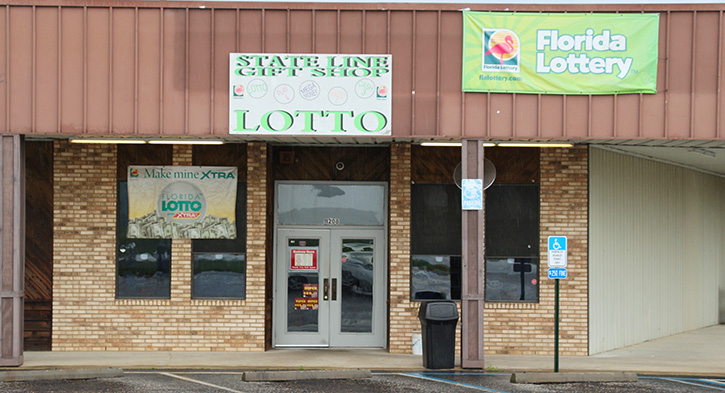
An Alabama man has claimed a $90,000 prize for a winning Florida Lottery Fantasy 5 ticket sold last weekend at a Davisville store.
 Darenell Payne of Monroeville purchased the ticket at the State Line Gift Shop at 11208 Highway 97 in Davisville. The ticket was one of three winning tickets sold for Saturday night’s drawing worth $90,334.20 each. Other winning tickets matching all five numbers were sold in Lakeland and Pinellas Park.
The 527 tickets matching four numbers won $82.50 each. Another 14,294 tickets matching three numbers are worth $8.50 each, and 125,610 ticket holders won a free Quick Pick ticket for picking two numbers.
Saturday’s winning numbers were 01-10-12-20-21.
Pictured: The State Line Gift Shop on Highwy 97 in Davisville. NorthEscambia.com file photo, click to enlarge.