

Northview Names Greenwell As Head Baseball Coach, Football Offensive Coordinator
August 6, 2016
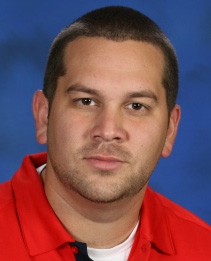 Northview High School has named Jeremy Greenwell as their new head baseball coach and offensive coordinator for football.
Greenwell comes from Ernest Ward Middle School, where he worked as a physical education teacher and led a successful football program (career record 28-11). EWMS has the only middle school football program in Escambia County.
He played baseball as a student at Northview from 2002-2005 and pitched for Jeff Davis Community College (2006). Greenwell played football and lettered all four years at Northview and then played football at the University of West Alabama. He has coached baseball for four seasons. He coached football under legendary coach Jay Jeffcoat at Ernest Ward from 2008 to 2010 before taking over as head football coach at Ernest Ward from 2011 to 2015.
Greenwell’s hiring comes on the heels of the recent resignation of Sid Wheatley, who returned to his native Mississippi. Wheatley served as head football and head baseball coach at Northview. Former offensive coordinator Derek Marshman was promoted to head football coach a week ago, just days before fall practice began.
Green Hills Road Closure
August 6, 2016
A section of approximately of 200 feet of Green Hills Road between Stefani Road and Pine Forest Road will be closed to through traffic beginning Tuesday at 7 a.m.
The road closure is part of a drainage enhancement and repair project that will replace and enlarge the existing culvert which was temporarily repaired after the April 2014 flood. Traffic will be detoured either to West Roberts Road to Pine Forest Road to the west section Green Hills Road or West Roberts Road to Stefani Road to the east section of Green Hills Road.
Weekend Gardening: August To Do List
August 6, 2016

Here are gardening tips for the month of August from the UF/IFAS Extension program:
What to Plant
- Bedding Plants: The hottest days of summer limit planting now to heat tolerant vinca, gaillardia, bulbine, and coleus.
- Bulbs:Aztec lily, butterfly lily, walking iris, and spider lily can be planted any time of the year, even late summer.
- Herbs: Herbs that can be planted from plants (not seeds) include bay laurel, ginger,Mexican tarragon, and rosemary.
- Vegetables: This month starts the fall planting season. Many cool season crops can be planted now, including a final crop of warm-season vegetables such as pepper. Tomato can be planted for the fall garden.
- Lawn problems: Damaged areas can be the result of insects, disease, or irrigation problems. Be sure to determine the cause so the proper remedy is used. Use a sharp mower blade and only remove 1/3 of grass blade to reduce stress on the lawn.
- Palms: If older fronds are yellowing, you may have a magnesium or potassium deficiency. Apply an appropriate palm fertilizer.
- Poinsettias: Pinch back poinsettias and mums before the end of the month to allow time for buds to form for winter bloom.
- Ornamental Plants: Rapid growth and leaching rains may result in nutrient deficiencies in some plants. Fertilize those plants that show signs of deficiencies.
- Bedding Plants: Remove spent blooms, cut back, and fertilize flowering annuals and perennials to extend the bloom season into the fall months.
- Adjust irrigation based on rainfall.
- Deadhead flowers to encourage new blooms.
- Monitor the garden for insects and disease.
- Plant trees, shrubs, and perennials and water until established.
Deputies Seek Credit Card Thieves
August 6, 2016

The Escambia County Sheriff’s Office is seeking information on two suspects that used credit cards that had been stolen during a previous car burglary. The incdent occured July 26 at the Highway 29 Walmart in Ensley. Anone with information should call the Escambia Count y Sheriff’s Office at (850) 436-9620 or Crime Stoppers at (850) 433-STOP.
Wahoos Drop Series Opener To Biloxi
August 6, 2016
For the second game in a row, the Pensacola Blue Wahoos played in an extra inning game.
This time, the Blue Wahoos lost to the Biloxi Shuckers, 5-4, Friday at MGM Park when second baseman Brandon Dixon made a throwing error trying to turn a double play to end the inning that allowed the Shuckers pinch runner Clint Coulter to score the winning run.
 On Thursday, Pensacola lost a nearly five-hour game to the Mississippi Braves, 10-2, in 14 innings at home.
Pensacola fell to 9-5 in extra-inning games and the first half champions dropped to 19-22 in the second half. Biloxi improved to 16-25.
The Biloxi Shuckers scored first when right fielder Tyrone Taylor smacked a two out solo homer over the left center wall for a 1-0 Shuckers lead in the bottom of the first. Biloxi went up, 2-0, when third baseman Tom Belza doubled to center field to drive in first baseman Dustin DeMuth
Pensacola pitcher Tyler Mahle walked to start the third inning and was knocked in by Blue Wahoos left fielder Phillip Ervin’s 19th double of the season to pull within, 2-1.
Pensacola third baseman Taylor Sparks hit a two-run homer to left center field to put Pensacola on top in the fourth inning, 3-2. Sparks eighth dinger this year also brought in Zach Vincej who started the inning with a single to center field.
Biloxi tied the game at 3-3 in the bottom of the fourth inning when second baseman Javier Betancourt doubled to center field to drive in Belza.
Mahle, Pensacola’s starting pitcher, helped himself in the sixth inning with the bases loaded when he singled to left field to score Vincej, who led off the inning with a single. It was Vincej’s 21st multi-hit game and 19th in the second half.
Biloxi shortstop Angel Ortega homered on a line drive to left field, his second of the season, to start the seventh inning and tie the game, 4-4.
Pensacola’s Vincej has been one of the hottest hitters in the Southern League since June 1. He’s hitting .337 (61-181) in 54 games.
Also leading Pensacola at the plate Friday was Sparks, who now has three homers in his last six games. He went 2-5 with a two-run homer and scored twice. Sebastian Elizalde also went 2-5 with a double and has 19 multi-hit games with 15 of those coming in the second half.
Century Man Charged With Animal Cruelty
August 5, 2016

A Century man has been arrested on two animal cruelty charges.
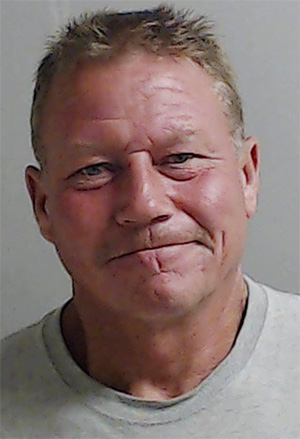 Monroe Kemp Moore, Jr., age 51, was charged with two counts of unlawful confinement or abandonment of an animal. He was released from the Escambia County Jail on a $10,000 bond and with a judge’s order to not possess any animals.
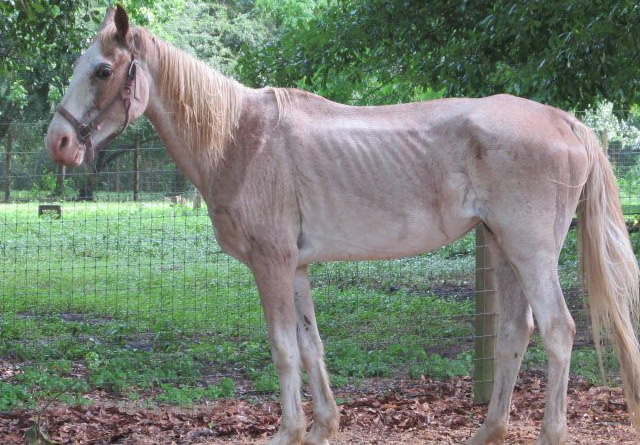
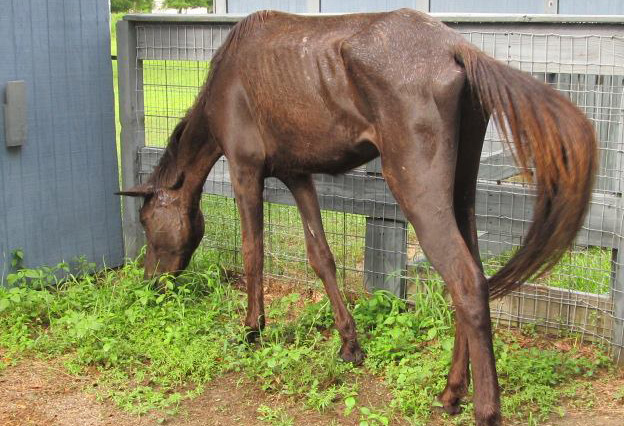
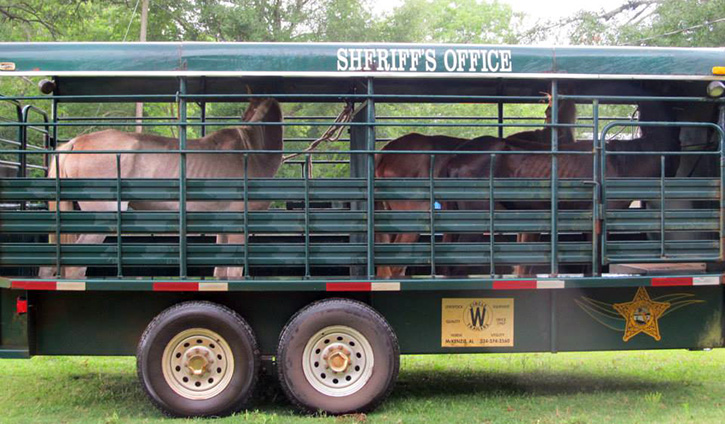
Escambia County Animal Control, Panhandle Equine Rescue and the Escambia County Sheriff’s Office seized three severely malnourished horses from a property in the 2500 block of Highway 168, near Shaw Road, near Century on May 27, 2015.
“All of the horses were thin, two of them were emaciated. “They didn’t have anything to eat, and they were in really bad shape,” PER President Diane Lowery said at the time the horses were seized. “People need to know that if they are not feeding and taking care of their horses they are going to have to deal with a judge.”
According to court documents in the case, two of the horses had bones that were projecting and visible due to malnourished. The horses were unable to graze due to a lack of grass in their quarter of an acre enclosure. It appeared that the horses had no water an no one caring for them for some time.
The horses were rehabilitated by Panhandle Equine Rescue.
The only horse rescue in Escambia County, PER was founded by a small group of concerned citizens with a mission to rescue, rehabilitate and provide adoption services for abused, neglected and abandoned equines. PER is authorized by the court system to investigate equine cruelty in Escambia County.
NorthEscambia.com file photos, click to enlarge.


Brand New Century Academy Shines During Open House
August 5, 2016
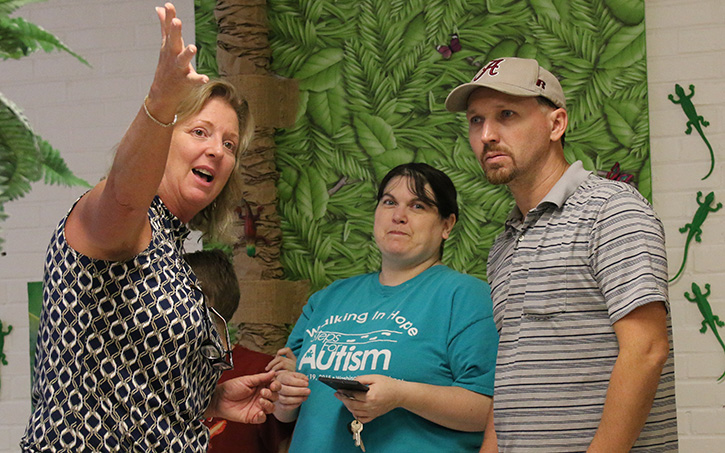
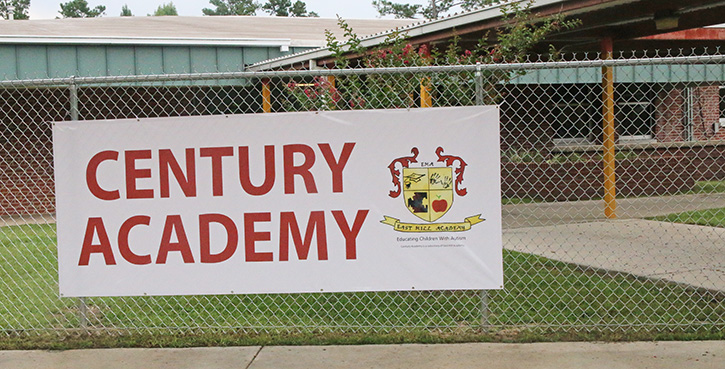
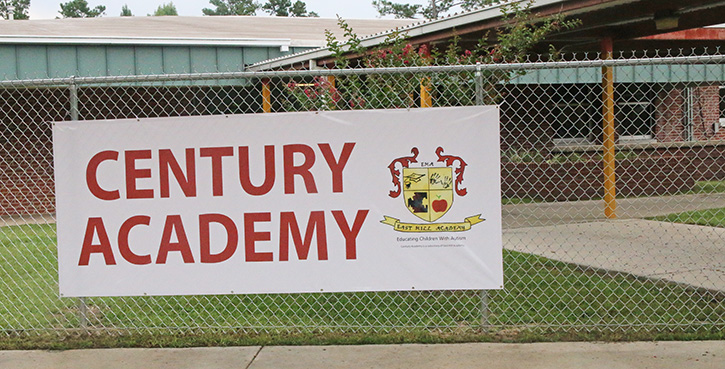
An open house was held Thursday evening at the new Century Academy, a private, non-profit K-12 school that will specialize in teaching children diagnosed with autism and other related learning disabilities.
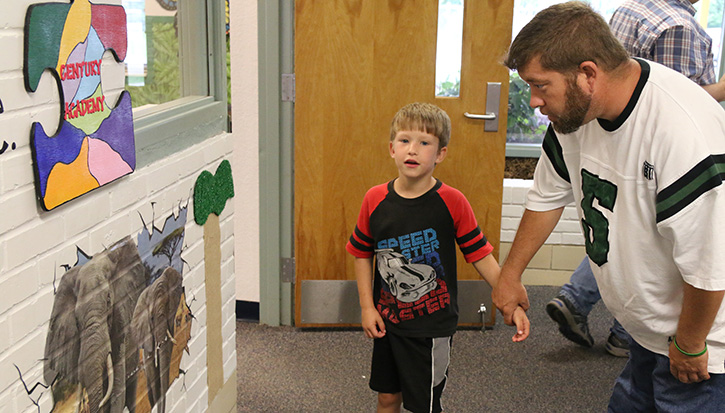
Century Academy is operated by the well established East Hill Academy in Pensacola. It’s located in the former Carver/Century K-8 school on Hecker Avenue — an older building that has been transformed with plenty of paint and decor into a world filled with rain forest and ocean scenes — designed to capture the attention and imagination of children with autism.
“It is a beautiful place but one that is carefully designed to enhance the educational experience for children with autism and other learning disorders,” said director Barbara Barber.
After winning $20,000 in the Studer Institute’s Century Business Challenge, Barber knew the time was right for Century Academy, and she wanted it to be as much of a part of Century of possible.
“I hired only local staff,” Barber said. “I wanted them to be part of the community.”
 The K-12 school plans to operate with a student-teach ratio of about five to one, with a teacher and assistant, in each classroom. Each students will have a Lenovo Thinkpad laptop, not a Chromebook like is being used in the public schools, she said.
Before the open house, about 15 students had officially registered for Century Academy, but Barber said she expects more students will be registered as their August 15 first day of school approaches. And she said she expects additional students to transfer in after school begins.
“I’m so excited about the opening of Century Academy. This school has the potential to change the entire face of the community and raise the bar economically for the community and personally for the children for years to come,” Rep. Clay Ingram, who attended the open house Thursday, said.
Century Academy has an official motto, stenciled on a wall just inside the front door — “We are Century Academy. All of us are unique. And when we come together, The puzzle is complete.”
There are two types of scholarships available for students that will cover the cost of tuition at the private school. Century Academy is now actively in the second phase of registration for the John McKay scholarship. This scholarship has a September 1 deadline to file an intent notice.
For more information about Century Academy, call (850) 437-5560.
NorthEscambia.com photos, click to enlarge.

State Attorney: Morgan Campaign Ad In Northview FFA Program Not Criminal
August 5, 2016

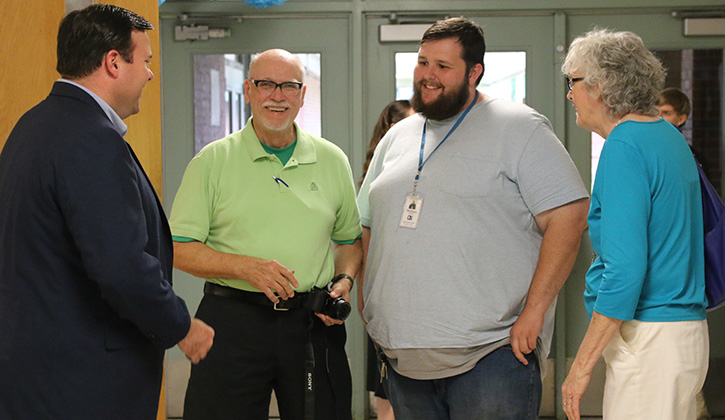
The State Attorney’s Office has completed its review into a complaint that Sheriff David Morgan’s re-election campaign violated the Florida elections law concerning an advertisement that was published in a program booklet for the Northview FFA Blue Jacket Jamboree last spring.
The SAO found that there is insufficient evidence to prove a criminal violation. They determined that possible civil violations of the election law may have been committed, and the complaint has been refereed to the Florida Elections Commission.
The report from the State Attorney’s Office stated:
The State Attorney’s Office was contacted regarding possible election law violations by Sheriff David Morgan’s re-election campaign. These reports alleged two possible violations. The first possible violation was that Morgan’s campaign published a political advertisement that did not contain the required disclosure statement. The second allegation was that a Sheriff Office employee, Chief Deputy Eric Haines, participated in a political campaign while on duty.
Morgan’s campaign was contacted by a student representative at Northview High School to see if the campaign was interested in publishing a political advertisement in the Blue Jacket Jamboree booklet. A half-page advertisement was
purchased and was paid for using campaign funds in February 2016. Chief Deputy Haines asked his daughter to design and prepare the advertisement. On March 7, 2016, Chief Haines’ daughter completed the advertisement and sent it by email to Perry Byars, the FFA faculty advisor at Northview. Byars acknowledged receiving the advertisement and forwarding it to the FFA treasurer. This political advertisement did not contain the required disclosure stating the candidate’s name, party affiliation, or office sought.
On March 31, 2016, the Northview student responsible for the Blue Jacket Jamboree booklet contacted Morgan’s campaign deputy treasurer, Henrique Dias, to determine if the campaign was still interested in publishing an advertisement. At the time this email was sent, the student was unaware that Byars had already received the advertisement. This email was forwarded to Chief Haines the morning of April 1, 2016, shortly before he arrived at the Sheriff’s Office for work.
Haines, being concerned that his daughter had failed to complete the delivery of the advertisement, attempted to contact her. When he was unsuccessful in contacting his daughter and believing that there was an immediate deadline to return the advertisement, Chief Haines sent an email to the Northview student with the political advertisement attached. This email was sent at 9:26 a.m. while Chief Haines was on duty at the Escambia County Sheriff’s Office. This email was sent using Chief Haines personal cell phone and personal email account. No sheriff’s office computers or equipment was ever used.
The SAO said the required political disclaimer in the ad is a civil matter, enforceable by the Elections Commission with a fine up to $1,000.
The SAO also determined there was insufficient evidence to provide a criminal violation by Haines. Morgan has set forth policies and procedures that prohibit employees from engaging in political activity while on duty.
After the investigation, Haines docked himself one day of leave. For this reason, the SAO said the matter will be referred to the Florida Elections Commission for their review.
Tate Cheerleaders Take Honors At Camp; Four Headed To London
August 5, 2016

The Tate High School cheerleading squads recently attended the UCA Cheerleading Camp in Panama City Beach. The Tate varsity and junior varsity brought home Superior Overall in both of their categories.
Varsity received first place extreme routine, first place sideline, second place game day and Superior Overall.
Junior varsity received second place extreme routine, second place cheer and Superior Overall, and the freshman squad received second in game day.
Four Tate High cheerleaders — Payton Simmons, Zoe Williams, Jasmine Crabtree, and Mallory Stephens — were All-American Cheerleaders out of hundreds who attended the camp. Those who earned All-American status have been invited to cheer in the New Year’s Day parade in London.
Members of the Tate Varsity cheerleaders are: Taylor Roushon, Gloria Jones, Jasmine Crabtree, Emilee Potter, Cole Stillwater, Jonah Cass, Kinsey Gill, Krysanne Hagen, Mallory Stephens, Blessing Kirk, Lexi Holley, Elena Lucci, Morgan Austin, Brylee Dodd, Alexis Wilson, Kennedy Bellard, Hayden Lindsay, Abi Manoso, Kearstyn Lile, Bailey Carter, Shelby Flemming, and Coach Jessica King.
Members of the Tate Junior Varsity cheerleaders are: Payton Simmons, Tayler Mills, Kyndal Milstead, Zoe Williams, Taylor Barnes, Kensley Foley, Payton Herring, Keaden Martin, Kyanna Woods, Hannah Hamilton, Destiny Campbell, Madyson Reaves, Carlie Boswell, Danyah Turner, Ally Stephens, Skylar Smith and Coach Jamie Southard.
Members of the Tate Freshman cheerleaders are: Leila Jones, Madison Lucio, Skye Stillwater, Sherrie Swinson, Maddie Ray, Hailey Morphis, Savannah Weaver, Savanna Bowen, Lillie Hamrac, Karis Parmley and Coach Karen Potter.
Pictured top: Tate Varsity cheerleaders. Pictured first below: Invited to London are All-American cheerleaders Jasmine Crabtree, Mallory Stephens, Zoe Williams and Payton Simmons. Pictured second below: Tate JV cheerleaders. Pictured third below: Tate Freshmen cheerleaders. Photos for NorthEscambia.com, click to enlarge.



Mississippi Beats The Wahoos In Five Hour Game
August 5, 2016

The Pensacola Blue Wahoos and Mississippi Braves were locked in a 2-2 tie for 13 innings and then the 14th inning happened.
That’s when the Braves sent 12 batters to the plate scoring eight runs on four walks, four singles and four errors by the Blue Wahoos. Mississippi won, 10-2, over Pensacola Thursday in a four hour, 57 minute game at Blue Wahoos Stadium to stay tied with Mobile for first place in the Southern League South Division. Both teams are 24-16, while Mississippi improved to 58-51 this season.
Pensacola fell to 9-4 on the season in extra-inning games. They also dropped to 9-2 in five-game series at home on the year after going a perfect 7-7 in the first half.
Pensacola is now 19-21 in the second half and 60-50 on the season.
In the top of the 14th inning, Pensacola relief pitcher Jake Ehret gave up a one out, bases loaded walk to center fielder Connor Lien to score third baseman Johan Camargo, who started the inning with a single. It gave the Braves a 3-2 lead and opened a flood gate of runs for Mississippi.
Pensacola set a franchise record with 20 strikeouts in the extra-inning game. The previous high was 18, including one that was a regular nine inning game.
Pensacola second baseman Ronald Bueno came to the plate with the bases loaded and two outs in the ninth inning. Bueno, who was called up from High-A Daytona Tortugas Tuesday, took a 2-2 pitch and sent a liner to left field to score right fielder Brandon Dixon to tie the game, 2-2, and send it into extra innings for the second time this series.
It was no pressure on the 23-year-old Bueno, who in his last bases loaded situation this season hit a double and drove in two runs for Daytona.
The Braves scored first, going up, 2-0, when first baseman Carlos Franco hit a two-out, two-run line drive over the center field wall in the sixth inning.
Pensacola got a run back in the seventh inning when the Blue Wahoos loaded the bases with one out and right fielder Brandon Dixon scored from third on a wild pitch, pulling them within 2-1.
Pensacola went 6-50 or .120 with runners in scoring position against Mississippi in the series. In the previous series against the Montgomery Biscuits, the Blue Wahoos hit .190.
Sean Newcomb, the top Atlanta Braves pitching prospect, retired 16 in a row Thursday. He struck out a season-high 10 Blue Wahoos and gave up three hits in 6.2 innings.
Newcomb, who has allowed one run or less in nine of his 22 starts, did not get a decision Thursday and remains 5-7 on the year with a 4.26 ERA.
A first round pick in 2014, Newcomb dueled Pensacola spot starter Barrett Astin matched goose eggs through the first five innings. Astin, who had started in his last three outings and eight times this season, finished his outing pitching 5.2 innings, allowing two earned runs on four hits and one walk and striking out six.