

Six Months Later: Only Six Tornado Victims Approved For State Housing Help
August 7, 2016
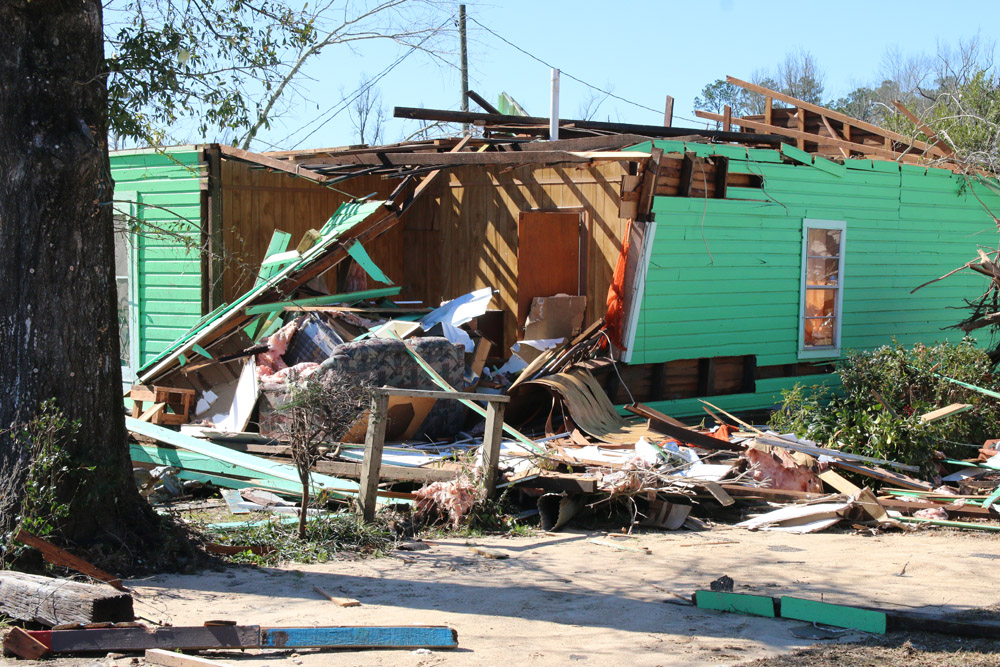
Nearly six months after two devastating tornadoes struck Escambia County, only six homeowners have been approved for state housing disaster funds for tornado recovery.
The Florida Housing Finance Corporation notified Escambia County in March that they had approved $2,058,028 in State Housing Initiatives Partnership, or SHIP, disaster funds for the two tornadoes that struck Escambia County in February. Funds were appropriated to assist with owner occupied housing rehabilitation, replacement, and disaster mitigation as outlined in the county’s Local Housing Assistance Plan.
The funds were split between damage caused by a February 15 EF-3 tornado in Century and a February 23 EF-3 tornado in Pensacola. Century alone suffered $3.9 million in damage, while there was another $18 million in damage in Pensacola. There were over 100 homes in Century that were destroyed or suffered major damage. About 75 percent of the structures were uninsured.
Beginning in April, dozens of homeowners applied for SHIP funding through Escambia County. According to the latest numbers available from county officials, only six SHIP funding grants have been approved — one for housing rehabilitation and five for complete reconstruction. SHIP funds were restricted to homeowners meeting certain low income requirements.
One delay in funding approval in Century has been the town’s historic district. For applicants in the historic district, the process requires additional review and approval by the state.
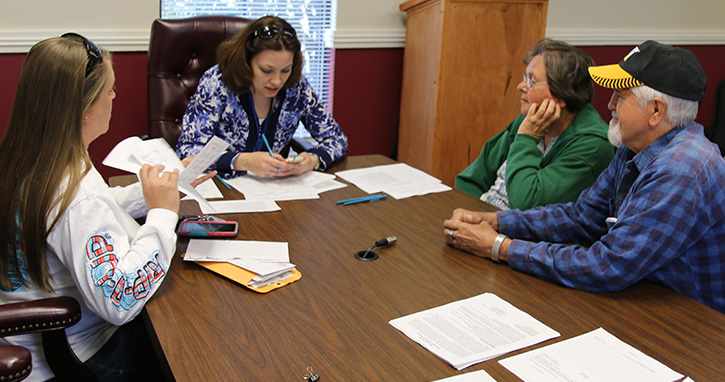
Pictured top: A destroyed home in Century. Pictured below: Housing assistance applications were accepted by Escambia County for residents in the unincorporated areas at Century Town Hall. NorthEscambia.com photos, click to enlarge.
Escambia County School Orientation Events Scheduled
August 7, 2016
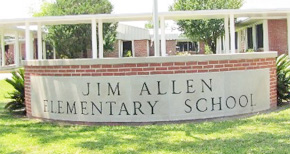 School orientation events for Escambia County Schools are scheduled as follows:
Elementary School Orientations
All elementary schools will have orientation on Monday from 8 a.m. until 10 a.m.
Middle School Orientations
All middle schools will have orientation Monday from 10 a.m. until noon.
High School Orientation and Schedule Pickup
Click here for a detailed list from the Escambia County School District.
FDOT: Weekly Traffic Alerts
August 7, 2016

Drivers will encounter traffic disruptions on the following state roads in Escambia and Santa Rosa counties as crews perform construction and maintenance activities.
Escambia County:
- Airport Road (S.R. 750) Resurfacing – Intermittent lane restrictions from 8 p.m. to 6 a.m. as crews perform paving operations between U.S. 29 and County Road 95A (North Palafox Street).
- Texar Drive (S.R. 752) Pedestrian Overpass– Access to the pedestrian bridge is closed for approximately one month. Eastbound ECAT bus stops located at the pedestrian bridge will be temporarily relocated during construction to just west of N Miller Street.
Santa Rosa County:
- I-10 Widening – Alternating lane closures, between the Escambia Bay Bridge and S.R. 281 (Avalon Boulevard/Exit 22), Sunday, Aug. 7 through Thursday, Aug. 11 from 8 p.m. to 6 a.m. as crews continue widening work. In addition, there will be alternating lane closures on Avalon Boulevard near the I-10 interchange for bridge work.
All activities are weather dependent and may be delayed or re-scheduled in the event of inclement weather. Drivers are reminded to use caution, especially at night, when traveling in a work zone and to watch for construction workers and equipment entering and exiting the roadwa
Registration Event Scheduled For Danceworks Classes
August 7, 2016

Registration is underway for Heather Leonard’s Danceworks, and a registration event will be held Monday.
The registration will be from 5 until 7 p.m. on Monday at the Byrneville Community Center.
Ballet, tap and jazz classes will be taught by Heather Leonard beginning the week of August 29 for girls ages 3 and up. Classes for ages 3-8 will be based on age, while classes for dancers age 9 and over will be based upon level. Leonard has taught dance to hundreds of girls from North Escambia and surrounding areas. She is also the coach for the Northview High School Dance Team.
For the class schedule, click here. For further information or questions email hldanceworks@gmail.com.
Pictured: The Heather Leonard’s Danceworks Spring 2016 recital at Northview High School. NorthEscambia.com file photos, click to enlarge.

Forest Service Takes To The Air For Forest Management
August 7, 2016
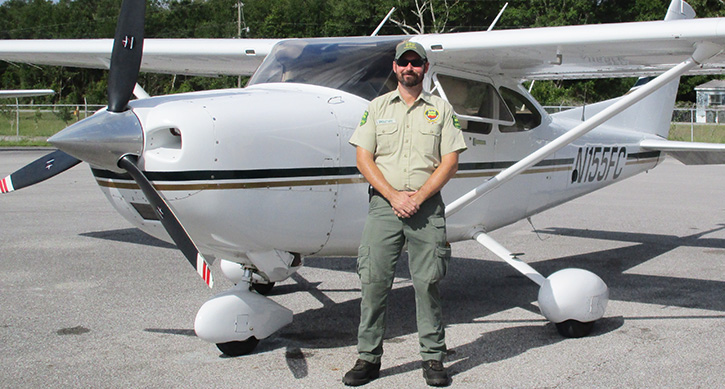
The Florida Forest Service uses aircraft across the state and locally to assist in monitoring and managing forests. Many people are aware how aircraft are used on wildfires and even used on prescribed fires, but other ways aircraft are used include insect and disease outbreaks, forestry Best Management Practices (BMPs), and damage assessments.
After severe weather, such as the February tornadoes, or large wildfires, the Florida Forest Service may send up an aircraft to get initial estimates on size of the area affected and type and extent of damage to both public and private land. This can give estimates quicker, and reduce the need for manpower to hike into possibly unsafe conditions.
When monitoring for BMPs, the forester identifies sites with recent operations from the air. While compliances with certain BMPs can be seen from the air, most require an inspection on the ground. BMPs protect water quality during logging, site preparation, and planting operations. Florida maintains a high rate of compliance with BMPs each year.
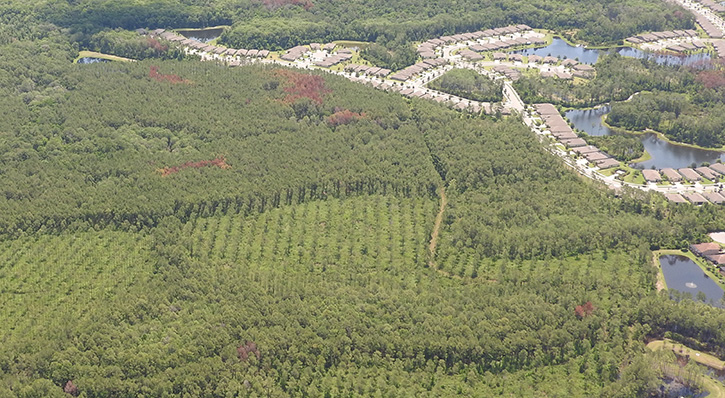
One of the most important flights taken each year is monitoring for southern pine beetle. This beetle can destroy many acres of pine in an outbreak. The Florida panhandle has not had an outbreak since 2001. Each summer, each county is flown in a grid pattern and the forester obtains the latitude and longitude of suspicious looking groups of dead or dying pine trees.
The landowner is contacted and an assessment is made on the ground to confirm or deny the presence of these devastating beetles.
To receive a BMP manual, or cost share assistance for preventing Southern Pine Beetle (must have 10 or more acres of pine trees), or other information, please contact the Escambia County Forester in Molino at (850) 587- 5237.
Pictured top: Scott Singletary, Florida Forest Service fixed wing pilot and his aircraft. Pictured below: A southern pine beetle outbreak and, bottom, thinning to help prevent the insect’s spread. Photos for NorthEscambia.com, click to enlarge.

Florida Gov’t Weekly Roundup: Zika Fever, Card Games Go Bust
August 7, 2016
The conversation across America might have been focused on the presidential race or the upcoming Rio Olympics — but in Florida, everyone was abuzz about Zika.
The mosquito-borne virus had been a nagging presence for a while, but in the week after the first homegrown cases of the disease were disclosed, talk took off about the sickness with a funny name and serious consequences.
 Even GOP presidential nominee Donald Trump, visiting Northeast Florida, was asked to respond. He pretty much said that Gov. Rick Scott had it under control. Scott tried to make the same point, calling Florida a “safe state” after spending weeks ringing the alarm bells about Zika.
With that in play, it took something pretty dramatic to break above the din. Like a judge issuing a potentially wide-ranging ruling that some card games violate state law. Or an already strange race for the U.S. Senate taking another unique turn, with one Democratic candidate insisting he won’t debate another because of domestic-abuse allegations.
NO ZZZs IN FIGHT VS. ZIKA
Despite news coverage prompted by cases of the virus contracted through mosquito bites, most of Florida’s Zika infections still stem from travel outside the country. The total count as of Friday afternoon was 422 cases. Of those, 16 had been locally contracted — i.e., caused by an airborne pest.
Still, the idea that the disease had finally made the long-feared jump to the Sunshine State sent officials scrambling. Scott and the director of the federal Centers for Disease Control and Prevention spent Thursday in Miami talking about state and federal efforts to stop the spread of the virus.
After touring the Wynwood area, an artsy community just north of downtown Miami that recorded the first cases of locally transmitted Zika, Scott appeared with CDC head Thomas Frieden to update the community and the state about the Zika response.
“I spent the day walking around Wynwood and I had the opportunity to meet with residents and business owners to let them know everything we are doing at the state level to combat the Zika virus,” Scott said.
“We are going to continue to be very aggressive,” he said.
The governor continued to lament the fact that Congress has not passed, and President Barack Obama has not signed, a bill to fund a larger Zika response. Scott has authorized $26.2 million in emergency funding to combat the disease, and Frieden said the CDC and the federal government would support Florida’s efforts.
Aside from the health effects of the virus, which can cause severe birth defects, one of the major concerns for Florida is that any outbreak could hamper the state’s tourism industry. Earlier in the week, Scott had stressed that the home of Walt Disney World and hundreds of miles of beaches remains a “safe state,” and on Thursday he said early indications about tourism were reassuring.
“We’ve told basically the world to continue to come to Florida,” Scott said. “I was out at Disney World last week and it was packed, fortunately.”
But at least one expert warned against reading too much into that. Mark Bonn, professor of services management at Florida State University’s Dedman School of Hospitality, said the state — which recently has also drawn negative international attention because of a mass shooting in Orlando and toxic algae blooms in estuaries fed by Lake Okeechobee — needs to get a handle on the Zika issue before the cooler-weather tourism season kicks in.
“We know from tourist behavioral research that the most important decision-making motive in a consumer’s mind about where they’re going to go for their vacation is safety and security,” said Bonn, who specializes in tourism marketing and research. “So if a consumer is at all unsure about a destination’s safety and security, they’re probably going to pass and probably go somewhere else.”
British and Canadian health officials have issued advisories about travel to Florida.
CREATIVE CARD GAMES GO BUST
If it was a gamble for pari-mutuels throughout the state to start operating “designated-player” card games, then their luck might have just run out. In a decision that could have far-reaching implications, an administrative law judge ruled Monday that the way the games are being operated by a Jacksonville poker room violates a state ban on “banked” card games.
Monday’s ruling that the popular card games are being played illegally comes more than four years after Florida gambling regulators first signed off on the games, which have eclipsed other card games like Texas Hold ‘Em in popularity among patrons.
But it wasn’t until last year, as state officials and the Seminole Tribe reached a proposed agreement on a gambling deal, that regulators tried to shut down the games.
The background: The controversy involves what are known as “designated-player” card games, also called “player-banked” card games, which include a hybrid of three-card poker and resemble casino-style card games but are played among gamblers instead of against the house. Pari-mutuel operators — who are banned by law from offering “banked” card games, such as blackjack, in which players bet against the house instead of against each other — contend the games are legal.
But, in a case involving Jacksonville Kennel Club, Inc. that was viewed by both sides as a legal test of the issue, Administrative Law Judge Suzanne Van Wyk ruled Monday that the way the card games are being played “did indeed violate” state law.
“Given the strict statutory prohibition against gambling, the intricate regulatory scheme imposed, and the narrow carve out for cardrooms, the games cannot be allowed to continue to operate in the current manner,” Van Wyk wrote in a 54-page order. “The basic (tenet) of the cardroom statute is that authorized games are not casino gaming because the participants ‘play against each other.’ As currently operated, the designated player is a player in name only. The existing operation of the games does no more than establish a bank against which participants play.”
Lawyer John Lockwood, who represents the Jacksonville facility and other operators, said Monday that he was reviewing Van Wyk’s order. An appeal is expected.
NO DEBATE ABOUT U.S. SENATE RACE
The odds of a debate in the Republican primary for U.S. Senate — where incumbent Marco Rubio appears to be well out in front of a cast of opponents including home builder Carlos Beruff — were already looking pretty long. Now it seems that the more hotly contested Democratic side of the race will also lack any face-to-face showdowns.
Democratic Congressman Patrick Murphy said Wednesday he would not debate his main opponent, Congressman Alan Grayson, in the Aug. 30 primary because of allegations of domestic abuse. That comes after reports last week, led by Politico, that Grayson’s ex-wife said she was the victim of abuse.
Grayson has denied the allegations, but the story prompted at least two progressive organizations that had supported Grayson to abandon him weeks before the primary.
On Wednesday, Murphy backed out of any plans to debate Grayson after he said abuse survivors told him “that Alan Grayson’s continued presence in this race is an insult to the countless Floridians whose lives have been affected by this kind of violence.”
“Alan Grayson’s words and actions have disqualified him from public service, and I cannot in good conscience give him a platform to promote himself and his campaign,” Murphy said. “As a result, I will not participate in any forums or debates with Alan Grayson.”
Murphy and Grayson also face longshot candidate Pam Keith, a labor attorney, and Grayson’s campaign tried to use that to imply sexism might have played a role in Murphy’s decision to capitalize on “some very serious allegations to exploit this very personal family struggle, and for his own political gain.”
“Pam Keith was unequivocal today about her willingness to debate Alan Grayson alone, or with Patrick Murphy,” Grayson campaign manager Michael Ceraso said. “Perhaps Patrick Murphy has an issue debating with anyone in this primary, whether it’s Alan Grayson, or the only woman in the race.”
The Murphy-Grayson race has already been a bare-knuckle affair, and while it might lack any face-to-face clashes, the two still have more than three weeks to sling accusations at each other before they cross the finish line.
STORY OF THE WEEK: Gov. Rick Scott and other officials worked to reassure Floridians and tourists in the wake of the first locally transmitted cases of the Zika virus.
QUOTE OF THE WEEK: “We probably should just schedule the same conversation about every seven days, it appears.”—state Chief Financial Officer Jeff Atwater, asked to respond to the latest comments from GOP presidential nominee Donald Trump that caused widespread outrage.
by Brandon Larrabee, The New Service of Florida
Biloxi Beats The Wahoos
August 7, 2016
The Pensacola Blue Wahoos lost its fourth straight game, falling, 7-2, Saturday to the Biloxi Shuckers at MGM Park.
 The Shuckers starter Luis Ortiz and reliever Tayler Scott combined to shut out Pensacola through five innings, allowing one hit, walking two and striking out six. Reliever Stephen Kohlscheen earned his 17th save of the season throwing 1.1 innings, allowing two hits and two walks, while striking out three.
Kohlscheen loaded the bases in the ninth allowing singles to Pensacola catcher Kyle Skipworth and center field Ronald Bueno and a walk to Phillip Ervin. But Biloxi Kohlscheen worked out of the jam to end the game by striking out second baseman Alex Blandino and right fielder Sebastian Elizalde.
For the game, Pensacola had 10 hits but was 1-6 with runners in scoring position and left 10 base runners stranded. The Blue Wahoos also struck out 10 times.
Leading Biloxi’s offense was right fielder Clint Coulter, who went 2-2 and scored four of the Shuckers’ seven runs. It was just his second game after being called up from High-A Brevard County Manatees.
Pensacola, which is 19-23 in the second half after winning the first half Southern League South Division crown, were led by Alex Blandino, who got on base four times in five plate appearances and scored one of the Blue Wahoos two runs. Pensacola catcher Kyle Skipworth was also 2-3 with one run scored and one RBI.
However, Biloxi center fielder Brett Phillips hit a sacrifice fly to right field scored the first five runs of the game to lead, 5-0, in the sixth inning. Coulter scored three times.
Pensacola finally scored its first run of the game when Skipworth doubled to lead off the eighth inning and scored when center fielder Ronald Bueno singled to center field to pull the Blue Wahoos within, 5-1. The Blue Wahoos scored a second and final run of the game when Blandino crossed the plate on a sacrifice fly by right fielder Sebastian Elizalde to make the score, 5-2. With two outs, Pensacola loaded the bases but third baseman Taylor Sparks struck out to end the inning.
Biloxi extended its lead to 6-2 when pinch hitter Nick Ramirez singled to center to score Coulter for the fourth time. It went up, 7-2, when left fielder Tyrone Taylor singled to center field with two outs to drive in Ortega.
Pensacola started reliever El’Hajj Muhammad for the first time this season in place of Rookie Davis, who was called up to Triple-A Louisville Bats. Muhammad had made 27 appearances for the Blue Wahoos this season. He threw 46 pitches over three innings without giving up a hit and allowed one unearned run, walking one and striking out two.
The Pensacola Blue Wahoos return home Thursday, August 11 to take on the Tennessee Smokies.
Names Released In Murder-Suicide Near Jay
August 6, 2016
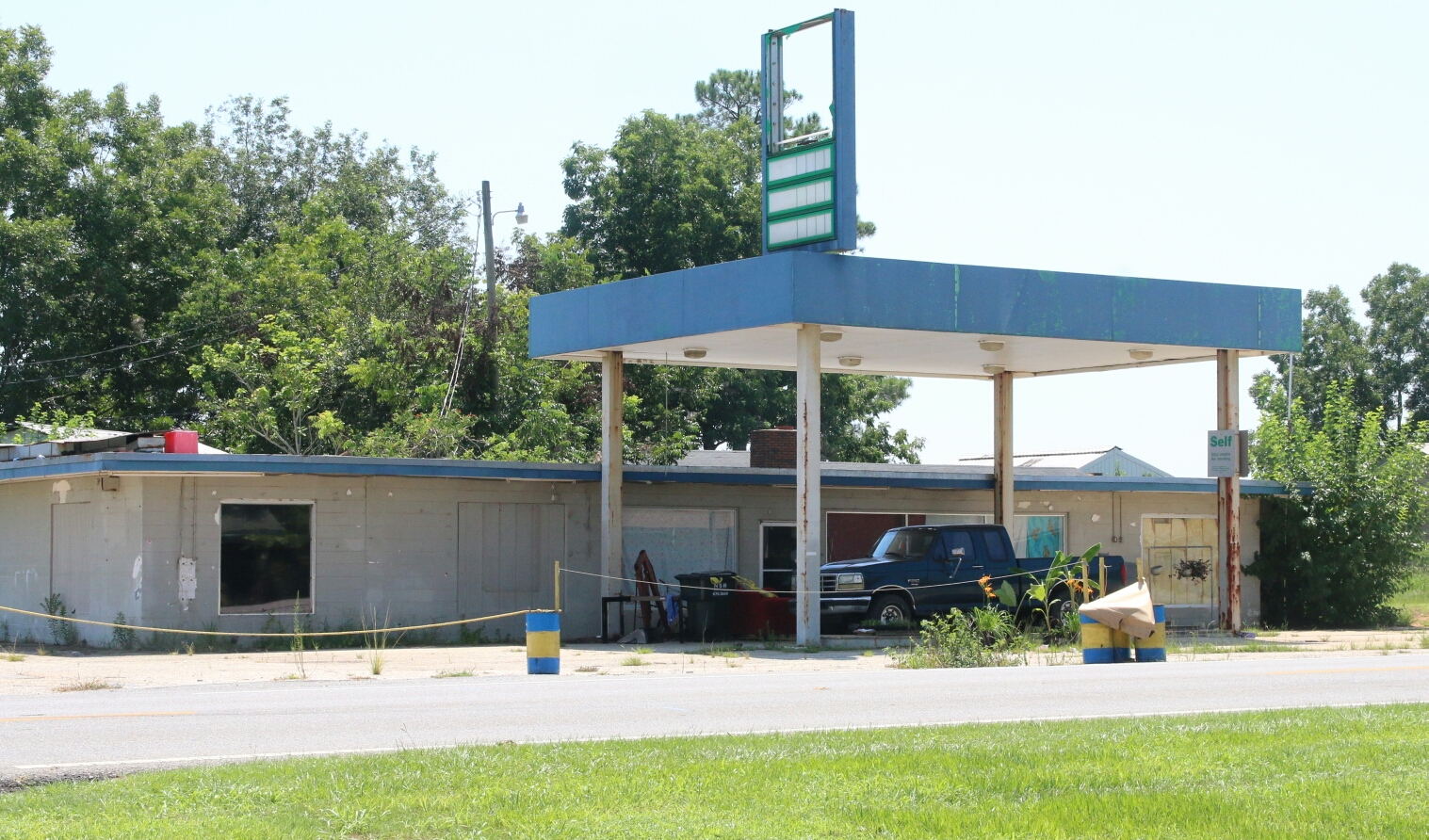
A murder-suicide near Jay that left a man and a woman dead remains investigation as the names of the victims were released Saturday night.
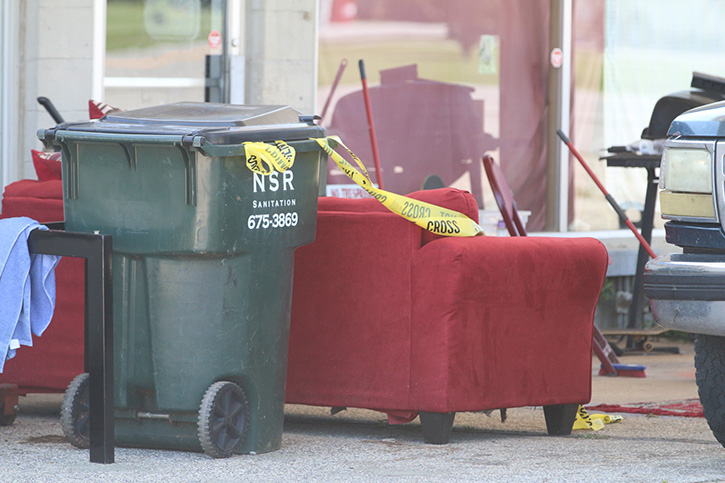
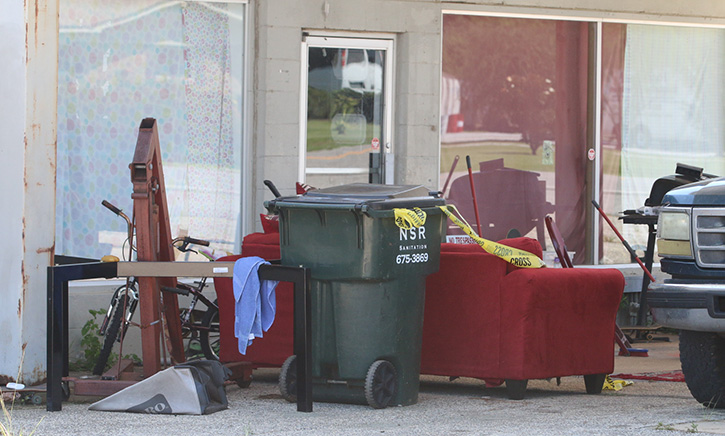
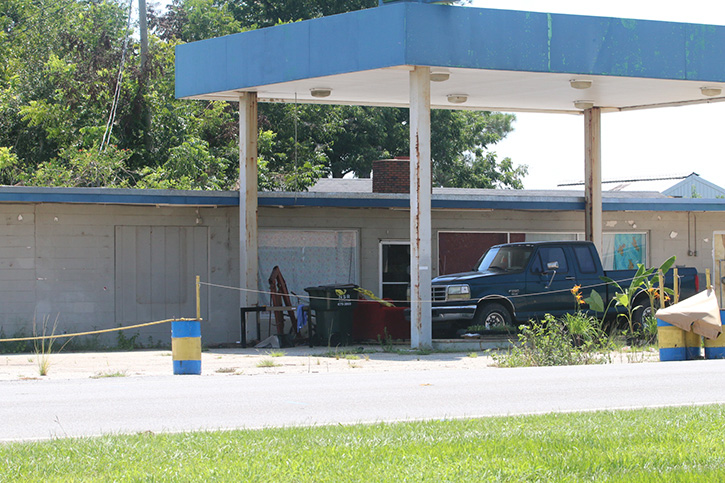
The Santa Rosa County Sheriff’s Office was dispatched to a disturbance in the 12000 block of Chumuckla Highway in the Brownsdale community south of Jay late Friday night. As deputies were responding, they received information that the situation was quickly escalating inside the residence, located in a former gas station.
Deputies arrived to find an adult female and an adult male inside the residence with severe gunshot wounds, according to Deputy Rich Aloy, spokesperson for the Santa Rosa County Sheriff’s Office.
Brandon Hayes Hammett, 36, was pronounced deceased at the scene, while 33-year old Stacy Marie Williams was transported to an area hospital where she later passed away. The Sheriff’s Office has not identified which person was the murder victim.
SRSO major crimes detectives are actively investigating the incident.
Further detail will be posted as they become available.
NorthEscambia.com photos.
Fire Marshal Investigating Early More Fire That Destroyed Mobile Home
August 6, 2016

An early morning fire that destroyed mobile home near Walnut Hill is under investigation by the Florida State Fire Marshal.
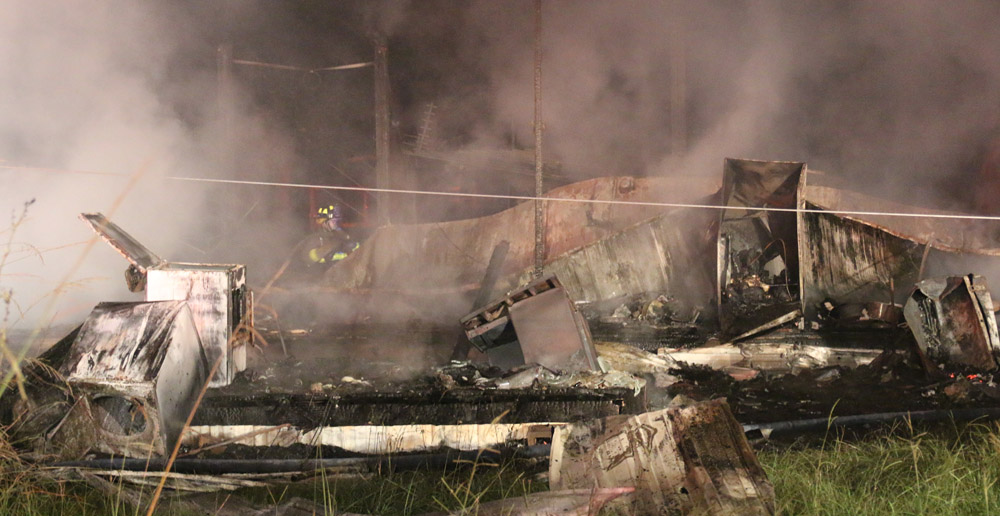
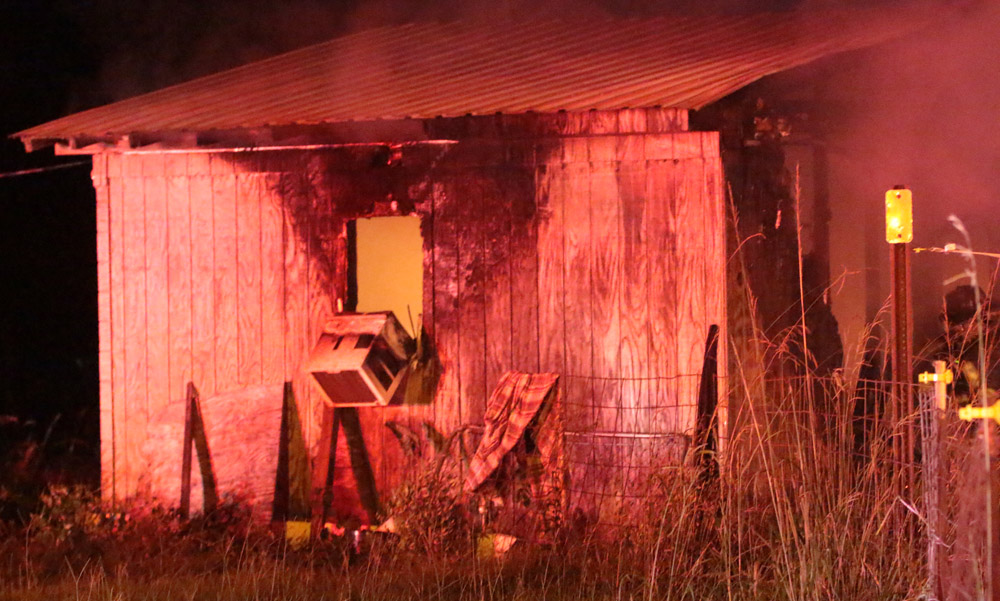
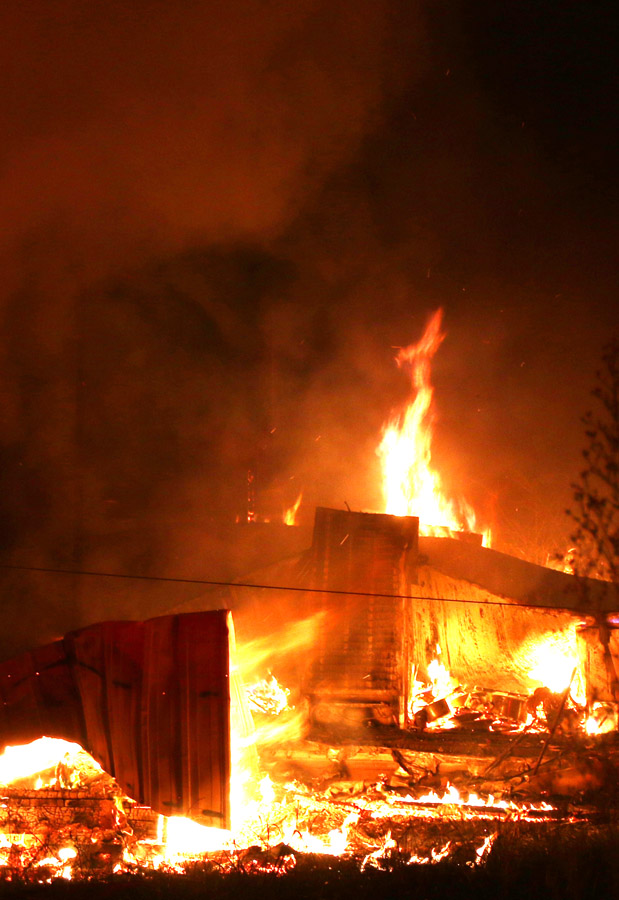 A neighbor reported that the mobile home in the 6900 block Circle Road, just off Rockaway Creek Road, was fully involved and mostly on the ground about 3:10 a.m.
Firefighters arrived to find that the mobile home had been destroyed by fire. An occupant of the mobile was treated on the scene by Atmore Ambulance. There was no word if the occupant was transported to a hospital.
The cause of the fire is under investigation by the Florida State Fire Marshal’s Office.
The Walnut Hill, Century and McDavid stations of Escambia Fire Rescue and the Atmore Fire Department also responded to the blaze, along with the Escambia County Sheriff’s Office.
NorthEscambia.com photos, click to enlarge.
Cops Like Donuts And Coffee, Right? Meet A Little Guy With A Big Heart
August 6, 2016
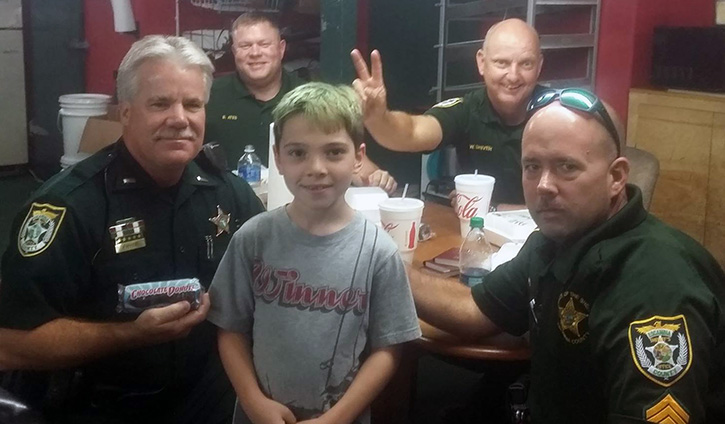
Escambia County Sheriff’s Office deputies had the chance this week to meet a young man with a giving heart at Gilley’s Country Store in Bratt. Tyler’s mom submitted the photo and wrote the following:
“Today Tyler and I went to our corner store in Bratt where we saw four of Escambia County Sheriff’s Offices finest. Tyler was very excited as he LOVES police officers. He said ‘mom cops’ favorite drink is coffee and their favorite food is donuts’….we both laughed…then he went on to ask if he could use some of his own money to buy the officers some donuts. He picked 4 packs of chocolate donuts. Paid for them and then gave them to the officers. They were all very grateful and very polite. Tyler was so excited that his green hair matched their green uniforms!!! Lol. Tyler thanked them for “keeping the place safe.” And from our family to the ECSO family we thank each of you for your service and putting your lives on the line daily. Be blessed and stay safe out there.”
Courtesy photo for NorthEscambia.com, click to enlarge.