

Ernest Ward Names October Students Of The Month
October 28, 2013
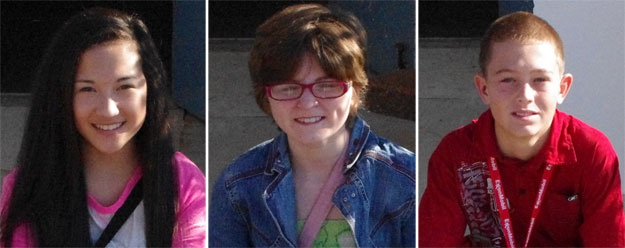
Ernest Ward Middle School has named their October Students of the Month. They (picture L-R) Kayla Galvan, eighth grade; Aurora McCann, seventh grade; and Keaton Solmonson, sixth grade. Submitted photos for NorthEscambia.com, click to enlarge.
The Power Of Pink: Thousands Take Part In Breast Cancer Walk
October 27, 2013


About 15,000 people took part in the 11th annual Making Strides Against Breast Cancer walk Saturday morning in Pensacola.
“My sister and I walked with our mom who is a breast cancer survivor,” Tiffany White of Flomaton said after the walk along with her mother Brenda Peterson of Century.
Like Tiffany, most walked for a reason. For a mom, a grandmother, a friend or their own personal battle against breast cancer. For many, it’s a party-style event, with a variety of festive outfits. The walk begins at the former University Mall and ends at Cordova Mall.
“I try and walk every year in the Breast Cancer Walk, my grandma had it 15 years ago,” said Ashley Suggs of Cantonment. “She’s a survivor!”
There were hundreds of survivors honored during the walk that raises nearly a half million dollars each year for breast cancer research and the American Cancer Society.
Pictured top: Valerie Craft of Century, survivor Brenda Peterson of Century and Tiffany White of Flomaton. Pictured below: The view from Chris Jordan of Cantonment as an estimated 15,000 took part in the annual Making Strides Against Breast Cancer walk Saturday morning in Pensacola. Pictured inset: Ashley Suggs of Cantonment and family walk for her grandmother. Photos for NorthEscambia.com, click to enlarge.

Photo Gallery: Hundreds Attend Williams Station Day
October 27, 2013
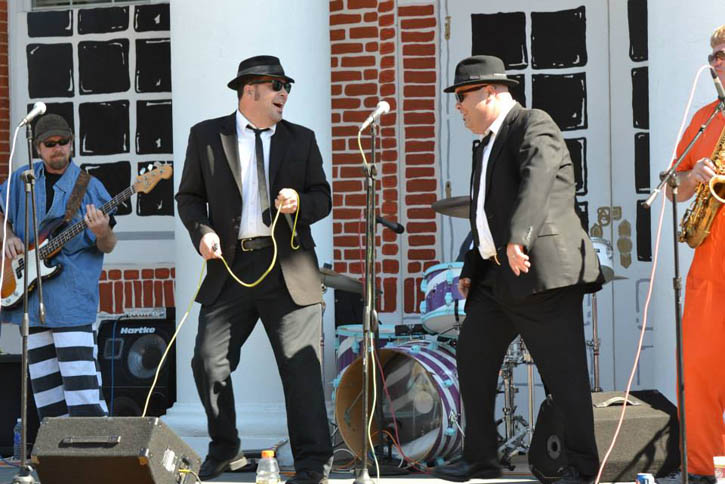
 Hundreds attended the 22nd annual Williams Station Day in Atmore Saturday.
Williams Station Day takes its name from Atmore’s early history when in 1866 the community was a supply stop along the Mobile and Great Northern railroad.
Festival-goers were entertained by a wide variety of musical acts, and a wide variety of arts and crafts were also available. The Alabama Blues Brothers provided the feature entertainment as part of their farewell tour.
For a photo gallery, click here.
Pictured top: The Alabama Blues Brothers perform during Saturday’s Williams Station Day in Atmore. Pictured inset and bottom: Scenes from Williams Station Day. NorthEscambia.com photos by Marcella Wilson, click to enlarge.
Master Deputy Gulsby, K-9 Caleb Place In National Competition
October 27, 2013
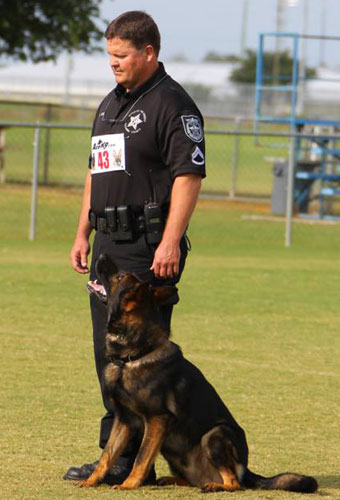 Escambia County Sheriff’s Office Master Deputy Wayne Gulsby of Molino and his K-9 partner Caleb recently won third place in the Police K9 Agility Competition during the United States Police Canine Association National Certification Course in Washington, D.C.
Gulsby has been employed by the Escambia County Sheriff’s Office for about 27 years, and K-9 Caleb has served since February of 2013. Caleb is a German bred and imported German Shepherd and is a certified patrol/bomb dog.
Courtesy photo for NorthEscambia.com, click to enlarge.
Weekend Gardening: Colorful Bedding Plants Can Brighten A Winter Day
October 27, 2013

Decreasing day length is a signal to start preparing for winter. Soon, deciduous shrubs will drop their leaves and the landscape will appear stark and less impressive. To keep the gloomy days of winter at bay, add cool season bedding plants to the landscape.
 Bedding plants are those that are commonly used in residential and commercial landscapes to provide color and interest. No other group of plants can so quickly and economically create a colorful landscape.
Most bedding plants are annuals. These short-lived plants grow from seed, bloom and die within one growing season. The transient nature of annuals means that at the end of their season when they are no longer attractive, annuals are removed and replaced with new plantings.
Many flowering plants prefer a very specific season; therefore, bedding plants are classified into two groups based on the temperatures they prefer. Cool season bedding plants do best in the cold to mild temperatures of October through early May and generally tolerate typical winter freezes without protection.
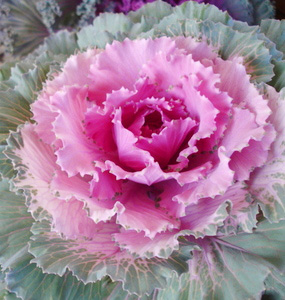
According to a University of Florida/IFAS publication, bedding plants that can be added to the North Florida landscape now include alyssum, baby’s breath, calendula, carnation, dianthus, dusty miller, foxglove, hollyhock, ornamental cabbage and kale, pansy, petunia, snapdragons and violas.
 Most annual bedding plants prefer to be in a sunny location. Prepare the planting beds several weeks before planting. First, remove any weeds or other unwanted plants from the bed. Next, turn the soil to a depth of about eight inches. Spread a two- to four-inch layer of compost, rotted leaves, aged manure, composted finely ground pine bark or peat moss over the bed, and then evenly sprinkle a light application of an all purpose fertilizer. Thoroughly blend the organic matter and fertilizer into the bed, rake smooth and you’re ready to plant.
Gardeners are accustomed to (and even demand) that bedding plants be in bloom when they are purchased. Some cool season bedding plants, however, will provide far superior results if they are purchased when young and before the colorful display begins.
Bedding plants are typically planted to make a dramatic statement. To accomplish that, place multiple plants of the same kind in a bed. Bedding plants generally look best and the beds will fill in better when the rows are staggered. Lay out the first row of plants spaced properly. The second row is laid behind the first row at the appropriate spacing from it, but the plants are placed between the plants of the first row so that they form triangles with those plants.
Flower beds of colorful bedding plants add a lot to the landscape but require a fair amount of maintenance to stay looking their best. Keeping beds well weeded is critical. A two-inch layer of mulch will help considerably in keeping weeds from growing, and using preemergence herbicides (weed preventers) may help in some situations. However, always plan on having to do some hand weeding.
Theresa Friday is the Residential Horticulture Extension Agent for Santa Rosa County.
Northview Band Ranked Best In Class At Dixieland Showcase
October 27, 2013
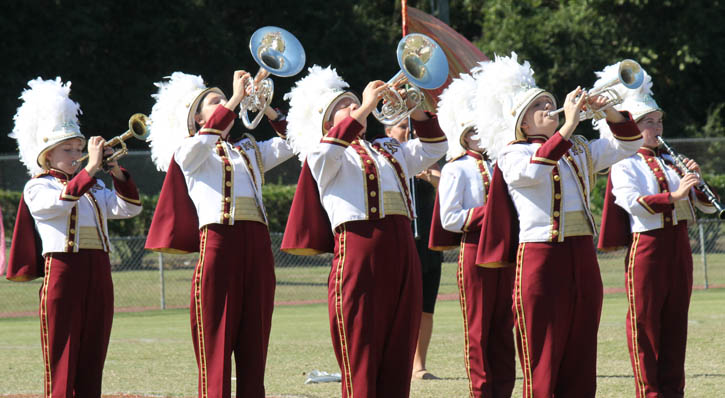
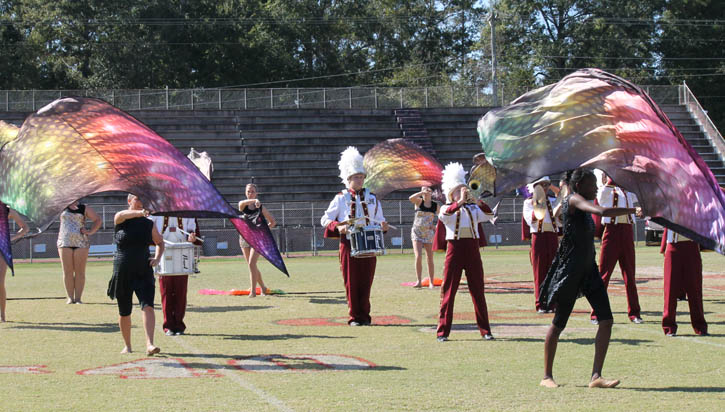
The Northview High School Tribal Beat Band took top honors in their class Saturday during the annual Dixieland Band Showcase at T.R. Miller High School in Brewton.
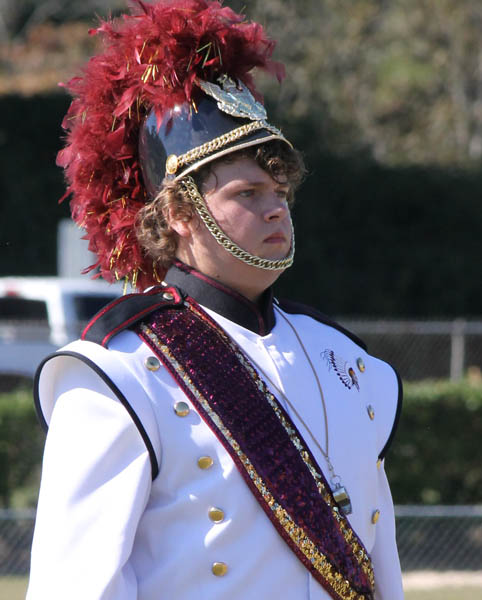
The Tribal Beat Band was named Best in Class Drum Major, Color Guard, Percussion, Drum Line and Band during the event. The Northview Band also received straight superiors in all categories but one and an overall superior rating.
Saturday’s event included bands from across Alabama and Florida.
Pictured top and below: The Northview High School Tribal Beat Band, rated superior and Best in Class during the Dixieland Band Showcase at T.R. Miller High School in Brewton Saturday. Pictured inset: Cory Hester, named Best in Class Drum Major during Saturday’s event.
Abundance Of North Escambia Fall Festivals, Events Planned
October 26, 2013
A wide variety fall festivals and other events are scheduled for this weekend and next week in the North Escambia area:
Molino Library Parade, Trick or Treat
The Molino Branch Library will host a Not-So-Scary for Little Goblins story time and parade at 4 p.m. on Monday, October 28 for children ages 0-5. Beginning at 6 p.m. and in conjunction with the Mid-County Historical Society, the library will be hosting their 1st Annual “Trick-or-Treat Down a Spooky Museum Street” with a special guest visit from the Florida Garrison 501st Legion. Enjoy stories and songs and some silly theatre presented by staff. This event is for children ages five and up and their grown-ups.
Mexican Dinner For Molino Park Elementary
Aldersgate United Methodist Church in Molino will host a Mexican Dinner on Wednesday, October 30 from 6 p.m. until 7 p.m. Eat in or take out during this time. Cost is by donation with proceeds going to Molino Park to help with replacement of electronic equipment. (850) 587-5294.
Cantonment Pumpkin Patch
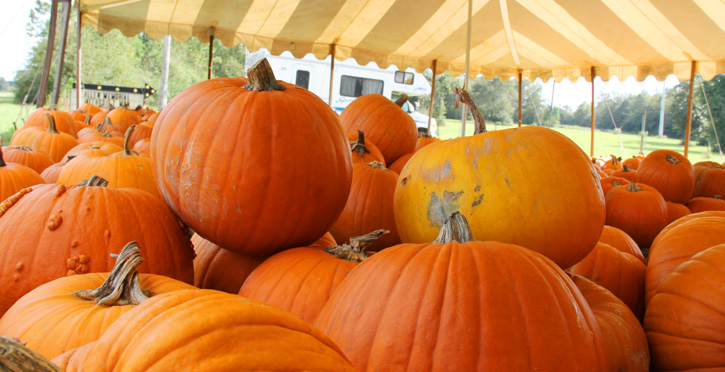
Allen Memorial United Methodist Men’s Pumpkin Patch is now open from 10 a.m. until 6 p.m. The pumpkin patch is located on Highway 29 at Neal Road, just north of the paper mill.
Molino Community Fall Festival
A Community Fall Festival will be held Thursday, October 31, from 6 p.m. until 8 p.m. at Victory Assembly of God Church located on Highway 29 in Molino. Come join the churches of the community for a fun-filled evening of games, candy, great food and fellowship.
Century Library Program
The Century Branch Library will have their Halloween program on Thursday, October 31 at 5 p.m. There will be ghost stories and lots of goodies for little goblins. Everyone is invited to attend and wear their costume.
Beulah Chapel Fall Festival
Fall Festival, Thursday, October 31 from 6-8 p.m. at the Beulah Chapel Assembly of God at 2311 Highway 4A. Food, games, bounce house and more.
Trunk Of Treat
St. Monica’s Episcopal Church, 699 S. Hwy. 95-A, Cantonment will host Trunk or Treat from 6-8 pm Thursday, October 31st in the church parking lot. Children are invited to trick or treat free from trunk to trunk. There will be music provided by our DJ and a hay ride. Chili and refreshments will be also be available.
Cottage Hill Fall Festival
First Baptist Church of Cottage Hill will hold their community wide Family Fun Fall Festival on Thursday, October 31, from 6 – 8 p.m. There will be an inflatable bounce house, lots of carnival booths with lots of candy, face painting, hayrides, cake walk, chili with all the fixings, hot dogs, desserts, and drinks. Everyone welcome and everything is free. More info: edavidson@cottagehillbaptist.net or (850) 968-2357.
Living Truth Fall Festival
Living Truth Church will hold their Fall Festival on Thursday, October 31, from 5:30 p.m. until 8 p.m. at the church, located at 8897 Byrom Campble Road. Admission is free and there will be lots of food and games.
Century Care Fall Festival
Century Care Center will hold their annual fall festival, October 31, beginning at 4 p.m. There will be games prizes, food, a give away basket drawing, and a haunted house. Everyone is invited to attend.
Arts and Crafts Festival, Car Show
Pine Forest United Methodist Church will hold their 24th Annual Arts and Crafts Festival and Car Show on Saturday, November 9 from 9 a.m. until 3 p.m. Live music by Nashville artist Ron Jeffers. Activities include over 130 arts, crafts & other vendors, food, homemade baked goods, and a holiday luncheon. Free admission. Free parking. Door prizes. 2800 Wilde Lake Boulevard. (850) 944-0170. Proceeds for community ministries. www.pineforestumc.org.
Walnut VFD Fish Fry
The Walnut Hill Volunteer Fire Department 44th Annual Catfish Fry will be held Saturday, November 2 from 11 a.m. until 2 pm. At the Walnut Hill Fire Station on Highway 97. Catfish fillets or grilled chicken, hush puppies, baked beans, cole slaw, homemade bread, cakes. $7 per plate. Door prize drawing at 1 p.m. Baked goods and live auction.
Dogwood Park Fall Festival
Dogwood Park Baptist Church will hold their annual old fashioned peanut boil and fall festival on Saturday, November 2, from 1 p.m. until 5 p.m. at 3301 Highway 97. Lots of boiled peanuts, bounce house, live music, horse rides, games and more. Everyone is invited to attend.
Pictured: The Allen Memorial Pumpkin Patch on Highway 29 at Neal Road in Cantonment. NorthEscambia.com photo, click to enlarge.
Escambia Schools Foundation Holding Student Artwork Contest
October 25, 2013
The Escambia County Public Schools Foundation is seeking artwork submissions from Escambia County K-12 students for its 27th Annual We Believe in Children 5K Run & Health Fair, which will be held on January 25, 2014. The winner of the contest will have their design on event t-shirts as well as posters, registration forms, and many other marketing materials used to promote this year’s event.
Students or their teachers should submit artwork, along with the attached required form by October 31, 2013. The top 3 finalists will be chosen by the 2014 We Believe in Children 5K Run Committee; students, parents, teachers, and the rest of the community will then vote on the final design winner on Facebook. The winning student will receive a free t-shirt featuring his or her design, as well as a party.
Entry Guidelines:
- Create artwork on a white sheet of paper – 8 ½ X 11 or 11 X 14.
- Use bold colors—paint, marker, or graphic art is acceptable.
- Dimensional art is acceptable as long as it can be photocopied.
- Artwork should reflect the We Believe in Children 5K Run & Health Fair (running, walking, active lifestyles, healthy communities, etc.)
- Name and date of the event should be included in the design: We Believe in Children 5K Run & Health Fair, January 25, 2014.
- All original artwork submitted becomes the property of Escambia County Public Schools Foundation. The artwork may be reproduced, distributed, displayed or derivative works may be created without compensation to the entrant.
- Artwork MUST be entirely original work, by the submitting student, and cannot include any copyrighted image or likeness.
- Tips: Use as much space as possible on the paper so the design is easy to see. Make sure all lines are clear and concise.
For additional information, please contact Cindy Nall at (850) 469-5354 or cnall@escambia.k12.fl.us.
To learn about sponsorship opportunities for the 2014 We Believe in Children 5K Run & Health Fair, please contact Jennifer Passeretti at (850) 430-7457 or jpasseretti@escambia.k12.fl.us.
Tate Drama To Present ‘Jabberwock’
October 24, 2013
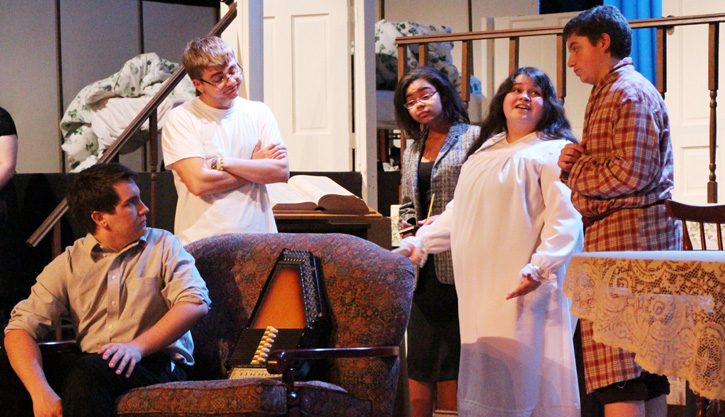

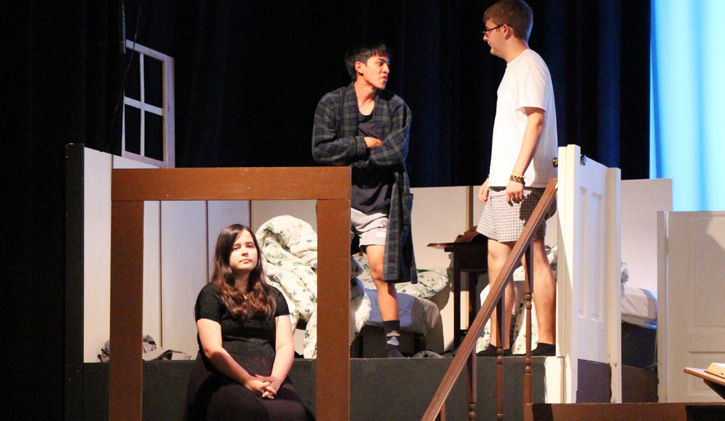
The Tate High School Drama Department will present “Jabberwock” nightly through Saturday.
Jabberwock is based on the early life of James Thurber who was an American author and cartoonist who contributed to The New Yorker during the 1920’s, 30’s and 40’s. Jerome Lawrence and Robert E. Lee adapted Thurber’s writings and drawings into this play that tells the story of a young Jamie Thurber and his eccentric family in the years before and during World War I.
Jabberwock will be performed at 7 p.m. Thursday, Friday and Saturday in the school cafetorium. Tickets are $7 at the door.
Pictured: The Tate High School Drama Department’s presentation of Jabberwock. Photos by Jennifer Beal for NorthEscambia.com, click to enlarge.
Prescribe Burns Allow For Rare Orchids, Other Flowers To Bloom
October 24, 2013
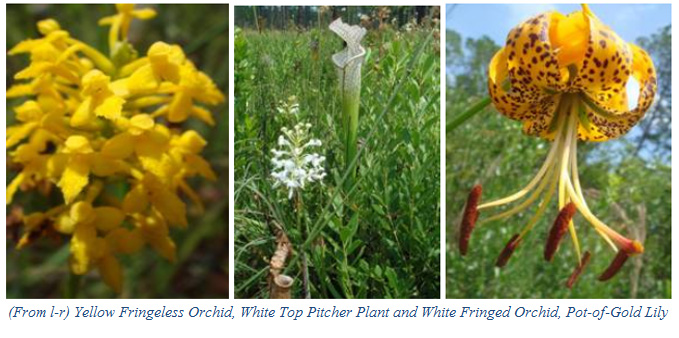
A grouping of rare orchids and other flowers blooms bright in Blackwater River State Forest this year. The brilliant colors are, the Florida Forest Service says, proof of a healthy forest aided by a robust prescribed burning program.
The forest service’s statewide land management program has also brought a resurgence of the endangered red-cockaded woodpecker in Blackwater, once down to a dozen pair and now standing at almost 100 pair.
“Our forestry management programs, especially prescribed burns, bring our state forests back into good health,” said Florida State Forester Jim Karels. “The burns are a crucial part of our statewide endangered plant conservation program, one of the longest running such programs in the country.”
The blooms in Blackwater now include Pot-of-Gold and Catesby’s lilies, White Top Pitcher Plants, and several species of rare orchids, including four Yellow Fringeless Orchids (Platanthera integra) blooming together, more than has ever been seen in the state forest since the program began. Conservation efforts will ensure these plants continue to bloom on state forest lands for many years to come.
Prescribed burning helps manage the health of forest lands, control pests and disease, and improve wildlife habitat and control hardwood encroachment in sensitive areas such as pitcher plant bogs or red-cockaded woodpecker clusters. It also contributes to the restoration and maintenance of biological communities and reduces the hazard of wildfire.
Since 1991, Florida has worked with state universities, researchers and other nonprofits to support about 10 endangered plant conservation projects each year. Other than prescribed burns on managed lands, projects include removing exotic and invasive species, inventory of state forest lands for rare plants, and collection and propagation of plants. The program has protected more than 100 species of endangered plants on more than 150 public lands.