
Watercolors On Display This Month At Molino Branch Library
November 17, 2014
The art of Patsy Pennington is on display this month at the Molino Branch Library.
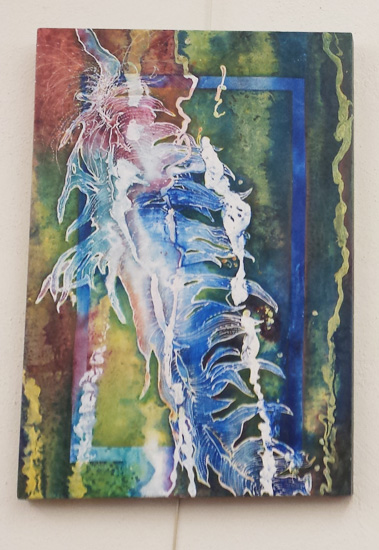 Pennington’s favorite subjects are usually found in nature which she depicts in an almost abstract manner for the full advantage of the transparency and flow of the watercolors. Her works have earned her membership in numerous watercolor societies throughout the nation and innumerable awards.
She has illustrated four books for Peter Pauper Press – “Friends Make the Difference, “GIft of Friendship”, “Friends Make the Best Presents” and “Teachers Make a Difference”.
Courtesy photos for NorthEscambia.com, click to enlarge.
First Baptist Bratt Will Serve As Operation Christmas Child Central
November 16, 2014

Volunteers will soon be busy at the First Baptist Church of Bratt during “National Collection Week” for Operation Christmas Child. For the 21st year, the simple, gift-filled shoe boxes will bring Christmas joy and evangelistic materials to children in over 130 countries across the world.
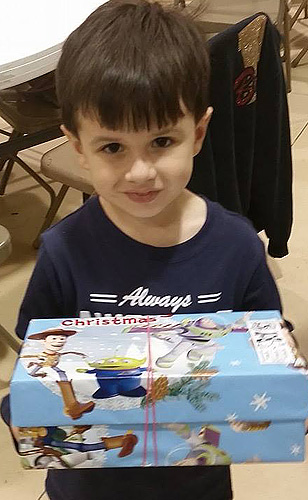 National Collection Week for OCC is November 17-24. The First Baptist Church of Bratt will be the official OCC Relay Center for the north end of Escambia County, FL. The FBC Bratt will also accept boxes from individuals, groups or churches in Escambia County, AL, again this year.
“This is not about the FBC of Bratt”, says Student Pastor Tim Hawsey, Relay Center coordinator. “This is about being a blessing and bringing God’s love and hope to children in poverty around the world that would not receive it otherwise. We have gone through the intense process of been approved as a church to be a Relay Center to collect the boxes from individuals, families, and churches of our area, document and pack them into special cartons and take them to the next level for Samaritan’s Purse, and we are blessed to do it.”
Collection hours at the First Baptist Church of Bratt will be:
- Monday, Nov. 17: 8 a.m. – noon, 4-6 p.m.
- Tuesday, Nov. 18: 8 a.m. – noon
- Wednesday, Nov. 19: 8 a.m. – noon, 4 PM – 6 PM
- Thursday, Nov. 20: 8 a.m. – noon
- Friday, Nov. 21: 8 a.m. – noon
- Saturday, Nov. 22: 8 a.m. – noon
- Sunday, Nov. 23: 8 a.m. – noon, 4-6 p.m.
- Monday, Nov. 24: 8 a.m. – 11 a.m.
Operation Christmas Child boxes should be packed in a specific manner, and there are changes this year. For more information, call Hawsey at the First Baptist Church of Bratt at (850) 327-6529, visit www.samaritanspurse.org/occ, or call (800) 353-5949. Resources are available for churches that wish to participate.
Pictured: Some of the Operation Christmas Child boxes collected at Ray’s Chapel Baptist Church in Bogia. Photo for NorthEscambia.com, click to enlarge.
Troopers ‘Stuff The Charger’ For Manna Food Pantries
November 14, 2014
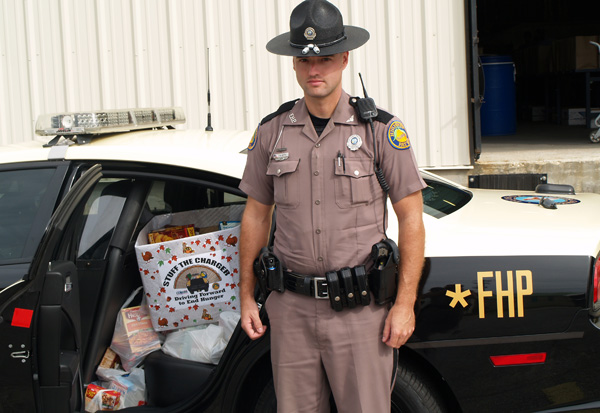
The local Florida Highway Patrol troop based in Pensacola “Stuffed the Charger” during their inaugural food drive. The food was delivered to the Manna Food Pantries. Statewide, the FHP collected over three tons of food during the event. Photo for NorthEscambia.com, click to enlarge.
Fields of Faith: Student Led Worship Event Planned
November 14, 2014
The Northview High School Fellowship of Christian Athletes (FCA) is sponsoring a student led worship event next week in Tommy Weaver Memorial Stadium in Bratt.
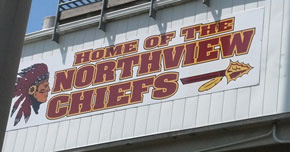 Northview students, area churches and community members will come together to worship, share student testimonies and hear a message from guest speaker Pastor Nathan Brown of Ray’s Chapel Baptist Church.
The public is invited to attend the event from 6-8 p.m. on Wednesday, November 19. Donations will be accepted for Bryant Cooper, a local 17-year old recently diagnosed with cancer, and the family of Darion Riley, a Northview student that passed away as the result of a Molino traffic accident last week.
Mae Day: Dog’s 11 Months On The Run End With Happy Reunion
November 13, 2014

Perhaps the best known dog in Atmore is no longer on the run; she’s back home in Birmingham today, ending an 11-month game of cat and mouse.
Back on January 15, Vickie Clark’s son was visiting Atmore from Birmingham along with 15-month old Mae the dog. Mae jumped the fence, beginning the 11-month saga.
Atmore Animal Shelter employee Brandon James and other animal shelter employees began, very unsuccessfully, to capture Mae.
 “She’s one of the smartest dogs I’ve ever come across,” James said Wednesday. “She’d smell you from a long way away and take off.”
The Clarks and the animal shelter turned to the community which in turn provided numerous Mae sighting reports over the past several months. Animal shelter employees would head out, only to be outsmarted or outrun by Mae each time.
“Brandon James has been my lifeline to the whereabouts of this lost puppy. Our family looked for Mae numerous times but sadly she would run from familiar voices and was truly scared and in ‘flight’ mode,” Clark said in a letter praising James and the animal shelter. “Brandon and his team never gave up. The community would contact Brandon with every Mae sighting and he would go out to try to capture this elusive rascal. When I would start to lose hope, Brandon would lift me up and remind me to keep the faith that they would get our girl. Brandon worked tirelessly to capture Mae in every way possible. ”
Members of the Atmore community would feed Mae. One resident would even toss her flea medication stuffed inside a hot dog on a regular basis. James called her “Atmore’s mascot”.
The was one capture along the way but it turned out to be a male look alike.
Then there was a big break in the hunt for Mae last week. She was spotted in a fenced-in yard. James said an animal shelter staffer got close enough — from the upwind side — to hit her with a tranquilizer dart.
“I thought we had her since she was in a fenced-in yard, but no,” James said. “She got away, and then there was a three block foot chase. But she went down from the tranquilizer and we were able to pick her up.”
A quick check by a local veterinarian revealed that Mae was in remarkably perfect health — no worms, no other problems despite her 11-month time on the lam.
Mae was reunited with her “mom” Vickie Wednesday at the animal shelter. There was brief celebration, and then it was back home to Birmingham. Clark said she had no planned stops between Atmore and Birmingham to eliminate any other escape possibilities.
Pictured top: Mae reunited with her family Wednesday, along with members of the Atmore community and the Atmore Animal Shelter staff that took part in her 11-month rescue. Pictured inset: Atmore’s “mascot” dog Mae. Courtesy photos for NorthEscambia.com, click to enlarge.
Can The Yellow Jackets: Manna Food Drive Underway At Northview
November 12, 2014
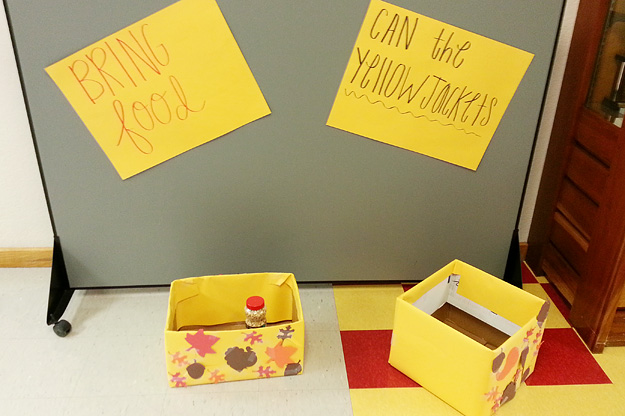
A “Can the Yellow Jackets” food drive is underway at Northview High School. The Chiefs will play the Vernon Yellow Jackets in the first round of the state playoffs this Friday night. Non-perishable food items are being collected for the Manna Food Pantries during the food drive, which concludes November 17. NorthEscambia.com photo, click to enlarge.
Local Rotary Clubs Honor Local Military Members
November 11, 2014
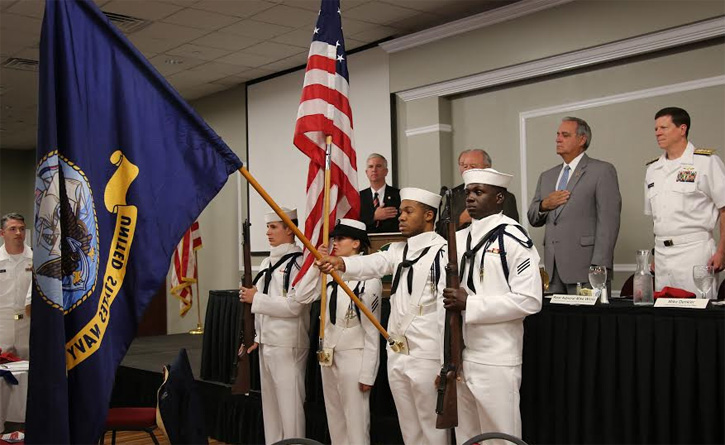
Rear Adm. Mike White, commander, Naval Education and Training Command (NETC) was the guest speaker at the recent Combined Rotary Clubs of Pensacola (CROP) annual Military Appreciation Luncheon.
More than 270 personnel including Rotarians from 13 local clubs, community leaders and military members attended the event to honor and recognize local military members. Bob
Schuster, member of the Five Flags Rotary Club and assistant governor, Area 1, gave opening remarks, recognized numerous military veterans and welcomed the active duty service members in attendance to the Rotary meeting.
“The Rotary motto ‘service about self’ – is something that every sailor as well as every individual who wears a uniform shares,” said White, as he talked about the newest generation of sailors and the sacrifices they make today.
Representatives from several local Pensacola commands were honored for their contributions not only in the military workforce but also as members of the community. During the 2014 fiscal year, more than 1,600 military members volunteered their spare time to feed the hungry, tutor children, help the elderly and clean beaches. Their combined volunteer effort totaled more than 26,900 hours.
“Without any reservation, in this all volunteer force, they have chosen a lifestyle of service, dedicating themselves to the highest standards of American citizenship and commitment,” White added.
U.S Congressmen Jeff Miller gave closing remarks and said that he was grateful for the opportunity to share in the day’s events.
“It was an honor to be here today recognizing those men and women who wear the uniform both present and past,” said Miller. “Thank you for your service and selfless sacrifice.”
by Lt. Cmdr. Kate Meadows
Veterans Honored, Embassy Flag From Baghdad, Iraq Dedicated
November 11, 2014
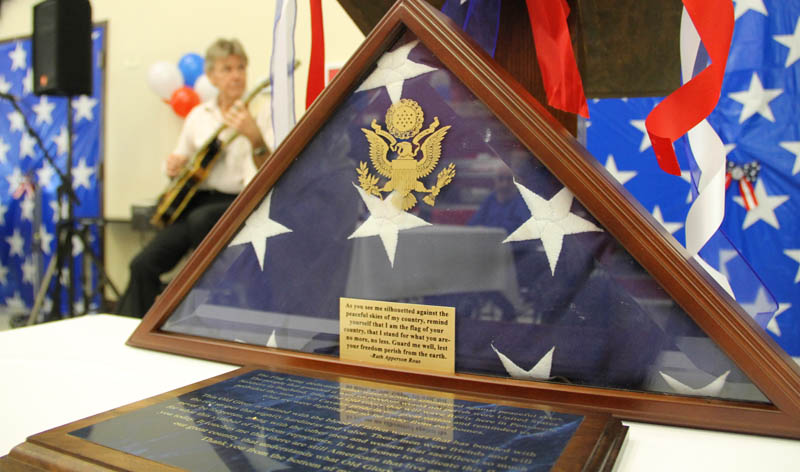
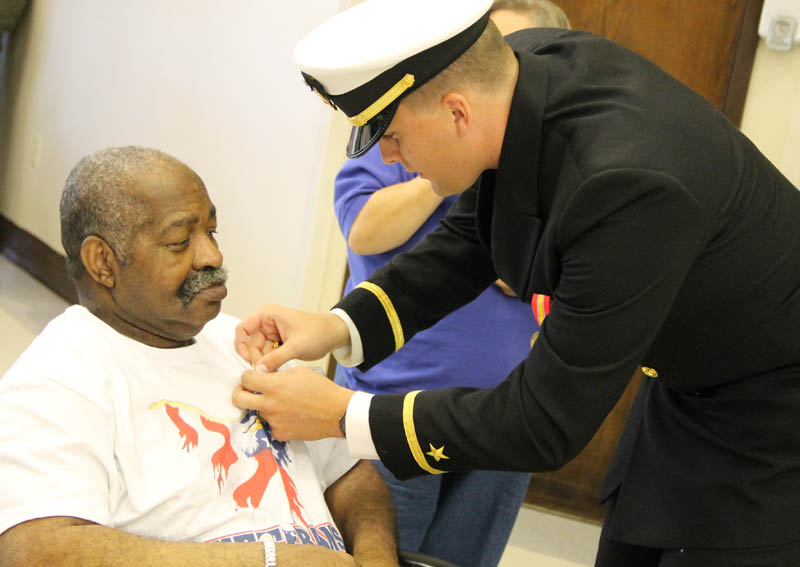
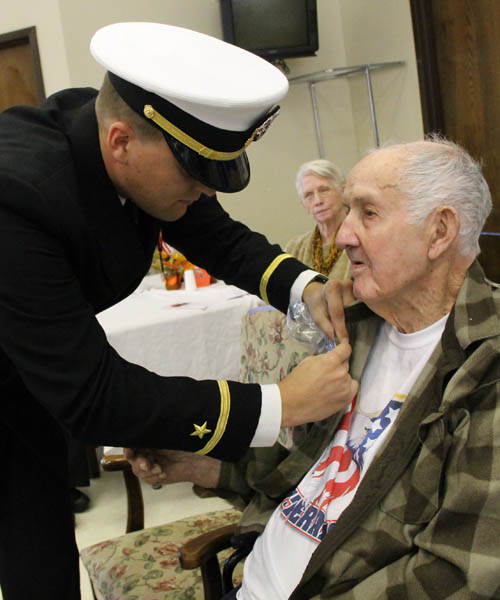 Century Health and Rehabilitation Center held a special ceremony recently to honor those that have served and to dedicate a flag that once flew over Baghdad, Iraq.
The flag once flew over a Baghdad compound that served as a temporary embassy. Before leaving, the men took the flag with them. Major Scott Sewell, who served under the flag, gifted it to his father, Major John Sewell U.S. Army, retired. The flag was presented to Century Health and Rehabilitation Center by “Johnny” Sewell, the center’s former social services director.
The center also recognized each veteran resident, staff member and volunteer with a special pin and certificate during their patriotic program.
NorthEscambia.com photos, click to enlarge.
American Diabetes Month: Floridians Impacted In Large Numbers
November 11, 2014

November is American Diabetes Month. As the prevalence of the disease continues to rise across the state and nation, the number of Floridians with diabetes is expected to increase.
David Becker, a spokesman for the American Diabetes Association, says the latest numbers show 29 million Americans with diabetes, and the toll on health can be great, including kidney failure, blindness, amputations and more.
“There are a lot of co-morbid diseases as far as diabetes and cancer and heart disease,” he points out. “It all kind of is interrelating.”
Becker says about 95 percent of those people who have diabetes have Type 2, which healthier lifestyle choices with nutrition and physical activity can help prevent.
In Florida a little more than 1.7 million have diabetes, but that is expected to increase to nearly three million by 2030, according to the Robert Wood Johnson Foundation.
Becker notes that even some simple, small changes with healthy eating and regular exercise can yield big results. “If you lose just 7 percent of your body weight, you can decrease your chances of getting diabetes by 58 percent,” he stresses.
If the current trends don’t change, it’s estimated that by 2050, 30 percent of all Americans will have diabetes.
by The Florida News Connection
Photos: Blue Angels Come Home
November 10, 2014

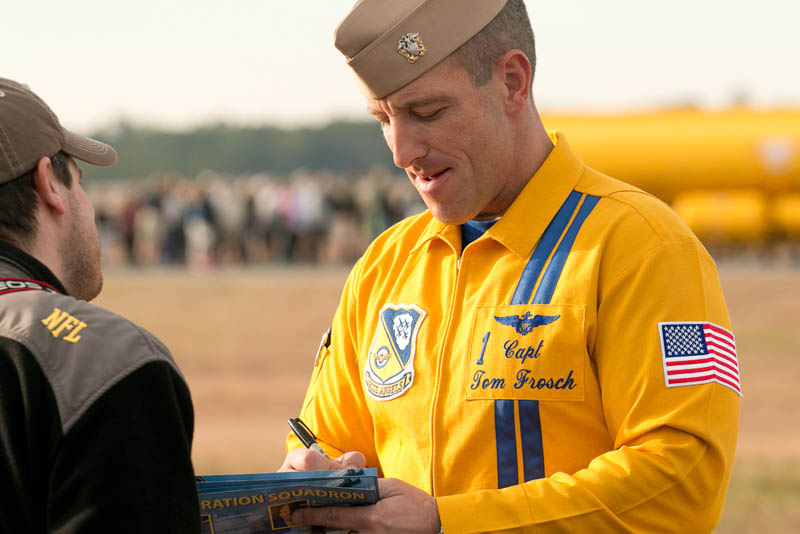 Over 150,000 people attend the 2014 Blue Angels Homecoming Show aboard NAS Pensacola this weekend.
For a photo gallery, click here.
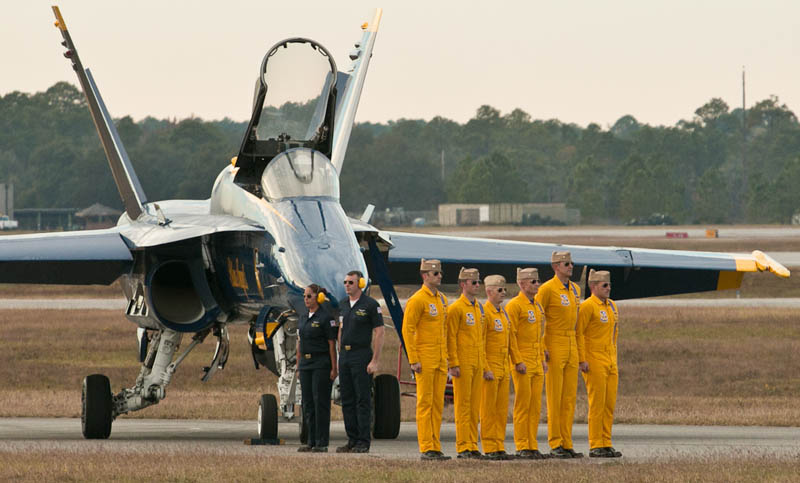
Pictured top: The Blue Angels Homecoming Show. Pictured inset: The No. 1 pilot, Capt. Tom Frosch, signs autographs. Pictured below (top to bottom): screaming for the skies, lining up, Fat Albert and plane versus jet truck. Photos by Ditto Gorme for NorthEscambia.com, click to enlarge.