

Special Session Over, But Spotlight On Florida Hospitals Continues
July 2, 2015
A panel formed by Gov. Rick Scott to examine the finances of hospitals and other parts of the health-care industry held its first meeting Wednesday since the end of two legislative sessions dominated by those issues, as Scott signaled he would continue pushing for changes.
The governor’s Commission on Healthcare and Hospital Funding met in Jacksonville to hear from local hospitals — and particularly UF Health Jacksonville — and to consider data on executive compensation and the quality of care around the state.
In a statement issued after the meeting, Scott made it clear that, despite the end of the special session last month that focused on resolving health-care funding, he wanted the panel to come up with future modifications.
“As we prepare for the next legislative session, it is imperative that the Commission continues to look at taxpayer funded hospitals to ensure there is a measurable return on investment on any money these institutions receive in the future,” Scott said. “This review will help guide our decisions when determining how to best move forward so all Floridians can know exactly how their tax dollars are being spent and the outcomes being received at each hospital.”
The Jacksonville meeting came about a month and a half after Scott wrote a letter to Russell Armistead, chief executive officer of UF Health Jacksonville, asking why the institution “appears to be more reliant on supplemental payments through the LIP program than any other hospital in Florida.”
The Low Income Pool, or LIP, is largely used to cover the expenses of uninsured, low-income Floridians who show up at hospitals needing treatment. A conflict between the federal government and the state over extending the program derailed the 2015 legislative session and forced lawmakers to return to Tallahassee in June to approve a state budget.
The federal government eventually extended the program but cut its funding from about $2.2 billion to about $1 billion. A mix of state and other federal funds was used to fill in the hole.
In his remarks to the commission, Armistead defended his hospital, saying that the state’s return on investment from the facility “may be the best in Florida.” He said UF Health Jacksonville treats a disproportionate number of residents with Medicaid or no health insurance, is the sixth largest employer in Jacksonville and keeps many of its medical residents in the area when their education is complete.
“We do all this, as we’ll explain, despite the markedly declining levels in the LIP funding over the last several years,” Armistead said.
Armistead’s facility, formerly known as Shands Jacksonville Medical Center, also won praise from some of the members of the panel.
The hospital executive also questioned plans by some lawmakers to change the “certificate of need” program, which regulates such issues as the construction and replacement of hospitals. Supporters of the CON program say it is needed to prevent the proliferation of small, private facilities that could pick off the most lucrative patients and leave the least attractive ones for public hospitals.
“If you want business to work and do away with CON, do away with all that stuff, it’s great. Just tell hospitals you don’t have to take care of people who don’t have money,” said Armistead, who added that it wasn’t his preferred solution. “Then, I could turn Shands Jacksonville around probably (in) three weeks.”
Meanwhile, some members of the panel continued to express frustration with the inability to get hospitals to open up their books.
But doing so could require a change in law, according to an official with the Agency of Health Care Administration at the meeting.
Sam Seevers, a former Destin mayor who serves on the commission, pointed out that the members of the panel — who are volunteers appointed by Scott — have to disclose their own finances as part of their obligations under the state’s open-government laws.
“That should be part of what (hospitals) do as well if they’re receiving monies,” she said.
by Brandon Larrabee, The News Service of Florida
Cunningham, Tanner Win 4-H Foundation Scholarships
July 2, 2015
Two Escambia County 4-H members who have excelled in both 4-H and academics have been awarded 4-H Foundation scholarships.
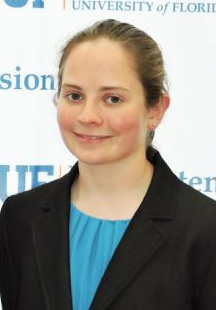 Navy Federal Credit Union 4-H Scholarship – $1,500
Amanda Tanner was a dual enrollment student at Pensacola State College and graduated with a high school diploma and associate’s degree. As a 4-H member for four years, she has held many leadership positions at the local, district and state levels, including president for the 4-H County Council of Escambia County.
Tanner has completed more than 500 hours of community service, served as a 4-H camp counselor and 4-H teen health ambassador, and is a member and president of the Escambia County 4-H Horse Club. Her plans are to attend the University of South Alabama and major in chemistry. After graduation, Tanner plans to attend veterinarian school specializing in large animals.
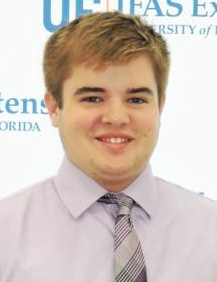 Escambia County 4-H Foundation Scholarship – $1,500
Donald Cunningham is a four-year 4-H member of the Molino Livestock 4-H Club. He graduated from Pace High School with honors and has completed more than 200 hours of community service at Habitat for Humanity, Relay for Life and St. Luke’s United Methodist Church Youth Group.
Cunningham was very active in the 4-H livestock project and was awarded Steer of the Year and Heifer of the Year at the recent Gulf Coast Agriculture and Natural Resources Youth Organization (GCA & NRYO) Spring Livestock Show. Cunningham will attend the University of Florida and major in building and construction management.
Water District Adds New Escambia River Campsites To Reservation System
July 2, 2015
The Northwest Florida Water Management District has added 58 campsites to its online camping reservation system. These campsites are located along the Apalachicola, Escambia, and Choctawhatchee rivers. With these new additions, there are now 88 campsites within 28 areas available to reserve online for free.
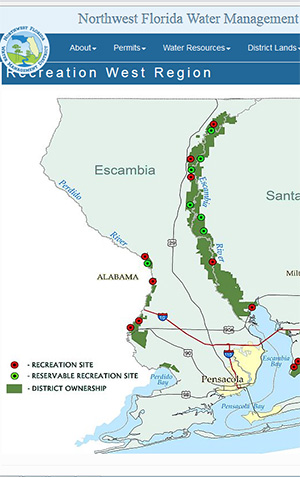 “One of the District’s priorities is making the use of public lands easier and more convenient for our visitors, whether they’re from across town or across the country,” District Executive Director Brett Cyphers said. “By providing potential visitors the ability to reserve more campsites online, we can better ensure a more predictable and positive experience. And that’s what we want in the end, more people getting outside and enjoying the natural places they pay to support and protect.”
To make a campsite reservation, visitors must first register for a free online account. Once this is done, visitors can then reserve a site up to 11 months in advance for up to seven days. Two non-consecutive reservations are allowed at one time for each account.
New signs designating, “Camping By Reservation Only” have been placed at the newly-added campsites. Day-use is still available at those recreation areas where signs are posted and is available on a first-come, first-served basis.
To view the full list of District campsites available to reserve, visit www.nwfwater.com and then click on “Recreation”.
Jacksonville Tops The Blue Wahoos 6-2
July 2, 2015
The Pensacola Blue Wahoos welcomed a new slugger to its lineup Wednesday—right fielder Juan Duran.
Duran, who is Pensacola’s single-season home run holder with 17 last season, hit a bullet for a single to centerfield in the fourth inning to drive in Blue Wahoos left fielder Jesse Winker. He went 2-3 on the night, walked and scored. He also knocked a two-out double off the right field wall in the ninth.
The Jacksonville Suns, though, took the lead for the Golden Skillet trophy beating Pensacola, 6-2, in front of 4,649 fans at Pensacola Bayfront Stadium. The trophy goes annually to the series winner, which Jacksonville now leads, 6-5.
Duran said his wrist felt fine after returning from injury rehab with the Arizona League Reds. There, the outfielder went 9-23 and hit .391 with two home runs and nine RBIs in seven games.
“I felt great,” he said. “Nothing was hurting. I just do my best every time I play.”
Pensacola manager Pat Kelly was happy to see Duran’s bat in the middle of the lineup, after he hit .243 with 17 home runs and 51 RBIs in 2014.
“Every time he steps to the plate you stop to watch because he has a chance to hit it out of the ballpark,” Kelly said. “We haven’t had that in the middle of the lineup all year.”
Wandy Peralta entered the game 0-1 with a 2.25 ERA against the Suns, even throwing six scoreless innings May 15 against the team. However, Jacksonville scored five runs in the first inning off the southpaw on four singles and a triple by Suns right fielder Carlos Lopez, who has now gotten a hit in 24 of his last 27 games.
Kelly said a few ball and strike calls hurt Peralta’s focus.
“He had the ball up and didn’t get a couple of calls from the umpire which irritated him,” Kelly said.
The Pensacola bullpen came in and shut down the Jacksonville offensive burst. Jacob Johnson threw 5.1 scoreless innings, allowing just two hits, two walks and striking out three.
Zack Weiss came in in the ninth Wednesday and struck out two Suns. He has now faced 20 batters in his last five games and struck out 11.
“Johnson really saved our bullpen,” Kelly said. “That was huge.”
Kelly also liked what he saw in Weiss, who retired the Suns 1-2-3. He has now thrown seven scoreless innings in his last five relief appearances.
“That’s what we anticipated when he first got here,” Kelly said. “He has straightened things out.
Showers, Thunderstorms Again Today
July 1, 2015

Here is your official North Escambia area forecast:
Wednesday: A 40 percent chance of showers and thunderstorms. Mostly sunny, with a high near 91. Southwest wind 5 to 10 mph.
Wednesday Night: A 30 percent chance of showers and thunderstorms. Partly cloudy, with a low around 73. Southwest wind around 5 mph.
Thursday: A 30 percent chance of showers and thunderstorms. Partly sunny, with a high near 91. Southwest wind 5 to 10 mph.
Thursday Night: A 20 percent chance of showers and thunderstorms. Partly cloudy, with a low around 74. Southwest wind 5 to 10 mph.
Friday: A 30 percent chance of showers and thunderstorms. Mostly sunny, with a high near 92. Southwest wind 5 to 10 mph.
Friday Night: A 20 percent chance of showers and thunderstorms. Partly cloudy, with a low around 74. Southwest wind 5 to 10 mph.
Independence Day: A 30 percent chance of showers and thunderstorms. Partly sunny, with a high near 91. Southwest wind 5 to 10 mph.
Saturday Night: A 20 percent chance of showers and thunderstorms. Partly cloudy, with a low around 74. Southwest wind 5 to 10 mph.
Sunday: A 30 percent chance of showers and thunderstorms. Mostly sunny, with a high near 91.
Sunday Night: A 20 percent chance of showers and thunderstorms. Partly cloudy, with a low around 73.
Monday: A 30 percent chance of showers and thunderstorms. Mostly sunny, with a high near 92.
Monday Night: A 20 percent chance of showers and thunderstorms. Partly cloudy, with a low around 73.
Tuesday: A 30 percent chance of showers and thunderstorms. Mostly sunny, with a high near 92.
Bond Reduction Denied For Century Homicide Suspect
July 1, 2015
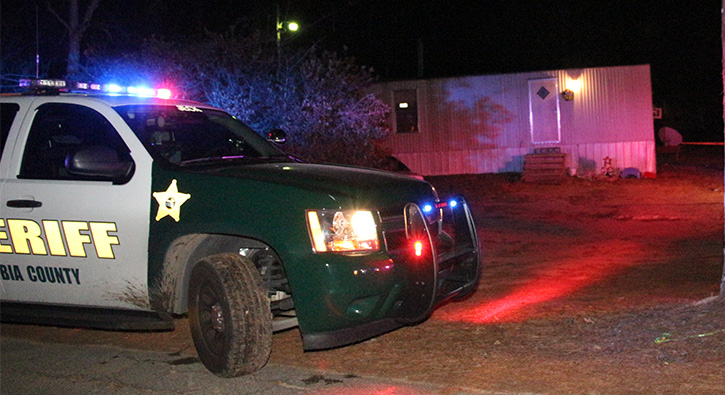
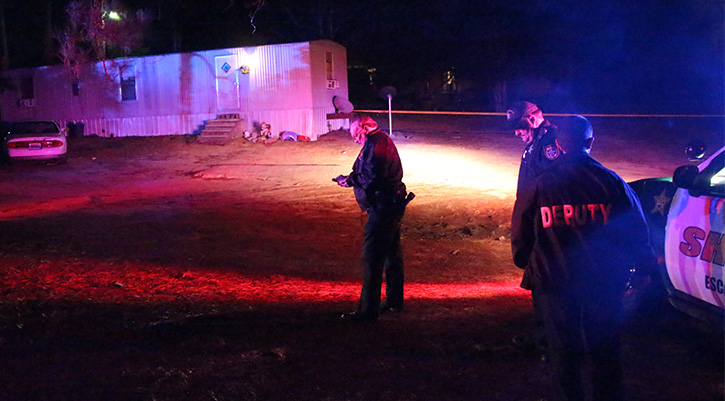
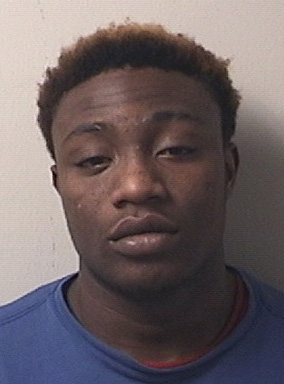 An Escambia County Circuit Clerk judge has refused to reduce bond for a Century man accused in a January 31 shooting death in Century.
Judge Jennie Kinsey ordered that 20-year old remain in the Escambia County Jail with bond set at $215,000. He is charged negligent manslaughter and aggravated assault for the shooting death 20-year old Jonathan Wilson. Myles is due to appear in court again in September. He has pleaded not guilty to the charges against him.
NorthEscambia.com photos.
Ransom Middle Teacher Selected For National C-SPAN Educators Conference
July 1, 2015
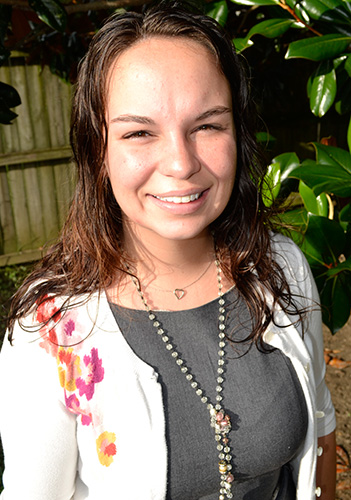 Lauren Samoszenko, a social studies teacher at Ransom Middle School, is one of 30 educators from across the nation selected to attend C-SPAN Classroom’s 2015 Educators’ Conference to be held in Washington July 9-10.
The conference helps educators discover how to integrate C-SPAN’s programs and C-SPAN Classroom’s free web-based primary source materials into classroom activities to create engaging learning experiences for students. The conference brings together middle school teachers who specialize in social studies and/or technology. Samoszenko competed with applicants from across the country to secure a place at the conference. C-SPAN provides the roundtrip airfare, hotel accommodations and meals for all selected attendees.
“Over the course of the two day conference, we aim to equip teachers with a variety of strategies to incorporate C-SPAN’s primary source programs into their classrooms,” said Craig McAndrew, C-SPAN Manager of Education Relations. “Our free resources are geared toward aiding teachers in providing a clear understanding of how the federal government works, the issues affecting our country, and the history of the U.S.”
Throughout the event participants will learn more about C-SPAN, its online archive of primary source programs as well as a host of other free digital resources that can be implemented in the classroom. C-SPAN Political Editor Steve Scully will speak at the conference dinner about the 2016 presidential campaign season.
Submitted photo for NorthEscambia.com, click to enlarge.
130 New Laws Take Effect In Florida
July 1, 2015
Wednesday, 130 new laws weny into effect today in Florida along with a record-setting budget approved by Legislature this year in the regular and special sessions and signed by Gov. Rick Scott.
 The state will no long collect sales tax on gun club memberships, people with 64-ounce beer containers known as “growlers” can get them filled at breweries, and governments in Florida will have to start looking to buy American-made U.S. flags.
Lawmakers also decided that, as of Wednesday, the state’s decades-old ban on gay adoption will no longer be in statutes, children can secretly record sexual abusers and law enforcement agencies can’t require officers to issue any preset number of tickets.
For the year, lawmakers sent 239 bills to Scott during the regular and special sessions. He vetoed seven and signed the rest.
A number of the new laws make technical changes to state statutes or have ties to the $78.2 billion spending plan.
Sixty-three of the laws approved by the Legislature went into effect immediately upon Scott’s signature. Among those proposals, people without conceal-carry permits can now pocket their weapons when forced to leave home because of hurricanes and other disasters (SB 290); current and past members of the U.S. armed forces, reserves or National Guard since Sept. 11, 2001 can ask to have their home and personal information exempt from state public record (HB 185); rural letter carriers can drive without a seat belt while working their route (SB 160); and there will be fewer tests given to public-school students (HB 7069).
Here are highlights of the laws taking effect July 1:
BUDGET
— SB 2500A, the spending plan for the fiscal year, at $78.2 billion the largest in state history. It was approved in a June special session after lawmakers failed to come together on health-care spending during the regular session.
The package includes boosts in funding for public schools, universities and colleges, and the Agency of Persons with Disabilities, and will cover repairs to 94 bridges and the replacement of 16 others. The budget also includes $38.5 million for the protection of the state’s natural springs and $15 million for Florida Forever. The land-buying and natural resource protection funding amounts are far below what was desired by backers of the 2014 voter-approved measure that set aside a portion of revenue from a real-estate tax for land acquisitions and maintenance.
TAX CUTS
— HB 33A, another product that required the special session to fully snap together.
The wide-ranging package came in lower than what the House and Gov. Rick Scott wanted, but still clocks in at $372.4 million in the next fiscal year.
There are tax cuts on the cost of gun club memberships, college textbooks, luxury boat repairs, certain agricultural supplies and services, school extracurricular fundraisers, aviation fuel at select flight-training academies, and on motor vehicles purchased overseas by internationally deployed service members from Florida.
For many Floridians, the most noticeable item will be a reduction in the communications-services tax on cell-phone and cable-TV bills. The savings are projected at $20 a year for people paying $100 a month for the services.
Another notable feature is the 10-day sales-tax holiday starting Aug. 7 on clothing under $100, school supplies that cost $15 or less and the first $750 of personal computers purchased for non-commercial use.
ABORTION
— HB 633, requires a 24-hour waiting period before women can have abortions. Under the law, information about abortions must be provided in person to the women at least 24 hours before a procedure is performed. There are exceptions for victims of rape, incest, domestic violence or human trafficking — but those victims can waive the 24-hour wait only if they can produce police reports, restraining orders, medical records or other documentation.
ADOPTION
— HB 7013, provides $5,000 payments to government workers who adopt foster children, with the payments increasing to $10,000 for adoptions of children with special needs. The measure also repeals the state’s decades-old ban on gay adoption.
MILITARY
— HB 27, requires the Department of Highway Safety and Motor Vehicles to accept a military personnel identification card as proof of a social security card number during the application process to acquire a driver license or identification card.
— HB 277, ensures young service members are able to rent hotel rooms in Florida. Some hotels and other lodging establishments have minimum age requirements. The law requires hotels, motels and bed-and-breakfast inns to waive age restrictions for active-duty service members with valid military identification cards.
— HB 329, creates Woman Veteran, World War II Veteran, Navy Submariner, Combat Action Badge Ribbon, Air Force Combat Action Medal and Distinguished Flying Cross license plates.
— HB 801, adds a memorial in the Capitol Complex to 241 members of the U.S. military killed Oct. 23, 1983 when a truck carrying 2,000 pounds of explosives drove into a headquarters and barracks area in Beirut, Lebanon.
PATRIOTISM
— HB 225, the “All-American Flag Act.” While the law goes into effect July 1, the law requires U.S. and Florida flags purchased by governments in Florida after Jan. 1, 2016, to be made from materials grown, produced and manufactured in the United States.
EDUCATION
— HB 41, known as “Gabby’s Law for Student Safety,” revises how “hazardous walking conditions” are identified and handled. The law allows school district superintendents to make formal requests to the government agencies with jurisdiction over roads to correct the hazards. The government agencies would have to include the work in their next annual five-year capital improvements programs or declare why the corrections aren’t being planned.
LAW ENFORCEMENT
— SB 264, makes it clear local law-enforcement agencies cannot use ticket quotas. Also, the law requires individual local governments to submit reports to the Legislature if traffic-ticket revenues cover more than 33 percent of the costs of operating their police departments. The proposal is a reaction to the speed trap that was nestled along U.S. 301 in the small North Florida city of Waldo.
— HB 7001, allows children under 18 to secretly record conversations related to sexual abuse or other violent acts. The proposal stemmed from a Florida Supreme Court decision last year that ordered a new trial for a Lee County man who had been sentenced to life in prison for sexually abusing his stepdaughter.
— HB 133, dubbed the “43 Days Initiative Act.” The law extends the statute of limitation on felony sexual battery offenses from four years to 10 years. The title of the law is tied to a sexual offense victim who reported the crime four years and 43 days after the crime, which meant that no charges could be brought against the offender.
DRONES
— SB 766, prohibits the use of aerial drones to capture images that could infringe on the privacy of property owners or occupants. The law allows people to initiate a civil action against a person, state agency or political subdivision that violates the prohibitions. However, the prohibition doesn’t include agencies countering the risk of terrorist attacks, police who obtain search warrants that authorize the use of drones, property appraisers making tax assessments, and utilities maintaining their facilities.
ENTERTAINMENT
— HB 641, clears up confusion created by a 2013 law that shut down Internet cafes. This year’s law is intended to make it clear that amusement games can continue operating at businesses such as Dave & Buster’s and Chuck E. Cheese’s.
— HB 239, regulates the use of certain drugs in racing horses and greyhound dogs. The law also hikes the maximum fine when a racing animal tests positive for a prohibited substance from $5,000 to $10,000, or the amount of the purse if it’s greater.
ALCOHOL
— SB 186, ends the state’s prohibition on brewers being able to fill 64-ounce beer containers known as “growlers” for off-site consumption. The law limits cup sizes to 3.5 ounces for beer tastings and caps the number of vendor licenses that can be issued to a brewer. The law ends the use of the tourism exemption for on-site alcohol sales that brewers have been operating under since 1963.
— SB 596, allows craft distillers to annually sell up to two factory-sealed bottles of each product directly to each customer visiting the property.
UTILITIES
— HB 7109, limits future Public Service Commissioners to three consecutive four-year terms. The law also requires utilities to notify customers of the best available rates and prevents electric utilities from charging higher rates through extensions of billing cycles — a provision directed at Duke Energy.
MEDICAL
— HB 269, allows terminally ill patients to access certain experimental drugs. Dubbed the “Right to Try Act,” the law focuses on drugs that have been through what is known as “phase 1″ of a clinical trial but have not been approved for general use by the U.S. Food and Drug Administration. The law also provides liability protections to doctors and drug manufacturers.
STATE INVESTMENTS
— SB 7024, repeals a restriction on the State Board of Administration from investing money from the Florida Retirement System Trust Fund in institutions doing business in or with Northern Ireland. The restriction was imposed by the Florida Legislature in 1988.
INSURANCE
— HB 715, removes a restriction that prevents newly-constructed or substantially-improved structures seaward of the coastal construction control line or within the Coastal Barrier Resources System from qualifying for coverage from the state-backed Citizens Property Insurance Corporation.
— HB 4011, repeals a law capping at four the number of vehicles that can be covered by a single family insurance policy.
— SB 1094, intended to provide flexible insurance options for flood coverage.
PUBLIC RECORDS
— SB 7040, provides an exemption to email addresses that the Department of Highway Safety and Motor Vehicles collects related to driver’s licenses and motor-vehicle records.
— SB 200, exempts taxpayers’ email addresses obtained by tax collectors in the process of sending tax notices.
— SB 248, creates a public-records exemption for certain videos made by police body cameras. The exemption would apply to videos made on private property without the approval of a property owner or individual.
by Jim Turner, The News Service of Florida
Escambia Deputies, PPD Conduct Prostitution Sweep
July 1, 2015
For the last three weeks the ECSO Narcotics Unit has conducted a prostitution sweep in conjunction with the Pensacola Police Department. Photos and info of those arrested are attached, along with the location at which they were arrested.

Information as displayed provided by the Escambia County Sheriff’s Office.
Status Of Abortion Law In Doubt After Court Ruling
July 1, 2015
The day before a new Florida law would have begun requiring women to wait 24 hours before having an abortion, a Leon County judge placed the law on hold while a constitutional challenge goes forward. But the state quickly filed an appeal, a move that could prevent Francis’ ruling from taking effect.
Leon County Chief Circuit Judge Charles Francis issued a temporary injunction Tuesday that would have prevented the law (HB 633) from taking effect on Wednesday.
“Plaintiffs have shown a substantial likelihood of success on the merits, that irreparable harm will result if … (HB 633) is not enjoined, that they lack an adequate remedy at law, and that the relief requested will serve the public interest,” Francis wrote in the ruling.
But the appeal by Attorney General Pam Bondi triggered an automatic stay on Francis’ decision, which could allow the law to go into effect. The American Civil Liberties Union, which filed the initial case, immediately responded by asking for Francis to lift that stay.
“We filed our motion to lift the stay 10 minutes after the state appealed,” said ACLU attorney Renee Paradis, who argued the case before Francis last week.
The new law adds to the information that physicians performing abortions must provide to women to obtain their consent. Under the law, the information must be provided in person to women at least 24 hours before the procedures are performed — requiring women to make two trips to abortion clinics.
The Legislature approved the measure in April, and Gov. Rick Scott signed it into law in June — prompting the ACLU to file for the emergency injunction.
Now the ACLU will proceed with a constitutional challenge on behalf of Gainesville Woman Care LLC, which operates the Bread and Roses Women’s Health Center, and Medical Students for Choice, an advocacy group.
“The court’s decision was grounded in the Florida constitution’s right to privacy,” ACLU of Florida legal director Nancy Abudu said Tuesday. “We were very happy to be able to convince the court that there was no medical justification for this law.”
The ACLU contends that for women — especially low-income women who must arrange for child care, time off work and overnight travel — the law increases the threat to their privacy in seeking an abortion.
But the state contends that it has a vested interest in its residents’ well-being — the basis for the 24-hour wait that supporters say will give women more time to reflect on their decisions.
“The state wields the police power to protect the health and safety of the people,” Blaine Winship, special counsel to Attorney General Pam Bondi, told Francis during a June 24 hearing.
And in his ruling, Francis noted Winship’s argument that the state has a right to require physicians to obtain informed consent from women before performing abortions on them.
“The legislature’s right to require informed consent has been upheld as being grounded in the common law,” he wrote.
Opponents say that the law places additional barriers in the way of women seeking abortions, especially those who are victims of violence and those who are low-income or live in rural areas.
The law includes exceptions to the waiting period for victims of rape, incest, domestic violence and human trafficking, but they must produce police reports, restraining orders, medical records or other documentation in order to qualify.
Pam Olsen, executive director of the International House of Prayer, said she’ll continue her weekly prayer vigil outside the Florida Supreme Court.
“It’s a right law,” Olsen said. “It should go into effect. It should have gone into effect on July 1. I’m sorry that the judge ruled this way, but we will live to fight another day, and the judges are not always right in this nation, are they?”
by Margie Menzel, The News Service of Florida