

Century Teaspoon Festival Celebrates Heritage
March 1, 2009

 The third annual Teaspoon Heritage Festival was held Saturday in Century.
The weather moved the day’s events inside the New Life Baptist Church. The event included a special performance by Ballet Pensacola and other groups, food, arts and crafts and more.
The festival celebrated the heritage of African slaves that escaped from Colonial plantations in the Carolinas and Georgia to settle in the community of Teaspoon, now modern day Century.
The free festival was sponsored by The Teaspoon Foundation and New Life Baptist Church.
Pictured above: One of the arts and crafts vendors at Saturday’s Teaspoon Festival in Century. Pictured above left: A dancer from Ballet Pensacola performs. NorthEscambia.com photos, click to enlarge.
Blog: The Rest Of The Story
March 1, 2009
And now for a little “shop talk”…that’s what radio legend Paul Harvey would say on his “Paul Harvey News” show when he was about to discuss some news event in the world of media.
That shop talk Saturday night turned to the death of the iconic voice that was our trusted friend. Paul Harvey passed away Saturday at the age of 90.
What does the death of Paul Harvey have to do with NorthEscambia.com? Perhaps more than you realize.
“You know what the news is, in a minute, you’re going to hear…the rest of the story.”
“Stand by for news!” he would say. I remember hearing that booming Paul Harvey voice from the radio. I was pretty young, perhaps in elementary school. The hot summer air on granny’s porch in rural Alabama would be filled with that Midwestern voice that would bring us the news. The news might be the latest national headlines from the president, or it might be the story of a little old lady in Chicago that did something just a bit different than the rest of us.
Whatever the story, it always sounded equally important and interesting, regardless of the subject. Paul Harvey taught us that every person has a story, and, if you will just take the time to listen, that story can be intriguing no matter how mundane it may seem.
He was very plainspoken, weaving the story without being sensational. Sometimes he would interject his commentary, and somehow you would almost always agree with that voice from the little speaker.
As that young guy who spent those 15 minutes each day with that voice from Chicago, I had no idea what career path I would take. But this radio thing seemed pretty interesting. After all, this Paul Harvey guy must have made a pretty good living reading those ads for those big companies. Remember “Bankers Life and Casualty Company”? They sponsored Paul Harvey News for 30 years, from the 50’s to the 80’s.
I grew up in a small Alabama town, and I remember when FM radio came to town. It was much like modern day 2009, with the conversion to digital tv and the needed converter boxes. Our family car, a Ford LTD, had only an AM radio with those black selector push buttons. The new FM station was coming to town, and we where not going to be able to hear it in the car without one of those converters.
I remember the excitement of getting the FM converter box to hear the new station in town in our car. We had an FM radio in the house. We were far enough away from the next largest city that the new local FM was about the only FM station we could hear.
And there was Paul Harvey in that new FM radio format, that commanding voice sounding even stronger. But along with Paul Harvey, that new local station in town did local news right before Paul Harvey. There it was on the radio…local news about the people and places in our little town. It was no longer that AM radio station from the next big city with big city news, it was local news on our local FM.
I found that all very intriguing, and continued to think that having a job like Paul Harvey would be cool. But at that age, astronaut seemed pretty interesting too.
“Page…two…”
Fast forward to my senior year in high school. For me at that age, radio was for music and Casey Kasem’s American Top 40, not for Paul Harvey. He was no longer that friend that I listened to each day, but rather just a distant memory. But radio was about to become my friend.
The writer at our local weekly newspaper quit. The editor called the high school English teacher, hoping to find a graduate that might still be in town that could write. The odds of that were slim; graduating high school was usually followed by leaving our little town.
That English teacher recommended that the editor talk to me about writing for the paper. So there I was, a high school senior and now the one and only staff writer for the local paper. Understand that the local newspaper was very different then than local papers are today.
The presses would rumble the building every Wednesday afternoon, and the smell of ink would permeate the building. You could hear the presses outside the building, a rumble like a distant train shaking the ground. In the meantime, back on the main street of town, a lone paper box stood. People would line up, quarters in hand, to buy the paper. Sometime they would wait hours for those first copies to be put in the box. The editor of the paper would take the papers to the box himself; that was the most important job in the world every Wednesday afternoon, and he would do it himself.
One of my early writing assignments was to visit the local radio station to write a story about something they had done, or something they were doing…it escapes my memory what the story I wrote was even about. But the moment is still vivid.
There I was in the broadcast studio of the radio station, interviewing the radio host for the now forgotten story.
Buttons and knobs. I must admit that I’ve always loved buttons and knobs. The studio had plenty of those. This whole radio thing look pretty interesting, mostly due to the buttons and knobs.
“You have a good voice,” an employee of the station told me. “Here, read this,” he said, handing me a AP news story off the dot matrix printer. I read.
The next thing I knew, my first ever job at the newspaper had led to my second ever job doing news at the local radio station. Now I was covering stories in both print and on the air, my own little small town media empire. At the high stakes rate of about $5 an hour at the radio station, I was making two salaries for covering the same news story. I had found the ultimate way to make cash. It was a teen’s dream.
The radio station were I was working was not that first station in town I mentioned earlier. I was working for the competitor, and you had to listen to your competitor to know what they were doing.
There was that Paul Harvey guy, probably a decade after I first heard him, on the competing station. “Stand by for news!” was once again part of my daily life. If I were going to read the news on the radio station, I wanted to read it half as good as Paul Harvey. I’d listen to his style, his delivery technique and the way he crafted his words. His words were never fancy, never those big long “I’m smarter than you” words. They were simple words, like a brush they would paint a picture in your mind over the airwaves.
With simple words and long, dramatic pauses, he did not deliver the news. He pulled you into the news, making you part of each and every story.
Suddenly, this whole radio station “gig” became more than just a cash cow, it had become a passion. At 18-years old, I had discovered that small town news — where everyone has a story — was where I wanted to be.
I spent a few years at that small town radio station, reading the news — telling the daily story of what was going on in our small town. I eventually left the radio station and went to work for a newspaper in a larger town. The editor that had given me that first job while I was still in high school was right. In the newspaper business, you get ink in your veins and just can’t stay away.
Over the years, there were more newspaper and more radio stations in my future, along with other jobs that were usually media related in some way.
Thinking back to what the newspaper editor would say about ink in the veins, he might have been a little off, at least when it comes to my veins. I ended up with a passion for small town news, telling the stories that otherwise would never be heard.
All that eventually led you and I to be here today on NorthEscambia.com. That “itch” for small town news just never went away. I’ve always been a follower of technology, so the Internet just seemed to be logical place for our local news.
Paul Harvey began his career on AM radio. Then FM. Eventually, those Rest of the Story broadcasts were streamed on the Internet. But regardless of the delivery method, it was still a personal approach to the news.
Those hot, humid summer days listening to Paul Harvey were my early inspiration to become a storyteller of local community news. In that indirect way, Paul Harvey is responsible for NorthEscambia.com.
And now, you know…the rest of the story.
Paul Harvey . . . Good day.
It’s Going To Be Really Cold Today
March 1, 2009
It’s going to be downright cold today.
Today’s high will struggle to top out at 45. A northwest wind 15 to 25 mph and gusting to 35 will make it seem even colder. There’s even a very slight chance of a few snowflakes today before the clouds clear. The chance of snow is much greater in Central Alabama where places like Montgomery are expecting an inch or two of snow today.
A wind advisory is in effect for today due to the high winds.
Strong north winds gusting up to 25 mph will make tonight’s low of 25 seem much colder.
Here’s your North Escambia weather foreast for the rest of the week:
Monday: Sunny, with a high near 52. Wind chill values between 20 and 30 early. North wind between 5 and 15 mph.
Monday Night: Mostly clear, with a low around 27. North wind around 5 mph becoming calm.
Tuesday: Sunny, with a high near 64. Calm wind becoming east between 5 and 10 mph.
Tuesday Night: Mostly clear, with a low around 34. South wind around 5 mph becoming calm.
Wednesday: Sunny, with a high near 70. Calm wind becoming south between 5 and 10 mph.
Wednesday Night: Mostly clear, with a low around 47. South wind between 5 and 10 mph becoming calm.
Thursday: Mostly sunny, with a high near 74.
Thursday Night: Partly cloudy, with a low around 54.
Friday: Mostly sunny, with a high near 77.
Friday Night: Partly cloudy, with a low around 55.
Saturday: Mostly sunny, with a high near 74.
Softball Returns To Century
March 1, 2009
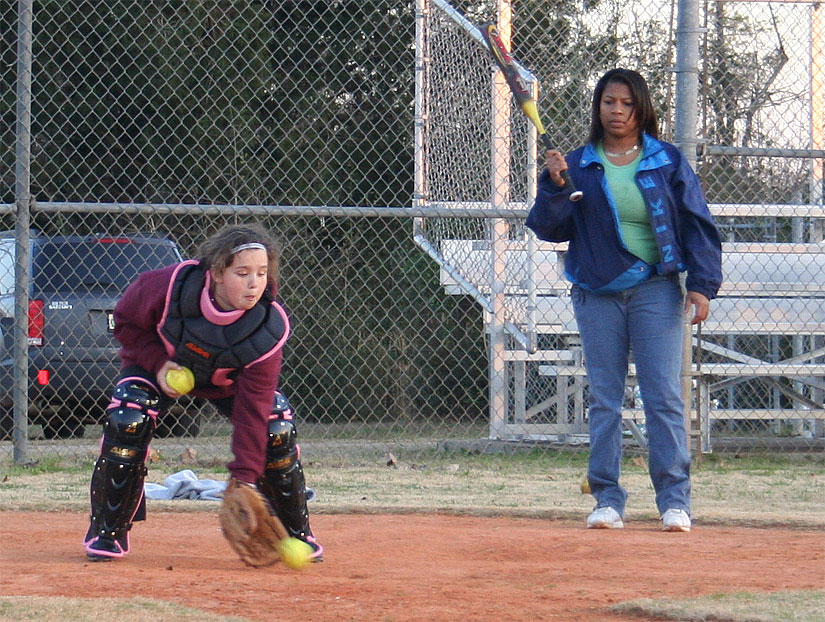
Dwindling interest and competing leagues led to not having a girls’ softball team participate in Century Little League last season. But a renewed effort from Century Little League’s Board of Directors has brought back the fun.
Submitted by Joel Borelli
When asked what obstacles needed to be overcome league president and Century resident Kevin Merchant, said “It wasn’t easy, especially given the fact that last year we didn’t have a team. Sometimes it’s harder to get something back after you lost it than it might be to start something new.” He went on to explain that a lot of children go to school at Bratt or Walnut Hill and make friends there. It’s only natural for them to want to play sports with their friends and that’s okay, but the unfortunate result is that some children end up playing for the Northwest Escambia League and not Century.
He was quick to point out that, “We still have a lot of children available to us. The key was finding the right person to coach the team, an enthusiastic person, willing to go the extra mile and go out there and recruit. And we found that with Coach Tara Jones.”
When I caught up with Coach Jones on her second day of practice she agreed it wasn’t easy, especially with no team to draw girls from last season. She reiterated though, that the simple act of recruiting made all the difference.
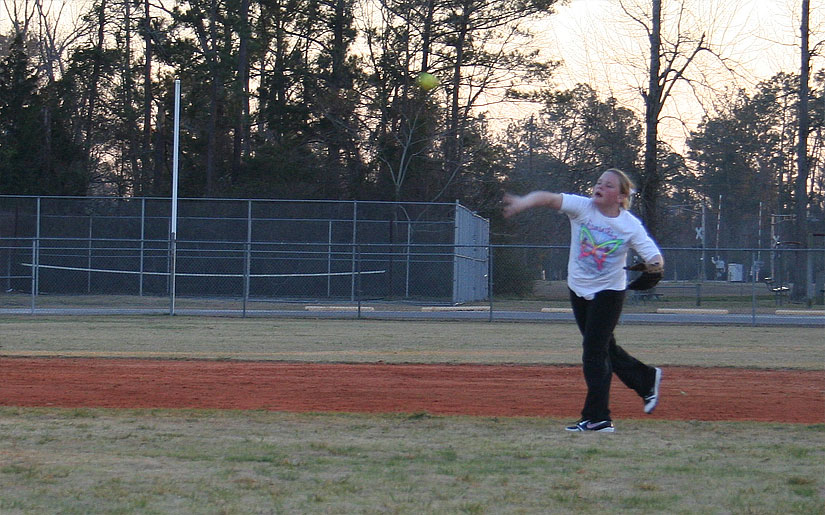
“Talking with friends, neighbors, everyone I know,” she says was the formula for her success. And although it’s still early, she’s excited about her team. “I’ve got three girls who played minor league ball with the boys last year. I’m really counting on those girls to come out and do their best and to help the others that don’t have the experience. We’ve got some girls that can hit the ball too,” she added . And while she believes her team will compete well, she admits she has a ways to go in putting it all together. “I’ve got my starting shortstop, my catcher, and a few other positions, but I’m still trying to identify the rest, especially pitcher.”
The impact of the return of softball in Century goes well beyond the city limits. Around the league teams are, “Tickled, excited,” says Kevin. “It’s a win-win situation. The additional team added to schedules helps the entire tri-county league and improves the competition. It also helps the league when it comes to All-Stars. An expanded talent pool results in more girls to choose from so the league can field the best possible All-Star team.” His excitement doesn’t end there either. “I don’t see why we can’t get two or three girl’s softball teams going and sustain them,” he states.
 So how does that happen? What does the future hold for Century softball and what has to be done to sustain the hard work already done in laying this foundation? Like all non-profit, volunteer-run organizations, Century Little League must rely on support from the community. In Century, that starts with the city’s participation. Kevin made it perfectly clear how great an asset Century has been to the league. “Century is a fantastic partner with us, there’s so much that they do. Every year they donate money and they don’t charge us to run the field lights, among other things. These go a very long way to making Century Little League a success. They also allow us to operate the concessions ourselves which really helps us raise additional funds.”
Beyond the city’s help, Kevin recognizes that the citizens themselves must pitch in, be they parents of children or just those that want to volunteer, and he reached out to them a few weeks ago. “We recently hosted a Fun Day at Showalter Park.” The day sported games the kids could play, a home run derby, fast pitch competition, races, and those types of things. “We opened it up to the whole town too. We didn’t want it to be for just the kids playing baseball or softball. We wanted whole families to come out and have a good time.” In spite of the bad weather the turnout was good and he’s looking to build on it for next year. Cheerfully doing his part to raise money, Kevin took a good soaking in the dunk tank that day, despite the chilly weather.
As for the business community, Kevin states, “We receive a lot of support from local businesses, which really helps, but we could always use more. In this economy especially, there are parents out there who just can’t afford to pay the registration fees and that’s just too bad.” When asked about other suggestions for community involvement he had a unique idea. “I think the churches might help us some and I plan on contacting them. There are over 30 churches in Century and if each one sponsored just one child’s registration fee that would get thirty-plus more kids out here having fun, playing ball, and the positive impact sports has on children is worth the investment.”
When asked to give us a prediction on Century’s success around the league this year, he said, “Coach Wes’ National League Tee Ball team has a real good chance to win it all. We have two really good minor league teams and then Coach Jones’ softball team looks like it has a shot too.” And Coach Jones got in on the fun too, saying with a smile, “I’m seeing some wins for us this year.”
While Kevin and I were talking I took the opportunity to ask him about the rest of Century Little League and according to him the outlook is good. Tee Ball participation is way up and this year Century is fielding two minor league teams as well, but he was quick to say that kids are still welcome to come out and play, especially eleven and twelve year olds, the weakest turnout age for Century this season. If you have a child 12 and under you can bring them by the park any Monday, Tuesday, Thursday or Friday from 5 p.m. to 6 p.m. to sign up.
Joel Borelli serves as a board member for the Century Little League.
Pictured top: Catcher Cheyanne Merchant and Coach Tara Jones practice. Pictured inset: Shortstop Samanta Bathea. Submitted photos for NorthEscambia.com.
North Escambia Bee Association Holds Chautauqua
March 1, 2009
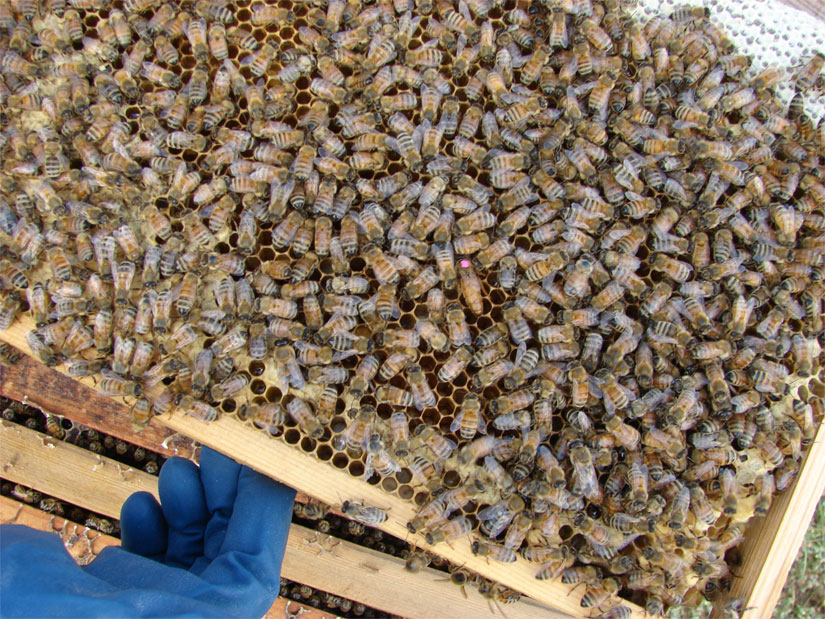
The Third Annual North Escambia Bee Association Chautauqua (workshop) was held last Saturday at Northview High School.
Joan Strickland filed the following report for NorthEscambia.com –
For a photo gallery from the Chautauqua, click here.
There was a good attendance at the 3rd Annual NEBA Chautauqua and we had informative speakers. David Westervelt shared some new techniques in testing bees, one was an IVDS –Integrated Virus Detection System (learn more at www.bvs-inc.us/). His Powerpoint presentation included a detailed cross section of a honeybee that came from www.beemaster.com (there is a lot of information on their site). I was not able to locate the cross section on John Clayton’s site but am sending him an e-mail to request that he share the pic or at least a link with us. The notation under the pic was www.beemaster.com/honeybee/beexray.gif David talked also about the wax in the hive and how many molecules can be stored in that wax, found through lab testing they have been doing. Bees generally forage up to 5-7 miles from the hive and can encounter many hazards along the way. It made us more aware of chemicals and pesticides that we or others may be using that could affect our hives. We learned about non-toxic control of varroa mites using powdered sugar. The powdered sugar coats the bees and then as they groom and clean each other off the varroa are removed as well.
We learned about Small Hive Beetles and new traps being tested to help control their population. They can overtake a hive of bees in a short period of time. Several traps commonly in use are the AJ Beetle trap and the West SHB trap, using no toxic chemicals. Fill the AJ trap with vegetable oil and place it between the top bars in the hive. Sprinkle the pan on the West SHB trap with pickling lime, cover it with the special slotted lid and place it on your bottom board, you could use vegetable oil in place of the lime.
Elmore Herman spoke to us about marketing hive products and some of the challenges we may face here in Florida with regulations. He encouraged us to be in contact with Florida Farm Bureau and our local and state representatives to learn more about how we can help change the regulations (Department of Agriculture – food safety division) on bottling honey for the small / hobby beekeepers. In addition it was good to know what the larger bottlers are having to endure. One man from Okaloosa County shared with us his experience with state regulations, that was Mark Bundrick. Perhaps he will reply in a blog tied to this story and share his experience. Elmore shared information with us about how beneficial the bees are to crops being grown. One could expect to get $55 per hive on a watermelon field. One hive could cover 1-2 acres. We learned too how both the bee keeper and the squash grower could work hand in hand (or hive in field) to benefit one another.
Dan Mullins, Santa Rosa County Extension Horticulture Agent gave a presentation on both beneficial and harmful plants common to our area. During the break I met his wife, Vickie, who is the Santa Rosa 4H Coordinator. Vickie was right there, hands on and offered great information to those interested in a beekeeping 4H club.
We enjoyed a great BBQ lunch (part of the package for the day) prepared by Archie Weaver. Rossman Apiaries was there with their bee keeping products and set up along the hallway. Many placed their orders a week or more in advance and Rossman brought their orders to the event to save their customer money on shipping, much appreciated in these economically challenging times. Rossman brought a large selection of item for us to be able to shop throughout the day. Fred Rossman and his son-in-law Clint Gay were there, Clint taking care of the sales and Fred on hand to answer most any question we had. Both were so pleasant, knowledgeable and informative.
After lunch we split into groups and had a choice of advanced beekeeping curriculum and beginner beekeeping curriculum. I, of course, was in the beginning group having managed my bees for going on two years. For the beginning group there were these topics: Assembling Wooden Ware; Bee Pests; Splitting; Bee Diseases. For the advanced group the topics were: Raising Queens; a Forum with Laurence Cutts; Marketing; How to Render Propolis and Wax. See the attached itinerary for a list of who taught what in the afternoon. I learned some new and valuable information from David Westervelt in the Splitting class. He showed us about making a mark across several cells on a frame that we wanted to raise a new queen from, this could potentially raise more than one queen.
There were a gracious plenty of door prizes given, won by the drawing of tickets throughout the day. Some won hive tools, some a new style bottle (available through GloryBee Foods), some caps and a five frame nuc. Two of the winners are pictured, they were Andrew Waltrip and Dale Campbell Jr.
Toward the end of our lunch break I came back into the main meeting room (one of the school shop classrooms) and caught the tail end of information that David Westervelt was sharing about a trip he took to Haiti to help folks there learn more about beekeeping. We take for granted the supplies we have readily on hand! A small amount of powdered sugar costs them $3 which is about a weeks’ worth of wage to them. Both David and Doug Corbin have been on these teaching trips there. I am hoping they will reply to the blog on this story and perhaps even share their pics and a story of their own to follow this one.
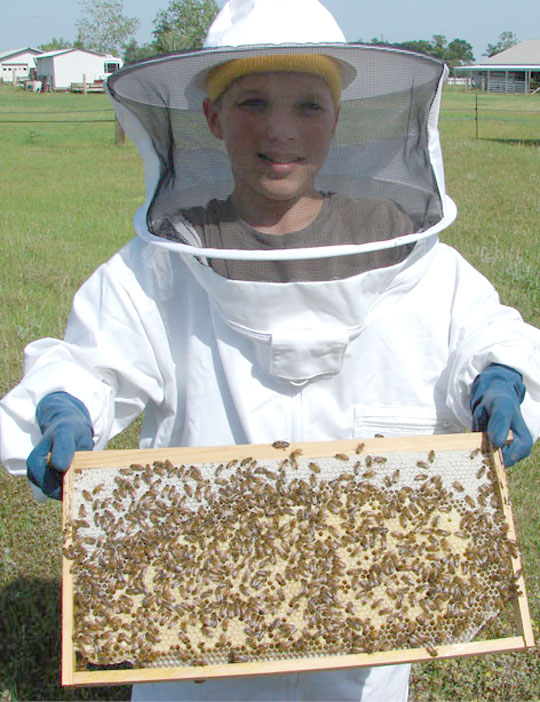 Throughout the day I met several folks there and had an opportunity to learn more about them. During one of the periods between teaching it was asked who was the oldest beekeeper there, that would be Rex Aldridge at 88, the youngest was Rosalyn Miller, I believe she is seven years old and helps her Dad Tony Miller in their hive keeping. Aden Davis (pictured left), 11 years old, was the youngest to have registered and managed his own hives. Aden started about a year ago. His mentor is Laney Hiller. Aden bought his first two queens from Lawrence Cutts over in Chipley, FL. Aden participates in the Bee Bunch group which is a Christian group of bee keeping acquaintances. Nine of the Bee Bunch were in attendance at the Chautauqua. Laney is our coordinator for the Bee Bunch. Aden, with some assistance from Laney, has presented his bees at his school for career day. He is rather knowledgeable for his age and applies himself at learning all he can to keep his bees and share information with others.
Rex Aldridge has been keeping bees since he was eight years old. He is a member of the Robertsdale Beekeeping Association. He shared with me that he was in the Army for 38 months, participated at Omaha Beach and was awarded five bronze stars. He got his first box of bees at eight years old by swapping a box of sweet potatoes for a box of bees, this was in Chilton County, Ala. Rex stated that he was one of the first folks to experiment with and start growing peaches in Chilton County.
OJ Blount from Andalusia, Ala., was there and had an interesting display to share with us that he calls The Queens Castle. OJ has been keeping bees for about 30 years and enjoys helping other beekeeping hobbyists. He uses a completely natural beekeeping method with no chemicals of any kind. OJ is 82 years old and says he is still learning about the health of bees as well as his own health. He tries to eat right and help his bees stay healthy by keeping their hives clean (that alone would account for an exercise program). OJ was a cook in the military and enjoys cooking still and brought some brownies that he shared. They were made with muscadines and honey and were very light and wonderful. A diabetic could have appreciated them as well as the rest of us did!
For a photo gallery from the Chautauqua, click here.
Pictured top: A hive of bees. Pictured inset: Beekeeper Aden Davis, 11, with a hive. Submitted photos by Joan Strickland for NorthEscambia.com, click to enlarge.
Photo Gallery: Hundreds Attend Ruritan Farm Auction
March 1, 2009
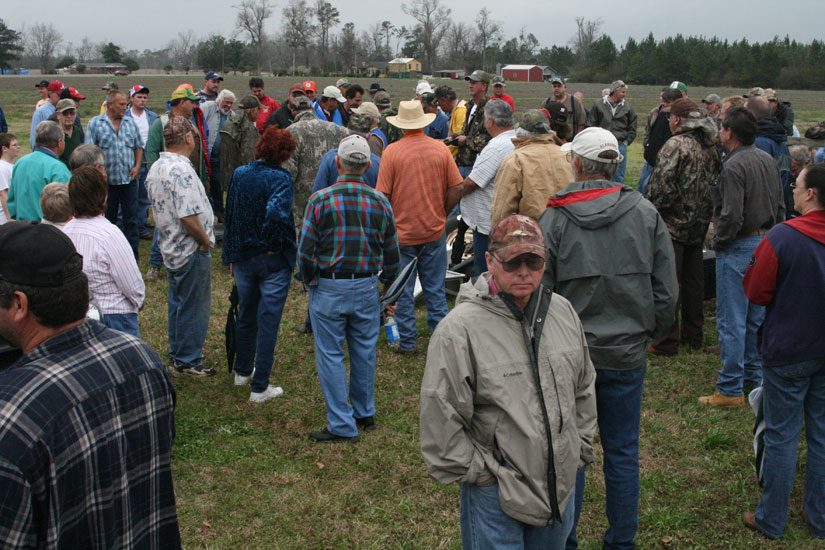
The annual Walnut Hill Ruritan Club farm equipment auction was held Saturday in Walnut Hill. Items sold included farm equipment, lawn and garden equipment, vehicles, household items and more. The sale is held each year on the last Saturday of February. Dozens of buyers and sellers registered for the event.All proceeds benefit the Ruritan’s community service projects in the Walnut Hill area.
For a NorthEscambia.com photo gallery from the event, click here.
Pictured above: Hundreds attended the annual Walnut Hill Ruritan Club farm equipment auction Saturday in Walnut Hill. NorthEscambia.com photo, click to enlarge.