

Video, Full Text: Obama Defends Actions In Libya
March 29, 2011
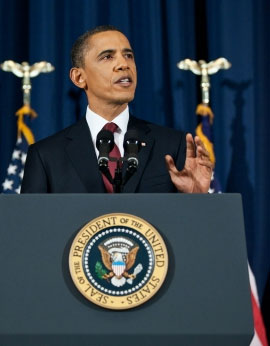
President Barack Obama defending U.S. actions in Libya during a nationally televised speech to the nation Monday night. He said the mission “stopped Gadhafi’s deadly advance” and announced that NATO will take the lead in the mission on Wednesday.
Here is the full text of Obama’s address Monday night:
Tonight, I’d like to update the American people on the international effort that we have led in Libya –- what we’ve done, what we plan to do, and why this matters to us.
I want to begin by paying tribute to our men and women in uniform who, once again, have acted with courage, professionalism and patriotism. They have moved with incredible speed and strength. Because of them and our dedicated diplomats, a coalition has been forged and countless lives have been saved.
Meanwhile, as we speak, our troops are supporting our ally Japan, leaving Iraq to its people, stopping the Taliban’s momentum in Afghanistan, and going after al Qaeda all across the globe. As Commander-in-Chief, I’m grateful to our soldiers, sailors, airmen, Marines, Coast Guardsmen, and to their families. And I know all Americans share in that sentiment.
For generations, the United States of America has played a unique role as an anchor of global security and as an advocate for human freedom. Mindful of the risks and costs of military action, we are naturally reluctant to use force to solve the world’s many challenges. But when our interests and values are at stake, we have a responsibility to act. That’s what happened in Libya over the course of these last six weeks.
Libya sits directly between Tunisia and Egypt -– two nations that inspired the world when their people rose up to take control of their own destiny. For more than four decades, the Libyan people have been ruled by a tyrant -– Muammar Qaddafi. He has denied his people freedom, exploited their wealth, murdered opponents at home and abroad, and terrorized innocent people around the world –- including Americans who were killed by Libyan agents.
 Last month, Qaddafi’s grip of fear appeared to give way to the promise of freedom. In cities and towns across the country, Libyans took to the streets to claim their basic human rights. As one Libyan said, “For the first time we finally have hope that our nightmare of 40 years will soon be over.”
Faced with this opposition, Qaddafi began attacking his people. As President, my immediate concern was the safety of our citizens, so we evacuated our embassy and all Americans who sought our assistance. Then we took a series of swift steps in a matter of days to answer Qaddafi’s aggression. We froze more than $33 billion of Qaddafi’s regime’s assets. Joining with other nations at the United Nations Security Council, we broadened our sanctions, imposed an arms embargo, and enabled Qaddafi and those around him to be held accountable for their crimes. I made it clear that Qaddafi had lost the confidence of his people and the legitimacy to lead, and I said that he needed to step down from power.
In the face of the world’s condemnation, Qaddafi chose to escalate his attacks, launching a military campaign against the Libyan people. Innocent people were targeted for killing. Hospitals and ambulances were attacked. Journalists were arrested, sexually assaulted, and killed. Supplies of food and fuel were choked off. Water for hundreds of thousands of people in Misurata was shut off. Cities and towns were shelled, mosques were destroyed, and apartment buildings reduced to rubble. Military jets and helicopter gunships were unleashed upon people who had no means to defend themselves against assaults from the air.
Confronted by this brutal repression and a looming humanitarian crisis, I ordered warships into the Mediterranean. European allies declared their willingness to commit resources to stop the killing. The Libyan opposition and the Arab League appealed to the world to save lives in Libya. And so at my direction, America led an effort with our allies at the United Nations Security Council to pass a historic resolution that authorized a no-fly zone to stop the regime’s attacks from the air, and further authorized all necessary measures to protect the Libyan people.
Ten days ago, having tried to end the violence without using force, the international community offered Qaddafi a final chance to stop his campaign of killing, or face the consequences. Rather than stand down, his forces continued their advance, bearing down on the city of Benghazi, home to nearly 700,000 men, women and children who sought their freedom from fear.
At this point, the United States and the world faced a choice. Qaddafi declared he would show “no mercy” to his own people. He compared them to rats, and threatened to go door to door to inflict punishment. In the past, we have seen him hang civilians in the streets, and kill over a thousand people in a single day. Now we saw regime forces on the outskirts of the city. We knew that if we wanted — if we waited one more day, Benghazi, a city nearly the size of Charlotte, could suffer a massacre that would have reverberated across the region and stained the conscience of the world.
It was not in our national interest to let that happen. I refused to let that happen. And so nine days ago, after consulting the bipartisan leadership of Congress, I authorized military action to stop the killing and enforce U.N. Security Council Resolution 1973.
We struck regime forces approaching Benghazi to save that city and the people within it. We hit Qaddafi’s troops in neighboring Ajdabiya, allowing the opposition to drive them out. We hit Qaddafi’s air defenses, which paved the way for a no-fly zone. We targeted tanks and military assets that had been choking off towns and cities, and we cut off much of their source of supply. And tonight, I can report that we have stopped Qaddafi’s deadly advance.
In this effort, the United States has not acted alone. Instead, we have been joined by a strong and growing coalition. This includes our closest allies -– nations like the United Kingdom, France, Canada, Denmark, Norway, Italy, Spain, Greece, and Turkey –- all of whom have fought by our sides for decades. And it includes Arab partners like Qatar and the United Arab Emirates, who have chosen to meet their responsibilities to defend the Libyan people.
To summarize, then: In just one month, the United States has worked with our international partners to mobilize a broad coalition, secure an international mandate to protect civilians, stop an advancing army, prevent a massacre, and establish a no-fly zone with our allies and partners. To lend some perspective on how rapidly this military and diplomatic response came together, when people were being brutalized in Bosnia in the 1990s, it took the international community more than a year to intervene with air power to protect civilians. It took us 31 days.
Moreover, we’ve accomplished these objectives consistent with the pledge that I made to the American people at the outset of our military operations. I said that America’s role would be limited; that we would not put ground troops into Libya; that we would focus our unique capabilities on the front end of the operation and that we would transfer responsibility to our allies and partners. Tonight, we are fulfilling that pledge.
Our most effective alliance, NATO, has taken command of the enforcement of the arms embargo and the no-fly zone. Last night, NATO decided to take on the additional responsibility of protecting Libyan civilians. This transfer from the United States to NATO will take place on Wednesday. Going forward, the lead in enforcing the no-fly zone and protecting civilians on the ground will transition to our allies and partners, and I am fully confident that our coalition will keep the pressure on Qaddafi’s remaining forces.
In that effort, the United States will play a supporting role — including intelligence, logistical support, search and rescue assistance, and capabilities to jam regime communications. Because of this transition to a broader, NATO-based coalition, the risk and cost of this operation — to our military and to American taxpayers — will be reduced significantly.
So for those who doubted our capacity to carry out this operation, I want to be clear: The United States of America has done what we said we would do.
That’s not to say that our work is complete. In addition to our NATO responsibilities, we will work with the international community to provide assistance to the people of Libya, who need food for the hungry and medical care for the wounded. We will safeguard the more than $33 billion that was frozen from the Qaddafi regime so that it’s available to rebuild Libya. After all, the money doesn’t belong to Qaddafi or to us — it belongs to the Libyan people. And we’ll make sure they receive it.
Tomorrow, Secretary Clinton will go to London, where she will meet with the Libyan opposition and consult with more than 30 nations. These discussions will focus on what kind of political effort is necessary to pressure Qaddafi, while also supporting a transition to the future that the Libyan people deserve — because while our military mission is narrowly focused on saving lives, we continue to pursue the broader goal of a Libya that belongs not to a dictator, but to its people.
Now, despite the success of our efforts over the past week, I know that some Americans continue to have questions about our efforts in Libya. Qaddafi has not yet stepped down from power, and until he does, Libya will remain dangerous. Moreover, even after Qaddafi does leave power, 40 years of tyranny has left Libya fractured and without strong civil institutions. The transition to a legitimate government that is responsive to the Libyan people will be a difficult task. And while the United States will do our part to help, it will be a task for the international community and –- more importantly –- a task for the Libyan people themselves.
In fact, much of the debate in Washington has put forward a false choice when it comes to Libya. On the one hand, some question why America should intervene at all -– even in limited ways –- in this distant land. They argue that there are many places in the world where innocent civilians face brutal violence at the hands of their government, and America should not be expected to police the world, particularly when we have so many pressing needs here at home.
It’s true that America cannot use our military wherever repression occurs. And given the costs and risks of intervention, we must always measure our interests against the need for action. But that cannot be an argument for never acting on behalf of what’s right. In this particular country -– Libya — at this particular moment, we were faced with the prospect of violence on a horrific scale. We had a unique ability to stop that violence: an international mandate for action, a broad coalition prepared to join us, the support of Arab countries, and a plea for help from the Libyan people themselves. We also had the ability to stop Qaddafi’s forces in their tracks without putting American troops on the ground.
To brush aside America’s responsibility as a leader and -– more profoundly -– our responsibilities to our fellow human beings under such circumstances would have been a betrayal of who we are. Some nations may be able to turn a blind eye to atrocities in other countries. The United States of America is different. And as President, I refused to wait for the images of slaughter and mass graves before taking action.
Moreover, America has an important strategic interest in preventing Qaddafi from overrunning those who oppose him. A massacre would have driven thousands of additional refugees across Libya’s borders, putting enormous strains on the peaceful –- yet fragile -– transitions in Egypt and Tunisia. The democratic impulses that are dawning across the region would be eclipsed by the darkest form of dictatorship, as repressive leaders concluded that violence is the best strategy to cling to power. The writ of the United Nations Security Council would have been shown to be little more than empty words, crippling that institution’s future credibility to uphold global peace and security. So while I will never minimize the costs involved in military action, I am convinced that a failure to act in Libya would have carried a far greater price for America.
Now, just as there are those who have argued against intervention in Libya, there are others who have suggested that we broaden our military mission beyond the task of protecting the Libyan people, and do whatever it takes to bring down Qaddafi and usher in a new government.
Of course, there is no question that Libya -– and the world –- would be better off with Qaddafi out of power. I, along with many other world leaders, have embraced that goal, and will actively pursue it through non-military means. But broadening our military mission to include regime change would be a mistake.
The task that I assigned our forces -– to protect the Libyan people from immediate danger, and to establish a no-fly zone -– carries with it a U.N. mandate and international support. It’s also what the Libyan opposition asked us to do. If we tried to overthrow Qaddafi by force, our coalition would splinter. We would likely have to put U.S. troops on the ground to accomplish that mission, or risk killing many civilians from the air. The dangers faced by our men and women in uniform would be far greater. So would the costs and our share of the responsibility for what comes next.
To be blunt, we went down that road in Iraq. Thanks to the extraordinary sacrifices of our troops and the determination of our diplomats, we are hopeful about Iraq’s future. But regime change there took eight years, thousands of American and Iraqi lives, and nearly a trillion dollars. That is not something we can afford to repeat in Libya.
As the bulk of our military effort ratchets down, what we can do — and will do — is support the aspirations of the Libyan people. We have intervened to stop a massacre, and we will work with our allies and partners to maintain the safety of civilians. We will deny the regime arms, cut off its supplies of cash, assist the opposition, and work with other nations to hasten the day when Qaddafi leaves power. It may not happen overnight, as a badly weakened Qaddafi tries desperately to hang on to power. But it should be clear to those around Qaddafi, and to every Libyan, that history is not on Qaddafi’s side. With the time and space that we have provided for the Libyan people, they will be able to determine their own destiny, and that is how it should be.
Let me close by addressing what this action says about the use of America’s military power, and America’s broader leadership in the world, under my presidency.
As Commander-in-Chief, I have no greater responsibility than keeping this country safe. And no decision weighs on me more than when to deploy our men and women in uniform. I’ve made it clear that I will never hesitate to use our military swiftly, decisively, and unilaterally when necessary to defend our people, our homeland, our allies and our core interests. That’s why we’re going after al Qaeda wherever they seek a foothold. That is why we continue to fight in Afghanistan, even as we have ended our combat mission in Iraq and removed more than 100,000 troops from that country.
There will be times, though, when our safety is not directly threatened, but our interests and our values are. Sometimes, the course of history poses challenges that threaten our common humanity and our common security -– responding to natural disasters, for example; or preventing genocide and keeping the peace; ensuring regional security, and maintaining the flow of commerce. These may not be America’s problems alone, but they are important to us. They’re problems worth solving. And in these circumstances, we know that the United States, as the world’s most powerful nation, will often be called upon to help.
In such cases, we should not be afraid to act -– but the burden of action should not be America’s alone. As we have in Libya, our task is instead to mobilize the international community for collective action. Because contrary to the claims of some, American leadership is not simply a matter of going it alone and bearing all of the burden ourselves. Real leadership creates the conditions and coalitions for others to step up as well; to work with allies and partners so that they bear their share of the burden and pay their share of the costs; and to see that the principles of justice and human dignity are upheld by all.
That’s the kind of leadership we’ve shown in Libya. Of course, even when we act as part of a coalition, the risks of any military action will be high. Those risks were realized when one of our planes malfunctioned over Libya. Yet when one of our airmen parachuted to the ground, in a country whose leader has so often demonized the United States –- in a region that has such a difficult history with our country –- this American did not find enemies. Instead, he was met by people who embraced him. One young Libyan who came to his aid said, “We are your friends. We are so grateful to those men who are protecting the skies.”
This voice is just one of many in a region where a new generation is refusing to be denied their rights and opportunities any longer.
Yes, this change will make the world more complicated for a time. Progress will be uneven, and change will come differently to different countries. There are places, like Egypt, where this change will inspire us and raise our hopes. And then there will be places, like Iran, where change is fiercely suppressed. The dark forces of civil conflict and sectarian war will have to be averted, and difficult political and economic concerns will have to be addressed.
The United States will not be able to dictate the pace and scope of this change. Only the people of the region can do that. But we can make a difference.
I believe that this movement of change cannot be turned back, and that we must stand alongside those who believe in the same core principles that have guided us through many storms: our opposition to violence directed at one’s own people; our support for a set of universal rights, including the freedom for people to express themselves and choose their leaders; our support for governments that are ultimately responsive to the aspirations of the people.
Born, as we are, out of a revolution by those who longed to be free, we welcome the fact that history is on the move in the Middle East and North Africa, and that young people are leading the way. Because wherever people long to be free, they will find a friend in the United States. Ultimately, it is that faith — those ideals — that are the true measure of American leadership.
My fellow Americans, I know that at a time of upheaval overseas — when the news is filled with conflict and change — it can be tempting to turn away from the world. And as I’ve said before, our strength abroad is anchored in our strength here at home. That must always be our North Star — the ability of our people to reach their potential, to make wise choices with our resources, to enlarge the prosperity that serves as a wellspring for our power, and to live the values that we hold so dear.
But let us also remember that for generations, we have done the hard work of protecting our own people, as well as millions around the globe. We have done so because we know that our own future is safer, our own future is brighter, if more of mankind can live with the bright light of freedom and dignity.
Tonight, let us give thanks for the Americans who are serving through these trying times, and the coalition that is carrying our effort forward. And let us look to the future with confidence and hope not only for our own country, but for all those yearning for freedom around the world.
Thank you. God bless you, and may God bless the United States of America. (Applause.) Thank you.
Bagdad Fire Chief Passes Away
March 28, 2011
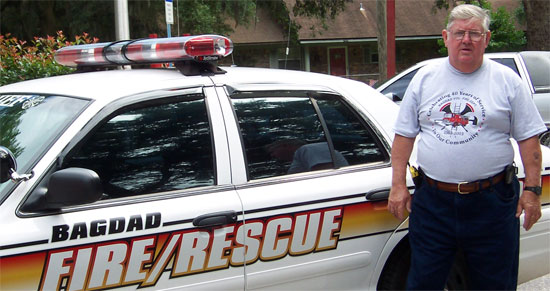
Chief Claude B. Dunlap Jr. of Bagdad Volunteer Fire Department passed away on Saturday, March 26. A volunteer fire fighter since 1972, he held the position of fire chief at the Santa Rosa department since 1995.
Born April 18, 1944 at Sacred Heart Hospital in Pensacola, Dunlap attended Bagdad Elementary School and later enlisted in the U.S. Army. He served as a combat engineer from August 1967 to August 1969 with two tours in Vietnam before returning home. He earned medals of Good Conduct, National Defense Service Medal, Vietnam Service Medal, Vietnam Campaign Medal, and Expert (rifle).
He followed in his father’s footsteps by joining Bagdad Volunteer Fire Department in 1973 and actively served the citizens of Bagdad and Santa Rosa County for 38 years. He worked his way up through the ranks as captain and assistant chief and in 1995 took the role as Fire Chief. Bagdad Fire Department grew tremendously under his direction.
He also coached little league baseball and football at the Bagdad ball field, and was an active member of the local CB Club. His dedication and service to Santa Rosa County will be honored and remembered by many for years to come. He was a loving husband, gather, grandpa, friend and fire chief and will be greatly missed.
He is survived by wife Brenda Dunlap and son David Dunlap who are also active members of Bagdad Fire Department.
Arrangements:
Viewing- Wednesday, March 30 from 5 p.m. to 7 p.m. at Lewis Funeral Home in Milton.
Burial services- Thursday, March 31 at 11 a.m. at Pace Assembly of God with procession and graveside services following at the Bagdad Cemetery.
Creative High School Students Honored With MIRA Awards
March 28, 2011
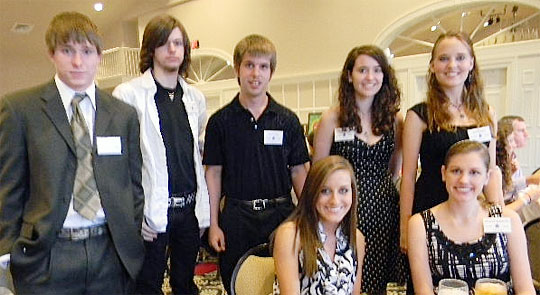
Ten of the most creative students from each high school in the county were honored recently as recipients of the 2011 MIRA Creative Arts Awards.
North Escambia area students honored during the dinner ceremony at the Mustin Beach Officers’ Club on Pensacola Naval Air Station were:
Northview High: Jared Adams, wood carving; Corry Baggett, woodworking; Mallory Bell, music; Caitlyn Brown, graphic arts; Dixie Carnley, digital graphic arts; Katelyn Garrison, digital graphic arts; Aaron Hammond, visual arts; Sarah Killam, music; Christina Sepulveda, graphic arts; Colton Sims, instrumental music.
Tate High: Maureen Crisco, pottery; Emily Danforth, chorus; Caitlyn Gallagher, instrumental music; Justin Gaylard, drama/choral music; Chloe Jackson, debate; Christopher L. James, instrumental music; Kim McCroan, drama/dance; Alexandria Quinn, visual art; Kayte Turner, dance; Caitlynn Walsh, jewelry design.
West Florida High: Cameron “Teddy” Bell, drama; Chelsea Driver, directing; Dominic Johnson, photography; Greg Lee, visual art; Nadia Mehriary, nonfiction writing; Forrestt Midkiff, television production; Brendan Trey Searcy, visual art; Diana Veitch, visual art; Ashley Vosmera-Mitchell, drama/costumes; Jashauna Williams, music.
Pine Forest High: Jennifer Barrett, journalism; Katherine Cooper, drama; Danielle Cotto, drama; Joshua Merced, instrumental music; Kimberly Raines, journalism; Chelsea Taylor, chorus; Zachary Woods, instrumental music; Joseph Wright, chorus; Christina Zarr, drama.
Pictured top: Northview High MIRA Award winners Corry Baggett, Aaron Hammond, Jared Adams, Katelyn Garrison, Dixie Carnley, Caitlyn Brown, and Christina Sepulveda. Not pictured: olton Sims, Mallory Bell and Sarah Killam. Submitted photo by Vicki Baggett for NorthEscambia.com, click to enlarge.
Walnut Hill Man Guilty On Federal Weapons Charge
March 28, 2011
A Walnut Hill man has been convicted by a jury on a federal weapons charge. Floyd Scott Mooney, 39, was convicted last week on one count of possession of a firearm or ammunition by a convicted felon.
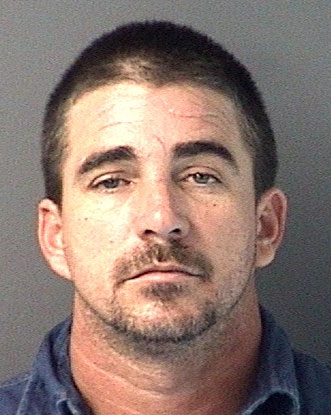
According to the indictment issued January 19 by the federal grand jury, Mooney was in possession of a half dozen rifles and ammunition in violation of federal law due to his status as a convicted felon that was sentenced to more than one year in prison.
In March 1999, Mooney was convicted on charges of conspiracy to possess with intent to distribute methamphetamine and possession of a firearm in relation to a drug trafficking offense and was sentenced to 18 months in federal prison, according to federal court records.
Mooney’s attorney, Gene Mitchell of Pensacola, has filed a motion for a new trial claiming several errors with the government’s prosecution. A judge has not yet ruled on the motion.
A federal judge will review the case in early June and set a sentencing date.
Escambia Soil And Water District Joins Against Conecuh Woods Landfill
March 28, 2011
The Escambia Soil and Water Conservation District has joined many other local governmental agencies in opposing the planned Conecuh Woods 5,100 acre landfill near Repton, Ala.
Conecuh Woods’ landfill, would include a 1,600 acre “disposal cell” from Range to Repton to near the Big Escambia Creek. Big Escambia Creek flows southward into Escambia County, Alabama, through Flomaton and drains through a North Escambia swamp into the Escambia River and then Escambia Bay.
 “As a community downstream of Escambia Creek, and South of the landfill site, and recognizing the potential devastating impact this landfill would have on the aquifers surrounding and underlying this community, the Escambia County Soil and Water Conservation District Board of Supervisors is of the opinion that the landfill poses a clear and present threat to the environment and the health and quality of life to all the citizens that reside in Escambia County, Florida, now and for generations to come,” the ESWCD resolution states.
Many other governments in South Alabama and Northwest Florida have passed resolutions in opposition to Conecuh Woods, including Escambia counties in Alabama and Florida, the Town of Century, Atmore and Flomaton.
“Nobody knows more than we do that Florida’s rules on water quality are tougher than Alabama’s,” Century Mayor Freddie McCall said recently. “If it comes into our river, Florida is in trouble immediately.”
The Conecuh Woods application currently awaits a decisions from the Conecuh County Commission. Even if they give their approval, the project may still remain on hold. Alabama Gov. Robert Bentley issued an executive order declaring a moratorium on new landfills in the state.
Photo (And Poem): Jack And Jill’s Hill Breaks Down In Walnut Hill
March 28, 2011

 There was a minor traffic hazard created on Highway 97 in Walnut Hill Sunday afternoon when a truck hauling the hill portion of “Jack and Jill” carnival ride broke down, about a mile south of the two water towers at Ernest Ward Middle.
After taking a photo, we were unable to resist having fun with a local rendition of the Jack and Jill nursery rhyme. (Our apologies in advance.)
Jack And Jill’s Hill In Walnut Hill
Jack and Jill went up to Walnut Hill
Not from the tower of water.
The truck broke down with a funny sound
And people to help came after.
The engine did come back to life again
With the work of a couple of men.
But not before a North Escambia photo
So that the world would know
That Jack and Jill’s very famous hill
had been in our very own Walnut Hill.
Pictured top: A minor traffic hazard was created Sunday afternoon in Walnut Hill when truck pulling a “Jack and Jill carnival ride broke down on Highway 97. NorthEscambia.com photos, click to enlarge.
Bratt, Molino Park Pre-K Registration Underway
March 28, 2011
Registration is underway for the Voluntary Pre-Kindergarten program for four-year olds at Bratt and Molino Park elementary schools.
Bratt Elementary
Registration packets can be picked up March 28 – April 8 and again May 2 – May 20. Parents or guardians will need their photo identification, the child’s immunization record and a physical for the child within one year prior to April 22, 2011. Students should be four-years old before September 1, 2011. For more information, contact Bratt Elementary School at (850) 327-6137.
Molino Park Elementary
Registration will be March 28-April 8. Parents must bring proof of residency, a utility bill, a photo identification of the parent or guardian, proof of guardianship if not the parent, child’s immunization record and a physical dated within one year prior to August 22, 2011. The child’s birth date must be between September 2, 2006, and September 1, 2007. For more information, contact Molino Park Elementary at (850) 587-5265.
Legislature To Address Charter School Expansion
March 28, 2011
With teacher merit pay reforms out of the way, the Florida Legislature has turned toward charter school expansion, considering two bills next week that would make it easier for highly-rated charter schools to expand enrollment, add grade levels and grant preferential admittance.
And just like the swiftly-approved teacher merit pay reforms, the push to expand charter schools has the strong backing of Gov. Rick Scott.
 “The next thing we’ve got to do (is get) our charter schools expanded,” Scott said Friday at a ceremonial signing of the teacher merit pay bill. “It gives our public schools the opportunity to be run by third parties and be way more innovative.”
The push for charter school expansion is part of a decades-long broader effort by Florida Republicans to offer more school choices beyond traditional public schools. Charter schools are public schools, but they can be run by a third-party, such as a university or non-profit, and are exempt from regulations that apply to traditional public schools.
Charter schools operate with approval and general oversight from the county school districts and are funded through taxpayer dollars.
They are different from private schools, which are totally autonomous and supported primarily by tuition.
“Charter schools give parents a choice,” said Rep. Kelli Stargel, R-Lakeland, who is a supporter of a House bill to expand charter schools. “When you have options, that brings everybody to a higher level.”
The bills in committee next week offer two different takes on charter school expansion.
One bill (SB 1546) sponsored by Sen. John Thrasher, R-St. Augustine, emphasizes the ability of universities and community colleges to add new grades or open new charter schools.
It also removes a requirement that charter schools provide transportation.
This is a big change from current law, which limits the number of charter schools eligible for state funding to one per university, with a few exceptions. It also allows community colleges to go from just being allowed to develop secondary charter schools that serve middle and high school students to all grades, K-12.
Thrasher’s bill shares with a House proposed committee bill (KINS 11-03) an effort to label charter schools that have received two “A” grades in three years as “high-performing.” That would open the door to benefits such as the ability to more easily tack on new grades, or increase enrollment by 25 percent. High-performing schools are also assured 15-year contracts. Both bills also strengthen a charter school’s ability to appeal a district’s decision to revoke a charter.
Both measures expand the ability of certain charter schools to grant preferential admittance based on where the parent is employed or where the student lives.
Rather than just granting the preferential status to children of charter school employees, for instance, the bill now allows the children of the charter school’s business partners admittance over others. The House bill also would allow preferential admission based on whether the child attends a pre-kindergarten program at that school.
Charter schools are growing in popularity in Florida. There are currently 458 charter schools in the state serving 154,758 students. That’s up from 411 that were in operation the year before.
Thrasher hinted on Thursday that changes to his bill are likely.
He said he would support an effort to “narrow” his wide-ranging bill. “I’m of the opinion it was too broad,” Thrasher said. “We will try to move forward and see what our friends in the House do, too.”
Stargel said she wasn’t a big supporter of the concept in Thrasher’s bill of letting universities and community colleges open more charter schools.
“They should stick to their mission of higher education,” Stargel said.
The push to expand charter schools is on the legislative agenda of former Gov. Jeb Bush’s Foundation for Florida’s Future, which also was a big supporter of teacher merit pay reforms.
Executive Director Patricia Levesque was on hand when the teacher merit pay bill was signed. The Foundation for Florida’s Future has seen much success this session, with another bill the organization supports that expands public school vouchers moving through committees in both chambers at a fast clip.
Pictured. Byrneville Elementary is the only charter school in North Escambia. NorthEscambia.com file photo, click to enlarge.
By Lilly Rockwell
The News Service of Florida
Alger Road Culvert To Get Upgrade
March 28, 2011
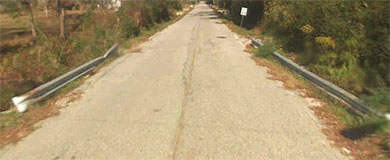
A problem culvert on Alger Road will cost the Town of Century $80,843 to repair.
According to Dale Long, the town’s engineer, sand is washing away over time, requiring a repair. To completely remove and replace the culvert would cost an estimated $130,000, but the $80,843 repair will include a fiberglass lining for the existing pipes under the roadway.
The contract will be awarded to Pensacola Concrete Construction company. The town received one other proposal on the project for $155,325.
The fiberglass liner will be a permanent repair, according to mayor Freddie McCall. “This is not a Band Aid,” he said.
The drainage culvert is located on Alger Road about 350 feet west of North Century Boulevard.
Escambia Hostage Hoax Prompts SWAT Response; Two Arrested
March 27, 2011
 A bogus report prompted a SWAT standoff Sunday in Escambia County. Deputies believed that a Pensacola woman who wished to turn herself in on a warrant was being held against her will by her boyfriend.
The Escambia County Sheriff’s Department received a call around 7:15 a.m. from a woman who identified herself as 32-year-old Lateefah Moore. The caller told Sheriff’s dispatchers that she had a warrant for her arrest and wanted to turn herself in. When dispatchers confirmed the warrant was valid they dispatched deputies to the address she provided, 1500 East Johnson St.
When deputies arrived at the address they attempted to serve the warrant but could not get anyone to answer the door. One of the responding deputies called the telephone number recorded by dispatch and a female answered. The deputy, thinking he was talking to the warrant suspect, asked her to come to the door. The female then began to cry and told the deputy that her boyfriend was holding her against her will.
“At the time of this phone call, we believed that we had a man holding his girlfriend and two children hostage,” said Sheriff’s spokesperson Deputy Chris Welborn. “The patrol supervisor made the decision to call out our hostage negotiations and SWAT teams.”
The Sheriff’s special weapons and tactics team took up positions around the residence while hostage negotiators tried to contact the female or her boyfriend.
“Our hostage negotiators were finally able to make contact with Moore, but she denied being held against her will and was a bit frightened by all the activity,” said Welborn. “Our negotiators talked her into coming out and we were able to get to the bottom of this.”
Upon further investigation, it was determined that Moore’s boyfriend’s ex-girlfriend, identified as 27-year-old Kaneatha Sheri Harris of Pensacola, had made the phone call to the Sheriff’s office and identified herself as Moore.
Patrol deputies tracked down Harris at her residence in the Sunrise apartment complex at 4350 Fairfield Dr. She was taken into custody and charged with making a false report and two counts of obstructing justice.
Moore was also arrested on a violation of probation warrant.