

Make A Resolution To Be More Wildlife Friendly
January 1, 2011
 The tradition of the New Year’s Resolutions dates back to 153 B.C. Janus, a mythical king of early Rome was said to have two faces which allowed him to look back on past events and forward to the future.
The beginning of a new year is a great time to reflect on the issues of the past and resolve to do better in the upcoming year. The 2010 Gulf oil spill had a devastating impact on local wildlife. Florida is a state renowned for its diverse and unique ecosystems. But rapid development and environmental disasters, particularly in coastal areas, is continuing to destroy wildlife habitat. Resolve to be more wildlife-friendly in 2011 by following these easy tips from the Florida Yards and Neighborhoods Program.
Provide food
Select plants with seeds, fruit, foliage, or flowers that butterflies, birds, and other wildlife like to eat. Berries, fleshy fruits, nuts, and acorns are all treats for many animals.
Supply water
Any water you provide will attract wildlife. You could have running water in the form of a natural feature, such as a pond, creek, or other body of fresh water, but a fountain or birdbath will also beckon wildlife. Empty and clean your birdbath every few days. Do not clean it with soap or bleach—just physically scrub all surfaces with a brush or scouring-type sponge. Change the water regularly to prevent mosquito breeding and bacterial contamination.
 Leave snags
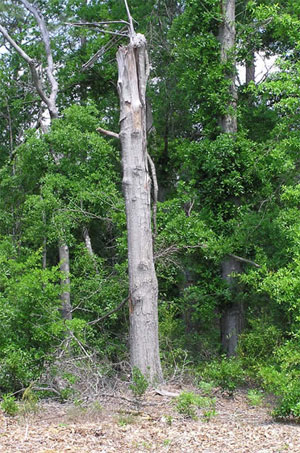
Leave snags, which are the trunks of dead trees, in place if they do not create a hazard. Many birds use snags for perching, nesting, and feeding. Snags are often removed from yards or land mistakenly thought of as no longer having value. Nothing could be farther from the truth. A tree’s full life cycle at this point, is far from over.
Manage pets
If you permit pets to harass or kill wildlife, you will only hinder any efforts you make toward attracting wildlife. This is especially true for cats allowed outdoors.
Reduce insecticide use
Each time you apply an insecticide to your landscape, you reduce insect populations, which form an important food source for birds. Some chemicals can also poison birds and other animals that feed on affected insects.
Reduce the amount of mowed lawn area
Unmowed areas can contain more plant species than mowed areas, providing more potential food sources and habitat for wildlife. Reduce the mowed area around your house, especially in low-traffic areas, such as corners of the yard.
Increase vertical layering
Plant a variety of plants in different sizes and heights to provide more cover and feeding opportunities for diverse species of wildlife.
By following the simple tips in this chapter, your Florida-Friendly lawn and garden can become a sanctuary for wildlife, as well as part of a migratory passage between one wild space and another. Animals need to move from place to place, just like people. They have trouble traveling in heavily urban and suburban landscapes, but you can help them by joining your Florida-Friendly yard with others in the neighborhood to create a “natural corridor”—a safe, traversable route between woodlands, wetlands, or other wild areas.
For more specific information, visit the University of Florida/IFAS website at http://edis.ifas.ufl.edu/topic_landscaping_for_wildlife or call your local Extension Office.
Theresa Friday is the Residential Horticulture Extension Agent for Santa Rosa County.
Century Care Center Residents Ring In The New Year
January 1, 2011
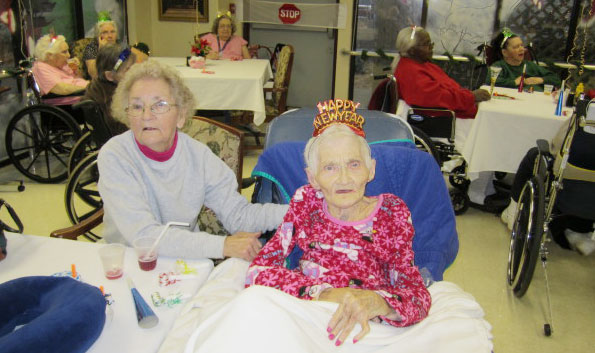
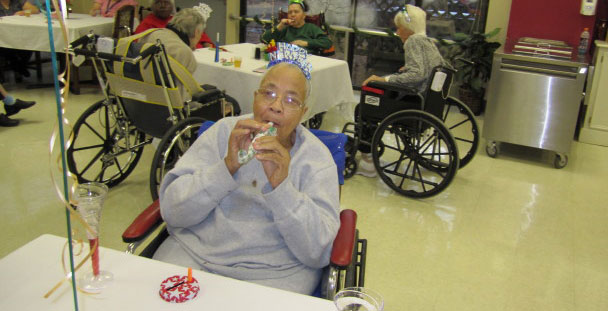
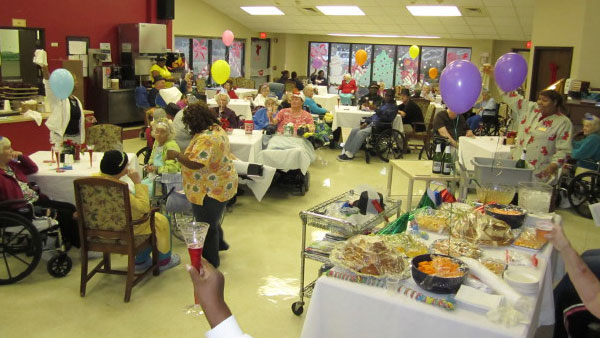
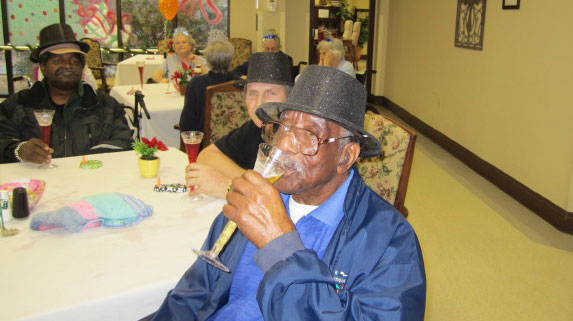
The residents at Century Care Center rang in 2011 just a few hours early with a Friday afternoon celebration. Submitted photos for NorthEscambia.com, click to enlarge.
2011 Brings New Laws For Florida’s Divorced Residents
January 1, 2011
New laws expanding protection for children at risk of being abducted by a parent and recalculating how alimony is paid go into effect January 1.
The first bill (HB 787), sponsored by Rep. Daryl Rouson, D-St. Petersburg, adds new protective measures to those a judge can use to prevent feuding parents from taking children out of state or out of the country if there is reason to believe they won’t bring them back. Included in the new tools would be the ability to pull a child’s passport, require a bond when traveling, or prevent the parent from taking the child to countries where extradition would be difficult or impossible.
The other measure (HB 907) that goes into effect Saturday recalculates how alimony and support payments are made by changing the formulas used to determine custody, percentage of care and other factors that make up the amount owed by a non-custodial parent. The law, sponsored by Rep. Anitere Flores, R-Miami, also bolsters penalties for non-custodial parents who don’t cooperate.
Among enhanced sanctions, the law raises the minimum amount owed if the parent is non-responsive. The bill specifically defines different types of support payments and when they should be applied. The law also adds statutory definitions dealing with the duration of a marriage, with certain types of alimony available only to ex-spouses of long-term relationships.
Under the new law, which affects cases pending after July 1, 2010, the judge’s first decision is whether one party actually needs alimony and if the other party has ability to pay. Once that’s settled, the judge then determines how long the marriage lasted and what type of alimony is appropriate.
2010 Year In Review In State Government
January 1, 2011
Gov. Charlie Crist started 2010 as a Republican, and the favorite to be the party’s nominee for U.S. Senate.
He ended 2010 as an independent, and about to join the 12 percent of Floridians who are unemployed as his four-year term as governor ends.
That was not the only thing that drastically changed in 2010 in Florida state government. With Crist ensured to be leaving office when the year came to a close and the entire Cabinet set to turn over too, change was the overriding theme of 2010.
Not many people outside of the health care sector knew who Rick Scott was when the clock struck midnight last New Year’s Eve. Next week, Scott will become the 45th governor of Florida. Similarly, Attorney General Bill McCollum was sure to be the Republican to taking on Democrat Alex Sink. Except, he wasn’t.
Sink was supposed to be the national Democrats’ one bright spot on what everyone saw shaping up to be a GOP tsunami this election cycle. But those 67,000 votes the Sink camp was looking for desperately on Election Night never came in from Palm Beach County, which was again at the center of a razor-thin contest in Florida.
Elsewhere, Democratic U.S. Senate candidate Kendrick Meek was not supposed to be able to beat Jeff Greene in his party’s primary – he did – and he was not supposed to be able to overcome Crist siphoning Democratic votes in their fractious three-way race with Marco Rubio – he didn’t.
When Election Night 2010 was all said and done, Florida had an all-new – and an all-Republican – Cabinet. Former Senate President Jeff Atwater defeated former state Rep. Lorrane Ausley to replace Sink as CFO, leaving Democrats on the outside looking in. Ausley humorously biked to Atwater’s house to accuse him of ducking debates, but the charge – like her campaign – never really got rolling.
She also famously featured a spray-painted Old Capitol in her lone campaign commercial, but with Atwater being joined next year by Republicans Pam Bondi and Adam Putnam on the Cabinet, Democrats might consider tagging the place for real in 2011.
Speaking of unexpected political occurrences, Jim Greer was out as Republican Party of Florida chairman before Baby New Year 2010 was a week old. He was replaced by a legislative veteran in Sen. John Thrasher, who was brought in to calm things down as Greer was arrested and charged with steering party money to a company he set up with former RPOF executive director Delmar Johnson.
There was also probably a big change in Greer’s personal relationship with Johnson when he learned that his partner-in-alleged-crime had been working with investigators to catch him.
“Kiss my godson for me,” Johnson said as a farewell to Greer on a call released in May as he cooperated with an investigation targeting his boss and godson’s father.
If he’d only known the call was being recorded and Johnson had turned on him, Greer might have been the one telling Johnson to kiss something.
Last year’s scandal-plagued Republican, former House Speaker Ray Sansom, punctuated his fall from power this year by retiring from the Florida House all together just days before the beginning of the 2010 legislative session. He may be still muttering about the St. Petersburg Times, which drove the story that brought about his demise.
There was change on the state’s utility regulation panel as well. Five Public Service Commissioners voted against rate increases for the state’s largest power company – and now, four of them are no longer on the PSC. Commissioners David Klement and Benjamin Stevens were voted off the panel just months after joining – Stevens started out in the beginning of 2010. Later in the year, former PSC Chairwoman Nancy Argenziano and Commissioner Nathan Skop were denied second terms – in fact they didn’t even get interviews.
And at least one high-profile state agency head, Department of Environmental Protection Secretary Mike Sole, saw the changes coming at the end of the year and made plans for 2011 early. For Sole, that meant taking a much-better paying job with Florida Power & Light.
A SLICK SUMMER
Sole may have been ready for a change of pace in part because the situation in the Florida Gulf Coast was hard to get a handle on in the wake of a massive BP oil spill.
Hardly anyone in officially Tallahassee noticed when the Deepwater Horizon rig exploded with days to go in a free-wheeling 2010 legislative session. But as soon as they adjourned Sine Die – with no handkerchief ceremony lest Republican leaders be seen with their then newly-former Republican governor – boy, did they notice the oil.
State government focused on the spill, the clean-up effort and the effect it all might have on the tourism-dependent Florida Panhandle all summer, and Sole was at the center of it.
The spill was finally contained in August, though the battles over the claims process continued the rest of the year – and likely will for years to come. BP set aside $20 billion to help the Panhandle recover, but the administrator, Ken Feinberg, likely wasn’t on anyone in Florida’s Christmas list this year. He came under fire from Crist, McCollum and Chief Financial Officer Alex Sink, who went after Feinberg at times harder than she targeted Scott.
In the process, a proposal to allow drilling in Florida waters that seemed destined for the fast track with support from new House Speaker Dean Cannon and Senate President Mike Haridopolos was killed dead. To make it official – and Republicans argued to capitalize on the spill politically – Crist called a special session this summer to consider putting a ban on drilling in the state constitution.
Reluctantly, lawmakers came back to Tallahassee, though they didn’t stay long and didn’t do much. The session was over in the House less than an hour after it started, and with no House to send anything to, the Senate called it quits too.
Crist called them the “do-nothing Legislature,” and pledged like Harry Truman to “give them hell for it.” But needing Democratic votes to try to catch up with Rubio, the newly-independent Crist spent most of the fall talking about things like protecting abortion rights, so it was more like Crist was giving them heck.
SB DEEP SIXED
If there was one lynchpin in Gov. Crist’s decision to run for the U.S. Senate without a party affiliation, it may have been the day he vetoed a bill to change the way teachers are paid.
By vetoing the bill to end teacher tenure and create merit pay for educators that was favored by almost every Republican in the Legislature – and former Gov. Jeb Bush – Crist may as well have declared his Independence Day. The GOP never forgave Crist for the veto, and two weeks later, he was an independent.
The writing was clearly on the wall with SB 6, as the bill came to be widely-known.
Crist spent most of the spring publicly waffling on the legislation, and further infuriating the ruling Republicans in Tallahassee, he compared the way the bill moved through the Legislature to Congressional Democrats’ push to pass a national health care bill, which has riled the GOP.
That of course didn’t sit well with what very quickly became Crist’s (Grand) Old Party. “He’s got an `R’ (on the) back of his name right now. (But) you’d have to ask him if he believes he’s following the principles of the Republican Party,” Florida GOP Chairman and State Sen. John Thrasher said at the time.
Many of the Republicans in the Legislature who endorsed Crist when he looked unbeatable in the primary responded to the veto by taking back their support. Among them was now House Speaker Cannon, who said immediately after the veto that it would be difficult to continue supporting Crist’s Senate campaign. His attempt to do so lasted only a few hours, because the same day, Cannon wrote Crist a letter saying sayonara.
More than any other piece of legislation in 2010, SB 6 shaped the year where more things changed than things stayed the same.
CENTER STAGE – ERR, COURT
One of the biggest stories in national politics this year was Congress passing – and President Barack Obama – signing a federal health care law this spring in Washington, D.C. By fall, the fight over health care was hardly over – and it had moved to Florida.
Democrats – those that weren’t disappointed the plan didn’t have a so-called “public option” anyway – were dithyrambic, but Attorney General Bill McCollum was not at all impressed. He showed it by filing a suit against the plan minutes after Obama signed it, touching off a legal fight everyone expects to reach the U.S. Supreme Court, but with the first rounds taking place in Florida.
There were also lawsuits filed in Michigan and Virginia, but McCollum’s Florida measure was joined by 20 other states, as well as the National Federation of Independent Business and two Florida residents who said they didn’t have insurance and didn’t want it.
The states claim that the sweeping reform violates states’ rights in the U.S. Constitution and will force massive new spending on hard-pressed state governments. Attorneys for the U.S. Department of Justice counter that Congress has always had broad taxation powers, and has been given the authority to regulate the parameters of the Medicaid program and who qualifies for coverage.
The judge in the case, U.S. District Judge Roger Vinson, appeared repeatedly this year to be sympathetic to arguments being put forth by Florida and the other states, at one point invoking the 1800’s Whiskey Rebellion in comments that likely made federal lawyers want a stiff drink.
“We had the Whiskey Rebellion because people rebelled against having to pay taxes for the whiskey that they made. The government never made people buy whiskey,” Vinson said.
STORY OF THE YEAR: The fall of Charlie Crist. The rise of Rick Scott. A one-time political superstar was clearly eclipsed by a newfound Sunshine State supernova, and everywhere around the Florida political landscape, dominoes fell.
QUOTE OF THE YEAR: “Things change,” Crist, explaining why he was on the verge of abandoning a promise to remain in the Republican U.S. Senate primary to run as independent, both perfectly summarizing and understating a crazy year that was in Florida politics and government.
By Keith Laing
The News Service Florida
Two Life Sentences For Century Man For Robbery
December 31, 2010
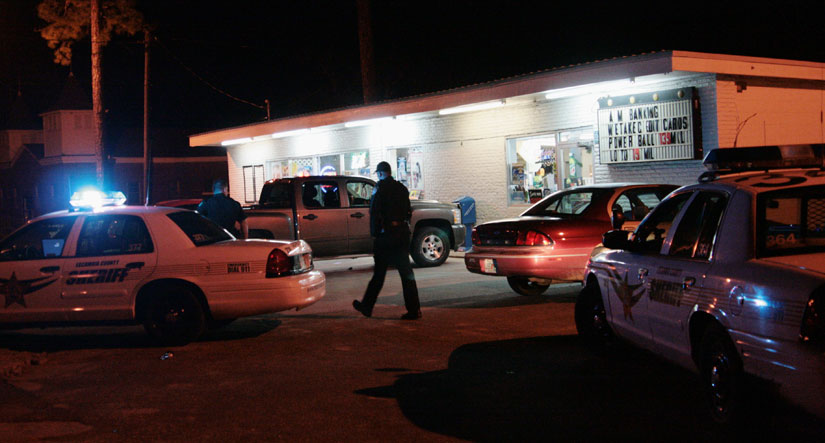
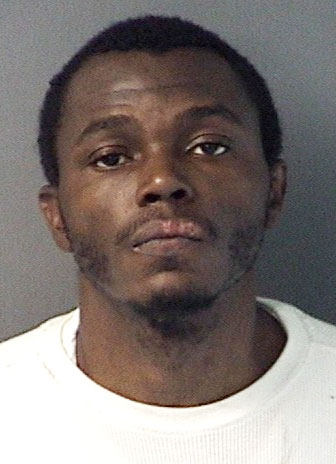 Shawn Demarcus Simmons of Century has been sentenced to two life prison terms for the March 4, 2010, holdup of Moyes State Line Food Mart in Century.
Simmons was convicted earlier this month of two counts of armed robbery with a firearm. Circuit Judge Frank Bell imposed the two life sentences and ordered that they be served consecutively with a 10 year minimum mandatory.
Shawn Demarcus Simmons is facing a 10 year mandatory minimum and a maximum of life in state prison on each count, according to State Attorney Bill Eddins. Simmons, who was once named one of Escambia County’s most wanted criminals, will be sentenced December 29.
Simmons forced the store clerk at gunpoint to empty the cash register, and took several hundred of dollars in Florida Lottery funds and several lottery tickets. After robbing the clerk, Simmons then robbed a customer at gunpoint.
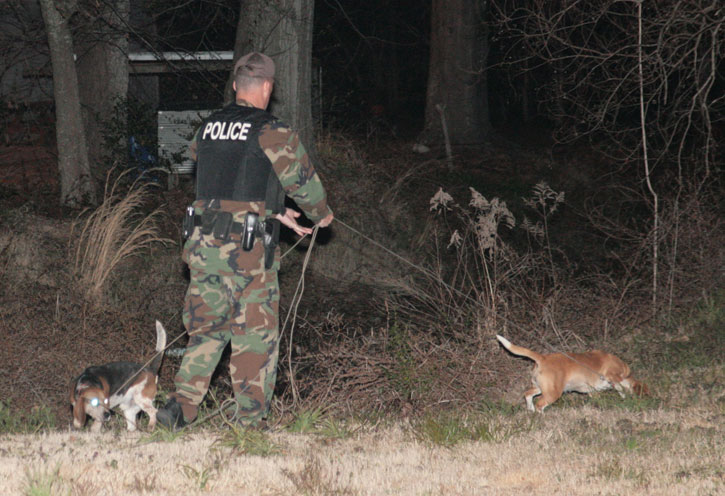 K-9 units from the Escambia County Sheriff’s Office and Century Correctional Institution joined Escambia County deputies and Flomaton Police Department officers in a lengthy manhunt for the suspect. The manhunt was centered in an area bounded by Highway 29, Old Flomaton Road, Highway 4 and the Alabama state line.
Less than two hours after the Moyes robbery, a resident just south of the convenience store called 911 to report that a black male wearing a dark colored hoodie jacket was standing at her door, covered in mud. The resident also described the man as having lips that were light in color and appeared to be burned.
‘Don’t you know me? Don’t you remember me? The police are after me’,” the suspect told the woman, according to the sheriff’s office report.
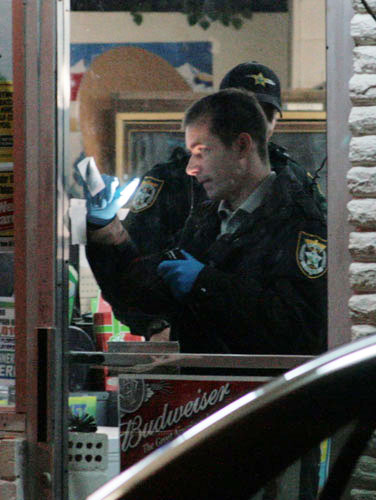 The man reportedly asked the female if he could enter the house, but she refused and called for help. A black jacket was recovered by an Escambia County Sheriff’s Office crime scene technician from behind the woman’s residence. Deputies called off the search about three hours after the robbery, unable to locate Simmons.
The woman at the house later identified Simmons from a photo line up as the man that was at her door. Another witness that was outside the store prior to the robbery also picked Simmons out of a photo line up.
Gulf Coast Crime Stoppers later named Simmons as one of Escambia County’s most wanted fugitives after he was accused of robbing and pistol-whipping a Century man. Simmons was also the subject of additional manhunts in Century and Brewton, Alabama.
He was later arrested on March 24, 2010, after a domestic disturbance and manhunt in Pensacola. During that incident, deputies were dispatched to West Lee Street where two victims advised that Simmons had ran from the residence toward Baptist Hospital.
While deputies were searching for him, Simmons reportedly called the victim from Baptist Hospital and “told her that he knows what’s going down and he’s not going back to jail,” according to the arrest report. Again, deputies were unable to locate Simmons.
The following morning, Sheriff’s Office dispatchers were advised that Simmons was at Sacred Heart Hospital in Pensacola trying to get a ride back to Century and had been observed by hospital security personnel.
Deputies were unable to locate Simmons when they arrived at Sacred Heart Hospital. A Pensacola Police Department K-9 was called to the hospital, and they were able to locate and arrest him.
Once arrested, “Simmons was bragging about how he eluded police when he fled from the residence,” according to the arrest report.
During the Lee Street incident, Simmons had reportedly told the female victim that he was going to kill her, her child and then kill himself. The victim, a Century resident, was staying with her aunt in Pensacola to avoid Simmons, according to deputies. When Simmons managed to find her at the Lee Street address in Pensacola, he violently attacked her, kicking her in the face and stomping on her stomach and chest. She was transported by ambulance to Baptist Hospital for treatment.
A friend of the victim had tried to set her up on a date with Simmons, but she declined because she already had a boyfriend, the sheriff’s report says. Since that time, Simmons had stalked the victim, the report states, even trying to kick in the door of her apartment in Century. She had fled Century and had been living with her aunt in Pensacola.
Pictured top: Deputies investigate the March 4, 2010, armed robbery of Moyes State Line Food Mart in Century. Pictured middle inset: Tracking dogs are used to search for Simmons following a Century armed robbery. Pictured bottom inset: A crime scene technician dusts the door of Moyes State Line Food Mart in Century after a March 4 armed robbery. NorthEscambia.com file photos, click to enlarge.
Jason Daniel Kirk Gets 25 Years In Prison For Half Pound Of Pills
December 31, 2010
A Flomaton man has been sentenced to 25 years in prison after he was arrested in Florida with just under a half pound of illegal pills allegedly stolen from an Alabama pharmacy.
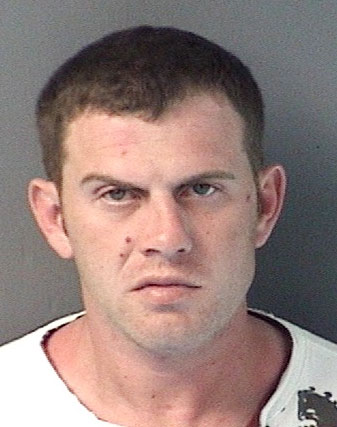 Jason Daniel Kirk, 30, pleaded guilty to three counts of trafficking in illegal drugs and three counts of possession of controlled substances. His sentence includes a 25 year minimum for on two of the trafficking counts.
The case stemmed from a burglary that Kirk was alleged to have committed in March, 2010 at Fred’s in East Brewton where numerous bottles of pills were taken.
The Escambia County (Fla.) Narcotics Unit received information that the defendant was selling these pills out of his room at the Value Place Hotel on Scenic Highway. A search warrant was executed, and deputies found a lock box that contained quantities of Xanax, oxycodone, methadone, morphine and hydrocodone, according to the arrest report. One bag of hydrocodone weighed in excess of 200 grams (0.44 pounds), the arrest report stated.
The key to the safe was located on Kirk’s person. Deputies also located over $600 in cash and notebooks containing sales and inventory figures for the pills . Kirk admitted to ownership of the narcotics, and that they were taken from the Fred’s, according to the State Attorney’s Office.
Jason Kirk’s brother, Matthew Kirk of Brewton, was indicted by an Escambia County (Ala.) Grand Jury on two counts of third degree burglary, one court of second degree theft of property in connection with the the pharmacy burglary. Matthew Kirk was the only police officer on duty in the small Alabama town at the time the burglary occurred. Matthew Kirk has pleaded not guilty and is awaiting trail.
Flu Bug Widespread
December 31, 2010
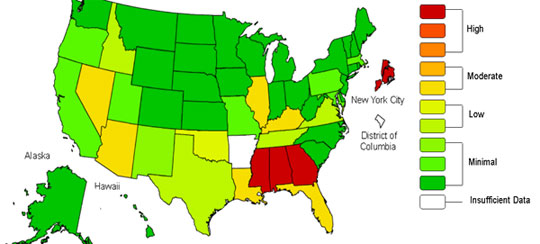
Alabama is among three states with high flu activity , while the flu was at a moderate level in Florida, according to a report released Thursday by the Centers for Disease Control and Prevention.
The flu was reported to be widespread in Alabama, while it was more regional in nature in Florida. Mississippi, Georgia, Virginia and New York also had widespread flu activity last week.
According to the report, there might be a little good news for those that have had their flu shot — the current flu strains seem to be well-matched to this season’s flue vaccine.
15-Year Old Gets 20 Years For Fight With Deputies
December 31, 2010
Tracy Edward Squaire Jr. has been sentenced 20 years in state prison for an incident where he fought with deputies and grabbed a service revolver. He was just 14 years old at the time of the incident.
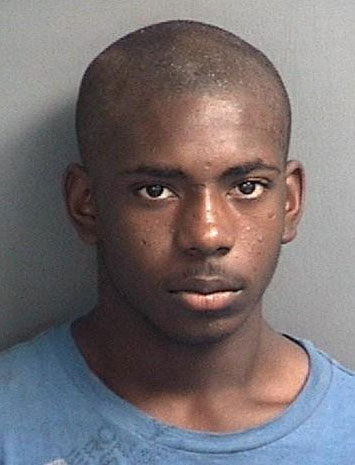 The conviction stemmed from an April 20, 2010, incident in which Squaire, now 15, snuck out of his house at night and loaded a car with his belongings. He then stole the car and wrecked it less than a mile from his home. He then walked back home and stole a second vehicle from his parent’s home.
While Squaire was transferring his belongings from the first car to the second he was approached by Deputy Brandon Minor. As Deputy Minor attempted to investigate the stolen vehicles, Squaire resisted and a struggle ensued between Squaire and the deputy. The struggle ended with Squaire wrestling away Minor’s firearm and turning it on him. Squaire held Minor at bay with his own firearm while he fled in one the of the stolen vehicles.
As Squaire was pursued by law enforcement he proceeded to wreck the second stolen vehicle. When Deputy Kelly Hall approached the wrecked vehicle Squaire leaned out the window and pointed the firearm at Deputy Hall. Deputy Hall fired a round into the vehicle. At that time Squaire exited the vehicle under the guise of surrendering. After exiting the vehicle Squaire lunged for Deputy Hall’s weapon. After a brief struggle Deputy Hall was able to get Squaire in custody.
Church Deals With Aftermath Of Fire (With Interior, Exterior Photos)
December 31, 2010
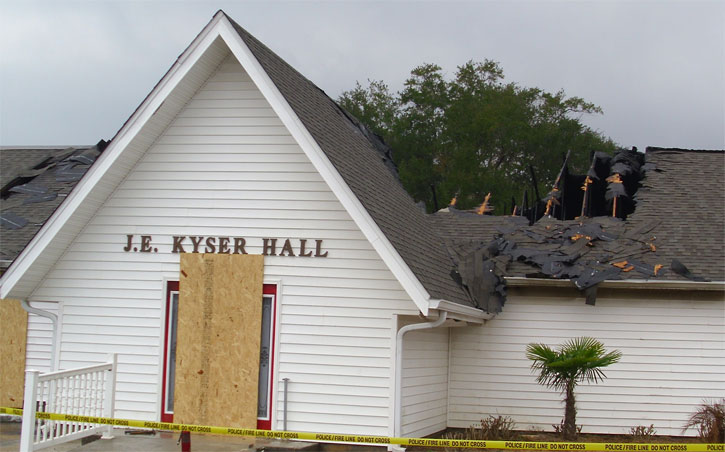
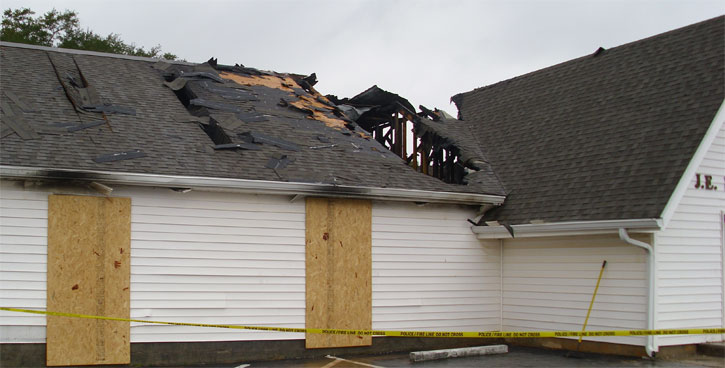
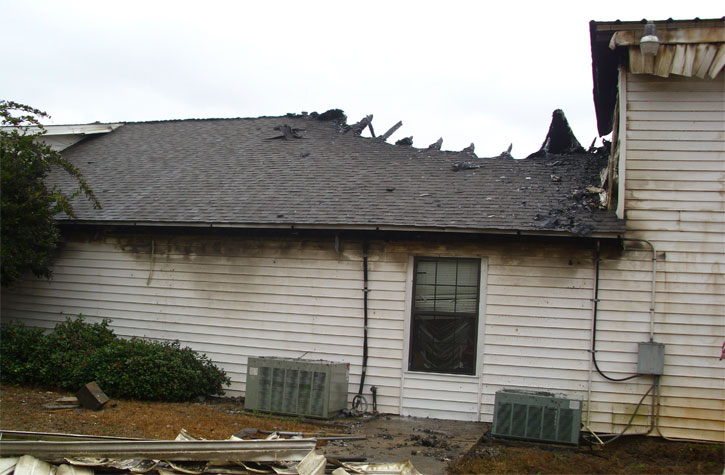
A Cantonment church is making plans to move forward with their mission today following a fire early Thursday morning that destroyed one of their buildings.
The J.E. Kyser Hall at the Pine Forest Assembly of God Church was consumed by fire, destroying classrooms and offices. The main church sanctuary was not damaged, while a third building housing children’s and youth areas received some smoke damage.
Sunday School classes for this Sunday have been canceled, and the morning worship service has been rescheduled to 10 a.m. There will be no Sunday evening services. Next Wednesday, evening services will be held at 6:30 p.m.
For our Thursday morning story about the fire, click here.
Pictured above and below: Photos show the aftermath of a Thursday morning fire at the Pine Forest Assembly of God Church in Cantonment. Submitted photos for NorthEscambia.com, click to enlarge.
(scroll down for several photos)


Before The Ball Drops: A Countdown Of Challenges For Rick Scott
December 31, 2010
With 2010 almost ready to be counted out, one of the year’s top Florida stories – Republican Rick Scott’s election – will turn a new page, morphing into one of the New Year’s first major political events.
As the governor-elect readies for his Jan. 4 inauguration, the our Tallahassee bureau asked a dozen lobbyists, elected officials and academics to look ahead and take stock of the early hurdles facing Scott.
As 2010 fades, let’s count down from 10 the top challenges facing the incoming governor in ’11.
10: A High Bar: Scott takes office promising to add 700,000 jobs to Florida’s feeble economy. Sure, he’s giving himself seven years to do this. But the new executive also says he’ll reach this goal on top of the roughly million jobs economists say Florida will add during that time, through normal growth and business expansion. Scott’s job creation promise will sit like a thermometer on the windowsill of the new administration. And it better keep going up. Still, a University of Central Florida forecast this month warns the state’s unemployment rate won’t drop below 10 percent until early 2013.
9: An Impatient Public: Winning the closest governor’s race in modern Florida history means Scott doesn’t have a deep well of popular support. A survey this week by Public Policy Polling shows Scott’s unfavorability rating dropped from 54 percent when he was elected to 43 percent now. But Floridians, mired in a three-year economic downturn, likely won’t give the new guy a lot of time to make good on his campaign promises. If Scott wants proof, he just has to check how President Obama’s political fortunes turned in two years. “Scott has plans that go out seven years, but I think he’s only going to get seven months to make things happen,” said House Democratic Leader Ron Saunders of Key West.
8: Finding the Money: Scott’s got billions of dollars he wants to give away. A property-tax break would save Floridians $1.4 billion; eliminating the corporate income tax would slice more than $1.8 billion, and the incoming governor also wants to reduce unemployment taxes and cut more than $3 billion in electric utility costs for businesses. The state’s pension and employee health care system are vast repositories of money that could yield savings even with relatively modest changes. But while Scott wants to give money back – especially to businesses and homeowners – the state’s $3.5 billion budget shortfall shows the leaky ship of state is going to demand plugs.
7: Staffing his Administration: As a candidate, Scott fueled visions of America’s best and brightest flocking to Tallahassee eager to reinvent government. But with inauguration around the corner, the ‘help wanted’ sign is still the most prominent feature on the new administration’s door. Scott’s transition teams have released hundreds of pages of proposals to revamp agencies, instill efficiencies, and eliminate wasteful spending. But the uncertainty about coming to work for an outsider CEO who doesn’t particularly like government seems to be slowing down the hiring process. After all, today’s agency job may look nothing like what it will if Scott gets his way with the Legislature. Scott also is discovering what lawmakers, corporate recruiters and local government officials have long known: Tallahassee can be a tough sell.
6: Fighting Red Tape Fanatics: Scott gets plenty of mileage deriding regulations he says are hampering the state’s economy. Growth management and environmental standards seem to commonly land in his crosshairs, along with duplicative regulations between competing state agencies. But the Capitol’s fourth-floor rotunda is frequently a swirling sea of lobbyists representing industries or individual companies seeking to get a leg up on a rival by imposing a department rule or landing a request for proposal. When Scott takes on regulations, he may also be taking on some influential lobbyists and their legislative patrons. The governor could soon be schooled in why some special interests are more special than others.
5: A Workforce Insurgency: Scott’s talked of slicing at least 5 percent of the state workforce. He’s also expected to push for more privatization of prisons, ending teacher tenure, and consolidating a handful of state agencies. All told, Scott’s efforts appear poised to create a vocal cadre of self-avowed policy victims – some of them well financed by the Florida Police Benevolent Association, Florida Education Association and American Federation of State, County and Municipal Employees (AFSCME). If Scott instills reforms deftly, he may avoid creating a loud and unified opposition. But wholesale changes involving large numbers of public employees could yield fierce pushback that overwhelms the new administration.
4: The Media Funnel: Scott’s a kind of do-it yourself guy when it comes to the media. He spent $73 million of his own money to win election – with the bulk of the cash going to saturation television advertising in which he starred. Meanwhile, Scott the candidate declined to meet with the state’s newspaper editorial boards, apparently seeing no benefit in having his policies or positions distilled through the media funnel. In turn, none of the state’s major papers endorsed his candidacy.
However, once he’s sworn-in as governor Tuesday, Scott will likely have to deal with the press. His proposals will draw media scrutiny, critics’ views will be aired. And there’s a good chance Scott won’t often like what he reads or hears on television and radio. Will he occasionally try to sidestep the press and run his office like the campaign, maybe with help from the Florida Republican Party? “We know that raising money here is going to be a fulltime job for the next party chairman,” said outgoing state GOP Chairman John Thrasher, a St. Augustine senator.
3: Ambitious Legislators: Florida’s legislative leaders supported Scott’s Republican primary rival, Bill McCollum, and spent four months running a scorched earth campaign against the governor-elect last summer. They’ve now spent an equal amount of time as his ally. But Scott is aware of the thin ice on which he stands. Senate President Mike Haridopolos, R-Merritt Island, has U.S. Senate ambitions of his own for 2012 against Democrat Bill Nelson. And with redistricting hitting at the midpoint of Scott’s term, there will be plenty of legislators angling for higher office. That can work both ways for Scott, with some seeking the governor’s support and others looking to cross swords with him to assert their independence and gain political leverage. Scott clearly has more to fear from hungry Republican allies than he does from outnumbered Democrats at this point.
2: Runaway Rhetoric: Scott’s already promised plenty. But in one of his first acts, he may want to keep his inaugural address vague and lofty, since whatever he says on Jan. 4 is likely to linger for the next four years. Late Democratic Gov. Lawton Chiles’ “covenant with the people,” and Republican Jeb Bush’s wish to “make these buildings around us empty of workers and silent monuments,” rattled long after their inaugurals. So far, Scott has spoken mostly of “jobs, jobs, jobs.” But Gary Mormino, a University of South Florida historian, said, “I’d like to hear him Tuesday talk about the new Florida dream. What we had in this state now seems like it’s in the ash can of history, with this economy. But how does he connect our past with the future?”
1: Obama, Again: Scott ventured into politics leading Citizens For Patients Rights, the campaign opposing President Obama’s health care overhaul. CPR failed to derail the initiative. But as a gubernatorial candidate, Scott managed to seize on the president’s rising unpopularity in Florida in defeating Democrat Alex Sink. He also ridiculed the federal stimulus money used to balance Florida’s budget the past three years. Scott remains devoted to keeping federal health care requirements out of Florida, and there’s no more stimulus to spread around – or criticize. But Scott may have to play a central role courting the Obama administration’s support for a Medicaid waiver needed to enact the Legislature’s sweeping, cost-saving attempt to put more low-income Floridians into managed care.
By John Kennedy
The News Service Florida