

Scott Signs Abortion Ultrasound, Parental Notice Bills
June 25, 2011
A year after former Gov. Charlie Crist vetoed a similar proposal, Gov. Rick Scott late Friday signed a bill that will require ultrasounds before women can receive abortions.
Scott also approved a bill aimed at tightening the state law that requires parents to be notified before their minor daughters can have abortions.
Scott signed both controversial bills quietly, with his office notifying reporters after 7 p.m.
One bill will require ultrasounds before women can have first-trimester abortions, a requirement that is already in place for later-term abortions. Women will have to sign forms if they do not want to see the fetal images or hear descriptions. Supporters said the bill will ensure that women receive needed information — and could lead some to forgo abortions. But opponents said the requirement is government interference in the relationship between doctors and patients.
The parental-notice measure seeks to tighten restrictions on what is known as judicial “bypass.” That process allows minors to seek court approval for abortions without their parents being notified.
By The News Service of Florida
Atmore AT&T Wireless Customers Get Faster 3G Speeds
June 25, 2011
Good news for AT&T Wireless customers in Atmore — faster 3G network speeds are available.
AT&T began activating the 3G service on Wednesday, and the network may continue to fall back to slower speeds during the next few days as system capacity is adjusted, according to Sue Sperry, corporate spokesperson for AT&T.
“It’s a pardon our progress type of situation,” Sperry said, “as final adjustments are made.”
The faster 3G service was activated in both Atmore and Uriah, Alabama. The 3G speeds are not yet available in Walnut Hill or McDavid, but upgrades are planned, Sperry said.
One Year Later: Photos Of Oil Washing Onto Pensacola Beach
June 25, 2011
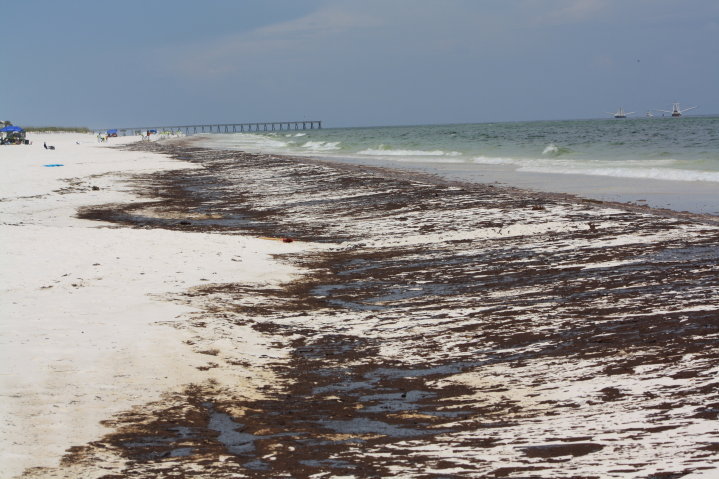
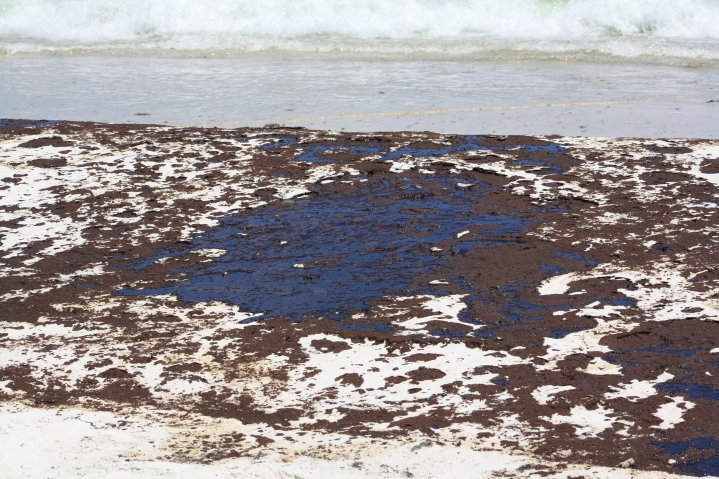
It was the day that the World’s Whitest Beaches were no more. It was the day that the oil began to wash onto the shores of Pensacola Beach. It was the day the sands were stained black with oil; it was the day the tears of the locals stained the remaining sugar white sand.
One year ago this week, masses of oil began to wash onto Pensacola Beach from the BP Deepwater Horizon oil spill in the Gulf of Mexico. Walnut Hill resident Regina Hare was there and submitted a gallery of photos for NorthEscambia.com readers. She titled the photos “It’s hard to say goodbye”.
One year later, the beach has returned to an apparent state of clean, bright white sand. But, in retrospect, we wanted to share the photo gallery from one year ago.
Click here for the photos “It’s hard to say goodbye”.
Submitted photos by Regina Hare for NorthEscambia.com, click to enlarge.
Woman Sentenced To 25 Years For Drug Trafficking
June 25, 2011
 A 50-year old Escambia County woman has been sentenced to 25 years in state prison for drug trafficking.
Sharon Ward received the 25-year mandatory sentence from Judge Paul Rasmussen after being convicted by an Escambia County jury of trafficking in hydrocodone.
During May and June 2010, Ward sold a total of 60 hydrocodone pills to a confidential informant on two different occasions. When investigators executed a search warrant on June 17, 2010, they found over over 140 hydrocodone pills in her home. The pills were throughout her house, including a locked safe and a coffee can.
ECUA Pipe Dumps 2.2 Million Gallons Of Untreated Sewage Prompting Health Advisory
June 25, 2011
An ECUA pipe failure dumped about 2.2 million gallons of untreated sewage into a wetland near the University of West Florida on Wednesday, prompting the Escambia County Health Department to issue a health advisory for Thompson’s Bayou.
Signs of the spill from the 12-inch “force main” pipe were first noted at 9:30 a.m. Wednesday, according to an Emerald Coast Utilities Authority press release dated Thursday but received by NorthEscambia.com Friday afternoon after an inquiry to ECUA. The notice was also not posted to the ECUA website until late Friday afternoon.
“Originally, the loss of flow was first thought to be from telemetry failure during local lightning activity. An immediate investigation was initiated, and the source of the leak was discovered around 2:30pm CDT (Wednesday),” the ECUA news release stated.
The area was “valved-off” and tankers were then used to transport the wastewater to a lift station, a process that took about two hours. The affected area, according to ECUA, was then cleaned-up, water quality samples were taken and state and local authorities were notified.
The health department advised against water-related activities for Thompson’s Bayou at the Escambia River until further notice due to a concern about the potential for high bacteria levels.
Weekend Gardening: Gardenias And Hydrangeas
June 25, 2011

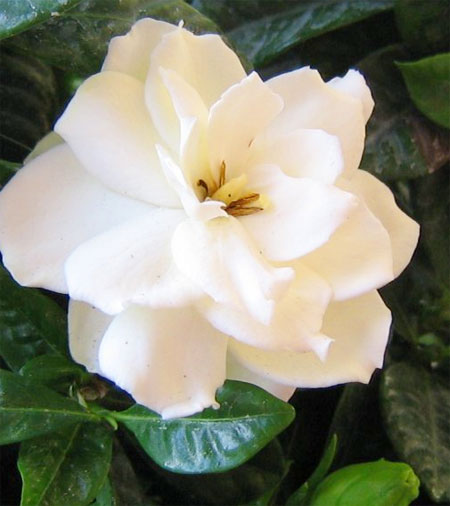
 Hydrangeas and gardenias are two of our most beloved shrubs in the South. They are revered for their flowers and are planted in large drifts throughout Northwest Florida.
Gardenia shrubs are evergreen and produce shiny, dark green leaves. They are known for their waxy, creamy white flowers. The flower’s aroma, adored by many gardeners, is powerful and pleasant.
Hydrangeas are deciduous shrubs and produce coarse, light green leaves. Their large leaves will fall off after a freeze. Although you are left with bare sticks during the winter, the summer blooms are well worth the winter bareness. While there are many different types of hydrangeas, the mopheads are probably the most recognizable. Their large inflorescences are usually blue on acid soil, pink on alkaline soil and a dirty white on neutral pH soil.
Even though these shrubs are different in many aspects, the one thing they have in common is when they “set” their flower buds. Both shrubs develop flower buds on old (mature) wood of the previous year and open in early summer of the following year. Flower buds are formed at the terminal end of stems and, if not killed by cold or removed by inappropriate pruning, provide the showy floral display the next year.
 The best time to prune gardenias and hydrangeas is after they finish flowering for the season. Pruning them at the incorrect time of the year, such as winter, will remove the flower buds.
Your pruning program should be purposeful. First, remove all diseased, weak and dead wood. It will be important to disinfect your pruning equipment after removing suspect branches. Pruning shears, loppers and saws can be dipped in a weak bleach solution to prevent spread of disease between plants.
Once all the problem branches have been removed, then think about thinning the plant. Shrubs are often thinned to reduce a top-heavy appearance or to open up a dense canopy. To thin, simply remove some of the oldest branches by pruning them down to the ground. Remove about a quarter to a third of the branches, selecting the oldest ones for elimination. When thinning, take care not to damage the nearby younger stems and foliage.
Next, cut back branches that are excessively long. Prune back to a lateral branch that is six to twelve inches below the desirable plant height, removing no more than a third of the stem. Cut each branch separately to different lengths with hand pruners. This will maintain a neat informal shrub with a natural shape. Plants sheared into various geometric shapes produce a formality not suitable for many modern, natural landscapes. Making pruning cuts down inside the canopy instead of on the outside edge will also hide unsightly pruning cuts.
 Within the last several years, reflowering hydrangeas have found their way into the marketplace. Reflowering hydrangeas produce an initial flush of flowers followed by sporadic flowering or later flushes of flowers in the same growing season.
Endless Summer® Hydrangea is a reflowering hydrangea. It is very forgiving and will not suffer if left unpruned or pruned at the wrong time. In fact, young, recently planted shrubs are best left alone. Unlike other hydrangeas, your Endless Summer® will bloom on both old and new wood, branches that grew last year and the new branches from this year. Another unique feature is that this hydrangea will continue to set buds and bloom throughout the season. Deadheading, or removing the spent flowers will encourage continual blooming.
For more information, contact Theresa Friday at 850-623-3868 or email tlfriday@ufl.edu. Friday is the Residential Horticulture Extension Agent for Santa Rosa County.
UWF Uncovering 1740’s Spanish Mission In Molino
June 24, 2011
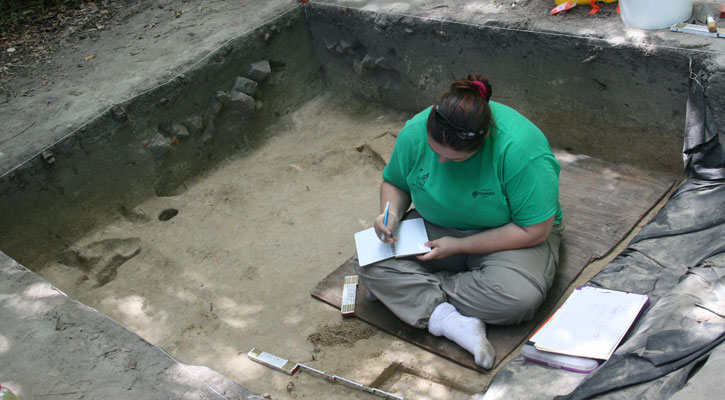
A major archaeological dig is underway this summer in Molino, as evidence of a 1700’s mission and even a 6,000 year old artifact have been uncovered.
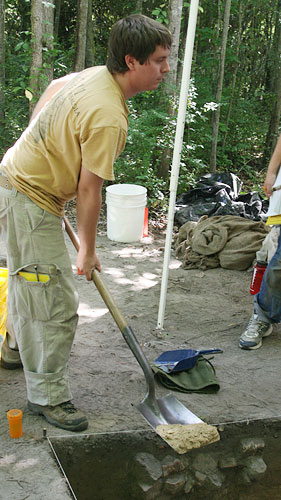 “It’s amazing that this is right here in our own backyard,” said undergraduate archaeology major Phillip Mayhair (pictured left), a 2008 Northview High graduate that lives just a few miles away in Barrineau Park. “It was amazing that they found this right here in Molino.”
The Mission San Joseph De Escambe was established upriver along the Escambia River — which, along with Escambia County, actually took its name from the mission near Molino. The Apalachee Indian settlement with about 75 residents is well documented, according to archaeologist John Worth. It was established in the 1740’s. A Franciscan missionary was stationed by the Spanish at the village along with 15 members of a Spanish cavalry unit until about 1757.
The village was led by Apalachee Chief Juan Marcos Fant until it was destroyed during a Creek Indian raid on April 9, 1761. The village and the church were at least partially burned during the raid. Following the raid, the residents moved down the Escambia River to what is now downtown Pensacola.
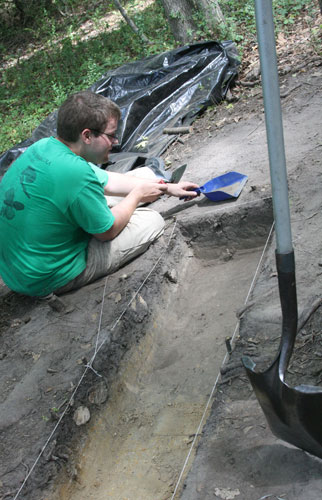 The Mission was uncovered in 2009 by the UWF archeology students under the leadership of professor of Worth, who spent years digging through historical records before the actual digging in Molino began.
Now, the UWF students are digging on a private lot not far from the Molino Boat Ramp and Fairgrounds Park. They are uncovering period artifacts from the Mission, as well as items thousands of years old (like a 6,000 year old spearpoint) and other bits of more modern-era Molino history.
“Clearly, this was the site of the Mission San Joseph De Escambe,” Worth said. “It’s a near pristine site; it’s never been plowed or really disturbed all of these years.”
The Missions settlement is believed to have included a Spanish missionary church and a small Apalachee Indian village.
While the walls have deteriorated over time and appear to the casual observer to be nothing more than darker soil, two summers ago UWF students found almost 40 wrought iron nails in their original positions. In what was called an “amazing” find, students uncovered a wrought iron nail still embedded in piece of wood, the remains of a beam or post where the nail was hammered about 250 years ago.
“So far, we have not found the church,” Worth said. “We would really like to discover it.”
Coming up this weekend on NorthEscambia.com, we’ll take a more in-depth
look at the items found at the archaeological site in Molino.
Editor’s note: The Mission historical site is located on private property and is not accessible to the general public.
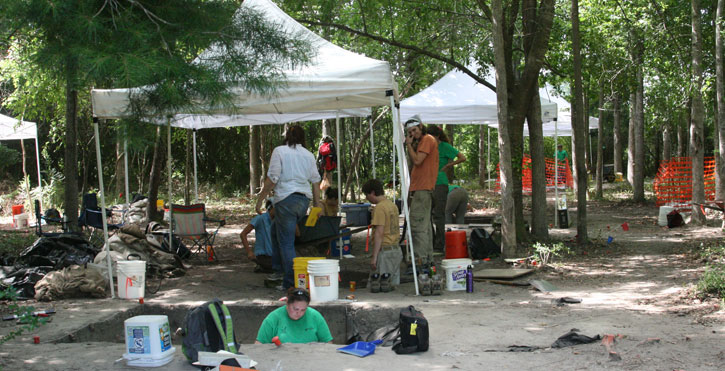
Pictured: UWF Students work to uncover the 250-year old Mission San Joseph De Escambe not far from the Escambia River in Molino. NorthEscambia.com photos, click to enlarge.
UWF Team Surveys 1800’s Steam Launch Found In McDavid
June 24, 2011
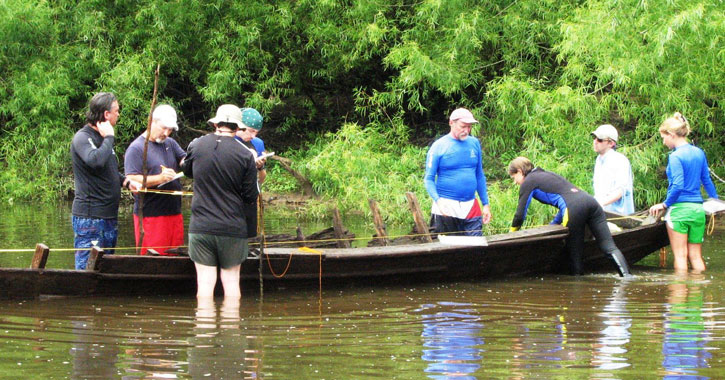
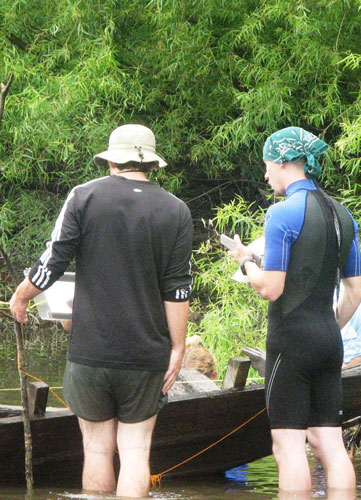 A research team from the University of West Florida confirmed Thursday morning that the old boat pulled from the Escambia River over the weekend was, in fact, a steam launch from about the late 1800’s.
Archaeologist John Bratton and students from the University of West Florida took a look at the boat this morning and found that the surviving wooden structure is in remarkably good shape.
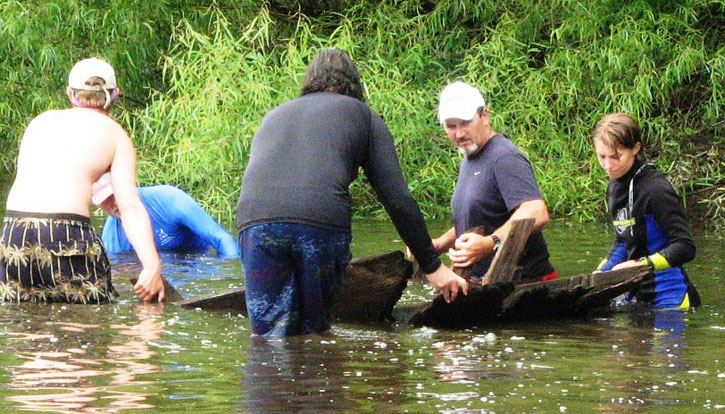
The steam launch is once again submerged in the Escambia River near McDavid. Bratton and his team recovered a few small pieces of wood to determine its type and to learn how to best preserve the boat if it’s ever removed from the river for display in a museum.
For earlier NorthEscambia.com stories about the discovery of the steam launch and detailed photos of the boat out of the water –
- McDavid Mystery: Steamboat Pulled From the Escambia River (6/19)
- Expert: McDavid Mystery Steamboat Appears To Be From 1800’s (6/21)
Pictured: A UWF Archeology research team surveys a 100 plus year old steam launch on the Escambia River near McDavid Thursday morning. Submitted photos for NorthEscambia.com click to enlarge.
Century Meeting Will Plan Hurricane Preparedness
June 24, 2011
A hurricane and disaster preparedness workshop will be held next week in Century.
The CERT (Community Emergency Response Team) event will organize citizens, churches and neighborhood groups and discuss hurricane preparedness. The event will take place at the Century Town Hall, Tuesday, June 28 at 6 p.m.
The event will organize a hurricane response plan, connect the community to resources available during a major disaster and help organizations identify their own Community Emergency Response Team.
For more information, contact Gary Riley at (850) 256-3822.
Missing Cantonment Woman Found
June 24, 2011
A woman missing from the Cantonment area since Wednesday afternoon was found unharmed Thursday night.
 Jacqueline Findley, 55, was last seen Wednesday afternoon at her home in the 2000 block of Welcome Circle, south of Quintette Road. Family members believe she walked away from the home toward a wooded area and reported her missing Wednesday night.
The Escambia County Sheriff’s Office searched the area late Wednesday night using a K-9 and a helicopter, but they were not immediately able to locate Findley.
No further details about where Findley was found were immediately available late Thursday night.