

No Charges To Be Filed In Equestrian Center Hiring
November 17, 2011
The State Attorney’s Office announced this afternoon that no criminal charges will be filed against Escambia County Commissioner Wilson Robertson or any other person as a result of a the hiring process at the Escambia County Equestrian Center.
 Robertson was accused of becoming overly involved in the hiring of Forest Gibbs as an Equestrian Center manager, possibly influencing the process. There were also allegations made that Robertson was involved in getting Gibbs a salary that was higher than advertised $44,000.
Robertson, Gibbs and about eight other witnesses were interviewed as part of the investigation, according to the State Attorney’s Office.
Robertson said eight of about 60 applicants for the job were selected an interviewed by the selection committee. After the committee selected Gibbs, Robertson said he contacted Assistant County Administrator Larry Newsome and the county attorney “to remind them of the budget the county had created and approved, including the starting salary of $60,000.00 plus benefits per year.”
There was no attempt to to influence the candidate chosen for the position, Robertson said.
Gibbs was removed from his position at the Equestrian Center so that the position could be re-advertised under the watchful eye of County Administrator Randy Oliver.
The commission also approved policies that will prevent any commissioner from being as a job reference for a county job, and prevent commissioner from speaking to the human resource department or selection committee about an applicant until an offer is accepted.
Gulf Coast Soldier Killed in Afghanistan
November 17, 2011

Another Gulf Coast soldier has been killed in Afghanistan. Pfc. Matthew C. Colin of Navarre was serving in the U.S. Army as part of Operation Enduring Freedom.
Details surrounding his death have not yet been released. His remains arrived at Dover Air Force Base in Delaware Thursday afternoon.
Car Found In Ravine Long After Apparent Traffic Crash
November 17, 2011
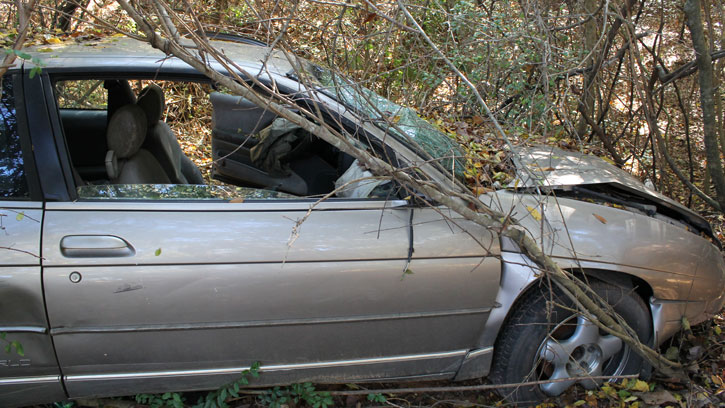
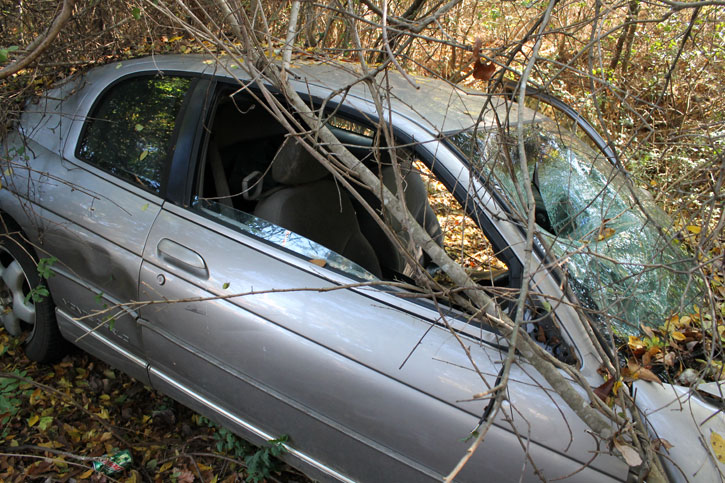
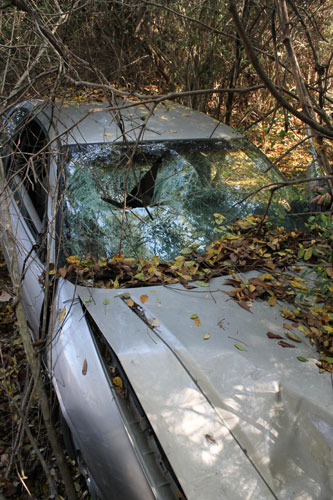 A car was discovered in a deep ravine Thursday morning, apparently weeks or even months after a traffic crash.
The car was spotted by a passerby in a ravine parallel to railroad tracks on South Highway 99 at Highway 97A in Bay Springs. Area fire departments and an ambulance were dispatched because the caller was unable to advise anything other than that the airbags had deployed on the vehicle.
Firefighters discovered that the 1999 Chevrolet Monte Carlo had been in the ravine perhaps for a long period of time; brush and small trees had grown around the vehicle. A search did not find any human remains in or near the vehicle.
It appeared that the driver of the vehicle was headed south on South Highway 99 and failed to negotiate a 90-degree turn.
The incident is under investigation by the Florida Highway Patrol.
Pictured: This Chevrolet Monte Carlo was discovered deep in a ravine Thursday morning, apparently a long time after a traffic crash. NorthEscambia.com photos, click to enlarge.
Escambia To Purchase Land Where Trash Inadvertently Buried
November 17, 2011
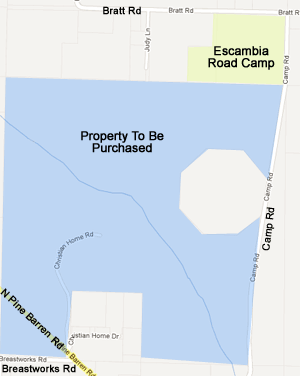 Escambia County is set to purchase about 15 acres of land in North Escambia where trash was inadvertently buried over 20 years ago.
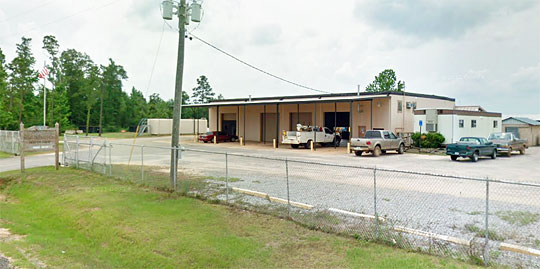
The county will pay RMS Timberlands $52,879 for the 14.81 acres along Camp Road and Pine Barren Road. The property is adjacent to the former county-owned Camp V Landfill, which closed in June 1988, and a current Escambia County Road Camp.
According to county documents, “It is confirmed that during operational activities, municipal waste was inadvertently buried outside defined waste limits onto adjacent property to the south. In addition, there are documented groundwater impacts associated with same property.”
RMS Timberlands attempted to sell the property to Gulf Power as part of the 4,000 acres the utility is acquiring in the area for a potential nuclear power plant. Due to the waste and groundwater issues, Gulf Power declined to purchase the property and turned to Escambia County to buy the land.
Purchasing the property will allow Escambia County to continue monitoring activities under Florida Department of Environmental Protection regulations.
The Escambia County Commission is expected to approve the purchase at their regular meeting Thursday night.
Pictured top: The property to be purchased by Escambia County is near the county road camp at Camp and Bratt Roads. Pictured inset: This NorthEscambia.com graphic shows the property bounded by Camp Road to the east, Pine Barren Road and Breastworks Road to the south.
Century Man Arrested After Short Foot Chase
November 17, 2011
A Century man was apprehended after a short foot chase Wednesday night.
 Justin Wayne Kyles, age 20 of Zion Street, reportedly ran from deputies near the intersection of North Century Boulevard and Pond Street about 7:30 p.m.. He was taken into custody a short distance away near Hudson Hill Road.
Kyles was arrested on an outstanding violation of probation warrant. He is also facing additional charges of possession of marijuana and possession of drug paraphernalia related to cash and small bags of marijuana found following the chase.
Kyles was booked into the Escambia County Jail without bond.
Charges Dropped Against Man Accused In Dumbbell Attack
November 17, 2011
 Charges have been dropped Century man accused of beating a man with a dumbbell weight in the parking lot of a local convenience store.
Sammy Maurice Myles, 25, of old Flomaton Road, was charged with aggravated battery with a deadly weapon after the incident May 30 at the Century Kwick Stop at 8130 North Century Boulevard.
The charges were dropped as a result of the victim’s unwillingness to prosecute, according to the State Attorney’s Office.
The victim’s wife told Escambia County Sheriff’s Office deputies that the couple was in their car outside the store when the three men approached them. One allegedly hit her twice in the head, breaking her glasses. Myles allegedly began to beat the husband in the head with the dumbbell weight. The husband claimed that he began to fight back in self defense, at which time the other two men began to hit him.
Both victims were transported to a local hospital by ambulance for treatment of their injuries.
Myles, when questioned later by deputies at the Century Sheriff’s Office precinct, was observed to have a swollen eye and busted lip. He told deputies the husband and wife had jumped him earlier in the evening on Pond Street in Century. He said he had gone to the convenience store to get ice for his eye, at which time the husband and wife jumped him.
The Escambia County Sheriff’s Office arrest report does not specify how many pounds the dumbbell weight was.
Three Charged With Air Conditioning Thefts Causing $100,000 In Damages
November 17, 2011
A four month investigation has ended with the arrests of three people believed responsible for causing more than $100,000 worth of damages to air-conditioning units
in Pensacola.
“This is the successful culmination of investigations involving officers from Uniform Patrol, Neighborhood Services and Crime Scene with Criminal Investigations Detectives Dylan
Stackpole and James Reese leading the investigations,” said Pensacola Police Deparment Lt. Doug Baldwin.
Between mid-July and mid-October, Reese and Stackpole investigated approximately 50 cases of air-conditioning thefts and thefts of air-conditioning parts from churches, schools,
businesses, and unoccupied homes, said Sgt. Jim Andrews.
Andrews said the thefts primarily occurred between 10 p.m. and 5 a.m. in a concentrated area of Palafox Street east to Ninth Avenue and from Fairfield Drive south to Gonzalez Street.
The suspects and their latest charges are:
- Chrissie Marie McMillan, 30, of 1804 N. Hayne St., Pensacola. Charged with nine counts of fraud/false statement, two counts of grand theft; and nine counts of dealing in stolen property.
- Michael Edward Howard Jr., 33, of 504 E. Yonge St., Pensacola. Charged with 13 counts of grand theft damage over $1,000, 11 counts of dealing in stolen property, and four counts of burglary.
- James Wells, 55, of 200 E. Lakeview, Pensacola. Charged with two counts of fraud/false statement and two counts of dealing in stolen property.
Stackpole and Reese said Howard and McMillan were selling air-conditioning components to support drug habits, while Wells was involved to earn money for personal
expenses.
“Although the damage and replacement costs were over $100,000, the suspects received just under $2,900 selling the parts,” Andrews said.
Interviews, crime scene evidence and scrap records led to the arrests, said Andrews.
McMillan was initially arrested October 18 and charged with four counts of fraud/false statement, four counts of grand theft damage over $1,000, and three counts of dealing in stolen
property; Howard was initially arrested October 19 and charged with four counts of grand theft damage over $1,000 and two counts of dealing in stolen property; and Wells was initially arrested October 20 and charged with one count each of fraud/false statement and dealing in stolen property.
All three suspects had been in the Escambia County Jail since their arrests last month. The additional charges were served Tuesday.
McMillan was on probation for a similar charge after she was arrested by the Escambia County Sheriff’s Office in April.
No charges will be filed on the four local businesses that accepted the air-conditioner parts because they complied with state law, which states sellers are required to sign a form
saying they are the rightful owner of the property and also present their identification at the time of transaction. In addition, the companies photographed the suspects as well as the items.
At this time, additional charges are not pending on the suspects, Andrews said.
Escambia Schools Collect Food For Manna Food Pantries
November 17, 2011
Escambia County schools have been busy collecting food for Manna Food Pantries through the “Help Feed Your Neighbor” program.
On Thursday, school buses will deliver the food donated by students, staff and teachers to Manna’s warehouse.
The effort will help support the more than one-third of Manna’s clients that are under 18-years old.
With 39% of the people we serve being under the age of 18, food drives through schools and the district means students and school personnel are making a difference in the lives of other children,” said DeDe Flounlacker, Manna executive director.
Manna operates six pantries in Escambia and Santa Rosa counties, and distributed 786,092 pounds of food in the last 12 months to 38,825 people. All services are offered free of charge to those in need. In addition, Manna also operates a Gardens Program that is dedicated to helping people learn more about how to be self-sufficient in growing their own food. The Gardens Program supports 18 gardens in schools throughout Escambia County.
Greg Evers Subpoenaed By Grand Jury In Tree-Cutting Case
November 17, 2011
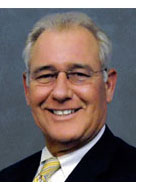 Sen. Greg Evers, who represents northern Escambia and Santa Rosa counties, has been subpoenaed to testify before a Tallahassee grand jury that is investigating claims that he used his position as chairman of the House Transportation Committee to help a Santa Rosa County billboard company avoid state tree cutting regulations.
The SaintPetersBlog first reported the story, saying Wednesday that Citizens for a Scenic Florida alleges that Evers convinced then-Florida Department of Transportation Secretary Stephanie Kopelousos to cut down over 2,000 trees along I-10 so Bill Salter Advertising could erect billboards without paying fees to the state.
Being subpoenaed does not indicate that Evers is being accused of a crime; it could mean that he is a witness to be interviewed in the secret grand jury investigation.
New Alabama Football Classifications Announced With Escambia County, Flomaton
November 17, 2011

Escambia County High School in Atmore and Flomaton High School will remain in the same football classes next year, according to the Alabama High School Athletic Association’s new classifications announced Wednesday.
Escambia County will remain in 4A Region 1. Teams in the region include:
- Escambia County (Atmore)
- Saint Paul Episcopal (moved down from 5A)
- Monroe County
- Wilcox Central (moved down from 5A)
- UMS-Wright
- Thomasville
- Hillcrest-Evergreen (moved from 4A Region 2)
- Clarke County (moved up from 3A)
Flomaton remains in 2A Region 1, which is comprised of:
- Flomaton
- Leroy
- Southern Choctaw
- Mobile Christian
- Washington County (moved down from 3A)
- Millry
- Sweet Water (moved up from 1A)
The reclassification alignment was approved by the AHSAA Central Board of Control at its fall meeting Wednesday. The process is implemented every two years to in order to consider the changing enrollments of schools, school consolidations and closings, new schools and association members and current member schools adding sports to their interscholastic program.
Pictured top: The Flomaton Hurricanes in action last September. NorthEscambia.com file photo, click to enlarge.