

Church Destroyed By Fire (With Photo Gallery)
May 14, 2014
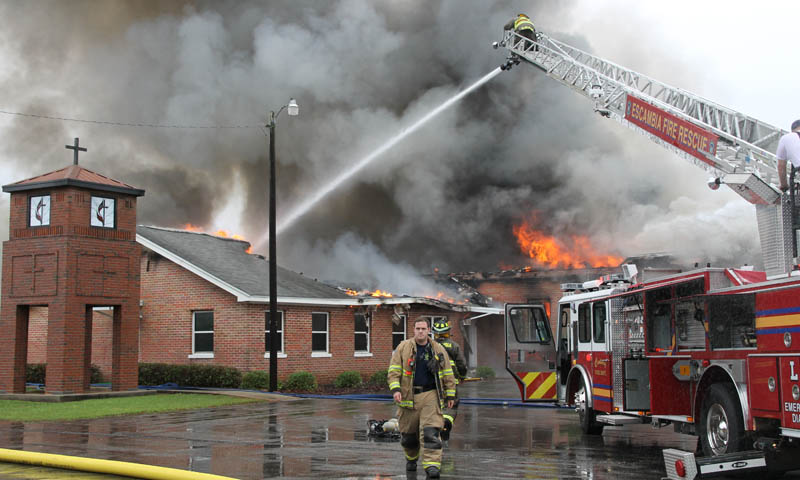
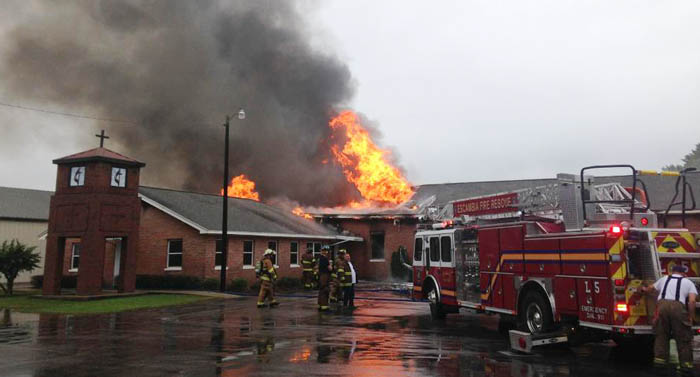
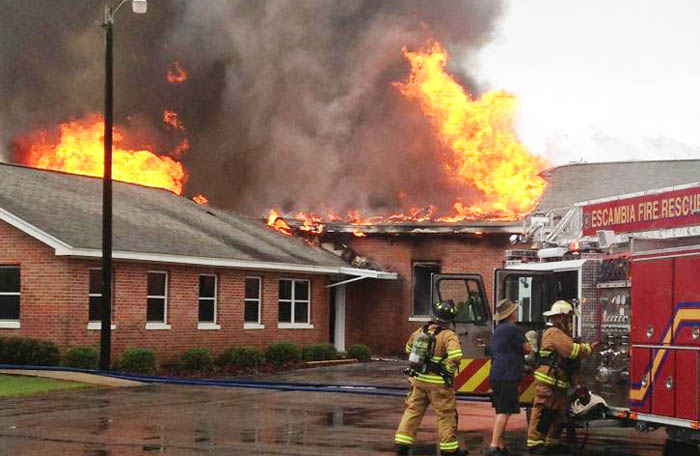
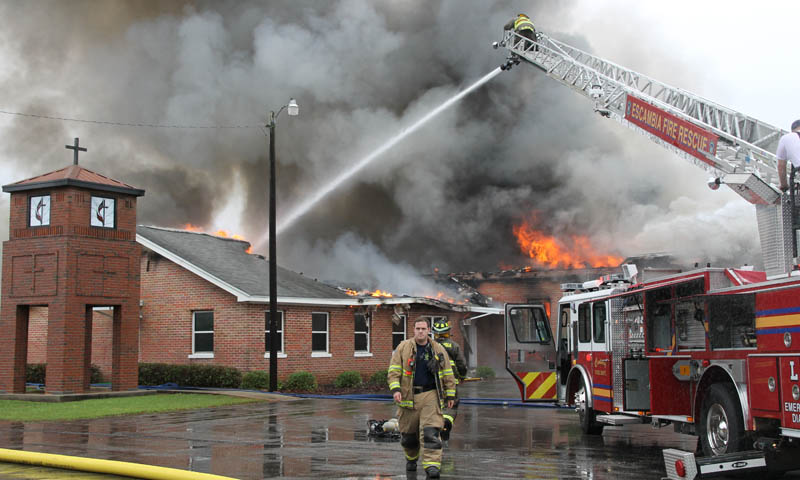
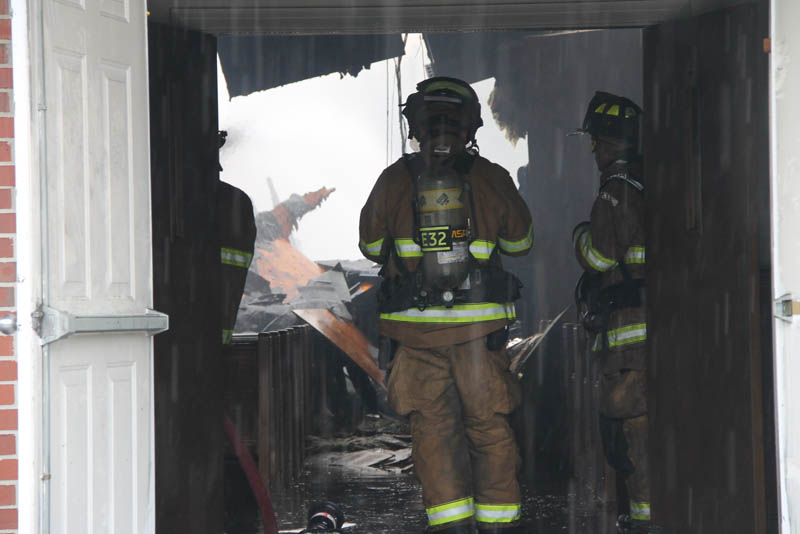
Fire destroyed the Mt. Carmel United Methodist Church north of Jay Wednesday.
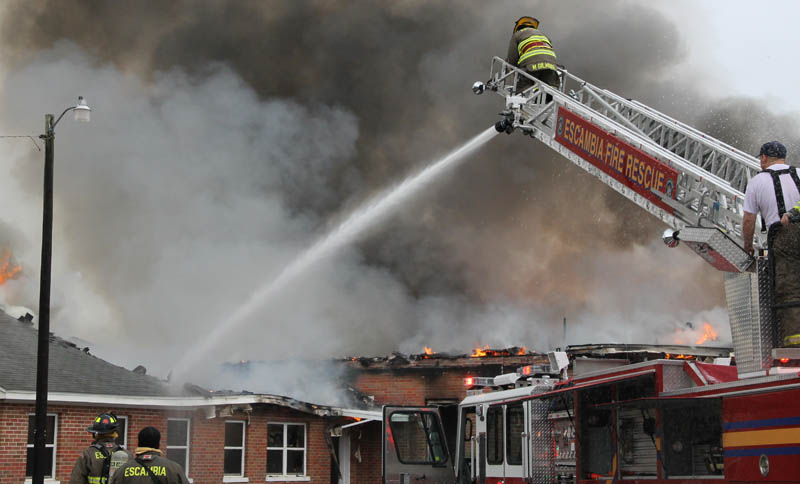
 The fire appeared to begin in the rear of the building and rapidly ripped through the sanctuary. Firefighters from across the area battled the blaze for hours but were unable to save the building. They were reportedly hampered by a lack of an adequate water supply.
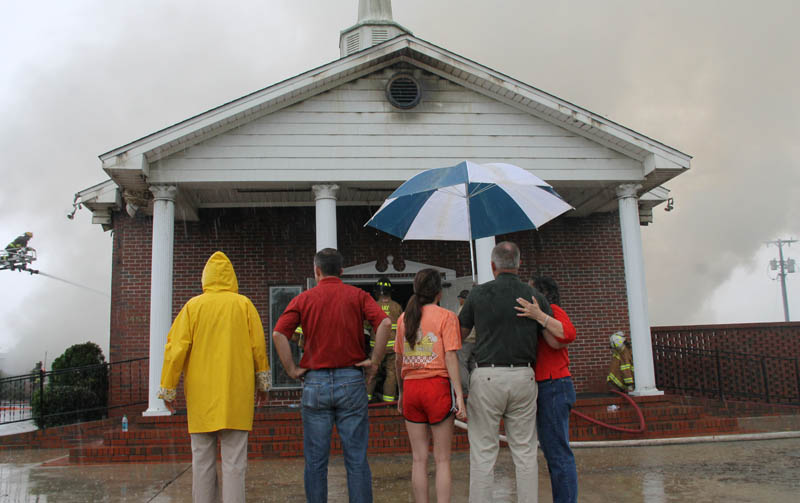
Church members gathered and watching helplessly as their church building was destroyed. Many wept, many gathered in prayer for the safety of first responders. Some just stared silently as the fire consumed the building.
The sanctuary, which seats just over 200 people, and adjoining educational space were a complete loss. There were no injuries reported.
The exact cause of the fire is under investigation by the Florida State Fire Marshal’s Office. Church members said a storm with heavy lightning passed through the area just before the storm; many speculated that lightning sparked the blaze.
Firefighters from multiple departments in Escambia and Santa Rosa counties in Florida, Escambia County, and the U.S. Navy.
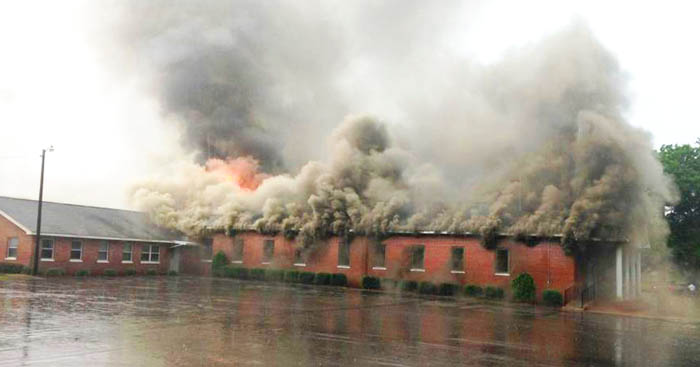
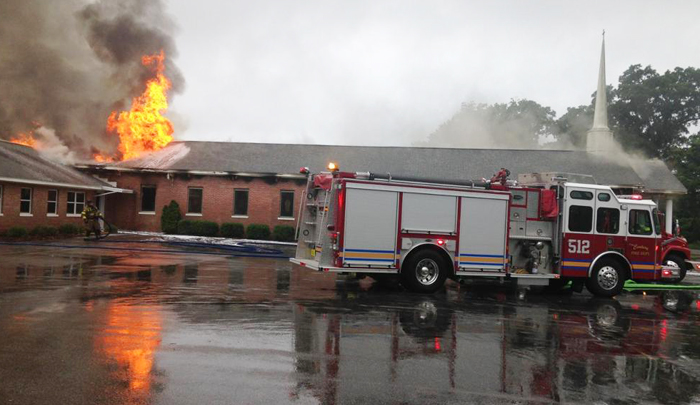
The photos below show the progression of the fire from before firefighters arrived on scene through the collapse of the roof over most of the building.
For more photos, click here for a gallery.
NorthEscambia.com photos, click to enlarge.
Homeowners File Class Action Suit Laying Flood Damage Blame On International Paper
May 14, 2014
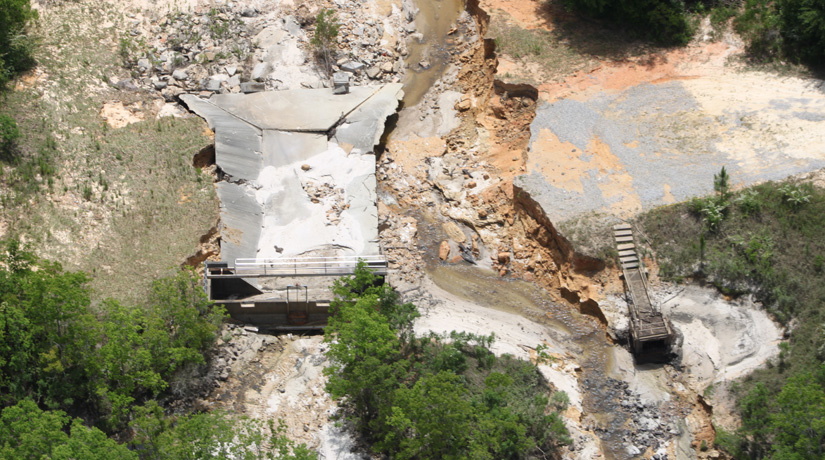
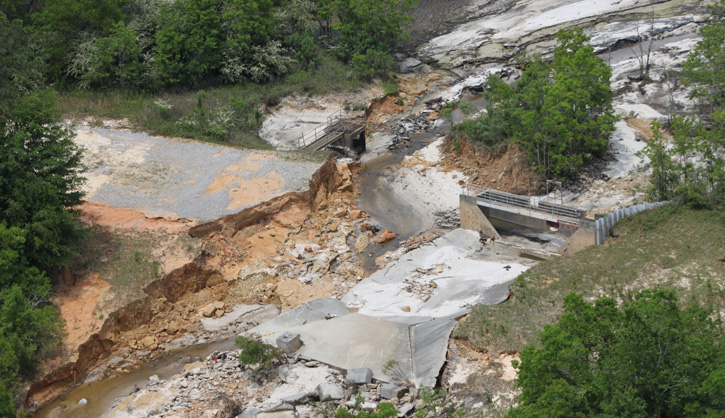
Several homeowners in the Bristol Park neighborhood have filed suit against International Paper over the severe flooding in their neighborhood.
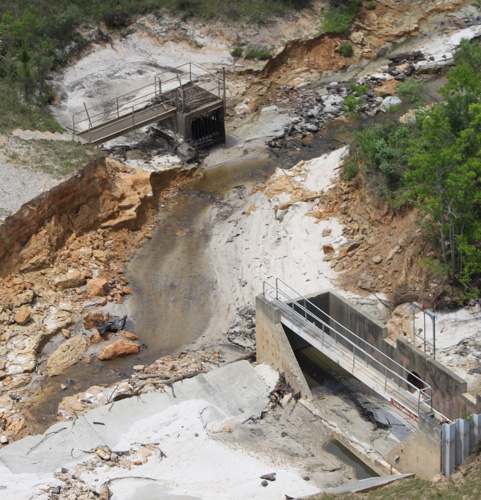
The class action lawsuit, filed Tuesday, claims that a breach in an International Paper levee on Eleven Mile Creek sent a rush of water down the creek, making the flooding far worse.
 “We’ve heard stories from people of a large rush of water. When you talk to more and more people there was a sudden increase of water that came into their neighborhoods people were not expecting this and it was rushing through their houses and rushing over their cars,” attorney J.J. Talbott said.
The lawsuit claims that between 10:30 and 11:30 p.m., a large “swell” or “wave” of water breached and overflowed into Eleven Mile Creek, including the Bristol Park and Ashbury Hills subdivisions, Devine Farms Road and other surrounding areas, as a result of International Paper’s dam or levee. Both residential areas are located in “Flood Zone X” on flood insurance maps, meaning they are not in special flood hazard areas and require no mandatory flood insurance.
The failure, the lawsuit asserts, was the result of IP’s negligence in maintaining the Eleven Mile Creek Dam and levee, failure to counteract continued development, failed to control debris buildup in and around the dam, and of a failure to notify those downstream of the potential or ultimate failure of the levee system.
The lawsuit seeks damages for loss and damage to personal and real property, diminished property values, loss of enjoyment, mental anguish, loss of income and additional expenses due to the flooding in the neighborhoods.
 International Paper responded to the lawsuit in a written statement released Tuesday afternoon to NorthEscambia.com:
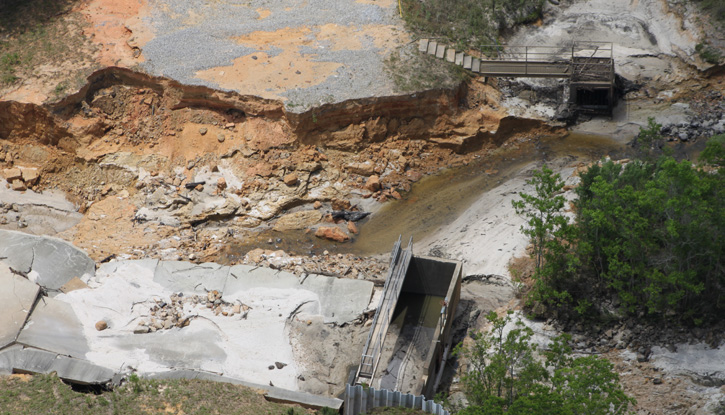
“On April 29, 2014, the Pensacola Mill experienced the storm/flood event that the rest of the county experienced. There was significant erosion and wash-out of an inactive erosion control structure near Kingsfield Road. The structure was previously used to control erosion at this now abandoned outfall point, but it has been out of service since the mill completed transition to the pipeline in October of 2012.
“Our heartfelt thoughts and prayers go out to all those who have been directly affected by the area floods. Many of our team members were impacted by this event. On April 29, record storm water flows from across the entire 48-square mile watershed of Elevenmile creek rapidly exceeded the capacity of the creek. During and after the storm, the Pensacola mill continued to discharge to our pipeline, which bypasses the Elevenmile creek watershed. No part of the mill’s waste treatment facility failed or collapsed during or after the storm event. We have fully communicated with both state and local agencies regarding the impacts of the storm on the Pensacola mill.”
Pictured: Aerial photos provide by Attorney J.J Talbott show what he said is the failure a dam and levee owned by International Paper that allowed flood waters to rush down Eleven Mile Creek. Photos for NorthEscambia.com, click to enlarge.
Scott Revving Up Veto Pen For Faster Highway Speed Bill
May 14, 2014
Six days after a Florida Highway Patrol trooper gave an impassioned request against the proposal during the funeral service for a fellow trooper, Gov. Rick Scott said he will veto a measure that could increase speeds on state highways.
Scott told reporters after the state Cabinet meeting Tuesday that he will “stand with law enforcement” and veto the bill (SB 392), which has yet to be forwarded to his desk by state lawmakers.
 “I’m going to stand with law enforcement and I want everybody to stay safe,” said Scott, who noted he had heard a wide range of opposition to the bill that would have allowed the Florida Department of Transportation to consider hiking maximum speed limits by 5 mph.
Scott added that comments last week against the bill by Trooper Tod Cloud were also “convincing.”
During a May 8 funeral ceremony for FHP Master Trooper Chelsea Renee Richard in Ocala, Cloud used his comments to tell Scott, who was in attendance, that the legislation “wasn’t a bright idea,” according to the Gainesville Sun.
Cloud was “very concerned about troopers being out there on the highway and people driving too fast,” Scott said. “By doing this we’re doing the right thing for our troopers and the right thing for law enforcement. I’ve been to too many law enforcement funerals.”
Richard was killed May 3 after being struck by a pickup truck while she was finishing up work on an earlier traffic accident on Interstate 75 near Ocala.
During the legislative session that ended earlier this month, the speed-limit proposal faced opposition from lawmakers at every stop in the committee process before being passed by a narrow 58-56 vote in the House and a more comfortable 27-11 Senate vote.
Shortly after Scott’s veto comments were reported, St. Petersburg Republican Sen. Jeff Brandes, one of the sponsors of the measure, tweeted he will bring the proposal back next year.
“I am proud of the bipartisan support we received on SB 392 and I look forward to continuing this discussion next year,” Brandes tweeted.
Kevin Bakewell, vice president of AAA Auto Club South, which sought a face-to-face meeting with Scott to lay out their opposition to the bill, said the veto “will undoubtedly prevent injuries and save lives on our roadways.”
“Speed-related crashes are a major contributing factor in traffic crashes including 30 percent of traffic fatalities,” Bakewell said.
Sen. Jeff Clemens, a Lake Worth Democrat who also sponsored the bill, argued during session that a 5 mph increase is unlikely to impact road safety.
by Jim Turner, The News Service of Florida
Escambia Man Gets Life In Federal Prison For Cocaine Conspiracy
May 14, 2014
An Escambia County man was sentenced Tuesday on on federal charges related to a multi-year conspiracy to distribute cocaine throughout the area.
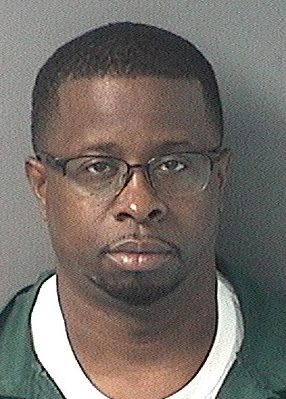 Ricky Lamar Blankenship, 43, was sentenced to life imprisonment to be followed by 10 years of supervised released by Senior United State District Judge Lacey A. Collier. Blackenship was also ordered to forfeit multiple vehicles, gold vehicle rims, a Rolex watch, diamond earrings, six flat screen televisions and over $260,000 in cash.
Prosecutors said Blackenship was responsible for over 500 kilograms of cocaine entering the Northern District of Florida.
Escambia Woman Awarded $4.25 Million In Cantonment Wreck Suit
May 14, 2014
An Escambia County jury has awarded $4.25 million to a local woman for a 2009 accident that claimed the life of her 4-year old son.
 According to the Highway Patrol, a 1999 Saturn driven by Theresa M. Guy, failed to stop at a stop sign at the intersection of Kingsfield Road and County Road 97. The Saturn was struck by a 2003 Dodge 2500 pickup driven by Samuel Seeley of Cantonment. Seely and his passenger, Beverly Seeley of Cantonment, were transported to West Florida Hospital in critical condition.
Guy’s passenger, Glen D. Ashby (pictured left), 39, of Navarre, was pronounced dead at the scene. Her son, Nathien Guy, later died at a Pensacola hospital.
According to the lawswuit, Roads, Inc. was installing a turn lane on the right side of the road and had removed a stop sign to a point off the road. Guy’s view of the stop sign was blocked by heavy equipment, and as a result she didn’t stop before entering the intersection.
Escambia County 4-H Members Earn District Ribbons
May 14, 2014
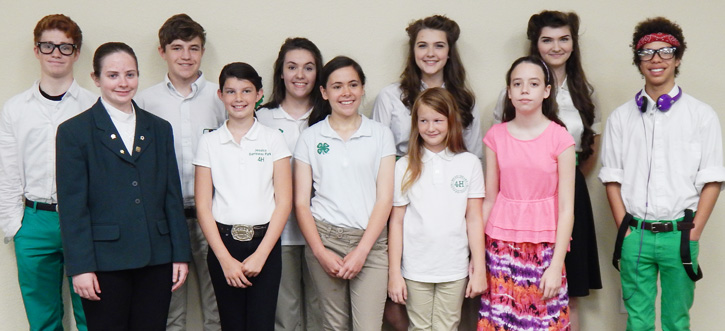
Escambia County 4-H members recently won several ribbons in their district competition in Okaloosa County.
Escambia County 4-H members won blue ribbons in the following categories:
Junior Demonstrations
Elizabeth Hawkins, Cool Clovers 4-H
Jessica Conti, Barrineau Park 4-H
Intermediate Share the Fun
Ami Rodgers, Cool Clovers 4-H
Senior Demonstrations
Danielle & Michelle Tinker, Cool Clovers 4-H
Amanda Tanner, Escambia County 4-H Horse Club
Mitchell Brooks, Spectrum 4-H
Senior Public Speaking
Amanda Tanner, Escambia County 4-H Horse Club
Senior Share the Fun
TEAM EVENT from Cool Clovers 4-H
Jacob Trombino
Aaron Scott
Karrigan Scott
Haley Scott
Danielle Tinker
Pictured top: Escambia County 4-H members. Submitted photo for NorthEscambia.com, click to enlarge.
Late Rally Not Enough For Wahoos In 5-4 Loss
May 14, 2014
The Pensacola Blue Wahoos scored three runs in the ninth inning and left the tying run at second base in a 5-4 loss to the Birmingham Barons Tuesday night at Regions Field. The Barons scored five runs over the fourth and fifth innings against Wahoos starter Michael Lorenzen (L, 2-2) to shore up the series win over the Wahoos.
 The Wahoos had a brief 1-0 lead after plating a run in the third, but the Barons rallied for two off Lorenzen in the fourth. In the fifth, Birmingham used four hits to score three more against the Wahoos starter. He allowed season highs in hits (8) and runs (5R/ER) over 5.0 innings. It was the first time this season he allowed more than two runs in a start.
Trailing by four runs in the ninth inning, the Wahoos loaded the bases with nobody out against former Wahoo Parker Frazier. A fielder’s choice, sacrifice fly and an error led to the three runs before the Barons escaped the jam to hang on for the win. Yorman Rodriguez paced the offense for Pensacola with a 2-for-4 game. Elvin Ramirez and James Walczak combined to work three scoreless innings out of the Blue Wahoos bullpen allowing just a hit each.
Barons (W, 2-2) starter Scott Snodgress held the Wahoos to just 1R/0ER over 7.0 innings to earn his second win of the season. Nester Molina (S, 1) came in to get the final out in the ninth and he picked up his first save of the year.
The two teams will wrap up the series on Wednesday morning beginning at 11a.m. RHP Mikey O’Brien will get the nod for the Blue Wahoos while RHP Terry Doyle will go for the Barons.
by Tommy Thrall
Escambia Man Wins $1 Million Lottery Prize
May 14, 2014
 An Escambia County man has claimed a $1 million top prize in the 50X THE CASH Scratch-Off game at Florida Lottery headquarters in Tallahassee. John Kyles, 56, chose to receive his winnings in a one-time, lump-sum payment of $711,505.77. Kyles purchased his winning ticket from Tom Thumb, located at 4805 Mobile Highway in Pensacola. The retailer received a bonus commission of $2,000 for selling the $1 million winning ticket. Photo for NorthEscambia.com, click to enlarge.
Residential Flood Debris Drop Off Site Open
May 14, 2014
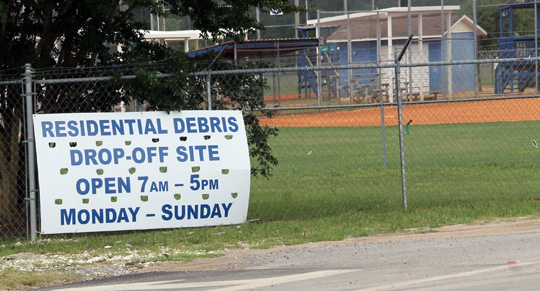
Escambia County has opened a Residential Debris Drop-Off Site at the John R. Jones Athletic Park, 555 East Nine Mile Road. Hours of operation will be from 7 a.m. to 5 p.m., Monday through Sunday until further notice.
This debris drop-off site will only available to Escambia County residents. Businesses and commercial haulers are prohibited.
Material accepted at this drop-off site will be limited to storm generated mixed construction and demolition waste. Household garbage, household hazardous waste or tires are not accepted.
For more information, contact Escambia County Solid Waste Management at (850) 937-2160.
Fire Marshal Investigating Possible Arson
May 13, 2014
A morning fire at a Cantonment mobile home is under investigation as a possible arson by the Florida State Fire Marshal’s Office.
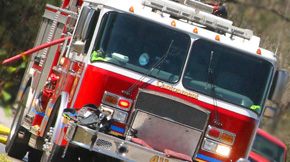 The fire was reported about 5:54 a.m. on the northern end of Robinson Street in Cantonment by a 911 caller that indicated the fire was the work of an arsonist. Firefighters reported light smoke coming from the structure when they arrived on scene.
There were no injuries reported.