
Florida Lawmakers Approve Budget Report With Small Surplus

September 11, 2014

As Gov. Rick Scott continued a state tour Wednesday in Pensacola promising $1 billion in tax cuts over the next two years, a legislative committee approved a report projecting a surplus about a third that size in the budget year that starts in July.

With little discussion, a panel of lawmakers charged with overseeing the state budget when the Legislature isn’t in session approved the annual long-range financial outlook.

Taking into account the likelihood that the Legislature will continue to set aside $1 billion in reserves and spend money on high-priority programs, the report estimates lawmakers will have about $336 million extra to plow into spending increases or tax cuts during the 2015-16 fiscal year.

That number could increase or decrease before either Scott or his Democratic challenger, former Gov. Charlie Crist, begins crafting a final budget proposal, and then again before lawmakers take their crack at a spending plan next spring. For his part, Crist has floated new spending initiatives that would also eat into the surplus.

Republicans who lead the Joint Legislative Budget Commission, which approved the report, played down the significance of the potential gap between the final surplus number and what might be needed to fund Scott’s priorities.

“Certainly, the Legislature and the governor can make changes next year,” said House Appropriations Chairman Seth McKeel, a Lakeland Republican who is not running for re-election due to term limits.

Senate Appropriations Chairman Joe Negron, R-Stuart, cautioned against reading too much into the report, saying he believes everything the state spends should be reviewed annually.

“I think we don’t know for sure what items in the rest of the general revenue part of the budget … we will fund,” Negron said. “Just as this year, we found almost $500 million to send back and reduce tag and title fees, and we still ended up with $1.3 billion in reserves. It’s just too early to know how all that’s going to play out.”

The report, a draft of which was released last week, doesn’t appear to have changed Scott’s message as he stumps for a second term.

“Charlie Crist and Barack Obama think that government creates jobs and money grows on trees because they’re both career politicians who have never run a business or created a single job. … And now we’re going to continue Florida’s turnaround with a $1 billion tax cut commitment to Florida’s families over the next two years,” Scott said in a news release Wednesday.

Amy Baker, a top state economist, said Florida’s recovery is continuing to move along, though it will still take time to get back to what would be considered normal. She also said that while there were still some low-possibility events that would dramatically impact the recovery — called “black swans” — the danger appears to have lessened.

“I would say the black swans are few compared to what we’ve seen in the past,” she said.

by Brandon Larrabee, The News Service of Florida

9/11 In His Own Words: Inside The Pentagon – Come September Morning

September 11, 2014


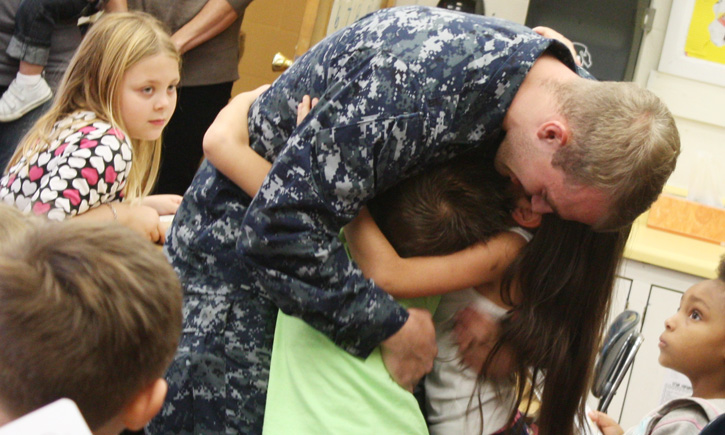
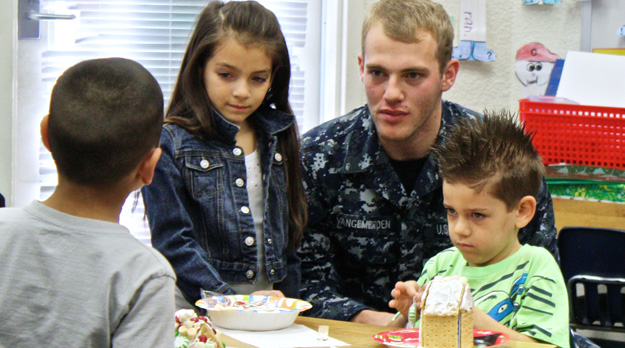
Steve Vanderwerff, who served as public affairs action officer for Naval Education and Training Command in Pensacola, was inside the Pentagon on September 11, 2001 — less than 100 yards around the corner from the crash site in his new office. Less than a week before, his office had been located in the strike zone.

Vanderwerff describes, in his own words, that September morning….

My decision to join the Navy was solely based on my sense of adventure. The Navy’s ad from my childhood, “It’s not just a job it’s an adventure,” truly struck home. I envisioned myself a bell-bottomed, Dixie-cup wearing sailor right out of the movie “Mr. Roberts.” Ah the sweet pleasure of sailing the seven seas doing the hula-hula, late night pub crawls in Hong Kong, collecting an armful of tattoos and chasing after Thai girls and beer while being paid. So I enlisted. It was 1988. All has come true except for the tattoos.

The years flew by, a tour on USS Carl Vinson – the Navy’s Golden Eagle, two tours with Pacific Fleet Combat Camera, surviving SERE School, graduating from Syracuse University’s DoD film school, a science expedition to the North Pole; and a tour with the Blue Angels as their backseat aerial photographer pulling a lot of G’s. I was operating on maximum overdrive, high on adrenaline. The ad had come true. It wasn’t just a job it was indeed an adventure. Little did I know that I had yet to experience the adventure of a lifetime, one that was life altering, made me grow-up and come to fully realize what it means to serve my country in the United States Navy.

After my tour with the Blue Angels I was detailed to the Pentagon. I had heatedly disagreed with my detailer’s decision. Taking a Secretary of Defense staff assignment at the Joint Combat Camera Center (JCCC) didn’t exactly register very high on my fun meter. Driving a desk, supporting Com Cam policy and supervising the reception of imagery from forward deployed combat camera teams isn’t exactly how I had ever envisioned myself. Damn it, I was an operator! The likelihood or remote possibility of me running into something fun and adventurous like arm-wrestling Bolivian Blow Dart Peddlers or fire walking with Tahitian Mai Tai Jugglers while stationed in DC was slim-to-none. Didn’t he have something for me, like pulling G’s in a fast-mover (I could fill volumes about how to prevent power puking inside the cockpit)? Or what about breaking through the Arctic’s polar cap in a nuclear powered fast attack submarine and standing guard against polar bear attack as I had in the past? I’m not exactly sure if a polar bear attack on a US Submariner constitutes an act of war, if so who owns the polar cap? If he wouldn’t send me to any of the above, how about something a bit more cerebral like me hitting a foreign beach armed to the teeth with Kevlar wearing Marines or maybe photographing Navy SEAL’s in revved up low-altitude fast moving helos moving in and out of hostile territory? I had always been a big fan of that sort of action. He said no to all. It was time for me to take a seat at a desk and help others do what I wanted to do.

And so on a hot muggy day I checked in. It was August 2001. The Pentagon buzzed like a beehive. I was impressed by all of military’s, “Heavy Hitters” that walked the halls. There was a lot to learn, especially working with the other service branches.  What was there not to like? The world appeared to be at peace. I was stationed in our nation’s capitol. I had a large cubicle, and my own computer with super fast T-line connections. A Starbucks was conveniently located one floor below. Best of all, I would be home every night for the next three years to annoy my wife and kids. My first month flew by moving JCCC into the Pentagon’s newly renovated wing.

On a sunny, Tuesday morning I arrived at work. It was September 11, 2001. It was a little after nine a.m. when I got to work. My wife Dayle, was flying back home that day from attending a funeral in the mid-west. I was getting in late because I had to drop my kids off at school; playing the role of soccer mom somewhat new to me. My officer in charge was attending a conference in Norfolk, Va. and my operations chief was at a meeting down the road in Alexandria. When I got to the office everybody was huddled around the TV. The news was reporting that a plane had crashed into one of New York’s Twin Towers.

I stood flabbergasted as the tragedy unfolded. To my disbelief a second jet slammed into the Twin Towers. My memory is a bit fuzzy of what happened next, but as I recall, soon afterwards the Pentagon shuddered and shook. My co-workers and I looked at each other not sure of what had just happened. That sure seemed like one helluva sonic-boom I thought to myself. Having come from the “Blues” my mind still operated in the aviation world of thinking. The phone rang. I answered it. It was one of my guys who, was off for the day at home just across the Anacostia River at Bolling Air Force Base. He asked me if we had just been attacked. I said “is that what that was?” I said I wasn’t sure, there were no alarms going off. He said he thought so because looking from his back yard black smoke was pouring out of the Pentagon. Someone went out to investigate. They quickly came back. All they said was, “We gotta go.”

Smoke filled halls were filled with people making their way towards exits. The murmur of voices and shuffling feet was all that could be heard. No one had a clue to what had just happened. The idea of a passenger plane hijacked by terrorists and crashing into the Pentagon was as remote a possibility as Arnold Schwarzenegger becoming the governor of California. Not exactly knowing what to think I made my way outside. Once outside I saw thick black smoke rising from the building. I thought that maybe construction workers working on the renovation might have hit a gas main. All sorts of thoughts ran through my head as hordes of dazed and confused people continued to pour into the daylight. Seeking information I went to my car and turned on the radio to listen to the news. I sat stunned not believing what I was hearing. Holy-moley I thought. We’ve been attacked by terrorists, same as the Twin Towers. My God there are people in the wreckage. I spend my entire career trying to get into the action and when I think that I’m away in the rear the action comes looking for me. I heard approaching sirens in the distance. Then it dawned on me. My wife was flying home that day. My mind raced with morbid fear. Is she safe? Has she got on the plane yet? In a fog I made my way to the pre-determined rally point. Once there I set my personal emotions aside. I had people to muster and account for. The rest of JCCC showed up. All were accounted for. Then security officers were yelling for everybody to leave the area because another attack was imminent. Mass hysteria hit the crowd. What the heck was going on? Like cockroaches scattering when the lights come on, civilians, military personnel, politicians and bungling bureaucrats ran for cover. Somehow we all ended up on the other side of Highway 395. I knew I wouldn’t be seeing my car for a long time. More worries filled my mind, thinking of how would I get home and who would pick-up and care for my kids? The second attack turned out to be a false alarm. I set aside my worries, I focused on the positive. My wife would be ok and I would figure out how to get home and take care of my children, but first I had my duty to fulfill. Once again I accounted for my personnel.

Fortunately several members had grabbed their cell phones. The airways were jammed, but after repeated attempts we were able to get a hold of my boss. He instructed us to get to the American Forces Information Services (AFIS) in Alexandria, where he currently was and where we would set up shop. There was imagery to get out to the world. The story needed to be told. Because none of us had access to our cars we made our way to the nearest metro station. I tried repeatedly, but couldn’t reach my wife. I was scared. Fortunately I was able to contact a neighbor who would pick my kids up from school. Once at AFIS we went into action setting up a temporary JCCC – still and video imagery started to come in. Sec Def wanted his imagery. Hours later after repeated attempts I finally was able to get a hold of my wife. She was safe. Her plane had been delayed because of the tragedy. She had spent her time desperately trying to get a hold of me, fearing for the worst – widow hood. I assured that her I was un-harmed and that the kids were safe with a neighbor. We cried for our good fortune and the mis-fortune of others. I thanked God for watching over me and my family. I had been less than a hundred yards around the corner from the crash site. Late that night in the safety of my home with my kids snug in bed I realized that a week earlier before moving into the newly renovated wing, JCCC had been located in the area of impact and that a few of my office mates and I would have been in the old office that morning to make sure we had moved everything, but had not because we had been watching the Twin Towers tragedy on TV. I sighed with relief. It had been a close call.

Years later, thinking about that bleak morning in September when all of America held its breath and our enemies cheered I give pause to reflect. Understanding, that on that day something awoke in me that had been missing in me, if not many others – service and sacrifice. I had spent my time in the Navy up until then thinking of what I could take or get out of the deal. My training, my many deployments, my wanting fun and adventure had always been about me. Sure, I had always been a good Sailor, but I had been driven by hubris and selfish desire. Not giving much thought to what it meant to serve my country. I was happy as long as I was able to collect a paycheck.

It didn’t happen overnight, but over the course of my tour at the Pentagon and supporting the “Global War on Terror” I found a new sense of purpose and energy. I worked long hours, determined to support the cause and give meaning to my duty. Gone were my days of thinking that being a Sailor meant being a sea going pirate, swashbuckling across the globe, with tales to spin and tell. People had died and would continue to do so without mine and every American’s full support to stop our enemies.

So when it was time for me to talk to my detailer about orders, I didn’t hesitate to ask for orders at the “tip of the spear” aboard a ship because that was where I was needed. My days of asking for fun and adventurous jobs seeking personal reward and glamour were over.

And so whenever I found myself on long arduous extended deployments while sailing in harms-way wondering why I had to be there and for what purpose I would think of all those who had gone before me and of their sacrifice and dedication to service.

I continued to serve with that sense of pride and purpose at follow-on duty stations, and continue to do so as a retired chief and civilian employee at Naval Education and Training Command, which develops the Navy’s workforce through education and training that builds personal, professional, and leadership skills.

When my time in the Navy, active duty and as a civilian, comes to a close I will be proud to say as President Kennedy so eloquently put,

“I can imagine no more rewarding a career. And any man who may be asked in this century what he did to make his life worthwhile, I think can respond with a good deal of pride and satisfaction:

“I served in the United States Navy”

Florida May Expand Use Of Silencers For Hunting, Including For Deer

September 11, 2014

Hunting game in Florida could become a little less noisy by the end of the year.

The Florida Fish and Wildlife Conservation Commission on Wednesday advanced a proposal that would remove a prohibition on the use of noise-suppressors, or silencers, with rifles and pistols when hunting deer, gray squirrels, rabbits, wild turkeys, quail and crows.

The proposal will now be advertised in the Florida Administrative Register, and the commission is expected to vote on the new rule in November.

While critics said muzzling rifle shots could increase the risk of people being struck by wayward bullets or cause people to wander unaware into hunting areas, backers of the proposal said such concerns are unfounded.

Commissioner Brian Yablonski noted that suppressors take out some of the big bang and recoil, but they don’t silence weapons as depicted in the movies.

“It still makes a very loud sound and this was in all cases,” Yablonski said during a commission meeting in Kissimmee. “We’re talking louder than a rock concert, louder than a jackhammer with the suppressor.”

Commission staff, hunters and a representative from the suppressor industry defended the proposal as a means to protect hunters’ hearing, lessen the impact of hunting on others and even help while introducing people to the sport.

Knox Williams, president of the American Suppressor Association, estimated that 40,000 suppressors are already owned in Florida.

Florida currently allows the use of suppressors on shotguns for game hunting. A suppressor can also be placed on a rifle or pistol when hunting on private lands for non-game wildlife, which includes hogs, furbearers and armadillos.

Buck Holly, an owner of C&H Precision Weapons in LaBelle, projected that by lifting the ban, sales of suppressors at his Hendry County business would grow from about two to five a month to up to 10 a month. He said that would allow him to add one or two jobs.

“I know in most counties one to two jobs isn’t a big blip on the radar, but in Hendry and Glades counties, one or two is a tremendous economic boost,” Holly said.

Patricia Brigham, chair of the League of Women Voters’ Gun Safety Committee, cautioned that a proliferation of silencers would reduce public safety.

“They’re going to be used in such a way that they’re not intended to be used, which is to harm other human beings,” Brigham warned. “There are more important things than protecting the hearing of a hunter, than encouraging a young person to hunt … the more important thing is the errant bullet catching the sleeve of a nearby hiker, penetrating the skin of nearby hiker, penetrating the heart of a nearby hiker.”

Katherine McGill, a founding member of the National Urban Wildlife Coalition, said more time should be given to the review.

“I have no problem with suppressors personally. If someone is target-shooting near my property I’d be glad that they are using them. I’d like them to be put on fireworks, too,” McGill said. “But I don’t want to be riding my horse in the woods and not hear that hunter out there.”

Suppressors are allowed in 32 states for all hunting.

Division of Hunting and Game Management Director Diane Eggeman said lifting the prohibition isn’t expected to lead to a widespread proliferation of the use of suppressors. She estimated a rifle suppressor costs between $750 and $2,000, while individuals also have to pay $200 for a federal criminal background check.

Holly placed the cost for most suppressors between $450 and $1,000.

by Jim Turner, The News Service

Our View: Where Were You That September Morning?

September 11, 2014

September 11, 2001. It’s been 13 years.

Life, at least when that morning began, seemed good. I’ve always been a work at home dad, so I was home with my two girls. The youngest was almost four months old, and the oldest was approaching her fourth birthday. It was a normal morning. The little one was asleep, “fat and happy” as we used to say, after a morning bottle. The oldest was in the living room just a few feet from my office watching PBS Kids on the TV as I worked on a project for a client.

Then this arrived in my inbox:

Subject: CNN Breaking News
From: BreakingNews@CNN.COM
Date: Tue, 11 Sep 2001 08:52am

– World trade center damaged; unconfirmed reports say a plane has
crashed into tower. Details to come.

I got up, walked to the living room and flipped the TV to CNN. They were talking about how a pilot could make such an error, hitting such a large building. They were speculating that it was just a small plane. But then as the TV news helicopters zoomed their cameras in closer, the anchors were beginning to notice what I had already thought….those holes the tower were to big to have been a small plane.

(continues below photo)

I called my wife at work in Atmore. She had seen the breaking news email, and had tried to visit the CNN website to see the story. If you remember trying to use the internet that morning, it was near impossible to get a news website to load; they were all overloaded. She was unable to see the pictures. I was describing what I saw on the TV to her.

I managed to grab a picture from CNN via my web server and then download and email it to her. We were speculating about how it could happen when the second one hit.

I remember saying “wait, hold on, wait…”. I told her what I just watched on the TV. The second plane had hit the other tower. We quickly decided that we were at war as the anchors on TV speculated again that perhaps there was a problem with some navigational system, causing jetliners on a beautiful, clear morning in New York to fly into some of the tallest structures in the world.

Another breaking news email arrived:

Subject: CNN Breaking News
From: BreakingNews@CNN.COM
Date: Tue, 11 Sep 2001 09:21am

– Second plane crashes into World Trade Center.

She and I began to speculate ourselves that we were at war. What would we do? What should we do? What about the kids? It was not panic, understand, but just that protective momma and daddy instinct, I suppose. Prayer. That was a good idea. Maybe go to the bank and get out a little cash. That seemed like a good idea. How would you prep for a war on American soil? We were not sure.

I continued to relay information about what I was seeing on TV to my wife at work, who, in turn, would relay the information to her coworkers. They had a TV, but no cable service or antenna. They ended up fashioning a homemade antenna to see a fuzzy picture.

Meanwhile, the breaking news emails kept arriving…

Subject: CNN Breaking News
From: BreakingNews@CNN.COM
Date: Tue, 11 Sep 2001 09:32am

– Sources tell CNN one of two planes that crashed into World Trade
Center was an American Airlines 767.

Subject: CNN Breaking News
From: BreakingNews@CNN.COM
Date: Tue, 11 Sep 2001 09:42am

– President Bush calls plane crashes at World Trade Center a
terrorist act.

Subject: CNN Breaking News
From: BreakingNews@CNN.COM
Date: Tue, 11 Sep 2001 09:45am

– Significant fire at the Pentagon. Details to come.

Subject: CNN Breaking News
From: BreakingNews@CNN.COM
Date: Tue, 11 Sep 2001 09:46am

– White House evactuated. Details to come.

The Pentagon on fire? The White House evacuated? Notice that in CNN’s email they were in such a hurry that they misspelled “evacuated”. One sentence at a time, the situation became more grave.

Subject: CNN Breaking News
From: BreakingNews@CNN.COM
Date: Tue, 11 Sep 2001 09:55am

– CNN confirms a plane hit the Pentagon

Subject: CNN Breaking News
From: BreakingNews@CNN.COM
Date: Tue, 11 Sep 2001 10:03am

– One of World Trade Center towers collapses; fire forces
evacuation of State Department

Subject: CNN Breaking News
From: BreakingNews@CNN.COM
Date: Tue, 11 Sep 2001 10:30am

– Second World Trade Center tower collapses in Manhattan

Over and over, we watched those towers collapse on TV, and we watched our Pentagon burn.

Our almost four year old asked a lot of questions. “Were people hurt? Did they need a Band-aid?” The magnitude of the event was lost on a four year old. Looking back at those first few hours, I think the magnitude of the event was lost on all of us.

Like many Americans, I sat glued to the TV that day, continuing to watch the video of the towers falling. Our almost four year old asked if another building fell down or if it was the same one. It was time to change the channel on the TV.

You might remember that many of the entertainment TV stations ran network news feeds. Others just simply ran screens about the day’s events. There was no USA network, no ESPN, no MTV. But on PBS, we found children’s programming at a time it was not normally on. For a little while, sitting in the living room floor holding my kids, the world stopped turning that September day, as we watched Big Bird and the Cookie Monster.

Country artist Alan Jackson later wrote a song “Where Were You When the World Stopped Turning?”.

Some of those lyrics:

Where were you when the world stopped turning that September day
Out in the yard with your wife and children
Working on some stage in LA
Did you stand there in shock at the site of
That black smoke rising against that blue sky
Did you shout out in anger
In fear for your neighbor
Or did you just sit down and cry

Did you weep for the children
Who lost their dear loved ones
And pray for the ones who don’t know
Did you rejoice for the people who walked from the rubble
And sob for the ones left below

But I know Jesus and I talk to God
And I remember this from when I was young
Faith hope and love are some good things He gave us
And the greatest is love

Where where you when the world stopped turning that September day? Your comments are welcome below.

NorthEscambia.com photos by Bethany Reynolds, click to enlarge.

Two Airlifted To Hospital After Oil Well Incident Near Flomaton

September 10, 2014

Two men are lucky to be alive, according to officials, after falling into two dangerous chemicals at an oil well near Flomaton Wednesday morning.

Both came in contact with  xylene and hydrogen sulfide (commonly called H2S gas) at the Eagle Rock oil well on Halls Creek Road off Upper Creek Road, according to Flomaton Fire Chief Steve Stanton. Both chemicals are natural byproducts of the oil drilling process.

The men were transported by private vehicle to the Flomaton Fire Department for treatment. They were airlifted  to area hospitals in critical condition. Their names and current conditions have not been released.

The chemicals were contained to the oil well and did not pose a threat to the public.

H2S gas, in high concentrations, can cause immediate collapse and death after a single breath. Excessive exposure to xylene can also also cause coma, respiratory failure and death.

Escambia Man Gets 7 Years For Hwy 29 DUI Crash

September 10, 2014

An Escambia County man has been sentenced to almost seven years in prison for a DUI crash that injured multiple people last year at Highway 29 and Tate School Road.

Curtis Francis Ward, 57, was sentenced by Circuit Judge Terry Terrell to 81.9 months in state prison followed by 98.1 months of probation for child neglect causing great bodily harm. Terrell also sentenced Ward to five years probation to be served consecutively for two counts of DUI with serious bodily injury and one count of child neglect causing great bodily harm.

The charges stemmed from a traffic crash on December 1, 2013, on Highway 29 at Tate School Road. According to the FHP, Ward drove his 2004 Jeep Liberty the wrong way on Highway 29, causing the head-on collission with a 2006 Chevrolet Silverado driven by 42-year Kimberly Hall of Brewton. Her front seat passenger, 42-year old Kenneth Hall of Brewton sustained the worst injuries, receiving multiple broken bones and has required multiple surgeries.

Ward’s two children, ages 7 and 8, were in his vehicle. One child sustained internal injuries requiring surgery.

Ward’s blood was drawn and sent to the Florida Department of Law Enforcement, where it was found to contain a 0.173 blood alcohol  content, well over the legal limit.

NorthEscambia.com file photos, click to enlarge.

Local Students Named National Merit Scholarship Program Finalists

September 10, 2014

Fourteen local high school students have been named semifinalists in the 59th annual National Merit Scholarship Program.

The students are Hannah E. Phillips of Tate High School; Jett P Crowdis, Claire M. Escobedo, Olivia Y. Liseth,  Shayli A. Patel,  Nadia H. Razek, Laurel N. Rush, Lauren E. Shumpert and Caroline E. Sullivan of Pensacola High School;  Maria T. Gund, Troy Stringfellow and Case W. Wagner from Pensacola Catholic High School; Jon H. Adler of Trinitas Christian School; and Ryan A. Garmeson of T.R. Miller High School in Brewton.

About 16,000 national semifinalists were announced Wednesday. These academically talented high school seniors have an opportunity to continue in the competition for some 7,600 National Merit Scholarships worth about $33 million that will be offered next spring. To be considered for a Merit Scholarship award, semifinalists must fulfill several requirements to advance to the finalist level of the competition. About 90 percent of the semifinalists are expected to attain finalist standing, and more than half of the finalists will win a National Merit Scholarship, earning the Merit Scholar title.

To become a  finalist, the semifinalist and their high school must submit a detailed scholarship application, in which they provide information about the semifinalist’s academic record, participation in school and community activities, demonstrated leadership abilities, employment, and honors and awards received. A semifinalist must have an outstanding academic record through-out high school, be endorsed and recommended by a high school official, write an essay, and earn SAT scores that confirm the student’s earlier performance on the qualifying test.

Former Escambia Sheriff’s Deputy Trainee Charged With Sexual Assault

September 10, 2014

A former Escambia County deputy trainee was arrested Tuesday for sexual assault.

Chris Loring Majors, 44, was charged with two counts of sexual assault and destruction of evidence. His bond was set at $100,000.

Major was terminated in July after a woman reported that he committed a  non-consensual sex act with her while on a service call. Majors reportedly admitted to the act while on duty, but claimed it was consensual.

Majors was hired at the Escambia County Jail in 2008. Shortly after the transfer of the jail from the Sheriff’s Office to the Escambia County Commission last October, Majors applied to become a law enforcement officer with the ECSO. He had just completed the department’s field training program. Prior to that, he would have answered calls only with a senior officer, the Sheriff’s Office said.

VT Aerospace Contract Signed, 300 Jobs Expected

September 10, 2014

The City of Pensacola has inked a lease with VT Mobile Aerospace Engineering, Inc. (VT MAE), which will establish a maintenance, repair, and overhaul (MRO) facility at Pensacola International Airport, creating at least 300 jobs.

The signing ceremony, which took place immediately following a special City Council meeting where the lease was approved, was also attended by representatives from Escambia County and VT MAE.

“We are so excited to bring VT MAE, one of the world’s leading MRO companies, to Pensacola International Airport,” said Pensacola Mayor Ashton Hayward. “By working with VT MAE, we will be able to create good, high-paying jobs and cement Pensacola’s position as a true contender for aviation and aerospace industry investment. This partnership aligns well with our regional goals to create a robust aerospace cluster and will help create greater business and job opportunities for the citizens of Pensacola and Escambia County.”

Tuesday’s announcement concludes the nearly two-year campaign by Hayward and economic development partners, including Escambia County and the Greater Pensacola Chamber, to attract VT MAE, a subsidiary of Singapore-based ST Engineering, to Pensacola. Under the terms of the lease, the City of Pensacola will construct an aircraft hangar complex on 18.66 acres at Pensacola International Airport and lease the facilities to VT MAE for a 30-year term. The hangar will be able to accommodate two wide-body aircraft, and is expected to be ready for operations in mid-2016.

Pictured top: Pensacola Chamber of Commerce Vice President of Economic Development Scott Luth presents the VT Mobile Aerospace Engineering lease to the Pensacola City Council Tuesday. Courtesy photo for NorthEscambia.com, click to enlarge.

Florida Regulators Take Another Shot At Medical Pot Rule

September 10, 2014

State regulators have hurriedly released a revamped framework for Florida’s new medical-marijuana industry, making minor changes after a legislative panel shredded an earlier attempt.

The Department of Health’s Office of Compassionate Use on Tuesday published the revised rule governing everything from stems and seeds to serving the substance to patients. The latest version of the rule includes some tweaks dealing with who can own the five “dispensing organizations” the state will eventually license.

The organizations will grow, process and distribute products — usually delivered in paste or oil form — derived from strains of pot that purportedly do not get users high but are believed to relieve life-threatening seizures in children with rare forms of epilepsy.

A law passed this spring requires each applicant to have a valid registration from the Department of Agriculture and Consumer Services to cultivate more than 400,000 plants, be operated by a nurseryman as defined by state law and have operated as a registered nursery in the state for at least 30 continuous years. At least 60 nurseries meet the criteria.

A preliminary rule crafted by health regulators would have allowed nurseries to have just 25 percent ownership in the entities applying for a license. That option drew a rebuke from the Legislature’s Joint Administrative Procedures Committee, which helps oversee state regulations. The original proposal also neglected to specifically address whether the nursery would be required to have a continued role in running the pot operation.

Under Tuesday’s revised proposal, a nurseryman would have to “serve as the operator,” alleviating some concerns that growers would have little or nothing to do with the grow operation despite lawmakers’ intention that the nascent pot business be controlled by companies with a long agricultural history in Florida. The proposal would require a nursery to have at least 25 percent ownership of the organization that gets a license, but also would offer another alternative that would allow “100 percent of the owners of a nursery” to fulfill that 25 percent requirement.

That ownership change appears aimed at appeasing some nursery owners who expressed concerns about financing the marijuana operations. Because pot is still illegal under federal law, nearly all banks are refusing to lend money to marijuana-related businesses. Converting other areas of operations into cash-only business could pose major problems for growers interested in participating in the medical marijuana start-ups, lawyers for Costa Farms told the Department of Health at a day-long public hearing on Friday.

“Today’s publication of a changed rule demonstrates that our focus has been to get this product to the market as soon as possible with an emphasis on patient safety. We want to avoid unnecessary delays. We want to help children with refractory epilepsy and patients with advanced cancer as quickly and safely as possible,” Florida Surgeon General and Secretary of Health John Armstrong said in a statement after the rule was published.

The proposed rule addresses some of the other questions posed last week by the legislative committee, which challenged the health department’s authority regarding nearly every aspect of the comprehensive rule, and considerations voiced by growers and others at Friday’s hearing.

After one nursery complained, the department changed the boundaries of one of the five regions to allow Martin County to be moved from the Central Florida region, which includes the Orlando area, into the Southeast region, which ranges along the Atlantic coast to Monroe County.

But overall the agency appears to have stuck to its guns and has receded little from its original blueprint. The most contentious aspect of the plan deals with the use of a lottery system to pick licensees in areas where more than one entity applies. Lawyers have threatened to sue over the use of the lottery, but health officials maintain that the process will minimize drawn-out litigation over contract awards that could delay getting the medical marijuana to patients.

The agency intends to certify the rule in 21 days and file it with the Department of State. The rule will then become effective 20 days after filing.

Seeking in part to offset a constitutional amendment that would legalize “traditional” medical marijuana going before voters in November, lawmakers this spring legalized strains of marijuana low in euphoria-inducing tetrahydrocannabinol, or THC, and high in cannabadiol, or CBD. The newly created Office of Compassionate Use within the Department of Health has until Jan. 1 to come up with a regulatory framework for the new industry.

Supporters of the low-THC, high-CBD strains of cannabis believe the substance can eliminate or dramatically reduce life-threatening seizures in children with severe forms of epilepsy. Under the new law, patients with other spasm-causing diseases or cancer would also be eligible for the strains of marijuana if their doctors order it, and if their doctors say they have exhausted all other treatments.

by The News Service of Florida

« Previous PageNext Page »