

West Florida Gin Upgrading With $725K Baling Press
March 12, 2015

The West Florida Gin is expanding its capabilities with an upgraded press. The gin recently signed an agreement for an Continental Eagle press for $725,000.
The press is used to bale cotton.
“This has been a necessary addition to our gin to keep up with the continued support from our cotton growing community. We are grateful for their support over the years, enabling us to upgrade each year, improving our services as a cotton ginning facility,” said Manager Robert Earl Godwin.
Godwin (pictured second from left) was joined for the signing by (L-R) David Mrozinski, Lav Bajaj and John Kolasky of Bajaj Steel Industries, LLC, manufacturers of the Continental press.
Photo for NorthEscambia.com, click to enlarge.
Later Presidential Primary Sails Through House
March 12, 2015
A bill delaying next year’s presidential primary elections in Florida continued its fast-track movement through the Legislature on Wednesday, getting unanimous support from the House.
Lawmakers voted 114-0 to move the state’s primary to the third Tuesday in March, which would be March 15 next year. The bill (HB 7035), which pushes the vote back by two weeks, would allow the Republican Party of Florida to make its primary winner-take-all under the national GOP’s rules.
 As a sign of how quickly the legislation is moving, the Senate Rules Committee is set to take up the upper chamber’s version of the bill (SB 7036) on Thursday morning. If that panel signs off, the legislation would be headed to the Senate floor.
The Republican National Committee’s rules for party primaries call for states that vote before March 15 in 2016 to allocate their delegates proportionally. States that wait until that date can award all of their delegates to the winning candidate — a treasure trove in a large state like Florida that could particularly come in handy for former Gov. Jeb Bush or U.S. Sen. Marco Rubio, both of whom are considering bids for the White House.
The Republican Party of Florida would ultimately choose whether to go with a winner-take-all system or award delegates proportionally.
Legislative leaders have brushed off suggestions that the move is being made to benefit Bush or Rubio in a potential fight for the GOP nomination, instead casting it as something that would draw the spotlight to Florida, the nation’s largest swing state in general elections.
“I think it’s a bill about Florida being relevant, and that’s really what it comes down to,” said House Speaker Steve Crisafulli, R-Merritt Island.
Democratic delegates are rewarded proportionally regardless of when a state’s primary is held. Aside from some carping that the idea was originally offered by a Democratic sponsor in 2009 and 2013 — after early primaries led the national parties to take away some of Florida’s delegates — the minority party didn’t argue the changes.
“We didn’t hear any indication from our party in Florida or the DNC (Democratic National Committee) that it would have any impact,” House Minority Leader Mark Pafford, D-West Palm Beach, told reporters.
State Republican Chairman Blaise Ingoglia, a state House member from Spring Hill, has signaled that he would like the state to give all of its delegates to the winning candidate.
Moving the primary back is the opposite direction of where lawmakers have tended to go in Florida. The state previously tried to move up in the order, scrambling efforts by both the Republican and Democratic parties to protect the traditional early votes in Iowa, New Hampshire, Nevada and South Carolina.
by Brandon Larrabee, The News Service of Florida
Tate Aggies Remains Undfeated With 4-2 Win Over West Florida
March 12, 2015
Tate 4, West Florida 2 (Varsity – 8 innings)
Tate 10, West Florida 6 (JV)
Tate 8, West Florida 6 (9th)
The Tate High School Aggies beat West Florida in eight innings Wednesday night 4-2. The Aggies remain undefeated at 9-0 overall, 4-0 in the district. Michael Sherrill (2-0) took the win in relief, striking out five and only giving up three hits. Trace Penton went 3-4 with a double, while Hunter Worley was 2-3 with two RBI’s. Brandon Fryman went 2-4.
The Aggies will host Crestview on Friday with the varsity at 7:00, junior varsity at 4:30, It’s a Blackout night, with all students entering the district game for $1 with $1 hot dogs for students and door prizes each inning.
Cantonment’s TaylorMade 14U Wins Battle On The Bay
March 12, 2015

The TaylorMade 14U team from Cantonment won the recent Battle on the Bay tournament in Gulf Beeze. TaylorMade went 5-0 beating Spanish Fort for the championship. The team is currently 15-1 with two tournament wins and a second place tourney finish.
Pictured: Taylormade team members (bottom, L-R) Hunter Mclean , Gavin Coles , Dawson Kuba , Hunter Riggan, Brandon Sprout, Jalen Whitfield, (top, L-R) Head Coach Ralph Story, Jace Dunsford, Trey Lefleur, Mason Land, Hunter Rayburn, Nolan Rigby, Pat Palmer, Mack Hamrick, and Coach Rodney Story. Photo for NorthEscambia.com,, click to enlarge.
11 Dead In Military Helicopter Crash Near Navarre
March 11, 2015
Eleven service members are dead following a military helicopter crash in the Panhandle.
 UH-60 Black Hawk from the Army National Guard crashed during a routine training mission on or near a remote area of beach near Navarre. The helicopter had seven Marines and four soldiers aboard. The copter was based at Camp Lejeune and the soldiers were from a National Guard unit based in Hammond, LA.
“Our thoughts & prayers are with them and their families as the search and rescue operation continues,” Secretary of Defense Ashton Carter said in a Tweet.
Two National Guard UH-60 Black Hawk helicopters were participating in a training exercise overnight, Eglin spokesman Andy Bourland said in a news release.
One of the helicopters, with four aircrew members and seven Marines aboard, was involved in an accident near Eglin range site A-17, east of the Navarre Bridge, Bourland said. The helicopter was reported missing at about 8:30 p.m. last night, and a search and rescue team found debris at about 2 a.m. today, he added.
Recovery efforts are underway at the accident site, and sonar has located the wreckage in the water. The second helicopter returned to Eglin, and all Marines and soldiers aboard were accounted for.
Names of the soldiers and Marines are being withheld pending notification of their families, and the accident is under investigation, Bourland said.
More details will be posted as they become available.
Old Ernest Ward Middle Fixtures, Furnishings To Be Donated To Century Prison
March 11, 2015

When students moved into the new Ernest Ward Middle School last month, everything down to desks and chairs was brand new. That left a lot of items in the old buildings, which date back to the 1940’s. The old buildings are slated for demolition, but before they go the Century Correctional Institution wants items that can be put to use at the prison.
The school district has already removed all items from the old buildings that can be repurposed within the school system. Everything that remains is considered surplus property.
 Desks, chairs, file cabinets, homemade tables, ceiling tiles, water fountains, sinks, toilets and urinals are just some of long list of items that Century CI is asking the Escambia County School Board to donate to the prison system before demolishing the old EWMS campus.
Prison Warden John Sloan, in a letter to Superintendent Malcolm Thomas, said the donations will allow his facility to better manage its budget while not compromising the services provided.
Century CI already provides thousands of dollars worth of inmate labor and other services at no charge to the Escambia County School system, especially at North Escambia area schools.
The Escambia County School Board is expected to approve the recommended donations to Century Correctional Institution at their next regular meeting on March 17.
Escambia To Hold Special Meeting To Discuss RESTORE
March 11, 2015
The Escambia County Board of County Commissioners will hold a special meeting on Thursday, April 16, at 9 a.m. to discuss issues concerning the Resources and Ecosystems Sustainability, Tourist Opportunities, and Revived Economies of the Gulf Coast States Act of 2012, also known as the RESTORE Act. The development of Escambia County’s Direct Component Plan will be discussed.
The Special BCC Meeting will be held in Room “A” on the first floor of the Pensacola Bay Center, located at 201 East Gregory Street.
Delegation From The Philippines To Tour ECUA Cantonment Facility
March 11, 2015

An international delegation from the Philippines will visit and tour the Emerald Coast Utilities Authority’s Central Water Reclamation Facility (CWRF) in Cantonment next week.
The group was invited under the auspices of the Department of State’s International Visitor Leadership Program., which focuses on exposing international visitors to a variety of topics in the United States such as waste management practices. Their local visit was arranged by the Gulf Coast Citizen Diplomacy Council (GCCDC).
“The group is composed of two mayors, the project director, and staff who are looking at the topic of sustainable urban development. One of their objectives is to explore programs that address sanitation and waste management, as well as study sustainable approaches to ensuring a clean water supply to a community, said Matt Rizzo, GCCDC program coordinator.
The CWRF in Cantonment was named a top-three finalist for the 2011 Global Water Reuse Project of the Year by Global Water Intelligence in Berlin, Germany, EU. The facility uses advanced wastewater treatment technology, and achieves zero-discharge through partnerships for industrial reuse of the reclaimed water. The reuse partnerships also reduce demand on the sand-and-gravel Aquifer, the sole source of the area’s drinking water.
Pictured top: The Central Water Reclamation Facility in Cantonment.
Prison Investigators Testify About Being Silenced
March 11, 2015
Testifying under oath Tuesday before a Senate panel, current and former Department of Corrections investigators — including the sheriff of Gulf County — said they were ordered by the inspector general’s office to quash cases that could embarrass the agency or high-ranking officials.
Gulf County Sheriff Mike Harrison told the Senate Criminal Justice Committee that, as a corrections investigator, he was twice told by “upper-level management” in the inspector general’s office of the Department of Corrections not to pursue criminal charges against corrupt, high-ranking officials.
 Investigators were encouraged to pursue administrative cases — which could end in firings but not criminal charges — “to make it look favorable upon the department,” Harrison said after being sworn in, a rarely used option available to committee chairmen and ordered Tuesday by Chairman Greg Evers, R-Baker.
“Criminal charges on a high-ranking colonel or warden or assistant warden would obviously be a black eye on DOC,” Harrison, who left the inspector general’s office in December 2012 after being elected sheriff.
Harrison said he was told not to pursue criminal charges against a former Jackson Correctional Institution warden and assistant warden regarding a cover-up of the medical treatment of an inmate at the Panhandle prison in which two inmates nearly lost their lives.
The state attorney’s office originally declined to take the case but agreed to bring charges against former warden Ted Jeter and assistant warden CarolAnn Bracewell after Harrison and another investigator obtained additional sworn testimony indicating that the pair had pressured workers into keeping silent about what happened, Harrison said.
“It was initially declined by the state attorney’s office but with the new information he indicated to bring it back to him and we were instructed not to do so,” he told the panel.
Doug Glisson, who was Harrison’s supervisor at the time and still works for Inspector General Jeffrey Beasley, said the decision not to pursue criminal charges came from Beasley. Glisson is one of a handful of inspectors who filed a lawsuit against Gov. Rick Scott, Beasley and others alleging they were denied whistleblower status and faced retaliation after exposing a cover-up involving the 2010 death of an inmate at a Panhandle prison who died after being repeatedly sprayed with noxious chemicals. A federal judge recently dismissed the case, but the inspectors’ lawyer said he plans to appeal.
Harrison told the committee he was also instructed not to pursue a criminal case against a colonel at Holmes Correctional Institution who had been accused of smuggling contraband into the prison. Harrison said he ignored his superiors and brought the case to the state attorney, who later pressed charges against the colonel, who is now on probation.
“I come from a law-enforcement background,” Harrison, who worked for the inspector general’s office for about two years, said. “I was used to, if someone broke the law, that you took the charges to the state attorney’s office and you proceed forward. That didn’t appear to be the case within the inspector general’s office. It was quite frustrating with me.”
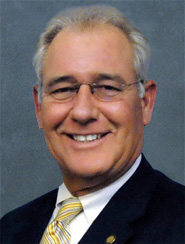 Evers, who has sponsored a sweeping prison overhaul (SB 7020) that would create a commission with investigatory powers to oversee the policing of prisons, said he wants “to dig deeper” into Harrison’s accusations about Beasley’s office.
“I think it should be referred to somebody or allow us to continue to dig. Apparently we can stumble across more than what the investigations have found in the past few years, just by asking questions of the right people,” Evers said.
Evers said he would support the creation of a special legislative joint committee to look into allegations of cover-ups within the office of the inspector general.
“We’ve got a problem. I said several meetings back that we’ve got a crisis. Yes, we’ve got a crisis,” he said.
Tuesday’s testimony from Glisson and Harrison indicated a pattern of Beasley’s office preventing inspectors from going after senior officials and focusing instead on “low-hanging fruit,” as characterized by an anonymous investigator in a letter highly critical of Beasley sent to Evers.
Glisson told the committee on Tuesday that he was told to drop an investigation into a high-ranking corrections official’s possible involvement with wrongdoing at a training academy.
Two days after one of Glisson’s inspectors asked the official about the academy, “we were called to the office of the inspector general and we were warned that the person we had named as a subject, that there was a ‘Capitol connection’ with this individual,” Glisson said.
“It just had a chilling effect,” he said.
Glisson and his inspector then were told to go through the official himself if they wanted any information pertaining to the investigation.
“Again, inspectors and investigators are supposed to have unfettered access to documentation, to talk to who we want. But now we’re being told specifically you’ll go through this person who’s been named as a subject,” he said. “We thought it was inappropriate.”
Department of Corrections Secretary Julie Jones has steadfastly stood by Beasley — who answers to Scott’s Inspector General Melinda Miguel — since she took over the post in January. Jones defended him again Tuesday.
“I have the utmost confidence in the abilities of the Office of Inspector General and department staff to take decisive action in the interest of safety and security for both themselves and the inmates in our custody,” Jones said in a statement.
The cases referenced in Tuesday’s hearing “happened years ago” and were “declined due to a lack of probable cause or sufficient evidence, she said.
“When a case is declined by the state attorney’s office for criminal prosecution, and there is evidence to prosecute civilly, investigators are encouraged to take decisive action to ensure that the individuals in question are held accountable,” Jones said. “I am personally disappointed that the environment in which current and former department staff were asked to testify did not allow for the presentation of all known facts regarding the incidents in question.”
by Dara Kam, The News Service of Florida
Tate Remains Undefeated With Win Over Fort Walton Beach
March 11, 2015
The Tate High School Aggies beat Fort Walton Beach 10-0 Tuesday. The Aggies, now 8-0 overall, 4-0 in the district, held an early 5-0 advantage after the first.
Jesse Gunter earned the win for the Aggies, pitching for just over four innings, allowing seven hits, four errors and four runs and striking out one. Cole Halfacre 3-5, RBI, 3 runs; Sawyer Smith 2-5, RBI, 3 runs; Mark Miller 2-4, RBI, 2 runs; Jacob Saulnier 2-3, 2 RBIs; Hunter Worley 2-2, RBI; Brandon Fryman 1-3, run
In junior varsity action Tuesday, Tate beat Fort Walton Beach 9-2.
The Aggies will travel to West Florida High School on Wednesday. The JV plays at 4:00, followed by the varsity at 6:30.