

Escambia Extension Urges Smart Grilling For Food Safety
July 4, 2015
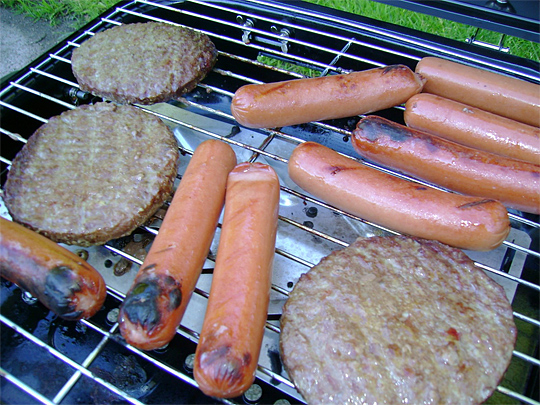
Safety is an important consideration when operating a grill. Improper use can cause a fire or explosion. Keep the area around a lighted grill clear of combustible materials, and never use a grill in an enclosed area such as a sheltered patio or a garage. Avoid wearing loose-fitting clothing that may catch fire. The cooking grids should be cleaned after every cookout. The last thing you want to do is cause someone to become ill due to improper cleaning or unsafe food preparation practices.
Wash your hands with hot soapy water for at least 20 seconds before starting to prepare any foods, and wash your hands again if you do anything else—change a diaper, pet an animal, or blow your nose, for example. Cover any cuts or sores on your hands with a bandage, or use plastic gloves. If you sneeze or cough while preparing foods, cover your mouth and nose with a tissue and turn your face away, or cough into your sleeve. Always wash your hands afterwards.
Bacteria multiply rapidly at room temperature. Most food-borne illness-causing bacteria cannot grow well at temperatures below 40°F or above 140°F. Thaw foods in the refrigerator or in the microwave. Never leave foods out at room temperature.
Keep everything that touches food clean. Bacteria can hitch rides around your kitchen on all sorts of things—plates and cutting boards, dirty utensils, dish rags and sponges, unwashed hands.
Never chop fresh vegetables or salad ingredients on a cutting board that was used for raw meat without properly cleaning it first. If possible, keep a separate cutting board just for the preparation of raw meat, poultry, and fish.
 Wash cutting boards thoroughly with hot soapy water, and then sanitize with a solution of household bleach and water.
Keep raw meat, poultry, fish, and their juices from coming into contact with other foods during preparation, especially foods that will not be cooked. Wash all utensils and your hands with hot soapy water after contact with raw meat.
Marinate meat, poultry and seafood in the refrigerator in a covered, non-metal container. Throw away any leftover marinade.
Grill food to a safe internal temperature. Use a meat thermometer to assure correct doneness of the food being grilled.
Safe minimum internal temperatures:
- Poultry (whole, ground, and breasts): 165°F
- Hamburgers, beef: 160°F
- Beef, veal, and lamb (steaks, roasts and chops):
- Medium rare: 145°F
- Medium: 160°F.
- All cuts of pork: 160°F.
Hold meat at 140°F until served. Use a clean platter for transferring cooked meat from grill to serving table.
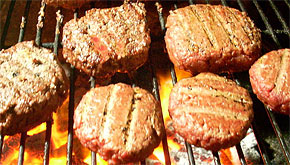 Summer is the time for getting together with friends and family and cooking outdoors. Make your outdoor grilling experience safe and enjoyable.
For further information regarding food safety and other related topics, go to the University of Florida’s Solutions for Your Life website: http://www.solutionsforyourlife.com.
Dorothy C. Lee, CFCS, is an Extension Agent II, Family & Consumer Sciences with the Escambia County Extension Service. Reference: Safe Food Handling Fact Sheet, United States Department of Agriculture, Food Safety and Inspection Series.
4th Weekend Recipes: Patriotic Pops, Ice Cream Sandwiches
July 4, 2015
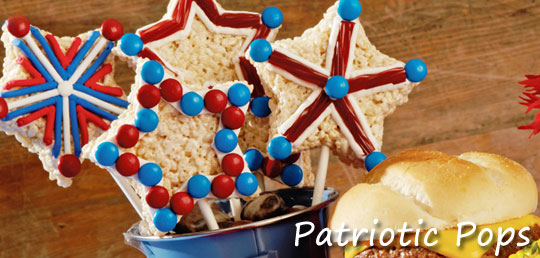

The Fourth of July calls for a carefree party, with good friends, fab food, fun and fireworks – a real star-studded holiday celebration.
Patriotic Pops cut into star shapes definitely say “Happy Fourth of July.” Decorated in red, white and blue icing, red licorice and colored candies, these easy-to-make crispy rice treats are a favorite for both youngsters and the grown-ups. The kids can lend a hand to help decorate by placing the candy pieces on the stars.
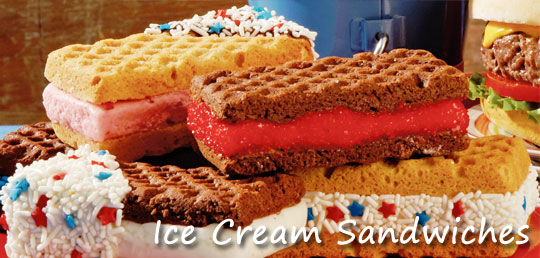
Add a taste of nostalgia for the child in all of us with Ice Cream Sandwiches – everybody loves ‘em. Homemade brownies and buttery vanilla cookies, sandwiched with the ice cream flavor of your choice are a cut above ice cream truck offerings. Give them the flair of the Fourth by rolling the edges in patriotic sprinkles and sugars. Or, dip part of the sandwich into melted candy melts and decorate with sprinkles for a fun and festive finish.
(Scroll down to see both recipes.)
Patriotic Pops
Ingredients
- 1/4 cup (1/2 stick) butter or margarine
- 4 cups mini marshmallows
- 6 cups crisp rice cereal
- 24 8-inch Cookie Treat Sticks
- Red, Blue and White Cookie Icing
- Red and blue candy-coated chocolates
- Red licorice
Preparation
- Spray Star Cookie Treat Pan and rubber spatula or wooden spoon with vegetable pan spray.
- In large saucepan, melt butter. Add marshmallows; cook and stir until melted. Remove from heat and add cereal; mix well. Press into prepared pan; insert cookie sticks. When cool to touch, remove from pan. Repeat with remaining cereal mixture. (If mixture becomes hard to work with, microwave at 50% power 30 to 60 seconds to soften.)
- Outline treat as desired with Cookie Icing; add candy and licorice. Let dry at least 1 hour.
Serves
Makes about 2 dozen pops
Ice Cream Sandwiches
Ingredients
Brownies
- 1 cup all-purpose flour
- 1/4teaspoon baking soda
- 1/4 teaspoon salt
- 1/4 cup (1/2 stick) unsalted butter
- 1-1/2 cups semi-sweet chocolate chips
- 2/3 cup granulated sugar
- 2 eggs
- 1 teaspoon vanilla extract
Vanilla Cookies
- 1-1/2 cups all-purpose flour
- 1/2 teaspoon baking powder
- 1/4 teaspoon salt
- 1/2 cup (1 stick) unsalted butter
- 1/2 cup granulated sugar
- 1/4 cup firmly-packed light brown sugar
- 2 eggs
- 1 teaspoon vanilla extract
- 1 teaspoon lemon extract, orange extract or ground cinnamon (optional)
Preparation
- Brownies: Preheat oven to 325°F. Spray Ice Cream Sandwich Pan with vegetable pan spray.
- In small bowl, combine flour, baking soda and salt. In large microwave-safe bowl, melt butter with chocolate chips. Whisk in sugar, eggs and vanilla; beat well. Add flour mixture; stir until just combined. Spoon 2 tablespoons batter into each pan cavity, spreading evenly.
- Bake 8 to 10 minutes or until toothpick inserted at an angle toward center comes out clean. Immediately remove to cooling rack; cool completely. Repeat with remaining batter.
- Vanilla Cookies: Preheat oven to 325°F. Spray Ice Cream Sandwich Pan with vegetable pan spray.
- In small bowl, combine flour, baking powder and salt. In large microwave-safe bowl, melt butter. Whisk in sugars, eggs, vanilla and, if desired, other extract or cinnamon; mix well. Add flour mixture; mix until blended. Spoon 2 tablespoons batter into each pan cavity, spreading evenly.
- Bake 8 to 10 minutes or until toothpick inserted at an angle toward center comes out clean. Immediately remove to cooling rack; cool completely. Repeat with remaining batter.
- To Assemble: 1 quart ice cream, any flavor
- Assorted Patriotic Mix Sprinkles and Red and Blue Sugars
- White Candy Melts, melted (optional)
- Scoop about 1/4 cup ice cream onto smooth side of half of the brownies. Top with remaining brownies, pressing gently. If desired, roll edge of sandwiches in sprinkles or sugars. Wrap and freeze immediately.
- Or, dip a portion of the sandwich in melted candy melts; add sprinkles and sugars. Freeze 5 minutes to set, then wrap and freeze until ready to serve.
Serves
Makes about 12 ice cream sandwiches
Wahoos Beat Jacksonville
July 4, 2015
The Pensacola Blue Wahoos (4-4, 29-47) took the three-game series and a 7-6 advantage in the season series for the Golden Skillet against the Jacksonville Suns (3-5, 32-45) with a 5-1 victory Friday night.
Wahoos starter Tim Adleman (4-6) had a solid performance on the mound, earning a win with 6.0 innings of work while allowing only one run on eight hits and striking out seven. Suns starter Scott Lyman earned his third loss in four starts.
Manager Pat Kelly on Adleman: “He’s been really steady every time out there. You just know that if you score a couple of runs for him, you’re going to win the game.”
With fireworks scheduled for after the game, veteran infielder Ray Chang blasted some fireworks of his own as he led the team at the plate with yet another stellar performance. He hit his first home run since June 13, 2013 on a solo shot to left field and was 3-4 at the plate. Outfielders Jesse Winker and Sean Buckley each went 2-4 with an RBI apiece.
Chang on the home run: “Obviously as a leadoff guy you want to see as many pitches as possible, try and get his pitch count up. I saw every pitch that he had, and I was just fouling balls off, fouling balls off.
“They’ve been [pitching] in to me a lot this series, knowing I’m a guy that likes to spray the ball the other way. And so I just cheated on one and got lucky and hit one out, first time in two years.”
Adleman got into a bit of trouble in the top of the first as he loaded the bases with only one out. However, he was able to get out of the jam with a pair of impressive strikeouts.
In the bottom half of the fourth, Seth Mejias-Brean singled, stole second and advanced to third on a fly ball. Sean Buckley then drove him home with one out to increase the Wahoo lead to 2-0.
The Suns did a bit of damage in the fifth inning, getting a run on three singles to bring them within a run. Adleman was able to get out of the inning with a two-out strikeout as a man was in scoring position.
Juan Perez led off the bottom of the sixth with a double to the corner in right. He would later score on an error at second following a Juan Duran blooper to make it 3-1.
Kyle Skipworth led off the seventh with a double to the corner in right, the sixth leadoff hit in the first seven innings. After a Mejias-Brean walk on the next at-bat, an error at first would allow Skipworth to score from second base.
Juan Silva and Chang opened the bottom of the eighth with a pair of walks. Jesse Winker would then capitalize for the Wahoos with a ground-rule double to drive in a run and make it 5-1.
Kelly took time to praise the defense after the win: “We’ve played super defense all year, and I thought that was very apparent tonight. We turned a big double play. Mejias-Brean made an outstanding play to his left earlier in the ballgame. With Adleman pitching, you know you’re going to get ground balls, so I think the infielders are ready and it makes a big difference.”
Survey: That July 4th Cookout Costs Less This Year
July 4, 2015
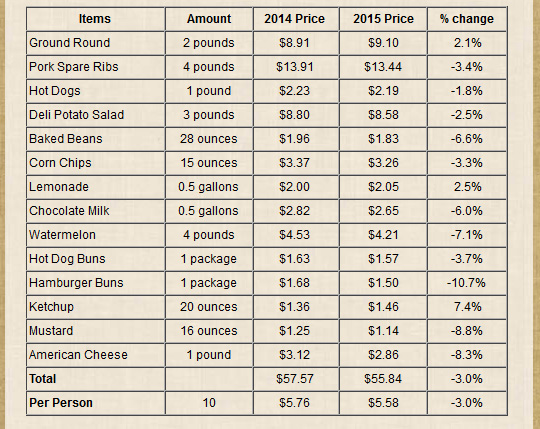
A Fourth of July cookout of Americans’ favorite foods including hot dogs, cheeseburgers, pork spare ribs, potato salad, baked beans, lemonade and chocolate milk will cost slightly less this year and still comes in at less than $6 per person, says the American Farm Bureau Federation.
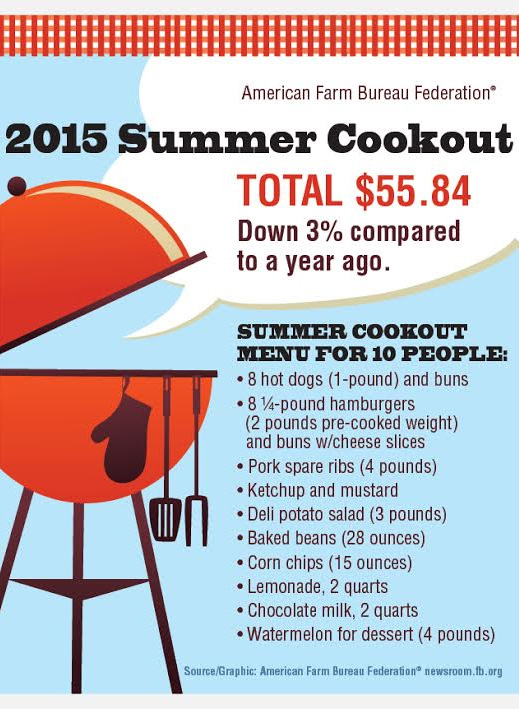 Farm Bureau’s informal survey reveals the average cost for a summer cookout for 10 is $55.84, or $5.58 per person. That’s about a 3-percent decrease compared to a year ago.
“Based on our survey, food prices overall appear to be fairly stable. Prices for beef have continued to increase this year, but prices for other meats are generally declining. Dairy product prices are also quite a bit lower,” said John Anderson, deputy chief economist at AFBF.
“Meat production is starting to increase substantially. Beef prices have started to stabilize but have not declined yet. On the other hand, retail pork prices have been declining all year,” Anderson said.
“Fuel and other energy prices have also generally been lower so far this year compared to last year,” Anderson said. “This helps keep prices down on the more processed items in the basket. Energy is an important component of the final price for these products.
“As a nation, we continue to enjoy a consistent, high-quality supply of meats and poultry at prices that are remarkably affordable for most consumers,” he said.
AFBF’s summer cookout menu for 10 consists of hot dogs and buns, cheeseburgers and buns, pork spare ribs, deli potato salad, baked beans, corn chips, lemonade, chocolate milk, watermelon for dessert, and ketchup and mustard.
A total of 88 Farm Bureau members (volunteer shoppers) in 30 states checked retail prices for summer cookout foods at their local grocery stores for this informal survey.
The summer cookout survey is part of the Farm Bureau marketbasket series which also includes the popular annual Thanksgiving Dinner Cost Survey and two “everyday” marketbasket surveys on common food staples Americans use to prepare meals at home. A squad of Farm Bureau members across the nation checks retail prices at local grocery stores for the marketbasket surveys. AFBF published its first marketbasket survey in 1986.
One Injured In Hwy 29 Crash
July 3, 2015
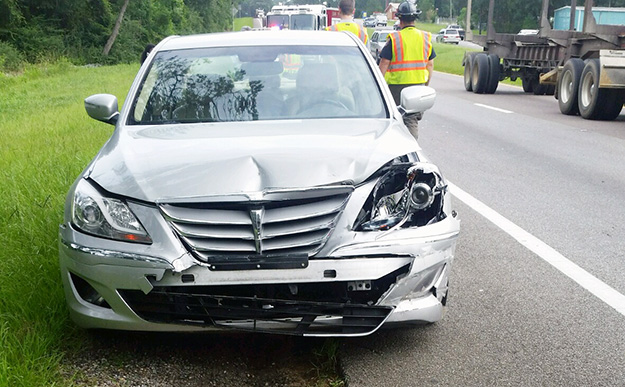
One person was injured in a two vehicle crash about 9:00 Friday morning on Highway 29 north of Kingsfield Road. A newborn baby in the pictured vehicle was properly restrained and uninjured. Further information has not been released by the Florida Highway Patrol. NorthEscambia.com photo by Kristi Price, click to enlarge.
Northview’s FFA Named One Of Florida’s Finest; Places Second In Advocacy Program
July 3, 2015
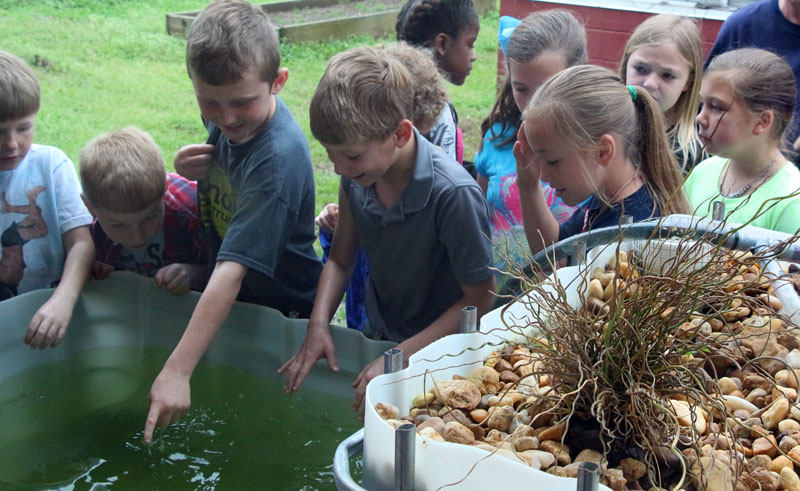
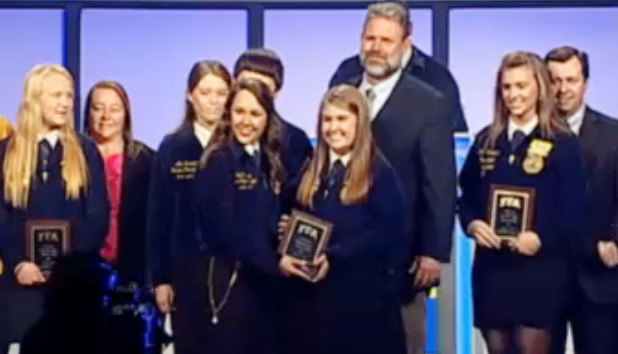
The Northview High School FFA was named as one of Florida’s Finest FFA Chapters, and the chapter’s “Fresh From Florida Advocacy Program” was named the second best program in the state during the FFA state convention this week in Orlando.
The selection of Florida’s Finest FFA Chapters is based upon the completion of the National Chapter Award program application. These chapters have excelled in the areas of student, chapter and community development and have worked hard to fulfill the mission of the FFA. Northview’s FFA chapter will represent Florida at the national level in the National Chapter Award Program later this year in Louisville, KY.
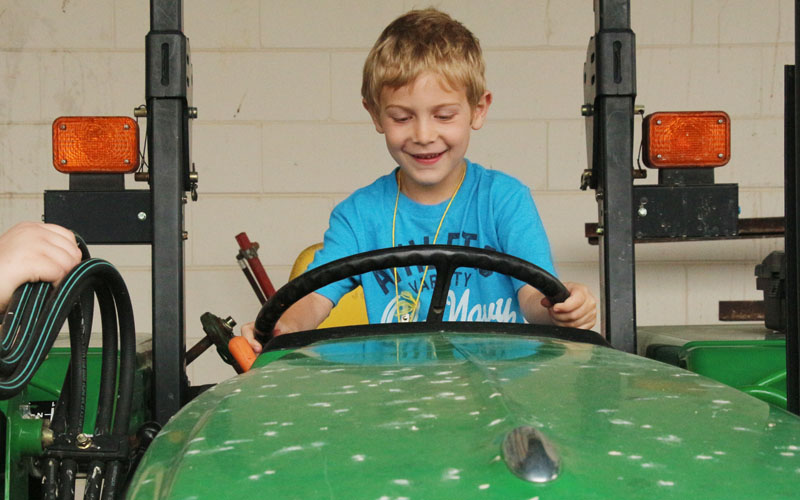
 Formerly known the Food for America program, the Fresh from Florida Advocacy Program is designed to encourage FFA members to participate in agricultural literacy and awareness projects on the local level. The annual program, conducted by the Northview FFA in March, gave over 1,000 students a chance to learn about agriculture firsthand as they got up close and personal with farm animals, farm equipment and more. The students even had the opportunity to make their own butter and enjoy it on crackers.
In addition to their second place state award this year, the Northview High School FFA “Fresh From Florida” program was previously honored as the best in Florida for three consecutive years.
Pictured above and below: The Fresh from Florida program last March at Northview High School. NorthEscambia.com photos, click to enlarge. Pictured inset: The Fresh from Florida Advocacy Awards at the state FFA convention in Orlando on Thursday.
Four Cantonment Residents Injured In Five-Vehicle Interstate Crash
July 3, 2015
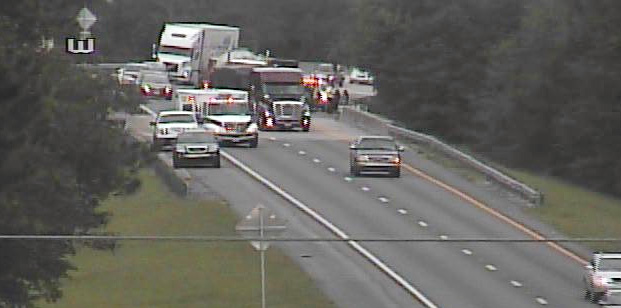
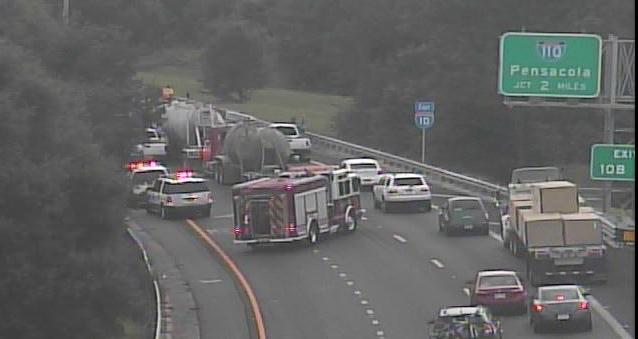
Two Cantonment residents received minor injures in a five-vehicle pileup on I-10 Thursday.
The Florida Highway Patrol said 47-year old Guy Richard Patrick Malonzo of Pensacola was eastbound on I-10 near the Highway 29 exit when he failed to stop his 2005 semi-truck before hitting a 2010 Ford F150 that was slowed for traffic. After Malonzo struck the F150, it caused the multi-vehicle pileup.
The driver of the F150, 41-year old Carol Tyler Allen of Cantonment, and passengers – 10-year old Brady Allen, eight-year old Gavin Gay, and eight-year old Mallory Gay, all of Cantonment – were transported to Sacred Heart Hospital in Pensacola with minor injuries. Malzon0 and the persons involved in the crash were uninjured.
Malzono was cited for careless driving. Another driver involved in the crash, 17-year old Perla Ortiz-Cruz, was cited for no driver’s license.
The 9:58 crash closed I-10 for most of an hour, according to the FHP.
Pictured: Traffic cameras partially show a five-vehicle crash and traffic backup Thursday on I-10 at Highway 29. Courtesy images for NorthEscambia.com, click to enlarge.
Florida Gets $3 Billion In BP Settlement; Escambia To See $58 Million In RESTORE Funds
July 3, 2015
Florida will land about $3.25 billion as part of a multi-state federal settlement with BP over widespread damages caused by the 2010 Deepwater Horizon disaster.
Florida stands to receive $2 billion for economic damages, the most of any Gulf Coast state, and $680 million for restoration projects. The deadly explosion aboard the Deepwater Horizon drilling rig and ensuing massive spill affected the environment, tourism and the fishing industry along the Gulf of Mexico but its effects rippled throughout the state.
Florida is also in line for $572 million as part of the 2012 Resources and Ecosystems Sustainability, Tourist Opportunities, and Revived Economies of the Gulf Coast States (RESTORE) Act, with that figure potentially growing to $1.25 billion. Escambia County is expected to receive at least $58 million in RESTORE funds over the next several years. That money is in addition to the $10.5 million Escambia County was already set to receive.
The deal announced Thursday requires London-based BP to pay $18.5 billion in economic and natural resources damages to the five Gulf Coast states affected by the disaster, which pumped at least 3.9 million gallons of oil off the coastlines of Alabama, Florida, Louisiana, Mississippi and Texas.
Sen. Don Gaetz, who as Senate president pushed for the creation of a consortium to oversee the bulk of the settlement funds, said the money will help boost economic development throughout the Panhandle, now largely reliant on tourism and the military industry.
“This could be game changer,” said Gaetz, a Republican from Niceville. “Just as the Deepwater Horizon was the worst economic disaster to befall our area, this settlement could be the best economic opportunity in our times. This kind of money allows you to build out our current economy in northwest Florida, as well as being able to development entire economic sectors that don’t exist today.”
Triumph Gulf Coast Inc., a non-profit corporation created by the Legislature in 2013, will manage 75 percent of the economic damages money. Triumph, set up to help the eight Panhandle counties most economically impacted by the spill, is expected to award the money over 30 years for recovery efforts. The legislature will distribute the remaining 25 percent.
“This agreement will help Florida implement key projects and invest in environmental priorities to keep our state beautiful,” Gov. Rick Scott said in a release.
Under the agreement, Florida will receive an initial payment of $400 million next year, with subsequent disbursements of about $100 million annually through 2033.
The governor’s office and other state environmental agencies deferred to the attorney general’s office when asked how the state would use the money.
“We will be working closely with our partner agencies to determine the next steps moving forward,” Florida Fish and Wildlife Conservation Commission spokeswoman Katie Purcell said.
Attorney General Pam Bondi announced the settlement during a press conference at the Port of Tampa Bay on Thursday.
Environmentalists, still reeling from how the Legislature divvied up voter-approved water and land conservation money for the new budget year, are hopeful that the BP cash will be used appropriately as it’s slowly dispersed over the next two decades.
With $2 billion earmarked for economic recovery efforts, Audubon Florida Executive Director Eric Draper said that the remainder of the spending should be steered toward environmental projects.
“Although Florida wasn’t impacted by that much oil, we have significant amount of environmental degradation associated with water quality problems and even lack of fresh water flow,” Draper said. “This money could be spent anywhere from the Caloosahatchee River all the way to the Panhandle.”
The agreement — potentially the largest environmental settlement in U.S. history — is “an unprecedented opportunity to accelerate and expand the response to the devastating harm caused by the spill, and to build lasting resilience into the essential ecosystems of the Gulf,” a group of national and local environmental organizations said in a joint press release.
“While we await key details, one thing is clear: As soon as the settlement is final, it will be time to put that money to work,” the statement from the Environmental Defense Fund, National Wildlife Federation, National Audubon Society, Ocean Conservancy, The Nature Conservancy, Coalition to Restore Coastal Louisiana and Lake Pontchartrain Basin Foundation said.
Business lobbying groups also hailed the settlement.
“Five years after the Deepwater Horizon oil spill, we still do not know the extent of the damage done to the Gulf, however this is a first step in making our industry whole,” Carol Dover, president and CEO of the Florida Restaurant and Lodging Association, said in a press release.
BP, which has spent more than $20 billion responding to the spill and claims, saw its value drop by a third after the maritime disaster.
The agreement is “a path to closure for BP and the Gulf,” BP Chairman Carl-Henric Svanberg said in a statement.
“It resolves the company’s largest remaining legal exposures, provides clarity on costs and creates certainty of payment for all parties involved,” Svanberg said. “In deciding to follow this path, (BP) has balanced the risks, timing and consequences associated with many years of litigation against its wish for the company to be able to set a clear course for the future.”
In April 2013, Bondi filed a lawsuit against BP Exploration & Production Inc., BP America Production Co., and Halliburton Energy Services, Inc., seeking $5.48 billion for lost revenue — past and future — from the Deepwater Horizon oil spill.
The lawsuit sought actual and potential lost tax revenue caused by the spill. Bondi filed the lawsuit after the company ignored a settlement offer.
Thursday’s announced settlement with BP doesn’t end the state’s lawsuits against rig owner TransOcean and contractor Haliburton Energy Services. The agreement also doesn’t help those who opted out of a 2012 class action settlement to pursue individual property damage and medical claims.
The portion of the settlement dealing with the economic loss claims still requires final approval from all of the parties involved, and a consent decree dealing with natural resources damages and Clean Water Act claims will require court approval.
by Jim Turner, The News Service of Florida. NorthEscambia.com also contributed to this report.
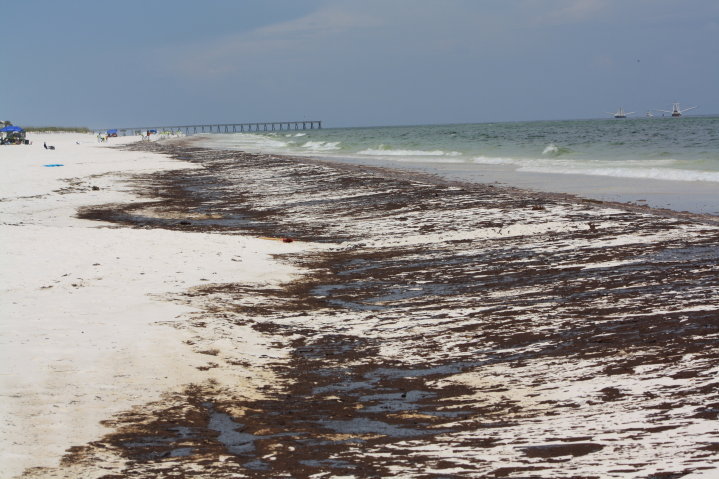
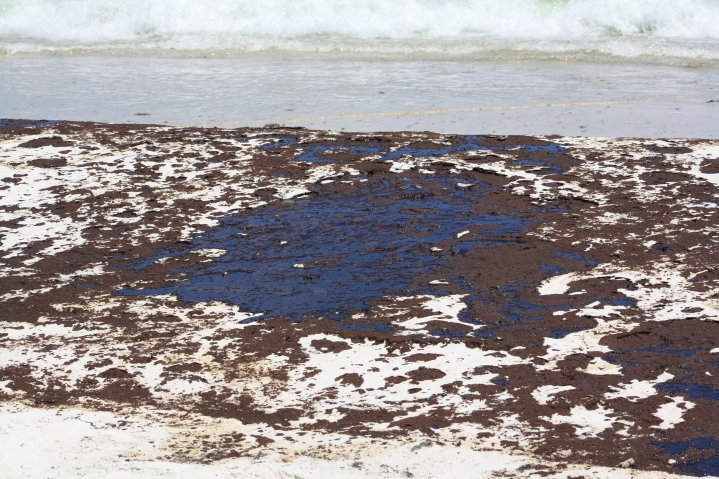
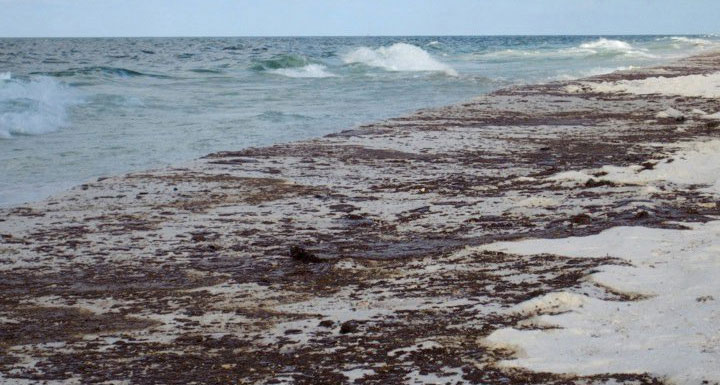
Pictured top and insets: Oil on Pensacola Beach. Pictured below: Protective oil boom in Pensacola Bay. NorthEscambia.com photos, click to enlarge.
West Florida Library Summer Reading Program Continues
July 3, 2015
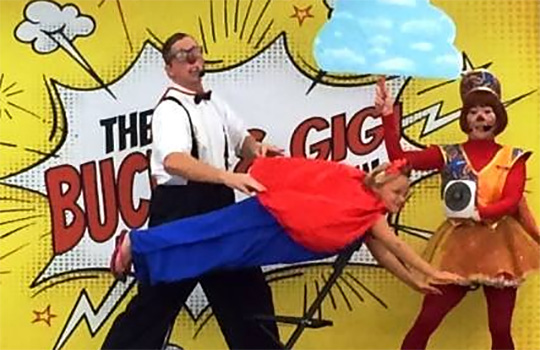
Young readers learned from Bucky & Gigi during the West Florida Library’s Summer Reading Club Programs. Bucky & Gigi provided a fun, fast-paced show using physical comedy, circus skills, mime, magic, improvisation and lots of audience participation.
The Summer Reading Program, for children ages 0-17, will continue at the West Florida Library as follows:
Mark Seymour
This interactive percussion extravaganza encourages children to believe in themselves.
- Tuesday, July 7, 10:30 a.m. – Southwest Branch, Big Lagoon State Park
- Tuesday, July 7, 3:30 p.m. – Westside Branch, held at the Main Library
- Wednesday, July 8, 11 a.m. – Century Branch
- Wednesday, July 8, 3:30 p.m. – Main Library, Meeting Room A
- Thursday, July 9, 10:30 a.m. – Molino Branch, Auditorium
- Thursday, July 9, 3:00 p.m. – Tryon Branch, Meeting Room A
Pensacola State Gymnastics
This PSC youth gymnastics team will flip, tumble and entertain in a display of athletic fitness at its finest.
- Tuesday, July 14, 10:30 a.m. – Southwest Branch, Big Lagoon State Park
- Tuesday, July 14, 3:30 p.m. – Westside Branch, held at the Main Library
- Wednesday, July 15, 11 a.m. – Century Branch
- Wednesday, July 15, 3:30 p.m. – Main Library, Meeting Room A
- Thursday, July 16, 10:30 a.m. – Molino Branch, Auditorium
- Thursday, July 16, 3:00 p.m. – Tryon Branch, Meeting Room A
Magic with Russell Davis
This humorous magician uses tricks and comedy to encourage a love of reading.
- Tuesday, July 21, 10:30 a.m. – Southwest Branch, Big Lagoon State Park
- Tuesday, July 21, 3:30 p.m. – Westside Branch, held at the Main Library
- Wednesday, July 22, 11 a.m. – Century Branch
- Wednesday, July 22, 3:30 p.m. – Main Library, Meeting Room A
- Thursday, July 23, 10:30 a.m. – Molino Branch, Auditorium
- Thursday, July 23, 3:00 p.m. – Tryon Branch, Meeting Room A
Superhero Wrap Up Party
Celebrate a super summer with crafts, face painting, snacks and prizes.
- Tuesday, July 28, 10:30 a.m. – Southwest Branch, Big Lagoon State Park
- Tuesday, July 28, 3:30 p.m. – Westside Branch, held at the Main Library
- Wednesday, July 29, 11 a.m. – Century Branch
- Wednesday, July 29, 3:30 p.m. – Main Library, Meeting Room A
- Thursday, July 30, 10:30 a.m. – Molino Branch, Auditorium
- Thursday, July 30, 3:00 p.m. – Tryon Branch, Meeting Room A
Pictured: Bucky & Gigi perform Thursday morning at the Molino Branch Library. Photo for NorthEscambia.com, click to enlarge.
Escambia Insurance Agent Sentenced For Selling Fake Policies To NBA, NFL Players
July 3, 2015
An Escambia County insurance agent was sentenced to federal prison today for defrauding athletes by selling them fake insurance policies.
Kevin D. Webster, 44, was sentenced Thursday to 21 months in prison for wire fraud, and hew as ordered to pay $144,229.07 in restitution.
During his guilty plea in February 2015, Webster admitted that, between 2008 and 2012, as an insurance agent registered in Florida and other states, he knowingly defrauded NFL and NBA player clients by falsely representing that he had used the clients’ money to obtain umbrella insurance policies, with coverage amounts ranging from $5 million to $1 million, from United States Liability Insurance Group. Instead, Webster stole approximately $140,000 in client payments meant for policy premiums.
The case was investigated by the Federal Bureau of Investigation and the Florida Department of Financial Services.