

Top Ten Legislative Issues At The Halfway Point
April 2, 2015
As Florida lawmakers prepared last month to start the 60-day legislative session, 10 big issues popped out as priorities. Typically, big issues get resolved in the final weeks, days and hours of legislative sessions. But as the session hit its halfway point Wednesday, here is an update about where those 10 issues stand:
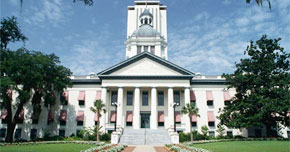 BUDGET: It’s been called a chasm. As the House and Senate prepare to enter budget negotiations later this month, they are more than $4 billion apart on their spending plans. Ordinarily, this would be a good budget year, as lawmakers have a more than $1 billion surplus. But lawmakers face uncertainty about the future of a nearly $2.2 billion health-care program, known as the Low Income Pool, which is scheduled to expire at the end of June. The state is trying to negotiate an extension of the program with the federal government. But the uncertainty is causing ripples throughout the budget, including playing a major role in the divide between the House and Senate.
CHILD WELFARE: Last year, after a series of child deaths, the Legislature passed a wide-ranging law aimed at reforming Florida’s child protection system. This year’s session started after the shocking death of a child who was dropped off a bridge into Tampa Bay. After holding hearings, the House and Senate have moved forward with proposals that would build on the 2014 law. As an example, lawmakers are proposing a requirement that services to maltreated children be based on what is known as “trauma-informed care,” a more child-centered approach. As another example, a House bill would expand the role of the state’s Critical Incident Rapid Response Team, which the secretary of the Department of Children and Families can deploy in cases of child deaths.
GAMBLING: The House and Senate have long disagreed about gambling. Usually, the Senate has wanted expanded gambling, while the more-conservative House has refused to go along. But this year, the roles have been reversed. House Majority Leader Dana Young, R-Tampa, proposed a sweeping plan that, in part, would allow up to two Las Vegas-style casinos in Miami-Dade and Broward counties and allow slot machines at greyhound tracks in Palm Beach County and Southwest Florida. But Young said she doesn’t even know if her plan will get a vote. The Senate, meanwhile, has negotiated with the Seminole Tribe of Florida on part of a deal that is scheduled to expire this summer. But with Senate President Andy Gardiner an adamant foe of gambling, the Senate doesn’t appear willing to take up more far-reaching changes. Lawmakers, however, face pressure to reach agreement with the Seminoles. The deal involves $116 million a year the state receives for allowing the tribe exclusive rights to offer games such as blackjack at its casinos.
GUNS: Republican lawmakers have rallied behind the Second Amendment during this year’s session. The GOP-controlled Legislature appears ready to approve a plan that would expand the number of people who could carry concealed weapons during emergency evacuations. The Senate has already passed the plan, which would allow lawful gun owners who don’t have concealed-weapons licenses to carry firearms during such evacuations. Committees in both chambers, meanwhile, also have approved bills that would allow people with concealed-weapons licenses to carry guns on the campuses of state colleges and universities. University-system officials oppose the campus gun bill, which is being considered after a shooting incident in November at Florida State University that left three people wounded.
HEALTH CARE: As happens every year, lawmakers are considering dozens of bills dealing with health-care issues. But all of those issues pale compared to the future of the Low Income Pool program and a Senate attempt to expand health coverage to about 800,000 low-income and uninsured people. Both the House and the Senate want to reach agreement with the federal government on an extension of the Low Income Pool, though only the Senate has included the program in its budget plan. But the Senate’s proposal to use money available under the federal Affordable Care Act to expand health coverage has split the chambers. The Senate plan would use a private health-insurance system to provide the coverage, trying to draw a distinction with a straight expansion of the Medicaid program. But House Republican leaders have shown no sign that they are willing to accept billions of dollars in federal money to expand coverage.
LAND AND WATER: Lawmakers came into the session with an extra mandate on their plates. Voters in November approved a constitutional amendment requiring the Legislature to set aside hundreds of millions of dollars a year for land and water projects. Both chambers have moved forward with plans, but backers of the constitutional amendment contend lawmakers are not spending enough money on buying land for preservation. Leaders in both chambers say they are following the requirements of the constitutional amendment and that the state needs to focus on managing vast amounts of land that it already owns. Meanwhile, the House and Senate need to work out details of a water-policy plan, which is a key priority of House Speaker Steve Crisafulli, R-Merritt Island.
PRISONS: Senate Criminal Justice Chairman Greg Evers, R-Baker, has spent the past few months digging into problems in the Florida Department of Corrections, making unannounced visits to prisons and taking sworn testimony during a committee meeting. That led the Senate on Wednesday to approve a wide-ranging plan aimed at cleaning up problems in the prison system, which has been rocked by investigations into inmate deaths, allegations of cover-ups and complaints about poor working conditions. But the House and Senate still need to reach agreement on reforms. One major difference is that the Senate wants to create a commission that would have the power to conduct investigations at prisons. The House does not support such an idea.
STADIUMS: For an issue involving sports stadiums that regularly fill up with tens of thousands of screaming fans, things have been quiet. Very quiet. Lawmakers are faced with deciding whether to spend sales-tax dollars on projects at EverBank Field in Jacksonville, Daytona International Speedway, Sun Life Stadium in Miami-Dade County and an Orlando soccer stadium. The issue could have been resolved in February, but it was pushed into the session. But so far, there have not been any visible signs of debate on the issue. That’s not to say the issue won’t emerge in the closing weeks. If nothing else, Gardiner, R-Orlando, has made clear he supports tax dollars for the soccer stadium in his hometown.
TAX CUTS: Gov. Rick Scott, who made cutting taxes a signature issue in his 2014 re-election campaign, rolled out an ambitious proposal early this year to slash $673 million in taxes. But the House has one-upped him. It is considering a $690 million tax-cut package. The House and Scott agree on some major cuts, such as a $470 million reduction in the communications-services tax on cell-phone bills and cable and satellite television. But the House also wants to add cuts such as trimming taxes on commercial real-estate leases. The Senate has moved some individual tax-cut bills but has not offered a major package amid the overall budget uncertainty.
TESTING: School testing was already shaping up to be a controversial issue this year. But in early March, technology problems caused widespread problems as students started taking the new Florida Standards Assessments. That has added even more fuel to a debate about whether students and teachers are overloaded with standardized tests and whether the testing system is reliable. The House and Senate have moved forward with bills to address testing issues. Proposals, for example, include eliminating an 11th-grade language arts test and barring final exams in classes for which the state or a local school district has end-of-course tests. But lawmakers are facing pressure to take more-dramatic steps, amid questions about the validity of the testing system.
by Jim Saunders, The News Service of Florida
New Florida EBT Cards In The Mail
April 2, 2015
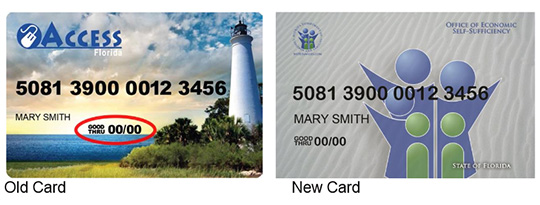
Florida ACCESS EBT (Electronic Benefit Transfer) cards will begin expiring April 30 and replacement cards with a new design will be mailed to those receiving benefits. The “Good Thru” date printed on the front of the card indicates when the card is no longer valid – the last day of the month presented. Recipients should expect replacement cards to arrive by the 20th of the month that the card is scheduled to expire.
New EBT cards are activated prior to mailing and are ready for use as soon as they are received. After completing a transaction with a new card, former cards will automatically deactivate and can then be disposed of. Existing PIN numbers will remain the same.
Customers who’ve had a change of address since the last application or renewal of benefits was received should log into their MyACCESS Account at www.myflorida.com/accessflorida and report a change of address. This will ensure the new card is mailed to the correct address.
For more information and assistance with replacement cards visit, www.myflorida.com/accessflorida, or call EBT Customer Service at 888-356-3281
Looking For A Spring Break Outdoor Adventure? Try One Of These Ideas
April 2, 2015
by Carrie Stevenson, Escambia County Extension
This time of year, many families are looking for ways to entertain their kids during spring break. For those not planning to travel far, our area is full of fun, and often inexpensive, outdoor adventures.
As part of a series of field excursions led by Extension Agents over the past few years, we’ve been able to introduce visitors and lifelong residents of the panhandle to some tremendous natural resources that are right at our back door. Following are three examples of family friendly trips worth marking off your “Florida bucket list”.
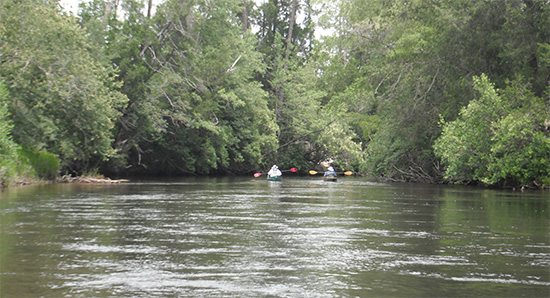
Perdido River: the natural border between Alabama and Florida, the Perdido stretches over 65 miles from its source near Atmore, Alabama and ends up at Perdido Key in the Gulf. Clean, clear, and sandy-bottomed, the Perdido River is a perfect spot to tube, kayak, canoe or paddleboard and several local outfitters can provide equipment. While on the river, you might experience a flyover from a bald eagle, see towering bald cypress, or explore shallow backwater springs and swamps.
Further east is Florida Caverns State Park in Marianna. This region is one of the most biodiverse in the state, with endemic tree species—like the Florida Torreya, found only in three counties in the state—along with many hardwood species found more typically in the central Appalachians. The extensive limestone cavern and spring systems in Jackson County are home to beautiful swimming/diving spots as well as the caverns. The ranger-led tours are excellent, as well as the hiking trails within the park grounds. The cave tour takes about an hour and is mildly strenuous. There are no tours on Tuesday or Wednesday, so keep this in mind when planning a visit.
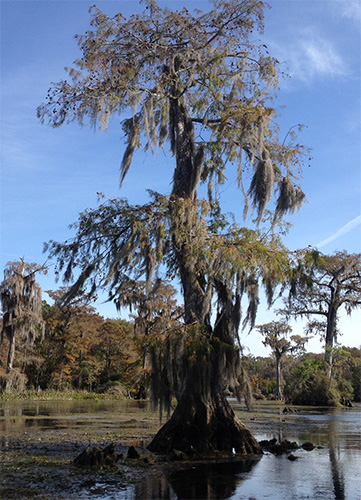 At the edge of our district is Hollywood-famous Wakulla Springs. Film site for both “Tarzan” and “Creature from the Black Lagoon”, the spring teems with wildlife year-round. A guided tour via pontoon boat will bring you up close to manatees, alligators, ospreys, anhingas, and large herons. Hiking trails, a swimming hole, and the historic lodge and restaurant are open to visitors as well. The nearby Chipola River is also a beautiful spot to paddle.
Every county in the Florida panhandle has tremendous water resources, from the Gulf to inland rivers and even waterfalls. Take time to explore on your days off this spring.
For more information, contact Coastal Sustainability Agent Carrie Stevenson at 850-475-5230 or ctsteven@ufl.edu.
Pictured top: Canoeing on the Perdido River. Pictured inset: Bald cypress trees at Wakulla Springs State Park. Photos by Carrie Stevenson for NorthEscambia.com, click to enlarge.
Downed Power Line Sparks Fire, Leaves Hundreds Without Electricity
April 2, 2015
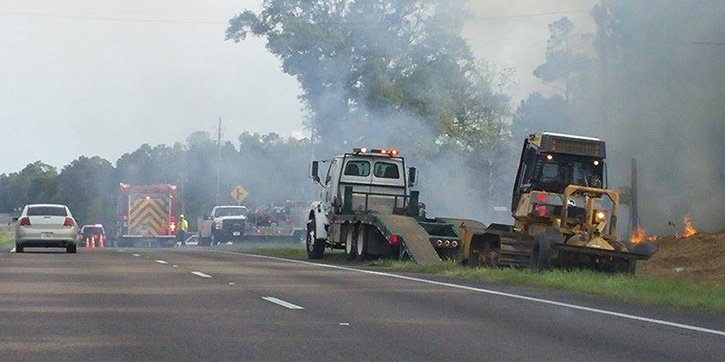
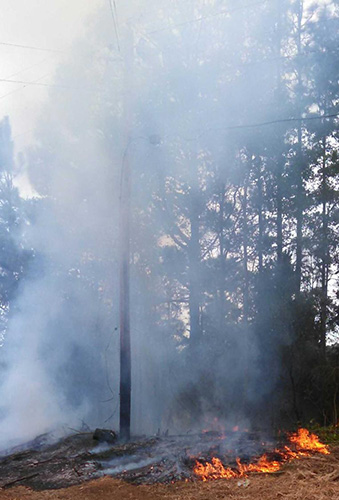
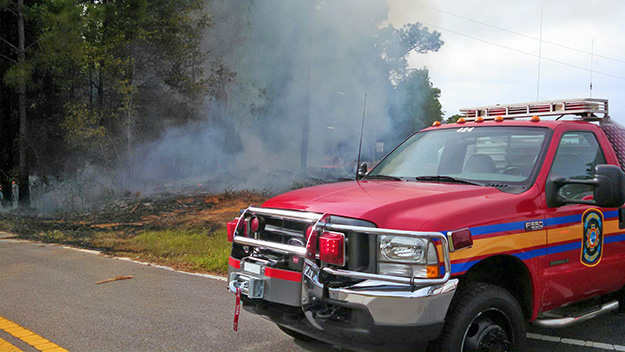
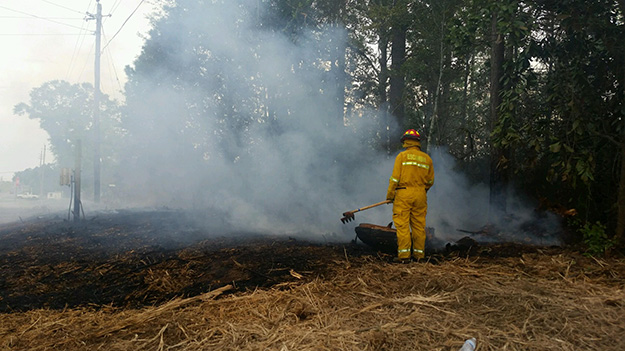
A downed power line in Cantonment sparked a brush fire and set a power pole on fire Wednesday afternoon, leaving 207 homes and businesses without electricity for over eight hours. An equipment operator reportedly cut the line while trimming trees along the utility right of way near Cantonment Building Materials. There were no injuries. Power was restored to all Gulf Power customers by just after midnight.
NorthEscambia.com photos by Kristi Price and reader submitted photo (top) by Haley Smith, click to enlarge.
Century Partners With UWF To Develop Marketing Plan
April 1, 2015
Century is taking part in a University of West Florida program to work with UWF marketing professors to develop a marketing plan that will help the Century community develop its business assets and promote them to site selectors and companies looking to expand or relocate.
Century and the Community Economic Development Association for Escambia County are the first participants in the UWF Office of Economic Development and Engagement’s Northwest Florida Asset Valuation and Marketing Support Program.
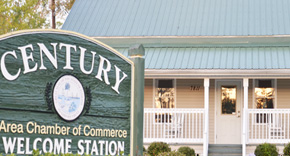 “We are very pleased to have the Town of Century and the Community Economic Development Association partner with the UWF Department of Marketing and Economics to produce a comprehensive marketing strategy for the town,” said Brice Harris, director of strategic initiatives for OEDE. “This is exactly the type of project that we envisioned when launching the Asset Valuation and Marketing Support Program, and so we are delighted to provide funding to support this important initiative.”
Century Mayor Freddie McCall said the town is excited to work with UWF faculty.
“The town is very appreciative of these partners in helping the town to move toward achievement of its vision to be the model for rural economic redevelopment, excelling in cultivating its workforce, facilitating the growth of regional industry and enhancing the quality of life for its residents and the surrounding communities,” McCall said.
Likewise, UWF faculty members look forward to working with economic development officials in Century.
“The Town of Century has a wonderful story to tell, and we would like to help tell that story to a wider audience,” said UWF associate professor Stephen LeMay. “Century has a history, access to wilderness areas and a strong logistics infrastructure. Those things, among others, should not be secrets.”
UWF associate professor Felicia Morgan said the partnership will provide an opportunity for her to use her marketing skills to help Escambia County grow and prosper.
“The Town of Century and the area around it hold so much potential for human and economic development, and I hope that our work on the marketing plan will be a spark for that engine,” she said. “In short, this is simply an incredibly worthwhile endeavor that I think will be both challenging and fun.”
Century has much that makes it an attractive place to grow or expand a business, said UWF professor Scott Keller.
“It is clear that the Town of Century has many jewels that when promoted to the public will be of great interest to a variety of consumer and industrial target market segments,” Keller said. “It is a pleasure to collaborate with the people of Century, and help the city build a successful marketing plan.”
Launched in February, the $250,000 Northwest Florida Asset Valuation and Marketing Support Program provides participants with funding to help offset the cost of hiring UWF faculty, staff and students to conduct market studies, create promotional campaigns and deliver other services that enhance the marketability of locales and geography-based assets in Northwest Florida.
Individual awards can be no larger than $20,000, and participating organizations must contribute at least $1 for every dollar awarded through the program.
The program is not open to for-profit organizations. OEDE will continue to accept applications until all the money allocated to the program is used.
Texting While Driving Targeted In Florida Senate
April 1, 2015
A Senate committee Tuesday narrowly approved two bills that would strengthen the state’s ban on texting while driving. The Senate Communications, Energy and Public Utilities Committee voted 5-3 to approve the bills by Sen. Thad Altman, R-Rockledge, and by Sen. Maria Sachs, D-Delray Beach.
 Both bills would lead to enforcement of texting while driving as a “primary” offense — meaning police could pull over motorists for texting behind the wheel. Currently, police can only cite motorists for texting while driving if they are pulled over for other reasons. The bills were considered separately because Sachs’ proposal also would double fines for texting while driving in school zones or at designated school crossings.
“Texting and driving kills people,” Sachs said. “That’s the bottom line.”
The committee, however, voted 5-3 to reject a proposal by Sen. Darren Soto, D-Orlando, that would make it a felony if motorists are texting while driving and cause fatal accidents. Also, the committee approved a proposal by Sen. Geraldine Thompson, D-Orlando, that would ban the use of cell phones while driving in school zones, at designated school crossings or on school-district property.
House versions of the Altman, Sachs and Thompson bills have been filed but have not been heard in committees.
by The News Service of Florida
Florida House Keeps Guns, Ammo In Proposed Sales Tax Holiday
April 1, 2015
Guns and ammunition remain in a proposed Independence Day sales-tax holiday on hunting gear that is part of a wide-ranging tax cut package that advanced Tuesday in the House.
In supporting the $690 million tax-cut package (PCB FTC 15-05), the House Finance & Tax Committee rejected efforts by Democrats to remove firearms and ammo from a proposed one-day sales tax holiday for July 4. Also, it rejected a separate amendment to remove a tax exemption on admissions and membership fees for gun clubs.
 The tax package, which is expected to next go to the House Appropriations Committee, awaits a Senate counter offer.
“I think we’ve got a great broad-based tax package that’s going to help millions of Floridians, all 20 million of them,” said House Finance & Tax Chairman Matt Gaetz, R-Fort Walton Beach.
Rep. Jose Javier Rodriguez, D-Miami, sought to remove firearms and ammo from the Independence Day tax holiday. He said the proposal sends mixed messages, as law enforcement will be telling people at the same time not to fire guns into the air.
“It’s not an exaggeration to say that it really is a bad policy when we have law enforcement expending resources to address a public safety issue and in our tax code he have the exact opposite incentive and we’re encouraging people to purchase ammunition for the holiday,” Rodriguez said.
But Rep. Frank Artiles, R-Miami, said the proposal could help increase tourism by promoting hunting and fishing in the state.
In addition to rifles, shotguns, spearguns, crossbows, and bows, the July 4 sales-tax event would cover camping tents and fishing gear.
“While I understand my Democratic colleagues don’t like firearms and ammunition, the reality is that fish hooks also kill fish,” Artiles told Rodriguez. “But apparently fish are not important to you.”
National Rifle Association lobbyist Marion Hammer called the Fourth of July tax holiday “tremendously appropriate.”
“On Independence Day honoring our founding fathers, who used firearms and ammunition to purchase our freedom, is not only symbolic, it is a tribute to the patriots who carried firearms and ammunition against our enemies and built our new nation,” Hammer said.
The committee, in being asked to consider 15 amendments to the tax plan, agreed to a couple of minor changes, including one that would maintain a tax credit for groups such as Habitat for Humanity and Building Homes for Heroes when those projects are within areas of former enterprise zones.
Lawmakers are allowing the reauthorization of enterprise zones to die at the state level, Artiles said.
The Senate, which continues to review individual bills offering tax cuts and business incentives, has held off on introducing a tax package as Florida continues to negotiate with the federal government over funding for the Low Income Pool program. The program helps pay for health care for low-income and uninsured patients.
Katie Betta, a spokeswoman for the Senate President Andy Gardiner, said in an email Tuesday that no timetable has been set for the Senate’s tax-cut package.
The House tax-cut proposal is $17 million larger than a $673 million package requested by Gov. Rick Scott. Both packages are highlighted by a Scott proposal to reduce taxes on cell-phone and pay-TV bills by 3.6 percentage points.
The House package also includes such moves as eliminating sales taxes on college textbooks and cutting a tax on commercial-real estate leases from 6 percent to 5.8 percent.
The package also would lead to a three-day period starting July 31 when back-to-school shoppers would be able to avoid paying sales taxes on clothes and other school-related items. Also, the House has proposed a small-business tax holiday two days after Thanksgiving.
by The News Service of Florida
Mira Awards Honor Escambia County’s Most Creative High School Seniors
April 1, 2015
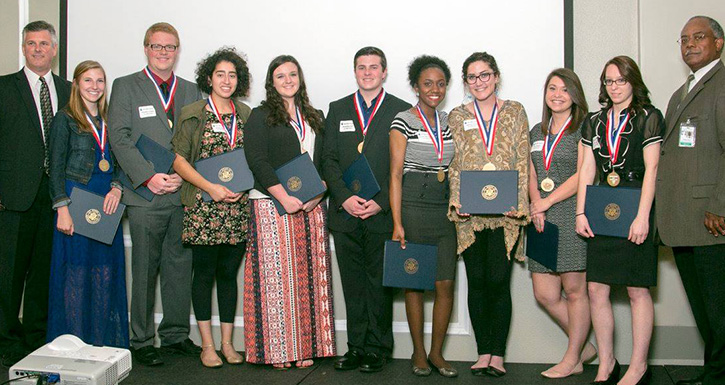
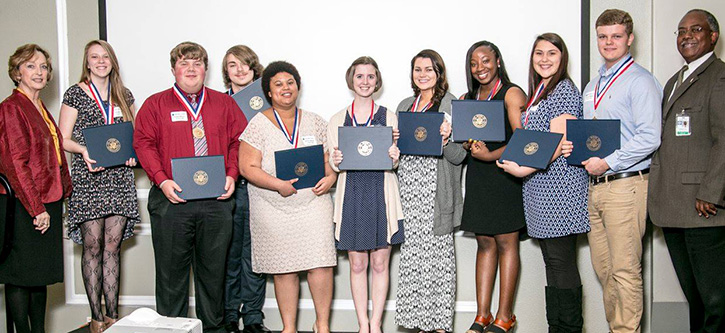
About 70 of Escambia County’s most creative high school seniors were honored recently during the 2015 Mira Creative Arts Awards Banquet at New World Landing.
Mira Creative Arts Awards recipients were nominated for the award by their high school teachers and will receive commemorative engraved medallions as well as Certificates of Special Congressional Recognition from Congressman Jeff Miller.
Northview High School
- Autumn Leanna Ates, Visual Arts
- Tristan Brown, Theatre
- Ryan Chavers, Prose Writing
- Desiree Elliard, Prose Writing
- Julie Hester, Dance
- Jessica L. McCullough, Graphic Design
- Natassja Scott, Visual Arts
- Shania Lynn Ward, Graphic Design
- Tristan Williams, Instrumental Music
Tate High School
- Sarah Colburn, Instrumental Music
- Chandler Cotton, Instrumental Music
- Reema Eqab, Fine Arts
- Jamie Hendren, Vocal Music
- Jacob Howard, Instrumental Music
- Abreona Nixon, Mock Trial
- Gabriele Pyron, Visual Arts
- Kara Rhodes, Photo Journalism
- Jessica Roser, Ceramics
- Kristin Wheeler, Drama
West Florida High School
- Delaney Anderson, Journalism
- Ashley Cobb, Theatre
- Addie Leah Davila, Graphic/Digital Design
- Katarina Dombek. Visual Arts
- Lewis Elliott, Musical Theatre
- Antonio (Kai) Estrada, Photography
- Dalton Kristopher Merritt, Instrumental Music
- Hannah Power, Visual Arts
- Kaitlyn Tran, Graphic/Digital Design
- Devin Walker, Instrumental Music
Pine Forest High School
- Taylor Erdman, Carpentry
- Jada Espinoza, Design Services
- Alesandra Fatcheric, Visual Arts
- Ashley Frye, Vocal Music
- Nathan Kirk, Visual Arts
- Tyler Meatte, Instrumental Music
- Bekah Potter, Yearbook
- Destiny Redd, Technical Theatre
- Shayanne Ridenour, Theatre
- Alyssa Webb, TV Production
Escambia High School
- Ryan Berg, Instrumental Music
- Charlotte Blessing, Digital Media
- Drew Coats, Visual Arts
- Holly Coker, Vocal Music
- Savannah Daw, Yearbook
- Melvini’Quie Gordon, Visual Arts
- Evan Dawn Harris, Theatre
- Josh Johnson, Instrumental Music
- Johnathan Pierce, Instrumental Music
- Kirsten Serene White-Wood, Culinary Arts
Pensacola High School
- Erik Blount-Douglas, Instrumental Music
- Claire Escobedo, Visual Arts
- Matthew Ferguson, Drama
- Chelsea Gay, Instrumental Music
- Dana Jaalouk, Photography
- Caroline Johnson, Instrumental Music
- Elizabeth Parra, Visual Arts
- Heather Sartain, Creative Achievement
- Anne Schultz, Drama
- Nigel Walden, Drama
Washington High School
- Kaleb Broom, Instrumental Music
- Aleina delaCruz, Drama
- Samantha Marie Johnna Earley, Visual Arts
- Hallie Rana Friedman, Drama
- Allison Leigh Fuller, TV Production
- A. J. Pryor, Vocal Music
- Stephanie Rosemore, Visual Arts
- Alicia Katherine Diane Umbreit, Vocal Music
- Natalie Williams, Nonfiction Writing
- Avion Wright, Instrumental Music
In 1987, a group of teachers at J. M. Tate High School created the Mira Awards to recognize talented and creative students in the arts and sciences. The following year, the committee approached the Escambia County Public Schools Foundation to bring the awards under its umbrella and to initiate county-wide student participation each year in the areas of writing, performing and visual arts, and other creative disciplines. The term “Mira” is Latin for the name of the brightest star in the constellation Cetus.
Pictured top: Mira Award winners from Tate High School. Pictured below: Northview High School Mira winners. Photos for NorthEscambia.com, click to enlarge.
Health Department To Offer Immunization Clinics For Kids In Century And Molino
April 1, 2015
 Mark your calendars….the Florida Department of Health Escambia County will hold three walk-in immunization clinics for children ages six weeks to 18 years in Molino and Century.
The clinics will be held at the Molino Service Center at 3470 Highway 29 on Thursday, April 23 and Thursday, May 21 from 9 a.m. until 3 p.m., and Wednesday, June 17 from 10 a.m. until 3 p.m. at Healthy Start in Century, 501 Church Street.
For more information call (850) 595-6500 ext. 1700.
State Colleges No More?
April 1, 2015
The battle over how far Florida colleges should be allowed to go in offering four-year degrees, once largely the responsibility of state universities, has spawned a new effort to more strictly limit those opportunities.
The newest measure is sponsored by Sen. Joe Negron, a Stuart Republican who could become Senate president after the 2016 elections and has worked before to limit college offerings that he says overlap with what four-year universities already provide.
“One of my goals over the next several years is to make our good universities great,” Negron said. “And you can’t find the funding to do that when you have unnecessary duplication of effort.”
Under Negron’s proposal, which was attached to an existing measure on higher education (SB 1252), colleges would have to give notice a year before they expect to start offering new four-year degrees, up from 60 days in the current law. It would cap at 5 percent the share of a college’s enrollment that could be made up of students pursuing baccalaureate degrees.
And in a shot to the marketing of the colleges — which used to be called “community colleges” — the institutions would no longer be allowed to use “state” in their names. Sixteen colleges would have their names changed to comply with that rule, in addition to Florida Gateway College being renamed Lake City College.
Negron said that part of the proposal would refocus the colleges on their regional missions. Each state college has an area of the state which it is supposed to serve spelled out in state law.
“As far as the use of the term ’state,’ it’s a misleading, inaccurate term,” he said. “When you say ‘Florida State College,’ that college does not serve all of Florida, it does not serve all the state.”
There has long been tension between colleges, which are overseen by the State Board of Education, and universities, which are managed by the Florida Board of Governors, about whether the Board of Education is too quick to grant four-year degrees to its institutions.
Last year, when he chaired the powerful Senate Appropriations Committee, Negron threatened to slash $3.5 million from state colleges and give it to universities to try to force a change. Senators also considered taking away the Board of Education’s authority over four-year degrees.
Eventually, lawmakers settled on a moratorium on new four-year programs at state colleges.
Negron’s new proposal would do away with that moratorium, as would a House bill (HB 7127) approved Tuesday by the House Education Appropriations Subcommittee. However, the House measure doesn’t have Negron’s further language about the colleges and four-year degrees.
A spokeswoman for the Florida Department of Education said through email that officials there “prefer to not comment on proposed legislation since it may change.”
Jim Henningsen, president of the College of Central Florida, speaking to a Senate committee last week on behalf of college presidents, said colleges were focused on the narrow goal of the original authority for them to offer four-year programs.
“Our goal in our system is to support exactly as you stated, that regional approach to economic development, workforce training in those areas. … There are some (situations) where universities as well as the colleges work together and find a baccalaureate solution that was needed for that specific region,” he said.
But there have been some concerns raised about the enrollment cap, which Negron has conceded might need to be modified. St. Petersburg College, which was one of the earliest schools to offer four-year degrees, now has about 12 percent of its students enrolled in those programs, according to senators.
Negron said he would be open to language capping that school’s four-year enrollment at 15 percent, along with other levels for colleges that already have more than 5 percent of their students pursuing those degrees. Institutions with less than 5 percent of their students in those programs might still face the lower cap.
Sen. David Simmons, R-Altamonte Springs, said he doesn’t want the proposal to come across as adversarial, highlighting especially the impact of striking “state” from the names of the colleges.
“That means that the students are the ones that end up bearing the brunt of this,” he said.
But Negron said he doesn’t believe the institutions would lose any prestige under his proposal, which would change the name of the system to the Florida Community College System but would give the schools themselves names without that term, like Daytona College.
“To me, let’s agree on the place of the community colleges in our overall educational system,” he said.
by Brandon Larrabee, The News Service of Florida