
Bond Set For Century Homicide Suspect; Trial Continued
May 20, 2015
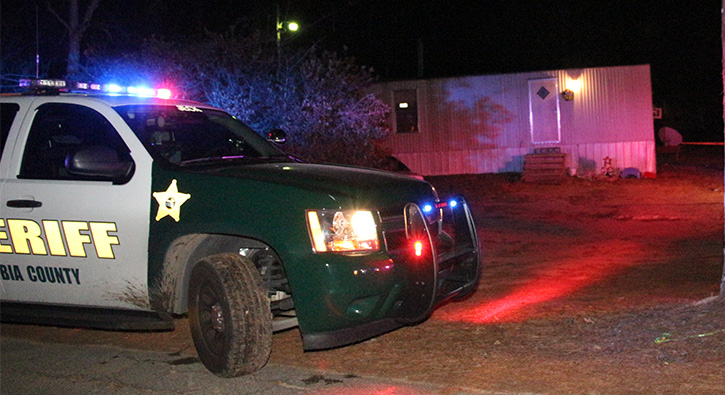
A Century man accused in a January 31 shooting death in Century was due to appear in court Tuesday, but his trial has now been continued and a bond amount has been set.
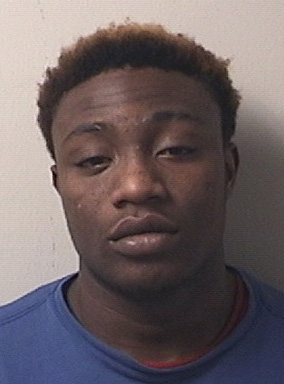 Jaran Britt Myles, 20, remains jailed on charges of negligent manslaughter and aggravated assault for the shooting death 20-year old Jonathan Wilson. Two counts of kidnapping originally filed against Myles have been dropped. His bond is now set at $260,000; he was previously being held without bond.
Myles is due to appear in court again in mid-July.
One witness told deputies that “Run Run”, later identified as Myles, pulled out a gun and asked him if he was scared of it before taking the magazine out of the weapon and pointing it him. Myles then pulled the trigger of the gun, without the magazine, but it “dry fired”, he said.
The witness said Myles then pointed the gun to Wilson’s head after loading the magazine back into the gun. Wilson then adjusted the height of the gun to his head, “correcting the placement of the gun pointed at him,” an arrest report states. The witness said when Wilson let go of the gun, Myles pulled the trigger and shot Wilson in the head.
Witness first told investigators that Myles then stuck the gun in a witness’ ribs then pointed it at a second witness, ordering the witness to drive him home. But that part of the witness’ story did not occur, Assistant State Attorney James Parker said, leading prosecutors to drop the kidnapping charges. The two witnesses did drive Myles away from the shooting scene to his nearby residence on Backwoods Road, but Myles never pointed a gun at them or forced them, Parker said.
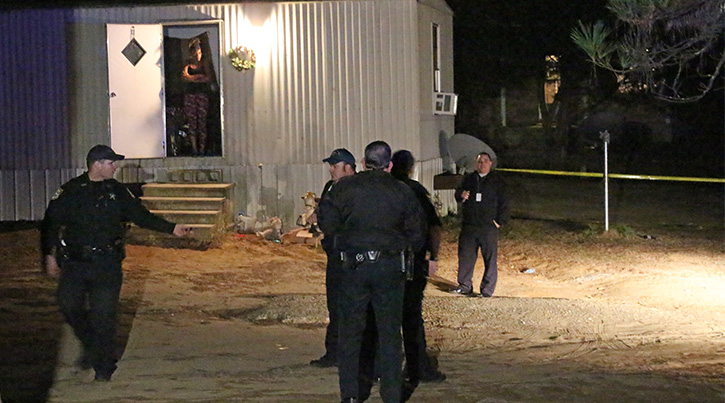 The State Attorney’s Office reached its conclusion after further interviews with witnesses, Parker said. At this point, there are no plans to file any charges against the witnesses.
Myles has pleaded not guilty to the charges against him.
NorthEscambia.com photos, click to enlarge.

Ernest Ward Middle Presents Year-End Academic Awards
May 20, 2015
Ernest Ward Middle School recently presented the following academic awards for the 2014-2015 school year:
Language Arts
- 6th Highest Academic Average – Amber Gilman
- 6th Most Improved – Madalin Roberts
- 7th Highest Academic Average – Ashlan Harigel
- 7th Most Improved – Aaliyah Pope
- 8th Highest Academic Average – Madison Kemp
- 8th Most Improved – Aurora McCann
Reading
- 6th Highest Academic Average – Libby Pugh
- 6th Most Improved – Travon Brown
- 7th Highest Academic Average – Emily Boutwell
- 7th Most Improved – Travone Smith
- 8th Highest Academic Average – Tori Herrington
- 8th Most Improved – MaKayla Dunsford
Math
- 6th Highest Academic Average – Hannah Hughes
- 6th Most Improved – Travon Brown
- 7th Highest Academic Average – Ashlan Harigel
- 7th Most Improved – Lydia Davis
- 8th Highest Academic Average – Jarius Moore
- 8th Most Improved – Sean Wilbanks
- Algebra Highest Academic Average – Austin Smith
- Algebra Most Improved – Larry Philyaw
Science
- 6th Highest Academic Average – Libby Pugh
- 6th Most Improved – Joseph Hunter Franklin
- 7th Highest Academic Average – Ashlan Harigel
- 7th Most Improved – Aaliyah Pope
- 8th Highest Academic Average – Austin Smith
- 8th Most Improved – Hayley Black
History
- 6th Highest Academic Average – Amber Gilman
- 6th Most Improved – Andrew Cook
- 7th Highest Academic Average – Ashlan Harigel
- 7th Most Improved – Kelly Johnson
- 8th Highest Academic Average – Kaylin Glenn
- 8th Most Improved – Rebekah Amerson
P.E.
- 6th Outstanding Achievement – Justin Miller
- 8th Outstanding Achievement – Shelby Sloan
Agriculture
- Outstanding Achievement – Katie Buford & Emma Fennell
Culinary(Hall)
- Outstanding Achievement – Morgan Lathan
Manufacturing
- Outstanding Achievement – Keegun Johnson
Business/Graphic Arts
- Outstanding Achievement – Meredith Morgan
Band/Chorus
- Advanced Chorus Outstanding Achievement – Kaylin Glenn & Ashtyn Carnley
- Beginning Chorus Outstanding Achievement – Mary-Paige Nassar (6th grade)
- Band Outstanding Achievement – Justin Cruce
Duke Talent Search Awards (7th Grade)
Keaton Brown
Presidential Awards (8th Grade 3.5 GPA or higher)
- Destiny Braddock
- Christopher Johnson
- Hayley Walker
- Jazmine Norman
- Anthony Day
- Emma Fennell
- Jacob Borelli
- Olivia Seals
- Taryn Janes
- Aubree Love
- Rebekah Amerson
- Tanner Levins
- Morgan Lathan
- Hannah McGahan
- Keegun Johnston
- Alexander McMinn
- Delaney Reynolds
- Aaliyah Tucker
- Austin Adams
- Gabbrielle Peebles
- Meredith Morgan
- Kaylin Glenn
- Seth Killam
- Shelby Sloan
- Zachary Prosser
- Justin Cruce
- Ashtyn Carnley
- Dalton Hamilton
- Austin Smith
- Madison Kemp
- Lydia Smith
- Katie Buford
- Aurora McCann
- Nikoal Creamer
Take Stock in Children –
- Ian Gifford, Ashten Wright & Teriana Redmond
Ruritan Award
- Shelby Bashore
Cox Hero
- Madison Kemp
Principal’s Award 6th Grade – Korben Creel
Principal’s Award 7th Grade – Steven Cotita
Principal’s Award 8th Grade – Hadden Barlow
6th Grade A Honor Roll
- Hannah Hughes
- Savannah Doremus
- Libby Pugh
- Shelby Godwin
- Maille Kilcrease
- Amber Gilman
- Sophia Cotita
- Emily Stabler
7th Grade A Honor Roll
- Kayla McKillion
- Ian Gifford
- Micah Calhoun
- Keaton Brown
- Ashlan Harigel
8th Grade A Honor Roll
- Austin Smith
- Kaylin Glenn
- Seth Killam
- Dalton Hamilton
- Shelby Sloan
A-B Honor Roll Awards
6th Grade A-B Honor Roll
- Kaley Lashley
- Benjamin Ward
- William Wilson
- Conner Byrne
- Taviana Parker
- Summer Waters
- Abigail Nelson
- Tyler Ray
- Kenna Redmond
- Cody Thomas
- Autumn Williams
- Madison Peterson
- Ariel Ward
- Bryce Korinchak
- Heather Knowles
- Logan Bryan
- Mary Nassar
- Hailey Harigel
- Maggie Amerson
- Makayla Garrett
- Nathaniel Mickel
- Abigail Levins
- Ireland Maharrey
- Rebecca Fuller
7th Grade A-B Honor Roll
- Ansleigh Maholovich
Raleigh Woodfin - Kinzie Rackard
- Teriana Redmond
- Savannah Roley
- Trevor Bomba
- Savannah Spence
- Brianna White
- Karlee’ Criswell
- Bailey Van Pelt
- Cloe Smith
- Nicholas Trump
- Emily Boutwell
- Lauren Ahern
- Kelley Bradley
- Josiah Stilwell
- Anna King
- Colby Morris
- Addison Albritton
- Marissa Rothrock
8th Grade A-B Honor Roll
- Austin Adams
- Kristopher Baxter
- Aubree Love
- Gabrrielle Peebles
- Aaliyah Tucker
- Morgan Lathan
- Delaney Reynolds
- Meredith Morgan
- Taryn Janes
- Justin Cruce
- Tanner Levins
- Marissa Bullington
- Larry Philyaw
- Jacob Borelli
- Zachary Prosser
- Alexander McMinn
- Ashtyn Carnley
- Emma Fennell
- Destiny Braddock
Information provided by Ernest Ward Middle School.
Lightning Strike Damages Home, Five Vehicles; Even Flattens Tires
May 20, 2015

A lightning strike left behind an odd trail of damage at a Molino home late Tuesday afternoon – even flattening vehicle tires.
 It appeared the lightning first struck a tree at the home in the 700 block of Barrineau Park Road and ran through a pickup truck. The lightning bolt then ran along the ground, leaving behind a trench and damaging three more vehicles. The center caps were blown off the tires of some vehicles, while other tires were flattened and the tag was knocked off one vehicle. The lightning then traveled to a fourth vehicle and ran electrical lines inside the home, blowing out one of the home’s windows.
There were no injuries. The Molino Station of Escambia Fire Rescue responded to check things out and make sure the was no fire.
Pictured: Lightning first struck this tree and truck (inset), with the bolt then digging a trench (also seen in the top photo along the edge of the concrete and in the below photo). The jolt blew the center caps off some of the vehicles’ tires and flattened tires before running to the house and shattering a window (bottom photo). NorthEscambia.com photos by Kristi Price, click to enlarge.


Cantonment Student Named National Merit Scholarship Winner
May 20, 2015
A Cantonment resident has been named a National Merit $2,500 Scholarship winner.
Olivia Y. Liseth iis one of Florida’s finalists to have the strongest combination of accomplishments, skills, and potential for success in rigorous college studies. The number of winners named in each state is proportional to the state’s percentage of the nation’s graduating high school seniors.
Liseth attends Pensacola High School. She is planning for a career in medicine.
Police Seek Suspects In iPad Thefts
May 20, 2015
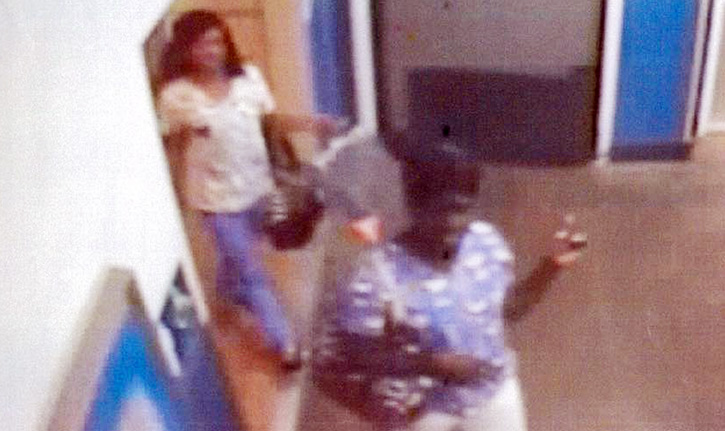
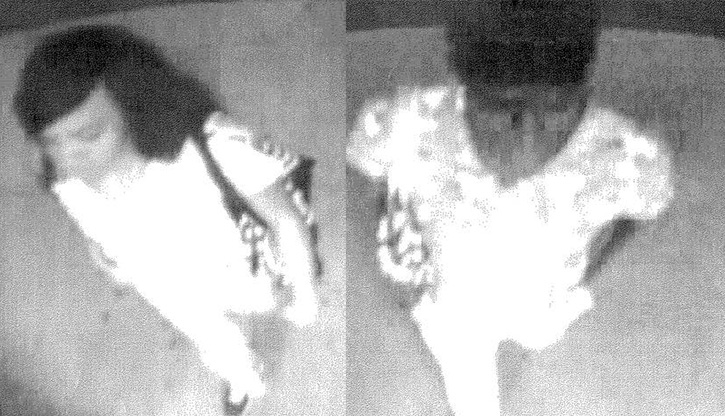
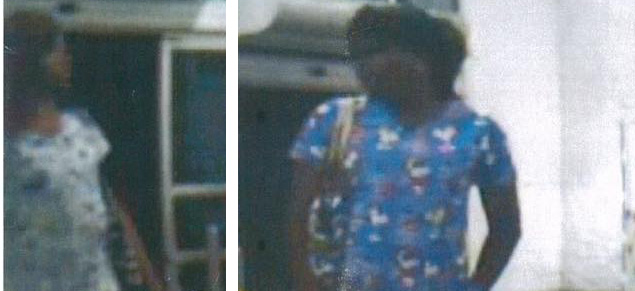
The Brewton (AL) Police Department is seeking assistance in identifying the individuals pictured. They are suspected in the theft of several iPads from the Brewton Walmart. Anyone with information on their identities is asked to call Lt. Brock Holt at the Brewton Police Department at (251) 867-3212 or their local law enforcement agency. Photos courtesy Brewton Police Department for NorthEscambia.com, click to enlarge.
End Of An Era: Daniel Smillie Retires From Escambia Road Department
May 20, 2015

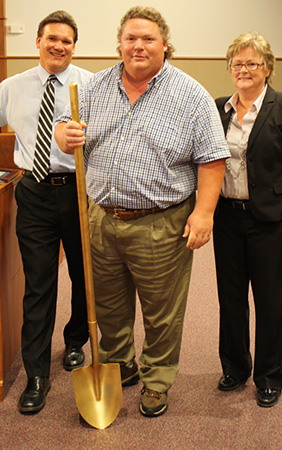
Daniel Smillie, Jr. was recently honored by the Escambia County Commission as he retired with 30 years of service as a field supervisor with the Escambia County Public Works Department, Roads Division.
 “The impact that his persona, and he, have had on that department are really immeasurable,” said Public Works Director Wes Moreno. “He has been a mainstay of that department…I guess it is the end of an era…He’s always gotten the job done. If you wanted the job done, all you had to do was call Danny Smillie and you didn’t have to worry about it any more.”
Smillie was presented with the usual county proclamation, a golden shovel and a new fishing rod. “I’ll surely use that,” he said quipped about the new fishing rod.
“I love helping the citizens of Escambia County,” he said. “I will miss that because I met a lot of good people.”
Smillie, a former resident of Cantonment, now resides in Beulah.
Danny Smillie, Jr., is pictured in the blue-checkered shirt. Photo for NorthEscambia.com, click to enlarge.
Summer Tryouts Next Week For Tate Softball, Northview Baseball, Tate Baseball
May 20, 2015

Northview High School Baseball and Tate High School softball have scheduled summer tryouts.
The 2015 Class 7A Softball State Champion Lady Aggies will hold Summer Softball Tryouts on Tuesday, May 26 and Thursday May 28 at 5:30 p.m. on the Tate softball field (enter the campus at the Kingsfield Road gate). For more information, contact Coach Melinda Wyatt at (850) 937-2300 ext. 241 or email mwyatt@escambia.k12.fl.us.
Northview High School will hold Summer Baseball Tryouts on Monday, May 25 at 10 a.m. at Northview for all returning Northview students, returning players and incoming freshmen. No pre-registration is required. Email Coach Marty Lister at mlister@escambia.k12.fl.us for more information.
Tate High School will hold Summer Team Tryouts on Monday, May 25 from 10 a.m. until noon. No pre-registration is required. Email Coach Greg Blackmon at gblackmon@escambia.k12.fl.us for more information.
Photo for NorthEscambia.com, click to enlarge.
Hospitals To Scott: Go Look It Up Yourself
May 20, 2015
As Gov. Rick Scott’s newly created health-care commission prepares to meet Wednesday to begin sifting through data about hospital funding, the governor’s request for information has been met with hospitals essentially telling him to go look it up.
Many of the dozens of surveys returned by hospitals have five or fewer of the roughly 100 lines filled out with new information. Officials frequently referred Scott back to information filed with the Florida Agency for Health Care Administration, which oversees much of the state’s spending on health care.
“Florida Hospital regularly reports financial and hospital utilization data to the Agency for Health Care Administration, as required by state law,” wrote Joe Johnson, president and chief executive officer of Florida Hospital Carrollwood, in a letter accompanying an essentially blank response to the survey. “We believe our submissions are up to date, accurate and readily available to the public for review. In order to meet your urgent request, we respectfully refer you to consult AHCA to obtain this comprehensive information.”
Johnson also used his letter to make a pitch for Medicaid expansion — something Scott adamantly opposes — calling it “the most compassionate, sustainable and fiscally prudent approach to deal with the state’s uninsured population.”
The same letter, signed by other officials, accompanied the submissions from other Florida Hospital branches.
It is not the only form letter that has been circulated to the commission. Several hospitals used a similar letter that argued, among other things, that the information Scott was seeking in some cases was unclear.
“Rather than speculate, we will await further clarification on these data points before we provide the requested information,” the letter said.
Scott formed the Commission on Healthcare and Hospital Funding after the Legislature failed to agree during its regular session on a spending plan for the budget year that begins July 1. Lawmakers were tripped up by questions surrounding whether the federal government will extend the Low Income Pool program, which is set to expire June 30. The $2.2 billion “LIP” program sends money to hospitals and other medical providers that care for large numbers of low-income patients.
The Senate also wants to use Medicaid expansion funds to help low-income Floridians purchase private insurance, but the House has for two years opposed similar proposals.
In an email, a spokeswoman for Scott did not directly answer whether he thought the survey answers were responsive to his questions.
“We received some of the information the governor requested for the commission,” spokeswoman Jackie Schutz wrote. “AHCA is posting that information on the commission’s website.”
Not every hospital stonewalled the governor. Flagler Hospital in St. Augustine was “pleased to respond to your request for information,” according to a letter from Joseph Gordy, the hospital’s president and chief executive officer.
“Our team worked diligently to provide as much of the data as possible within the time allotted for response,” Gordy said.
But even some of those responses came with notes of caution. Don Henderson, CEO of The Villages Regional Hospital, appeared to question the wisdom of a proposal Scott has floated to have hospitals share profits if the LIP program goes away.
“However, I would like to point out that if the current operating surplus at TVRH were diverted to other parts of the state, we could no longer afford the capital investments needed to keep up with the exceptional demographic growth in our area,” Henderson wrote. “We would also be very challenged to continue to provide the same rates of charity and uncompensated care. Let’s hope that does not happen.”
by Brandon Larrabee, The News Service of Florida
Wahoos Win Over Mississippi, Even Series
May 20, 2015
Starting pitcher Daniel Wright (2-4) was able to get some run support as the Pensacola Blue Wahoos (17-22) drove in a season-high seven runs to beat the Mississippi Braves (20-18) by a score of 7-4 on Tuesday night.
Wright went 5.0 innings and gave up three runs while striking out eight batters in the process. Greg Ross (2-3) earned the loss for the Braves as he gave up nine hits and five earned runs. Kevin Shackelford earned his first save of the season as he finished the game with a pair of scoreless innings. Wahoos reliever Blaine Howell, a former pitcher for Pensacola State College, also worked a pair of innings in his Double-A debut.
Kyle Waldrop, who hit safely in his first three at-bats of the evening, led the Wahoos at the plate with two singles, a double and an RBI. He is now hitting .361 in the month of May. Marquez Smith and Juan Perez contributed a pair of hits, with Smith driving in a pair of runs. Seth-Mejias-Brean and Ray Chang drove in a pair of runs each, as well.
The Wahoos got off to a good start in the first with a single from Kyle Waldrop and a two-out RBI double from Marquez Smith to drive him home.
The Braves responded in the second with a broken-bat single for an RBI from Eric Garcia, but Daniel Wright got out of the inning with consecutive strikeouts with runners at the corners, leaving the score tied 1-1.
The Wahoos threatened in the fourth inning, with Kyle Skipworth drilling a ball off the wall in straightaway center for a standup triple with one out. Juan Perez was able to draw a walk with two outs to put runners at the corners, but they were unable to take advantage of the opportunity.
Mississippi took the lead on the top of the fifth with a single from KD Kang. Wright then hit Seth Loman with a pitch to load the bases with one out, and Chris O’Dowd drove in another run with a single to right. Wright ended the inning with a pair of strikeouts, but the Braves would lead 3-1 by the end of the frame.
With two outs in the bottom of the fifth, Ryan Wright was able to beat a throw from third for a two-out infield single. It would prove to be crucial, as Waldrop would drive him home on a double the next at-bat. Marquez Smith would follow that up with a single to bring Waldrop home and tie it 3-3. Seth Mejias-Brean then ripped a line drive into left-center field to bring two runs home, giving the Wahoos a 5-3 lead.
Kang and O’Dowd struck again as Kang doubled and was eventually driven home from third on an RBI groundout from O’Dowd, bringing the Braves within a run.
Reliever Kevin Shackelford gave up a pair of singles and a walk to load the bases in the eighth, but was able to get out unscathed by forcing a groundout to end the top half.
After Mejias-Brean walked and Perez singled in the bottom of the eighth, Juan Silva put them both into scoring position with a sacrifice bunt. That set the table for defensive substitute Ray Chang, who would drive them both in on a single to make it 7-4.
Century Drive-by Shooting Under Investigation
May 19, 2015
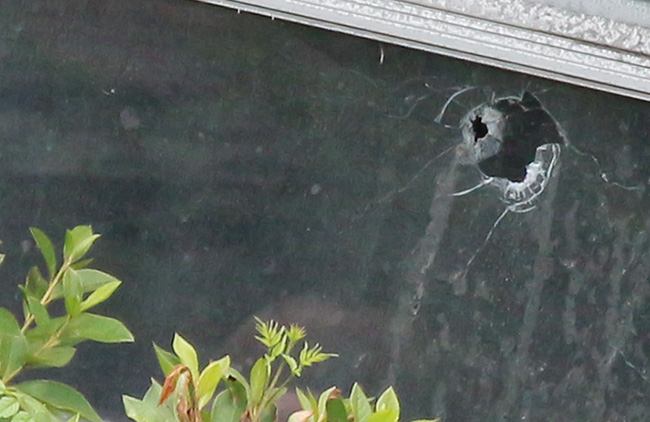
An apparent drive-by shooting reported Monday in Century is under investigation.
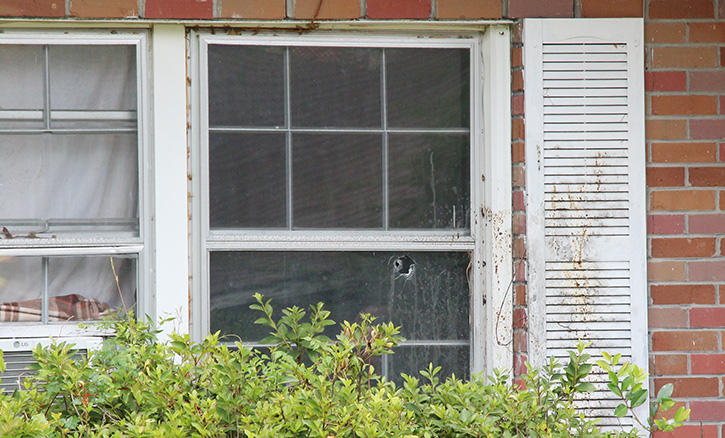
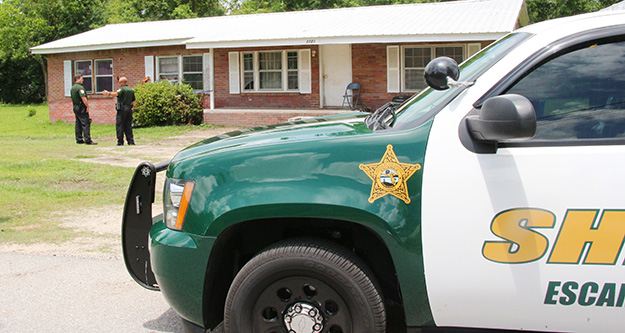
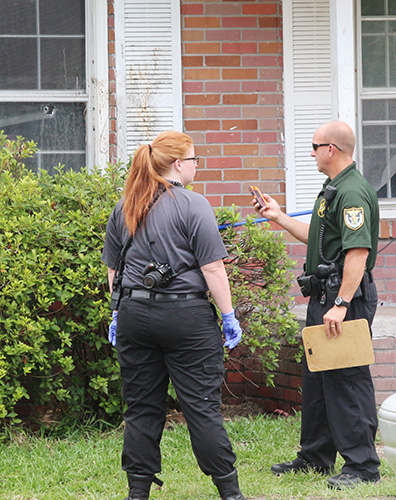 A resident of Archie Street called the Escambia County Sheriff’s Office reported that they had found apparent bullet holes in their home. One apparent bullet hole through a front window was easily visible from the street as deputies and a crime scene technician conducted their investigation just before noon Monday.
It was not immediately know exactly when the alleged drive-by occurred. There were no injuries.
A spokesperson for the Escambia County Sheriff’s Office said their investigation is continuing as they work to develop a suspect in the case.
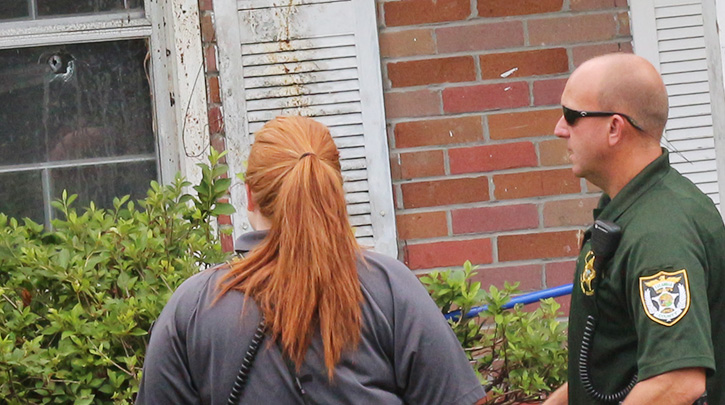
Pictured: The investigation in to an apparent drive-by shooting Monday on Archie Street in Century. NorthEscambia.com photos, click to enlarge.