
Molino Man Charged With Sex Crime Against Minor
November 26, 2015
A Molino man has been arrested for an alleged sex crime against a minor.
 John Thomas Hughes, of the 6000 block of Highway 95A, was arrested on a count of lewd and lascivious behavior. He remained in the Escambia County Jail with bond set a half million dollars.
Hughes allegedly initiated sexual contact with an underage female who got away and locked herself in a bathroom at her home, according to an arrest report.
Hughes denied the allegations, telling investigators that he believed the juvenile made up the story. Hughes changed his story and contradicted himself several times during an interview with investigators, according to an Escambia County Sheriff’s Office report.
Thanksgiving Dinner Cost Up Slightly This Year
November 26, 2015
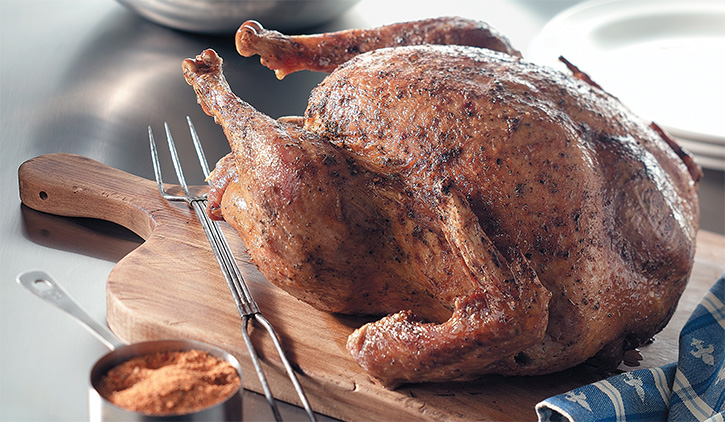
The American Farm Bureau Federation’s 30th annual informal price survey of classic items found on the Thanksgiving Day dinner table indicates the average cost of this year’s feast for 10 is $50.11, a 70-cent increase from last year’s average of $49.41.
The big ticket item – a 16-pound turkey – came in at a total of $23.04 this year. That’s roughly $1.44 per pound, an increase of less than 9 cents per pound, or a total of $1.39 per whole turkey, compared to 2014.
“Retail prices seem to have stabilized quite a bit for turkey, which is the centerpiece of the meal in our marketbasket,” AFBF Deputy Chief Economist John Anderson said. “There were some production disruptions earlier this year due to the highly pathogenic Avian influenza outbreak in the Midwest. Turkey production is down this year but not dramatically. Our survey shows a modest increase in turkey prices compared to last year. But we’re now starting to see retailers feature turkeys aggressively for the holiday. According to USDA retail price reports, featured prices fell sharply just last week and were actually lower than last year,” he added.
The AFBF survey shopping list includes turkey, bread stuffing, sweet potatoes, rolls with butter, peas, cranberries, a relish tray of carrots and celery, pumpkin pie with whipped cream, and beverages of coffee and milk, all in quantities sufficient to serve a family of 10. There is also plenty for leftovers.
Foods showing the largest increases this year in addition to turkey were pumpkin pie mix, a dozen brown-n-serve rolls, cubed bread stuffing and pie shells. A 30-ounce can of pumpkin pie mix was $3.20; a 14-ounce package of cubed bread stuffing, $2.61; and two nine-inch pie shells, $2.47.
“Despite concerns earlier this fall about pumpkin production due to wet weather, the supply of canned product will be adequate for this holiday season,” Anderson said.
Items that declined modestly in price were mainly dairy items including one gallon of whole milk, $3.25; a combined group of miscellaneous items, including coffee and ingredients necessary to prepare the meal (butter, evaporated milk, onions, eggs, sugar and flour), $3.18; a half pint of whipping cream, $1.94; and 12 ounces of fresh cranberries, $2.29. A one-pound relish tray of carrots and celery (79 cents) and one pound of green peas ($1.52) also decreased slightly in price.
The average cost of the dinner has remained around $49 since 2011. This year’s survey totaled over $50 for the first time.
“America’s farmers and ranchers are able to provide a bounty of food for a classic Thanksgiving dinner that many of us look forward to all year,” Anderson said. “We are fortunate to be able to provide a special holiday meal for 10 people for just over $5 per serving.”
39 Arrested in Sheriff’s Office Warrants Sweep
November 26, 2015

Sheriff David Morgan announced at a news conference Wednesday morning that a recently concluded warrant sweep ended with the arrest of 39 people on 54 outstanding warrants.
The arrests, for offenses that ranged from moving traffic violations to sex crimes, took place November 18-20.
Those arrested during the warrants sweep were:
- Austin Beck (DOB: 1/21/1995) FT-Sex Offense
- Rasheed Dickens (DOB: 7/17/1995) Sexual Assault Battery
- Tonya Gers (DOB: 10/4/1985) Fraud
- Christopher Graham (DOB: 02/28/1976) VOP Felony Battery
- Marshall Jones (DOB: 12/11/1981) Aggravated Assault
- Kersey Minniefield (DOB 10/9/1991) VOP Battery, Larceny
- Susan Nix (DOB: 1/1/1955) Moving Traffic Violation
- Adrian Joseph Phillips Jr. (DOB: 3/10/1992) Trafficking Cocaine
- Reginald Pitts (DOB: 8/1/1972) Grand Theft/Dealing in Stolen Prop
- Jennifer Powell (DOB: 7/16/1988) VOP Aggravated Battery
- Christopher Pritchett (DOB: 4/7/85) Dealing in Stolen Property, Larceny, Burglary
- Willie Puryear (DOB: 5/24/1979) Sex Offender Violation/Larceny
- Henry Salter (DOB: 4/12/1956) Bond revoked – Burglary/Grand Theft
- Nikya Stanley (DOB: 4/1/1993) Larceny
- Nakia Thomas (DOB: 7/21/1985) Aggravated Battery, Larceny
- Dylan Ankney (DOB: 1/11/1992) VOP x 2
- Willie Bruce (DOB: 10/22/1994) VOP Resisting Officer without Violence
- Tracy Floyd (DOB: 1/20/1974) Fraud – Impersonation
- Heidi Gibson (DOB: 2/6/1968) Hit & Run, Traffic Violation, DWLS – 3rd of Subsq Off
- Larry Gorham (DOB: 8/28/1959) Revoked Bond – Aggravated Battery w/ Deadly Weapon
- David Harger (DOB: 6/9/1993) VOP – Lewd & Lascivious VOP – Grand Theft Firearm
- Davyon Hartjen (DOB: 7/9/1974) – Fraud/Grand Theft
- Brittany Jackson (DOB: 2/3/1994) Larceny
- Kearia Jones (DOB: 2/9/1991) Battery
- Robert Newberry (DOB: 12/25/1959) Possession of Ammunition by Convicted Felon
- John Rondeau (DOB: 6/20/1967) Possession of Firearm by Convicted Felon
- Melvin Stevens (DOB: 4/28/1977) VOP – Battery D/V
- Amanda Clark (DOB: 12/2/1976) Larceny
- Justine Crisostomo (DOB: 2/23/1989) VOP – Possession of Controlled Substance without Rx
- Taneisha Curry (DOB: 2/5/1989) VOP – Possession of Marijuana
- John Hughes (DOB: 4/16/1983) Lewd & Lascivious Behavior
- Shameico Jefferson (DOB: 1/23/1981) Larceny VOP – DWL/R – Habitual
- Jerry Lilly (DOB: 5/17/1990) VOP – Possession of Marijuana, Criminal Mischief – damage property
- Lance McAnulty (DOB: 4/8/1993) VOP – Possession of Controlled substance, Possession of Drug Equipment
- OTTIC- Juvenile
- Deantre Morrell (DOB: 12/31/1995) Criminal Mischief – Damage property, Larceny, Grand Theft x 3
- James Robles (DOB: 1/1/1975) VOP – Grand Theft – $300 or more but less than $5,000 x 2
- Decody Herring (DOB: 1/10/1991) Possession of Firearm by Convicted Felon
- Jared Woodson (DOB: 10/18/1968) Possession of Weapon by Convicted Felon, Aggravated Assault, Weapon Offense

A Colorful Thanksgiving: Molino Library Coloring Contest
November 26, 2015

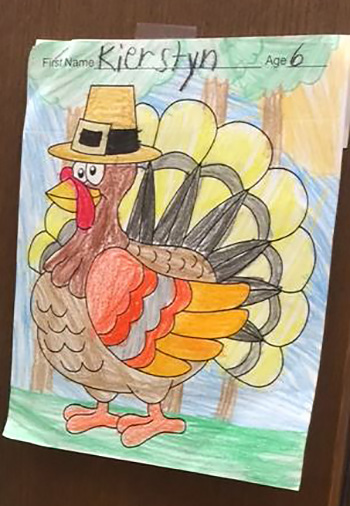
The Molino Branch Library held a Thanksgiving Coloring Contest for children ages 11 and under. The winner of the 4-6 age bracket was Kierstyn, seen here with her colorful Thanksgiving turkey and prizes. Courtesy photo for NorthEscambia.com, click to enlarge.
Cook Carefully This Thanksgiving to Prevent Kitchen Fires
November 26, 2015
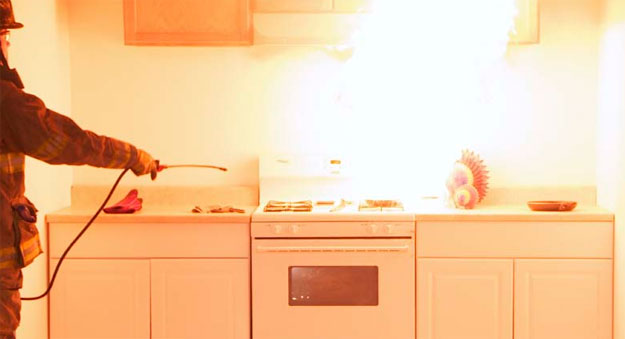
The U.S. Consumer Product Safety Commission (CPSC) is alerting consumers that the threat of fires in the kitchen triples on Thanksgiving Day. From 2009 through 2011, there was an average of about 1,300 cooking fires on Thanksgiving Day. This is more than three times the average daily rate from 2009 through 2011 of about 400 cooking fires a day.
“As fire safety experts have said for years, ‘Stand by your pan!’” said CPSC Chairman Inez Tenenbaum. “If you are frying, grilling or broiling food, stay in the kitchen. Not following this advice can be a recipe for disaster on Thanksgiving and throughout the year.” When it comes to fires in the home, cooking fires are number one. They accounted for nearly 150,000 fires (more than 40 percent of all annual unintentional residential fires) each year from 2009 through 2011. Unattended cooking is the top cause of cooking fires. Cooking fires also caused the most home fire-related injuries, with an estimated annual average of nearly 27 percent, or 3,450 injuries each year.
Overall, CPSC estimates an average of 362,300 unintentional residential fires, 2,260 deaths, 12,820 injuries and nearly $7 billion in property damage attended by the fire service occurring each year between 2009 and 2011.
To stay safe in the kitchen, avoid wearing loose-fitting clothing with long sleeves near ranges or ovens, watch children closely so they don’t come into contact with cooking food or hot stovetops, turn pan handles toward the back of the stove to prevent kids and others from spilling a pan’s scalding contents onto themselves.
In the event of a fire, call 911. Cover a pan with a lid to smother the flames. Never pour water or flour on a fire. That can make it worse. Keep a fire extinguisher in the kitchen.
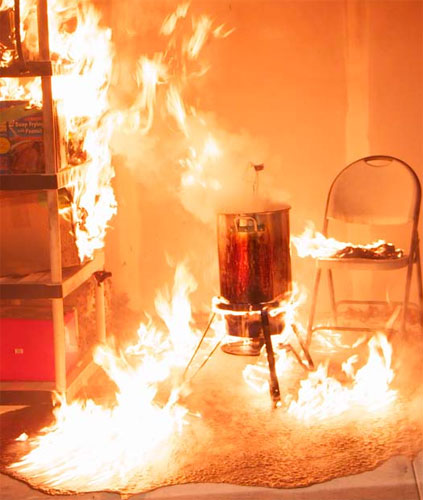 “Turkey fryer fires can be explosive and result in serious burns,” said Glenn Gaines, Deputy U.S. Fire Administrator for the United States Fire Administration (USFA). “Only use a turkey fryer outside and away from your home. Never use it in a garage or on a porch. Don’t overfill the oil or leave the turkey fryer unattended.”
Since 2003, there have been more than 125 turkey fryer-related fires, burns, explosions, smoke inhalations, or laceration incidents reported to CPSC staff. There were 55 injuries among these incidents, but none were fatal. For the incidents reporting a dollar value for the property loss, the total loss reported was around $6 million. Additional incidents involving turkey fryers may have occurred that were not reported to CPSC.
Consumers should also protect themselves by installing smoke alarms in their homes. “Roughly three out of five home fire deaths happen in homes with no smoke alarms or no working smoke alarms,” said Jim Shannon, President of the National Fire Protection Association. “Smoke alarms save lives. Having a working smoke alarm cuts the chances of dying in a fire in half.”
Change the batteries in smoke alarms at least once every year and test the alarms every month to make sure they are working.
To provide a better warning of a fire and more escape time, install more than one alarm and interconnect all smoke alarms in the home. Interconnected alarms speak to one another, so if there is a fire in one part of the house, the interconnected alarms sound throughout the house and alert consumers to the fire more quickly.
For the best protection, install alarms on every level of the home, outside sleeping areas and inside each bedroom, and use both ionization and photoelectric alarms. Alarms that are powered by house wiring should have a battery backup.
Smoke alarms provide the warning, but every family should have a fire escape plan as well. Practice the escape plan with everyone in the house so they can get out quickly. The escape plan should include two ways out of each room (as practical) and a family meeting place that is outside where everyone can meet if there is a fire in the home.
n Fires
Multiple Injuries In Firetruck, SUV Crash In McDavid
November 25, 2015

Three people were injured in a collision between a fire engine and a SUV early Tuesday evening in McDavid.
The engine, with lights and sirens activated, departed the McDavid Station of Escambia Fire Rescue at 5:14 p.m. According to the Florida Highway Patrol, 62-year old Gordon Janksy of Pensacola failed to stop his 2012 Chevrolet Traverse for the firetruck, driven by 32-year old Mark Carter of Century. Both vehicles came to rest in the parking lot of a convenience store across the road from the fire station.
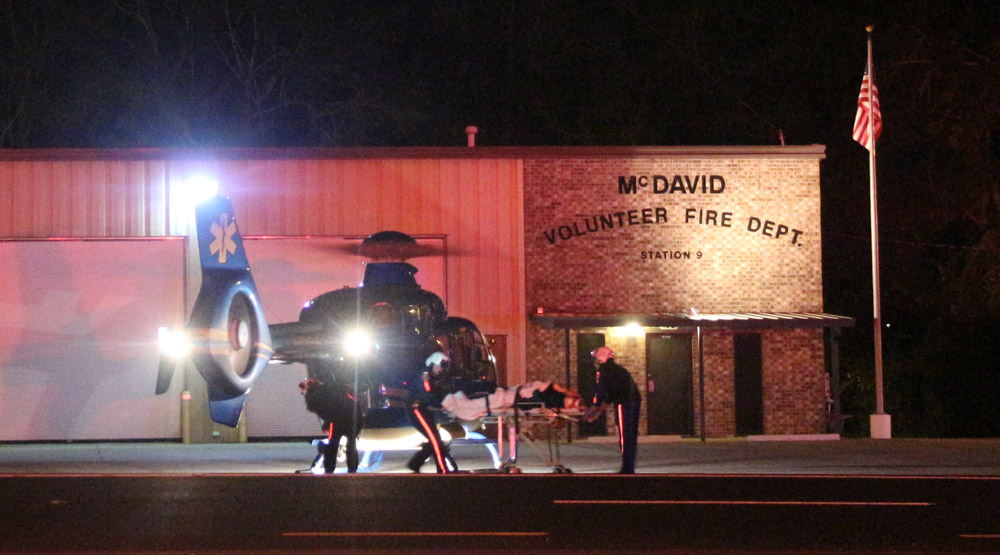 Carter was transported by ambulance with a non-life threatening injury to West Florida Hospital where he was expected to be released. A second member of the fire department, 19-year old Jared Carnley of McDavid, was a passenger on the fire truck and was not injured.
A total of six individuals were in the SUV. Driver Gordon Janksy was not injured in the crash. His passenger, 61-year old Linda Jansky of Pensacola, was airlifted to Sacred Heart Hospital in Pensacola in serious condition after being extricated from the vehicle. An adult male, whose name was not released, was transported to Sacred Heart Hospital by ambulance. An addtional adult female and two children in the SUV were not injured.
Gordon Jansky was cited for violation of right of way to an emergency vehicle, according to the FHP.
The fire engine was responding emergency to a reported structure fire in Molino. The fire turned out to be from a microwave oven that caused smoke in the Shifko Road home; that fire was handled by other Escambia Fire Rescue units on scene.
For a photo gallery, click here.
NorthEscambia.com photos, click to enlarge.

Farm-City Thanksgiving Meals Distributed To 700 Families
November 25, 2015
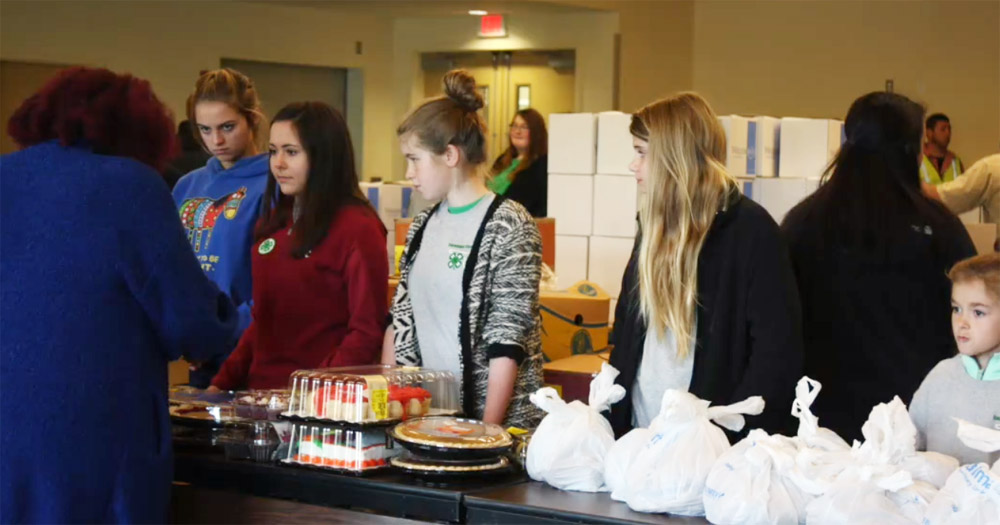
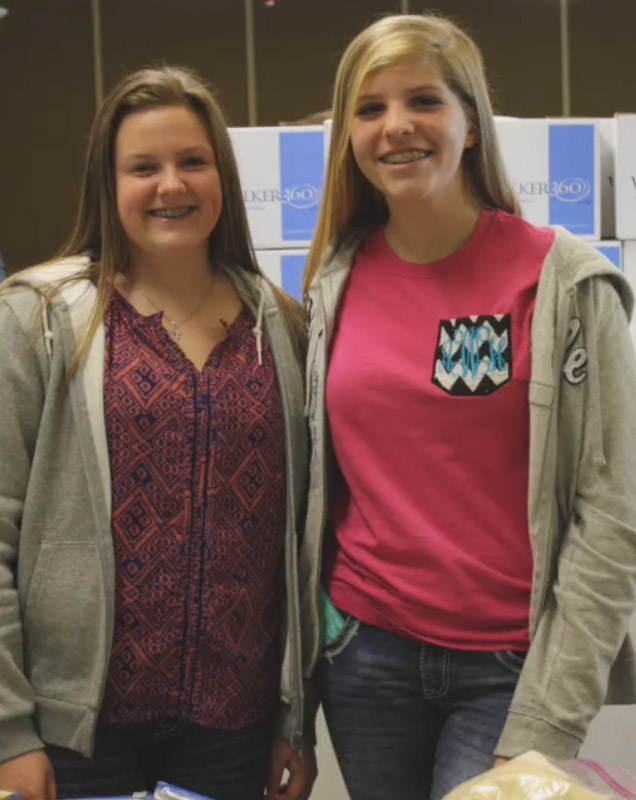
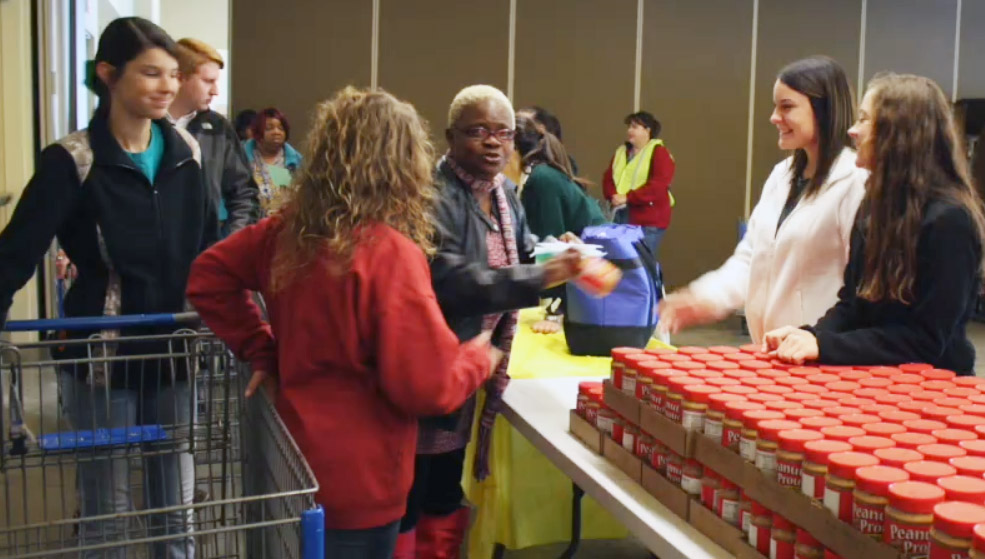
As part of Farm-City week, 700 families in Escambia and Santa Rosa counties received full Thanksgiving meals Tuesday — much of it locally grown — thanks to the efforts of local farms, food banks and hundreds of FFA and 4-H students. Students from Tate High School’s FFA chapter and local 4-H clubs helped with the Escambia County distribution for 300 families at the Waterfront Rescue Mission.
The 400 pre-qualified families in Santa Rosa County and 300 in Escambia County received turkeys, collard and turnip greens, sweet potatoes, cornmeal, peanut butter and more. The sweet potatoes were donated by local farmers and sorted by FFA students from a half dozen schools, and students also picked the collards from field Monday at the University of Florida Institute of Food & Agricultural Sciences West Florida Research and Education Center. [Click here for photos and a story from Monday's harvest.]
Farm to City Week is a national effort with the goal to bring about a better understanding between rural and urban people by increasing their knowledge and appreciation for agriculture.
The locally grown produce was harvested at the University of Florida, West Florida Research and Education Center by participating Ag students from Northview High School, Tate High School, Jay High School, Central School, Beulah Academy, West Florida High and Ernest Ward Middle School.
Photos for NorthEscambia.com, click to enlarge.
Holiday Closings, Trash Schedules
November 25, 2015
The following will be closed in observance of the Thanksgiving holiday.
- Escambia County Schools (Wed-Fri)
- Santa Rosa County Schools (Wed-Fri)
- Escambia (Fla. & Ala.) and Santa Rosa county offices (Thur-Fri)
- Century, Jay, Milton, Pensacola, Atmore, Flomaton city offices (Thur-Fri)
- Perdido Landfill (Thurs, landfill open Fri)
- Santa Rosa Landfill (Thurs, landfill open Fri)
- U.S. Post Office — retail windows closed, no mail delivery or collection (Thur)
- Florida state offices (Thur-Fri)
- Federal offices (Thur-Fri)
- No bus service from ECAT on Thursday, regular service Friday
- West Florida Public Libraries, including Century and Molino branches(Thur-Fri)
ECUA Garbage Escambia County:
All residential sanitation, recycling, and yard trash collections for ECUA customers that would normally be made on Thursday, Nov. 26, or Friday, Nov. 27 will be made one day later, on Friday, Nov. 27 or Saturday, Nov. 28, respectively.
All commercial sanitation collections for ECUA customers that would normally be made on Thursday, Nov. 26 will be made one day earlier, on Wednesday, Nov. 25. There are no changes to the schedule for commercial services scheduled on Friday, Nov. 28, or Saturday, November 29.
ECUA Customers, North Santa Rosa County:
There will be no garbage or yard trash collection on Thanksgiving Day, Nov. 26. Garbage and yard trash will be collected on the next normally scheduled collection day for that route (Monday). Recycling collection scheduled for Thursday, November 26, will be collected on Saturday, November 28, 2015.
There are NO CHANGES to Tuesday and Friday collections, which are unaffected by the holiday schedule change.
Holiday Cooking Can Be Bad For ECUA Sewers And Home Plumbing
November 25, 2015
The Thanksgiving holiday means special times with family, friends, lots of delicious food and the potential for sanitary sewage overflows (SSOs). No matter how the meal is prepared, it will certainly generate fats, oils and grease, or FOG, Which can be damaging to the Emerald Coast Utilities Authority sewer system and your household plumbing.
Keep your plumbing and the sewer system free from blockages and overflows by properly disposing of FOG this holiday season. Many homeowners may be surprised to learn that pouring the fatty remains of culinary delights down the kitchen drain can result in costly and unpleasant SSOs. Besides the mess, untreated sewage can cause health hazards and threaten the environment. Overflows can also require expensive cleanup.
Cooks should avoid depositing other oil-based foods down the drain and garbage disposal. No-nos include fatty substances such as lards or shortening, butter or margarine, food scraps, dairy products, batter and icing, salad dressings and sauces. For more information on ways to keep your kitchen clean and green, visit www.ecua.fl.gov.
Conscientious cooks should:
- Throw food scraps in the trash
- Use a paper towel to wipe away residue from serving dishes and plates
- Rinse these items over a sink strainer to catch and dispose of any remaining food particles
Any grease left-over from holiday cooking should be poured into a heat-safe can, place it in the freezer to cool and harden, and toss the can out with regular garbage. If you’re planning to deep-fry a turkey, put the used fryer oil back in its original container or use an ECUA Cooking Oil Disposal Container. Drop it off at an ECUA Disposal Station to be recycled into biodiesel fuel. ECUA has several conveniently placed stations throughout the community:
Clean & Green
3303 North Davis Highway
Baskerville Donovan Engineering
449 West Main Street
ECUA at Ellyson Industrial Park
9255 Sturdevant Street
ECUA Sanitation Department
3050 Godwin Lane
ECUA Bayou Marcus Water Reclamation Facility
3050 Fayal Drive
Pensacola Beach on Via de Luna Drive
Between Pensacola Beach Elementary School and Our Lady of Assumption Catholic Church
NAS Pensacola (Military and Base Personnel ONLY)
Andrew Jackson Court
Fort Santa Maria de Galve Hase Road
Slemmer Avenue
Murray Street and Billingsley Street
Corry Field Housing at NAS Corry Station
Escambia County Sheriff’s Sub Station Serving Perdido Key & Grand Lagoon
12950 Gulf Beach Highway
For additional information visit the ECUA website www.ecua.fl.gov or call ECUA Customer Service (850) 476-0480.
It’s Beginning To Look A Lot Like Christmas In Century
November 25, 2015
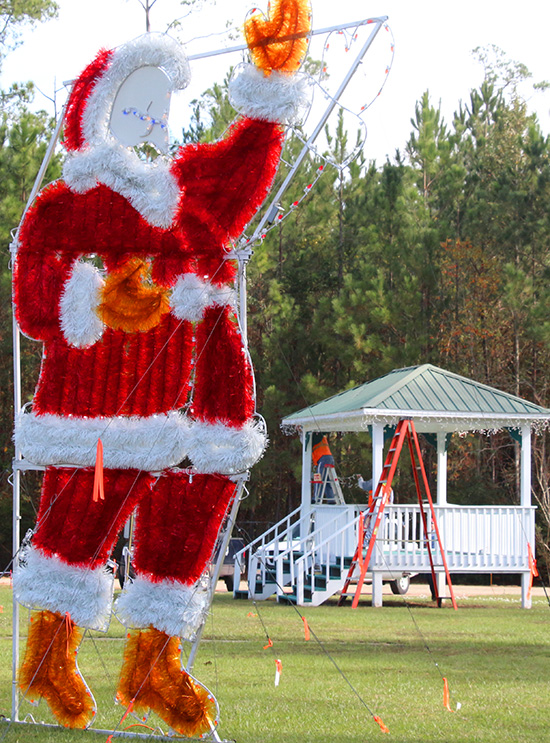
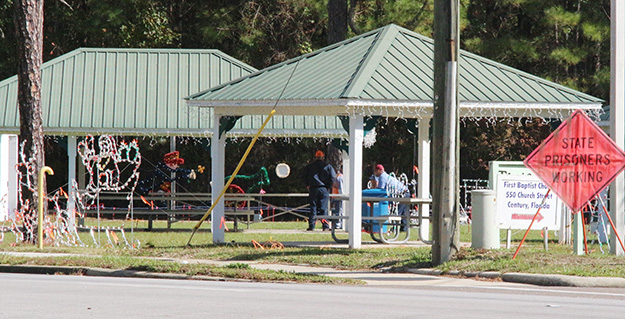
A work crew from the Town of Century and work release prisoners from the Century Correctional Institution were hard at work Tuesday erecting Christmas decorations in the Nadine McCaw Park on North Century Boulevard. While the decorations will be lit prior to the event, an official tree lighting ceremony will be held in the park at 6 p.m. December 3. NorthEscambia.com photos, click to enlarge.