

State Looks For Answers After Supreme Court Ruling In Nine Mile Road Murder
January 19, 2016
Florida lawmakers are pledging to remedy the state’s death-penalty sentencing structure after the U.S. Supreme Court ruled this week that the state’s method of giving judges the power to impose death sentences is unconstitutional.
But legal experts fear that the Legislature’s fix may only be a temporary solution for the capital punishment process, one of the most complicated legal arenas rendered even thornier after the decision.
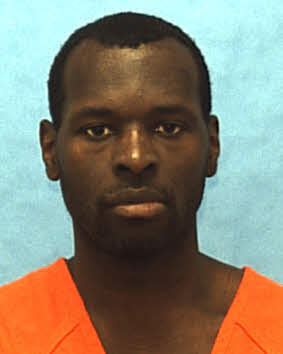 The high court’s decision came in the appeal of convicted murderer Timothy Lee Hurst, who was sentenced to death for the 1998 killing of fast-food worker Cynthia Harrison in Pensacola. Harrison, an assistant manager at a Popeye’s Fried Chicken restaurant on Nine Mile Road where Hurst worked, was bound, gagged and stabbed more than 60 times. Her body was found in a freezer.
The jury in the Hurst case recommended a death sentence to the judge, but its vote was split seven to five.
In sentencing Hurst to death, a judge found two aggravating circumstances — that the murder was committed during a robbery and that it was “especially heinous, atrocious or cruel.”
But the decision should not have been the judge’s, Justice Sonya Sotomayor wrote.
Days after the 8-1 ruling, leaders in the Republican-controlled Legislature — as well as judges, defense lawyers and prosecutors — were scrambling to sort out the implications of what some called a deceptively simple order.
What is clear is that lawmakers intend at the very least to resolve the main issue addressed by the court in the case, known as Hurst v. Florida.
“This is something that we have to do,” House Judiciary Chairman Charles McBurney, R-Jacksonville, said. “We will be addressing the issue which was raised specifically by the Supreme Court in that decision, and then looking beyond the narrow decision to see how it affects other aspects of the death penalty statute to ensure its future constitutionality as well.”
Florida requires juries to make recommendations to judges regarding the death penalty after considering aggravating and mitigating circumstances, with judges ultimately imposing the sentences.
But Florida’s unique law giving judges the power to decide whether defendants should face death equates to an unconstitutional violation of the Sixth Amendment right to a trial by jury, Justice Sonya Sotomayor wrote in the majority opinion.
The ruling did not address whether juries’ decisions about imposing death sentences should be unanimous, as is required for convictions. Among the 31 states that have capital punishment, Florida is one of only three states that do not require unanimous decisions regarding death sentences.
Two other Florida cases that deal with the unanimity issue are now pending before the U.S. Supreme Court.
Lawmakers are exploring the issue of unanimous decisions and whether the Hurst ruling should apply retroactively to inmates already sentenced to death — Attorney General Pam Bondi’s lawyers, who represent the state in death penalty cases, contend that it should not.
“I think that when we consider how our death penalty system is structured, we need to be clear-eyed in making sure that it can withstand not only the current legal situation but future legal challenges,” said Sen. Rob Bradley, a Fleming Island Republican and former prosecutor whose law firm represents a defendant who could face the death penalty.
But, in an election year in which swing-state Florida is considered critical for a Republican White House win, whether GOP lawmakers will pass any legislation that could be perceived as watering down the death penalty is questionable.
Speaking to reporters, Senate President Andy Gardiner said he had “mixed emotions” about unanimous jury requirements.
“I think you’ll see us more focused on the Supreme Court ruling as opposed to the unanimous side,” Gardiner, R-Orlando, said.
But doing the minimum to conform Florida law with the high court ruling is problematic, said Florida International University law professor Stephen Harper, who runs the school’s Death Penalty Clinic.
“My hope is that the Legislature goes far enough to require unanimity in both the decision that somebody is death eligible and that somebody will get the death penalty. And if they don’t do that, they’re only inviting more litigation and waiting for the next shoe to drop. They may fix it temporarily, but they’re not going to fix it permanently,” he said. “They’re only going to put a Band-aid on a much bigger problem.”
The Hurst decision also likely comes with a price tag for Florida taxpayers. Prosecutors, public defenders and state-paid lawyers representing Death Row inmates told lawmakers this week that the ruling will increase their workloads.
“The potential impact is, at a minimum, you’re going to see a lot of litigation from individuals in the pipeline that we thought were already out of the pipeline,” 8th Judicial Circuit State Attorney William Cervone told a Senate budget committee.
It is unclear how many of the 390 prisoners on Florida’s Death Row — the second highest-number in the nation — may be affected by the decision.
“In theory, any defendant who raised this specific issue on appeal would have an argument to go back. We don’t know how many that will be,” said Rep. Jose Javier Rodriguez, a Miami Democrat who has renewed his push for unanimous jury verdicts to impose the death penalty.
The sentencing issue has a special sense of urgency because two Death Row inmates are scheduled to be executed in February and March.
In the case of Cary Michael Lambrix, slated to be die by lethal injection on Feb. 11, the Florida Supreme Court ordered the state and Lambrix’s lawyers to present arguments regarding the impact of the Hurst decision. The court is operating under what is called an “expedited schedule” because of the pending death warrant, signed by Gov. Rick Scott in November.
Last week, Scott ordered Mark James Asay to be executed on March 17. Asay’s lawyer, Marty McClain, said the U.S. Supreme Court decision is more complicated than lawmakers may realize.
McClain contends that the ruling combined with current Florida law require a unanimous jury decision to impose the death penalty because state law requires unanimous jury verdicts to convict defendants of capital murder.
“The Hurst v. Florida opinion is very subtle. It takes a while to understand all that’s there,” McClain said. “The problem with the state’s position is they’ve oversimplified this. They just want it to go away.”
by Dara Kam, The News Service of Florida
Century Library To Get Faster Data Connection
January 18, 2016
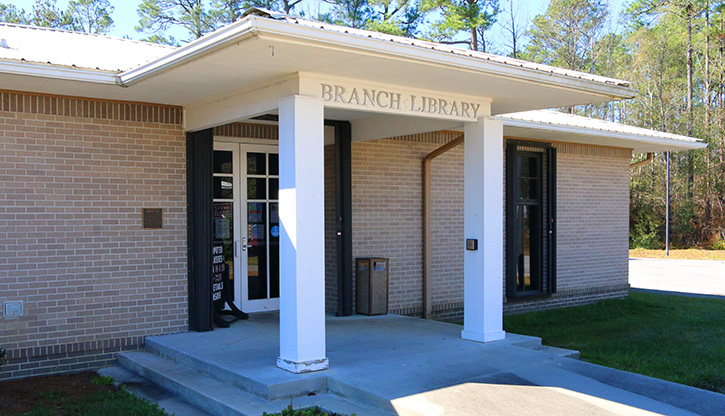
The Century Branch Library’s data connection to the outside will soon be getting faster.
The Escambia County Commission is set to approve an agreement with Southern Light, LLC, to provide a fiber optic connection to the library. This will provide a high speed fiber data connection between the Escambia County Library Century and the Main Library Branch with a monthly fee of $762.
The present T1 connection between the facilities is insufficient to progress with newer technology, according to county officials.
Once approved by the commission, work will be scheduled for the underground connection from the street to the building. The installation is expected to take just one day.
Pictured: The Century Branch Library. NorthEscambia.com photo, click to enlarge.
No Injuries In Highway 97 Crash
January 18, 2016
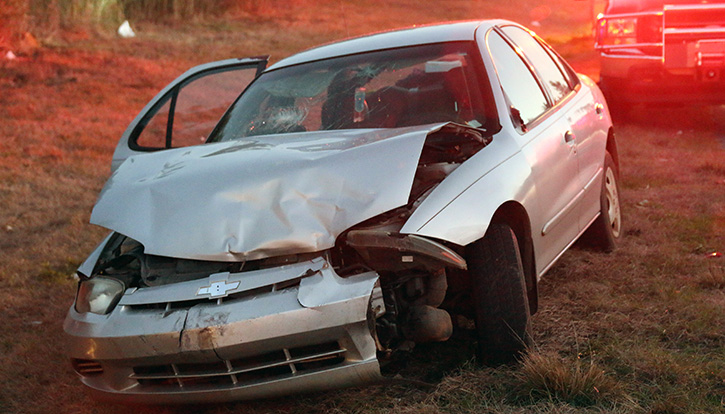
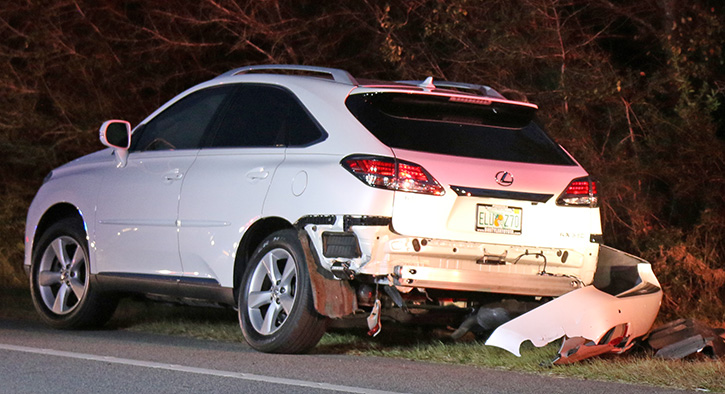
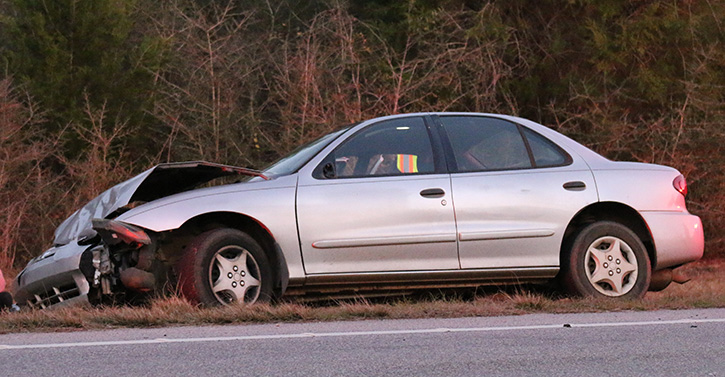
There were no injuries in a rear-end type crash late Sunday afternoon on on Highway 97 near Molino. Everyone involved in the 5:06 p.m. crash just north of Sunshine Hill Road refused medical treatment at the scene. The accident is under investigation by the Florida Highway Patrol. NorthEscambia.com photos, click to enlarge.
Child Hit By Vehicle
January 18, 2016
A 9-year old boy was in serious condition after being hit by a vehicle Sunday afternoon in Escambia County.
 The Florida Highway Patrol said the boy was playing with friends in the 3400 block of Tarragona Street when he attempted to cross the street. The driver of a 2002 Dodge Stratus, 17-year old Warren Grahamm of Pensacola, failed to observe the boy and hit him.
The boy was transported to Sacred Heart Hospital with serious injuries.
Grahamm was cited for driving too fast for conditions by the FHP.
Farm Day 2016 Planned For February 4
January 18, 2016
UF/IFAS Extension and Alabama Cooperative Extension will present Farm Day 2016 on Thursday, February 4 at the Grace Fellowship Church at 1412 East Nashville Avenue in Atmore.
Registration begins at 8 a.m. Topics will include economic outlook, row crop disease control, corn price protection, insects that plague and more. Lunch will also be provided.
For more information, contact one of the following:
FLORIDA
Libbie Johnson: 850-475-5230 • libbiej@ufl.edu
Mike Donahoe: 850-623-3868 • mcd@ufl.edu
John Atkins: 850-675-3107 • srcextag@ufl.edu
ALABAMA
KimWilkins: 251-937-7176 • wilkikj@aces.edu
KenKelley: 251-867-7760 • kellewi@auburn.edu.
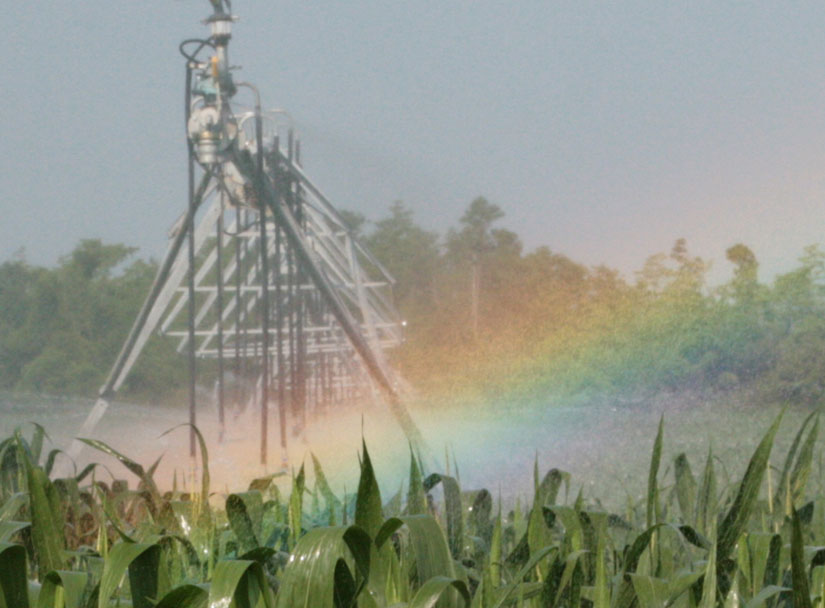
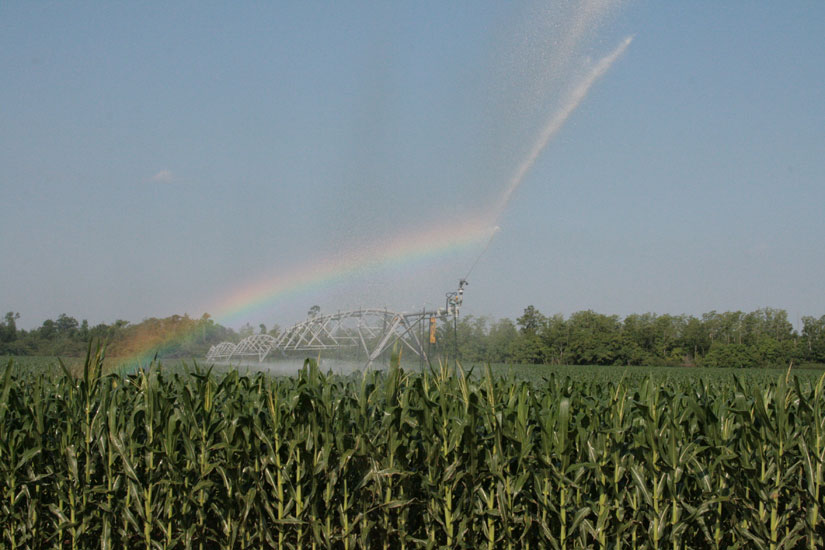
Pictured above and below: An operating irrigation system in Walnut Hill creates a rainbow in this NorthEscambia.com file photo, click to enlarge..
Order A Free Tree From The Florida Forest Service
January 18, 2016
In honor of Florida’s Arbor Day last week, Florida Commissioner of Agriculture Adam H. Putnam announced that the Florida Forest Service is providing 10,000 free trees to Florida homeowners through a partnership with the Arbor Day Foundation’s Energy-Saving Trees Program. Florida’s Arbor Day is held each year on the third Friday in January.
 Strategically placed trees can add extra shade to the home and reduce household electrical use by up to 30 percent. According to the U.S. Department of Agriculture, a single healthy, young tree can provide the same net cooling effect as ten room-sized air conditioners operating 20 hours per day. In addition to providing energy savings, trees provide other benefits such as cleaner air and improved storm water management.
Florida homeowners can reserve their free tree today at arborday.org/FloridaTrees. Within seconds of accessing the website, an online tool helps homeowners find the most strategic location for planting and estimates the annual savings and benefits that will result from the tree. Homeowners may reserve one tree per household. The program will continue until all the trees have been reserved.
The Energy-Saving Trees online tool was created by the Arbor Day Foundation and the Davey Institute, a division of the Davey Tree Expert Co., and uses peer-reviewed scientific research from the U.S. Forest Service’s i-Tree Software to calculate estimated benefits. This program is funded by a grant from the U.S. Forest Service.
The Florida Forest Service, a division of the Florida Department of Agriculture and Consumer Services, manages more than one million acres of public forest land while protecting 26 million acres of homes, forestland and natural resources from the devastating effects of wildfire.
‘Solar Choice’ Coalition Shifts Focus To 2018
January 18, 2016
A coalition trying to expand who can provide solar energy in Florida formally shifted its focus toward trying to pass a ballot initiative in 2018.
Members of the group “Floridians for Solar Choice,” which had fallen behind in qualifying for the November 2016 ballot and remains in the midst of a contract dispute with a petition-gathering firm, announced the change during a news conference at the Florida Press Center in Tallahassee.
“Our coalition, at the onset, was committed to building a broad set of solar polices that could grow the solar industry. And we remain committed to that,” said Stephen Smith, executive director of the Southern Alliance for Clean Energy, a key supporter of the coalition. “Our coalition is not going away.”
The proposal has drawn opposition — and a rival solar-energy initiative — from a group backed by major Florida utilities.
When asked if it would also shift its focus to 2018, that utility-backed group, known as “Consumers for Smart Solar,” said in an email that it is “committed to promoting solar in a way that protects consumers.”
“Our opponent’s failure to make the ballot does not affect our commitment to do what’s right for the people of Florida,” Consumers for Smart Solar spokeswoman Sarah Bascom said.
With support from Gulf Power, Duke Energy, Florida Power & Light and Tampa Electric, Consumers for Smart Solar has raised far more money than Floridians for Solar Choice. As of Nov. 30, Consumers for Smart Solar had raised $5.9 million, while Floridians for Solar Choice had raised $1.49 million.
The move by Floridians for Solar Choice gives the coalition more time to collect the needed petition signatures to qualify for the ballot. However, it would also put the issue before voters in a non-presidential election, when Democratic turnout is generally lower.
The Floridians for Solar Choice initiative would allow businesses to generate and sell up to two megawatts of solar power to customers on the same or neighboring properties. The group’s supporters also announced plans to file a brief in the Florida Supreme Court opposing the Consumers for Smart Solar proposal, which still needs court approval of its ballot wording.
“This misleading ballot amendment is bad for consumers, bad for the environment and bad for Florida,” said Bradley Marshall, an attorney for the environmental law firm Earthjustice, a Floridians for Solar Choice coalition member.
Smith said the Consumers for Smart Solar proposal is aimed at confusing voters in an effort to keep the Floridians for Solar Choice proposal from getting approved.
“It is unfortunate that Florida continues to treat solar energy differently and continues to maintain barriers to free market growth of this energy source,” said Tory Perfetti, chairman of Floridians for Solar Choice, which has received Supreme Court approval of its ballot proposal.
The Consumers for Smart Solar measure, which would generally maintain the status quo in allowing Floridians with solar equipment on their property to sell energy to power companies, is close to submitting the required number of valid signatures to appear on the ballot. It had submitted 582,155 signatures as of last report.
Initiatives face a Feb. 1 deadline to submit 683,149 petition signatures to the state. As of Monday morning, Floridians for Solar Choice had submitted 274,582 valid signatures.
In late December, Floridians for Solar Choice filed a lawsuit against petition-gathering firm PCI Consultants Inc., which is holding 212,000 signed petition signatures as it seeks payment for expenses that Floridians for Solar Choice contends are beyond what the group agreed to pay.
by Jim Turner, The News Service of Florida
MLK Day Holiday Closures
January 17, 2016
The following will be closed on Monday in observance of Martin Luther King Jr. Day. Normal operations will resume on Tuesday.
- Escambia County Board of County Commissioners
- West Florida Public Library System
- Escambia County Clerk of the Court & Comptroller
- Escambia County Property Appraiser
- Escambia County Tax Collector
- Escambia County Area Transit
- City of Pensacola offices
- Town of Century offices
Exceptions:
- The Perdido Landfill will be open on Monday.
ECUA
ECUA offices will be closed Monday, January 18, in observance of the Martin Luther King, Jr. holiday. However, all residential and commercial sanitation collections for ECUA customers in Escambia and Santa Rosa Counties will be unaffected, and will be carried out as scheduled. Customers may call ECUA Customer Service at (850) 476-0480 for additional information, or visit the ECUA website at www.ecua.fl.gov.
Escambia, Santa Rosa Join Federal Program To Reduce Drug Trafficking
January 17, 2016

Escambia and Santa Rosa counties have joined a federal program designed to reduce drug trafficking.
Both counties have been added as members of the Gulf Coast High Intensity Drug Trafficking Area (HIDTA) program. The Gulf Coast HIDTA, which includes counties and parishes in Alabama, Arkansas, Louisiana, Tennessee, and Mississippi, is one of 28 nationwide drug enforcement initiatives aimed at reducing violent crime and drug trafficking.
In 2014, law enforcement agencies in Northwest Florida began the application process to become a member of the Gulf Coast HIDTA due to drug trafficking routes running through Escambia and Santa Rosa Counties via Interstate 10 and U.S. Highway 98. A threat assessment conducted as part of this request confirmed that not only do many ongoing investigations in Gulf Coast HIDTA counties have a connection to the Pensacola area, but numerous Escambia and Santa Rosa County investigations also have ties to other agencies that are part of the Gulf Coast HIDTA. Additionally, Escambia County has experienced drug-related shootings, and arrests in those violent incidents frequently are linked to the local illicit drug market.
The following coalition of federal, state, and local Northwest Florida law enforcement agencies petitioned the Office of National Drug Control Policy to designate Escambia and Santa County as part of the Gulf Coast HIDTA:
- United States Attorney’s Office, Northern District of Florida
- Drug Enforcement Administration
- Escambia County Sheriff’s Office
- Santa Rosa County Sheriff’s Office
- Pensacola Police Department
- Gulf Breeze Police Department
- Federal Bureau of Investigation
- Florida Department of Law Enforcement
- State Attorney’s Office, First Judicial Circuit
- Bureau of Alcohol, Tobacco, Firearms and Explosives
- Florida Office of the Attorney General
- Florida Highway Patrol
- Homeland Security Investigations
- Internal Revenue Service
“Due to collaboration and hard work of our law enforcement partners, Northwest Florida will receive additional resources and support in addressing drug-related crimes,” said Acting United States Attorney Christopher P. Canova. “The enhanced communication between the local agencies in our district with the other HIDTA initiatives across the nation will also better enable law enforcement personnel to disrupt and dismantle drug trafficking organizations that serve as
the source and supply of dangerous drugs into the community.”
“The DEA Miami Field Division is happy to have Escambia and Santa Rosa Counties join the HIDTA program,” said DEA Special Agent in Charge Adolphus P. Wright. “Their inclusion will greatly contribute to the HIDTA mission of combatting drug trafficking in the Gulf Coast area.”
“Due to recent changes at the U.S. Attorney’s Office and local DEA office, we will be joining the Gulf Coast HIDTA. We are encouraged that positive changes are on the horizon,” said Sheriff David Morgan of the Escambia County Sheriff’s Office.
One Person Injured In Highway 95 A Wreck
January 17, 2016


One person was injured in a single vehicle crash Saturday night in Cantonment.
The driver of a SUV lost control, ran of Highway 95 near Chipper Road, and struck a tree about 9:50 p.m. The vehicle came to rest back in the middle of Highway 95A, where firefighters were forced to extricate the driver.
The driver was transported to an area hospital with injuries that were not considered life threatening. There were no passengers in the vehicle.
The accident remains under investigation by the Florida Highway Patrol, further details including the name of the driver have not yet been released. The Cantonment and Molino stations of Escambia Fire Rescue, Escambia County EMS and the Escambia County Sheriff’s Office also responded to the crash.
NorthEscambia.com photos by Kristi Price, click to enlarge.


