

Battle Over Florida Education System Ready For Ruling
April 10, 2016
A Leon County circuit judge heard closing arguments Friday in a potentially far-reaching lawsuit that challenges whether the state has met a constitutional requirement to provide a “high quality” system of public schools.
Judge George Reynolds, who heard four weeks of testimony and arguments, described the case as a “difficult issue.” He did not rule Friday and said lawyers have until April 25 to file written arguments.
 The lawsuit, led by a group called Citizens for Strong Schools, is rooted in a 1998 constitutional amendment that says it is a “paramount duty of the state to make adequate provision for the education of all children residing within its borders.” The amendment fleshed that out, in part, by saying adequate provision will be made for a “uniform, efficient, safe, secure, and high quality system” of public schools.
Citizens for Strong Schools argues that Florida has not complied and that the court should require the state to take steps to carry out the constitutional amendment.
“The state has failed to make adequate provision by not allowing significant numbers of students to obtain a high-quality education,” Jodi Siegel, an attorney for Citizens for Strong Schools, said Friday during her closing argument. “This is not an insignificant matter. There’s over 1 million students that cannot read at grade level. There are half-a-million free-and-reduced lunch students who cannot read at grade level.”
But Rocco Testani, an attorney for the Florida Board of Education, argued that the state’s schools have made a huge amount of improvement and pointed to indicators such as scores on the National Assessment of Educational Progress, a set of tests commonly used to compare students across the country.
“What we know is that Florida has had a remarkable journey from a state that was below average, well below average, 15, 16, 17 years ago, to a state that is now truly a leader, truly a leader, when it comes to national comparisons,” Testani said.
Issues of state education funding, standards and testing have drawn fierce debate during the past two decades, particularly because of changes that former Gov. Jeb Bush spearheaded. Those changes relied heavily on standardized testing, school grades and expanding school choice.
Before the closing arguments Friday, a video deposition of former Lt. Gov. Frank Brogan was presented in court. Brogan served as state education commissioner before becoming Bush’s lieutenant governor and helped usher in the changes.
Brogan, who is now the chancellor of the higher-education system in Pennsylvania, testified in the deposition that he is proud of progress Florida has made. He testified that Bush made education the highest priority of the administration and described Bush as a “wonk.”
“It was difficult to debate education issues with Gov. Bush if you didn’t know what you were talking about,” Brogan said.
Mississippi Tops Pensacola 2-0
April 9, 2016
It was a battle of top pitching prospects and this time Pensacola Blue Wahoos southpaw Amir Garrett lost out to Mississippi Braves right-hander Chris Ellis 2-0 in Pearl, MS.
Ellis, the No. 14 prospect in the Atlanta Braves system, threw six shutout innings, allowed four hits and struck out eight to lead Mississippi to a 2-0 victory over Pensacola at Trustmark Park in Pearl, Miss. The win ties the five-game series at one game apiece.
Ellis joined the Braves in November in a trade with the Los Angeles Angels where he was considered the No. 2 ranked prospect. He cruised in the game, retiring the side three times.
Meanwhile, Amir Garrett, Baseball America’s No. 3 prospect in the Cincinnati Reds organization, pitched six innings, allowing two earned runs on five hits, walking one and striking out four.
Mississippi scored its winning runs when it scored twice in the bottom of the sixth inning off Garrett. The Braves started the sixth with three straight hits with Braves shortstop Ozzie Albies getting things going with his third hit of the game when he singled to center. Then centerfielder Matt Lipka tripled to score him. Left fielder Dustin Peterson then doubled to score Lipka and put Mississippi ahead, 2-0.
It would be all the Braves needed as three relievers came in and continued to shutdown Pensacola’s hitters.
Pensacola did have opportunities to score in the sixth and seventh innings. However, left fielder Phillip Ervin struck out stranding centerfielder Beau Amaral at third base in the sixth. Then in the seventh the Blue Wahoos loaded the bases with two outs but Amaral struck out leaving the bases full.
Tate Hosts District Special Olympics (With Photo Gallery)
April 9, 2016


The 20th Annual Escambia County School District’s Special Olympics Spring Games were held Friday at Tate High School with over 500 student athletes. Over 600 Tate student volunteers assisted as “buddies” and event workers.
The event began with Special Olympic athletes running with the Special Olympics Torch around the track. There will was also an Olympic Village with plenty of fun and games, and even a petting zoo, for the athletes to enjoy after they completed their track and field events.
Athletes received the traditional gold, silver and bronze medals for top finishes.
NorthEscambia.com photos, click to enlarge.



Forest Service Battles 20 Acre Fire Near Nature Trail Subdivision
April 9, 2016
Florida Forest Service firefighters battled a 20-acre wildfire south of Nine Mile Road near the Nature Trail subdivision late Friday afternoon.
By 6:30 p.m., fighters had used two tractor-plow units to place a line around the majority of the fire’s perimeter while the rest burned into a swamp. Residents southeast of are area can were able to smell smoke and Nature Trail residents could see small flames and smoldering stumps overnight.
Century Pharmacist Arrested On DUI, Drug Possession Charges
April 9, 2016
A Century pharmacist was arrested Thursday night in Santa Rosa County on DUI and drug charges.
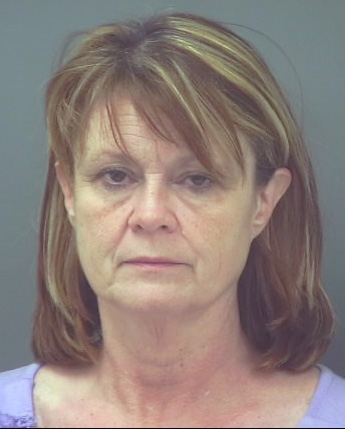 Julie Lynn Booth-Moran, age 57, of West Highway 4, was charged with driving under the influence, a misdemeanor charge of possession of a harmful new legend drug without a prescription and felony possession of a controlled substance without a prescription.
The Santa Rosa County Sheriff’s Office reported responding to a possible intoxicated driver just after 7:30 p.m. after witnesses described the vehicle as swerving all over the road and almost hitting several cars and mailboxes. Deputies made contact with a Lexus SUV driven by Booth-Moran at the Dogwood and Stewart Street intersection. The responding deputy reported that he followed that vehicle at 25 mph in a 45 mph zone on Stewart Street before activating his emergency lights. The deputy stated that the vehicle did not stop until two other units arrived with the lights and sirens activated on Firehouse Road.
The deputy reported that Booth-Moran tried to find her license multiple times in her purse but did find her concealed weapons permit, alerting him to secure a loaded .32 caliber semi-automatic handgun from her purse. As Booth-Moran looked for her driver’s license, the deputy reported that he could plainly see several prescription medication bottles in her purse.
Booth-Moran failed to perform the tasks as instructed in a field sobriety test and was placed into custody, according to her arrest report.
The deputy reporting finding a medication bottle without a prescription label but with a piece of tape labeled as “HCTZ 25″. The 28 pills inside the bottle were Hydrochlorothiazide, a diuretic medication commonly used to treat high blood pressure. Inside a prescription bottle with a proper label for another common blood pressure drug, the deputy reported finding one 10 mg hydrocodone pill, a controlled narcotic. An inside another bottle with a legal prescription label for Phentermine, an appetite suppressant, deputies reported find half of one Viagra pill.
According to the State Attorney’s Office, Booth-Moran’s breath test results were absolute zero for alcohol. She submitted to a requested urine test according to the arrest report; the results of that test are not yet available.
Booth-Moran was released on bond from the Santa Rosa County Jail early Friday morning.
Florida Gov’t Weekly Roundup: Sticking To Decaf
April 9, 2016
It was the espresso shot heard round the world.
 When Gov. Rick Scott went into a Gainesville coffee shop for a cup of joe, he instead found himself in a heated discussion with a fellow customer about abortion and jobs. The conflict between the governor and a former Lake Worth city commissioner became an Internet sensation, spawning cable TV segments, nationwide write-ups and even an attack ad from Scott aimed at his sparring opponent.
But amid the frothy coverage of the Starbucks showdown, the governor also spent part of the past week doing more than an engaging in a verbal beanbag fight. Scott signed a variety of bills, including a sweeping transportation measure, a funding plan for the Everglades and a retirement-system proposal that was a priority of Senate President Andy Gardiner, R-Orlando.
Elsewhere, significant developments bubbled up in court cases involving Medicaid and education. And a congressman who often seems to be caffeinated when he speaks about political adversaries faced a new round of stories about ties to a hedge fund that his primary opponent has used to hammer him.
SIGN OF THE TIMES
When the Legislature sent an alimony bill (SB 668) to Scott on Monday, it didn’t just mark the beginning of the clock for the governor to consider another politically sensitive issue. It also meant that Scott has received all 272 bills passed during the 2016 legislative session. The governor has already approved the vast majority of the measures and added more during the course of the week, but the bill-signing season is coming to a close.
Among the dozens of pieces of legislation Scott inked this week was a bill known as “Legacy Florida,” which opens a tap of cash to help restore the Everglades, the state’s natural springs and Lake Apopka.
The measure (HB 989), which was a priority of legislative leaders and had the support of conservationists, could annually set aside more than $250 million for restoration work. The money will come from funds that voters designated in 2014 to manage and preserve state lands and waters.
“I want to thank the Florida Legislature for fulfilling the promise I made to create a dedicated source of funding to restore the Florida Everglades,” Scott said in a prepared statement.
Conservationists considered the Legacy Florida measure their biggest accomplishment of the 2016 legislative session and hope that lawmakers will continue to carve out money from the voter-backed amendment for other priorities.
“I like the idea of earmarking. If we could just get a generous earmark for land conservation, then we will have finally achieved exactly what the voters wanted,” said Eric Draper, executive director of Audubon Florida. “But the voters certainly wanted the Everglades. That was in the first line of the amendment.”
In a victory for Gardiner, Scott also put his name on a bill (SB 7012) revamping the death benefits for first responders who are members of the Florida Retirement System. The bill would ensure that survivors of first responders killed in the line of duty who are members of the 401(k)-style investment plan get the same benefits as the survivors of employees enrolled in the state’s traditional pension plan.
It would also double those death benefits from half of the monthly salary of “special risk” class members like law-enforcement officers, firefighters and paramedics to the full amount. That change affects both investment-plan and pension-plan members.
“We do not want the spouses of Florida’s fallen heroes to struggle to meet the basic needs of their children,” Gardiner said in a prepared statement.
In another move, Scott approved a wide-ranging transportation bill (HB 7027) that drew attention for putting more money into the state’s 15 seaports. The measure boosts the minimum annual funding for the Florida Seaport Transportation and Economic Development program — administered by the Florida Ports Council — from $15 million to $25 million.
“I think what you’ll see is a continuation of investing in projects that address some of the critical growth needs that we’ve been dealing with over the last several years,” Florida Ports Council President and CEO Doug Wheeler said.
In a change that probably has less of an impact but got plenty of press anyway, Scott also signed a bill repealing the state’s nearly 150-year-old (and rarely enforced) ban on unmarried men and women living together.
While the prohibition hasn’t been used much in criminal proceedings, a House staff analysis during the session noted that it has had other consequences. For example, the analysis said the Florida Department of Business and Professional Regulation suspended a company’s liquor license in 1979 after finding that six people tied to the company were in violation of the law.
Floridians who wish to shack up and sell alcohol are now free to do so.
JUDICIAL REVIEW
Suing the state to change policies can take a long time. Just ask opponents of the Legislature’s redistricting plan, who waged a nearly four-year legal fight to overturn gerrymandered congressional and state Senate maps.
Or ask groups representing pediatricians and dentists, who this week settled with the state in a decade-long lawsuit about care provided to children in Florida’s Medicaid program.
The settlement, released Tuesday, came about 15 months after a federal judge found that Florida’s history of low reimbursement payments to doctors led to a lack of access to care for many poor children. But the agreement also came after the state argued that an overhaul of the Medicaid system had effectively made the case moot.
In the end, the settlement calls for steps aimed at increasing payments to doctors, improving dental care for children and trying to make sure children get enrolled in Medicaid and receive services with minimal disruption. The document said the settlement is the “product of lengthy negotiations and compromise.”
But Tallahassee pediatric cardiologist Louis St. Petery said the effects of the settlement could take time to work their way through the system.
“I don’t see any change in access tomorrow compared to today just because the settlement agreement is in place,” he said. “The settlement agreement meters this out over one year, two years, three years, depending on which category of physicians and dentists you’re talking about. That’s a very long time.”
Education advocates have also gone to court to try to get more resources from the state, in a case that wrapped up Friday with closing arguments. Leon County Circuit Judge George Reynolds heard the arguments in a lawsuit challenging whether the state has met its constitutional obligation to provide a “high quality” system of public schools.
“The state has failed to make adequate provision by not allowing significant numbers of students to obtain a high-quality education,” said Jodi Siegel, an attorney for Citizens for Strong Schools, the group that brought the challenge. “This is not an insignificant matter. There’s over 1 million students that cannot read at grade level. There are half-a-million free-and-reduced lunch students who cannot read at grade level.”
But Rocco Testani, an attorney for the Florida Board of Education, argued that the state’s schools have made a huge amount of improvement and pointed to indicators such as scores on the National Assessment of Educational Progress, a set of tests commonly used to compare students across the country.
“What we know is that Florida has had a remarkable journey from a state that was below average, well below average, 15, 16, 17 years ago, to a state that is now truly a leader, truly a leader, when it comes to national comparisons,” Testani said.
A GRAYSON AREA?
Democratic Congressman Alan Grayson, who’s running for his party’s nomination for a U.S. Senate seat, has never been reserved in talking about his critics. And he wasted no time ripping into the Office of Congressional Ethics after the independent body said in a report Tuesday that his use of a hedge fund merits “further review.”
Grayson, a favorite of progressive groups, quickly denied any wrongdoing during a conference call with reporters in which he questioned the ethics of the committee’s staff and labeled the allegations first filed last summer as “politically motivated,” “a witch-hunt,” and “frivolous.”
“I think that nothing will happen between now and the election, and the most likely course of events is that after the election the complaint will be dismissed,” Grayson told reporters.
The House Ethics Committee, which released the report, has made no final decision regarding the allegations that Grayson used his position as a sitting member of Congress to solicit investments into the fund, which would violate federal law and House rules.
The Office of Congressional Ethics, an independent body, found in its report that there is “substantial reason to believe” several allegations, including that Grayson permitted the use of his name by four entities linked to his hedge fund and Grayson Consulting, Inc. of Virginia; that he omitted required information from his annual financial disclosure statements; and that a Grayson congressional staffer used official resources while working for Grayson’s hedge fund.
The campaign of Grayson’s opponent, Democratic Congressman Patrick Murphy, who has received White House support in his run for the Senate, called the report “damning,” and held a conference call with reporters the day after the report’s release to continue whaling away.
Grayson said the “fishing expedition” further illustrates the Washington political establishment’s support for Murphy.
“Patrick Murphy and his D.C. establishment allies are using (this) new political witch-hunt to try to distract our Florida voters from what they really care about,” Grayson told reporters.
STORY OF THE WEEK: Gov. Rick Scott signs several key pieces of legislation as he nears the end of his work on approving or nixing measures passed by the House and Senate during this year’s legislative session.
QUOTE OF THE WEEK: “And if we get him onto the floor at the convention, and he loses the first ballot, then it becomes a slaughterhouse. And I’ve got my cleaver and apron handy.”—Republican political consultant Rick Wilson, a critic of Donald Trump, on the potential of defeating the businessman’s bid for the presidency at this summer’s Republican National Convention.
by The News Service of Florida
Senior Night: Northview Beats Chipley In Eight
April 9, 2016

Roman Manning drove in the game-winning run in the bottom of the 8th inning for the Northview Chiefs on Senior Night to defeat the Chipley Tigers 6-5.
Northview started off hot Friday night with four runs in the first inning to take a commanding 4-0 lead. Chipley, ranked #4 in 1A in Florida, cut into the lead in the 4th inning with two runs in the top half of the inning, but the Chiefs responded with one in the bottom of the 4th for a 5-2 lead. Chipley added one run in the 6th inning and two runs in the 7th inning to tie the game at 5-5 and force the extra inning.
Leading hitters for the Chiefs were Quentin Sampson (2-5, 1 RBI); Zach Payne (1-1, 1 RBI, 1 run); Jared Aliff (1-2, 1 RBI); Roman Manning (1-4, 1 RBI, 1 run); Thomas Moore (1-3); Seth Killam (1-3, 2 runs, including the game-winning run). John Chivington and Devin Stabler also had a run each for Northview.
Daniel Mascaro earned the win for Northview, throwing one inning and allowing no hits or no runs. Thomas Moore threw seven innings, striking out 10 batters while allowing five hits and five runs.
Northview improved to 7-9 on the season and 4-6 in the district. The Chiefs finished tied for #3 in District 3-1A, but a tiebreaker will move them to the #4 seed in the upcoming district tournament.
Northview returns to action in their regular season finale Tuesday at Laurel Hill.
Pictured: Northview seniors and their parents (L-R) Jacob Dunsford, Zach Holland and Roman Manning. Not pictured: Thomas Moore. Photo for NorthEscambia.com, click to enlarge.
Federal Disaster Loans Now Available For Tornado Recovery
April 8, 2016

The federal government is making disaster loans available in Escambia County to assist with tornado recovery.
The loans from the U.S. Small Business Administration will be available to business, non-profits, churches an individuals that suffered physical or economic losses as result of the EF-3 tornado on February 15 in the Century area or the Feburary 23 EF-3 tornado in the Pensacola area.
The types of loans available include:
- Business Physical Disaster Loans – Loans to businesses to repair or replace disaster-damaged property owned by the business, including real estate, inventories, supplies, machinery and equipment. Businesses of any size are eligible. Private, non-profit organizations such as charities, churches, private universities, etc., are also eligible.
- Economic Injury Disaster Loans (EIDL) – Working capital loans to help small businesses, small agricultural cooperatives, small businesses engaged in aquaculture, and most private, non-profit organizations of all sizes meet their ordinary and necessary financial obligations that cannot be met as a direct result of the disaster. These loans are intended to assist through the disaster recovery period.
- Home Disaster Loans – Loans to homeowners or renters to repair or replace disaster-damaged real estate and personal property, including automobiles.
Applicants must have a credit history acceptable to the SBA and the ability to repay all loans. Collateral is required for physical loss or economic injury disaster loans over $25,000. Loan terms range up to 30 years with interest rates from 1.813 to 6.25 percent.
Only uninsured or otherwise uncompensated disaster losses are eligible.
It is anticipated that the SBA will open an application assistance center in Century by the middle of next week. NorthEscambia.com will publish office hours and location once announced. For more information, contact SBA’s Disaster Assistance Customer Service Center by calling (800) 659-2955, emailing disastercustomerservice@sba.gov, or visiting SBA’s Web site at http://www.sba.gov/disaster.
The deadline to apply for physical damage assistance if June 6; the deadline for economic injury assistance applications is January 9, 2017.
The loans are also available in the contiguous Florida county of Santa Rosa and the contiguous Alabama counties of Escambia and Baldwin.
NorthEscambia.com photos, click to enlarge.
Citizens Join Together To Aid Century Tornado Long Term Recovery
April 8, 2016
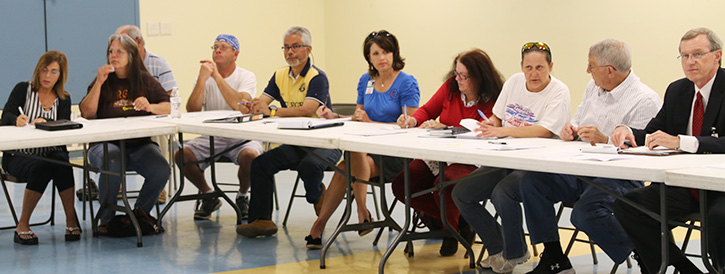
A group of about 40 people met Thursday night in Century to discuss long term tornado recovery efforts. The group included representatives from a number of churches and non-profits ready to work, to tornado victims still facing desperate times.
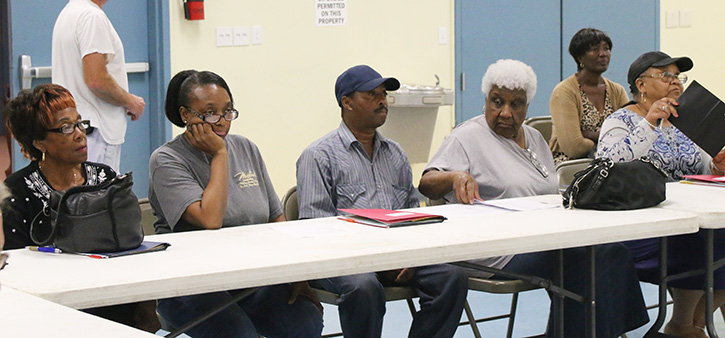
“It’s still raining in my bedroom,” said Century resident Helen Mincy. “I need a roof.” She said her tornado recovery had not necessary been limited by money, but by government red tape. Specifically, she pointed to a law that states that unlicensed contracting is a felony.
“All of our lives were have used the a local handyman to do our work. He don’t have a license. Now, the local guys (without a contractor’s license) don’t want to touch it because he don’t want to get locked up. We can’t get nothing done.”
Century Mayor Freddie McCall told the group that many have been hampered by title issues after homes, some 100-years old, have been passed down through generations of family members without property deed changes with the county. Despite the volunteer efforts of Legal Services of North Florida to help, many have had their county permit and aid applications denied, the mayor said, due to improper paperwork.
“It sounds like all of these people are just going to be left out,” McCall said.
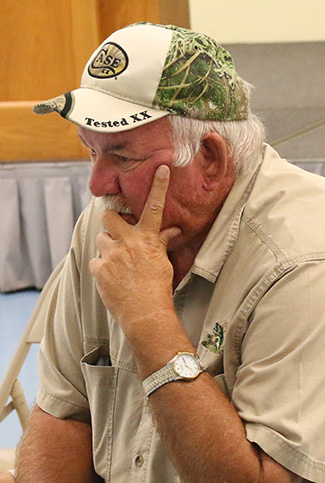 Longtime Century area resident Regi Burkett volunteered to coordinate the group’s efforts. Burkett has been chief of the Century Volunteer Fire Department for 29 years.
“I have huge passion of this area,” Burkett said. “I am sick of what I see and hear. It is time for something to make a difference for these people that are being told no. When they hit a brick wall, we need to help them try again and again until the answer is yes.”
Paula Byrd, who facilitated Thursday night’s meeting, said, “Recovery take a long time. This is a long term commitment to help.”
The group divided into different committees and groups to work toward their long term recovery efforts — beginning with an effort to help those such as Mincy with immediate needs. The Town of Century will provide the group with office space at the Century Business Center on Pond Street, and a church group will provide a phone. Information on how to contact the group will be published when available on NorthEscambia.com.
Pictured top: Citizens came together Thursday night in Century to discuss long term tornado recovery. Pictured inset; Regi Burkett, who will serve as the group’s coordinator, listens to victims. Pictured below: Helen Mincy, left, and other citizens attended to the meeting. NorthEscambia.com photos, click to enlarge.
Convicted Double Killer Found Dead At Holman Prison
April 8, 2016
An inmate at Holman Prison in Atmore was found dead Thursday morning.
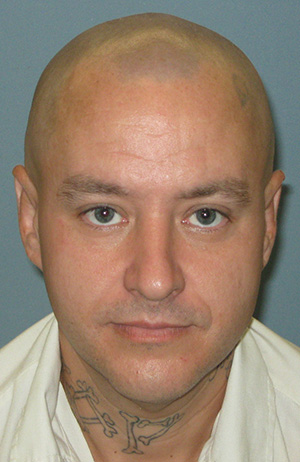 Bob Horton, public information manager for the Alabama Department of Corrections, said state inmate William Randall Triplett, 45, was found dead of an apparent suicide.
At 11:10 a.m., two corrections officers found Triplett hanging from a bedsheet in a one-person cell inside the prison’s segregation unit. The inmate was unresponsive and a corrections physician pronounced him deceased 11:35 a.m.
Triplett was convicted of capital murder in 2003 and sentenced to life without parole for killing his father, Billy Triplett, and stepmother, Debbie Triplett, during the course of a robbery in Clay County in 2001.
Triplett’s death remains under investigation.