

Escambia Company Expands, Adding New Jobs
May 27, 2016

An Escambia County manufacturing plant is adding to their facility and adding new jobs.
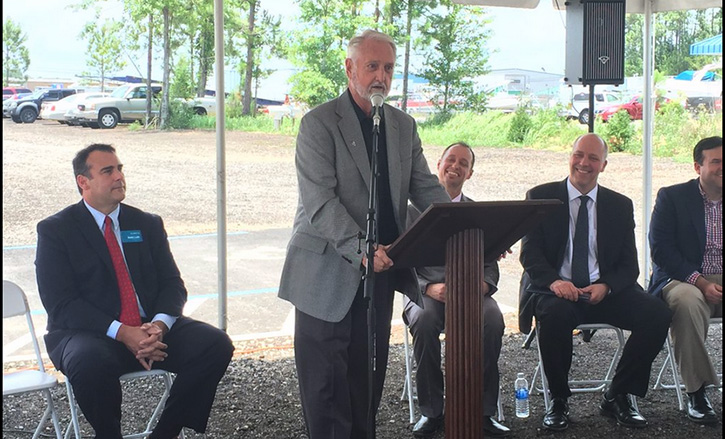
The Danish based Jupiter Group held a grand opening Thursday for a 25,000 square foot addition to their facility in the Ellyson Industrial Park. With the expansion, they plan to employ a total of 250 people in Escambia County.
The company builds turbines that produce clean power, mostly from wind. Their primary customer is the General Electric Wind Energy Plant in Pensacola.
Courtesy photos for NorthEscambia.com, click to enlarge.
Pensacola Mullets Fall To Birmingham
May 27, 2016
After the game, Pensacola manager Pat Kelly wanted to know if its 6-4 loss to the Birmingham Barons counted against the Blue Wahoos.
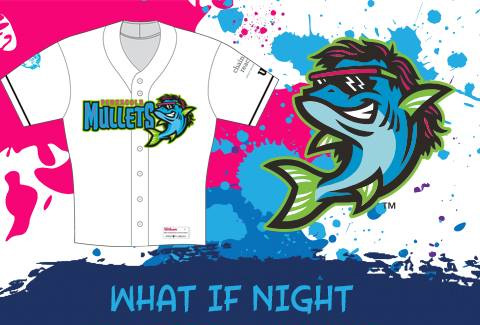 On “What If” night Thursday, the Pensacola players sported Mullet jerseys, instead of its regular Blue Wahoos uniforms and they played in Mullet Stadium.
“The Mullets are 0-1,” Kelly said jokingly. “I don’t think it counts against our record.”
Unfortunately, the loss does go in the Blue Wahoos loss column. The team fell into a first place tie with the Biloxi Shuckers at 27-20.
The logo for the Mullet name sported the fish with a mullet leaning up against the letter “P” for Pensacola. In 2012, the fish was one of six finalists for the name of the Cincinnati Reds Double-A affiliate.
The loss spoiled a strong outing by big righty Sal Romano.
Romano got the first five outs of the game on strike outs. He finished with a season-high nine strikeouts and lasted 7 innings for the second time in three games. He walked just one batter. Romano still got a K on a 94 mph fastball in the seventh inning when he struck out Birmingham center fielder Adam Engel.
Kelly said the 21-year-old Romano, the Cincinnati Reds No. 9 prospect, is slowly turning into a pitcher, instead of a thrower.
“The seventh inning might have been his best inning,” Kelly said of Romano, who set the Barons down in order. “It’s small baby steps but he’s not rearing back and throwing as hard as he can. Harder is not always the best.”
Romano said when he takes the mound his goal is to reach the seventh inning. That’s much easier to do with his increasing confidence in his changeup that he has been developing the last few seasons.
“That’s a big thing for me,” he said. “I just said, ‘Let’s bear down here.’ I’m trying to make pitches, not just be a big kid throwing hard.”
Pensacola came back in the bottom of the eighth to make it a one-run game, 5-4, against the Barons, who tied the series, 1-1.
The Mullets loaded the bases on two walks and a single. Pensacola center fielder Phillip Ervin scored on DH Sebastian Elizalde’s ground out and then Mullets first baseman Kyle Parker scored on a wild pitch. Pensacola catcher Chad Wallach, who entered the game in an 0-12 slump, then singled in Mullet’s second baseman Brandon Dixon. Wallach was 2-3, walked and knocked in a run.
Birmingham scored an insurance run in the ninth, however. The Barons added another run in the ninth when Engel singled in Barons shortstop Eddy Alvarez with no outs. With runners on first and third for Birmingham, Pensacola center fielder Bryson Smith caught a fly ball by right fielder Eudy Pina and then threw a perfect strike to Wallach to get Engel out at the plate and prevent more runs from scoring.
“Bryson did a nice job staying back on the ball,” Kelly said.
Also playing well for the one-time Mullets Thursday, was Pensacola first baseman Kyle Parker, who made up for his error by slicing a solo shot over the left field wall just inside the foul pole in the fourth inning to pull the Mullets within, 2-1. Parker got on base three times and scored twice.
Birmingham first baseman Jake Peter also hit his fourth home run of the season on a solo blast in the fifth inning to put the Barons up, 3-1.
Woman Hit By Her Own Vehicle In Convenience Store Parking Lot
May 26, 2016
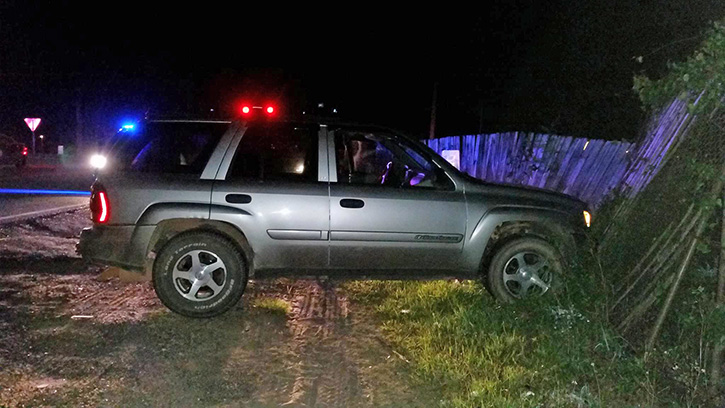
A woman was injured when she was hit by her own vehicle in a convenience store parking lot early Thursday morning.
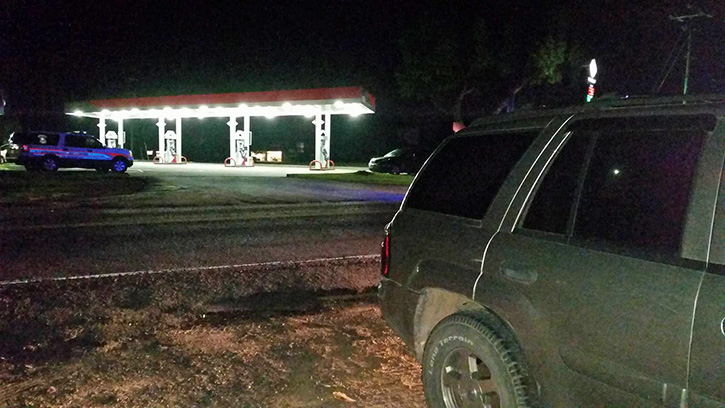
About 2:30 a.m., the woman was reportedly working on her vehicle in the parking lot of the Tom Thumb on Highway 29 at West Roberts Road when it jumped into gear, dragging the woman across the parking lot. The vehicle then ran over the woman before crossing West Roberts Road and hitting a privacy fence.
The woman was transported to an area hospital by Escambia County EMS.
The accident remains under investigation by the Florida Highway Patrol. Further details have not been released.
The Ensley Station of Escambia Fire Rescue also responded.
NorthEscambia.com photos by Kristi Barbour, click to enlarge.
Cantonment Couple Charged In ‘Heart-Wrenching’ Child Abuse Case
May 26, 2016
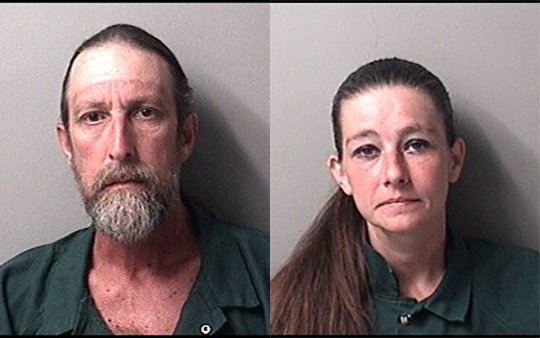
A Cantonment couple has been charged in a child abuse case that Escambia County Sheriff David Morgan called “heart-wrenching” and one of the worst he has ever seen.
Jeffrey Scott Linton, 48, and Rachel Watkins Linton, 34, of Muscogee Road in Cantonment, are facing multiple child abuse charges based upon allegations that they inflicted severe physical abuse on three young children.
“It is one of those things that bring tears to your eyes to think that a child would be treated in this manner,” Morgan said during a Wednesday afternoon press conference. He said there were nine total children in the home – eight biologically belonging to Rachel Linton, one the biological child of Jeffrey Linton. The charges filed relate to the three youngest of the children.
All of the children have been removed from the home.
The investigation began after the Department of Children and Families received an anonymous tip. That led to the Escambia County Sheriff’s Office opening an investigation and executing a search warrant at the couple’s Cantonment home.
“These investigations are always ongoing. If at any point and time additional facts come out that warrant additional charges being filed, we would review it at that time and file the appropriate charges,” Assistant State Attorney Greg Marcille said. “We do take these types of cases very seriously.”
Jeffrey Linton remains in the Escambia County Jail with bond set at $1.5 million; Rachel Linton’s also remains in jail with a bond set at $900,000.
The allegations against the Lintons span the period August 2015 to May 23, 2016, according to an arrest report obtained by NorthEscambia.com. On May 24, the Escambia County Sheriff’s Office was made aware of the allegations.
EDITOR’S NOTE: The remainder of this story details some of the severe physical child abuse allegations in this case. There are details that some readers will find disturbing.
The report indicates that about one month ago, one of the victims suffered a broken leg and then a broken arm caused by one of the siblings, and that Rachel Linton did not feed or bathe the children or take them to medical appointments. Two of the victims were born prematurely and are developmentally delayed.
DCF received a tip that Rachel Linton was planning to flee the area and has a history of fleeing when she is under investigation.
DCF received a report that two victims had injuries to their faces and heads, and Rachel Linton took the victims to West Florida Hospital where a trauma survey found that one victim had two broken arms and a broken leg and all three victims were malnourished.
The report says Rachel Linton frequently hits the victims’ heads on the walls and that Jeffrey Linton also abuses them. Rachel Linton threatened the children with further punishment if they provided any information to DCF about the ongoing abuse in the home. Both allegedly told the children to blame their injuries on the other children in the home.
One child allegedly suffered a broken arm as the result of Jeffrey Linton twisting an arm. DCF discovered the children had multiple bruises on their faces, back and arms, and that the children had knots on the back and tops of their heads. They suffered a variety of other injuries, including an abscess on the bottom of a foot, scarring and scabbing of lips, scarring of a nose, lacerations to their ears and bruising to their genital areas.
A witness alleged that Jeffrey Linton would hold the victims upside down by their feet and hit their heads on the floor as punishment and that he would hit them with a paddle “2-3 feet long” and throw them and slam their heads against a wall, and he would allegedly hit them with a fly swatter.
The witness said the paddle is now broken from use, and that she would hear the children cry and scream in pain.
Work Complete On Replacement Of 75 Year Old Highway 97 Bridge
May 26, 2016

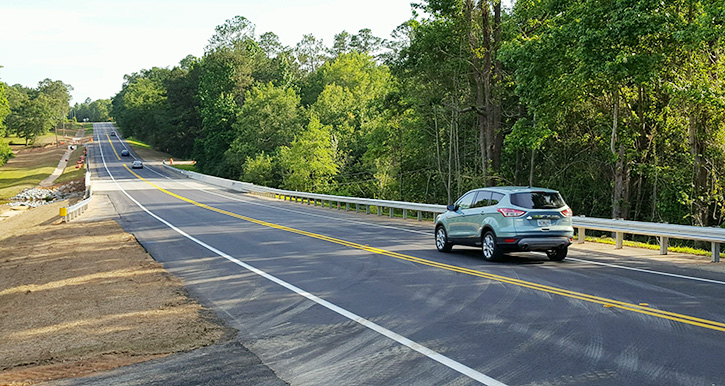
Work is now mostly complete on the replacement of a 75-year old Highway 97 bridge over Little Pine Barren Creek in Walnut Hill.
Work at the site began back in March 2015, with traffic moved to a temporary bridge in July. The construction was part of a $2.5 million contract which consisted of replacing a structurally deficient bridge, including roadway reconstruction, milling and resurfacing, guardrail, drainage, new signs and pavement markings.
The bridge is located at the intersection of Wiggins Lake Road, about one mile north of Ernest Ward Middle School. The bridge that was replaced was constructed in 1940.
Pictured: Traffic flows across a completed bridge on Highway 97 in Walnut Hill late Wednesday afternoon. NorthEscambia.com photos, click to enlarge.
State Supreme Court To Hear High Profile Gambling Case
May 26, 2016
The Florida Supreme Court is expected to hear a high profile gambling case next month.
 Justices will take up a closely watched case about whether a pari-mutuel facility in rural Gadsden County should be able to offer slot machines — a case that could have implications for five other counties across the state.
The pari-mutuel Gretna Racing., operated by the Poarch Band of Creek Indians of Atmore, argues it should be allowed to offer the lucrative machines, at least in part because Gadsden County voters approved slots in a referendum. But a divided 1st District Court of Appeal last year sided with Gov. Rick Scott’s administration, which contends that the small North Florida horse track cannot have slot machines without the express permission of the Legislature.
The outcome of the case could affect five other counties — Brevard, Hamilton, Lee, Palm Beach and Washington — where voters have approved slots in similar referendums. The case (Gretna Racing, LLC v. Florida Department of Business and Professional Regulation, etc.) is scheduled for arguments June 7.
by the News Service of Florida
Learn How To Purchase AED At Escambia County’s Cost
May 26, 2016
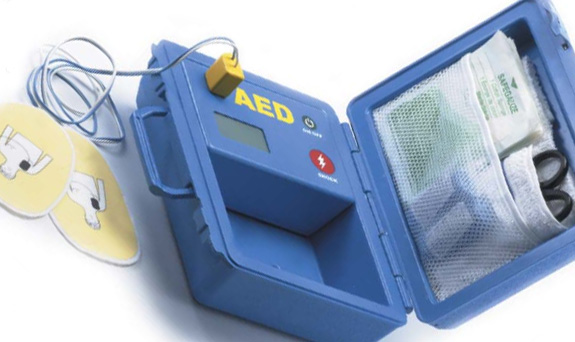
Escambia County will hold a meeting next week to provide more information on how to purchase an automated external defibrillator (AED) at the county’s cost.
District 5 Commissioner Steven Barry and Escambia County Public Safety will host a meeting Tuesday, May 31 at 6 p.m. for groups or individuals interested in purchasing an AED for their church or business at the county’s cost.
The meeting will take place at the Walnut Hill Fire Station at 7760 Highway 97. Escambia County Public Safety Director Mike Weaver will be available to answer questions about purchasing an AED at the same cost the county received during its last bid solicitation and provide information about AED kit options and available warranty programs.
An AED will be available to view at the meeting.
The cost will be $1,317.31 for the AED and associated equipment, according to Mike Weaver. Escambia County Public Safety Director . The vendor is also offering a wall mount cabinet for an additional $99..
“By no means are we trying to ’sell’ this particular AED. It is the same AED that we have chosen for our responders, County Buildings and parks. There are other devices and distributors that may be able to offer a lower price that will be shared,” Weaver said.
An automated external defibrillator is a lightweight, portable device that delivers an electric shock through the chest to the heart. The shock can stop an irregular heart rhythm and allow a normal rhythm to resume following sudden cardiac arrest. Sudden cardiac arrest is an abrupt loss of heart function. If it’s not treated within minutes, it quickly leads to death.
According to Escambia County, AEDs are important because they make it possible for more people to respond to a medical emergency where defibrillation is required. Because AEDs are portable, they can be used by anyone who has been trained how to use them – not only by medical professionals. They can be made part of emergency response programs that also include rapid use of 9-1-1 and prompt delivery of CPR. All three of these activities are vital to improving survival from cardiac arrest.
For more information, contact Escambia County Public Safety at (850) 471-6400.
Blue Wahoos Down Barons In Series Opener
May 26, 2016
Jackson Stephens’ family rarely miss his starts, making the five-hour drive from their home in Oxford, Ala., near the Georgia border to Pensacola.
They left the game in good spirits on Wednesday. Their son didn’t walk anybody, plus he improved his record to 4-3 and his ERA dropped to 3.22.
 “My dad hates walks,” Stephens said. “I didn’t have any so he was pumped. My mom, she just wants to see her baby do good and she’s happy.”
Stephens, coming off of a combined no-hitter against the Jacksonville Suns on May 20, threw another gem. He threw seven scoreless innings allowing five hits and striking out a season-high nine batters for the second time this season. He has now thrown 12 scoreless innings.
Pensacola earned the victory, 5-1, over the Birmingham Barons in the opening game of the five-game series in front of 3,993 fans Wednesday at Blue Wahoos Stadium.
Stephens pumped his fist after getting first baseman Nick Basto to fly out to Donald Lutz in left field to end the seventh inning.
All four of his pitches – a two- and four-seam fastball, curveball and slider – were working for him Wednesday. He said his seven scoreless innings Thursday were similar to his last outing when he pitched five innings without allowing a hit but giving up two walks.
“I’d say they were similar,” said the 21-year-old Stephens. “You’re not going to go out there and throw no hitters all the time. My stuff was there. I was able to get ahead in the pitch count with a lot of early strikes.”
Stephens, who entered the game with opponents hitting .221 off him, limited Birmingham to .192 (5-26) Thursday.
Pensacola manager Pat Kelly also liked what he saw from Stephens, who got ahead of hitters Thursday. Kelly pointed out Stephens threw about 85 pitches in both his five inning outing and Thursday’s seven inning game.
“He’s been throwing bullets but wasting them early in the ball game,” Kelly said. “That’s what he’s got to do.”
Pensacola retook sole possession of first place from the Biloxi Shuckers, who vaulted into the Southern Division lead when they beat the Blue Wahoos April 19. Pensacola is 27-19, while Biloxi is 26-19, after losing to Mobile BayBears, 9-1, Wednesday.
Pensacola’s third baseman Tony Renda doubled to lead off the first inning, went to third on a groundout by center fielder Phillip Ervin and scored on a wild pitch to give the Blue Wahoos a 1-0 lead.
Renda was also involved in the second run scored by the Blue Wahoos, too, in the third inning when he singled to drive in Pensacola catcher Chad Wallach. Renda tried to stretch his single into a double but was thrown out at second base by left fielder Courtney Hawkins.
Kelly was happy with Renda’s aggressiveness against Birmingham starter Tyler Danish, the White Sox No. 11 prospect, who threw a complete game shutout the last time he faced the Blue Wahoos on April 29.
“To scratch out a few runs early was nice,” Kelly admitted. “(Renda) had that big RBI for the second run.”
DH Eric Jagielo hit a two-out blooper to left field in the sixth inning that drove in Kyle Parker, who had singled, to put Pensacola ahead, 3-0.
Dixon got the third straight hit to start the eighth inning to drive in two runs and put Pensacola up, 5-0.
New York Yankee transplants who came over in the Cincinnati Reds trade for closer Ardolis Chapman, Renda and Eric Jagielo led the team at the plate Thursday. Renda hit in his fifth straight game, going 2-4 with a double and one run scored. Meanwhile, Jagielo went 2-4 and drove in the third run off of Birmingham’s Danish.
Jagielo, an All-Star in his previous minor league seasons, is hitting .180 but Kelly expressed confidence in him.
“To me it’s just a relaxation thing,” Kelly said. “When you’re coming to a new organization you want to show everybody what you can do. He looked good tonight.”
Century Man Facing Additional Charges For Stealing Copper Wire From Former School
May 25, 2016
A Century man arrested in late April for stealing heavy duty copper wiring from the former Century High School has been arrested again on similar additional crimes.
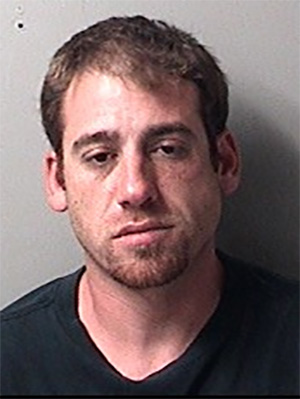 Nicholas Depue, 33, was arrested for burglary and grand theft, in addition to previous charges of burglary of an unoccupied structure and two counts of grand theft. He remains in the Escambia County Jail with bond set at $50,000.
The site foreman responsible for the demolition of the old Century High School told investigators that 100 pounds of salvage copper wire was missing from inside one of the campus buildings.
Upon contacting Advance Environmental Recycling in Flomaton, Escambia County (FL) Sheriff’s investigators found that Depue had alleged sold the stolen wire for scrap.
Depue was previously arrested after he allegedly removed a wood covering over a window and broke the window to enter the Old Century High School. Inside the building he took about 28 pieces of heavy duty copper wiring about 6-8 feet in length valued at about $600. The wiring was then hid in bushes about 1,000 feet from the school.
When investigators contacted Depue at his Front Street home, he admitted to the theft and showed deputies where the wire was located, an arrest report states. The wire was returned to the demolition company that is removing the school.
Depue is also accused of stealing a $4,000 Evinrude boat motor from a home on North Century Boulevard. The motor was attached to a 16-foot aluminum boat and was parked in the rear area of a yard. Depue then allegedly sold the boat motor to a Flomaton man for $800. The stolen boat motor was recovered.
Escambia School Media Centers Honored For Makerspaces In Innovation Centers
May 25, 2016
As part of the Escambia County School Superintendent’s Vision 2020 plan, school district library media specialists were challenged last summer to transition their school’s libraries into Innovation Centers and to rethink floor plans and material usage to create Makerspaces.
“It was exciting to see so many schools’ Innovation Center Specialists look for ways to reinvent their space and shift their mind sets,” said Superintendent Malcolm Thomas. “Spaces that were previously used for storage or teacher workrooms were cleared out and cleaned to become student Makerspaces. Students had a place to be creative and keep their projects to finish on another day.”
A rubric was created to track each Innovation Center’s progress with implementing Makerspaces. Library media specialists and principals completed the rubrics and provided documentation of their efforts. The rubrics and documentation were reviewed by a committee and eleven schools are being honored as being “exemplary” in their design and implementation of the Makerspace opportunities in their Innovation Centers. The Innovation Specialists at these schools are being awarded $250 from the Superintendent’s Circle fund to support the Makerspaces in their schools and further develop ideas and creativity.
Exemplary schools honored for their Makerspaces and Innovation Centers were:
· Ensley Elementary (Library Media Specialist, Myra Palmer)
· Ferry Pass Elementary (Library Media Specialist, Valerie Kaye)
· Northview High (Library Media Specialist, Alison Robinson)
· Oakcrest Elementary (Library Media Specialist, Michelle Lingo)
· Pine Meadow Elementary (Library Media Specialist, Debby Dorough)
· Ransom Middle (Library Media Specialist, Crystal Roberts)
· Tate High (Library Media Specialist, Mitzi Allen)
· Washington High (Library Media Specialist, Alisha Wilson)
· Weis Elementary (Library Media Specialist, Jennifer Kemp)
· West Florida High (Library Media Specialist, Linda Quinn)
· Woodham Middle (Library Media Specialist, Hazel McCormack)
Innovation Center Specialists have also worked hard this year to find ways to fund specific ideas. Many received grants from the Escambia Public Schools Foundation. Twelve schools each received part of a $28,000 grant from the Panhandle Public Access Network that allowed them to purchase some big ticket items.
“Some used grant money to buy items like Minecraft, small robots, circuits, and even 3D printers,” added Sheila Brandt, ECSD’s Media Services Coordinator. “We also saw amazing examples of recycling. Even the packing material that came in the boxes with the new Chromebooks were repurposed in creative ways, such as a model of Shakespeare’s Globe Theater created with the material at Washington High School.”
“As librarians, none of us ever want to see kids stop checking out books. This transformation has not meant that, in fact some schools saw an increase in their checkout rate,” Brandt added. “Instead, we are excited to see increased levels of energy and excitement when students come in to be creative, and they find a book for inspiration, or vice versa.”
“One rubric contained a comment from a high school Innovation Center Specialist that said that at first this seemed overwhelming,” added Thomas. “But now, she said she knows this was the most positive thing she could have done in her library for their students. It is my pleasure to present funds to these schools to help keep the innovations coming.”