

Blue Wahoos Lose To Shuckers
April 20, 2016
For the first time this season, the Pensacola Blue Wahoos find themselves trailing in a five-game Southern League series.
Biloxi Shuckers first baseman Nick Ramirez hit a two-out single in the bottom of the seventh inning — one of 10 Biloxi hits in the game — that scored center fielder Brett Phillips for a 4-3 victory over Pensacola at MGM Park.
 The Shuckers came back from a, 3-2, deficit to win the game. Biloxi shortstop Javier Betancourt hit a sacrifice fly to center in the bottom of the sixth inning to score Ramirez and knot up the game, 3-3. Ramirez, who hit his first home run the game before, was 2-4 with a run scored and RBI in Tuesday’s game.
With the bases loaded in the top of the fifth inning, Blue Wahoos center fielder Beau Amaral bunted and second baseman Tony Renda scored on the suicide squeeze to tie the score at 2-2. It was Amaral’s team leading ninth RBI of the season. Then right fielder Sebastian Elizalde scored to put Pensacola on top, 3-2, when shortstop Alex Blandino ground out to shortstop.
Pensacola starter Sal Romano allowed three earned runs, giving up nine hits to Biloxi and two walks in 5.2 innings. He struck out five. However, the loss went to reliever Wandy Peralta, who gave up the game-winning run on Ramirez’s single in the seventh.
The Shuckers scored first in the third inning to go ahead, 1-0, when Phillips hit a two-out line drive single that scored second baseman Christopher McFarland, who had hit an infield single to second base.
Pensacola tied it up, 1-1, in the fourth when Blandino doubled to center and scored on a throwing error by Biloxi’s Betancourt trying to complete a double play on Blue Wahoos left fielder Phillip Ervin.
Biloxi retook the lead, 2-1, in the bottom of the fourth when McFarland singled to right field to drive in left fielder Victor Roache, who had singled to center.
Biloxi moved into first place with the victory, improving to 9-3. Pensacola fell back by a half game to 9-4. Both teams met in last year’s Southern League South Division playoffs that Biloxi won.
Proposed Highway To Connect Beulah, I-10, Highway 29 Near Cantonment
April 19, 2016
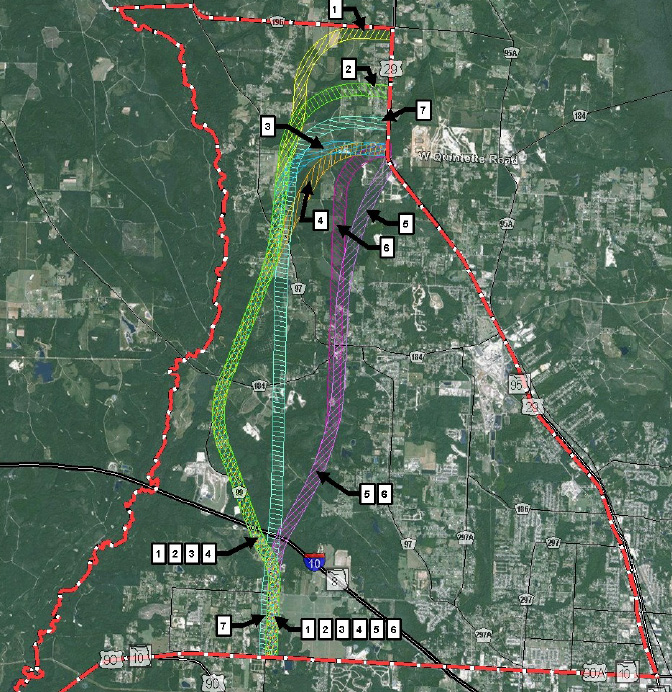
Plans are underway for a new “Escambia Beltway” — a high speed connector highway from Highway 29 north of Cantonment to a new interchange at I-10 in Escambia County and to West Nine Mile Road in Beulah.
The plan is only at the study and public comment stage today, but officials are hoping for Federal Highway Administration approval by January 2017.
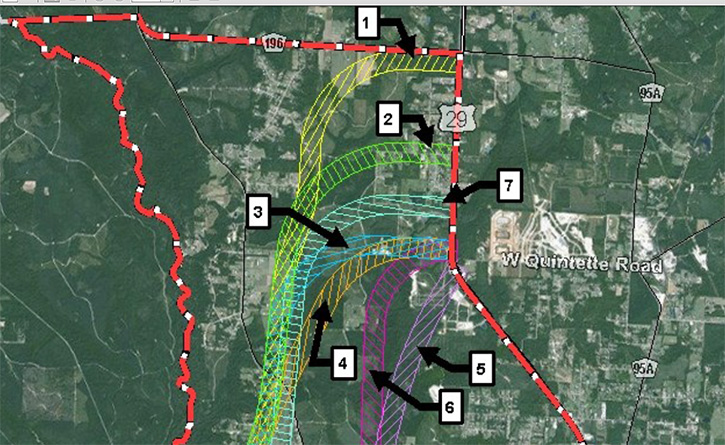
There are seven very similar routes under consideration for the Escambia Beltway with a northern endpoint somewhere along Highway 29 between Barrrineau Park Road and Quintette Road. The beltway will be a four-lane divided highway with controlled or limited access. Each of the proposed routes is about 11.4 miles long.
Escambia County will hold a public kick-off meeting for the project tonight from 5:30 until 7 p.m. at Plainview Baptist Church at 1101 West Nine Mile Road.
The study is being conducted by the county, in coordination with the Florida Department of Transportation, for the proposed Escambia Beltway and a new I-10 interchange.
This meeting is an opportunity for the public to learn about the project, become familiar with the study process and provide initial feedback on issues of concern. The meeting will be an open house to allow the public the opportunity to review maps and other information on display. Representatives from Escambia County and its consultant for the project will be available to explain the proposed improvements, the study process and to answer questions.
Those wishing to submit written comments may do so at the meeting, via email at cheryl.sackman@atkinsglobal.com or by mailing them to Atkins Project Manager Gregory S. Allen, P.E., 2114 Airport Boulevard, Suite 1450, Pensacola, FL 32504. All comments must be postmarked on or before May 6 to become part of the official project record.
Pictured top: This map shows a proposed new Escambia Beltway from Beulah to north of Cantonment on Highway 29. Pictured below: Seven proposed endpoints along Highway 29 for a new Escambia Beltway. Images fro NorthEscambia.com, click to enlarge.
Rep. Clay Ingram Draws Democratic Challenger
April 19, 2016
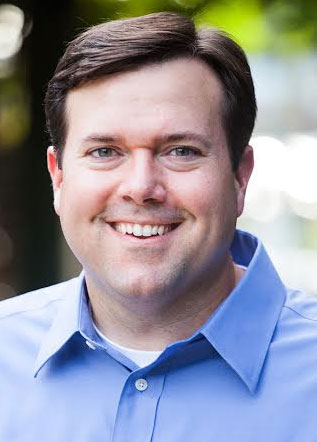 Rep. Clay Ingram, R-Pensacola, has drawn Democratic challenger as he seeks a fourth term in the state House.
Pensacola Democrat Gloria Robertson-Wiggins opened an account to run against Ingram in Escambia County’s House District 1. Ingram, chairman of the House Transportation & Economic Development Appropriations Subcommittee, had raised $91,746 as of March 31 and had nearly $54,000 in cash on hand, a finance report shows. Also in the District 1 race is no-party candidate William Fetke of Pensacola.
Police Seek Suspect In Flomaton Dollar General Armed Robbery
April 19, 2016

Flomaton Police are searching for the suspect in the armed robbery of a Dollar General Store.
About 9:47 p.m last Friday night, the suspect held up the Dollar General Store on Sidney Manning Boulevard. The suspect entered the store wearing khaki colored shorts and a white t-shirt. He ws described as a bald, black male, in his late twenties to early thirties with a muscular build.
The suspect fled the Dollar General in different clothing; he was wearing a black sleeveless shirt with a green Mossy Oak emblem on the front. He fled in a dark colored vehicle.
Anyone with information on the armed robbery is asked to contact the Flomaton Police Departmnet at (251) 296-5811
Greg Evers, Matt Gaetz Poised For Congressional Battle
April 19, 2016
In what could be one of the state’s most hotly contested congressional primary battles, state Sen. Greg Evers said Monday he is running for an open Northwest Florida seat being vacated by veteran U.S. Rep. Jeff Miller.
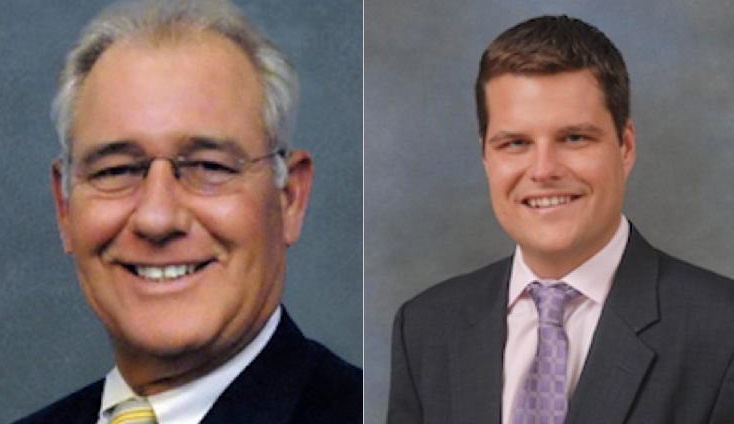 Evers, a Baker Republican, enters an already-crowded GOP field, which includes state Rep. Matt Gaetz and James Zumwalt, an Iraq war veteran who also served as an aide to Miller.
After toying with the possibility of running for weeks, Evers on Saturday filed a statement of candidacy for Congressional District 1 with the Federal Elections Commission, setting up what could be a grudge match with fellow state legislator Gaetz, who announced his candidacy for the seat almost a month ago.
“After prayerful consideration, I’m humbled and honored to announce my candidacy for CD 1. Many of the residents of the Panhandle have asked me to run because we need someone that will uphold the Panhandle values in D.C. As a lifelong resident of the Panhandle, I’m ready to carry our message to D.C., just as Jeff Miller did,” Evers said.
Evers, a 60-year-old farmer, said he intends to formally announce his entrance into the race at a press conference Tuesday morning in Milton.
Evers in 2001 won a special election for the state House, where he served until his election to the Senate in 2010.
The Northwest Florida district — one of the state’s most conservative — abuts the Alabama border and spans Escambia, Okaloosa, Santa Rosa and Walton counties and includes most of Holmes County.
The winner of the Aug. 30 GOP primary is almost certain to go to Washington, and a match-up between Gaetz and Evers could result in the type of political slugfest that the Panhandle is known for. Gaetz has already raised more than $350,000, including putting more than $100,000 of his own money into the race.
But Evers, known among reporters for a droll wit delivered in a thick Southern drawl, didn’t flinch when asked about Gaetz’s campaign war chest.
“The last time I checked, it’s the voters that elect, not dollars,” he said.
The district includes five military installations, which could give Zumwalt a leg up in a region heavily populated by retired and active-duty military voters. According to his website, Zumwalt served two tours in Iraq and was awarded a Bronze Star and later served as an analyst at the Pentagon before becoming an adviser to Miller
Evers stressed his commitment to veterans on Monday.
“I want to go to Washington and I want to fight for the veterans. So many have given so much, and some gave all. It’s something that I’m extremely proud of, the veterans that I have represented over the years. I want to be their voice in Washington, as I was on the state level,” he said.
Evers also said he wants to “fight for every citizen of the Panhandle,” especially small business owners like himself.
“These are serious times and serious problems that we have, and it’s not a time for political gamesmanship. It’s a time for statesmanship, and a statesman to stand up and carry the light to Washington D.C,” he said.
After representing the district for 15 years, Miller took the Florida political world by surprise in March when he announced he would not seek re-election in the fall. His retirement also set off a scramble for legislative seats, as Gaetz and Evers shifted from running state Senate campaigns to looking at runs for Congress. Matt Gaetz had planned to run for a Senate seat that his father, former Senate President Don Gaetz, R-Niceville, will leave this fall because of term limits.
Two Republican state representatives — Mike Hill of Pensacola Beach and Doug Broxson of Gulf Breeze — are poised to run for Evers’s Senate District 1 seat, where, again, the August primary will almost certainly determine the general election winner.
Broxson said he intends to file his campaign paperwork for the Senate seat shortly after Evers makes a formal announcement Tuesday morning.
“We think we have a great chance of telling our story of why we should be (in the Senate) and we’re looking forward to the process,” Broxson, elected to the House in 2010, told the News Service in a telephone interview Monday.
Hill, the victor of a special election in 2013, said he intends to announce his candidacy for Senate “very soon.”
Unlike what could be a brutal primary battle for the congressional seat, both men said they anticipate the race to replace Evers will be tamer.
“I think we’re going to see very civil race. It’s going to be highly contested. But Rep. Broxson and I are friends,” Hill said in a telephone interview.
Hill, meanwhile, said that Zumwalt and other candidates’ military experience could give them an advantage over the state legislators in the congressional match-up.
Gaetz could have a different edge, according to Broxson.
“The Gaetzes have a reputation of being able to raise massive amounts of dollars and I’m curious to see how Sen. Evers is going to match up the money campaign. I think he has pretty good polling information that says he should run. I’m going to be a spectator and see what they do and how they’re going to handle their campaigns,” he said. “Hopefully everyone would hope that it would be positive and they’ll concentrate on their legislative successes, but my guess is it could be a pretty bloody battle.”
by Dara Kam, The News Service of Florida
Jay Royals Get District Playoff Win Over Northview
April 19, 2016
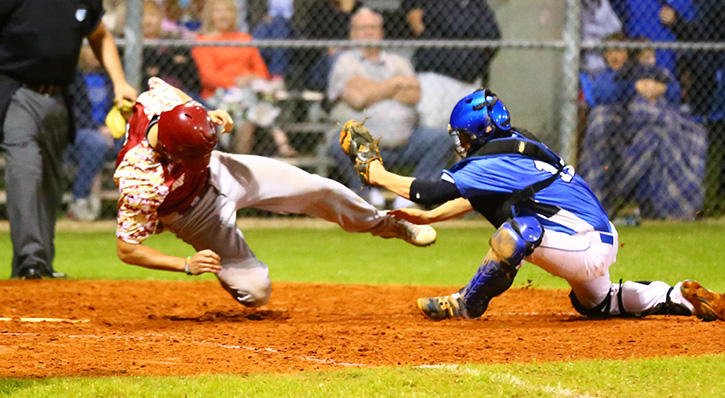
The Jay Royals defeated the Northview Chiefs 6-5 in the first round of the District 3-1A playoffs Monday in Jay.
 Jay took a 2-0 lead after the end of the first and scored again in the top of the second. In bottom of the second, a two run double by Jared Alif narrowed the Royals lead. The Chiefs scored three runs in the bottom of the fifth to cut Jay’s lead to one. An RBI single by Thomas Moore and a two run single by Zach Payne powered the Northview Chiefs comeback.
Josh Neese pitched a full seven for the Chiefs, allowing eight hits, six runs and striking out four.
Roman Manning was 1-4 with a run; Thomas Moore was 2-4; Luke Ward had one run; Zach Payne was 2-4 with a run; Jared Alif was 2-3 for Northview.
Jay advances to play Chipley at 7 p.m. Tuesday with the district championship game set for 7 p.m. Thursday.
NorthEscambia.com photos by Ramona Preston, click to enlarge.
State Required To Pay Legal Fees In Gay Marriage Fight
April 19, 2016
Lawyers representing plaintiffs who successfully challenged Florida’s ban on same-sex marriage are entitled to collect legal fees from the state, a federal judge has ruled.
U.S. District Judge Robert Hinkle’s order Friday came several months after Attorney General Pam Bondi first balked at having the state pay more than $500,000 in fees for lawyers representing same-sex couples.
Late last month — more than a year after same-sex marriages began in Florida — Hinkle issued a final judgment declaring that the state’s voter-approved prohibition against gay marriage is unconstitutional.
 Jim Brenner and his partner Chuck Jones, a Tallahassee couple who have been together for nearly three decades and were married in Canada, filed the initial lawsuit against the state challenging the gay marriage prohibition. Brenner and Jones later asked Stephen Schlairat and Ozzie Russ, a gay Washington County couple, to join the lawsuit. The American Civil Liberties Union also filed a challenge on behalf of eight couples and other plaintiffs, and the cases were consolidated.
In August 2014, Hinkle ruled that the state’s prohibition against gay marriage was unconstitutional, but he put a stay on his decision until January 2015, when same-sex marriages became legal in Florida.
In Friday’s order, Hinkle wrote that both the ACLU of Florida and Jacksonville attorneys William Sheppard, Betsy White and Samuel Jacobson, who represented the Brenner plaintiffs, were entitled to legal fees.
“The plaintiffs prevailed in each of these consolidated actions,” Hinkle wrote, and are therefore entitled to fees.
Hinkle also praised the state for agreeing that the plaintiffs’ lawyers are entitled to fees, a departure from the harsh words Hinkle had for state officials in his March 31 final judgment.
In that ruling, Hinkle chastised state officials for their reluctance in acknowledging that the Florida ban had been overturned and “for a history of resistance” in a variety of areas linked to gay marriage — including in the state’s handling of birth certificates for children of same-sex couples.
“We respect the judge’s order,” Bondi spokesman Whitney Ray said in an email when asked if the state intended to appeal Hinkle’s final judgment or Friday’s ruling regarding the fees.
But the legal wrangling may not be over. While the state has acknowledged that the lawyers are entitled to the fees, it is unknown if the state will argue over the amount.
Sheppard and his legal team are seeking at least $455,000 in fees, including a “multiplier” allowed in civil rights cases, according to documents filed last year.
“This is a victory for the American courts and democracy, in my opinion. That sounds hokey, but that’s how I count it in my belief system,” Sheppard, a longtime civil rights lawyer, said in a telephone interview Monday.
The ACLU has not disclosed its legal tab, but praised Hinkle’s decision.
“We are grateful for Judge Hinkle’s order recognizing the work our legal team did in arguing that Floridians have a right to marry the person they love and that denying them that right was unconstitutional,” ACLU of Florida spokesman Baylor Johnson said in an email.
The battle over the legal fees started last summer, after the U.S. Supreme Court ruled in June that same-sex couples have a fundamental right to marry. The Supreme Court ruling came in a case involving other states, but it cemented Hinkle’s ruling that Florida’s ban was unconstitutional.
In August, Bondi asked the 11th U.S. Circuit Court of Appeals in Atlanta and Hinkle to dismiss the case as moot. A dismissal would have absolved the state from an obligation to pay the plaintiffs’ lawyers, Sheppard and his team wrote in a court filing last year.
Despite Hinkle’s final judgment in the Florida cases and the U.S. Supreme Court decision, same-sex couples’ right to wed may not be settled permanently, Sheppard said.
“I don’t think for a second that we won’t be encountering other issues in the good old state of Florida related to this issue, whether it be legislative or whether it be just conduct of individual government officials,” he said. “It’s not an accepted thing, just because the Supreme Court says it is, any more than integrated schools is accepted.”
by Dara Kam, The News Service of Florida
40 On Century Tornado Housing Assistance Waiting List; Many Won’t Qualify
April 19, 2016
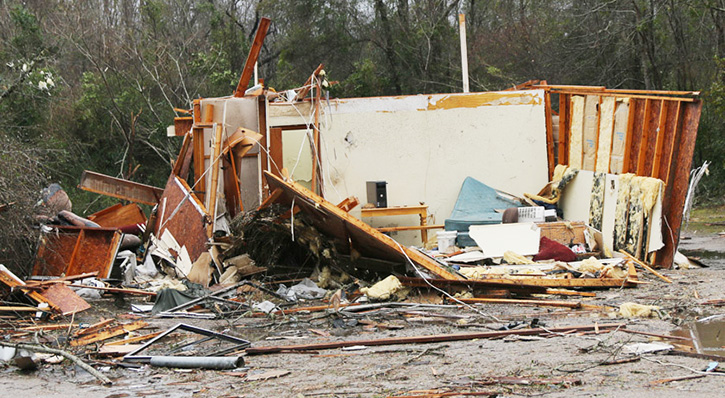
As of Monday afternoon 40 people had been added to a waiting list for Century residents to possibly receive state housing assistance following the February tornado.
Many of the 40 will not pass an initial screening for eligibility based upon application criteria, according to Meredith Nunnari, Escambia County Neighborhood Enterprise Division.
Only residents in the incorporated town of Century whose housing units were damaged by the tornado are eligible to apply. Owner occupants of manufactured homes are also eligible to apply if they own the property on which the home is located.
Century residents may call (850) 595-0872 to be placed on the waiting list, which will remain open for the near future. Residents must provide the following information when calling:
- Name
- Street address of impacted residence
- Contact phone number
Services will be made available to income-eligible owner occupants on a first qualified, first served basis as funding permits. Staff will follow up with applicants within five business days to determine program eligibility and to make appointments to begin the application process.
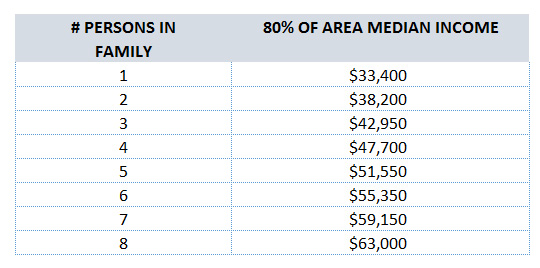
The following chart shows the maximum gross family household income requirements in Escambia County (effective March 28, 2016) for the housing repair and reconstruction activities through the State Housing Initiatives Partnership program, or SHIP. Household income includes income received from all persons residing in the household and from all sources providing income to the household.
Applications are still being accepted for owner occupants needing housing repair or reconstruction assistance from the February 15 and 23 tornadoes. Owner occupants in unincorporated Escambia County can call the Neighborhood Enterprise Division at (850) 595-0022, and those inside the city of Pensacola limits can call the City of Pensacola Housing Office at (850) 858-0306 to apply.
Biloxi Ties Series With 5-2 Win Over Pensacola
April 19, 2016
Pensacola center fielder Beau Amaral tripled in two runs in the top of the seventh inning to pull the Blue Wahoos within one run, 3-2, but it was not enough as the Biloxi Shuckers held on to win Monday in MGM Park.
 Biloxi first baseman Nick Ramirez hit his first home run of the year in the bottom of the seventh inning to help the Shuckers defeat Pensacola, 5-2. The victory pulled the defending Southern League South Division champions within a half game of Pensacola, improving its record to 8-3. Pensacola remains in first place at 9-3.
It was the Shuckers who showed the dominant pitching Monday. The Blue Wahoos left fielder Tony Renda, hitting .306 for Pensacola, led off the seventh inning with the team’s first hit off reliever Tristan Archer.
Milwaukee Brewers No. 14 prospect 22-year-old, lefty Josh Hader pitched a scoreless and hitless four innings with three walks and seven strikeouts in his third start of the season. Hader was the only southpaw starter in the Brewers camp this year.
Renda, who went 1-3, got Pensacola going. Pinch-hitter Sebastian Elizalde followed him with a two-out single to center off of Archer, who was then replaced by Stephen Peterson.
Peterson promptly served up a two-out triple to Pensacola’s Amaral that drove in two runs to pull the Blue Wahoos within, 3-2. Amaral upped his team-leading RBI total to eight this season, going 1-4.
But Biloxi came right back on the homer by Ramirez.
Pensacola catcher Joe Hudson caught outfielder Garrett Cooper trying to steal to end the eighth inning and gave the Blue Wahoos one last chance to tie or win it in the ninth inning. However, Biloxi’s leading closer Jay Chapman came in and set Pensacola down in order to earn his fourth save in five games. He has yet to give up a hit or run in five innings of work and has struck out seven.
Biloxi added two runs in the fourth, when it loaded the bases on singles by third baseman Nate Orf, catcher Jacob Nottingham and Cooper. With one out, shortstop Javier Betancourt singled to center in the bottom of the fourth inning to drive in Orf and Nottingham for a 3-0 Biloxi lead.
Biloxi scored, 1-0, when Cooper singled in the bottom of the first inning to score right fielder Brett Phillips.
Amir Garrett, the Cincinnati Reds No. 3 prospect according to Baseball America, threw six innings and allowed three runs, two earned on six hits and one walk, while striking out five.
But it was Hader, the only southpaw starter in the Brewers camp this year, who starred Monday. Received in a trade with the Houston Astros, some say the young lefty may make the Brewers team as soon as this year.
Greg Evers Files For Congress
April 18, 2016

State Sen. Greg Ever has filed to run for Congress, according to the Federal Elections Commission.
Evers will officially “announce intentions” at a press conference Tuesday morning in Milton, he told NorthEscambia.com Monday morning. He would not confirm that his announcement would be a Congressional run.
With a run for Congress, Evers would join what is expected to be a highly contested Republican primary to replace U.S. Rep. Jeff Miller, who recently announced he will not seek re-election to the District 1 seat he has held for 15 years.
“If I do run, it’s because I believe it’s where I can be the most effective service to my constituents, and not because I’m in a rush to enter the political fray in order to gain some sort of purely political, strategic advantage,” Evers, R-Baker, told The News Service of Florida last month. “I really believe these are serious times, extremely serious times. I intend to conduct myself accordingly. That requires that I do lots of prayer and research. That’s the reason I’m in Washington. And it was very humbling. Our country is in a serious state of affairs right now. We have to have a leader that’s going to stand up for the Panhandle. I’ve done that at the state level, but I want to be sure that I’m the right person to do that in Washington.”
The Northwest Florida district — one of the state’s most conservative — borders the Alabama border and spans Escambia, Okaloosa, Santa Rosa and Walton counties and includes most of Holmes County.
Evers has filed a “Statement of Candidacy” for the House seat with the Federal Elections Commission.
Pictured: Helen Mincy of Century explains damage to Sen. Greg Evers following the EF-3 tornado that ravaged part of the town in February. NorthEscambia.com file photo, click to enlarge.