

Escambia Fire Rescue Comes To Aid Of Cantonment Horse
July 18, 2016

The Cantonment Station of Escambia Fire Rescue came to the aid of a horse that was unable to stand up Sunday at Panhandle Equine Rescue.
 Sky, who just celebrated her 32nd birthday, had fallen and needed assistance from the firemen and PER volunteers. Once out of her stall, they were able to use a large animal lift that was recently purchased with donations.
“She is doing well right now and we are watching her closely. Prayers would be appreciated,” Panhandle Equine Rescue President Diane Lowery said. She also thanked the Escambia Fire Rescue members and the volunteers that assisted.
“They were awesome,” Lowery said.
The only horse rescue in Escambia County, Panhandle Equine Rescue was founded by a small group of concerned citizens with a mission to rescue, rehabilitate and provide adoption services for abused, neglected and abandoned equines. PER is authorized by the court system to investigate equine cruelty in Escambia County.
Photos for NorthEscambia.com, click to enlarge.


Northview Cheerleaders Take Gold At Auburn Camp; Four Headed To London
July 18, 2016

The Northview High School varsity cheerleaders attended UCA Cheer Camp last week at Auburn University, and the squad brought home the gold in several categories.
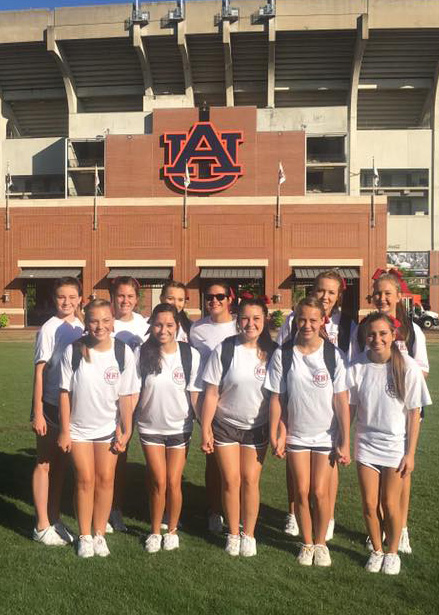 The Northview cheerleaders received first place trophies and gold ribbons in the small division for Xtreme routine, cheer, sideline, home fight song and overall division camp champions.
Additionally, four Northview cheerleaders — Peighton Dortch, Mallory Gibson, Autumn Albritton and Gabrielle Kline — earned All American status and now have the opportunity to cheer in London this fall.
Members of the Northview varsity cheerleaders are: seniors Autumn Albritton, Peighton Dortch, Mallory Gibson and Morgan Myrick; juniors Bailee Hinote and Anna Nelson; and sophomores Shelby Bashore, Gabrielle Kline, Allison Rice, Olivia Seals and Madison Sherouse. Coaches are Genia Bashore and Lauren McCall.
Pictured top and inset: The Northview High School varsity cheerleaders at Auburn University. Pictured below: All-American cheerleaders from Northview (L-R) Autumn Albritton, Peighton Dortch, Gabrielle Kline and Mallory Gibson. Photos for NorthEscambia.com, click to enlarge.

One Serious After Collision With Escambia Deputy
July 18, 2016

One person was seriously injured in a collision involving an Escambia County deputy Sunday night.
About 9:04 p.m., a Ford Taurus driven by 24-year old Jasmine Dodds of Bonifay was traveling north on Pine Forest Road at Blue Angel Parkway when she turned into the path of a marked Escambia County Sheriff’s Office cruiser driven by Deputy M. Keebler, 24. according to the Florida Highway Patrol.
Dodds., who was not wearing a seat belt, was seriously injured and transported to Sacred Heart Hospital. Two adult passengers in her vehicle received minor injuries.
Deputy Keebler received only minor injuries and was not transported to the hospital.
Dodds was cited for an improper left turn in front of approaching traffic by the FHP.
Pictured: An Escambia County deputy was not at fault in this collision Sunday night on Pine Forest Road at Blue Angel Parkway. Images courtesy WEAR 3 for NorthEscambia.com, click to enlarge.


Escambia Clerk Of The Court Warns Of Phone Scam
July 18, 2016

The Escambia County Clerk of Court Pam Childers reports a scam has been occurring in Pensacola and elsewhere in Florida.
In the scam, a person receives a telephone call from someone claiming to be a law enforcement officer stating that they, or a close relative, did not appear for jury duty or grand jury duty. The caller then states that the individual can pay money in order to prevent the arrest of the person who allegedly failed to report for jury duty.
Childers said these calls are not from her office.
Anyone who has received such a call is asked to contact Investigator Taylor Wells with the State Attorney’s Office at (850) 595-4267.
Wahoos Slip Past Jacksonville
July 18, 2016
Pensacola third baseman Taylor Sparks hit his third home run in his last four games to propel the Blue Wahoos to a 7-6 victory in the top of the 10th inning Sunday over the Jacksonville Suns in the second game of a doubleheader.
Sparks’ fifth homer of the season, this time off of Jacksonville reliever Tyler Higgins, helped Pensacola even its record at 12-12 and in second place in the Southern League South Division in the second half. Plus, the Blue Wahoos are now 8-3 in extra-inning games this season. Pensacola also clinched the five-game series, going up 3-1 on the road at The Baseball Grounds of Jacksonville.
 A mid-season call up from the Daytona Tortugas, Sparks has gone 4-for-10 in this series against Jacksonville pitching with three homers and five RBIs. He hit two blasts in his first game with Pensacola and now has five homers and 13 RBIs in 22 games with the Blue Wahoos.
Jacob Ehret earned his first Double-A win (1-0) in nine appearances with Pensacola pitching two scoreless innings in relief on one hit, two walks and a strikeout.
Pensacola jumped on Jacksonville starting pitcher Matt Tomshaw by scoring four runs in the top of the first inning. Blue Wahoos second baseman Brandon Dixon singled on a ground ball to leftfield that drove in center fielder Jeff Gelalich, who had doubled to start the game, for the first run.
Pensacola went ahead, 2-0, when shortstop Zach Vincej singled on a line drive to left field that scored left fielder Phillip Ervin. Blue Wahoos first baseman Ray Chang doubled in Dixon and Vincej for the final two runs of the inning that made the score, 4-0.
Jacksonville came right back in the bottom the first. Suns center fielder Moises Sierra doubled on a ground ball to left field that scored right fielder Ronnie Mitchell to make the score, 4-1. Then Suns third baseman Brian Anderson hit a two-out, two-run homer that also drove in Sierra to pull Jacksonville within, 4-3.
However, Pensacola came back with a run in the fourth inning to go up, 5-3, when Gelalich hit a sacrifice fly deep to center field that scored Blue Wahoos catcher Joe Hudson, who lead off the inning with a double.
Pensacola tacked on another run to go ahead, 6-3, in the fifth inning when right fielder Juan Duran singled in Dixon.
Jacksonville pulled within one run again, 6-5, in the sixth inning when first baseman Chris Curley hit an infield single to shortstop that scored both Sierra and Anderson.
The Suns tied the score, 6-6, in the seventh inning when Sierra hit a bases loaded sacrifice fly to center field that scored left fielder Alex Glenn.
In the first game of the doubleheader, Jacksonville won 1-0 scoring its only run in the first inning. Pensacola starter Jackson Stephens hit Brian Anderson with the bases loaded to score Austin Dean.
Record Crowds Wowed By The Blue Angels (With Photo Gallery)
July 17, 2016

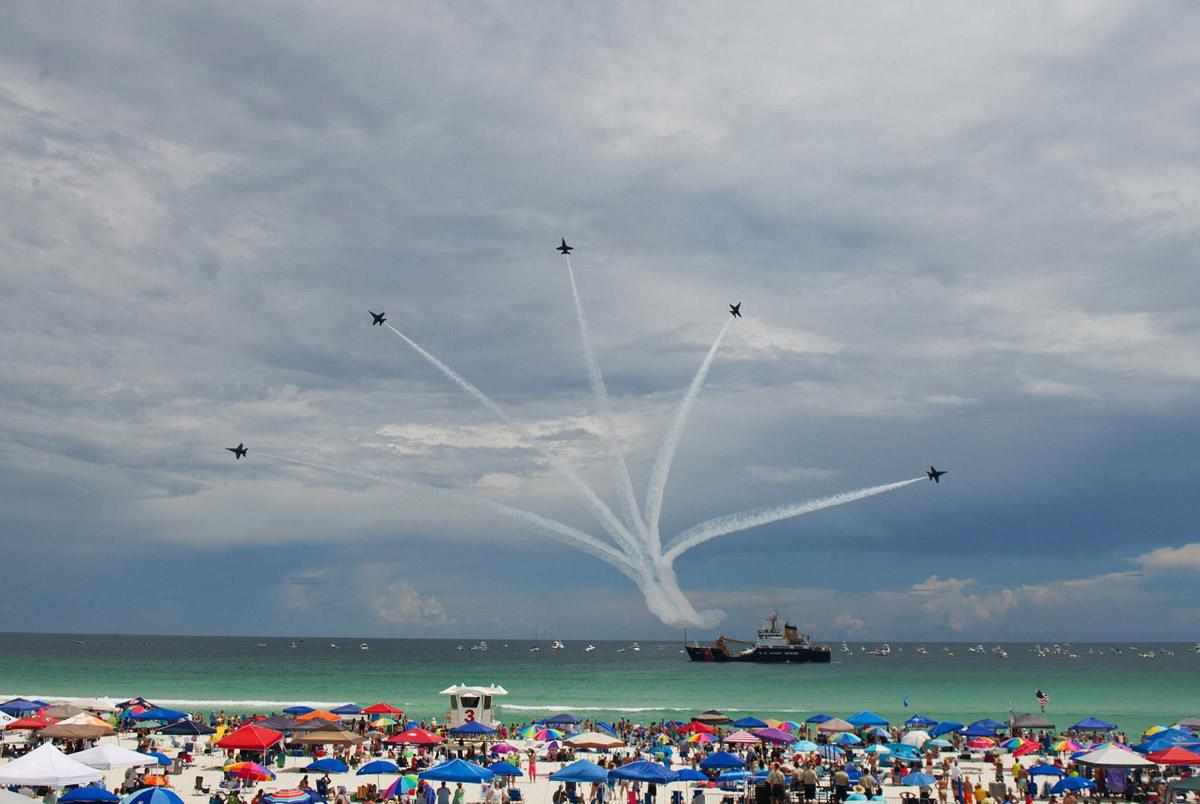
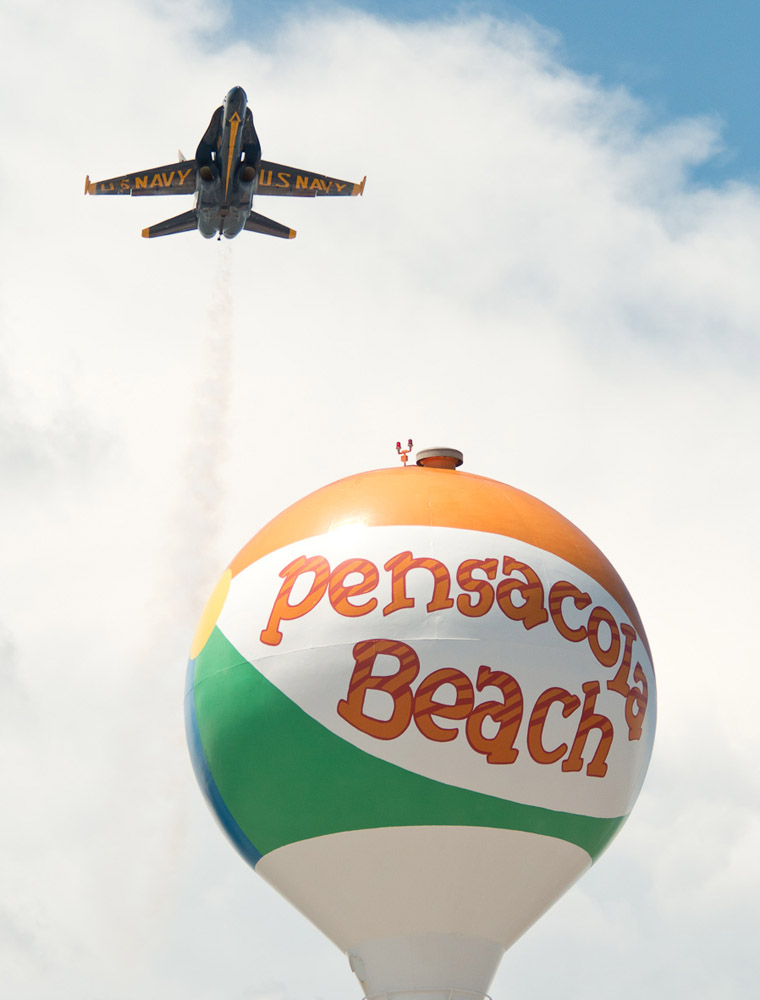 Perhaps the largest crowd ever packed onto Pensacola Beach Saturday for the annual Pensacola Beach Air Show featuring the Blue Angels. Official attendance numbers were not available by Sunday morning, but officials said people were arriving on the beach by the hundreds, and by the thousands, by daylight Saturday. The main parking lot at Casino Beach was full by a record 5:30 a.m., according to the Escambia County Sheriff’s Office.
For a photo gallery, click here.
NorthEscambia.com photos by Ditto Gorme and by the U.S. Navy, click to enlarge.

FDOT: Weekly Traffic Alerts
July 17, 2016

Drivers will encounter traffic disruptions on the following state roads in Escambia and Santa Rosa counties as crews perform construction and maintenance activities.
Escambia County:
- Nine Mile Road (State Road (S.R.) 10)- Lane restrictions east of Guidy Lane as crews construct a new eastbound, right and westbound, left turn lane for the shopping center Sunday, July 17 through Thursday, July 21. Lane closures will be in effect from 8 p.m. to 5 a.m.
- I-10 Widening – Alternating lane closures on I-10 eastbound, near U.S. 90 (Exit 17/Scenic Highway), from 7 p.m. to 6:30 a.m. the week of Monday, July 18 as crews perform paving work.
- Texar Drive (S.R.) 752 – Access to the pedestrian bridge will be closed for approximately one month. Eastbound ECAT bus stops located at the pedestrian bridge will be temporarily relocated during construction to just west of N Miller Street.
- Airport Road (S.R. 750)- Intermittent lane restrictions will begin Wednesday, July 20 from 8 p.m. to 6 a.m. as crews perform paving operations between U.S. 29 and County Road 95A(North Palafox Street). Work should be complete in a little over one month.
Santa Rosa County:
- S.R. 87 and S.R. 89 from S.R. 4 to the Alabama line – Intermittent and alternating lane closures and slow moving operations from 7 a.m. to 6 p.m. continuing through Sunday, July 31 as crews perform striping operations.
- I-10 Widening – Alternating lane closures, between the Escambia Bay Bridge and S.R. 281 (Avalon Boulevard/Exit 22), from 8 p.m. to 6 a.m. Sunday, July 17 through Thursday, July 21 as crews continue widening work. In addition, alternating lane closures on Avalon Boulevard near the I-10 interchange for bridge work.
- S.R. 87 Multilane – Drivers are reminded the speed limit has been reduced to 45 mph, from the Eglin Air Force Base boundary to north of the Yellow River near County Road 184 (Hickory Hammock Road), as crews widen the roadway.
- S.R. 281 (Avalon Boulevard)- Intermittent lane closures and slow moving operations from U.S. 98 to the toll bridge from 8 p.m. to 5 a.m. continuing through Thursday, July 28 as crews perform striping operations. There will be no work performed Friday through Sunday.
- U.S. 98 – Crews will perform striping operations and install raised pavement markers (RPMs) from the Pensacola Bay Bridge to Central Parkway (approximately nine miles) Sunday through Thursday nights through Sunday, July 31. Motorists may encounter minor traffic delays from 8 p.m. to 5 a.m.
All activities are weather dependent and may be delayed or re-scheduled in the event of inclement weather. Drivers are reminded to use caution, especially at night, when traveling in a work zone and to watch for construction workers and equipment entering and exiting the roadway.
Barrineau Park Elementary School Reunion Held
July 17, 2016
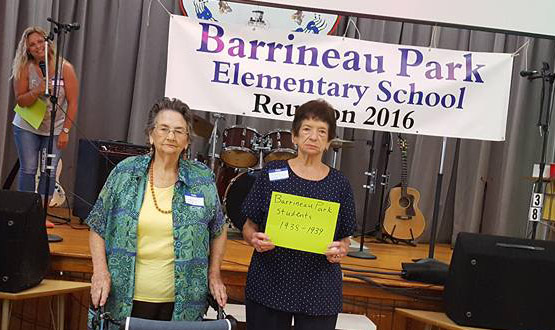
A Barrineau Park Elementary School reunion was held Saturday at the old school with dozens of former students representing the school’s history from 1938 to 2003. Members of various classes are pictured above and below.
Pictured top: Class of 1938 members.
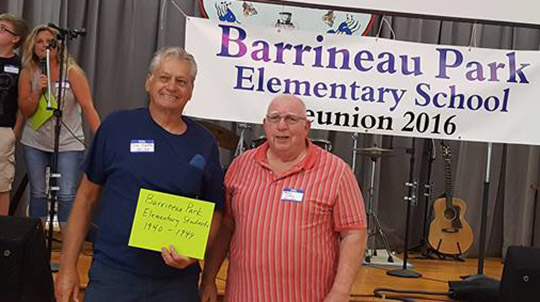
Above: Class of 1940 to 1949 students.
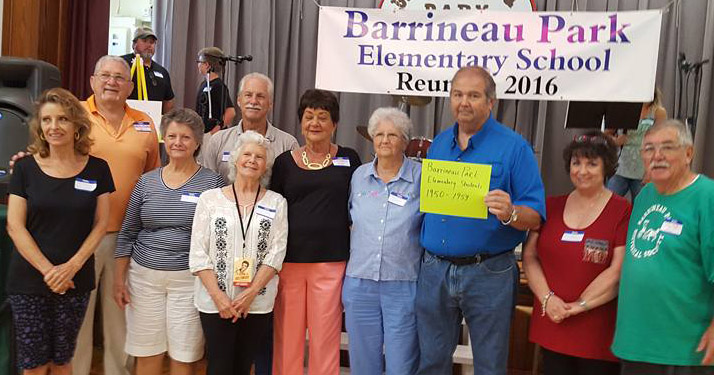
Above: Class of 1950 to 1959.
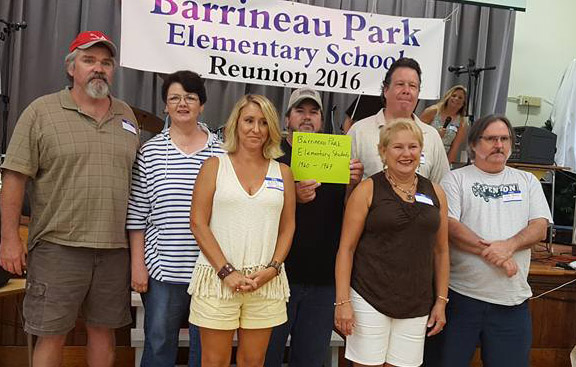
Above: Class of 1960 to 1969.
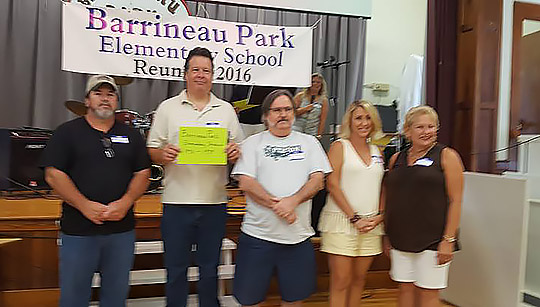
Class of 1970 to to 1979.
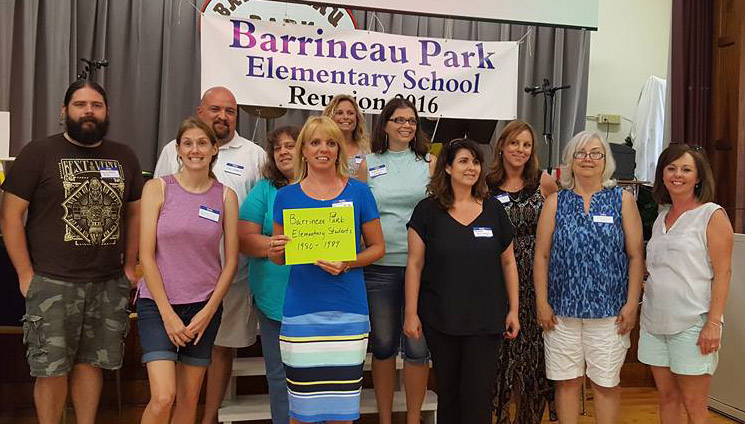
Above: Class of 1980 to 1989.
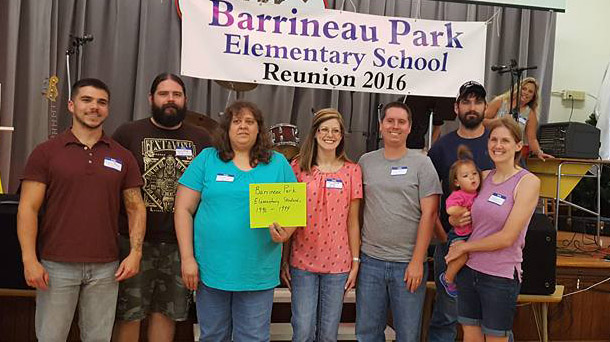
Above: Class of 1990 to 1999.
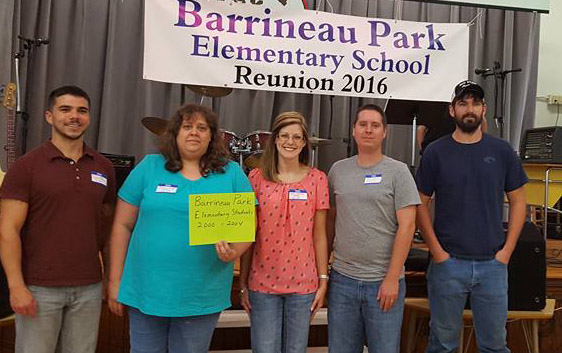
Above: Class of 2000 to 2003.
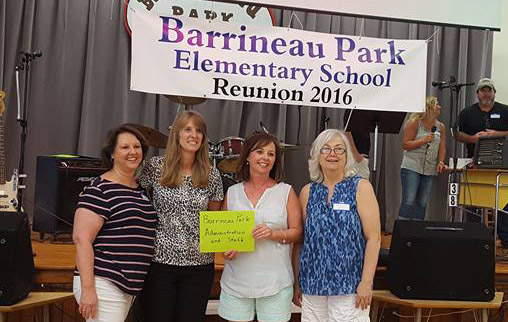
Above: Staff and administration.
Courtesy photos for NorthEscambia.com, click to enlarge.
Pediatricians: More Obstacles To Care Under Private Medicaid Plans
July 17, 2016
Florida pediatricians say children covered by Medicaid face more obstacles to getting needed care than they did before the state switched them over to private health-care plans, a recent survey found.
The survey, released last month by Georgetown University’s Health Policy Institute, showed that two-thirds of responding physicians saw an increase in the number of Florida children being reassigned to other doctors or health-care plans without their parents’ knowledge or consent.
 “Some of our patients keep getting switched to plans where they have to go all the way across the state for primary care,” one physician reported.
Respondents also said newborns were assigned to different plans than their mothers, while medical staff spent considerable time helping families return to their previous plans so that children could stay with their regular doctors.
“We spend much time and money appealing denials, even for treatments that patients have received for many years,” a respondent said.
The state’s Medicaid program has undergone a ten-year transition to managed care, with 95 percent of children covered by Medicaid moved to private managed-care plans by July 2015.
Under the new system, the managed-care plans get a monthly fee rather than payment for individual services — and the Georgetown survey was, in part, designed to evaluate the change.
It found that 84 percent of pediatricians said their patients in Medicaid managed care had difficulty obtaining prescriptions or over-the-counter medications, while 55 percent had cases in which a health plan kept them from providing needed treatment due to limits on benefits or requirements for prior authorization from the plans. Fifty-nine percent said families struggled to find specialists who would accept Medicaid, with referrals to behavioral or mental-health professionals the most difficult to fill.
Sarasota pediatrician Carola Fleener said she often advised patients to pay out of pocket for crutches or prescriptions they needed immediately, because getting the plans to approve would take too long.
Fleener also said the reimbursement rate for seeing Medicaid patients is so low that many doctors can’t afford it — and that private plans often challenge or deny their requests for payment.
Additionally, the survey found that just 27 percent of Florida children covered by Medicaid and the Children’s Health Insurance Program receive preventive dental care, compared to 48 percent of the programs’ recipients nationwide.
The survey was distributed to members of the Florida Chapter of the American Academy of Pediatrics from late February to early May. The sample size of 131 respondents was small — just under 6 percent of those contacted — although the study noted that 61 percent of those responding drew a majority of their patients from Medicaid enrollees.
However, the Florida Agency for Health Care Administration, which oversees the state’s Medicaid program, said the respondents represent less than 1 percent of all of the 37,593 physicians “who can provide services to our recipients.”
“We would not say that this survey is a true reflection of the program,” AHCA spokeswoman Mallory McManus wrote in an email.
Additionally, McManus said, surveys by the private plans show that those enrolled in Medicaid managed care “are satisfied with the access and care they are receiving.”
“We have on average fewer than two complaints from patients in any given month about having their plans switched, and we process those complaints promptly,” she wrote. “All Medicaid-eligible children are receiving medically necessary services. If anyone is aware of a child who is not receiving medically necessary care, they need to contact AHCA immediately.”
Others, however, say the state fails to provide proper oversight of its Medicaid managed-care plans.
“Florida has some decent protections in the managed-care contracts, but they’re clearly not being enforced,” said Joan Alker, executive director of Georgetown’s Center for Children and Families, in a recent interview.
“I don’t see where (the state is) overseeing anything,” Fleener said.
But Heather Urquides, spokeswoman for WellCare Health Plans, wrote in an email that the state is diligent in overseeing her company’s Staywell program for Medicaid beneficiaries.
“As part of the selection process, Staywell committed to meeting stringent benchmarks and quality metrics to ensure our members get the care they need,” Urquides wrote. “The state aggressively manages our performance to ensure we deliver on those commitments.”
Alker, however, said the complaint process for Medicaid managed care is “deeply buried” in AHCA’s website.
“It’s clear that families are not well-informed about what to do if they have a problem,” she added.
McManus said AHCA “takes very seriously the level of care all Florida Medicaid recipients receive.”
“We have strengthened our contracts and our oversight to the highest levels ever in the program,” she said. “The contracts give the agency the authority to ensure that our plans are providing the highest quality of care.”
by Margie Menzel, The News Service of Florida
Oak Grove Girl Competing For National Barrel Racing Title
July 17, 2016
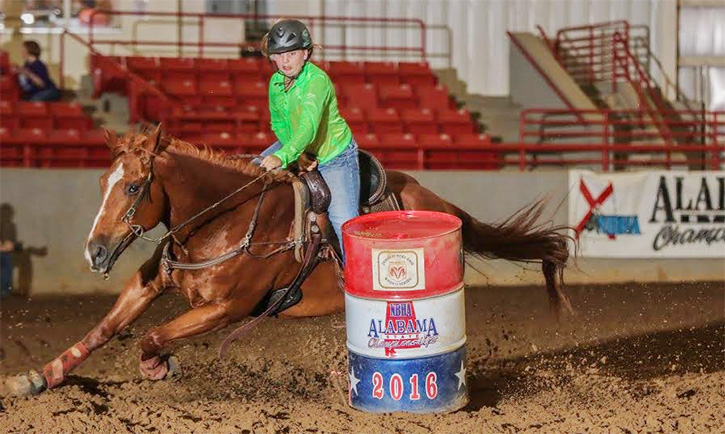
A North Escambia girl is competing this week for national barrel racing title.
Lelia Mason of Oak Grove, a fifth grader at Molino Park Elementary School, and her horse Scoot are in Perry, GA, to compete with 2,200 youth from across the country who qualified for the 2016 National Barrel Horse Youth World Finals. Scoot, the horse, is owed by Kathy Braddock of Century.
Mason, 10, said she promised to bring pride to the local community by exhibiting a Godly attitude, good sportsmanship and great horsemanship.