

Wahoos Drop Game Three To Mississippi
September 10, 2016
The Braves scored four runs in the first two innings, including a controversial two-run, inside-the-park home run by right fielder Keith Curcio, and defeated Pensacola, 9-2, Friday at Trustmark Park. The victory put Mississippi up, 2-1, in the best-of-five series.
The Pensacola Blue Wahoos are on the brink of elimination by the Mississippi Braves in the Southern League South Division playoffs.
 Pensacola manager Pat Kelly was ejected for the second time this season when he stormed the field to argue about Curcio’s home run. Blue Wahoos right fielder Sebastian Elizalde raised his arms in the air signaling for a ground rule double when Curcio’s hit appeared to get lodged under the fence.
Kelly spiked his hat, took a big kick at the grass and gestured wildly at the right field fence to first base umpire Alex Zeigler, who threw Kelly out of the game.
The Braves got big contributions from two players that were recently called up from the High-A Carolina Mudcats. Curcio, playing in his second game, went 1-5 with the homer and two RBIs that put the Braves up 4-0 at the end of two innings.
Meanwhile, catcher Kade Scivicque, playing in his fourth game, went 4-4 with one run scored and one RBI. His single drove in first baseman Joey Meneses for a 6-2 Braves lead in the bottom of the sixth inning.
Mississippi Mallex Smith also led the Braves 17-hit attack going 3-3 with a walk, double and triple and one RBI. Smith has now played in eight games for the Braves on a major league rehab assignment after breaking his left thumb.
After Pensacola loaded the bases with no one out in the top of the first and failed to score, Mississippi jumped out ahead, 2-0, in the bottom of the inning.
Mississippi third baseman Carlos Franco, who is hitting .545 in three playoff games including a three-run homer Thursday, singled to right field to score center fielder Mallex Smith to take a 1-0 lead. Braves first baseman Joey Meneses singled to left field to drive in left fielder Dustin Peterson to put Mississippi up, 2-0.
In the third inning, Pensacola first baseman Ray Chang smacked a two out single to left field that scored center fielder Brandon Dixon bringing the Blue Wahoos within, 4-1, of the Braves.
Pensacola cut the lead in half to 4-2 when Zach Vincej tripled off the left field wall with two outs in the top of the fifth inning to score left fielder Phillip Ervin.
But that was as close as Pensacola would get to Mississippi in Friday’s game.
Pensacola starter Sal Romano, who threw great all second half going 5-4 with a 2.43 ERA, gave up five earned runs on nine hits and one walk, while striking out three in five innings.
Pensacola and Mississippi play the fourth game at 6 p.m. Saturday at Trustmark Park. If Game 5 is needed, it will be played at 6:30 p.m. Sunday at Blue Wahoos Stadium.
In the North Division playoffs, the Montgomery Biscuits won, 4-3, over the Jackson Generals and now trail in the series, 2-1.
Prep Football Scores
September 10, 2016

Here’s a look at tonight’s high school football FINAL scores from across the North Escambia area.
FLORIDA
Gulf Breeze 42, Northview 0
Tate 41, West Gadsden 6
Wewahitchka 34, Jay 22
Kemper County 14, West Florida 9
Pine Forest 28, Pace 7
Escambia 36, Catholic 32
PHS 38, Washington 21
Milton 31, Fort Walton Beach 19
ALABAMA
Clarke County 35, Flomaton 21
Escambia Academy 52, Pickens Academy 6
Monroe County 24, Escambia County (Atmore) 18 2OT
T.R. Miller 38, Hillcrest (Evergreen) 12
Satsuma 29, W.S. Neal 12
Deputy Involved Shooting In Ensley Under Investigation
September 9, 2016
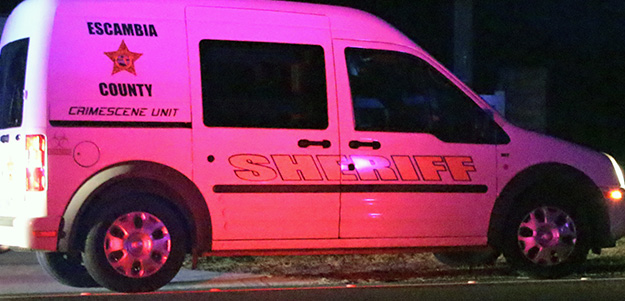
A deputy involved shooting early this morning in Ensley is under investigation.
The Escambia County Sheriff’s Office responded to the 8400 block of Figland Avenue for an armed disturbance in which the suspect had fired a gun at another resident. When deputies arrived on scene, they ordered the occupants to exit the residence.
One person exited the residence and followed orders given by the deputies. When the suspect exited the residence, he was armed with a firearm that he pointed to toward deputies, the Escambia Sheriff’s Office said in a statement.
The suspect was given numerous commands to drop the weapon but did not, forcing deputies to fire their service weapons.
The suspect was transported to a local hospital suffering from multiple gunshot wounds. Deputies said the suspect had threatened multiple people in the last two days with the firearm.
The officer involved shooting is under investigation by the Florida Department of Law Enforcement.
Further details, including the name and condition of the suspect, have not yet been released as the investigation continues.
NorthEscambia.com file photo, click to enlarge.
Animal Cruelty Charge Against Century Man Upgraded To A Felony
September 9, 2016
An animal cruelty charge against a Century man has been upgraded to a felony.
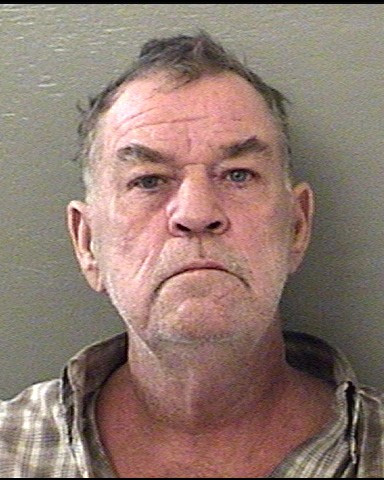 John Jackson Grimes was charged with misdemeanor unlawful confinement or abandonment of an animal in early August. Now, according to the State Attorney’s Office, the charge against him has been upgraded a felony animal abuse charge of causing cruel death, pain and suffering. He was re-arrested and released from the Escambia County Jail on bond with a condition that he no possess any animals.
Escambia County Animal Control, Panhandle Equine Rescue and the Escambia County Sheriff’s Office seized three severely malnourished horses from a property in the 2500 block of Highway 168, near Shaw Road, near Century on May 27, 2015.
According to court documents in the case, two of the horses had bones that were projecting and visible due to malnourishment. The horses were unable to graze due to a lack of grass in their quarter of an acre enclosure. It appeared that the horses had no water and no one caring for them for some time.
The horses were rehabilitated by Panhandle Equine Rescue.
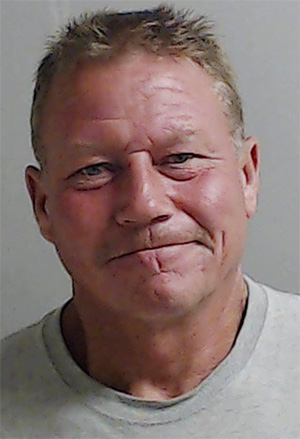 As previously reported, Monroe Kemp Moore, Jr., age 51, was also charged in the case with two counts of unlawful confinement or abandonment of an animal. He was released from the Escambia County Jail on a $10,000 bond and with a judge’s order to not possess any animals.
Mosquito Fogging Planned In Ensley, Gonzalez, Cantonment, Beulah
September 9, 2016
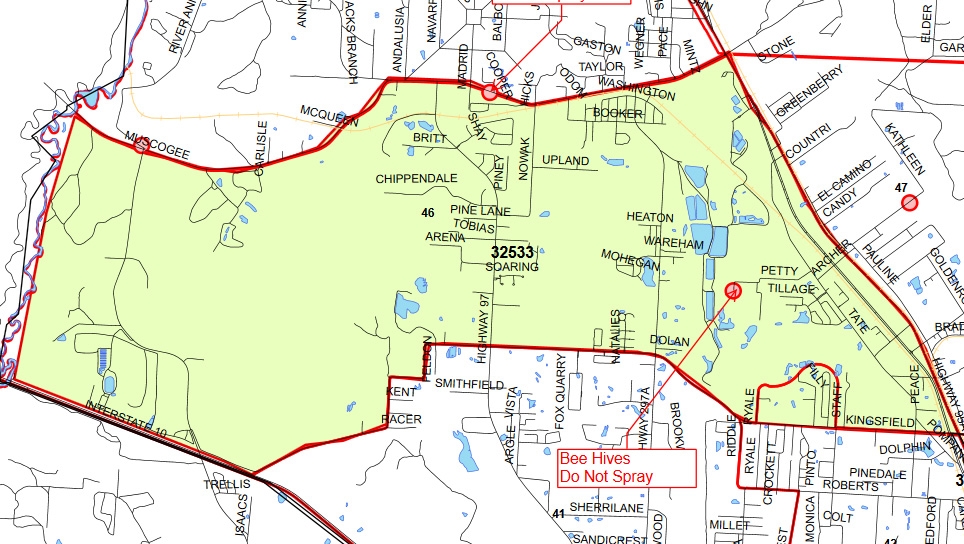
The Escambia County Mosquito Control Division is planning “fogging missions” beginning through Thursday, September 15 in areas of Beulah, Ensley, Gonzalez, Cantonment and Saufley Field.
Mission hours vary but typically occur in the evening hours from 6-9:30 p.m.
For maps of the spray areas, click below:
- Spray Area 25A Map: Saufley Field Area
- Spray Area 31A Map: Beulah
- Spray Area 38A Map: Ensley
- Spray Area 43A Map: Gonzalez
- Spray Area 43B Map: Gonzalez
- Spray Area 46A Map: Cantonment
Detour: Highway 112 (Muscogee Road) To Close In Alabama Next Week
September 9, 2016
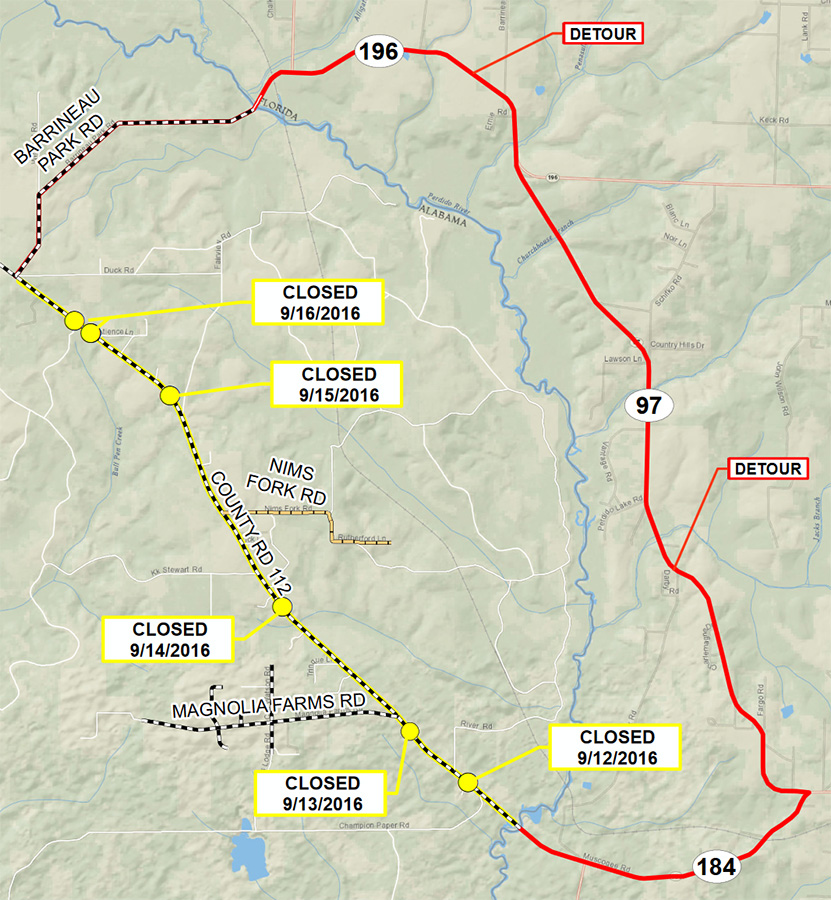
Highway 112 (Muscogee Road) will be closed to traffic in Baldwin County next week.
The closures will be between Barrineau Park Road and the Florida state line from Monday, September 12 to Friday, September 16 for drainage improvements. The closures will be from 7:30 a.m. until 5 p.m. each day.
See the above map (click to enlarge) for specific closure information and a recommended detour.
Volleyball: Jay Tops Northview
September 9, 2016
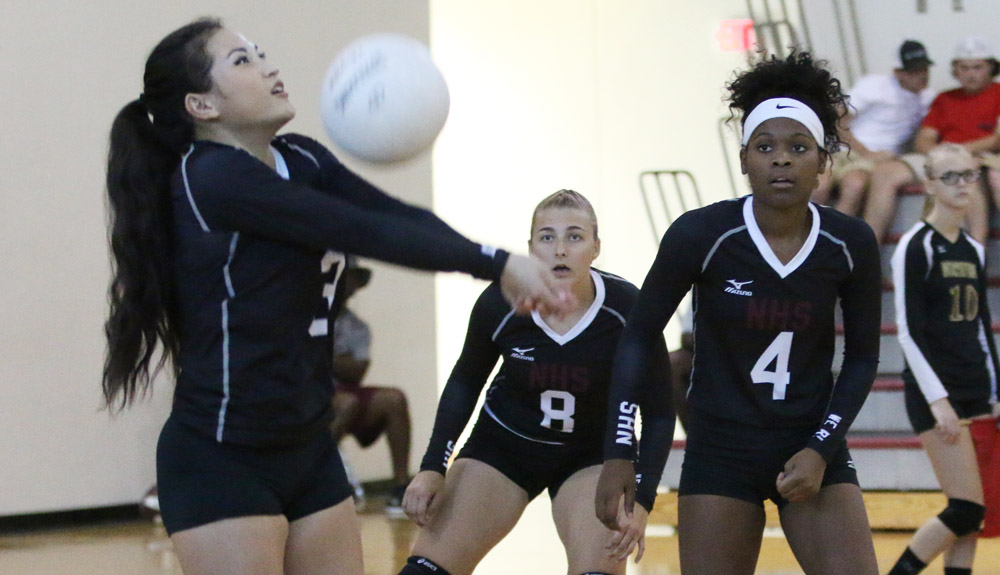
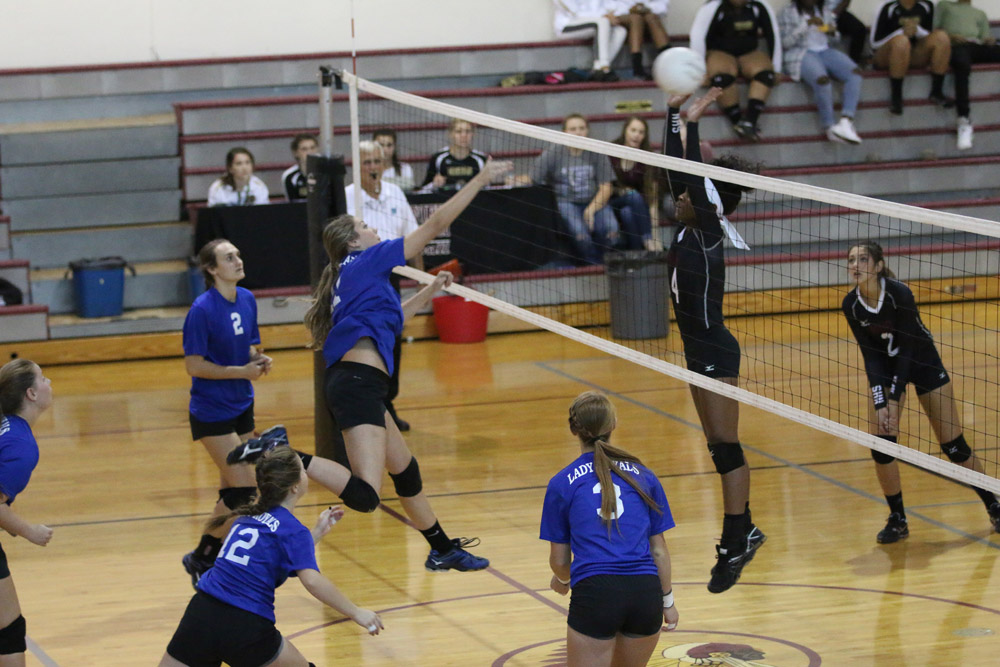
The Jay Royals defeated the Northview Chiefs varsity in three sets, 25-15, 25-15, 25-21, Thursday night in Bratt. In JV action. Jay downed Northview 25-13, 25-23.
Northview will travel to Flomaton on Monday (4:00 JV/5:00 varsity), while Jay will host Pensacola Christian today (5:00 JV/6:00 varsity).
NorthEscambia.com photos, click to enlarge.
Molino Park Elementary Mourns Loss Of ‘Granny Ward’
September 9, 2016
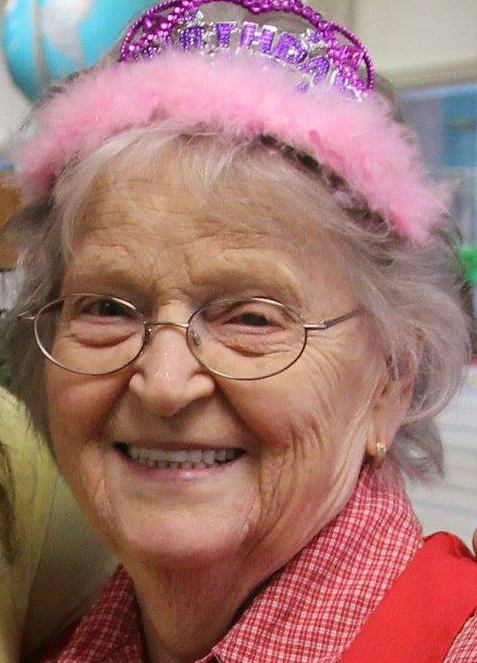 Molino Park Elementary School is mourning the loss of a beloved volunteer known to most as just “Granny”.
Granny, Mrs. Lillian Adell Ward, passed away Wednesday at age 86. She was a foster grandparent and a longtime volunteer that gave selflessly to the students.
Funeral services for Ward are Friday afternoon at Highland Baptist Church where she was a lifetime member (complete obituary).
Pictured: Molino Park Elementary School volunteer “Granny”, Mrs. Lillian Adell Ward, passed away Wednesday. Pictured below: Granny Ward celebrates her birthday with Molino Park students last May. Photos by Kim Stefansson for NorthEscambia.com, click to enlarge.

Northview Majorettes To Host Mini-Majorette Clinic
September 9, 2016
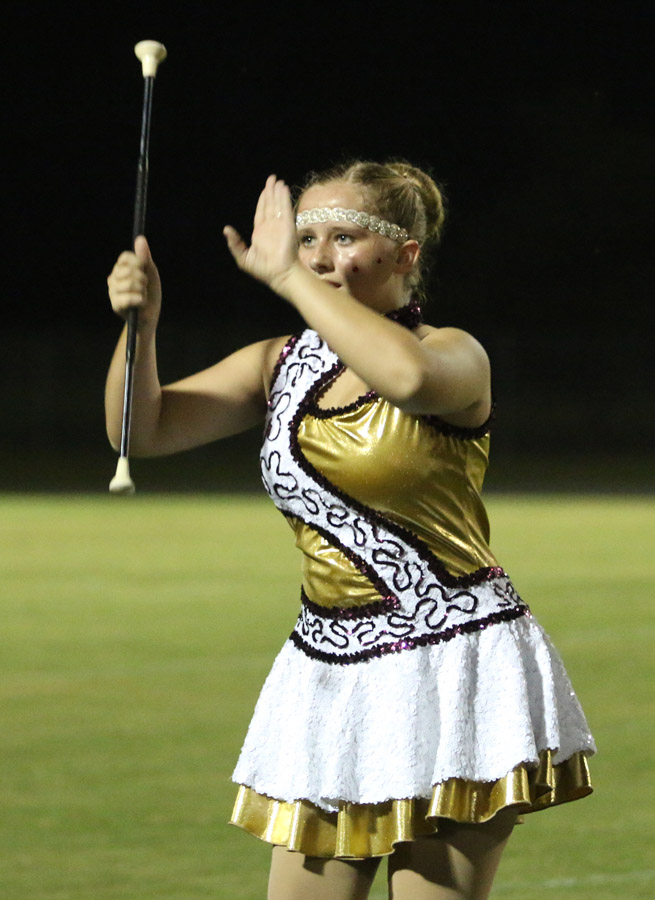
The Northview High School Majorettes are hosting a Mini-Majorette Clinic on September 13, 14 and 15 from 4-5 p.m. each day. The clinic will teach students baton tricks, skills and a baton routine they will perform during a pregame show on September 16. The clinic is open to any student between age 5 and grade 8. Students should bring their own baton, or one will be provided.
The cost is $25 per child and includes the clinic, a t-shirt, game admission and the performance.
To register, or for more information, click here for a registration form.
Wahoos Drop Playoff Game
September 9, 2016
The Pensacola Blue Wahoos gave up four runs in the third inning to the Mississippi Braves and couldn’t recover Thursday.
 Mississippi third baseman Carlos Franco hit a three-run homer in the third inning and 6-foot-6 right-hander Patrick Weigel handcuffed the Pensacola hitters throwing seven scoreless innings to give the Braves a 5-0 win Thursday in front of 3,866 at Blue Wahoos Stadium.
Mississippi tied the Southern League South Division series, 1-1, and now plays the next two games at 7 p.m. Friday and 6 p.m. Saturday at Trustmark Park. If Game 5 is needed, it will be played at 6:30 p.m. Sunday at Blue Wahoos Stadium.
Pensacola manager Pat Kelly expressed confidence in his team, despite the split at home. The Blue Wahoos won both series at Mississippi, going 7-3.
“Obviously, we wanted to win two here,” Kelly said. “It’s a best of three series now. It’s nice to know we can come back for game five.”
Franco lifted a high deep fly ball into Hill-Kelly Dodge Hill in right field with one out in the third inning to score three runs and put Mississippi on top, 5-0. It was his fifth homer this year.
Pensacola seemed jinxed to start the third inning. Braves center fielder Mallex Smith bunted down the first base line and Pensacola pitcher Jackson Stephens fielded and threw to first base hitting Pensacola first baseman Ray Chang right between the eyes.
Then Braves second baseman Levi Hyams hit a ball that deflected off of Stephens’ glove and reached first. Mississippi slugging left fielder Dustin Peterson smacked a hard liner into center field to score Smith to put the Braves up, 2-0. Franco finished the inning off with the fourth straight hit off of Stephens.
Stephens has been inconsistent in his last five starts. He’s allowed 16 runs in his last 21.1 innings pitched, which is a 6.75 ERA. In the second game of the playoffs, he pitched five innings, allowing five runs on eight hits and a walk, while striking out five.
Meanwhile, Pensacola’s Evan Mitchell pitched three scoreless innings of relief and now has thrown 15.2 scoreless innings. He allowed one hit, one walk and struck out one. Kyle McMyne retired the Braves in order in the ninth.
Kelly said it has been fun watching Mitchell gain confidence on the mound.
“It’s fun to see,” Kelly said. “He’s got great stuff. He has a 94 mph sinker and what a scout told me was a man hole cover slider.”
But the story Thursday was really 22-year-old Weigel who was making just his fourth start in Double-A. The right-hander pitched a gem throwing seven scoreless innings, allowing three hits, walking two and striking out eight.
Pensacola was unable to figure out the Braves’ Weigel, who allowed one Blue Wahoos runner to third base and one to second base. Weigel was called up to Mississippi on Aug. 19 from the Low-A Rome Braves where he was 10-4 with a 2.51 ERA.
“Weigel was good,” Kelly said. “He had all four pitches working. He was very impressive. We had a report on him that if you got him into the stretch he was not very good. We just didn’t get him in the stretch too many times.”
In his last start on Sept. 1 against Biloxi, Weigel was sharp, too. He allowed one unearned run on two hits over 8.1 innings, while striking out four.
Mississippi jumped out to a 1-0 lead in the second inning when Franco hit a leadoff single to left field. He scored easily from second base when Braves right fielder Connor Lien doubled over the head of Pensacola left fielder Phillip Ervin for a 1-0 lead.
Blue Wahoos leadoff hitter Alex Blandino and No. 3 hitter Sebastian Elizalde got five of the Blue Wahoos six hits Thursday. Blandino was 3-4 with a double, while Elizalde had two singles in four at bats.
In the North Division playoff, the Jackson Generals took a 2-0 lead in the best-of-five series against the Montgomery Biscuits with a 2-1 victory at home.