

One Injured In Mobile Highway Crash
September 12, 2016
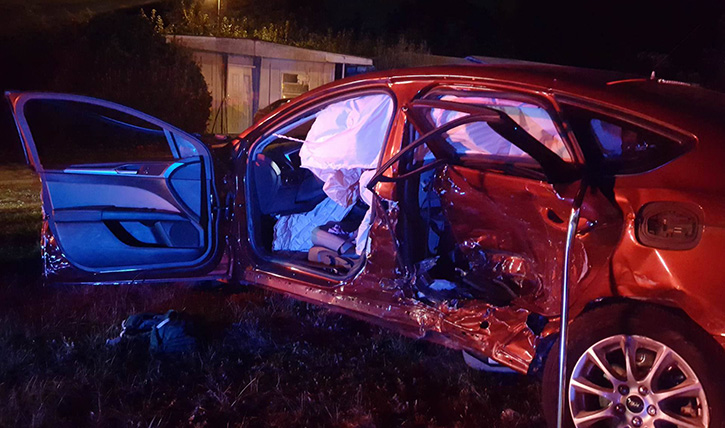
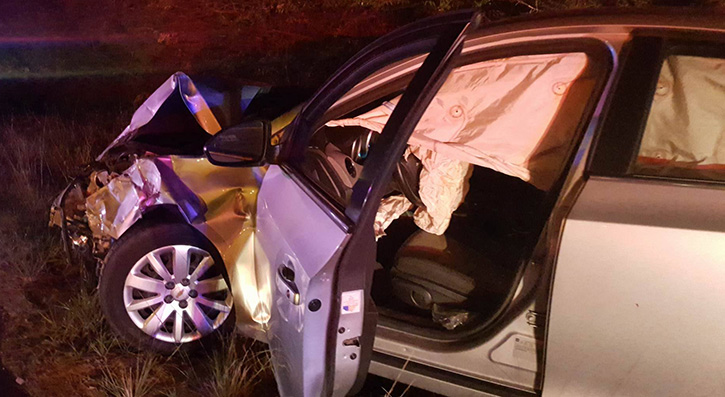
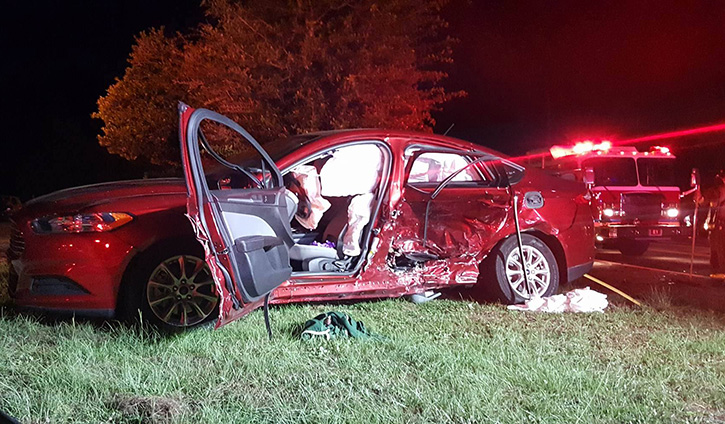
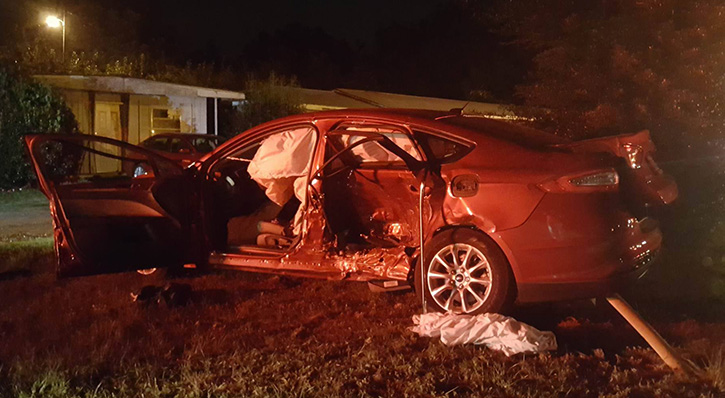
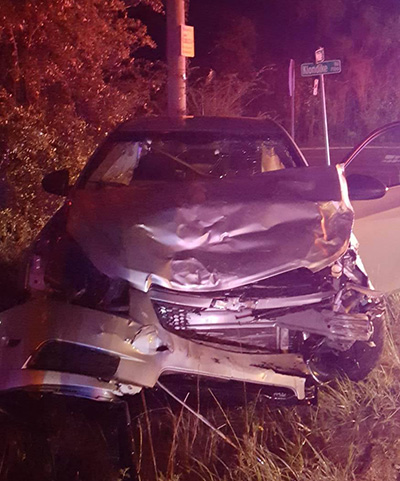 One person was injured in a crash Sunday night on Mobile Highway at Klondike Road. Further details have not yet been released by the Florida Highway Patrol as they continue their investigation. NorthEscambia.com photos by Kristi Barbour, click to enlarge.
FDOT: Weekly Traffic Alerts
September 12, 2016

Drivers will encounter traffic disruptions on the following state roads in Escambia and Santa Rosa counties as crews perform construction and maintenance activities.
Drivers will encounter traffic disruptions on the following state roads in Escambia and Santa Rosa counties as crews perform construction and maintenance activities.
Escambia County:
- Interstate 10 (I-10) / U.S. 29 Interchange – Drivers will experience the following impacts on I-10 and U.S. 29 from 8 p.m. to 6 a.m. Sunday, Sept. 11 through Thursday, Sept. 15.
- The inside lanes of U.S. 29 north and southbound near the I-10 interchange will be closed for drainage improvements.
- The outside lane of I-10 eastbound near U.S. 29 will be closed as crews perform shoulder work.
- The U.S. 29 north to I-10 eastbound ramp will be intermittently closed as crews work on the shoulder of the roadway. Traffic will be detoured north to make a U-turn at Broad Street and access I-10 eastbound.
- Survey crews will be working on I-10 east and westbound and the I-10 ramps near U.S. 29 from 9 p.m. to 5 a.m. Monday, Sept. 12 through Thursday, Sept. 15. Please use extra caution when driving through the project work zone.
- I-10 Widening – Intermittent and alternating lane closures between State Road (S.R.) 291 (Davis Highway/Exit 13) and U.S. 90 (Scenic Highway/Exit 17), from 7 p.m. to 6:30 a.m. the week of Monday, Sept. 12 as crews place pavement markers.
- S.R. 8A (I-110) Overpass Downtown- The northbound right lane will be closed from 8 p.m. Monday, September 12 to 5 a.m. Tuesday, Sept. 13 as crews perform routine maintenance on the bridge structure.
Santa Rosa County:
- I-10 Widening – Alternating lane closures between the Escambia Bay Bridge and S.R. 281 (Avalon Boulevard/Exit 22) from 8 p.m. to 6 a.m. Sunday, Sept. 11 through Thursday, Sept. 15 as crews continue widening work. In addition, there will be alternating lane closures on Avalon Boulevard near the I-10 interchange for bridge work.
All activities are weather dependent and may be delayed or re-scheduled in the event of inclement weather. Drivers are reminded to use caution, especially at night, when traveling in a work zone and to watch for construction workers and equipment entering and exiting the roadway.
9/11 In His Own Words: Inside The Pentagon – Come September Morning
September 11, 2016
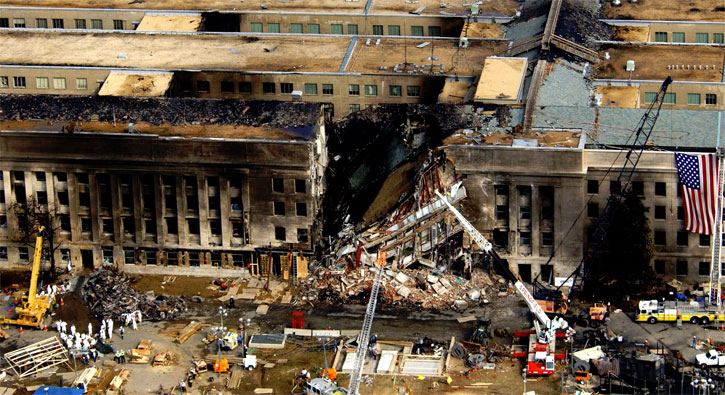
Steve Vanderwerff, who served as public affairs action officer for Naval Education and Training Command in Pensacola, was inside the Pentagon on September 11, 2001 — less than 100 yards around the corner from the crash site in his new office. Less than a week before, his office had been located in the strike zone.
Vanderwerff describes, in his own words, that September morning….
My decision to join the Navy was solely based on my sense of adventure. The Navy’s ad from my childhood, “It’s not just a job it’s an adventure,” truly struck home. I envisioned myself a bell-bottomed, Dixie-cup wearing sailor right out of the movie “Mr. Roberts.” Ah the sweet pleasure of sailing the seven seas doing the hula-hula, late night pub crawls in Hong Kong, collecting an armful of tattoos and chasing after Thai girls and beer while being paid. So I enlisted. It was 1988. All has come true except for the tattoos.
The years flew by, a tour on USS Carl Vinson – the Navy’s Golden Eagle, two tours with Pacific Fleet Combat Camera, surviving SERE School, graduating from Syracuse University’s DoD film school, a science expedition to the North Pole; and a tour with the Blue Angels as their backseat aerial photographer pulling a lot of G’s. I was operating on maximum overdrive, high on adrenaline. The ad had come true. It wasn’t just a job it was indeed an adventure. Little did I know that I had yet to experience the adventure of a lifetime, one that was life altering, made me grow-up and come to fully realize what it means to serve my country in the United States Navy.
After my tour with the Blue Angels I was detailed to the Pentagon. I had heatedly disagreed with my detailer’s decision. Taking a Secretary of Defense staff assignment at the Joint Combat Camera Center (JCCC) didn’t exactly register very high on my fun meter. Driving a desk, supporting Com Cam policy and supervising the reception of imagery from forward deployed combat camera teams isn’t exactly how I had ever envisioned myself. Damn it, I was an operator! The likelihood or remote possibility of me running into something fun and adventurous like arm-wrestling Bolivian Blow Dart Peddlers or fire walking with Tahitian Mai Tai Jugglers while stationed in DC was slim-to-none. Didn’t he have something for me, like pulling G’s in a fast-mover (I could fill volumes about how to prevent power puking inside the cockpit)? Or what about breaking through the Arctic’s polar cap in a nuclear powered fast attack submarine and standing guard against polar bear attack as I had in the past? I’m not exactly sure if a polar bear attack on a US Submariner constitutes an act of war, if so who owns the polar cap? If he wouldn’t send me to any of the above, how about something a bit more cerebral like me hitting a foreign beach armed to the teeth with Kevlar wearing Marines or maybe photographing Navy SEAL’s in revved up low-altitude fast moving helos moving in and out of hostile territory? I had always been a big fan of that sort of action. He said no to all. It was time for me to take a seat at a desk and help others do what I wanted to do.
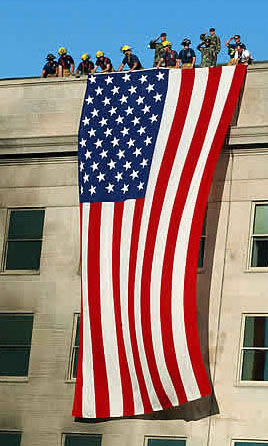 And so on a hot muggy day I checked in. It was August 2001. The Pentagon buzzed like a beehive. I was impressed by all of military’s, “Heavy Hitters” that walked the halls. There was a lot to learn, especially working with the other service branches. What was there not to like? The world appeared to be at peace. I was stationed in our nation’s capitol. I had a large cubicle, and my own computer with super fast T-line connections. A Starbucks was conveniently located one floor below. Best of all, I would be home every night for the next three years to annoy my wife and kids. My first month flew by moving JCCC into the Pentagon’s newly renovated wing.
On a sunny, Tuesday morning I arrived at work. It was September 11, 2001. It was a little after nine a.m. when I got to work. My wife Dayle, was flying back home that day from attending a funeral in the mid-west. I was getting in late because I had to drop my kids off at school; playing the role of soccer mom somewhat new to me. My officer in charge was attending a conference in Norfolk, Va. and my operations chief was at a meeting down the road in Alexandria. When I got to the office everybody was huddled around the TV. The news was reporting that a plane had crashed into one of New York’s Twin Towers.
I stood flabbergasted as the tragedy unfolded. To my disbelief a second jet slammed into the Twin Towers. My memory is a bit fuzzy of what happened next, but as I recall, soon afterwards the Pentagon shuddered and shook. My co-workers and I looked at each other not sure of what had just happened. That sure seemed like one helluva sonic-boom I thought to myself. Having come from the “Blues” my mind still operated in the aviation world of thinking. The phone rang. I answered it. It was one of my guys who, was off for the day at home just across the Anacostia River at Bolling Air Force Base. He asked me if we had just been attacked. I said “is that what that was?” I said I wasn’t sure, there were no alarms going off. He said he thought so because looking from his back yard black smoke was pouring out of the Pentagon. Someone went out to investigate. They quickly came back. All they said was, “We gotta go.”
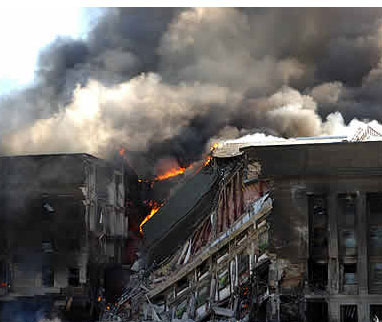 Smoke filled halls were filled with people making their way towards exits. The murmur of voices and shuffling feet was all that could be heard. No one had a clue to what had just happened. The idea of a passenger plane hijacked by terrorists and crashing into the Pentagon was as remote a possibility as Arnold Schwarzenegger becoming the governor of California. Not exactly knowing what to think I made my way outside. Once outside I saw thick black smoke rising from the building. I thought that maybe construction workers working on the renovation might have hit a gas main. All sorts of thoughts ran through my head as hordes of dazed and confused people continued to pour into the daylight. Seeking information I went to my car and turned on the radio to listen to the news. I sat stunned not believing what I was hearing. Holy-moley I thought. We’ve been attacked by terrorists, same as the Twin Towers. My God there are people in the wreckage. I spend my entire career trying to get into the action and when I think that I’m away in the rear the action comes looking for me. I heard approaching sirens in the distance. Then it dawned on me. My wife was flying home that day. My mind raced with morbid fear. Is she safe? Has she got on the plane yet? In a fog I made my way to the pre-determined rally point. Once there I set my personal emotions aside. I had people to muster and account for. The rest of JCCC showed up. All were accounted for. Then security officers were yelling for everybody to leave the area because another attack was imminent. Mass hysteria hit the crowd. What the heck was going on? Like cockroaches scattering when the lights come on, civilians, military personnel, politicians and bungling bureaucrats ran for cover. Somehow we all ended up on the other side of Highway 395. I knew I wouldn’t be seeing my car for a long time. More worries filled my mind, thinking of how would I get home and who would pick-up and care for my kids? The second attack turned out to be a false alarm. I set aside my worries, I focused on the positive. My wife would be ok and I would figure out how to get home and take care of my children, but first I had my duty to fulfill. Once again I accounted for my personnel.
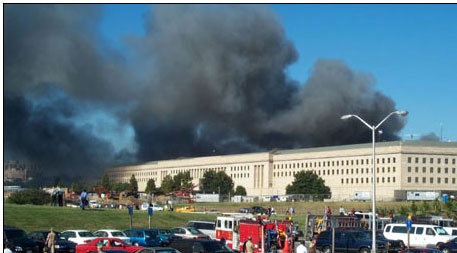 Fortunately several members had grabbed their cell phones. The airways were jammed, but after repeated attempts we were able to get a hold of my boss. He instructed us to get to the American Forces Information Services (AFIS) in Alexandria, where he currently was and where we would set up shop. There was imagery to get out to the world. The story needed to be told. Because none of us had access to our cars we made our way to the nearest metro station. I tried repeatedly, but couldn’t reach my wife. I was scared. Fortunately I was able to contact a neighbor who would pick my kids up from school. Once at AFIS we went into action setting up a temporary JCCC – still and video imagery started to come in. Sec Def wanted his imagery. Hours later after repeated attempts I finally was able to get a hold of my wife. She was safe. Her plane had been delayed because of the tragedy. She had spent her time desperately trying to get a hold of me, fearing for the worst – widow hood. I assured that her I was un-harmed and that the kids were safe with a neighbor. We cried for our good fortune and the mis-fortune of others. I thanked God for watching over me and my family. I had been less than a hundred yards around the corner from the crash site. Late that night in the safety of my home with my kids snug in bed I realized that a week earlier before moving into the newly renovated wing, JCCC had been located in the area of impact and that a few of my office mates and I would have been in the old office that morning to make sure we had moved everything, but had not because we had been watching the Twin Towers tragedy on TV. I sighed with relief. It had been a close call.
Years later, thinking about that bleak morning in September when all of America held its breath and our enemies cheered I give pause to reflect. Understanding, that on that day something awoke in me that had been missing in me, if not many others – service and sacrifice. I had spent my time in the Navy up until then thinking of what I could take or get out of the deal. My training, my many deployments, my wanting fun and adventure had always been about me. Sure, I had always been a good Sailor, but I had been driven by hubris and selfish desire. Not giving much thought to what it meant to serve my country. I was happy as long as I was able to collect a paycheck.
It didn’t happen overnight, but over the course of my tour at the Pentagon and supporting the “Global War on Terror” I found a new sense of purpose and energy. I worked long hours, determined to support the cause and give meaning to my duty. Gone were my days of thinking that being a Sailor meant being a sea going pirate, swashbuckling across the globe, with tales to spin and tell. People had died and would continue to do so without mine and every American’s full support to stop our enemies.
So when it was time for me to talk to my detailer about orders, I didn’t hesitate to ask for orders at the “tip of the spear” aboard a ship because that was where I was needed. My days of asking for fun and adventurous jobs seeking personal reward and glamour were over.
And so whenever I found myself on long arduous extended deployments while sailing in harms-way wondering why I had to be there and for what purpose I would think of all those who had gone before me and of their sacrifice and dedication to service.
I continued to serve with that sense of pride and purpose at follow-on duty stations, and continue to do so as a retired chief and civilian employee at Naval Education and Training Command, which develops the Navy’s workforce through education and training that builds personal, professional, and leadership skills.
When my time in the Navy, active duty and as a civilian, comes to a close I will be proud to say as President Kennedy so eloquently put,
“I can imagine no more rewarding a career. And any man who may be asked in this century what he did to make his life worthwhile, I think can respond with a good deal of pride and satisfaction:
“I served in the United States Navy”
Alabama Teen Killed In Wreck
September 11, 2016
A Brewton reportedly headed to a high school football game was killed on I-65 Friday night.
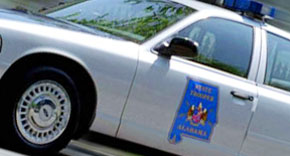 Alabama State Troopers said 18-year old Darius Dramon Tolbert was killed when the 2004 Dodge Durango in which he was a passenger crashed and overturned. Troopers said the driver and three other passengers were injured in the crash.
The wreck occurred about 5:40 p.m. on I-65 near the 31.9 mile marker. Tolbert was transported to an area hospital where he passed away about 7:10 p.m. Further information has not been released by Alabama State Troopers as they continue their investigation into the fatal crash.
9/11 Breakfast Honors Local First Responders
September 11, 2016
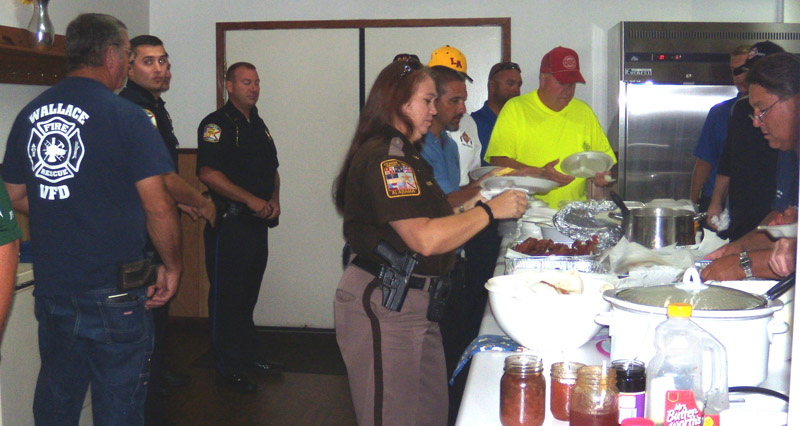
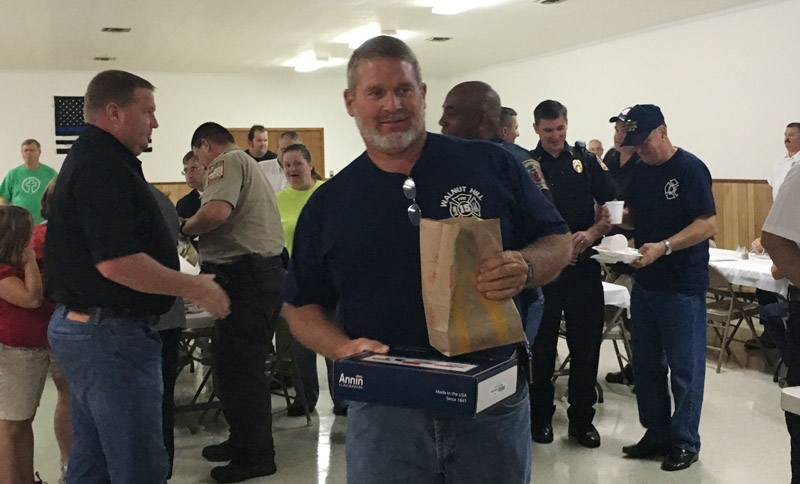
A 9/11 breakfast honored police, fire, public officials and other first responders from across Escambia County, Ala., Escambia County, Fla., and Santa Rosa County. The breakfast was held at the Little Escambia Baptist Church in Flomaton.
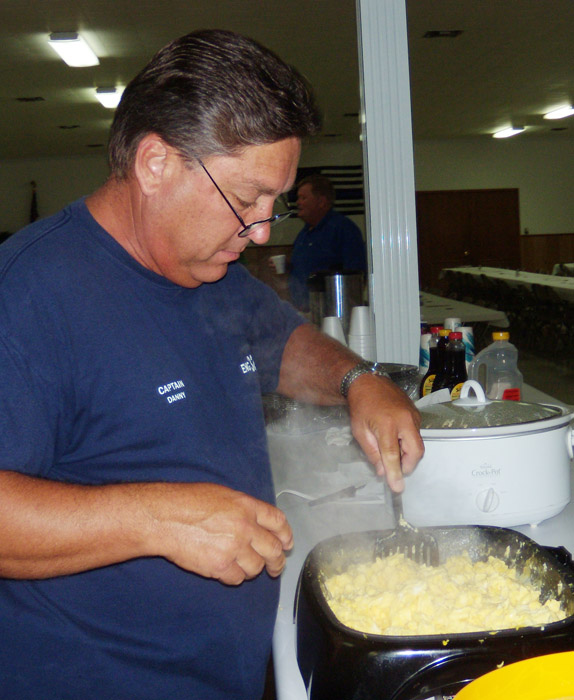 The 9/11 First Responders Appreciation Breakfast was held in memory of the first responders lost of 9/11 and in honor of all the local first responders that serve each day. Circuit Judge Dave Jordan and Tiffany Sullivan were the guest speakers. The men of LEBC prepared the breakfast and each first responder in attendance was given a “First Responder’s Survival Kit” and a New Testament Bible courtesy of the Atmore Camp of the Gideons International.
Each station or department represented was also presented with an American flag by Woodmen of the World to be flown or displayed at their station. Many departments were represented including the Flomaton Police Department, the Flomaton Fire Department, Atmore Police Department, Atmore Fire Department, Poarch Creek Fire Department, Atmore Ambulance, Escambia County (FL) EMS, D.W. McMillian Ambulance, Walnut Hill Station of Escambia Fire Rescue, Wawbeek VFD, Pineview VFD, Barnett Crossroads VFD, McCall VFD, Friendship VFD, ASAP EMS, Escambia County (AL) Sheriff’s Office, Alabama State Troopers and others.
Photos by Courtney Rabon for NorthEscambia.com, click to enlarge.
One Person Injured In Crash With Tree In Molino
September 11, 2016
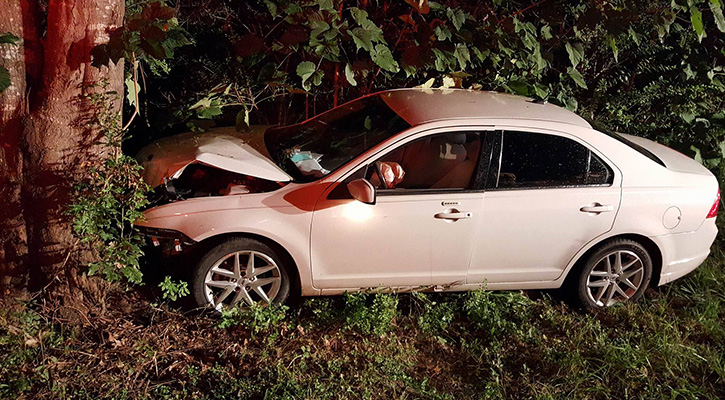
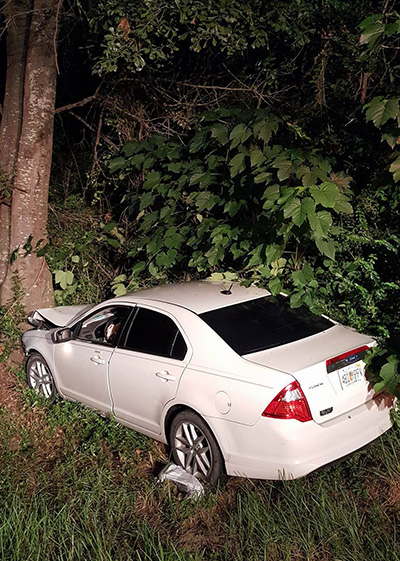
One person was injured in single vehicle crash early Sunday morning on Highway 95A at Chipper Road near Molino. The driver of a Ford Fusion lost control about 4 a.m. and slammed into a tree. Further information has not been released as the Florida Highway Patrol continues this investigation. NorthEscambia.com photos by Kristi Barbour, click to enlarge.
UWF Football Wins Historic Home Opener
September 11, 2016
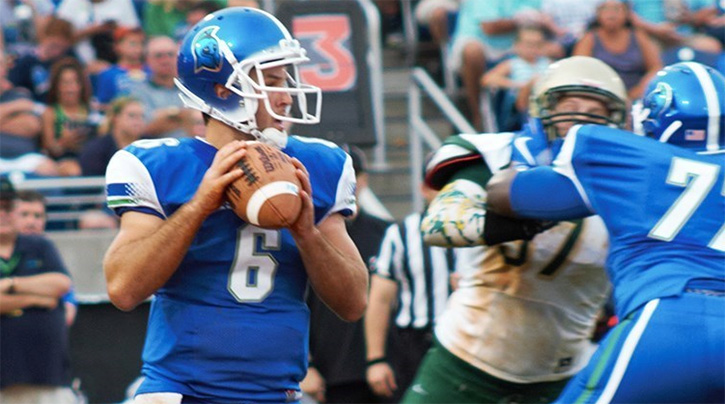
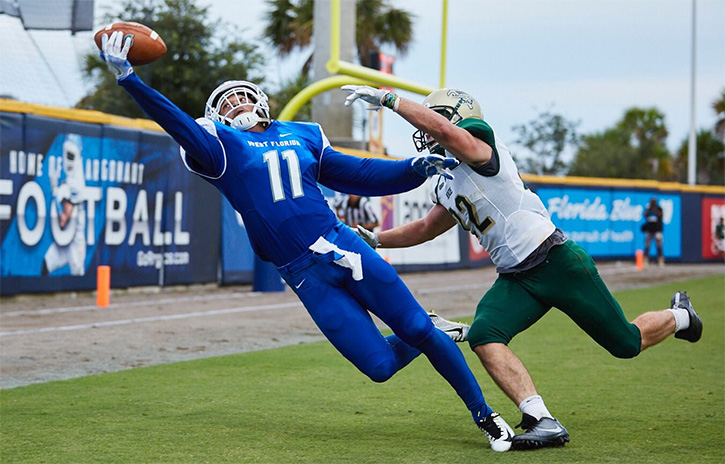
Quarterback Kaleb Nobles had a banner day for the University of West Florida football team, in the Argonauts’ 45-28 win over Missouri S&T on Saturday. The UWF defense stood out statistically again, allowing the Miners to total just 42 yards on the ground and keeping the opposition on its toes with six sacks on the day.
The team came out strong on the first drive of its home opener against MST, and the Argonauts never looked back. Nobles connected with freshman receiver Tate Lehtio for a gain of 33 yards in the first drive of the game to set the table for a phenomenal day. The Argonauts would later strike first on a 36-yard field goal from redshirt freshman Austin Peffers.
Nobles would find junior receiver Ishmel Morrow and senior receiver Anas Hasic in the end zone in the first quarter to jump out to a 17-0 lead. The trio of Morrow, Hasic, and Antoine Griffin combined for 19 catches and 425 receiving yards.
Led by linebacker Chris Sakamoto, West Florida would hold the Miners to just 44 total yards of total offense on 17 attempts in the first quarter. Sakamoto led the Argonauts with 11 tackles, and added a sack.
At the start of the second quarter, West Florida free safety Blake Norwood made a smart read, picking off Miners quarterback Tyler Swart. Norwood finished with two interceptions on the day. This would set up a go ahead touchdown for the Argos, as Nobles connected with Antoine Griffin for a 40-yard touchdown.
With West Florida up 24-0 early in the first half, it wouldn’t take long for Missouri S&T to strike back. On the Miners first drive of the second quarter, Swart would respond with an eight play, 77-yard drive, capping it off with a 1-yard touchdown run of his own.
With 9:32 remaining in the half, and Missouri S&T trailing West Florida 24-7, the Miners were not going to fold. Missouri S&T would force a West Florida three-and- out, followed by a 93-yard punt return for a touchdown from sophomore Braxton Graham.
Nobles and company would fire back quickly with a 67-yard touchdown pass, extending West Florida’s lead to 31-13. Just before the end of the half, Swart would respond with a 3-play, 75-yard touchdown drive. The Argonauts would head into the second half with a 31-20 lead.
On West Florida’s second drive of the third quarter, Nobles would again connect with Griffin for his second touchdown of the day. Nobles would find Kevin Grant three minutes later for the quarterbacks sixth touchdown of the day, to put UWF up 45-20.
Nobles finished his career day with six touchdowns, which ranks seventh in GSC history and ties his single-game best. He also finished the day with 503 yards passing, placing him ninth all-time in the conference record books.
The Argonauts will visit Chowan in Murfreesboro, North Carolina, next Saturday, September 17, for the final non-conference game of the season. The game is set for a 6 p.m. ET kickoff.
Photos for NorthEscambia.com, click to enlarge.
Our View: Where Were You That September Morning?
September 11, 2016
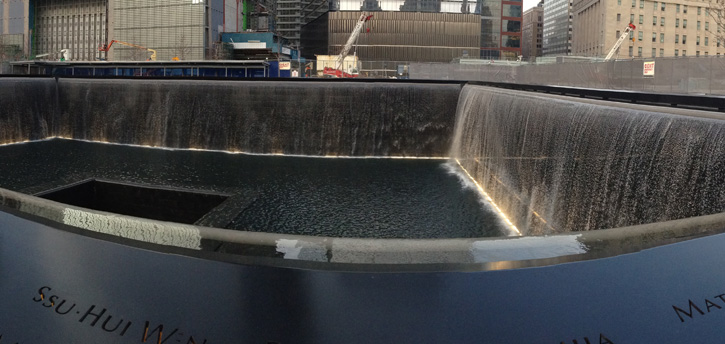

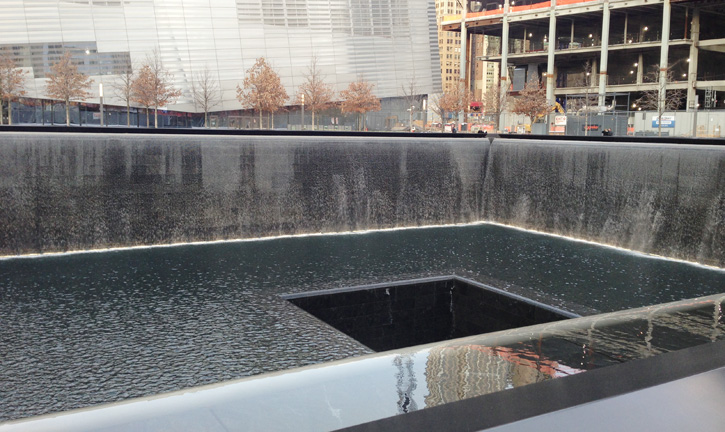
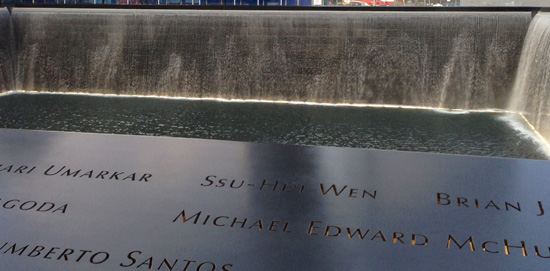
We publish this piece on an annual basis, and we encourage you to comment below, answering the question ‘Where Were You That September Morning?
September 11, 2001. It’s been 15 years.
Life, at least when that morning began, seemed good. I’ve always been a work at home dad, so I was home with my two girls. The youngest was almost four months old, and the oldest was approaching her fourth birthday. It was a normal morning. The little one was asleep, “fat and happy” as we used to say, after a morning bottle. The oldest was in the living room just a few feet from my office watching PBS Kids on the TV as I worked on a project for a client.
Then this arrived in my inbox:
Subject: CNN Breaking News
From: BreakingNews@CNN.COM
Date: Tue, 11 Sep 2001 08:52am– World trade center damaged; unconfirmed reports say a plane has
crashed into tower. Details to come.
I got up, walked to the living room and flipped the TV to CNN. They were talking about how a pilot could make such an error, hitting such a large building. They were speculating that it was just a small plane. But then as the TV news helicopters zoomed their cameras in closer, the anchors were beginning to notice what I had already thought….those holes the tower were to big to have been a small plane.
(continues below photo)
 I called my wife at work in Atmore. She had seen the breaking news email, and had tried to visit the CNN website to see the story. If you remember trying to use the internet that morning, it was near impossible to get a news website to load; they were all overloaded. She was unable to see the pictures. I was describing what I saw on the TV to her.
I managed to grab a picture from CNN via my web server and then download and email it to her. We were speculating about how it could happen when the second one hit.
I remember saying “wait, hold on, wait…”. I told her what I just watched on the TV. The second plane had hit the other tower. We quickly decided that we were at war as the anchors on TV speculated again that perhaps there was a problem with some navigational system, causing jetliners on a beautiful, clear morning in New York to fly into some of the tallest structures in the world.
Another breaking news email arrived:
Subject: CNN Breaking News
From: BreakingNews@CNN.COM
Date: Tue, 11 Sep 2001 09:21am– Second plane crashes into World Trade Center.
She and I began to speculate ourselves that we were at war. What would we do? What should we do? What about the kids? It was not panic, understand, but just that protective momma and daddy instinct, I suppose. Prayer. That was a good idea. Maybe go to the bank and get out a little cash. That seemed like a good idea. How would you prep for a war on American soil? We were not sure.
I continued to relay information about what I was seeing on TV to my wife at work, who, in turn, would relay the information to her coworkers. They had a TV, but no cable service or antenna. They ended up fashioning a homemade antenna to see a fuzzy picture.
Meanwhile, the breaking news emails kept arriving…
Subject: CNN Breaking News
From: BreakingNews@CNN.COM
Date: Tue, 11 Sep 2001 09:32am– Sources tell CNN one of two planes that crashed into World Trade
Center was an American Airlines 767.
Subject: CNN Breaking News
From: BreakingNews@CNN.COM
Date: Tue, 11 Sep 2001 09:42am– President Bush calls plane crashes at World Trade Center a
terrorist act.
Subject: CNN Breaking News
From: BreakingNews@CNN.COM
Date: Tue, 11 Sep 2001 09:45am– Significant fire at the Pentagon. Details to come.
Subject: CNN Breaking News
From: BreakingNews@CNN.COM
Date: Tue, 11 Sep 2001 09:46am– White House evactuated. Details to come.
The Pentagon on fire? The White House evacuated? Notice that in CNN’s email they were in such a hurry that they misspelled “evacuated”. One sentence at a time, the situation became more grave.
Subject: CNN Breaking News
From: BreakingNews@CNN.COM
Date: Tue, 11 Sep 2001 09:55am– CNN confirms a plane hit the Pentagon
Subject: CNN Breaking News
From: BreakingNews@CNN.COM
Date: Tue, 11 Sep 2001 10:03am– One of World Trade Center towers collapses; fire forces
evacuation of State Department
Subject: CNN Breaking News
From: BreakingNews@CNN.COM
Date: Tue, 11 Sep 2001 10:30am– Second World Trade Center tower collapses in Manhattan
Over and over, we watched those towers collapse on TV, and we watched our Pentagon burn.
 Our almost four year old asked a lot of questions. “Were people hurt? Did they need a Band-aid?” The magnitude of the event was lost on a four year old. Looking back at those first few hours, I think the magnitude of the event was lost on all of us.
Like many Americans, I sat glued to the TV that day, continuing to watch the video of the towers falling. Our almost four year old asked if another building fell down or if it was the same one. It was time to change the channel on the TV.
You might remember that many of the entertainment TV stations ran network news feeds. Others just simply ran screens about the day’s events. There was no USA network, no ESPN, no MTV. But on PBS, we found children’s programming at a time it was not normally on. For a little while, sitting in the living room floor holding my kids, the world stopped turning that September day, as we watched Big Bird and the Cookie Monster.
Country artist Alan Jackson later wrote a song “Where Were You When the World Stopped Turning?”.
Some of those lyrics:
Where were you when the world stopped turning that September day
Out in the yard with your wife and children
Working on some stage in LA
Did you stand there in shock at the site of
That black smoke rising against that blue sky
Did you shout out in anger
In fear for your neighbor
Or did you just sit down and cryDid you weep for the children
Who lost their dear loved ones
And pray for the ones who don’t know
Did you rejoice for the people who walked from the rubble
And sob for the ones left belowBut I know Jesus and I talk to God
And I remember this from when I was young
Faith hope and love are some good things He gave us
And the greatest is love
Where where you when the world stopped turning that September day? Your comments are welcome below.
NorthEscambia.com photos by Bethany Reynolds, click to enlarge.
Poll Shows Trump, Clinton Tied In Florida
September 11, 2016
Two months to the day before the presidential election, a poll released by Quinnipiac University shows Republican presidential nominee Donald Trump and Democratic nominee Hillary Clinton tied among likely Florida voters.
Clinton and Trump both get the support of 47 percent of likely voters in a head-to-head matchup, according to the Quinnipiac poll. That is virtually unchanged from a month ago, when Clinton led Trump 46-45 — which is considered a statistical dead heat.
The two remain tied when the most prominent third-party candidates are thrown into the race, with Trump and Clinton drawing 43 percent apiece. Libertarian nominee Gary Johnson, the former governor of New Mexico, gets 8 percent and Green Party candidate Jill Stein was chosen by 2 percent of the people surveyed.
Those numbers are also basically the same as Quinnipiac’s August poll, though Johnson has moved up a point and Stein is down one.
The Connecticut-based Quinnipiac, which frequently conducts polls in Florida and other states, surveyed 761 likely Florida voters from Aug. 29 to Wednesday. The poll has a margin of error of 3.6 percentage points.
The university’s polling institute also released swing-state polls showing Clinton holding modest leads in North Carolina and Pennsylvania. Trump has a one-point edge in Ohio that widens to four points when Johnson and Stein are added to the mix.
“The effect of the Republican and Democratic conventions on the presidential race has run its course,” said Peter Brown, assistant director of the poll. “As the campaign enters its final stage, Florida and Ohio, two of the largest and most important swing states, are too close to call, while North Carolina and Pennsylvania give Hillary Clinton the narrowest of leads.”
The poll continues to show Floridians divided along racial, gender and party lines in the presidential race. Clinton does marginally better among Democrats than Trump does with Republicans in a head-to-head race, while independents favor Trump, 48-39. Trump, a real-estate mogul, wins men by 22 percentage points; Clinton, a former secretary of state, takes women by 20.
Meanwhile, Trump takes 59 percent of white voters, to 36 percent for Clinton. Nonwhite voters favor her by an even wider margin, with 67 percent backing Clinton and 25 percent choosing Trump.
The divide persists despite recent efforts by Trump to reach out to nonwhite voters, particularly African-Americans.
The picture for smaller slices of the electorate can change slightly with Johnson and Stein factored in — for example, Trump’s lead among independents falls to five points — but the outlines remain largely the same.
by Brandon Larrabee, The News Service of Florida
Escambia Woman Charged With Stealing From Seven Disabled Adults
September 11, 2016
Attorney General Pam Bondi’s Medicaid Fraud Control Unit arrested an Escambia County resident for exploitation of disabled adults. Penny Williams, 43, allegedly stole more than $12,000 from seven different residents while employed by Capstone Group Homes between April and June 2016.
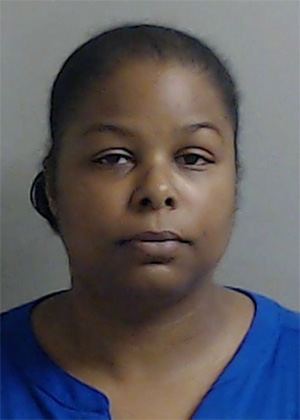 Williams faces seven counts of exploitation of disabled adults, all third-degree felonies. If convicted, Williams faces up to 35 years in prison and $35,000 in fines. The State Attorney for the First Judicial Circuit, Bill Eddins, will prosecute the case.
The Attorney General’s MFCU investigates allegations of patient abuse, neglect, and exploitation in facilities receiving payments under the Medicaid program. Additionally, the MFCU investigates and prosecutes providers that intentionally defraud the state’s Medicaid program through fraudulent billing practices. Medicaid fraud essentially steals from Florida’s taxpayers. From Jan. 2011 to the present, Attorney General Bondi’s MFCU has obtained more than $500 million in settlements and judgments.