

No Power, A/C Late Wednesday Night For Hundreds
July 21, 2016
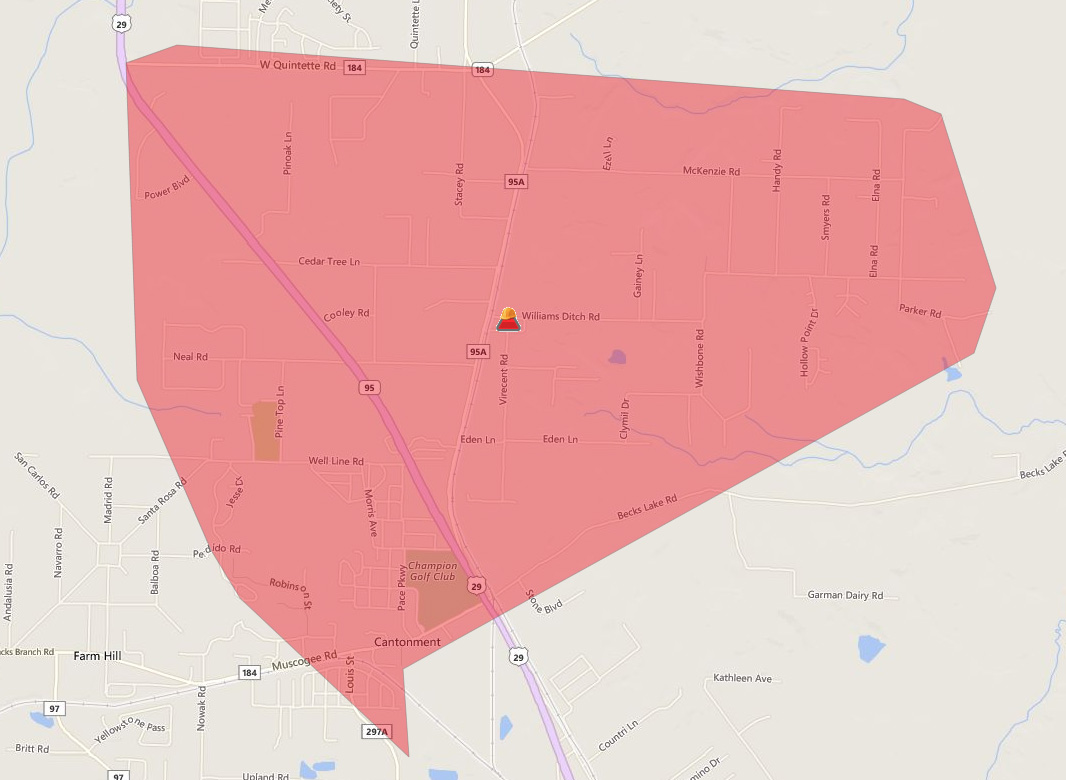
Hundreds of Cantonment and Cottage Hill residents spent up to about 90 minutes in the dark — and without air conditioning — Wednesday night.
Gulf Power reported 1,690 customers in the area lost power about 10:37 p.m. About half of the customers had their power restored within about an hour, while everyone was back on by about 12:10 a.m. Thursday.
The cause of the outage was reported to be “system protection equipment”.
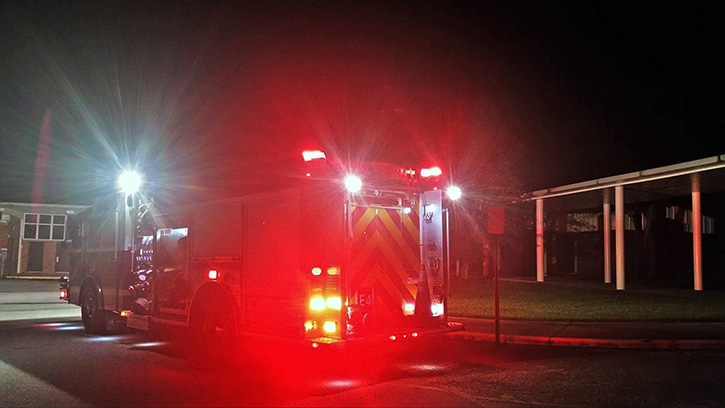
During the outage, the Cantonment Station of Escambia Fire Rescue responded to Jim Allen Elementary School for a sprinkler system waterflow alarm. The cause of the alarm was attributed to the power failure.
NorthEscambia.com photo by Kristi Barbour, click to enlarge.
Free Food, Math And Reading Help At Cantonment’s Carver Park
July 21, 2016
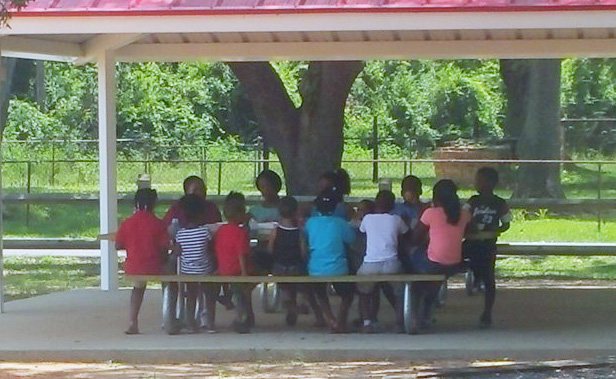
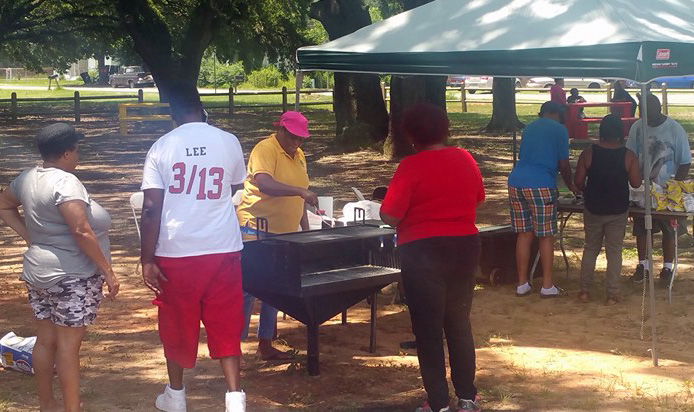
Hot dog in the park events are continuing at Carver Park in Cantonment, with kids able to enjoy a free meal and some educational time.
There will be free hot dog meals will be offered every Wednesday, beginning today, at noon in Cantonment’s Carver Park at 2058 Webb Street. The hot dog, chips and beverage meals are sponsored by Saint Jude Catholic Church for school-age children and served by the Cantonment Improvement Committee.
The Carver Park Resource Center will be open from 10 a.m. until noon on Wednesdays until school starts for children who want to keep up with their reading and math skills using computer games.
Photos courtesy Cantonment Improvement Committee for NorthEscambia.com, click to enlarge.
Man Found Shot To Death In Street
July 21, 2016
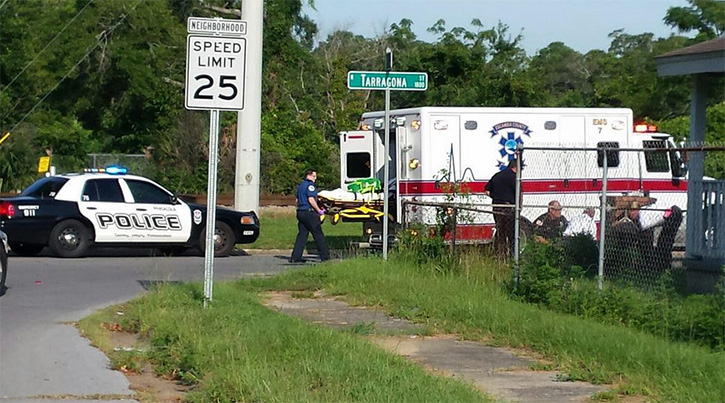
Police are continuing a homicide investigation after a man was found dead with a bullet wound Wednesday morning in Pensacola.
A woman called the Pensacola Police Department shortly before 8 a.m. after hearing gunshots. The man, later identified as 34-year Mark E. Freeman, was found fatally shot at the corner of East Avery and North Tarragona Streets.
Anyone with information on the incident is asked to call the Pensacola Police Department at (850) 435-1900.
Photo for NorthEscambia.com, click to enlarge.
Wahoos Beat Biloxi
July 21, 2016
The only thing that had cobwebs after Beau Amaral’s 71-day absence from the Pensacola Blue Wahoos starting lineup was his Jeep Wrangler that he left in the team’s parking lot.
In his first game back with Pensacola since going on the disabled list May 10, Amaral led off the first inning by lifting the first pitch he saw Wednesday over the right field fence into Hilly-Kelly Hill. It was his third homer starting a game this season.
 Amaral had surgery to remove his top rib on his right side that was pressing on a vein and created a blood clot in his non-throwing right arm. He returned to the Double-A level after playing 10 games in two weeks for the Rookie League Billings Mustangs. He hit .382 there with one homer and five RBIs for Billings.
Thanks to home runs by Amaral and catcher Chad Wallach, Pensacola went on to beat the Biloxi Shuckers, 6-4, in front of 4,683 fans Wednesday at Blue Wahoos Stadium.
Amaral said he was happy to be back in the No. 4 Pensacola jersey, even though, it lacked his last name across the back.
“It was real scary,” Amaral said about the blood clot that could have ended his season, professional baseball career or worse. “I shouldn’t have looked it up online. It kind of freaked me out.”
Amaral, who worked all offseason with his dad, Rich, to improve his swing also hit a leadoff solo homer on the first pitch of the 2016 season against the Jacksonville Suns and against Biloxi earlier in the year. He was 3-5 with the homer, two singles a run scored and an RBI Wednesday night.
“I got back to the dugout and thought I would wake up and still be in my hospital bed back at home,” said Amaral, who planned to celebrate his performance with a bottle of water and a conversation with his dad. “I’m just so excited to be here. It was really tough being at home and not being able to play baseball.”
Before his injury, Amaral hit .280 in 28 games with Pensacola with two homers, 14 RBIs and an on-base percentage of .360. His three hits Wednesday raised his average to .295.
As excited as Amaral was to be back in Pensacola, Blue Wahoos manager Pat Kelly was even more excited to have him back in the lineup.
“What a terrific comeback,” Kelly said. “We thought he was lost for the season. He comes back this quick and plays tremendous tonight. Everybody is excited to see him. Now, we have four really good outfielders.”
Besides the hits, Amaral made a great catch running back on a deep fly ball by Brett Phillips, the Milwaukee Brewers No. 2 prospect. He caught the ball over his left shoulder on the edge of the warning track.
“He made the play on Phillips look easy and that ball was crushed,” Kelly said.
Pensacola jumped out to a 6-0 lead after the first three innings off of Biloxi starting pitcher Angel Ventura, who gave up four runs on seven hits and two walks to earn a loss.
Blue Wahoos shortstop Zach Vincej scored from first base in the second inning on first baseman Eric Jagielo’s double in the right center gap that rolled to the wall putting Pensacola up, 2-0. Wallach then jumped on a pitch sending it over the left field wall for a 4-0 Blue Wahoos lead.
Two more runs scored in the third inning for a 6-0 Pensacola lead when right fielder Sebastian Elizalde scored on a Jagielo ground out and second baseman Brandon Dixon crossed the plate on a Ventura wild pitch.
Biloxi, who entered the game hitting .209 against Pensacola pitching, scored its three runs in the fourth inning. Phillips, Biloxi’s center fielder, scored the first run for the Shuckers on an error by Dixon. Biloxi third baseman Gabriel Noriega then smacked a two-out single to left field that scored first baseman Nick Ramirez for the Shuckers second run of the game, 6-2.
Noriega scored the final run of the inning when Biloxi shortstop Angel Ortega hit a blooper just over Pensacola’s Dixon’s outstretched arm into right field pulling Biloxi within, 6-3.
In the ninth inning, Biloxi loaded the bases on two bunt singles and a flair to right field off of Pensacola closer Alejandro Chacin. Chacin then walked third baseman Tom Belza to score Johnny Davis.
However, Chacin then got Biloxi’s top of the order out on two foul pop ups to Wallach and struck out Phillips to get out of the bases loaded jam. He now has a Southern League-leading 18 saves on the year.
“It wasn’t like he was getting crushed,” Kelly said of Chacin. “He made great pitches when he has to.”
Pensacola starting pitcher Tyler Mahle also pitched well. He worked six innings giving up five hits, two walks and three unearned runs, while striking out five. He’s now 5-1 in six starts for Pensacola with a .2.41 ERA, winning 10 of his last 11 starts between the High-A Daytona Tortugas and Blue Wahoos.
Pensacola relievers have now allowed four runs total, two of them earned in 24.1 innings this season.
The Blue Wahoos improved to .500 in the second half at 13-13 and the first half South Division champions are 54-42 overall.
Commission Gives Final OK To Fire Tax Increase To Staff South-End Stations
July 20, 2016
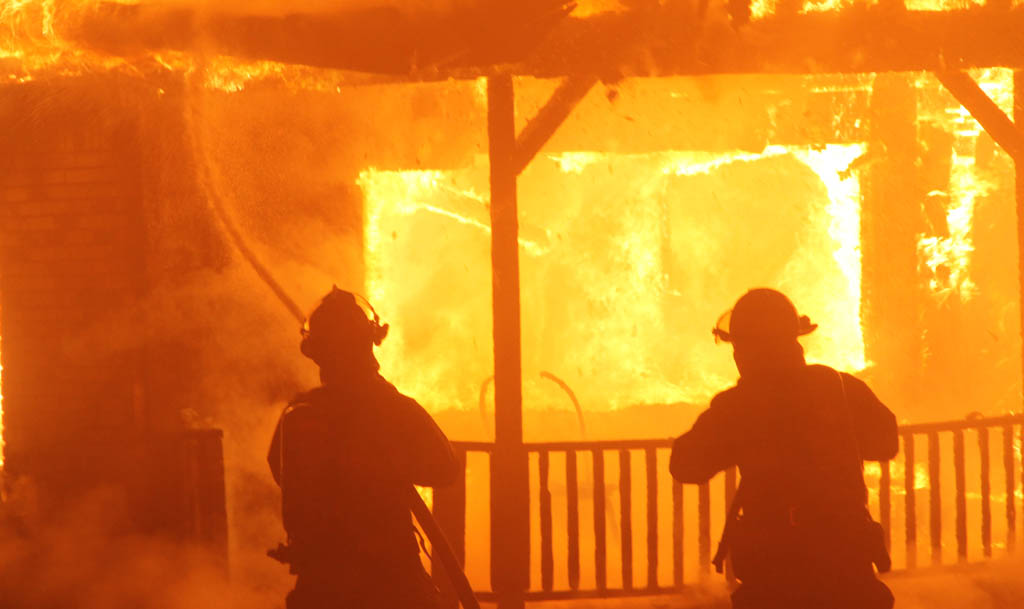
Tuesday evening, the Escambia County Commission gave final approval to a residential fire tax increase to staff south end fire stations with paid firefighters .
The commission voted 4-1, with Steven Barry dissenting, to add the $25.33, increasing the fire tax for the average homeowner from $100 to $125.33 beginning with the next fiscal year.
The proceeds from the extra $25 per year municipal services benefit unit assessment (MSBU) will fund 24/7 paid firefighters at the Myrtle Grove, Innerarity Point and Bellview stations, plus fund $150,000 in volunteer firefighter stipend increases.
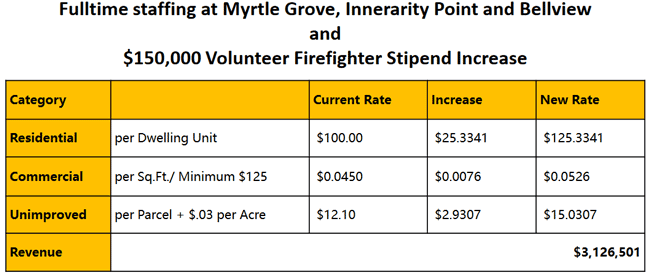
Commissioner Steven Barry voted against supporting the $25 MSBU increase because no District 5 station will receive additional benefits.
Last year, Escambia County increase the fire MSBU by $15 to fund full-time staff at Ferry Pass and West Pensacola.
NorthEscambia.com file photo.
Ryan Awarded Nursing Scholarship
July 20, 2016
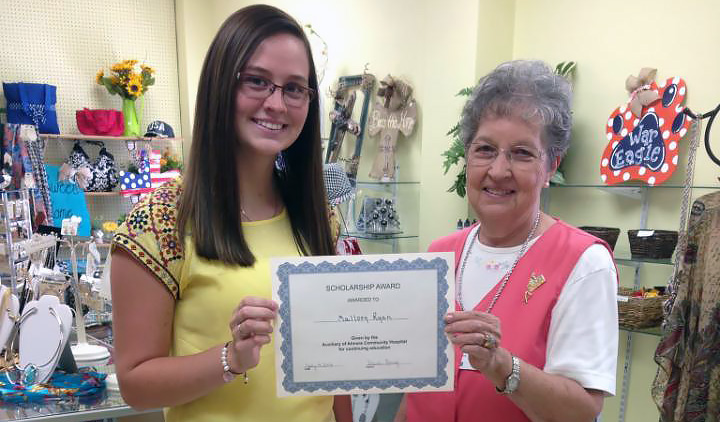
Mallory Ryan of Bratt was awarded a $1,000 scholarship Tuesday by the Atmore Community Hospital Auxiliary to continue her education in nursing. Ryan, a 2015 honors graduate of Northview High School, is currently enrolled in the Jefferson Davis Community College nursing program. Photo for NorthEscambia.com, click to enlarge.
Atmore’s Mayor, Three Council Members Face No Election Opposition
July 20, 2016
Atmore’s mayor and three incumbent council members are headed back into office for another term, while one incumbent council member faces opposition and a fifth is not seek re-election.
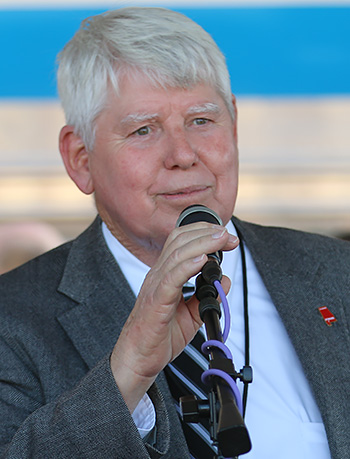 Qualifying ended Tuesday for Atmore’s municipal elections.
Four people are seeing the District 2 council seat held by Cornell Torrence, who did not qualify to seek another term. Hopefuls to replace him are Michael Arnold, Johnnie Jones, Russell Robinson and Jerome Webster.
Incumbent council member Chris Harrison will face Sandra Gray for the District 5 council seat.
Mayor Jim Staff, District 1 Councilman Web Nall, District 3 Councilman Chris Walker and District 4 Councilwoman Susan Smith are running without opposition and will return to office next term.
“I appreciate the people standing behind me and I look forward to the next four years serving the public,” Staff told NorthEscambia.com Tuesday night.
Pictured: Atmore Mayor Jim Staff, seen speaking to a crowd of Amtrak supporters last February, will serve another four years. NorthEscambia.com file photo, click to enlarge.
Putnam Breakfast Services Up Big Helping Of Politics
July 20, 2016
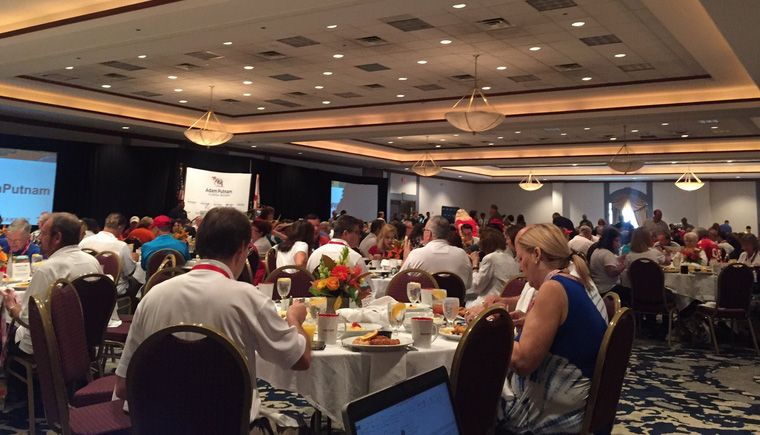
[CLEVELAND, OH] Florida Agriculture Commissioner Adam Putnam hosted a “Florida Grown Breakfast” for the state’s Republican National Convention delegates Tuesday and sought to highlight some of the products he oversees.
But political futures and hot-button issues got most of the attention.
While the immediate focus at the convention is furthering real-estate mogul Donald Trump’s presidential bid in 2016, other political ambitions are often served or advanced during the four-day gathering held once every four years.
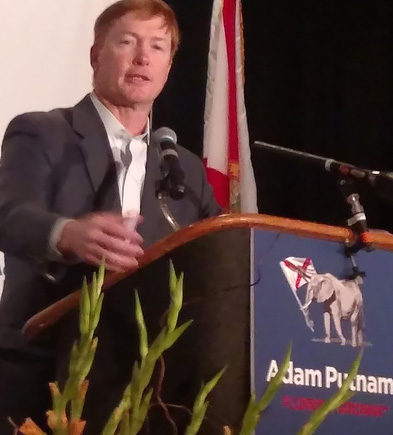 Former Republican Congressman Allen West addressed the largest elephant in the room when he stepped to the podium for the opening prayer. West began by talking about how Putnam got him an opportunity to speak before the U.S. House GOP caucus when West was considering a run for Congress.
“I want to tell you right now, when you decide to run for governor, I’ll be right there supporting you,” West told Putnam, setting off applause from the crowd.
Putnam is the front-runner for the GOP nomination for governor in 2018, when Gov. Rick Scott is forced out of office by term limits.
If, of course, Putnam runs.
After the breakfast, Putnam dodged a question about whether he would run, saying instead that he’s “having a ball as commissioner of agriculture.” But Putnam left little doubt he was considering a bid for governor.
“Florida’s a special place, and it’s special to me,” he said. “I’m a fifth-generation Floridian. I’m honored to have the ability to serve the state that I love and where I’m raising my family. We’ll have some decisions to make after this election.”
Putnam is hardly the only GOP official weighing his future. Scott is reportedly thinking about a campaign for a U.S. Senate seat in 2018. And potential down-ballot candidates are also starting to consider what to do.
Outgoing House Speaker Steve Crisafulli, R-Merritt Island, said Tuesday he would make a decision “over the next several months” about what his future in public office might be — with one likely option being a run to replace Putnam. Crisafulli comes from a family with deep roots in the state’s citrus industry.
For now, Crisafulli said he’s looking to finish his administrative duties as speaker before leaving office in November.
“I’ll have that opportunity to go home and speak more with my family about it,” he said of a future run. “There’s no secret that the commissioner of agriculture position is something that I’ve taken some interest in just because of my family background and history.”
But talk of political futures wasn’t the only thing that joined orange juice on the menu. Ben Carson, a neurosurgeon who lives in Florida and ran for the GOP presidential nomination this year, gave a speech aimed straight at the party loyalists gathered at the breakfast.
Carson slammed attacks on Trump that suggest the businessman’s outspoken style has gone too far. Carson labeled those complaints as part of a case of “political correctness” run amok. And he suggested those who believe in Islamic Sharia law have no place in America.
“If they want Sharia, then they need to stay in a country where Sharia is the law,” he said. “They do not need to bring Sharia into this country. Now, some people say that that’s being bigoted and that’s being Islamophobic — no. That’s being logical. That’s having common sense.”
Carson also criticized a push for greater rights for transgender people, comparing it to someone who read a book or watched a movie about Afghanistan and then decided to say they were from the area.
“For thousands of years, mankind has known what a man is and what a woman is,” he said. “And now, all of a sudden we don’t know.”
U.S. Sen. Tom Cotton, an Arkansas Republican who is seen as a potential presidential contender in 2020, spoke to the breakfast on several topics, including national security issues that dominated the convention Monday night.
Cotton blasted the Obama administration’s nuclear pact with Iran, which the White House says will limit the theocracy’s drive for a nuclear weapon but critics argue is too weak.
“If you want to know the future of Iran and their nuclear program, just look to North Korea,” Cotton said. “Because the last time a Clinton was in the White House, cut the same kind of deal with North Korea, and it took them only 12 years until they detonated a nuclear weapon.”
by Brandon Larrabee, The News Service of Florida
Pictured: Florida Agriculture Commissioner Adam Putnam held a Fresh from Florida breakfast in Cleveland Tuesday mornng for state’s Republican National Convention delegates. Photos for NorthEscambia.com, click to enlarge.
Authorities Searching For Escaped Teen In Escambia County
July 20, 2016
Authorities are searching for a teen male who escaped from police Tuesday afternoon while be transported to a juvenile correctional facility.
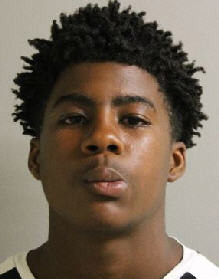 Jajuan Millender managed to escape from a Pensacola Police officer about 1:40 p.m. as he was being taken inside the Department of Juvenile Justice on St. Mary Avenue. He was last seen wearing a red shirt and gray underwear but no pants or shoes.
Millender is described as a black male, about five feet, 10 inches tall and weighing 140 pounds.
He is wanted on multiple charges, including battery on a law enforcement officer, grand theft of a vehicle, resisting with violence and escape.
Anyone with information on Millender’s whereabouts is asked to call the Pensacola Police Department at (850) 435-1900 or their local law enforcement agency.
Lowery Marks 10 Years As Panhandle Equine Rescue President
July 20, 2016
Tuesday, Panhandle Equine Rescue celebrated 10 years under the leadership of Diane Lowery of Cantonment as the group’s president.
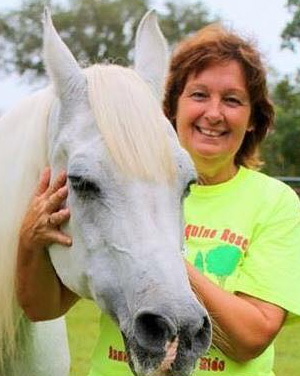 The only horse rescue in Escambia County, Panhandle Equine Rescue was founded in 2005 by a small group of concerned citizens with a mission to rescue, rehabilitate and provide adoption services for abused, neglected and abandoned equines. PER is authorized by the court system to investigate equine cruelty in Escambia County.
“I am honored that God has called me to do this. I’m hoping it is a long chapter of my life. And I appreciate everyone who stands behind and supports me. Without all of you this rescue would not have gone this far. Everyone plays a part and brings a certain something to the table and it all comes together to make this work. I am hoping that we can save many more lives in the future,” Lowery said.
For more information on Panhandle Equine Rescue, visit www.panhandleequinerescue.org.