

Wahoos Shut Out Biloxi
July 13, 2016
Pensacola Blue Wahoos starting pitcher Sal Romano walked into the clubhouse Tuesday with a different attitude.
Entering the game 1-9 this season and 1-14 over the past two seasons with the Blue Wahoos, he figured it was time for a change.
 It worked. Romano threw seven scoreless innings, allowed three hits and struck out a season-high nine batters to help the Blue Wahoos blowout the Biloxi Shuckers, 9-0, Tuesday in front of 3,323 at Blue Wahoos Stadium. It’s the largest shutout victory in franchise history.
“I came to the ballpark not thinking about anything, or the fact that I was pitching,” said Romano, ranked the Cincinnati Reds No. 15 prospect by MLB.com. “The biggest thing I did tonight was having fun and relaxing. I’m not a heavy guy. That’s not who I am.”
He also changed his walkup song to Jason Aldean’s “Lights Come On” right before the game, instead of his usual rap music that pumps him up. And he changed lockers with Pensacola center fielder Jeff Gelalich storing his gloves in Gelalich’s locker, while Gelalich put his bats in Romano’s locker.
Blue Wahoos manager Pat Kelly said he has to remind himself every day that Romano is only 22. He improved his record to 2-10 and lowered his ERA to 4.45 this season.
“I have to remind myself he’s just 22-years-old,” Kelly said. “I have to keep reminding myself of that fact. As he matures, he will be able to refine his stuff.”
Speaking of refining, Romano, who has a mid-90s fastball, relies more and more on his changeup. It allowed him to cruise through the first three innings without allowing a hit and striking out the side in the first inning.
The first hit of the game came when Biloxi right fielder Tyrone Taylor’s double to leadoff the fourth inning. Taylor, the Milwaukee Brewers No. 12 prospect according to MLB.com, also clobbered a two-out triple to the right center gap in the sixth inning off of Romano.
“It has become a really good pitch for me,” Romano said. “I didn’t realize how good it was. I never trusted it in any games.”
Pensacola scored five runs on five hits in the first inning, sending all nine batters to the plate. Blue Wahoos center fielder Jeff Gelalich singled on a ground ball to right field and left fielder Phillip Ervin walked. Pensacola right fielder Sebastian Elizalde tripled deep into the left center gap to drive in both Gelalich and Ervin for a 2-0 lead. Blue Wahoos third baseman then hit a grounder to left field that allowed Elizalde to cross the plate, putting Pensacola up, 3-0.
Blue Wahoos shortstop Zach Vincej then smacked a line drive to center field moving Sparks to second base. Biloxi Jorge Ortega then threw a pitch past his catcher and Sparks and Vincej moved up a bag. With two outs, Pensacola catcher Joe Hudson then lined a single to center to drive in Sparks and Vincej to complete the first inning outburst, 5-0.
Pensacola is 14-1 at home when scoring first and 29-7 overall. The team has now won eight of its nine homestands.
“It’s always nice pitching with some cushion,” Romano said.
Biloxi pitcher Jorge Ortega settled down after Pensacola mugged him for five first inning runs, finishing up his start by allowing just two more hits and getting 10 outs in a row. Ortega allowed eight runs in one inning in his last start against the Jacksonville Suns, giving him an ERA of 19.50 in his last two starts. On the year, he has a 5.06 earned-run average and a 1-8 record.
But Pensacola hitters pounded left-handed submarine Biloxi reliever Brett Lee, who played at West Florida High School in Pensacola and was drafted in the 10th round in 2011. In his hometown, Pensacola hitters lit him up in the seventh inning for four runs and three hits in 0.1 innings.
Biloxi reliever Gage Smith didn’t do much better giving up three hits, including two doubles in 1.2 innings.
The heart of Pensacola’s lineup entered the game 0-26 against Biloxi pitching this series. But they more than made up for that Tuesday, driving in six of the Blue Wahoos’ nine runs and scoring four times. Phillip Ervin, the No. 3 hitter in the lineup, was 0-3 entering the game but went 2-4, scored two runs and drove in three with a double in the seventh inning. He also stole his 26th base of the season.
Sebastian Elizalde, batting in the cleanup spot was 0-9 before Tuesday’s game. He was 1-4 with a triple in the first inning that drove in two runs and he scored once.
Taylor Sparks, the No. 5 hitter had gone 0-11, but was 1-4 with an RBI single and a run scored.
“We’ve staggered the lineup a little bit,” Kelly said. “We’re going to swing and miss but we’re also going to get a lot of hits.”
Atmore Prison Escapee Recaptured
July 12, 2016
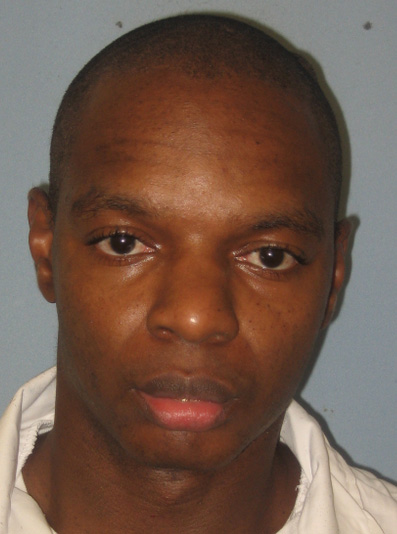 An inmate that escaped Monday from the Atmore Work Release program was recaptured early Tuesday evening.
Investigators with the Alabama Department of Corrections and U..S. Marshals apprehended Ridgeway after he was sighted in Atmore.
He was serving a 20-year sentence for a 1998 first degree robbery conviction in Mobile County. Officials said Ridgeway will face additional charges for the escape.
Flipped Pickup Slows Nine Mile Road Traffic; Driver Cited
July 12, 2016
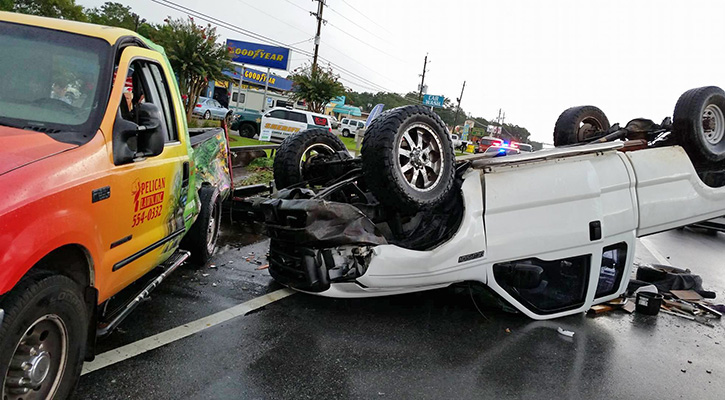
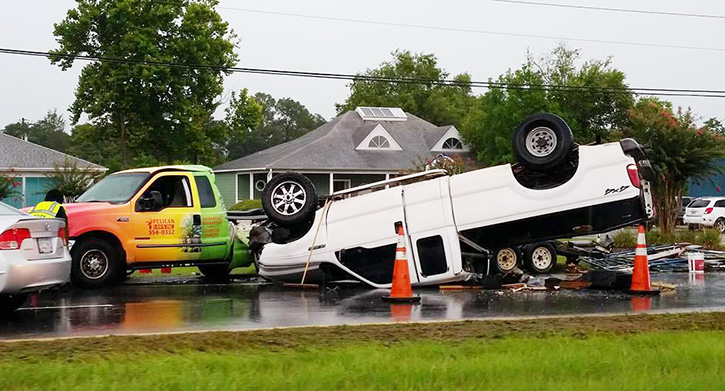
A pickup driver was ticketed by the Florida Highway Patrol after rear-ending a lawn service trailer.
The FHP said 45-year old Timothy J. Louviere of Milton was westbound on Nine Mile Road when he failed to maintain his 2000 Ford F-250 in his lane, ran off the roadway and struck the trailer on an unoccupied F-250 truck belonging to a lawn service.
Louviere’s pickup flipped, coming to rest upside down on Nine Mile Road. He was uninjured and cited for careless driving, according to the FHP.
NorthEscambia.com photos by Kristi Barbour, click to enlarge.


One Injured In Old Chemstrand Crash
July 12, 2016
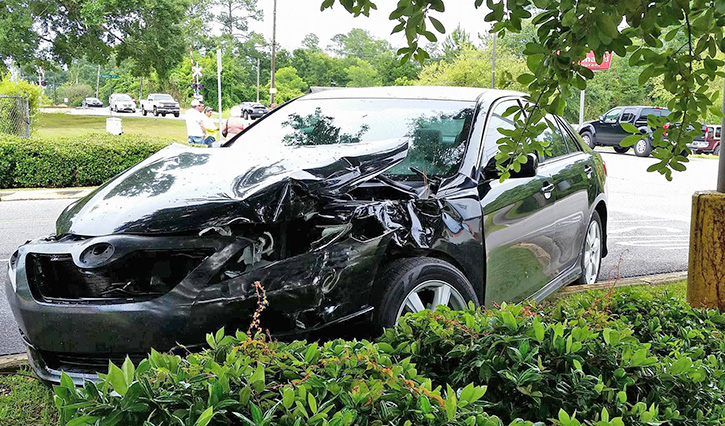
One person was injured in a two vehicle crash Tuesday afternoon at Old Chemstrand Road and Highway 95A.
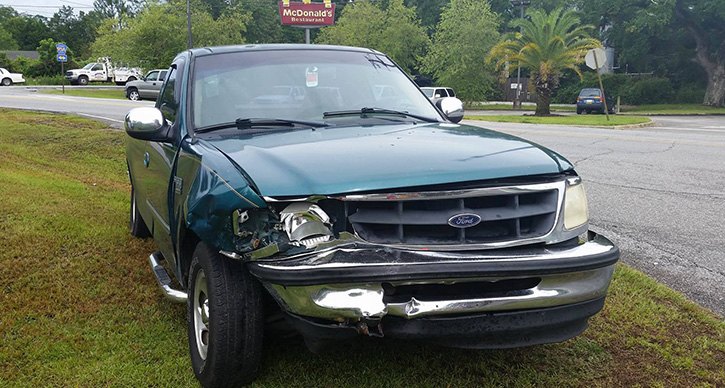
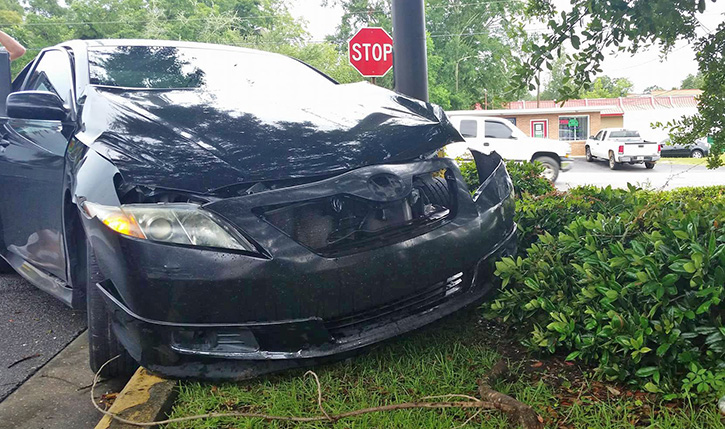
According to the Florida Highway Patrol 62-year old Clara Hallmark of Pace was traveling south on Highway 95A in a 2008 Toyota Camry when she failed to stop for stop sign and crossed into the path of a 1998 Ford F150 driven by Jose Osorio-Dominguez of Pensacola.
Pace was transported to Sacred Heart Hospital with minor injuries. Her passenger, a properly restrained one-year old, was not injured. Osorio-Dominguez and his passenger, 41-year old Jesus Rodriguez LuisAngel, were not injured.
Alcohol was not a factor in the crash, and all parties were wearing their seat belts.
Pace was cited for running a stop sign; Osorio-Dominguez was cited for no driver’s license.
NorthEscambia.com photos by Kristi Barbour, click to enlarge.
Jay Man Now Charged With Homicide In Double Shooting
July 12, 2016
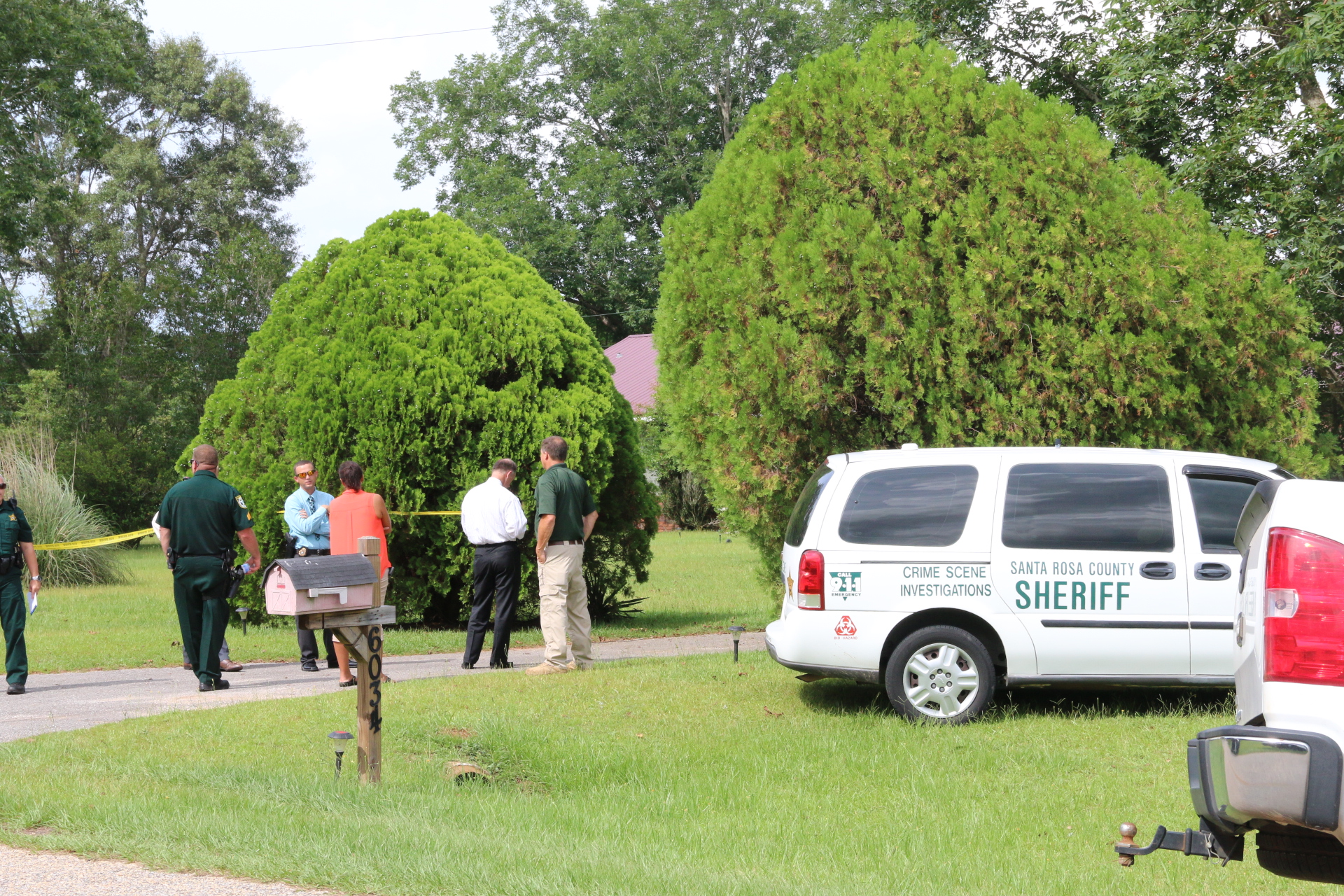
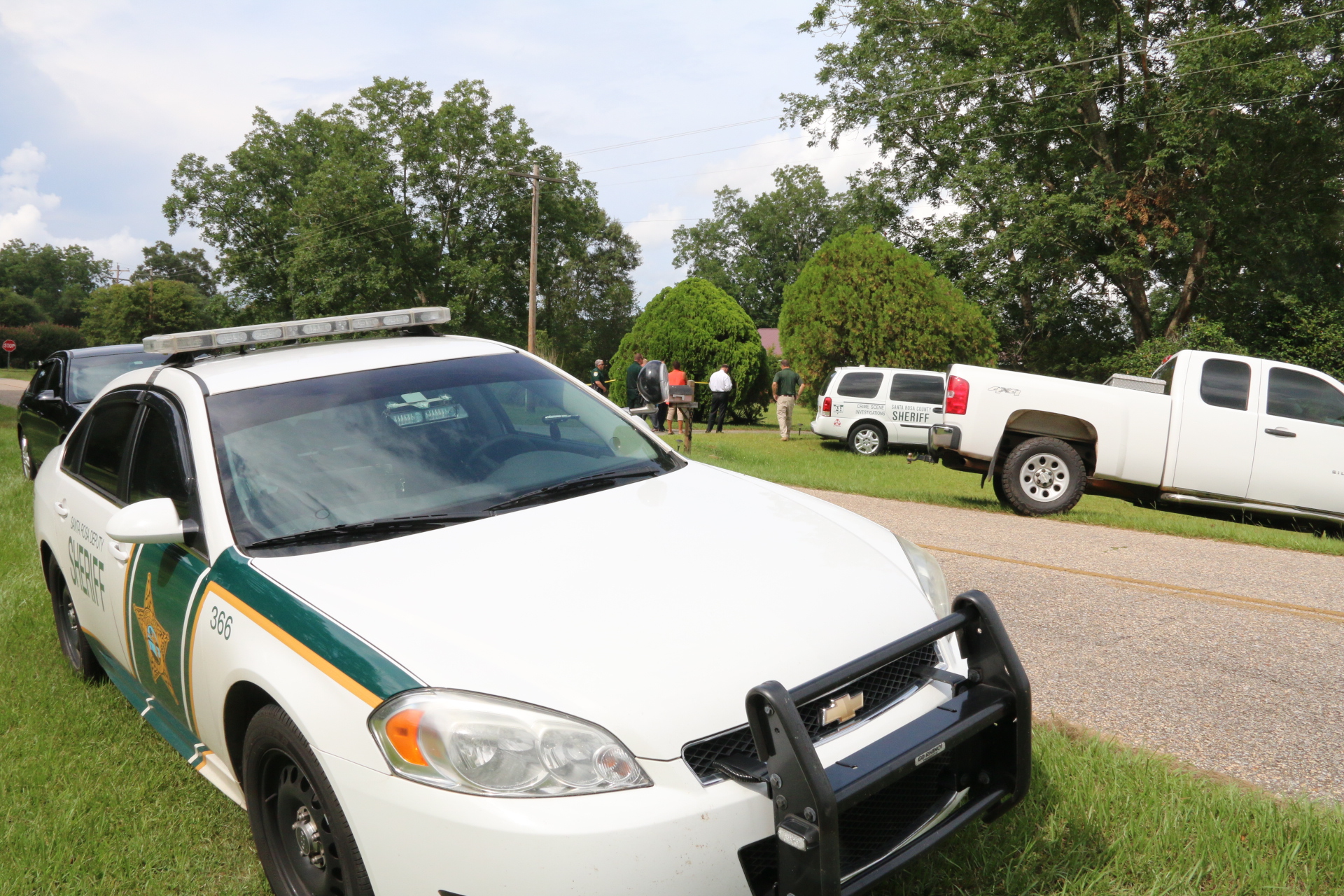
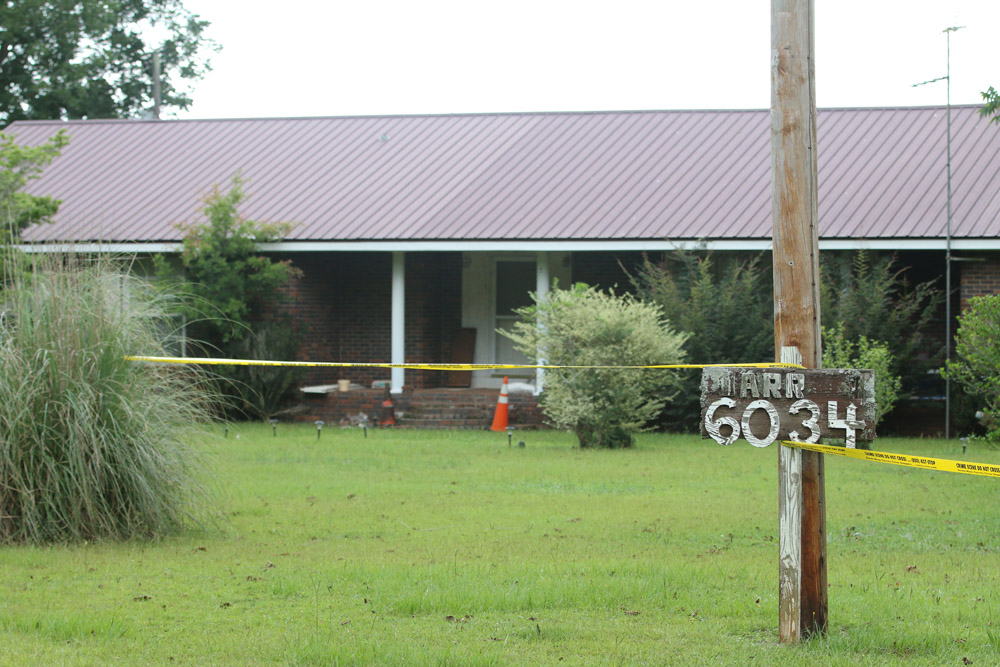
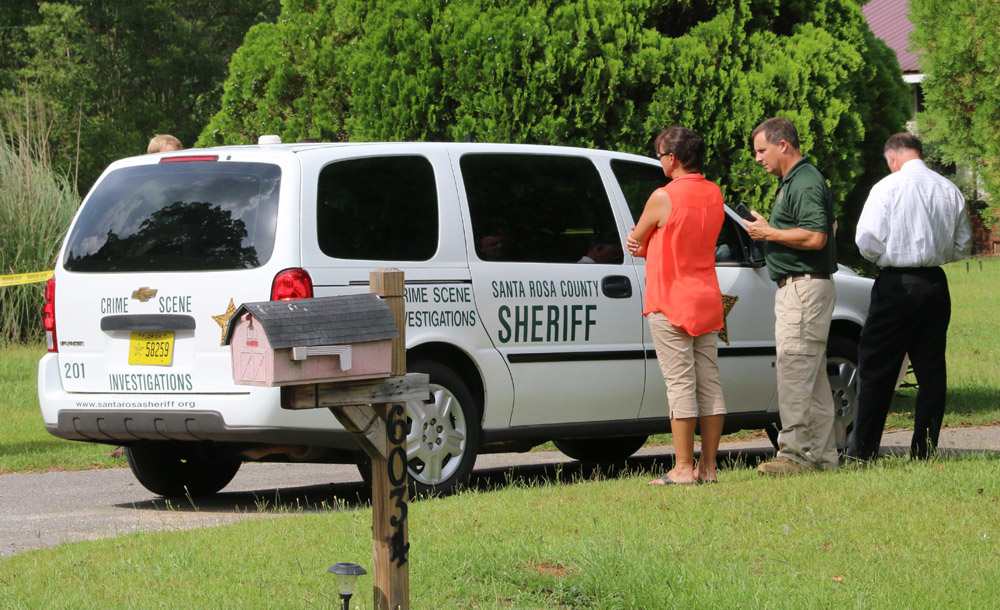
One woman was killed and another injured in a double shooting near Jay Monday afternoon. The shooting happened at a home on Tractor Trail, just south of Highway 89.
According to the Santa Rosa County Sheriff’s Office, Barbara Wolfe suffered a gunshot wound to the chest and was pronounced deceased on scene. Kimberly Horne was transported via helicopter to a trauma center suffering from a gunshot wound to the leg. She has since been discharged from the hospital.
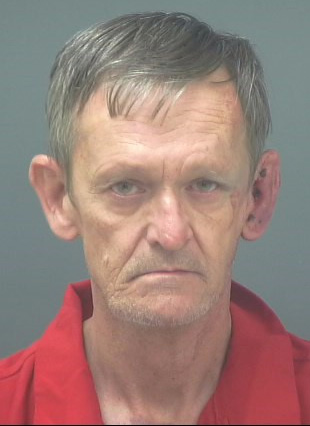 Christopher Warrick, a 57-year old resident of the home, was taken into custody and booked into the Santa Rosa County Jail. He was charged with homicide, aggravated battery, aggravated assault with a deadly weapon. The case remains under investigation and charges may be upgraded, according to the Santa Rosa County Sheriff’s Office. He is being held without bond.
NorthEscambia.com photos, click to enlarge.
New Three Story, 50 Unit Apartment Complex Planned For Century
July 12, 2016
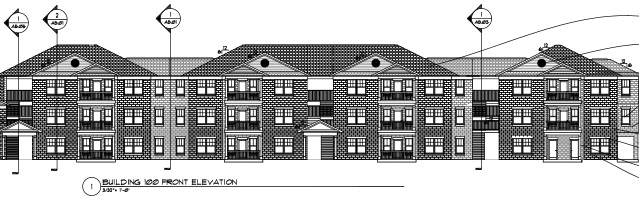
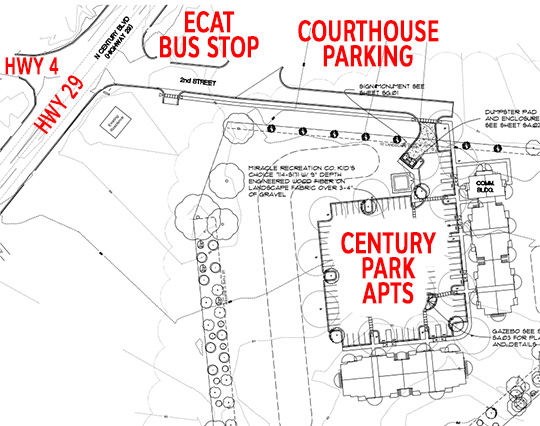
A new 50-unit apartment complex is planned for Century, according to Mayor Freddie McCall.
McCall told the Century Town Council Monday night that the “Century Park Apartments” will be constructed on Second Street, which is the entrance to the parking lot of of the Bill G. Ward Courthouse.
The complex includes two, three-story buildings and 125 parking spaces. Sixteen of the apartments will be 984 square feet with two bedrooms and one bath, while 22 will be 1,119 square feet with three bedrooms and two baths. There will also be 12 apartments with 1,291 square feet with four bedrooms and two baths.
Some of the apartments will be reserved for low income residents, McCall said.
Century Park Apartment plans show the Royal American Construction company in Panama City to currently currently be accepting bids on the project. The developer is the Paces Foundation of Smyrna, GA.
A construction timetable and other details have not yet been announced.
NorthEscambia.com graphics, click to enlarge.
One Injured In Gonzalez Hit And Run Crash
July 12, 2016
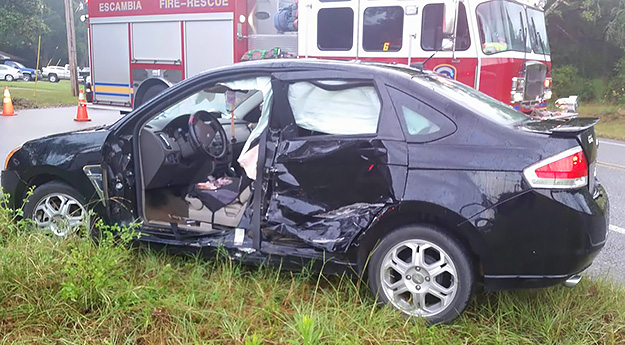
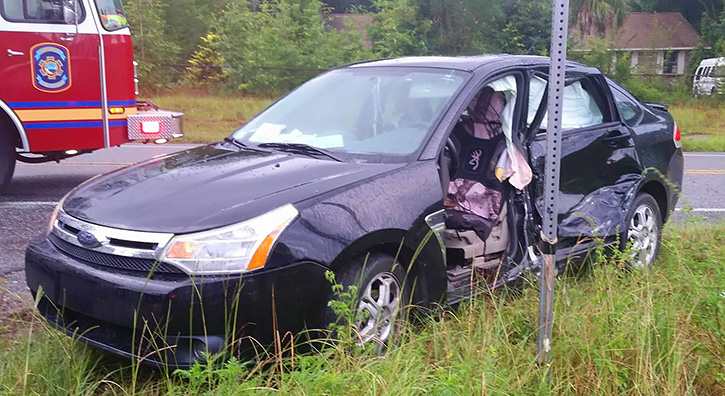
One person was injured in a hit and run crash near Ascend Performance Materials Monday evening.
The wreck happened at the intersection of Old Chemstrand Road and Junction Drive. The driver of a Ford car was briefly trapped following the crash and was extricated by firefighters. The other driver fled the scene.
Reports from the scene indicated the Florida Highway Patrol was given complete information on the hit and run driver after a witness followed the driver to his home.
Further details have not yet been released by the Florida Highway Patrol as they continue their investigation.
NorthEscambia.com photos by Kristi Barbour, click to enlarge.
FWC Law Enforcement Report
July 12, 2016

The Florida FWC Division of Law Enforcement reported the following activity during the weekly period ending July 7 in Escambia and Santa Rosa counties.
ESCAMBIA COUNTY
No report was submitted for Escambia County.
SANTA ROSA COUNTY
 Officer Ramos observed an ATV traveling on a paved public highway and initiated a traffic stop. When he activated his lights and siren, the operator of the ATV veered off the highway and attempted to lose the officer in the woods. Officer Ramos intercepted the man in a nearby mobile home park and a foot chase ensued. After several minutes of running, the man attempted to hide inside a mobile home. Santa Rosa Sherriff’s Office and FHP assisted by maintaining a perimeter around the home until the subject finally surrendered several hours later. A cursory search of the mobile home revealed illegal narcotics. The man was booked into the county jail for fleeing and attempting to elude and narcotics charges.
While on patrol in the Blackwater State Forest, Officers Clark and Hutchinson observed a male subject recreating at a camp site near a creek. While speaking with him, they discovered that the subject was consuming alcoholic beverages in an area where alcoholic beverages are prohibited. After the subject consented to a search of the camp, the officers located a container containing a bag of marijuana and drug paraphernalia. While continuing the search of the subject’s belongings, they discovered a bag containing several syringes and two baggies of methamphetamine. The subject admitted to possessing the methamphetamine but denied ownership of the marijuana. He claimed that the marijuana belonged to a female friend who left the camp earlier in the day. The subject was placed under arrest and booked into the Santa Rosa County Jail.
While patrolling at night in the parking lot of a boat ramp at the Blackwater River, Officers Clark and Hutchinson observed a vehicle parked in a restricted area. The officers pulled next to the vehicle and observed two subjects inside the vehicle. The officers made contact with the female subject who was seated in the driver’s seat. While speaking with her, they observed her making several overt movements as if trying to conceal something. The officers gained consent to search the vehicle. They made contact with the male passenger of the vehicle, who admitted to possessing a bag of methamphetamine. The officers located the methamphetamine and illegal drug paraphernalia inside of the vehicle. After further investigation, the female subject admitted to possessing the illegal drugs and paraphernalia. Both subjects were placed under arrest, transported and booked into the Santa Rosa County Jail.
Lieutenant Hahr and Officer Hutchinson were patrolling by vessel during the fireworks event at the Blackwater River. While patrolling after the event, they observed a vessel occupied by four subjects who were shouting at several subjects on the shore. The officers noticed that the vessel didn’t have the required navigational lights. They conducted a stop on the vessel and made contact with the man who was operating the vessel. The subject had a strong odor of an alcoholic beverage on his breath. While conducting a vessel safety equipment inspection, the man showed several signs of impairment. He consented to one field sobriety task, but when asked to perform more tasks, he refused. Based on the several indicators of impairment, the man was placed under arrest for BUI. A female passenger who was under the age of 21 was also found to be in possession of an alcoholic beverage. The female was charged with possession of an alcoholic beverage by a person under 21 years of age. The operator was transported and booked into the Santa Rosa County Jail. While at the jail, the subject was found to be in possession of a concealed handcuff key. The subject was charged with two felony counts for possession of the hand cuff key while in custody and introduction of contraband into a jail.
This report represents some events the FWC handled over the past week; however, it does not include all actions taken by the Division of Law Enforcement. Information provided by FWC.
Congressional Candidate Bydlak Tours Tornado Damaged Area, Addresses Century Town Council
July 12, 2016

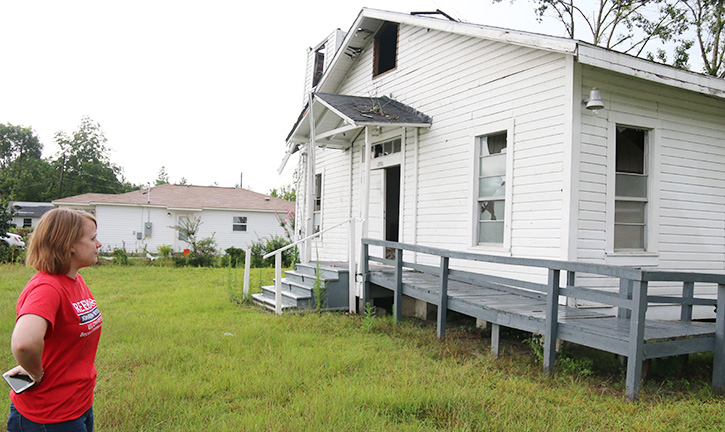
Republic Congressional candidate Rebekah Johansen Bydlak addressed the Century Town Council Monday night after touring areas of Century for a first-hand look at the devastation that was caused by the EF-3 tornado that struck the town on February 15.
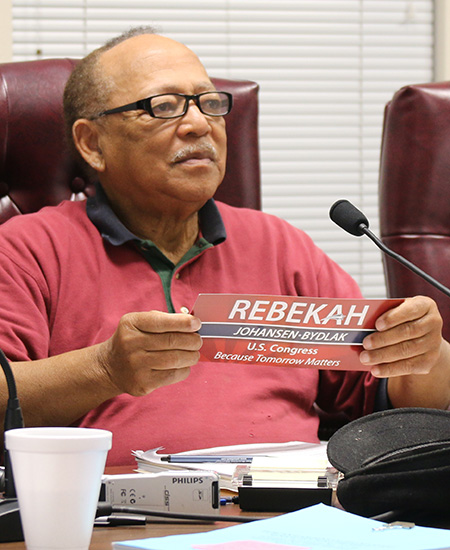 Bydlak said she understood how Century had been neglected by FEMA and the federal government following the tornado.
“I know how easy it is for an area this this to be forgotten,” she said. “I won’t let that happen.”
If elected, Bydlak told the council that she would be a friend to Century. “I will be a member of the community. I am a resident of North Escambia,” she said.
Bydlak is a resident of Cantonment and a McDavid native. The 25-year old would make history if she is successful in her Congressional bid, becoming the youngest woman ever elected to Congress and the first female to represent Florida’s 1st District.
Bydlak is a graduate of Pensacola State College and the University of West Florida. She holds a master’s degree in political science and public administration from UWF and spent the last three years advocating for lower spending and debt among the public, elected officials, and candidates across the country as director of outreach for the Coalition to Reduce Spending.
She is seeking the Congressional seat currently held by Rep. Jeff Miller, who has announced that he will not see reelection.
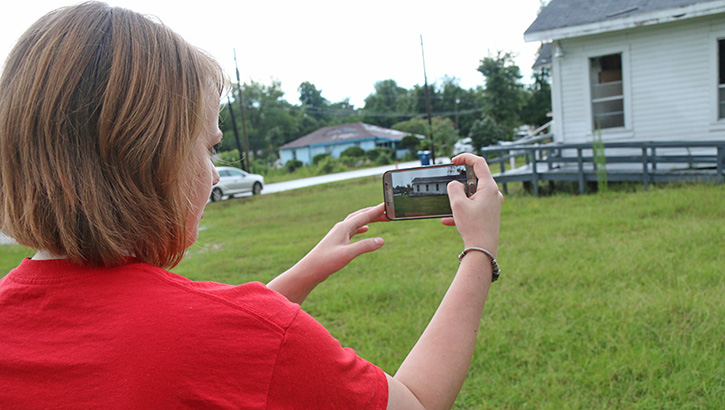
Pictured top: Republic Congressional candidate Rebekah Johansen Bydlak addressed the Century Town Council Monday night. Pictured inset: Council member Gary Riley listens to Bydlak speak. Pictured below: Bydlak toured the tornado damaged areas of Century prior to speaking to the town council, including this stop at the Wesley Chapel on Jefferson Avenue. NorthEscambia.com photos, click to enlarge.
Hamilton Crossing Drive Closes July 26
July 12, 2016
A section of Hamilton Crossing Drive will closure to all but local traffic beginning Tuesday, July 26. The closure will start approximately 800 feet north of East Kingsfield Road and extend through the cul-de-sac approximately 400 feet farther north. Traffic will be restricted to local traffic only for the duration of the project, and access for residents will be maintained at all times. Traffic will be detoured along Hamilton Crossing Drive.
Construction is to improve water flow and divert water flow to new drainage basins. In addition, a portion of the existing street will be regraded and repaved at a lower elevation in order to divert surface water to the new basins.
The road closure is expected to remain in effect for approximately 60 days. Every effort will be made to expedite construction to reopen the road before the Labor Day holiday on Monday, Sept. 5. If other lane or roadway closures are necessary beyond the above-described time periods, another notice will be issued.