
Early Voting Begins
October 24, 2016
Early voting got underway Monday in Escambia County.
According to Escambia County Supervisor of Elections David Stafford, a total of seven sites will be open 7 a.m. to 7 p.m. county-wide, the most early voting ever offered in Escambia County:
- Escambia Co Extension Office, 3740 Stefani Road
- Molino Community Center, 6450 Highway 95A North
- Southwest Branch Library, 12248 Gulf Beach Highway
- Genealogy Branch Library, 5740 N. 9th Avenue
- Main Library, 239 N. Spring Street
- Bellview-Saufley, 916 W Michigan Avenue
- Supervisor of Elections Main Office, 213 Palafox Place, Second Floor
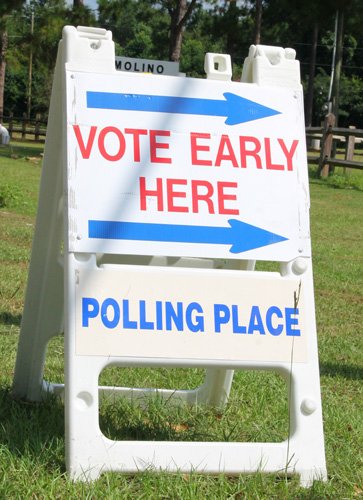 Early voting will be offered daily through Saturday, November 5. Early voters cast paper ballots through our digital scanners, and may choose any one of the seven sites.
Another option for voters is to cast a vote-by-mail ballot, which can be requested through the online form at EscambiaVotes.com, or by email (votebymail@escambiavotes.com), phone (850) 595-3900, mail, or fax (850) 595-3914. Requests must include the voter’s date of birth and address, and must be received no later than Wednesday, November 2. Voted ballots must be received in the Elections Office no later than 7 p.m. on Election Day and may not be returned to a polling location. The Postal Service recommends voters mail ballots at least one week before the due date. Vote-by-mail participants may track the status of their ballot at EscambiaVotes.com.
The third option for voters is to cast a ballot at their precinct on Election Day, Tuesday, November 8. Polls will be open from 7 a.m. until 7 p.m.
Voters are reminded to bring their photo and signature ID with them to the polls and are encouraged to visit EscambiaVotes.com for complete voting information or contact the Elections Office by phone or email with any questions.
FDOT: Weekly Traffic Alerts
October 24, 2016

Drivers will encounter traffic disruptions on the following state roads in Escambia and Santa Rosa counties as crews perform construction and maintenance activities.
Escambia County:
- U.S. 29 /State Road (S.R.) 95 Widening from I-10 to 9 Mile Road - Alternating lane closures on U.S. 29 and Nine Mile Road near the U.S. 29/Nine Mile Road overpass from 8 p.m. to 6 a.m. Sunday, Oct. 23 through Thursday, Nov. 3 as workers construct detours to accommodate the construction of the new bridge.
- Interstate 10 (I-10) Widening from Davis Highway to the Escambia Bay Bridge- Alternating lane closures on I-10 eastbound, between the Ninth Avenue overpass and the Escambia Bay Bridge, from 6 p.m. to 11 p.m. Friday, Oct. 21 as crews perform pavement repairs. In addition, traffic on I-10 east and westbound will be shifted to the newly constructed inside travel lanes near the Ninth Avenue overpass the week of Monday, Oct. 24. The shift will allow crews to reconstruct and lower the outside travel lanes to provide additional clearance for the overpass.
- S.R. 292 (Perdido Key Drive) Resurfacing from Alabama State Line to ICWW Bridge – Intermittent and alternating daytime lane closures will continue Monday, Oct. 24 through Friday, Oct. 28 as crews mill and place the structural course of asphalt on the mainline traffic lanes.
- Airport Road (S.R. 750) Routine Maintenance- Drivers may encounter lane restriction from 8 p.m. to midnight Tuesday, Oct. 25 as crews replace signs on the I-110 on-ramps.
- U.S. 98 – Pensacola Bay Bridge Replacement – Intermittent and alternating lane closures near the Pensacola Bay Bridge on U.S. 98, Gregory Street, Bayfront Parkway and 17th Avenue (south of the railroad bridge) from 8 p.m. until 5 a.m. Wednesday, Oct. 26 through Friday, Oct. 28 as crews take asphalt pavement core samples.
- 9 Mile Road (S.R. 10/U.S. 90A) from Beulah Road to Pine Forest Road - Clearing of trees and shrubs on the 4.8-mile segment has begun. Lane closures are only permitted between the hours of 8 p.m. and 6 a.m.
- Bluff Springs Road over Pritchett Mill Creek Bridge Replacement- The road will be closed the week of Monday, Oct. 31 as crews begin construction of a new bridge. Project is anticipated to be complete spring 2017.
Santa Rosa County:
- I-10 Widening from Escambia Bay Bridge to Avalon Boulevard- Drivers will encounter the following impacts on I-10 from 8 p.m. to 6 a.m. Sunday, Oct. 23 through Thursday, Oct. 27.
- Alternating lane closures between the Escambia Bay Bridge and Avalon Boulevard/Exit 22 as crews continue widening work.
- Traffic remains shifted to the outside on the I-10 on-and-off ramps at Avalon Boulevard/Exit 22 as crews prepare for rigid inclusion work. The shift will be in place until spring 2017.
- I-10 Resurfacing from east of S.R. 87 to the Okaloosa County Line – Intermittent and alternating lane closures east and westbound between the S.R. 87 interchange and the Okaloosa County line from 8 p.m. to 6 a.m. Sunday, Oct. 23 through Friday, Oct. 28 as crews perform construction activities. Motorists are reminded the speed limit is reduced to 60 MPH within the lane closure.
- S.R. 87 Widening from two miles south of the Yellow River to Hickory Hammock Road –The Yellow River beneath the S.R. 87 bridge will be temporarily closed Monday, Oct. 24 from 7 a.m. to 6 p.m. as crews mobilize equipment for construction of the new northbound bridge. Boaters are advised to avoid this area. Florida Fish and Wildlife Conservation Commission (FWCC) officers in marked vessels will be immediately upstream and downstream of the Yellow River Bridge to notify boaters of the closure.
- I-10 over Blackwater River Bridge Maintenance – The westbound, inside lane will be closed from 8 p.m. Monday, Oct. 24 to 5 a.m. Oct. 25 as crews perform routine maintenance work on the bridge.
- U.S. 98 – Pensacola Bay Bridge Replacement – Intermittent and alternating lane closures in Gulf Breeze near the Pensacola Bay Bridge on U.S. 98 from 8 p.m. until 5 a.m. Wednesday, Oct. 26 through Friday, Oct. 28 as crews take asphalt pavement core samples. Additional samples will be taken from the parking lots of the Wayside Park adjacent to the bridge.
All activities are weather dependent and may be delayed or rescheduled in the event of inclement weather. Drivers are reminded to use caution, especially at night, when traveling in a work zone and to watch for construction workers and equipment entering and exiting the roadway.
Florida Minimum Wage Is Going Up
October 24, 2016
Florida’s minimum wage will rise by a nickel an hour to $8.10 on January 1, according to the Florida Department of Economic Opportunity. That’s $2 for a 40 hour work week.
 It is the fifth-smallest hourly increase since Florida established a state minimum wage in 2005. There was no increase last year.
Under a constitutional amendment passed by Florida voters in 2004, the Department of Economic Opportunity calculates the state minimum-wage rate each year based on increases in a federal consumer price index that reflects changes in the costs of food, clothing, shelter, gas, medical bills, drugs and other goods and services used in daily living. The index, which reflects the 12-month period ending Septempter 1, rose by less than 1 percent in the past year.
Florida’s $8.10 wage will remain above the federal minimum wage of $7.25.
Voters Again Face Medical Marijuana Decision On The Ballot
October 24, 2016
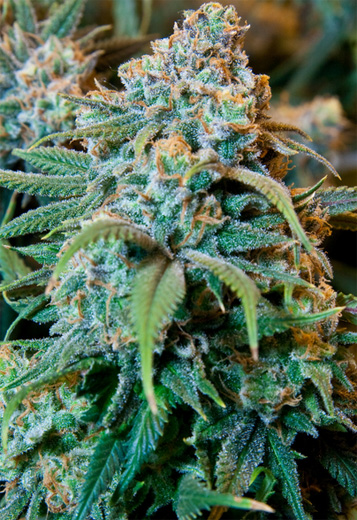
With medical marijuana already a reality in Florida, voters will decide in November whether to vastly expand the types of patients who are eligible for the treatment.
It’s the second time Floridians will weigh in on a medical-marijuana constitutional amendment, with the first proposal narrowly failing in 2014 to capture the 60 percent approval required for passage.
But the evolving politics of pot, an already-established marijuana industry and increased voter turnout for the presidential election improve the odds of passage in 2016.
 “It’s not a newfangled wild proposition. Five million Florida voters have already considered the issue, and it nearly passed with that electorate that is a much more conservative electorate than we have this time,” University of Florida political science professor Daniel Smith, who specializes in ballot initiatives, said in a recent telephone interview. “The establishment was much more opposed to medical marijuana two years ago than they are today. … So the fearmongering ‘the sky will fall’ argument is two years put to rest.”
The proposal on the Nov. 8 ballot appears to have overwhelming support, according to recent polls. A Florida Chamber of Commerce poll found that 73 percent of likely voters endorse the measure, after 58 percent voted for the 2014 version.
Partly to fend off the 2014 pot proposal, Florida lawmakers that year authorized non-euphoric marijuana for patients with epilepsy, chronic muscle spasms or cancer. The 2014 law also set up a regulatory structure for the marijuana industry. The Legislature this year expanded the law to allow full-strength marijuana for terminally ill patients.
But supporters of the proposed constitutional amendment say the Florida law does nothing for a host of severely ill patients who could benefit from the treatment.
Backers of the initiative, now titled “Use of Marijuana for Debilitating Illnesses” and appearing on the ballot as Amendment 2, tweaked the 2014 version to address criticisms from opponents.
For example, the revised proposal tightened language regarding minors — a major source of contention for opponents two years ago — and now requires parental consent before doctors can recommend the marijuana treatment for children, something supporters of the amendment insist is already required by state law.
The revamped proposal added epilepsy and post-traumatic stress disorder to a list of “debilitating” medical conditions — cancer, glaucoma, HIV, AIDS, amyotrophic lateral sclerosis (ALS), Crohn’s disease, Parkinson’s disease and multiple sclerosis — that qualify patients for the treatment.
And it added language that would allow physicians to recommend medical marijuana for patients with “other debilitating medical conditions of the same kind or class as or comparable” to those named in the amendment and for which the doctor believes “that the medical use of marijuana would likely outweigh the potential health risks for the patients.”
But critics insist the provision giving doctors leeway to recommend the treatment for unspecified illnesses amounts to “de facto legalization” of pot.
A recent television ad featuring Sheriff Sandra Hutchens of Orange County, Calif., warns that the amendment would expose Florida to a host of horribles experienced in her state, which in 1996 became the first to legalize medical marijuana.
“Thousands of pot shops pushing pot for things like trouble sleeping and anxiety. Only 3 percent of so-called patients have cancer or AIDS. Amendment 2 isn’t about helping the sick. It’s about legalizing pot. In California, we learned that, the hard way. Don’t let it happen to Florida,” Hutchens says on the ad.
But John Morgan, an Orlando trial lawyer who has largely bankrolled the amendment effort, dismissed such criticism.
“If I wanted to legalize marijuana, that’s what I would have done,” says Morgan, who has spent at least $2.6 million of his and his law firm’s money so far this year on the initiative.
Morgan frequently contrasts marijuana, a natural substance, with deadly prescription drugs that cause 14,000 overdoses annually and hook tens of thousands of other people.
“All I know is this. They could put up these scare tactics and these pictures of bud tenders. … But this is not a pharmaceutical and guess what? Thank God it’s not. Man made opioids. God made pot. I’m going to go with God every single time when it comes to me. And by the way, marijuana has never killed one person,” Morgan said during a recent debate.
While Morgan is still a major player in the effort to pass the measure, the bombastic trial lawyer has toned down his approach.
Two years ago, Morgan — the chairman of People United for Medical Marijuana, the political committee behind the marijuana initiative — used a bus tour to promote the proposal to college students.
In one of many appearances across the state, Morgan was caught on tape delivering a boozy, expletive-laced monologue to what appears to be a crowd of young supporters at a bar after a rally in the Lakeland area.
Morgan said in a recent telephone interview that he decided that “less of me is more” this year as he tries to pass the amendment.
“I believe that you have to learn from the past, and last time I think that the bus tour was good at that time, but I don’t think it would be good for this time,” Morgan said. “I just think it’s better to have this time a more cerebral discussion than a rock-and-roll tour.”
On the other side, some of the same opponents who helped kill the measure two years ago are again contributing to the “No on 2″ campaign.
Las Vegas casino magnate Sheldon Adelson — who dumped $5.5 million into the Drug Free Florida Committee in 2014 — contributed $1.5 million to the committee last month. The Carol Jenkins Barnett Family Trust gave the committee $800,000 in July. The trust, associated with the daughter of Publix Super Markets founder George Jenkins, also contributed $540,000 in 2014 to the committee. Tampa Bay developer Mel Sembler has also contributed $1 million this year to try to defeat the proposal.
Morgan frequently points out that one of measure’s harshest critics two years ago — the Florida Sheriffs Association — hasn’t formally opposed this year’s initiative.
But numerous sheriffs are speaking out against it. Also, the Florida Police Chiefs Association urged voters this week to oppose the amendment.
“First and foremost, this is something that should not be in our Constitution,” Charlotte County Sheriff Bill Prummell told The News Service of Florida.
Opponents like Prummell have made much of a Department of Health estimate predicting the amendment could spawn up to 2,000 dispensaries across the state, warning that a proliferation of “pot shops” could lead to a repeat of the prescription-drug epidemic that branded Florida as the pill-mill capital of the country not long ago.
Morgan also likes to say that Attorney General Pam Bondi, who opposed the measure in 2014, has been silent on the issue this year.
But Bondi said her position hasn’t changed.
“I continue to believe that Amendment 2 will expand the use and access of marijuana in Florida, especially among our youth,” Bondi said in an email, adding that she supports the state’s current law. “Unlike legislation, an amendment will be a permanent part of our Constitution and would be difficult to reverse if found detrimental to public health and safety.”
Amendment 2 could allow medical marijuana as an option for an estimated 500,000 patients in Florida, making it the second-largest market in the country. Two dozen other states have already legalized medical marijuana.
The outcome of Florida’s election is “critically important” for marijuana issues nationwide, according to United for Care campaign manager Ben Pollara.
“The success or failure of a medical marijuana initiative in a big, politically diverse state like Florida is going to be very meaningful for the future of medical marijuana initiatives as the advocacy industry moves towards full legalization away from medical,” he said.
While a number of states are considering marijuana initiatives this fall, the cannabis industry is focused on elections in Florida and California, where voters will decide whether to legalize pot for recreational use.
“Unless both of those pass, it will be a devastating blow to marijuana reform efforts for the next decade,” Pollara said.
by Dara Kam, The News Service of Florida
Two Injured In Ten Mile Crash
October 24, 2016

At least two people were injured in a two vehicle crash Sunday night at Ten Mile Road and Palafox Street. Both were transported to area hospitals by ambulance. The accident remains under investigation by the Florida Highway Patrol. Further details have not been released. NorthEscambia.com photos by Kristi Barbour, click to enlarge.


Firefighters Respond To Smoke Filled Home In Flomaton
October 23, 2016
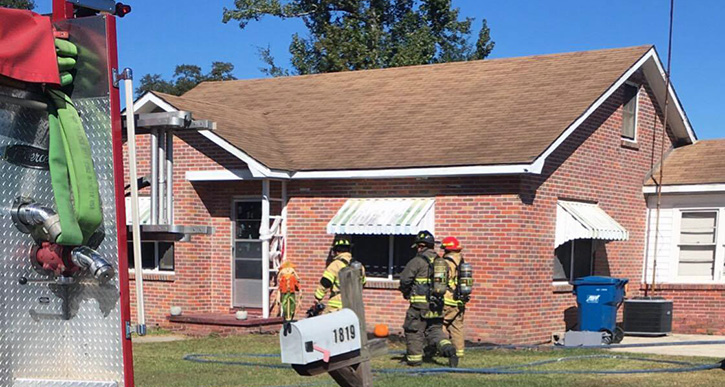
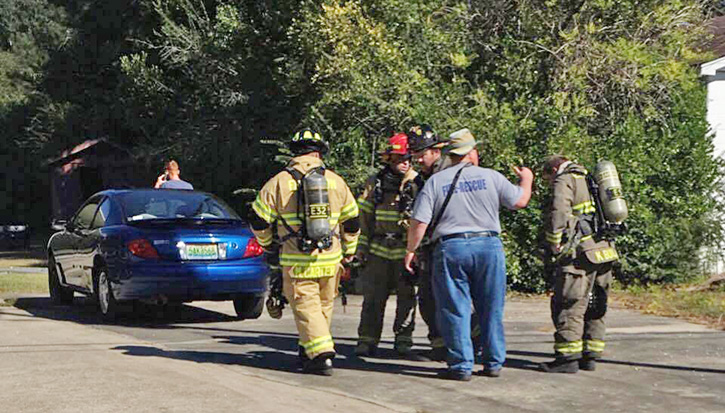
Firefighters responded to a smoke-filled home in Flomaton Sunday morning. The smoke was possibly from a heating unit.
The Flomaton, Friendship and Lambeth fire departments from Alabama and the Century and McDavid stations of Escambia Fire Rescue responded.
There were no injuries.
Photos for NorthEscambia.com, click to enlarge.
Silver Alert Issued For Missing Escambia County Woman
October 23, 2016
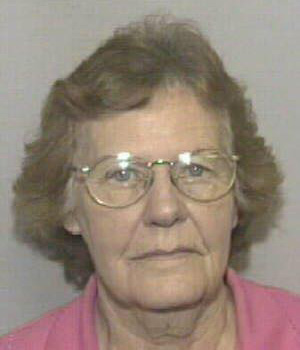
A Florida Silver Alert has been activated for 83-year old Shirley Cooey out of Escambia County.
She was last seen in the 8700 block of Rebel Road in the Beulah area. She may be traveling in a 2003, white Hyundai Sonata, Florida tag number K528XD
She has gray hair, blue eyes, is 5-foot 2-inches tall and weights 150 pounds.
Anyone with information on her whereabouts should call the Escambia County Sheriff’s Office at (850) 436-9620 or 911.
Pope Appoints Tate Graduate As New Bishop Of Memphis
October 23, 2016
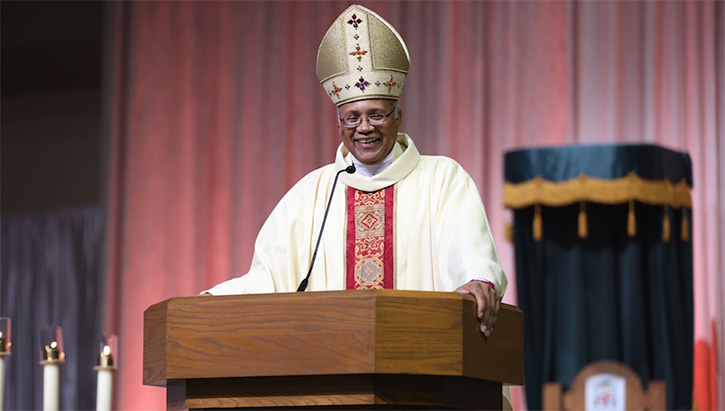
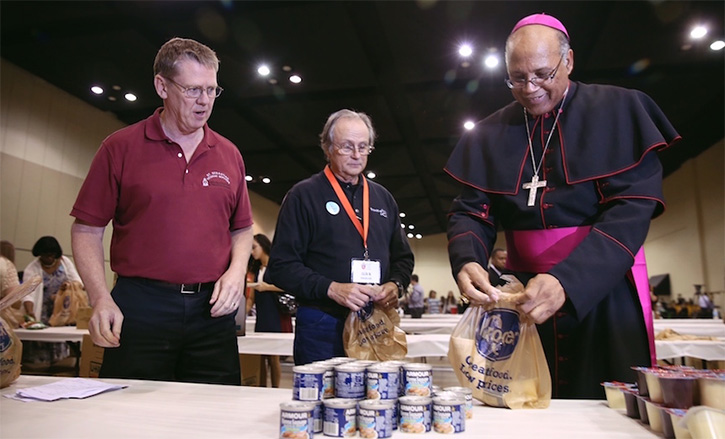
Bishop Martin Holley, a graduate of Tate High School, was appointed by Pope Francis and recently installed as the fifth bishop of the Diocese of Memphis.
“With faith in our Lord Jesus Christ, and with the love of God in my heart, I do accept the pastoral care of the people of God in the Diocese of Memphis,” declared Bishop Holley after the papal mandate appointing him to Memphis was read. “I resolve to faithfully serve the Church in this diocese.”. He was installed during a ceremony at the Cook Convention Center.
After making his pronouncement, Bishop Holley was presented with a crosier, his shepherd’s staff, and escorted to his cathedral, his bishop’s chair – the symbols of his authority.
The crowd of nearly 3,000 who attended the Mass burst into cheers and gave a standing ovation as the new bishop of Memphis assumed his post. He was then welcomed by representatives of his new diocese, and by members of other faiths in the city of Memphis.
In his first homily to his new flock, Bishop Holley urged them to “love others as Jesus has loved us.” “In God’s love, we find the fullness of grace, life, peace and joy,” he said.
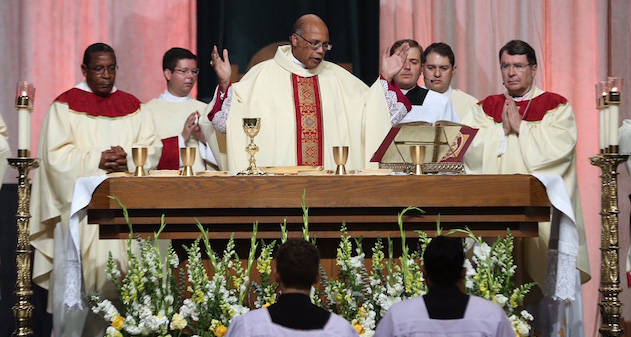 During his installation Mass, Bishop Holley noted that his episcopal motto is “His mercy endures forever.”
He urged the faithful of Memphis “to love and to bring the mercy of Jesus Christ into the lives of those who need to know His love and mercy.”
One of Bishop Holley’s first acts after officially becoming the Bishop of Memphis was to join Catholic Charities volunteers in assembling bags of food and other items for the homeless.
Holley was born in Pensacola. While his mother was pregnant with the future bishop, she, along with her husband and their seven older children, converted to the Catholic faith. When Holley was born on Dec. 31, 1954, he was named after the pastor of Our Lady of Fatima Parish in Cantonment, the family’s new parish priest. Bishop Holley is the 8th of 14 children of Sylvester and Mary Holley, both of whom are deceased.
Bishop Holley attended Catholic elementary schools and was captain of the basketball team at Tate High School, where he is a member of the school’s Hall of Fame, and then attended Faulkner State Junior College in Bay Minette, AL. He played basketball and earned a degree in management at Alabama State University in Montgomery, where he was named the university’s outstanding collegian.
Having felt the call to the priesthood from a young age, Bishop Holley attended Theological College in Washington and completed his seminary studies at St. Vincent de Paul Seminary in Boynton, Beach, Florida. He was ordained as a priest of the Diocese of Pensacola-Tallahassee in 1987.
In Florida, then-Father Holley served as a parochial vicar and later administrator of St. Mary Parish in Fort Walton Beach. He also served at St. Paul and Little Flower parishes in Pensacola. He served as spiritual director of the Serra Club of West Florida, which promotes vocations to the priesthood, and since 1983, he has been a member of the Joint Conference of the National Black Catholic Clergy Caucus.
Bishop Holley was ordained as a bishop of Washington in 2004 at the Cathedral of St. Matthew the Apostle.
Courtesy photos for NorthEscambia.com, click to enlarge.
Hundreds Attend Williams Station Day; Dancers Dazzle Crowd (With Gallery)
October 23, 2016

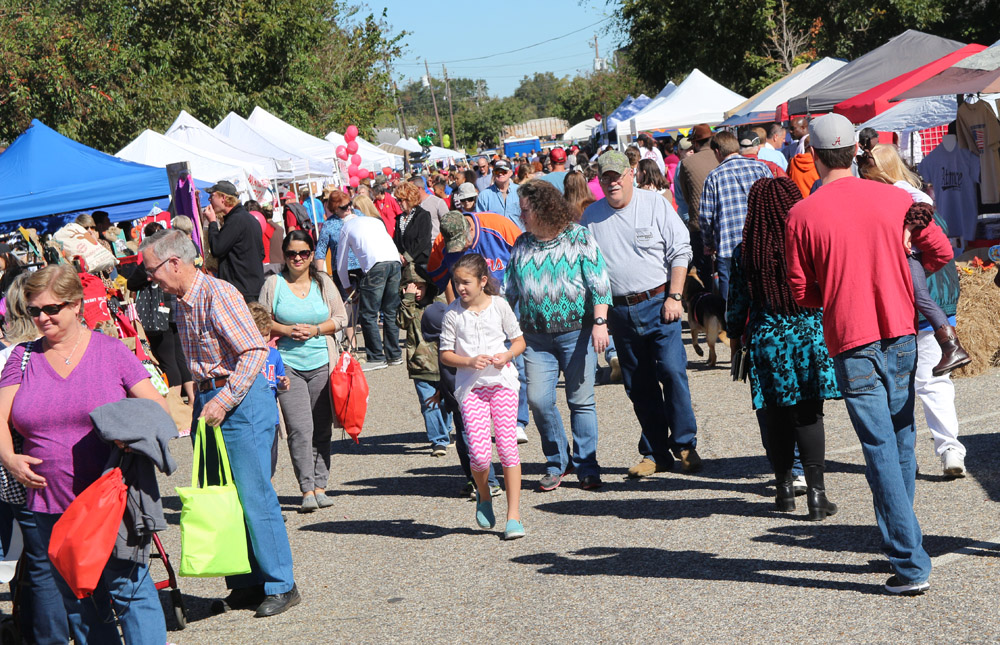
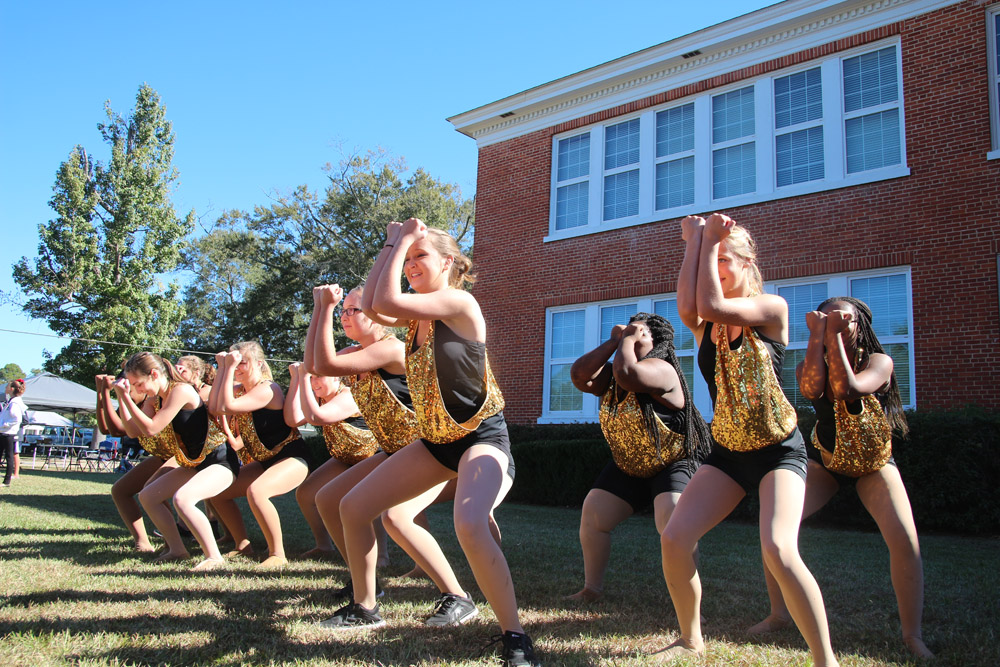
Hundreds attended the annual Williams Station Day in Atmore Saturday, including a large crowd for the day’s entertainment — including Twirl Time and the Northview High School Dance Team.
Williams Station Day takes its name from Atmore’s early history when in 1866 the community was a supply stop along the Mobile and Great Northern railroad. Festival-goers were entertained by a wide variety of musical acts, and a wide variety of arts and crafts were also available
For a photo gallery, click here.
NorthEscambia.com photos, click to enlarge.


It’s a Tradition: Pumpkins, Pumpkins Everywhere (With Photo Gallery)
October 23, 2016
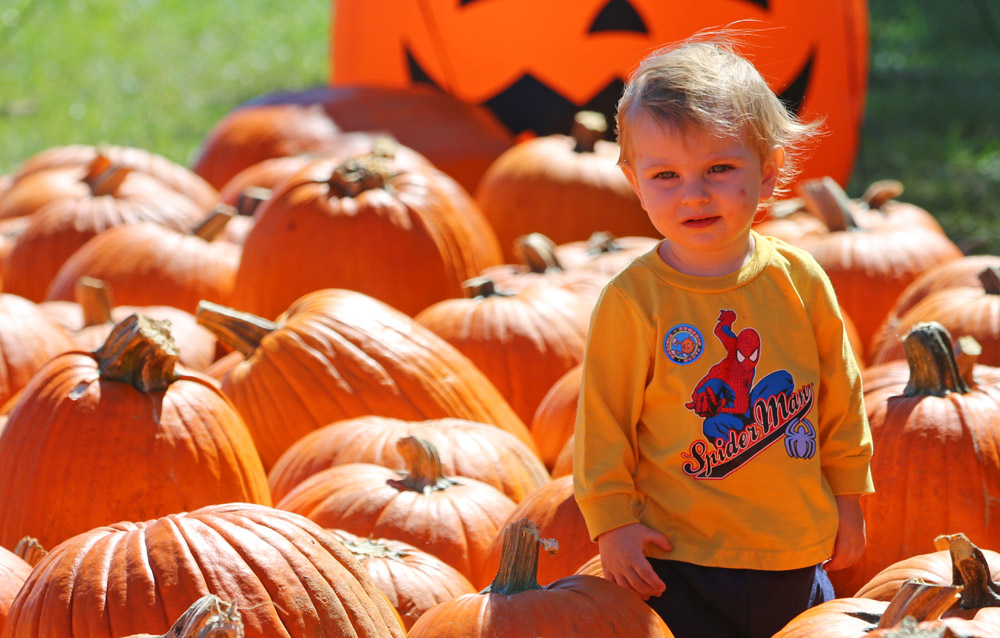
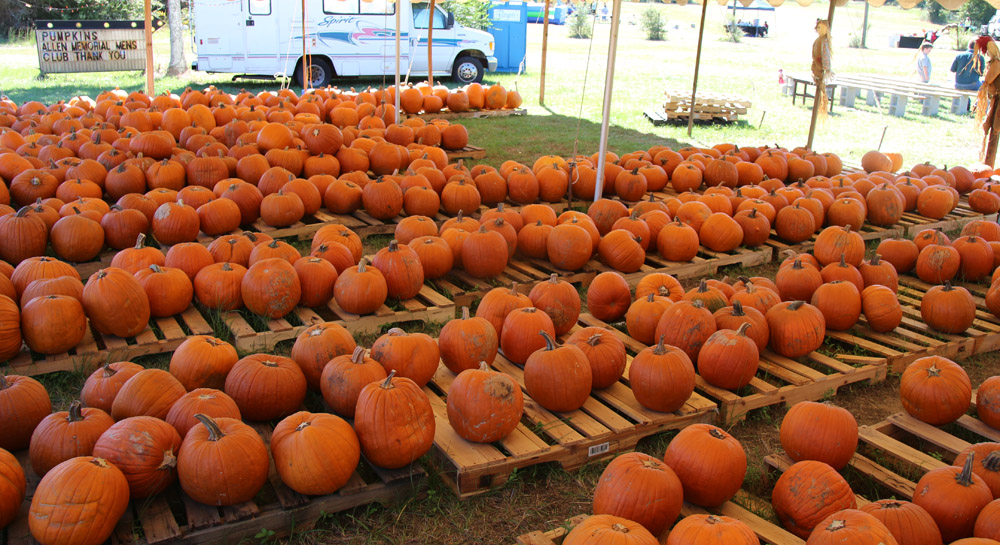
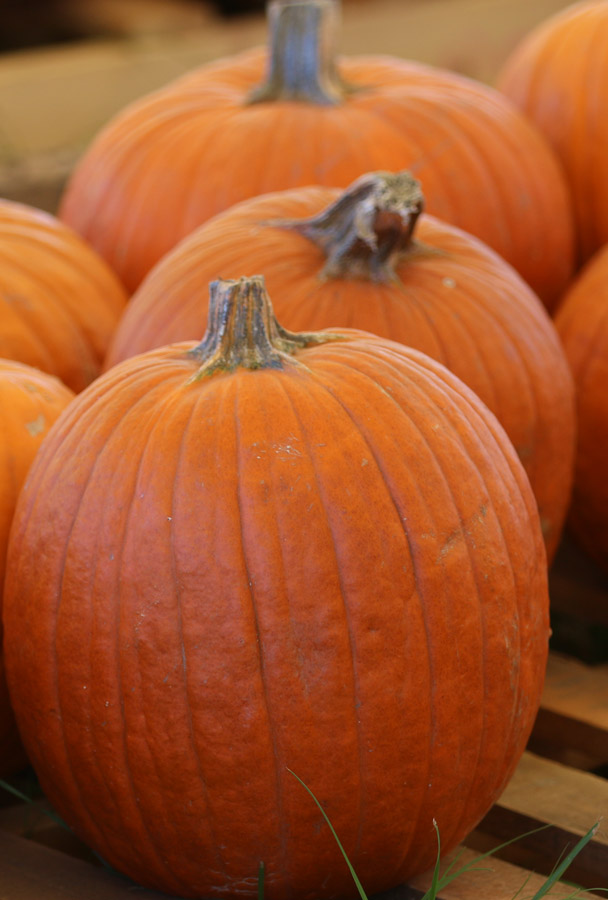 Looking for a pumpkin? The Allen Memorial United Methodist Church Men’s Pumpkin Patch is open once again this year at the corner of Highway 29 and Neal Road in Cantonment. Pumpkins of all shapes and sizes are available, with some priced as low as $1. The pumpkin patch is open daily from 10 a.m. until 6 p.m.
Organizers said hundreds of pumpkins have been sold far this year.
The church held its annual Fall Festival on Saturday with free activities for children, and plenty of food from the Methodist Men, including smoked turkey legs.
For a photo gallery, click here.
NorthEscambia.com photos, click to enlarge.