

Scott Renews Push For Economic Incentives Amid House Opposition
October 1, 2016
Gov. Rick Scott plans to ask lawmakers in 2017 to provide $85 million for economic incentives, after the Legislature rejected his request this year for $250 million for the state’s business-recruitment agency.
But he may have to twist arms to win support from the House, where incoming Speaker Richard Corcoran, R-Land O’ Lakes, remains openly critical of using public dollars to try to attract businesses.
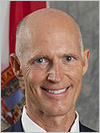 “The House’s position on this issue has been clear,” Corcoran said in a prepared statement. “The government engaging in social engineering to pick winners and losers that benefit the 1 percent is a bad deal for Florida taxpayers. There will not be any corporate welfare in the House budget.”
Scott announced his proposal at a board meeting of the public-private agency Enterprise Florida. Scott is chairman of the board.
After appearing at the Florida Chamber Foundation’s “Future of Florida Forum” — being held in Orlando alongside the Enterprise Florida board meeting — Scott said the incentive money is needed so Florida can compete for jobs against other states.
“We have to get a good return for taxpayers, but we have to be part of the game,” Scott said. “If we’re not, we’re not going to get the corporate office moves, the regional offices, things like that.”
Asked how he will get reluctant lawmakers to approve the funding request, Scott replied, “I just can’t imagine anybody’s going to vote against it.”
When asked if he had discussed the proposal with Corcoran, Scott added that he talks to state senators and representatives “all the time.”
The Senate is expected to again be more open to considering the proposal.
Incoming Senate President Joe Negron, R-Stuart, said he looks forward to learning more about the request and Scott’s other priorities.
“The Senate takes every priority of the governor very seriously,” Negron said in a prepared statement. “In the coming months, our Senate committees will have the chance to review his proposed budget in its entirety.”
During this year’s session, the Senate initially supported Scott’s $250 million request. But with the House opposed, the funding dissolved as the chambers hammered out a budget.
The $250 million request was one of Scott’s priorities for 2016. The rejection of the money resulted in Bill Johnson, who had lobbied lawmakers for the money, stepping down as president of Enterprise Florida and the agency being downsized.
Scott also requested $85 million for incentives in 2015. The final budget for that year included $53 million for Enterprise Florida, of which $43 million was for incentives and $10 million was for marketing.
Scott also plans to request that lawmakers narrow the focus of Enterprise Florida. The focus would be on efforts to attract corporate headquarters, along with businesses in the aviation, aerospace, defense, financial services, information technology and advanced manufacturing industries.
“We need to refocus EFI on one job, the one job is getting more people jobs,” Scott said during the Enterprise Florida Board of Directors meeting.
by The News Service of Florida
One Injured In 90 & 9 Ranch Road Traffic Crash
October 1, 2016
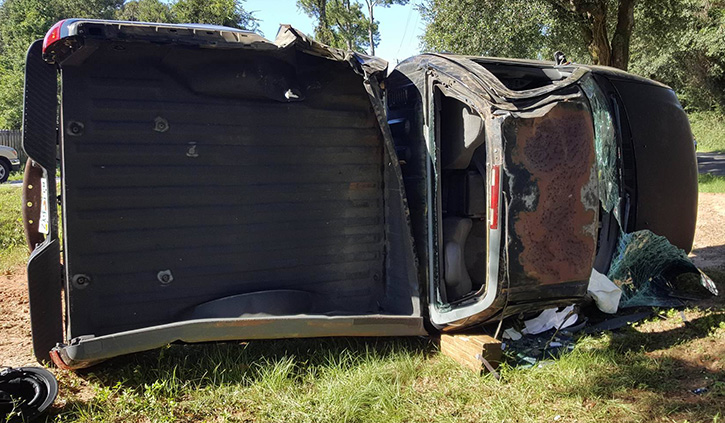
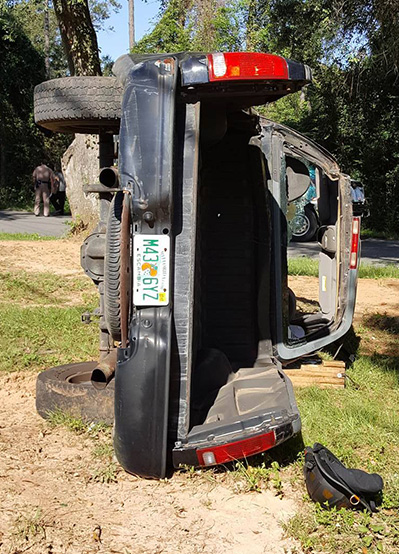
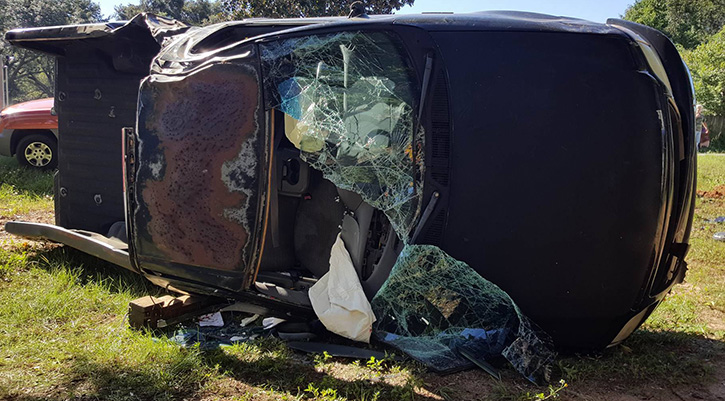
One person was injured in a single vehicle rollover accident Friday at 90 & Ranch Road and Old Chemstrand Road. The driver was transported to an area hospital with injuries that were no considered life threatening. Further information has not been released by the Florida Highway Patrol. NorthEscambia.com photos by Kristi Barbour, click to enlarge.
High School Football Finals
October 1, 2016

Here’s a look at Friday night high school final scores from across the aera
FLORIDA
- Maplesville, AL 21, Northview 0
- Tate 31, Washington 21
- Baker 42, Jay 6
- Escambia 35, Pine Forest 0
- Bay 14, PHS 13
- Catholic 26, Florida HS 7
- Gulf Breeze 35, Milton 3
- Navarre 42, Pace 28
- West Florida – OFF
ALABAMA
- Mobile Christian 29, Flomaton 0
- Satsuma 41, Escambia County (Atmore) 8
- T.R. Miller 41, Excel 8
- W.S. Neal 22 Monroe County 18
- Escambia Academy – OFF
NorthEscambia.com photo.
Several New Laws In Florida
October 1, 2016
County elections supervisors are up for pay raises, while penalties increase for trafficking in the modern version of food stamps and for stealing credit-card information at gas pumps, under new laws that went into effect Saturday.
 Those changes to state laws are among 26 that take effect this weekend after being crafted during the 2016 legislative session.
Lawmakers sent 272 bills to Gov. Rick Scott from the regular legislative session, which ended in March. Scott vetoed three and signed the rest.
The majority of the new laws, including the state’s annual budget, went into effect July 1 or immediately upon receiving Scott’s signature.
Here are some of the laws that will take effect Saturday:
HOUSE ARREST
— HB 75, which expands rules regarding electronic monitoring devices. The measure makes it a third-degree felony to ask another person to remove or help circumvent the operation of a monitoring device.
EBT CARDS
— SB 218, which is aimed at reducing trafficking in electronic-benefit transfer cards. The cards, commonly known as EBT cards, are a higher-tech form of food stamps and help provide food assistance to low-income Floridians. The measure, in part, would make it a first-degree misdemeanor to have two or more EBT cards and sell or attempt to sell one of the cards. A second offense would be a third-degree felony.
DISABILITIES PROTECTION
— HB 387, which is named “Carl’s Law” and increases civil and criminal penalties when victims are people with disabilities. Carl Stark, a 36-year-old autistic man from St. Augustine was shot and killed in 2015 after being targeted by teenagers looking to steal a car.
THREATS
— SB 436, which makes it a second-degree felony for making false reports about using firearms in a violent manner. The law also makes it a first-degree misdemeanor to threaten with death or serious harm a law-enforcement officer, state attorney or assistant state attorney, firefighter, judge, elected official or any of their family members.
SUPERVISORS PAY
— SB 514, which adjusts salaries for county supervisors of elections to be calculated the same as for clerks of circuit court, property appraisers and tax collectors. The Legislature’s Office of Economic and Demographic Research has indicated the change will result in $1.2 million in salary increases, which averages to an $18,540 increase per county.
HUMAN TRAFFICKING
— HB 545, which prohibits people under 18 from being prosecuted for prostitution and makes clear that sexually exploiting a child in prostitution should be viewed as human trafficking. The measure also increases the penalty for people who knowingly rent space used for prostitution.
ELECTRONIC SKIMMERS
— SB 912, which is part of a crackdown on illegal electronic skimmers that have been found on gas pumps and ATM machines. The measure, backed by Agriculture Commissioner Adam Putnam, increases the penalties for people who possess counterfeit credit-card information. The proposal also includes requirements for gas-station owners and managers to use security measures on self-service fuel pumps.
SPINY LOBSTERS
— SB 1470, which revises rules dealing with stone-crab traps and spiny-lobster traps. In part, the law makes clear that a person with fewer than 100 undersized spiny lobsters may face a misdemeanor violation for each of the undersized crustaceans. Possessing more than 100 undersized spiny lobsters is a third degree felony offense.
OFFICIAL CORRUPTION
— HB 7071, which is intended to ease the legal threshold to prosecute officials involved in public corruption. Rather than proving an official acted “with corrupt intent,” prosecutors will need to show the person “knowingly and intentionally” engaged in the corrupt act.
by Jim Turner, The News Service of Florida
Century Health And Rehab Honors First Responders At Cookout
September 30, 2016
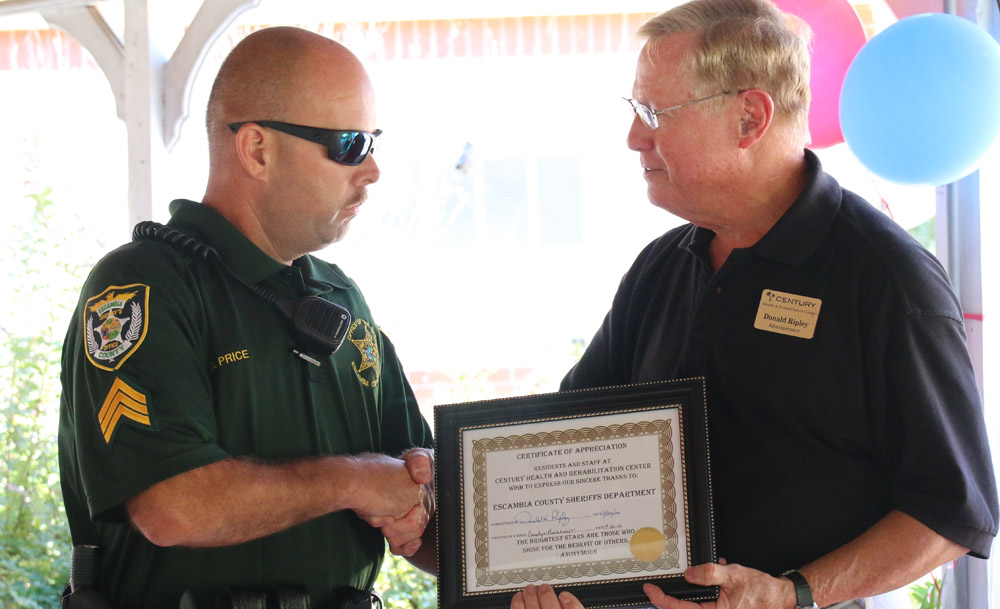
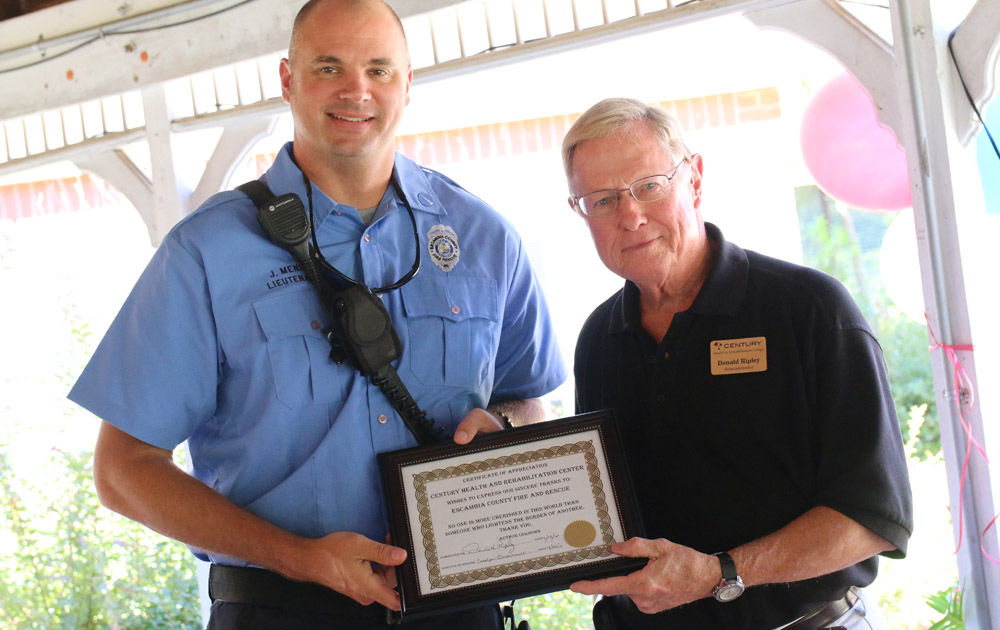
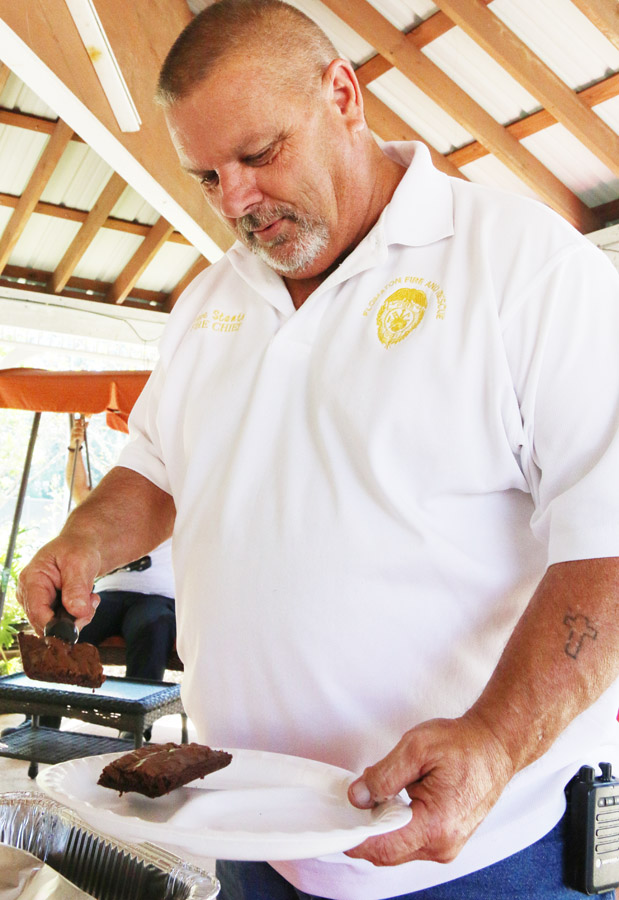 The Century Health and Rehabilitation Center hosted a free cookout for first responders Thursday. The cookout honored local area fire, EMT, and law enforcement employees and volunteers.
NorthEscambia.com photos, click to enlarge.
Jay Woman Killed In Wreck
September 30, 2016
A Santa Rosa County woman was killed in a two vehicle crash Thursday afternoon near Chumuckla.
 According to the Florida Highway Patrol, 15-year old Katlynn Brianna Hobbs of Jay was traveling eastbound on Highway 182 near Griswold Road in a 2007 Chevrolet Colorado. Hobbs slowed to make a left turn without signaling as 41-year old Robert Albert Kanning III of Jay attempted to pass in a passing zone on the left. Hobbs turned her vehicle into the path of Kanning’s 2007 Dodge Ram, causing the vehicles to collide and Hobb’s vehicle to overturn.
Katlynn Hobbs’ passenger, 40-year old Allison Maranda Hobbs of Jay was pronounced deceased on the scene.
Any charges in the crash are pending the outcome of a traffic homicide investigation by the FHP.
Ernest Ward Beats Escambia County Atmore (With Gallery)
September 30, 2016


Ernest Ward Middle School defeated Escambia County Middle School 46-26 Thursday in Atmore.
Next Thursday, Ernest Ward will host T.R. Miller in Walnut Hill.
For a photo gallery, click here.
NorthEscambia.com photos, click to enlarge.


Farm Bureau Distinguished Service Award Presented To County Administrator Brown
September 30, 2016
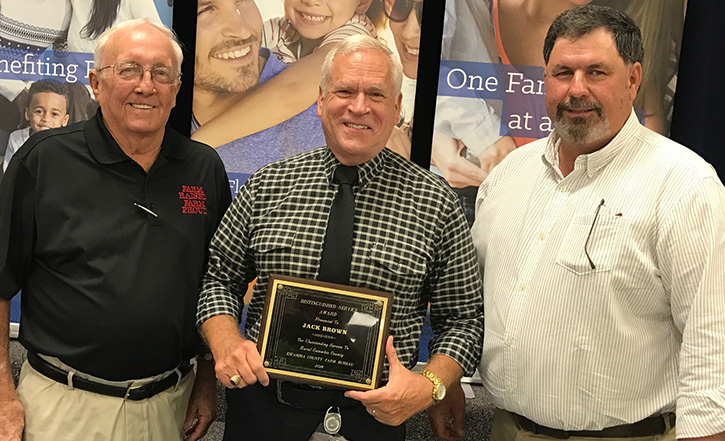
Escambia County Administrator Jack Brown was presented the Distinguished Service Award for outstanding service to rural Escambia County by the Escambia County Farm Bureau during their annual meeting Thursday night in Molino. Photo Pictured with Jack Brown (middle) are Farm Bureau leaders Jimmy Cunningham (left) and Brett Ward. Photo for NorthEscambia.com, click to enlarge.
Kena Spivey, 2, Loses Battle With Cancer
September 30, 2016

Kena Spivey, age 2, lost her battle to cancer Thursday morning. We introduced your to Kena and her unlikely friend, Bryant Cooper, in previous stories here on NorthEscambia.com.
 In late October of 2014, Bryant was a happy, focused young man with a love for football. And John Deere…that love was strong enough that he had even landed a dream job of sorts with a local John Deere dealership. But pain in his back — he thought just a pulled muscle or maybe kidney stones — sent him to the emergency room. The preliminary diagnosis was not good…suspicious spots on his liver. More tests for a final diagnosis that Bryant and his mother, Janet Little Cooper, never expected on November 4, 2014.
Cancer. Not just cancer, but a Stage 4 rare neuroendocrine cancer, and it had spread with a vengeance to other parts of this body.
Kena was diagnosed with a Stage 3 tumor on her cervix and uterus on July 7, 2014.
Kena was in Sacred Heart Hospital for a chemo treatment, and Bryant was in for his first ever treatment when the two met on November 17. Her parents, Charles and Dawn Spivey, were walking her down the hallway trying to calm her when they met Janet.
Kena’s tears stopped when she saw Bryant lying in his hospital bed. The friendship continued to grow up until her passing.
September is Childhood Cancer Awareness Month.
On average, 43 teens are diagnosed with cancer each day. And before the day ends, a childhood cancer will claim seven lives, Janet Cooper said. “There are billions and billions of dollars spent on cancer research every year in this country. But only four percent is spent on find a cure for childhood cancers.”
JV Football: Baker Over Northview
September 30, 2016


In junior varsity football, Baker defeated Northview 44-20 Thursday night in Bratt.
The JV Chief s will travel to West Florida at 6 p.m. on October 13, and the will host West Florida on October.
NorthEscambia.com photos, click to enlarge.