
Century Correctional Institution Inmate Assaults Officer
April 6, 2017
Last Saturday, an inmate assaulted a correctional officer at Century Correctional Institution, according to information recently released by the Florida Department of Corrections.
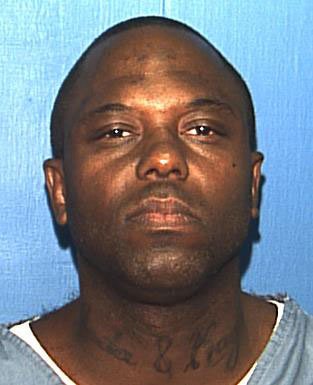 Inmate Antoine Tibbs assaulted the officer at approximately 5:15 a.m. Tibbs charged at the officer and struck the officer in the face, according to the FDOC. Staff responded appropriately, and the inmate was subdued.
Medical staff examined the officer and noted minor injuries. Tibbs will receive a disciplinary report for the assault.
Tibbs was sentenced October 22, 2015 to two years and six month on an Escambia County possession of a controlled substance charge.
Escambia County 4-H Livestock Show Results
April 6, 2017

Youth from Escambia County and surrounding areas had the opportunity to show off their animals and compete for prizes last Saturday at the Gulf Coast Agriculture and Natural Resources Youth Organization’s annual Spring Livestock Show in Molino.
The livestock show, which is supported by the Escambia County Board of County Commissioners and the University of Florida Institute of Food and Agricultural Sciences, featured animal exhibits of swine, cattle, poultry, sheep, goats and more.
Saturday’s show was the culmination of livestock projects by 4-H youth and FFA members lasting 100 days or longer, during which they raise their animals, monitor their health and nutrition, keep records and work to obtain a buyer
. The livestock show took place at the 4-H barns located at 5701 Highway 99 in Molino, in conjunction with the Blue Jacket Jamboree hosted by Northview FFA.
The results of the 2017 livestock show, separated by category, are:
Lightweight Swine:
- 1st place Haileigh Kirk
- 2nd place Michael Harrelson
- 3rd place Krista Perry
Middleweight Swine:
- 1st place Dillon Conti
- 2nd place Jansen Tobin
- 3rd place William Blackmon
Light Heavyweight Swine:
- 1st place Hannah Thorne
- 2nd place Wyatt Oliver
- 3rd place Jessica Conti
Heavyweight Swine:
- 1st place Wesley Hardin
- 2nd place Lilly Rose Herring
- 3rd place Shelby Lashley
Extra Heavyweight Swine:
- 1st place Wyatt Oliver
Grand Champion Swine: Hannah Thorne
Reserve Champion Swine: Dillon Conti
Showmanship (Swine):
Senior:
- 1st place Haileigh Kirk
- 2nd place Danielle Tinker
- 3rd place Dillon Conti
Intermediate:
- 1st place Hannah Thorne
- 2nd place Shelby Lashley
- 3rd place Jessica Conti
Junior:
- 1st place Allen Thomas Bridgers
- 2nd place Wyatt Allen
- 3rd place Alan Bray-Crews
Class 1 Steers: 1st place Lane Booker
Class 2 Steers: 1st place Travis Booker
Class 3 Steers:
- 1st place Micah Calhoun
- 2nd place Emma Fennell
Class 4 Steers:
- 1st place Jessica Conti
- 2nd place Tyler Simmons
Class 5 Steers: 1st place Ethan Cunningham
Grand Champion Market Steer: Jessica Conti
Reserve Champion Market Steer: Lane Booker
Showmanship (Steer):
Senior:
- 1st place Emma Fennell
- 2nd place Tyler Simmons
- 3rd place Ethan Cunningham
Intermediate:
- 1st place Jessica Conti
Market Lamb 1st place and Grand Champion Market Lamb: Allen Thomas Bridgers
Class 1 Breeding Lamb: 1st place Anna Sprague
Class 2 Breeding Lamb: 1st place Hannah Thorne
Grand Champion Breeding Lamb: Hannah Thorne
Reserve Champion Breeding Lamb: Anna Sprague
Meat Goat (Breeding), 3-6 months: 1st place Izzy Kent
Meat Goat (Breeding) over 12 months:
- 1st place Madison Fendley
- 2nd place Izzy Kent
Grand Champion Meat Goat Breeding: Izzy Kent
Reserve Champion Meat Goat Breeding: Madison Fendley
Dairy Goat (Breeding), 0-6 months:
- 1st place Madison Fendley
- 2nd place Andrew Fendley
Doe with Kid Class:
- 1st place Andrew Fendley
- 2nd place Madison Fendley
Dairy Goat (Breeding), over 6 months:
- 1st place Madison Fendley
- 2nd place Andrew Fendley
Grand Champion Dairy Goat Breeding: Madison Fendley
Reserve Champion Dairy Goat Breeding: Andrew Fendley
Showmanship (Dairy Goat):
Senior: 1st place Madison Fendley
Intermediate: 1st place Andrew Fendley
Showmanship (Meat Goat):
Senior: 1st place Izzy Kent
Lamb Showmanship
Junior Showmanship:
- 1st place Anna Sprague
- 2nd place Allen Thomas Bridgers
Intermediate Showmanship: 1st place Hannah Thorne
Beef Breeding
Class I: Registered Angus: 1st place Tyler Simmons
Class II: Registered Angus: 1st place Jessica Conti
Grand Champion Registered Angus: Tyler Simmons
Reserve Champion Registered Angus: Jessica Conti
Registered Charolais: 1st place Izzy Kent
Grand Champion Registered Charolais: Izzy Kent
Registered Gelbvieh Class 1/Class 2: 1st place Izzy Kent
Grand Champion Registered Gelbvieh and Reserve Champion Registered Gelbvieh: Izzy Kent
Registered Hereford Class 1/Class 2: Allen Thomas Bridgers
Grand Champion Registered Hereford and Reserve Champion Registered Hereford: Allen Thomas Bridgers
Registered Shorthorn:
- 1st place Travis Booker
- 2nd place Gerri Ryann Espey
Grand Champion Registered Shorthorn: Travis Booker
Reserve Champion Registered Shorthorn: Gerri Ryann Espey
Commercial Class I:
- 1st place Ally Oliver
- 2nd place Ethan Cunningham
- 3rd place Micah Calhoun
Commercial Class II: 1st place Amber Neal
Commercial Class III:
- 1st place Gerri Ryann Espey
- 2nd place Lane Booker
Grand Champion Commercial: Gerri Ryann Espey
Reserve Champion Commercial: Lane Booker
Grand Supreme Champion: Izzy Kent
Reserve Supreme Champion: Travis Booker
Showmanship (beef breeding):
Senior:
- 1st place Izzy Kent
- 2nd place Travis Booker
- 3rd place Micah Calhoun
Intermediate:
- 1st place Lane Booker
- 2nd place Gerri Ryann Espey
- 3rd place Jessica Conti
Junior: 1st place Allen Thomas Bridgers
Preview Steer
Class I: 1st place Wyatt Oliver
Class II: 2nd place Madison Fendley
Grand Champion: Madison Fendley
Reserve Champion: Wyatt Oliver
Rabbits
Best in Show: Tucker Padgett
Reserve in Show: Hannah Rodgers
Dutch: 1st place Mary Oliver
Standard Rex: 1st place Tucker Padgett
American Chinchilla: 1st place James Gruenwald
New Zealand: 1st place Lacie Kittrell
Lion Head: 1st place Isabelle Jenkins
Californian:
- 1st place Dabrianna Peterso
- 2nd place Stewart Woodfin
Mini Rex:
- 1st place Hannah Rodgers
- 2nd place Cora Andrews
- 3rd place Gracie Oliver
Production: 1st place Kamden Jones
Rabbit Showmanship
Junior:
- 1st place Tucker Padgett
- 2nd place Kamden Jones
- 3rd place Mary Oliver
Senior:
- 1st place Hannah Rodgers
- 2nd place Cora Andrews
- 3rd place Dabrianna Peterson
Chicken Chain
Best of Breed/Rhode Island:
- 1st place Andres Bocanegra
- 2nd place Wade Jack
- 3rd place Jansen Tobin
Best of Breed/Black Australorp:
- 1st place Tucker Padgett
- 2nd place Chase Lowe
Best of Breed/Barred Rock
- 2nd place Khai Jenkins
- 3rd place Brandon Korinchak
Grand Champion Pen: Tucker Padgett
Reserve Champion Pen: Andres Bocanegra
Grand Champion Bird: Tucker Padgett
Reserve Champion Bird: Andres Bocanegra
Chick Chain Showmanship (Junior):
- 1st place Tucker Padgett
- 2nd place Mary Oliver
- 3rd place Isabelle Jenkins
Chick Chain Showmanship (Intermediate):
- 1st place Andres Bocanegra
- 2nd place Hannah Thorne/Ally Oliver
Chick Chain Showmanship (Senior):
- 1st place Brandon Korinchak
- 2nd place Wyatt Oliver
- 3rd place Jake Nowling
Open Birds
Grand Champion: Sadie Emmert
Reserve Champion: Tucker Padgett
Open Showmanship (Junior):
- 1st place Tucker Padgett
- 2nd place Lacie Kittrell
Open Showmanship (Intermediate):
- 1st place Makayla Brazwell
- 2nd place Sadie Emmert
- 3rd place Piper Ferguson
10 Big Issues At Mid-Point Of Legislative Session
April 6, 2017
Halfway through Florida’s 60-day legislative session, almost all major issues remain unresolved.
That’s not unusual: Lawmakers always leave tough stuff to the end. But the House and Senate will have to resolve key differences if they hope to end the session as scheduled May 5.
Here is an update on 10 big issues:
 BUDGET: The House and Senate next week will pass budget proposals that top $80 billion, setting the stage for negotiations on a final spending plan. But with the two chambers at least $2 billion apart on their proposals — and disagreeing about crucial details — even Republican leaders are publicly raising the possibility that a special session will be necessary to pass a budget. The House and Senate need to come to agreement before the new fiscal year starts July 1.
DEATH PENALTY: With Florida’s death penalty on hold since January 2016 because of a thicket of court rulings, the House and Senate quickly passed a bill last month to resolve one of the most-important issues. The bill, signed by Gov. Rick Scott, requires unanimous jury recommendations before defendants can be sentenced to death. The Florida Supreme Court in October struck down a law that required only 10 of 12 jurors to agree on recommending death sentences.
ECONOMIC DEVELOPMENT: Scott and House Speaker Richard Corcoran, R-Land O’ Lakes, have been locked in a battle about the economic-development agency Enterprise Florida and tourism-marketer Visit Florida. The Corcoran-led House has voted to abolish Enterprise Florida and to cut funding for Visit Florida. Scott has barnstormed the state to try to build support for the agencies, which he says are important to job creation. Senate leaders have largely sided with Scott, and the dispute could play out in the budget negotiations.
EDUCATION: With Senate President Joe Negron, R-Stuart, making the issue one of his top priorities, the Senate has passed a bill that would lead to wide-ranging changes in the higher-education system, including revamping parts of the Bright Futures scholarship program, tightening performance standards for state colleges and universities and encouraging more students to graduate on time. Meanwhile, Corcoran has targeted low-performing public schools that he calls “failure factories” and is pushing for expanded school choice.
GAMBLING: The House and Senate have taken vastly different positions as they head toward negotiations on a gambling bill. The Senate passed a measure that focuses on changes in the pari-mutuel industry, including allow slot machines in eight counties where voters have approved them and allowing nearly all tracks and jai alai frontons to do away with live racing or jai alai games, a process known as “decoupling.” The House plan, meanwhile, focuses on reaching a new gambling agreement with the Seminole Tribe of Florida and seeks to prevent an expansion of gambling.
GUNS: Lawmakers appear likely to reach agreement on a bill that would shift a key burden of proof in “stand your ground” self-defense cases, a priority of the National Rifle Association. But some other high-profile bills are stuck in the Senate. Those bills include proposals that would allow people with concealed-weapons licenses to carry guns on college and university campuses or to openly carrying firearms in public.
HEALTH CARE: House leaders have renewed efforts to reduce regulations in the health-care industry. The House, for example, has passed a bill that would allow patients to stay longer at ambulatory-surgical centers and allow the creation of what are known as “recovery care centers” for additional post-surgical care. The Senate has scuttled such proposals in the past, and it remains unclear whether it will go along this year. Health care also will be key in budget negotiations, with both chambers proposing cuts in hospital funding.
MEDICAL MARIJUANA: After voters overwhelmingly approved a constitutional amendment in November, lawmakers are grappling with how to move forward with a broad expansion of the state’s medical-marijuana laws. A heavily lobbied issue focuses on the number of businesses that will receive potentially lucrative licenses to grow, process and sell cannabis. Under current law, seven businesses have such licenses, and the House and Senate disagree about issues related to adding more licenses.
WATER: Negron has made a priority of a plan to create a reservoir south of Lake Okeechobee to alleviate discharges of polluted lake water into the St. Lucie and Caloosahatchee estuaries. But the plan has faced heavy opposition from farmers, including the politically powerful sugar industry, and local officials south of the lake. Negron this week took steps to try to make the plan more palatable to opponents and House leaders, and the issue likely will play a part in budget negotiations.
WORKERS’ COMPENSATION INSURANCE: After a 14.5 percent rate increase began taking effect in December, business and insurance groups came into the legislative session lobbying for changes to reduce workers’ compensation insurance costs. But those groups, at least at this point, are not happy with House and Senate bills. The most-controversial issue in the debate stems from a Florida Supreme Court ruling last year that rejected strict limits on attorney fees in workers’ compensation cases. Lawmakers are considering allowing fees up to $250 an hour for workers’ attorneys — an idea opposed by business and insurance groups.
by Jim Saunders, The News Service of Florida
Softball: Northview Falls To South Walton
April 6, 2017

The Lady Chiefs take a tough loss on the road at South Walton Tuesday night.
Tori Herrington took the loss allowing 2 runs on 4 hits, 11 strikeouts and 2 walks.
Jamia Newton scored the lone run for the Chiefs on an RBI by Kendall Enfinger early in the first inning. The Seahawks answered in the bottom of the first with an RBI single by Alyssa Selvy. Neither team would score again till the Seahawks scored the game winning run on a triple in the bottom of the 8th followed by an RBI single.
Kendall Enfinger had the lone hit for the Chiefs going 1-3 with an RBI.
South Walton’s Alyssa Selvy recorded 13 strikeouts against the Chiefs allowing one hit and no walks.
NorthEscambia.com file photo.
Gulf Power Rate Settlement Approved
April 5, 2017
A settlement that will lead to rate increases for customers of Gulf Power was approved by state utility regulators on Tuesday.
The Public Service Commission unanimously supported the settlement agreement, which was initially announced March 20 but continued to be negotiated and was put forward Tuesday without opposition from customer groups.
The proposed settlement would lead to a base-rate increase of $62 million — with a $54.3 million net impact to customers — through the end of 2019.
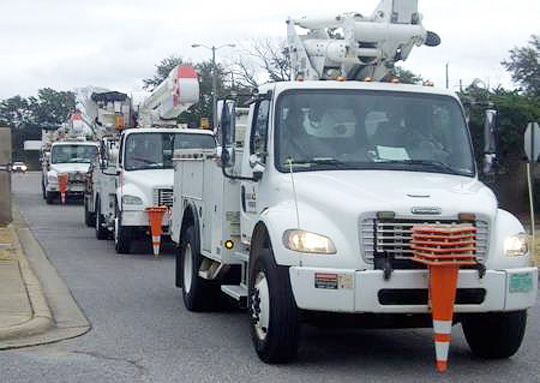 Due to the settlement, about $7 is expected to be added to the monthly bills of typical residential customers who use 1,000 kilowatt hours of electricity a month.
Starting July 1, the monthly bills for such customers are expected to go from $144 to $151.
The initial request from the utility sought to boost the typical monthly bill to $158 as Gulf Power —a subsidiary of Atlanta-based The Southern Company — first sought to raise overall base rates by $106.8 million.
Jeff Stone, Gulf Power general counsel, called the settlement “a reasonable compromise of the positions held by all parties.”
The utility previously said it would use the increased money to help pay for infrastructure improvements, including work on transmission lines and substations.
The settlement was not signed by the Sierra Club, the Florida League of Women Voters, the Federal Executive Agencies and Walmart. But representatives for each said they do not necessarily oppose the agreement.
Robert Scheffel Wright, an attorney representing the Florida Retail Federation and Walmart, said the Arkansas-based retailer thinks that a potential “return on equity” remains too high. But he added that “on balance we believe it’s a reasonable settlement.”
In the agreement, Gulf Power will have a targeted “return on equity,” a measure of profitability, of 10.25 percent, down from the original proposal of 11 percent. Gulf Power also agreed to take a one-time $32.5 million write down on costs related to a Georgia power plant, known as Plant Scherer.
Gulf Power in the past has sold electricity from the plant on the wholesale market but now uses power from the plant for its retail customers.
The Pensacola-based Gulf Power is one of four major investor-owned utilities in Florida. It serves about 450,000 customers in eight Northwest Florida counties.
by Jim Turner, The News Service of Florida
Driver Slams Into Loaded Horse Trailer
April 5, 2017
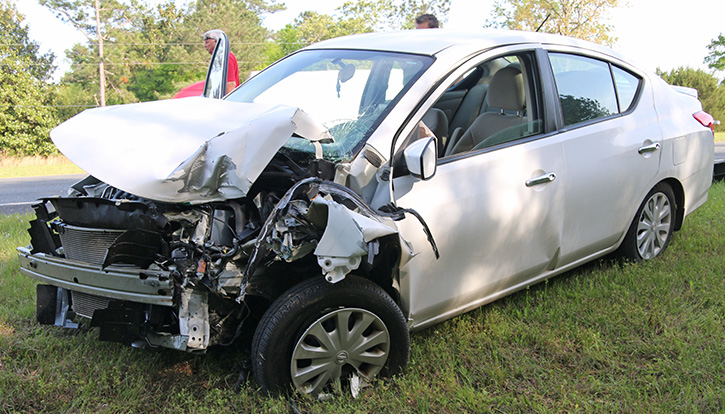
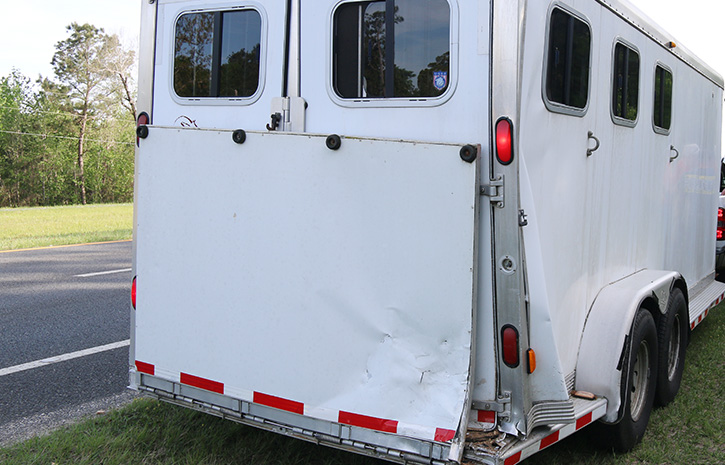
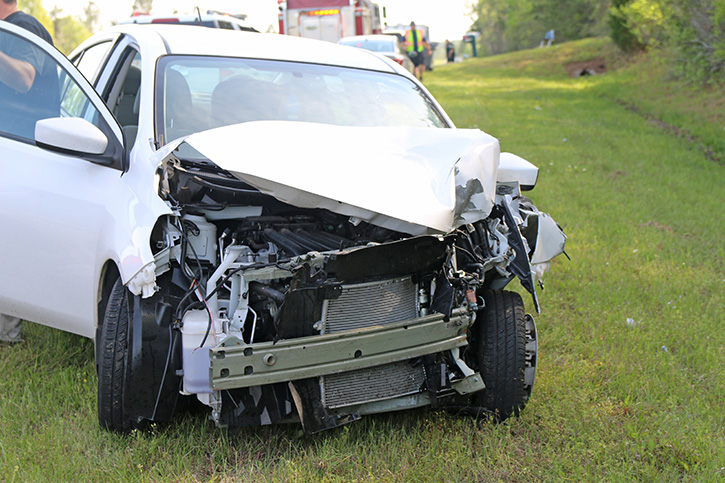
There were no injuries when a driver slammed into a horse trailer and pickup Tuesday afternoon on Highway 29 in McDavid.
The pickup driver with a horse trailer had reportedly stopped in a travel lane of Highway 29 south of Bogia Road for a school bus with stop lights activated. The driver of car then reportedly hit the horse trailer.
Both drivers and a horse were not injured. The horse trailer was not movable following the crash due to damage to the trailer hitch. The Escambia County Sheriff’s Office livestock officer responded to the scene to transport to the horse to its destination.
The school bus was not involved in the crash.
NorthEscambia.com photos, click to enlarge.
Deputies Remove Meth Lab From Cantonment Home
April 5, 2017
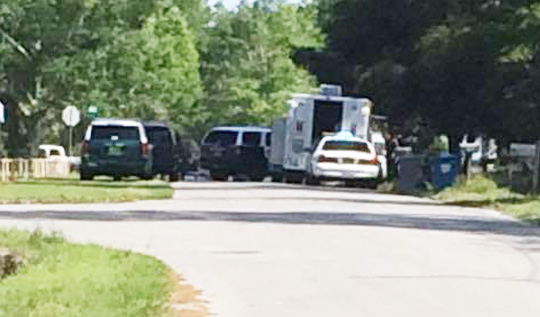
The Escambia County Sheriff’s Office cleaned up methamphetamine lab inside an unoccupied home in Cantonment Tuesday.
The ECSO received a tip that meth lab was inside the home on Lakeview Avenue near Forrest Street. A narcotics team responded and safely disposed of the meth lab.
There were no arrests made, according to the ECSO. An investigation continues.
Reader-submitted photo for NorthEscambia.com, click to enlarge.
Escambia Community Clinics Cantonment Pediatrics Is Now Open
April 5, 2017

The new Escambia Community Clinics Cantonment Pediatrics is now open.
 Medical, dental and behavioral health services area available at the new clinic located at 470 South Highway 29 in Cantonment in the old Winn Dixie shopping center.
Pediatrician Quetheline Lanza, MD and pediatric nurse practitioner Stephanie Howell, ARNP, are joining behavioral health provider Catherine Dunham, LCSW, and dentist Victoria Lane, DMD, as providers at the new location.
For an appointment and more information, call (850) 780-0111.
Courtesy photos for NorthEscambia.com, click to enlarge.


Sex Crime Charges Dropped Against Jay Woman
April 5, 2017
Sex crime charges against a Jay woman have been dropped, but she is still headed to prison on a previous conviction.
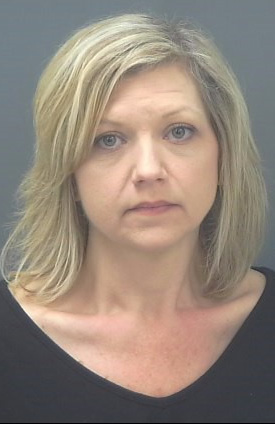 State Attorney Bill Eddins announced Tuesday that the charge of unlawful sexual activity against 46-year old Kimberly Ann Seevers has been dismissed by the state.
Seevers was charged on April 12, 2016, for the pending case. The case was scheduled for judge trial before Circuit Judge John Simon later this week.
The victim met with prosecutors Tuesday and expressed that he did not want to return to Florida to testify. He also indicated that he was satisfied with the prison sentence Seevers had received and wished to move forward with his life.
Seevers was previously arrested on November 24, 2015, for the same charge involving another minor. In that case, Seevers entered a plea of no contest and was sentenced on January 17 to 38 months in state prison by Circuit Judge Ross Goodman.
With no further charges pending, Seevers will be transferred from the Santa Rosa County Jail to the Florida Department of Corrections to begin serving her prison sentence.
Escambia County, Mayors Recognize Community Volunteers
April 5, 2017
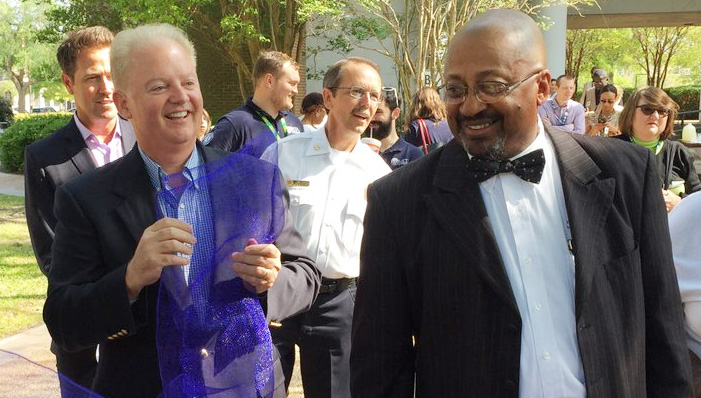
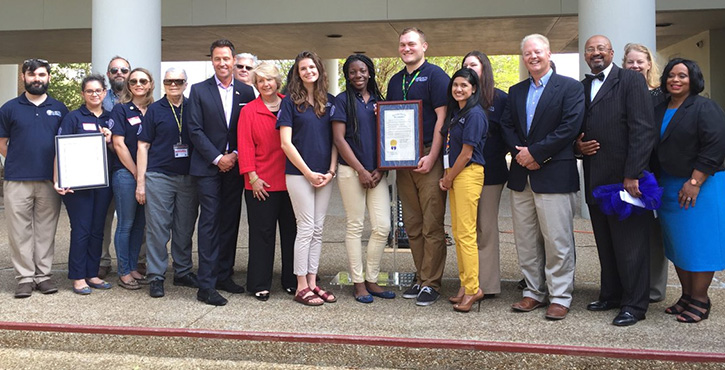
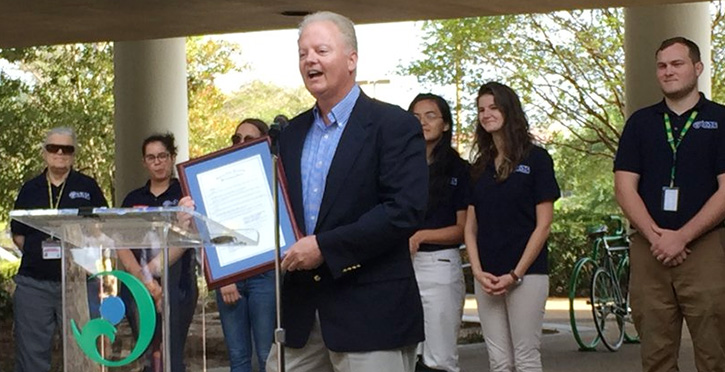
Commissioner Jeff Bergosh, Century Mayor Henry Hawkins and Pensacola Mayor Ashton Hayward presented proclamations Tuesday afternoon for the Mayors and County’s’ Day of Recognition for Community Volunteers. The day is a nationwide bipartisan effort to recognize the positive impact of national service, thank those who serve, and encourage citizens to give back to their communities. Pictured top: Pensacola Mayor Ashton Hayward (background, left), County Commissioner Jeff Bergosh (left) and Century Mayor Henry Hawkins. Photos for NorthEscambia.com, click to enlarge.