

Deer Hunters: Help Monitor For CWD, Be Aware What You Can Bring Into State
November 28, 2016
The Florida Fish and Wildlife Conservation Commission (FWC) is looking to hunters to help monitor the state’s deer herd the coming season for chronic wasting disease, or CWD as it’s more commonly called. And any Florida hunter planning to hunt deer, moose or elk out of state this year needs to be aware of certain laws and regulations aimed at preventing CWD from entering our state.
What is CWD?
CWD belongs to a group of diseases known as transmissible spongiform encephalopathies. Scientists still have much to learn about CWD, which appears to occur only in the deer family, but is believed to be caused by an abnormal protein called a prion.
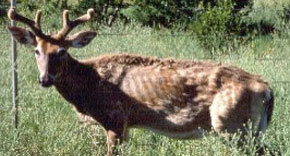 Fatal CWD attacks the brains of infected cervids (mule deer, white-tailed deer, moose and elk), causing them to become emaciated, display abnormal behavior and lose control of bodily functions.
Warning signs of CWD hunters can look out for while in the field include deer that are extremely thin or appear sick, or those exhibiting odd behavior such as excessive salivating or urinating, staggering, walking in circles, standing with a wide stance, head tremors, or deer found dead from unknown causes. If you see a deer that fits this description, call 866-CWD-WATCH (293-9282).
Transmission of CWD occurs by direct contact with bodily fluids (feces, urine or saliva) or through contact with a contaminated environment. In this second scenario, the prion stays in the environment, and may remain infectious for years.
The good news is, there’s no evidence that CWD can be transmitted to humans or livestock, and it’s not yet been found in Florida or any other southeastern state. But it’s going to take the help of all hunters and the FWC to keep it that way.
Currently the only practical method for diagnosing CWD is through analysis of brain-stem tissue or lymph nodes from dead deer. Therefore Florida’s more than 200,000 hunters can play an extremely important role in CWD surveillance by providing samples from harvested deer for testing.
How you can help
The goal of the FWC is to collect these samples throughout Florida, and it’s asking private landowners and hunting clubs to participate in this surveillance effort. Since 2002, the FWC has tested nearly 9,000 hunter-killed, road-killed and sick/diseased deer for CWD.
If you’d like to help, contact the FWC by calling the toll-free CWD Hotline at 866-CWD-WATCH (293-9282) for further information and to coordinate collection and pick-up of deer samples.
To date, CWD has been found in mule deer, white-tailed deer, moose and elk in Arkansas, Colorado, Illinois, Iowa, Kansas, Maryland, Michigan, Minnesota, Missouri, Montana, Nebraska, New Mexico, New York, North Dakota, Ohio, Oklahoma, Pennsylvania, South Dakota, Texas, Utah, Virginia, West Virginia, Wisconsin and Wyoming. It also has been detected in Canada (Saskatchewan and Alberta), Norway and in South Korea.
The primary objective of CWD management is to prevent it from entering our state, so we have adopted laws regulating the transport of harvested deer into Florida.
What is legal to bring back when hunting out of state
It’s illegal for hunters to bring into Florida whole carcasses of any harvested cervid from any of the affected states or countries. From these areas, hunters can bring back only deboned meat and finished taxidermy mounts, hides, skulls, antlers and teeth, as long as all soft tissue has been removed. And citizens are encouraged to report to the FWC any illegal importation of cervids from affected areas by calling its Wildlife Alert Hotline, toll-free, 888-404-FWCC (3922).
Should a CWD outbreak occur in Florida, the keys to effective management will be detecting it early and taking swift action to limit its spread. Because of this, the FWC has a CWD action team made up of veterinarians, biologists, law enforcement officers and media folks, in place and ready to respond along with other government agencies, such as the Florida Department of Agriculture and Consumer Services, U.S. Department of Agriculture, U.S. Fish and Wildlife Service, Florida Department of Health and the Centers for Disease Control and Prevention.
What’s the number to call?
This season, if you come across or harvest a deer that appears sick or emaciated, or one that has died from unknown causes, don’t handle it. Instead, contact the FWC, 24/7 on its toll-free hotline at 866-CWD-WATCH (293-9282).
It’s important to call as soon as possible so the carcass can be collected and tested while it is still fresh.
- See more at: https://www.morningagclips.com/help-monitor-for-cwd/#sthash.C2QDEQKL.dpuf
First Responders Rescue Driver, And Ferret, Following Crash
November 28, 2016
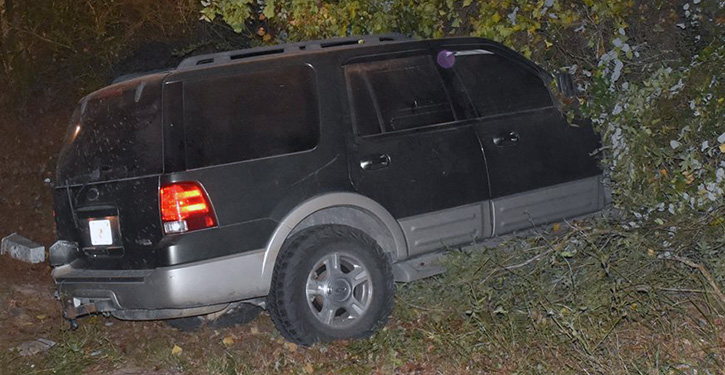
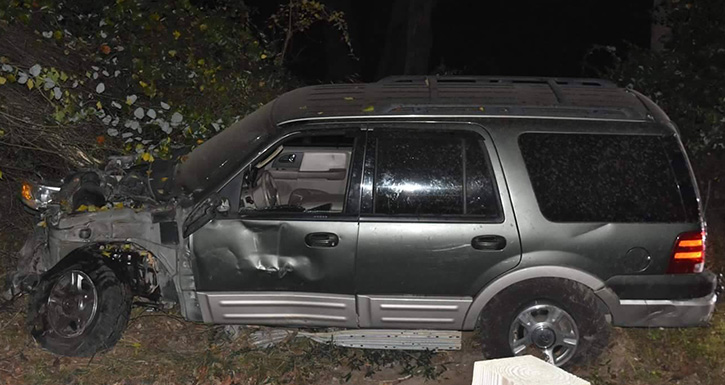
Firefighters rescued a driver — and a ferret — following a single vehicle crash Sunday night.
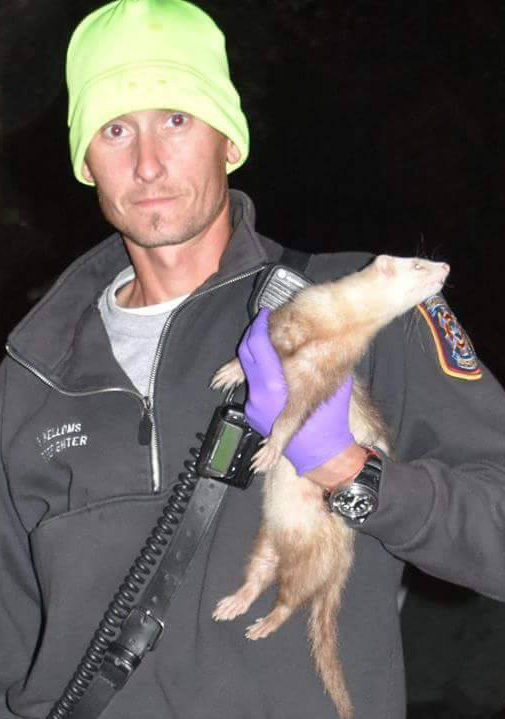
The driver was transported to an area hospital by ambulance with injuries that were not considered life threatening following the 11:30 p.m. crash on Mobile Highway near Klondike Road . A ferret in the vehicle escaped after the crash and was later located by firefighters. Escambia County Animal Control will hold the ferret (pictured bottom) until the driver is released from the hospital.
Further details on the crash have not been released by the Florida Highway Patrol.
NorthEscambia.com photos by Kristi Barbour, click to enlarge.
Overpass Deemed Safe After Vehicle Fire
November 27, 2016
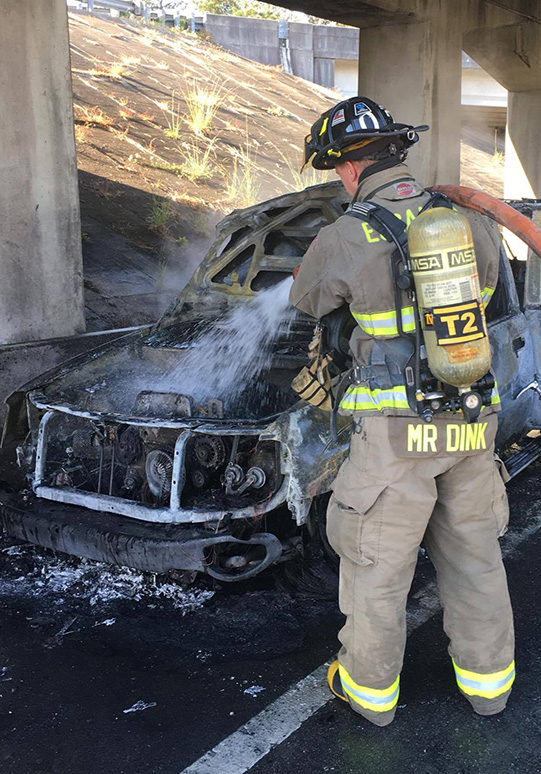
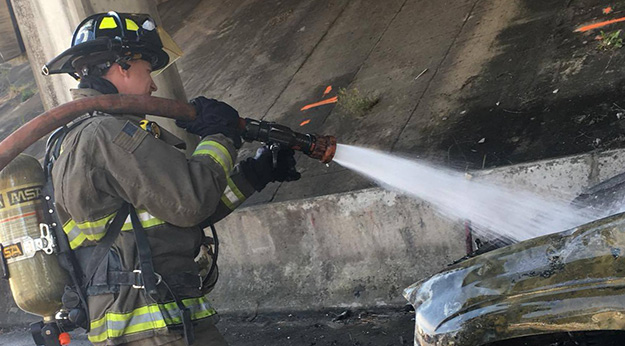
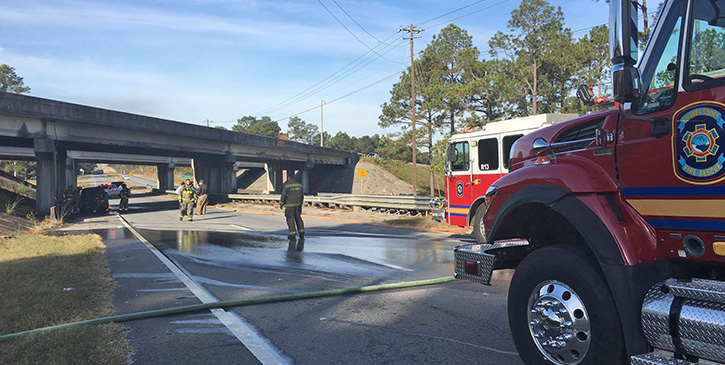
An I-10 overpass has been deemed safe after a vehicle fire underneath it Sunday morning in Beulah.
Fire destroyed the vehicle under the I-10 overpass over Nine Mile Road. Firefighters and state officials inspected the bridge for any possible damage from the intense heat and flames.
There were no injuries reported.
The Beulah and Bellview stations of Escambia Fire Rescue responded to the fire.
Photos for NorthEscambia.com, click to enlarge.
Firefighters Battle Lumber Mill Fire
November 27, 2016
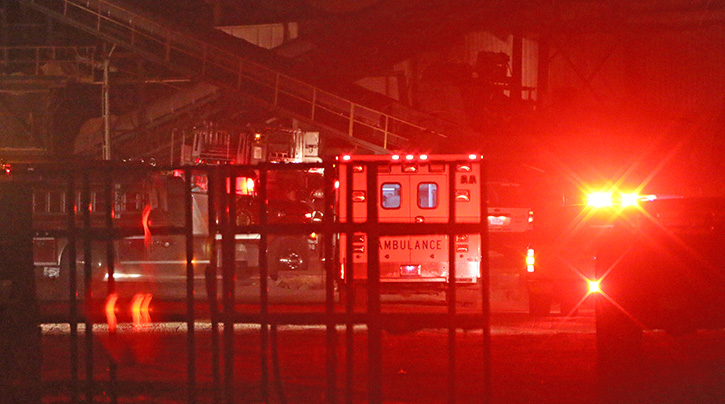
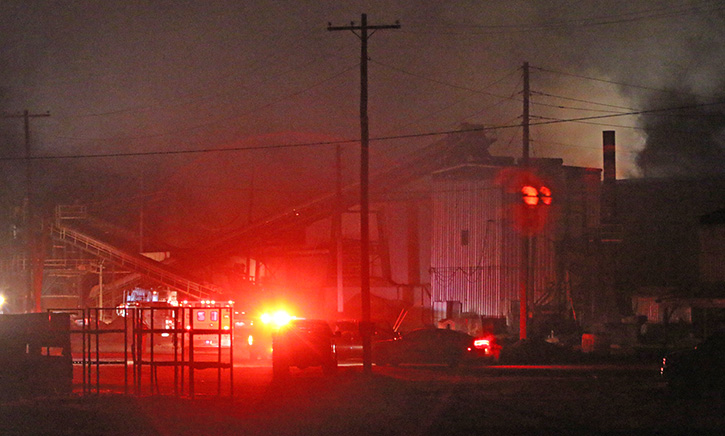
Firefighters from across the area battled a fire at Swift Lumber in Atmore overnight.
The fire was reported about 11:15 p.m. Saturday, with firefighters still working at 2 a.m. to extinguish the fire. The fire was first reported to be in an area behind the main sawmill, near the back of the sprawling lumberyard. The fire reportedly burned near the main electrical power transformers for the facility, forcing firefighters to cut power to the entire facility.
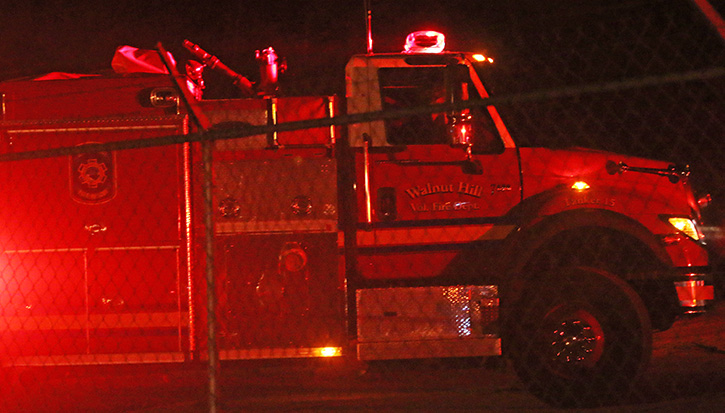
Dozens of firefighters from Atmore, Poarch, Nokomis and Walnut Hill battled for hours to completely contain the fire. The major portion of the fire was extinguished within a couple of hours, but portions continued to smolder and burn well into the morning. The Poarch, Nokomis and Walnut Hill fire department were released from the scene about 2:40 a.m., while Atmore firefighters remained on scene.
There were no reports of any injuries, and there was not immediate word on the cause of the fire.
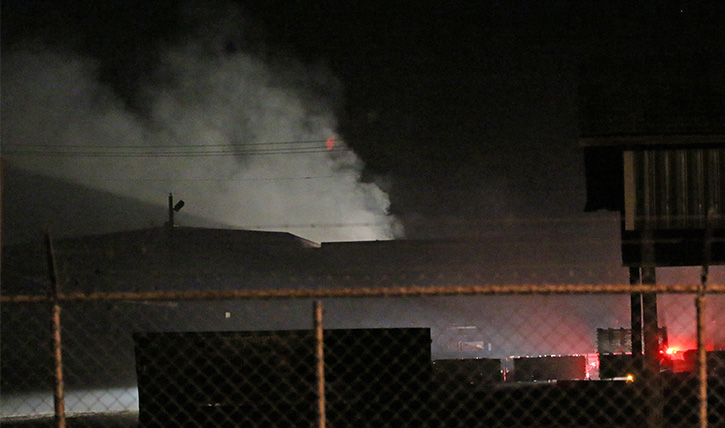
Pictured top: Firefighters and an ambulance stage near the main sawmill at Swift Lumber in Atmore Saturday night. Pictured below: Smoke can be seen rising from behind the buildings. Pictured below middle: A tanker truck from the Walnut Hill Station of Escambia Fire Rescue arrives at the Swift Lumber company in Atmore early Sunday morning. Pictured bottom: Smoke can be seen rising the facility. NorthEscambia.com photos, click to enlarge.
Escambia Students Cast Votes In Mock Presidential Election
November 27, 2016
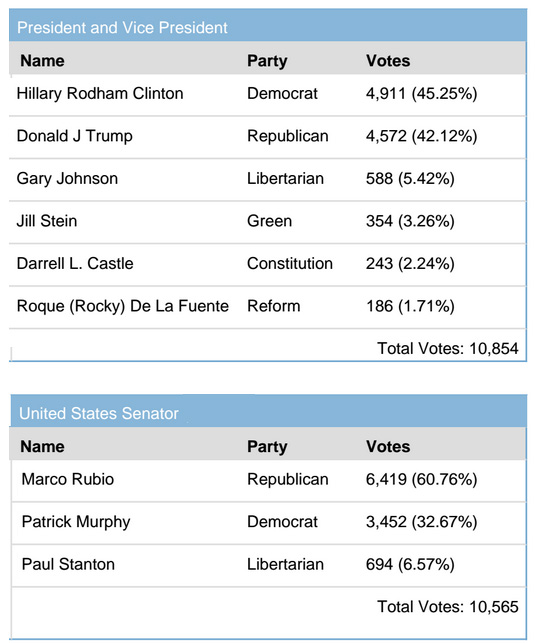
Escambia County Supervisor of Elections David H. Stafford partnered with Escambia County School District and Double Click Democracy, an online election service supported by the Lou Frey Institute at UCF and Kids Voting USA, in offering Escambia County students the opportunity to vote in a mock Presidential election. More than 10,000 students in multiple grade levels from various schools around the county participated in the online election and cast their ballot in two contests: President and Vice President, and United State Senator.
 The students’ results matched actual results in the U.S. Senate contest, with Marco Rubio edging out Patrick Murphy. However, the students chose differently than Escambia County voters in the Presidential contest, selecting Hillary Clinton over Donald Trump. A copy of the results is below.
“Our team was thrilled to play a role in offering area students the chance to participate in this election in a meaningful way,” said Stafford.
The Escambia County Supervisor of Elections office visits schools year-round, offering presentations on the elections process and the chance for students to cast demonstration ballots on actual voting equipment used in elections. Currently, voters aged 18 to 25 represent the second largest group of voters in Escambia County, but have the lowest voter participation rate in most elections.
“In our Social Studies classes we teach history and civics lessons and the responsibilities associated being be a citizen in our country. Voting is a right and becoming a regular educated voter is a responsibility,” said Escambia School Superintendent Malcolm Thomas. “Our partnership with our county’s election office, and the many ways they give our students opportunities to vote on school level decisions, such as student government and favorite Sunshine books, by using real ballots and voting equipment helps introduce this responsibility as early as elementary school and is greatly appreciated.”
“By engaging students with hands-on voting experiences and election education at an early age, we hope to change this statistic,” added Stafford.
FDOT: Weekly Traffic Alerts
November 27, 2016

Drivers will encounter traffic variations on the following state roads in Escambia and Santa Rosa counties as crews perform construction and maintenance activities during the next week:
Escambia County:
· U.S. 29 (State Road (S.R.) 95) Widening from Interstate 10 (I-10) to 9 Mile Road - Work will resume Monday, Nov. 28. Alternating lane closures near the U.S. 29/Nine Mile Road overpass between 8 p.m. and 6 a.m. as workers install barrier wall to accommodate the construction of the new bridge.
· Perdido Key Drive (S.R. 292) Resurfacing from the Alabama State Line to the Intracoastal Waterway Bridge - Work will resume Monday, Nov. 28. Daytime lane closures as crews perform shoulder reconstruction work. Traffic flaggers will be on site to assist with traffic control.
· 9 Mile Road (S.R. 10/U.S. 90A) Widening from Pine Forest to U.S. 29 - Work will resume Monday, Nov. 28. Motorists traveling Untreiner Avenue between Nine Mile Road and Powell Street will encounter intermittent lane closures between 9 a.m. and 3 p.m. as crews lay additional asphalt for an upcoming traffic shift. Once paving is complete, traffic will be shifted eastward onto the temporary asphalt as crews begin drainage improvements on the west side of Untreiner Avenue.
· Fairfield Drive (S.R. 727/295) Resurfacing from Mobile Highway to North Pace Boulevard – Work will resume Monday, Nov. 28. Intermittent and alternating lane closures between Mobile Highway and North Pace Boulevard between 8:30 p.m. and 6:30 a.m. as crews perform paving operations.
· New Warrington Road/Navy Boulevard (U.S. 98) Routine Maintenance from gulf Beach Highway to south of U.S. 98 (Walmart entrance) – North and southbound intermittent and alternating lane restrictions from 8 p.m. Monday, Nov. 28 until 3 a.m. Tuesday, Nov. 29 as crews make repairs to the roadway.
· U.S. 98 Routine Maintenance from the ramp from New Warrington to south of Pinewood Lane- East and westbound intermittent and alternating lane restrictions just west of the Bayou Chico Bridge from 8 p.m. Monday, Nov. 28 until 3 a.m. Tuesday, Nov. 29 as crews make repairs to the roadway.
· I-10 / U.S. 29 Interchange Improvements Phase I - The U.S. 29 north to I-10 westbound ramp will be closed from 8 p.m. to 6 a.m. Wednesday, Nov. 30 and Thursday, Dec. 1
as crews perform bridge work. Traffic will be detoured north to make a U-turn at Broad Street to access I-10 westbound. Drivers will also encounter lane closures on I-10 east and westbound, near U.S. 29 (Exits 10A and 10B), from 6 p.m. Saturday, Dec. 3 to 10 a.m. Sunday, Dec. 4 as crews perform pipe repairs.
· Pensacola Bay Bridge Replacement (U.S. 98) – The westbound outside lane and right turn lane between the bridge and 17th Avenue in Pensacola will be closed from 8 p.m. to 5 a.m. Sunday, Nov. 27 through Thursday, Dec. 1 as crews to perform take soil samples.
Santa Rosa County:
· Pensacola Bay Bridge Replacement (U.S. 98) – The westbound outside lane near the east end of the bridge in Gulf Breeze will be closed from 8 p.m. to 5 a.m. Sunday, Nov. 27 through Thursday, Dec. 1 as crews take soil samples.
· I-10 Resurfacing from east of S.R. 87 to the Okaloosa County Line- Intermittent and alternating lane closures east and westbound between the S.R. 87 interchange and the Okaloosa County line from 8 p.m. to 6 a.m. Sunday, Nov. 27 through Friday, Dec. 2 as crews perform construction activities. Motorists are reminded the speed limit is reduced to 60 MPH within the lane closure.
· S.R. 87 Widening from two miles south of the Yellow River to Hickory Hammock Road (County Road 184) – Intermittent lane closures near the south end of the Yellow River Bridge the week of Monday, Nov. 28. Lane restrictions will be in effect from 6 p.m. to 6 a.m. as crews make preparations for upcoming traffic shift.
· U.S. 90 Routine Maintenance west of Chumukla Highway intersection – The westbound, outside lane will be closed from 8 p.m. Tuesday, Nov. 29 to 5 a.m. Wednesday, Nov. 30 as crews perform maintenance activities.
Drivers are reminded to use caution, especially at night, when traveling through the construction zone, and to pay attention for workers and equipment entering and exiting the work area. All activities are weather dependent and may be delayed or rescheduled in the event of inclement weather. Drivers are reminded to use caution, especially at night, when traveling in a work zone and to watch for construction workers and equipment entering and exiting the roadway.
UF/IFAS: Five Tips For Avoiding Common Holiday Health Pitfalls
November 27, 2016

Have you ever reached the end of a holiday buffet with a plate filled with more food than you intended?
The holiday season is primetime for overeating, said Nan Jensen, family and consumer sciences agent with University of Florida Institute of Food and Agricultural Sciences Extension.
Jensen’s job is to teach residents how to buy and prepare healthy meals and keep up a healthy lifestyle. “My programs are based on the idea that food is medicine,” she said. “This is the idea that food and lifestyle can help prevent and manage chronic diseases, such as heart disease and diabetes.”
While exercising 30 minutes a day and filling half your plate with fruits and vegetables is good advice year-round, the holidays present a special set of challenges for our health and wellness, Jensen acknowledged. Jensen has these tips for avoiding common holiday health pitfalls:
1. Be mindful. “Be aware of what you put into your body, and think about what it will do for your body,” said Jensen. If you’re in an endless buffet line, try to put only those things on your plate that you really want and that will do your body good.
2. Make every calorie count. “You want to make sure that you’re getting the most bang for your buck, nutritionally speaking, when you put food on your plate,” said Jensen. For example, fruits and vegetables are highly nutritious but are lower in calories than many less nutritious foods. Jensen recommends reserving a small portion of your plate for something decadent and filling the rest with nutrient-dense foods.
3. When it comes to alcohol, take it slow. “We always teach ‘alcohol in moderation,’” said Jensen. “In addition to containing lots of sugar and calories, alcohol can take away our inhibitions when it comes to indulging in other food and drink. Pace yourself by drinking a glass of water in between drinks.”
4. Keep up activity levels. Keep up whatever activity routine you normally have throughout the year, said Jensen, though don’t attempt any big changes in your fitness or nutrition regimen. “Don’t necessarily try to lose weight during the holidays—just try to maintain your weight where it is,” she said.
5. Take the focus off food. “Sometimes food is the center of family gatherings, especially during the holidays, and that can lead to overeating. Think about other activities you can do together that will still be fun for everyone,” said Jensen. “And don’t stress about making the holidays perfect—that can lead to stress eating.
Judge Halts Worker’s Comp Rate Hike Over Sunshine Issues
November 27, 2016
Little more than a week before businesses were slated to get hit with increased workers’ compensation insurance rates, a Leon County circuit judge Wednesday blocked the hike because of violations of Florida’s Sunshine Law.
An organization that files workers’ compensation rate proposals for insurers quickly said it would appeal.
 The 73-page ruling by Leon County Circuit Judge Karen Gievers dealt with a 14.5 percent rate increase scheduled to start taking effect Dec. 1. The planned increase, which has drawn heavy attention from business and legal groups, stems from Florida Supreme Court rulings this year that found parts of the state’s workers’ compensation insurance laws unconstitutional.
Gievers ruled, in part, that the National Council on Compensation Insurance — the organization that files rate proposals for the industry — did not comply with legal requirements about holding public meetings during its deliberations on the hike. Also, she wrote that the organization, commonly known as NCCI, held improper closed-door meetings with staff members of the Florida Office of Insurance Regulation.
“The clear and convincing evidence demonstrated that NCCI and the OIR (Office of Insurance Regulation) held a series of secret meetings in the shade … and not in the Sunshine as required, meetings at which decision maker NCCI (through its staff) discussed and decided the substance of the rate increases NCCI proposed,” Gievers wrote. “Far from being meetings in the Sunshine required by law, the meetings between the OIR staff and NCCI staff were designed to, and had the effect of shutting the public out of meaningful participation in the rate making process.”
NCCI released a statement Wednesday afternoon saying it was “very disappointed” in the ruling and vowing to challenge it.
“We continue to believe that NCCI and the Florida OIR have fully complied with the law,” the statement said. “NCCI plans to appeal the trial court’s decision.”
James F. Fee Jr., a Miami attorney who represents injured workers, filed the lawsuit Aug. 10, as insurance regulators were considering a proposal by NCCI to raise rates by 19.6 percent. The Office of Insurance Regulation later required that the proposal be scaled back, and the 14.5 percent hike was approved in October.
The plan to increase rates largely resulted from a Florida Supreme Court ruling in April that said the state’s strict limits on attorneys’ fees in workers’ compensation cases were unconstitutional. Another Supreme Court ruling in a case involving an injured St. Petersburg firefighter also contributed to the increase.
Gievers focused heavily on part of state law that requires open meetings when rating organizations, such as NCCI, hold committee meetings to discuss workers’ compensation rate changes. She wrote that two NCCI committees dealt with rate filings in the past but that the organization contended it had delegated to an actuary the work of preparing what are known as “off-cycle” filings, such as the filings after this year’s Supreme Court rulings.
But Gievers said a series of meetings occurred during the development of the rate proposal and that the public was not allowed to take part.
She wrote that the “undisputed evidence established that none of the meetings at NCCI were open to the public, established that no minutes were kept and established that there was no notice to the public in advance of the meetings. Further, the undisputed evidence established that NCCI did not provide plaintiff Fee with all of the rate-related information he requested on more than one occasion.”
The ruling could add fuel to an expected battle about the workers’ compensation insurance system during the 2017 legislative session. Attorneys for injured workers have largely blamed the insurance industry — and, as an extension, NCCI — for the planned rate hikes, while business groups argue that attorneys’ fees drive up costs.
Bill Herrle, executive director of the small-business group NFIB/Florida, issued a statement after Wednesday’s ruling that took aim at workers’ attorneys.
“Today’s opinion on workers’ comp is just another tactic by the unscrupulous trial bar to put blinders on the Legislature and conceal the ridiculous fees they extract from the workers’ comp system,” Herrle said.
But Mark Touby, an attorney who is president of the group Florida Workers’ Advocates, called the ruling a “tremendous victory for Florida businesses and the workers they employ.”
“It is our hope that this well-reasoned ruling will put a halt to NCCI’s history of secret meetings and outrageous rate-hike requests, which only served to bail out the insurance companies’ alarming pattern of denying legitimate claims and then making Florida employers cover the cost of those errors,” Touby said.
by Jim Saunders, The News Service of Florida
‘Gentle Giant’ Bryant Cooper Loses Battle With Cancer
November 26, 2016
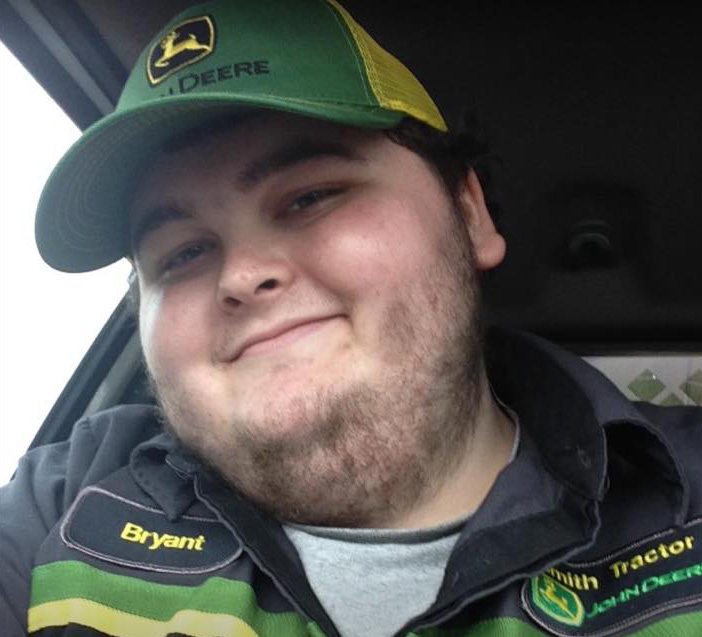
Bryant Thomas Cooper, 19, lost his battle with cancer on Friday.
“My precious son… left his cancer-filled body this morning to be made whole in the glory of God,” his mother, Janet Cooper, wrote on Facebook.
“Even in his last days, Bryant was the most caring, gentle giant I’ve ever seen. He loved everyone. Moments before Bryant left us, he squeezed my hand with such a strong grip until his last breath. I’ll never forget that precious moment with my baby boy.”
“Bryant fought the hardest of battles taking chemo that was made for adults more than 30 years ago,” Janet Cooper wrote. During her son’s battle with cancer, Janet Cooper became a proponent of childhood cancer awareness, urging other to “go gold” for the cause.
During those long hours as Bryant battled cancer, anger began to grow inside Janet. Not just the anger one might expect toward cancer, but an anger of what’s being done to cure childhood cancer.
On average, 43 teens are diagnosed with cancer each day. And before the day ends, a childhood cancer will claim seven lives.
“There are billions and billions of dollars spent on cancer research every year in this country. But only four percent is spent on find a cure for childhood cancers,” she said in 2015 interview.
Unlikely Friends
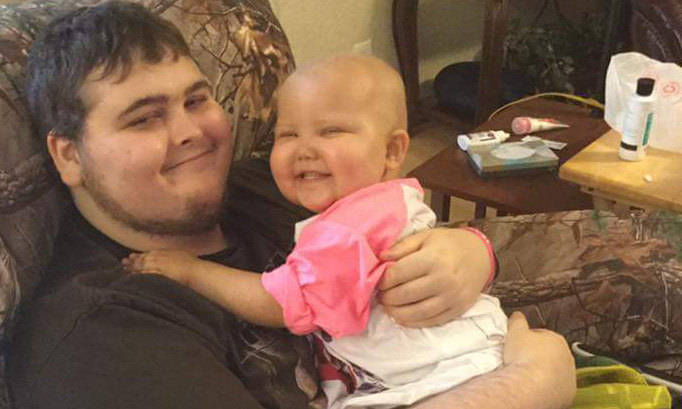 We introduced you to Bryant and his unlikely friend,2-year old Kena Spivey, in previous stories here on NorthEscambia.com.
In late October of 2014, Bryant was a happy, focused young man with a love for football. And John Deere…that love was strong enough that he had even landed a dream job of sorts with a local John Deere dealership. But pain in his back — he thought just a pulled muscle or maybe kidney stones — sent him to the emergency room. The preliminary diagnosis was not good…suspicious spots on his liver. More tests for a final diagnosis that Bryant and his mother, Janet Little Cooper, never expected on November 4, 2014.
Cancer. Not just cancer, but a Stage 4 rare neuroendocrine cancer, and it had spread with a vengeance to other parts of this body.
Kena was diagnosed with a Stage 3 tumor on her cervix and uterus on July 7, 2014.
Kena was in Sacred Heart Hospital for a chemo treatment, and Bryant was in for his first ever treatment when the two met on November 17. Her parents, Charles and Dawn Spivey, were walking her down the hallway trying to calm her when they met Janet.
Kena’s tears stopped when she saw Bryant lying in his hospital bed. The friendship continued to grow up until her passing in late September.
FHP: Buckle Up To Arrive Alive This Thanksgiving
November 26, 2016
The Florida Highway Patrol (FHP) is helping to ensure all motorists Arrive Alive this Thanksgiving holiday and is reminding motorists to buckle up before they hit the road. During the 2015 Thanksgiving holiday period, law enforcement agencies statewide worked 9,906 crashes. Tragically, 84 people lost their lives, and 17 of those individuals were not wearing seatbelts.
The public is encouraged to report impaired or aggressive drivers by dialing *FHP (*347). Also, remember to check traffic conditions before leaving for a trip and allow sufficient time to arrive at your destination safely.