

Cantonment Fire Claims Life Of Family Dog
December 1, 2017
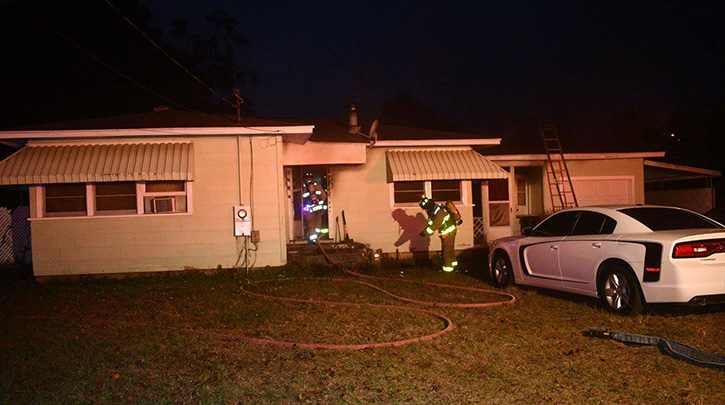
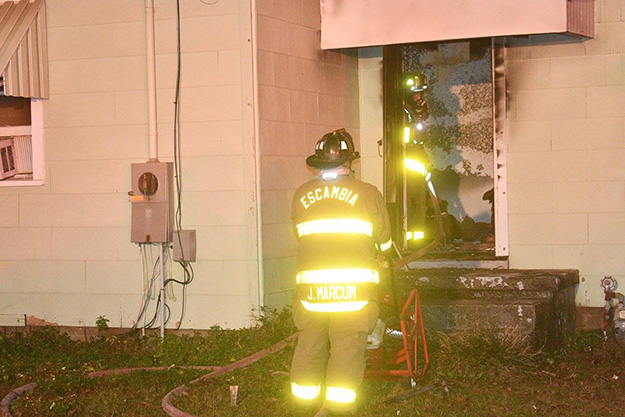
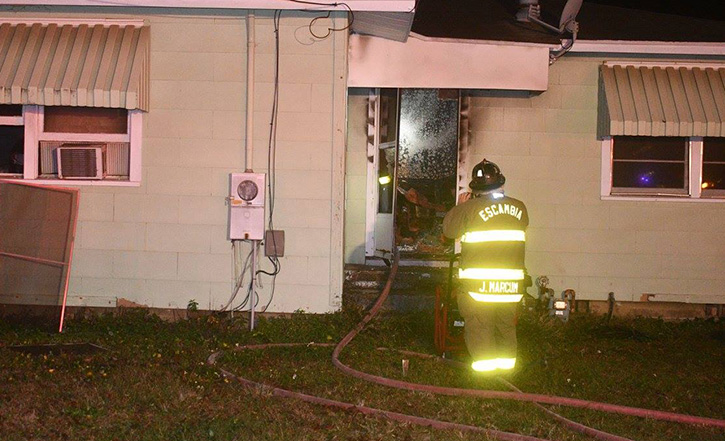
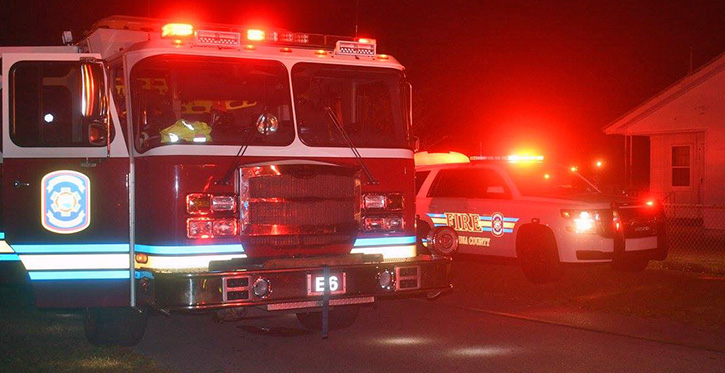
A Cantonment house fire early Thursday evening claimed the life of a family dog.
No one was at home when the blaze broke out in a home in the 400 block of Booth Avenue. Firefighters were able to quickly extinguish the blaze.
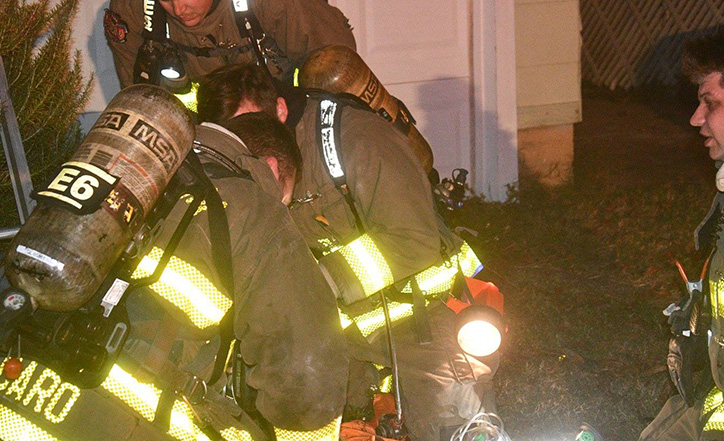
Firefighters worked unsuccessfully outside the home to revive the dog. There were no other injuries reported.
The exact cause of the fire is under investigation.
NorthEscambia.com photos by Kristi Barbour, click to enlarge.
Two Injured In Highway 29 Construction Zone Crash
December 1, 2017
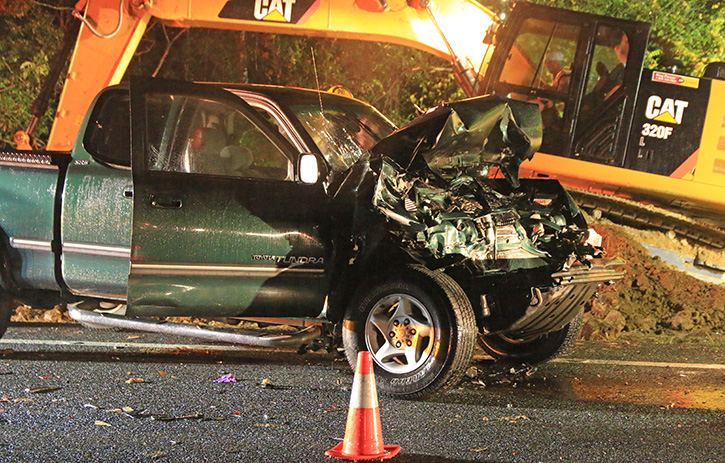
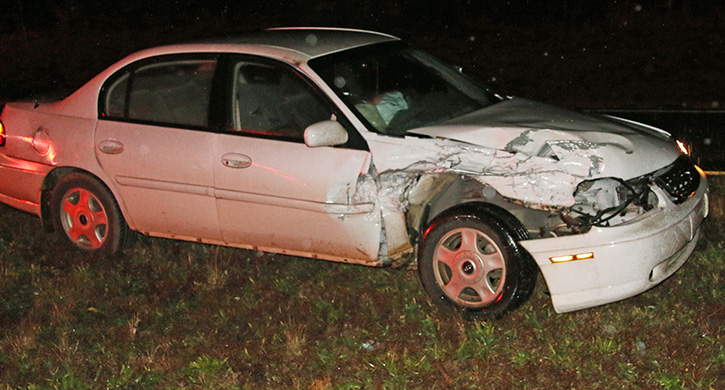
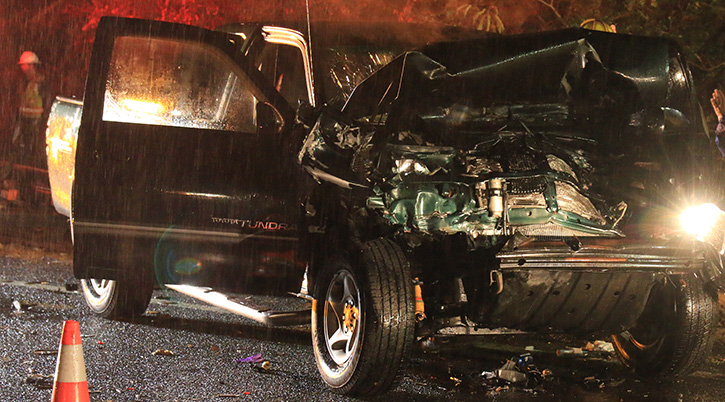
Two people were injured in a three vehicle wreck Thursday evening on Highway 29 in McDavid.
The crash just north of the McDavid Fire House occurred in a construction zone where a new gas pipeline is being installed next to the highway. The crash involved a pickup truck, a car and a trailer containing welding equipment. The exact sequence of events is under investigation by the Florida Highway Patrol.
Two people were transported by Escambia County EMS to an area hospital with injuries that were not considered life threatening.
NorthEscambia.com photos, click to enlarge.
Century Officially Lights Town Christmas Tree (With Photo Gallery)
December 1, 2017

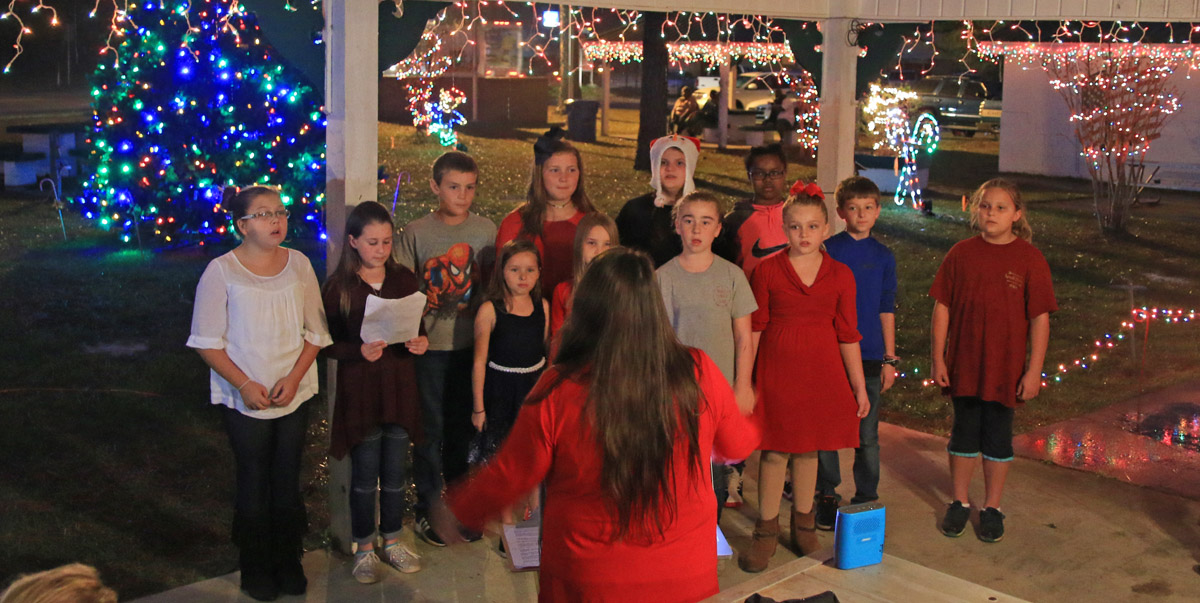
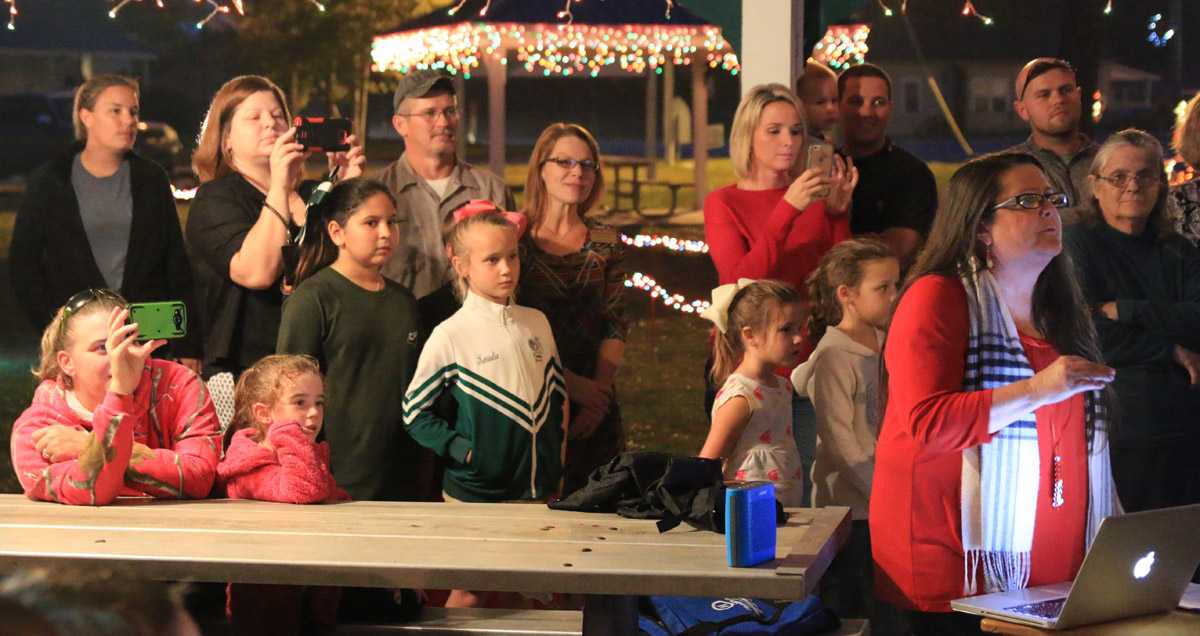
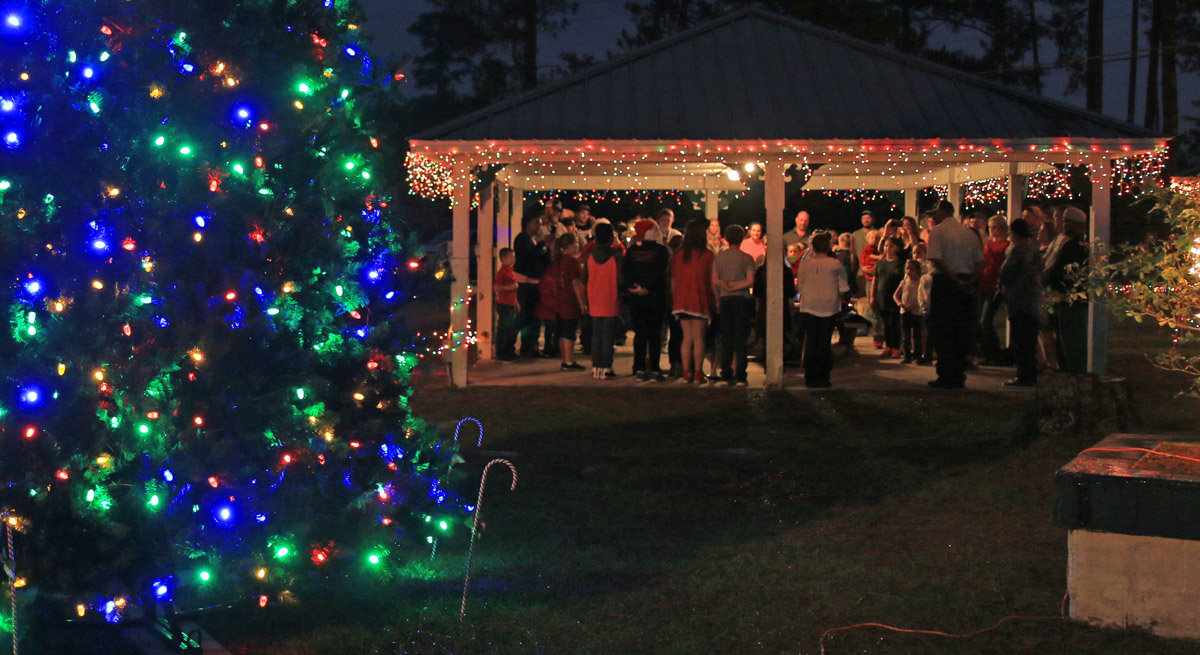
Rain could not dampen the Christmas spirit Thursday evening as the Town of Century held an official Christmas tree lighting ceremony at Nadine McCaw Park. The Byrneville Elementary School chorus led a small crowd in singing Christmas favorites under a covered pavilion. The lights are on nightly in the park, which is located on North Century Boulevard at Hecker Road in Century.
NorthEscambia.com photos, click to enlarge.
Northview Clubs Go Caroling (With Gallery)
December 1, 2017
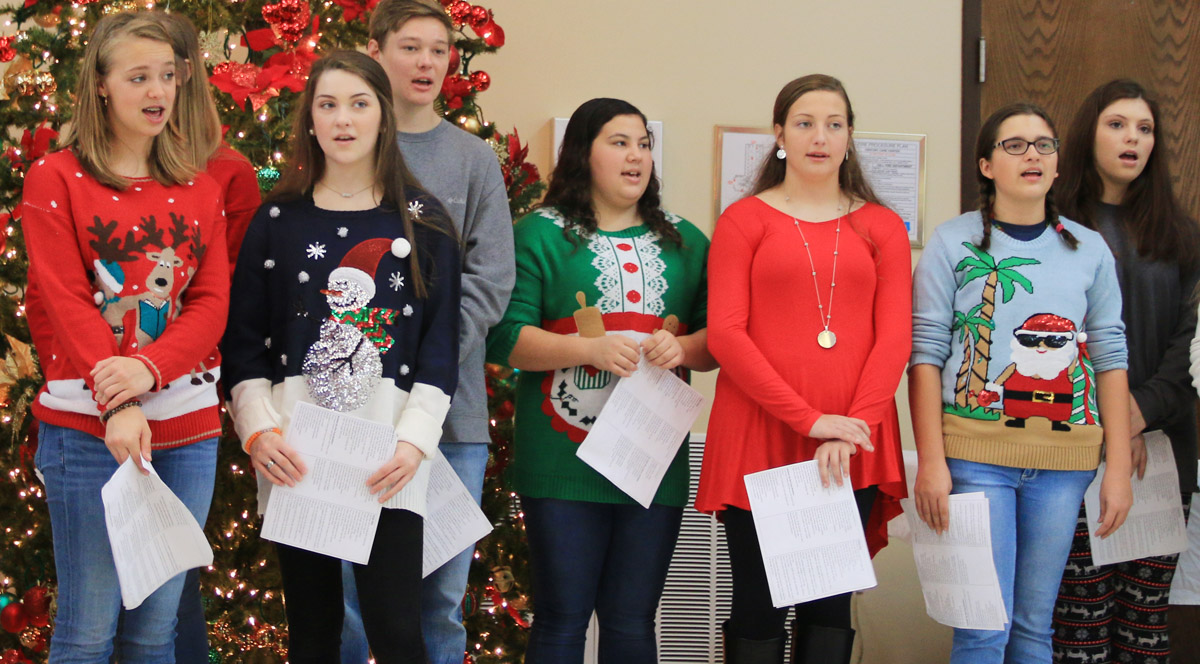
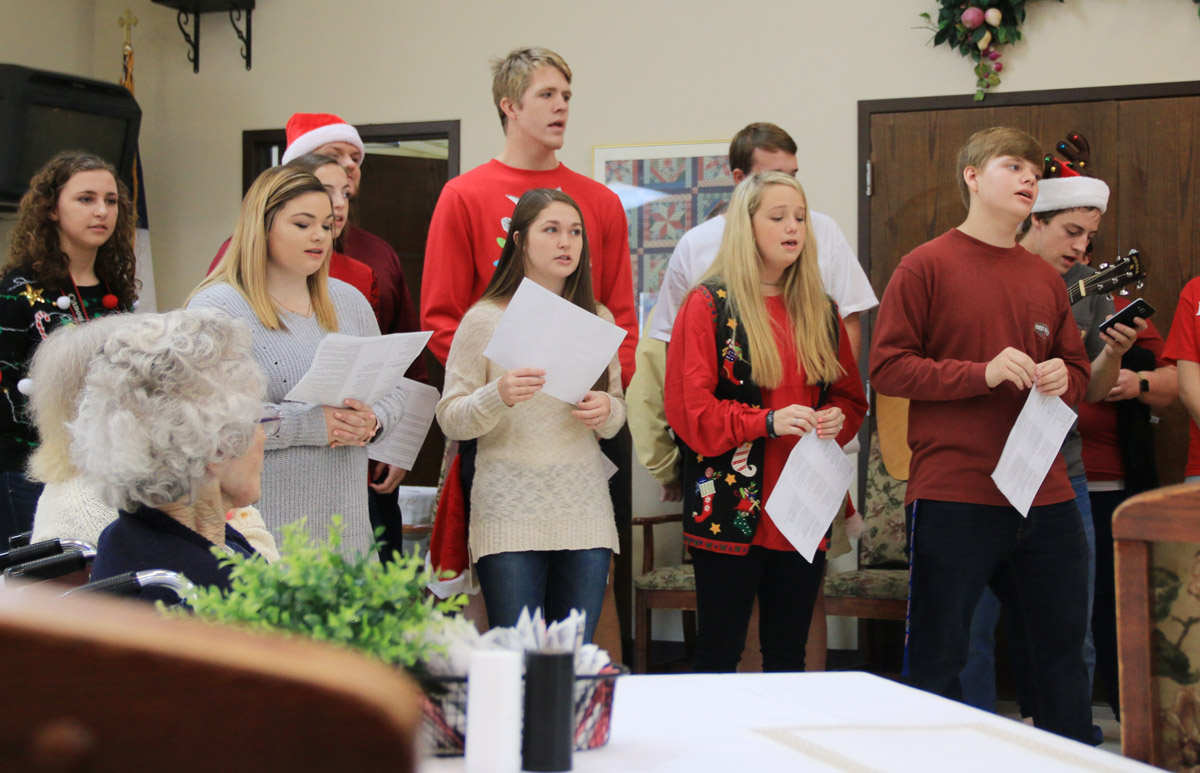
Members of three Northview High School clubs went Christmas caroling Thursday at Byrneville Elementary School, the Century Health and Rehabilitation Center and Bratt Elementary School.
The group included students from Northview’s Fellowship of Christian Athletes, BETA Club and Student Government Association. Pictured: The Northview Christmas carolers spread a little Christmas cheer for the residents at Century Health and Rebab Thursday morning.
NorthEscambia.com photos, click to enlarge.
New Chairman And Vice Chair For The Escambia County Commission
December 1, 2017
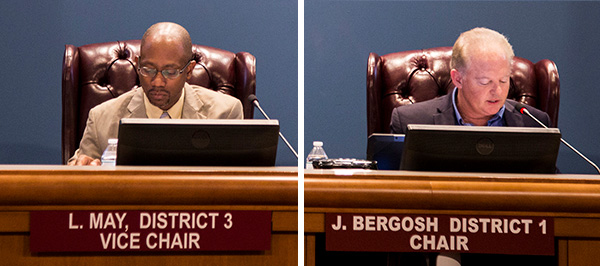
 At Thursday evening’s meeting of the Escambia County Commission, new commission chairman and vice chairman assumed their roles.
As part of the annual board reorganization where commissioners’ board and committee appointments are updated, District 1 Commissioner Jeff Bergosh was appointed to serve as chairman and District 3 Commissioner Lumon May was appointed to serve as vice chairman for the coming year.
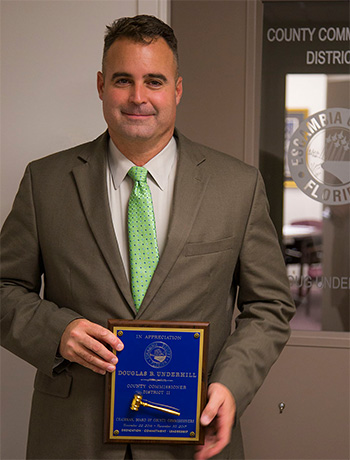
Also Thursday, District 2 Commissioner Doug Underhill was recognized for his year of leadership as chairman.
Pictured top: Escambia County Commissioners Luman May (left) Jeff Bergosh. Pictured inset: Commissioner Doug Underhill. Courtesy photo for NorthEscambia.com, click to enlarge.
Century Correctional Inmate Death Under Investigation
December 1, 2017

The Florida Department of Law Enforcement is investigating an inmate death at the Century Correctional Institution, but so far new details have been released.
“I can confirm there was a fatality at that facility and FDLE is the lead investigative agency. At this time this is all the information I can provide,” Michelle Glady, director of communications for the Florida Department of Corrections told NorthEscambia.com late Wednesday afternoon.
Escambia Fire Rescue and Escambia County EMS were dispatched to the prison about 5:15 p.m. Tuesday, but details on that call were not available.
Additional information will be posted as it is released.
NorthEscambia.com photos, click to enlarge.
ECMS Atmore Remains Undefeated With Win Over Ernest Ward
December 1, 2017

 The Escambia County Middle School Eagles of Atmore remained undefeated Thursday night with a win over Ernest Ward Middle School in Walnut Hill.
Boys
Escambia County (AL) 72, Ernest Ward 39
Girls
Escambia County 40, Ernest Ward 21
Ernest Ward Middle will travel to Pollard McCall on December 5 before ending their regular season at Perdido on December 7. Girls being play at 5:00 and boys at 6:00.
NorthEscambia.com photos, click to enlarge.

‘Keep The Wreath Green’ Fire Safety Campaign Begins
December 1, 2017
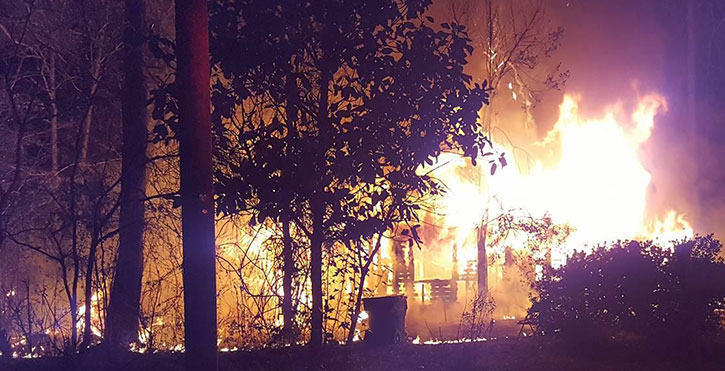
Escambia County Fire Rescue, in collaboration with the Pensacola Fire Department, has launched its annual “Keep the Wreath Green” fire safety campaign to run through December 31. The campaign is designed to promote fire safety during the month of December, with both departments hoping to reduce the number of fires during this time.
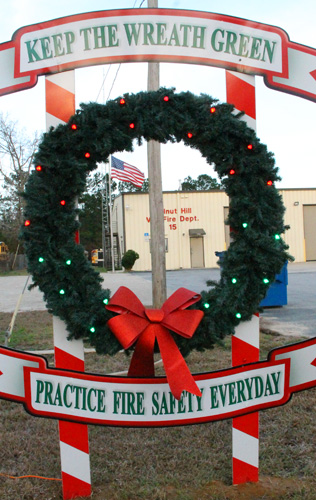 During the month-long campaign, five-foot wreaths will be on display at 18 county fire stations and five city fire stations, with wreaths also placed outside Escambia County’s Ernie Lee Magaha Government Building downtown, the Escambia County Public Safety Building, Pensacola City Hall and Cordova Mall near the food court entrance. Each time firefighters respond to a residential fire with damage, a green light bulb will be replaced with a red one to remind citizens of the dangers posed by fires in residential home.
In 2016, 12 bulbs were changed to red on county wreaths. Five of those fires were in the North Escambia area. Details and photos of each are below:
On December 26, 2016, fire destroyed a wood frame home on West Pond Street in Century.
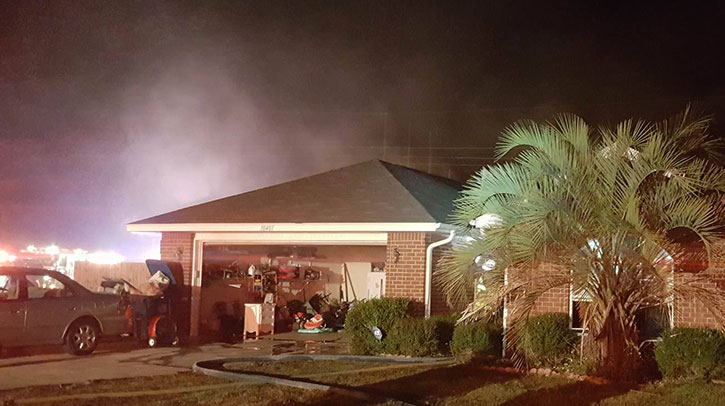
Five people — three adults and two children. were displaced by a fire December 22, 2016, on Rawlings Drive at Greenbriar Boulvard. A clothes dryer in the laundry room was confirmed as the source of the fire, with flames spreading to the kitchen and smoke damage throughout the home. Damage was estimated at $50,000.
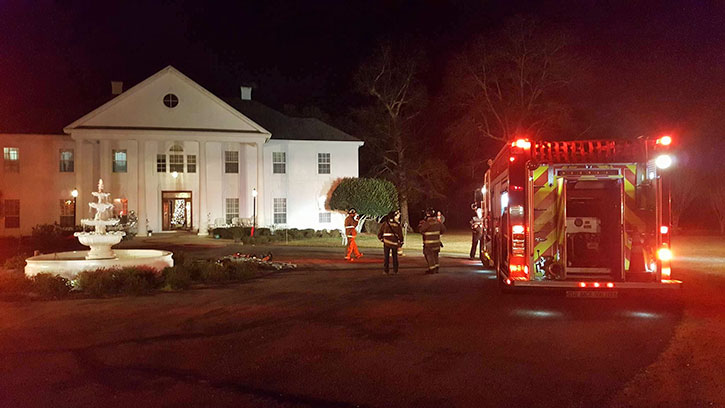
A fire on Luth Road in Molino on December 29, 2016, displaced a family. Crews arrived on scene to find an active fire in the attic, with light smoke showing from the 2 ½ story residential structure. Preliminary reports indicated the fire started from a fireplace chimney in the 5,500 square foot structure.
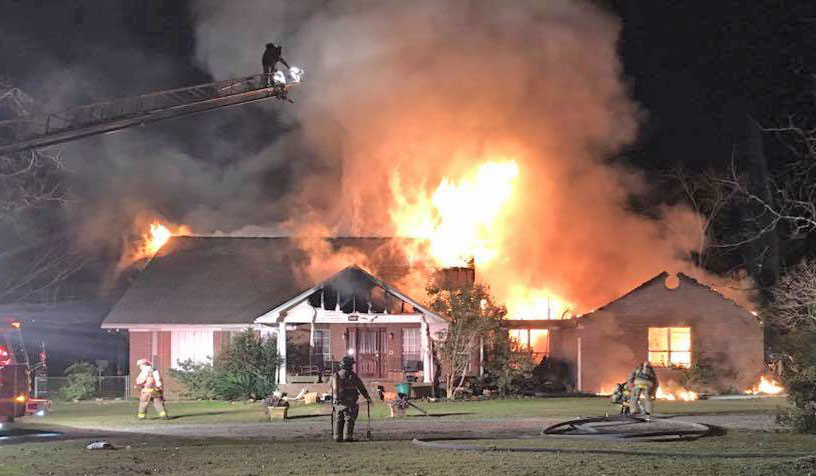
Fire destroyed a two story home in the 1200 block of West 9 ½ Mile Road on December 30, 2016. The fire was reported about 5:30 am. with heavy flames through the roof when firefighters arrived. Initial reports indicated the fire may have originated in the garage of the home. Two adults and two teenagers were displaced from the home.
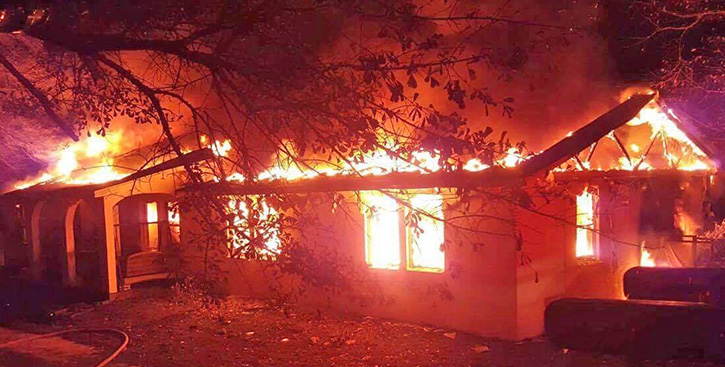
A December 11, 2016, fire in the 8900 block of Mobile Highway in Beulah left four people without a home. One firefighter was transported to Sacred Heart Hospital in stable condition for fatigue. T
NorthEscambia.com photos.
Florida Lawmakers Want To Make Soft Drinks Off Limits For Food Stamps
December 1, 2017

Two Republican state lawmakers this week filed proposals that call for barring the use of food stamps to buy soft drinks. Sen. Aaron Bean, R-Fernandina Beach, and Rep. Ralph Massullo, R-Lecanto, filed proposals (SM 1016 and HM 847) that would urge Congress to make soft drinks off limits in the aid program formally known as the Supplemental Nutrition Assistance Program, or SNAP.
The proposals, which will be considered during the 2018 legislative session, are non-binding “memorials” to Congress.
The proposals, in part, say soft drinks are “nutrient poor but rich in calories and can lead to nutritional deficiencies and health disorders including obesity, heart disease, high blood pressure, and diabetes.”
They said state and local governments have sought federal permission in the past to prevent SNAP benefits from being used to pay for soft drinks but have been rejected by the U.S. Department of Agriculture. As a result, the memorials would ask Congress to take action on the issue.
by The News Service of Flroida
Two Facing Multiple Charges After Davisville Traffic Stop
November 30, 2017
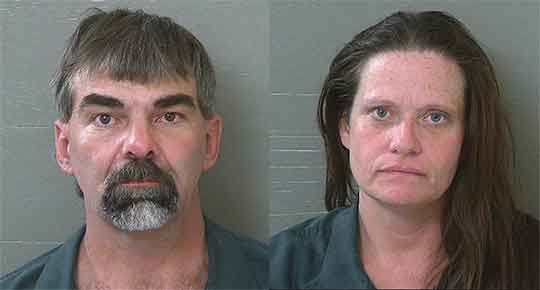
Two North Escambia residents are facing multiple charges after numerous drugs, items of drug paraphernalia, weapons and ammunition were found in a vehicle at a Davisville convenience store.
Chad Andrew Giddins, age 41 of McDavid, remained in the Escambia County Jail Thursday morning with bond set at $41,000, while 42-year old Tonya Ladora Foster of Cantonment was jailed with bond set at $20,000.
An Escambia County Sheriff’s deputy on patrol in the area of West Highway 4 and Sandy Hollow Road near Davisville reported recognizing Giddins as the driver of a pickup truck. Knowing that Giddin had an outstanding warrant, the deputy turned around and caught up with the pickup on Highway 97 at a gas station at the intersection of Highway 97 and Nokomis Road.
The deputy advised Giddins that he was under arrest and grabbed him by the large camouflage jacket he was wearing. Giddins refused to place his hands behind his back, according to an arrest report, even when the deputy placed his taser on his back. The taser was never deployed. With no backup in the immediate area, the deputy requested assistance in handcuffing Giddins from a local farmer that was at the store. The deputy located a cigarette box containing two plastic bags of marijuana in Giddins’ pocket.
Another deputy arrived on scene at took a female passenger in the pickup into custody. According to the arrest report, Foster was observed pushing a black bag under the pickup. The bag reportedly contained two bags containing marijuana and eight small bags of methamphetamine.
Inside the truck, deputies found multiple pills with no marking that will be submitted to the FDLE crime lab for analysis, a loaded .17 caliber rifles and scope with a chambered round ready to fire, a sunglasses case with a a crack pipe, over 130 rounds of .22 caliber ammo, two 20 gauge shotgun shells, four meth pipes, 30 rounds of .17 caliber ammunition, at least two small bags of crystal methamphetamine, digital scales, syringes, and other drug paraphernalia.
Giddins was charged with possession of a firearm by a convicted felon, possession of ammunition by a convicted felon, possession of methamphetamine with intent to distribute, possession of methamphetamine, possession of marijuana, possession of marijuana with intent to distribute, possession of drug paraphernalia, and knowingly driving with a suspended license.
Foster was charged with possession of marijuana, possession of methamphetamine with intent to distribute, possession of a control substance , possession of marijuana and possession of drug paraphernalia.
Giddins was also charged with fleeing and eluding pole with lights or siren activated, attaching a tag not assigned to the vehicle and driving with a suspended license for an earlier incident on November 2 in Walnut Hill. A deputy spotted Giddins in the Ernest Ward Middle school zone on Highway 97. The deputy followed his as he turned into a residence in the 700 block of North Highway 99. The deputy activated his lights and siren, but Giddins accelerated away,, around the residence and back onto North Highway 99, eluding the deputy.