
For The Children: Local Group Takes Mission Trip To Guatemala
November 13, 2011
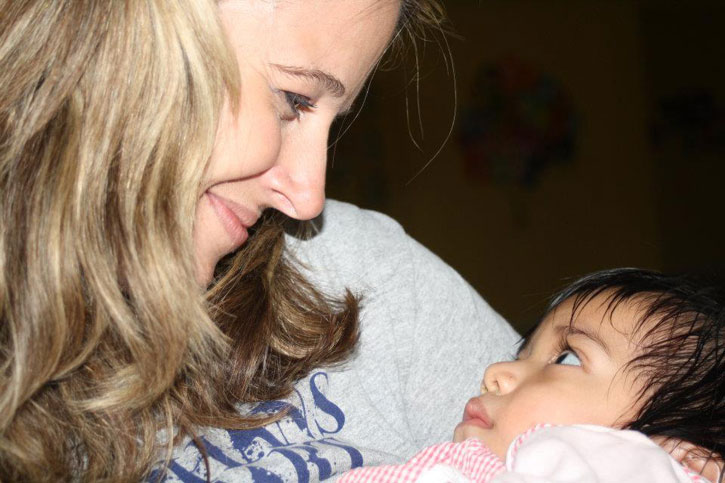
A group of North Escambia area residents from Highland Baptist Church in Molino recently returned from a mission trip to Malnutrition Center in San Juan, Guatemala.
For a photo gallery,click here.
In the story below, Sara Calhoun, wife of Highland Pastor Brian Calhoun, tell the story of the trip in her own words.
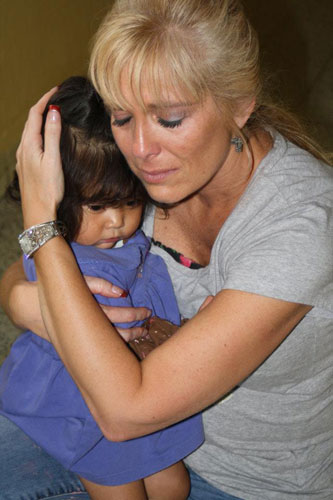 Last January, the Lord planted a seed in Kathaleen Holmes’ heart about leading a mission trip from Highland Baptist Church to the Malnutrition Center in San Juan, Guatemala with the Orphan’s Heart Ministries. Orphan’s Heart is an international childcare program that was established by the Florida Baptist Children’s Homes in 2008. Their work focuses on providing for the physical and spiritual needs of orphaned and disadvantaged children in the developing world. The core strategy of Orphan’s Heart focuses on sending short-term mission teams to what they consider to be priority locations. They primarily work alongside locals and help them improve the level of care for the children they serve. Orphan’s Heart works to improve the safety and security of the children and helps improve conditions to foster better health and sanitation.
The first time I saw the promotional video from the Florida Baptist Children’s Home about the ministry need at the Malnutrition Center in Guatelmala, I wept for the children and the horrible conditions in which they were living. Children are brought to the center extremely malnourished and close to death. Many are only able to be fed by a dropper when they first arrive. They long to be held, rocked, and loved. The need is great and the workers and resources are few. The image of the babies lying alone in their cribs for endless hours was haunting and I found myself thinking of nothing else. The second time I watched the video with our entire congregation, and I found myself weeping for an entirely different reason. I wept with tears of repentance as I felt incredibly ashamed of the indulgent lifestyle that we participate in here in America. Although I have always considered myself a thankful person, I suddenly realized that my level of thanks in no way met my level of blessings. I found myself drawn to Isaiah 6:8 “Then I heard the voice of the Lord saying, ‘Whom shall I send? And who will go for us?’ And I said, ‘Here am I. Send me!’ ”
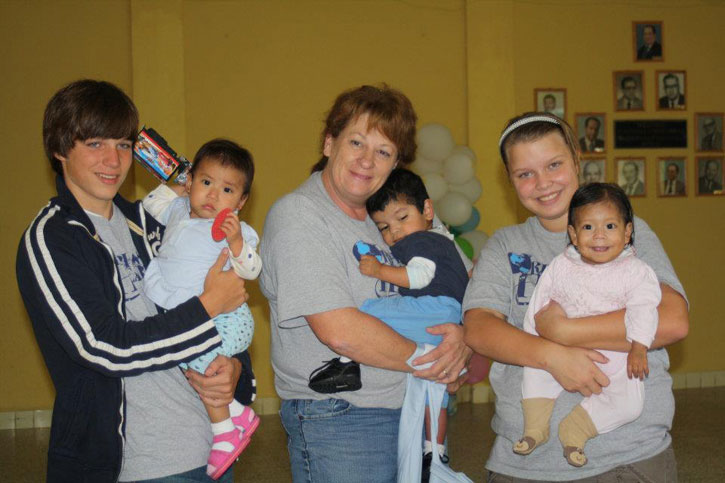 Many hearts were touched in the same way and answered the call after the promotional video and invitation for missions were shared. After months of prayer, planning, and fundraising, we sent a team of 28 to Guatemala on Friday, October 7th . Our mission while we were there was to spend a week assisting in the care of the 78 children at the Malnutrition Center, working on repairs at the Center, constructing a home for a family in need, and passing out Bibles. We thought we had adequately prepared ourselves physically, spiritually, and emotionally. Little did we know that no amount of preparation could have possibly prepared us for what we were about to experience. I thought I knew what we were walking into. I thought I understood the mission that was set before us. But I soon found out that I had grossly underestimated what the Lord had asked us to do. Although they say “a picture is worth a thousand words”, I have found that it still does not affect your heart in the same way as actually being there and allowing all of your God given SENSES to take in the situation. SMELLING the pungent aroma of the center when we first arrived made me shudder in fear that I may not be able to stomach the assignment that the Lord had given us. SEEING with my own eyes a room full of babies in cribs with their arms raised in hopes of being held brought tears to my eyes. HEARING the sounds of the children crying or banging their heads on the hard floor in an effort to draw someone’s attention was almost more than I could bear. FEELING your own arms wrapped around two or three children at a time and realizing the privilege it is to know that the Lord chose your arms to share His love brought me to my knees.
There are stories that need to be shared that range from heart breaking, to heart warming, to just flat humorous.
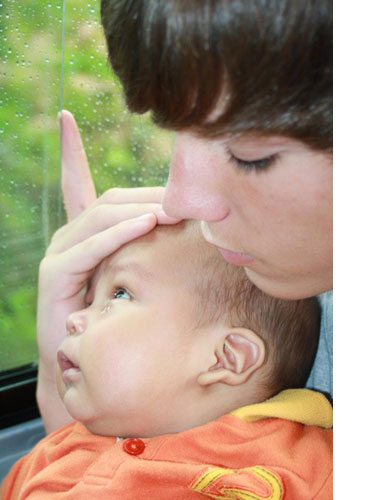
- We witnessed an 8 year old boy who only weighs a mere 27 lbs; both of my own biological children weighed more than that by their first birthday.
- There were two and three year old children who are so developmentally delayed due to their malnourishment that they are still unable to crawl or walk and are wearing clothes made for a 6 month old baby.
- Although the children are fed 5 times a day, we saw children with swollen, distended tummies hiding food in fear of being without once again.
- We watched a school age boy escape from the classroom area to the nursery where he picked up, embraced, and kissed a little girl. He hugged her over and over then placed her down on the mat and raked all the surrounding toys around her before being ‘caught’ by his teacher. We later found out that the little girl was his younger sister.
- We laughed as the Spanish speaking Guatemalan children repeated familiar English phrases like “That’s Okay!”, “Uh-Oh Spagettio!”, and “Be Careful!” that they have picked up from the missionary teams that have visited.
- I sat mesmerized as I watched the Guatemalan nannies who are only paid an annual salary of $3500 but are responsible for solely taking care of 12 or more children at a time. Some of these lovely ladies have worked at the Malnutrition Center for 28 years! I have never been so privileged to meet such hard working people with such a humble spirit.
- I witnessed babies who were able to feed themselves sharing their food with the babies who were waiting to be spoon fed by an adult. Babies in America do not do that. I believe these precious souls at the Malnutrition Center can remember and empathize with what it feels like to be hungry in a way that we simply cannot comprehend.
- We saw a three generation family ecstatic to receive the home we built in a matter of 8 hours with only 10 men. A home that is no bigger than the shed in my own backyard. A home that has no running water or electricity and only a cement floor, but it is considered a beautiful blessing and refuge for this family.
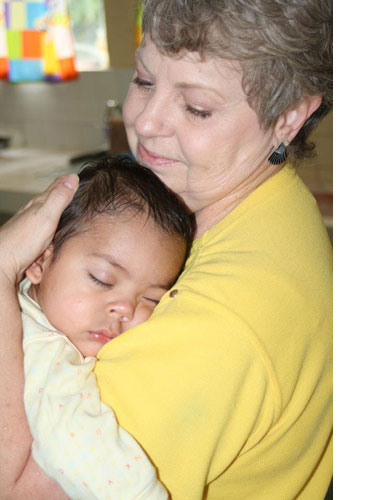
- I watched women walk for miles carrying their dirty laundry in a bundle on their heads to the community wash center which looked more like a large horse trough filled with murky water. I repented for the times I have grumbled in my own spirit because I simply couldn’t ‘keep up’ with the pile of laundry from my children’s various ball, dance, cheer, and karate activities.
- I prayed for our safety as we drove on the chaotic roads that have no traffic lights and no regard for the traffic signs. I laughed when our interpreter said she had heard rumors that in America we actually stop at intersections even if no one is coming! Who knew our driving practices seem as ridiculous to them as theirs does to us?
- While we were there, a little boy named Marvin died in the arms of his family as they were trying to make it to the center for formula to make him strong enough so he could have surgery for a cleft pallet.
- I marveled as I watched fellow church members that I have worshiped alongside for the past 4 years step far outside their comfort zone and serve in ways I never imagined.
- Although I initially cringed at some of the necessary practices of the center such as the fast and furious way that the babies are bathed or the endless hours that they are left in a lonely crib, I soon realized how much better this situation is than the home life that many children come from. Our men that worked on the construction team met a family who had to keep their baby in a bucket in order to prevent it from drowning in the water and mud that flood their home during the rainy season. This is a country where there are no government assisted programs that provide food when you are hungry or money when you are unemployed. It is simple: If you do not work, you do not eat. Crime is high because people who are starving, or watching their loved ones literally starve, will do whatever they have to do to get food. I found myself suddenly re-evaluating all my deep rooted opinions about government assistance and illegal immigration.
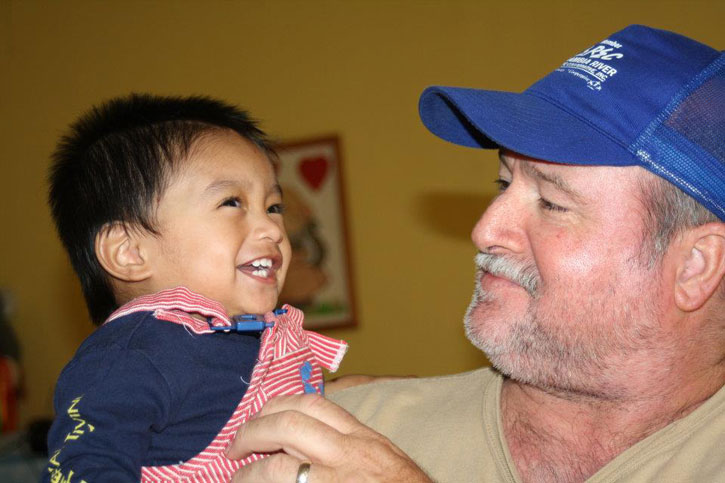 We all cried as we left the center on our final day. The sound of grown men singing old hymns to the babies that they rocked in their arms will always echo in my heart. The keen awareness settled in that we may never see these precious souls again on this side of heaven. I have to cling to the hope that they felt the love of Jesus through our arms. I have to believe that we gave them enough love to last a lifetime as we tried to squeeze as much joy and laughter into one short week. Although the beginning of my journey found my heart drawn to the call in Isaiah, I now find myself drawn to the biblical mandate in James 1:27 “Religion that God our Father accepts as pure and faultless is this: to look after orphans and widows in their distress and to keep oneself from being polluted by the world.”
That is my prayer: to accept the challenge to take care of the widows and orphans, to make an eternal difference in the life another, to love as He first loved us. There are many opportunities to serve. I ask that you consider partnering with this amazing ministry and joining the Lord in what He is doing in the lives of His people http://orphansheart.org/help We left as a team on a mission hoping to be a blessing to those in need. I think I can speak for everyone in our group when I say that I am certain that we RECEIVED a much greater blessing than we ever were able to GIVE!
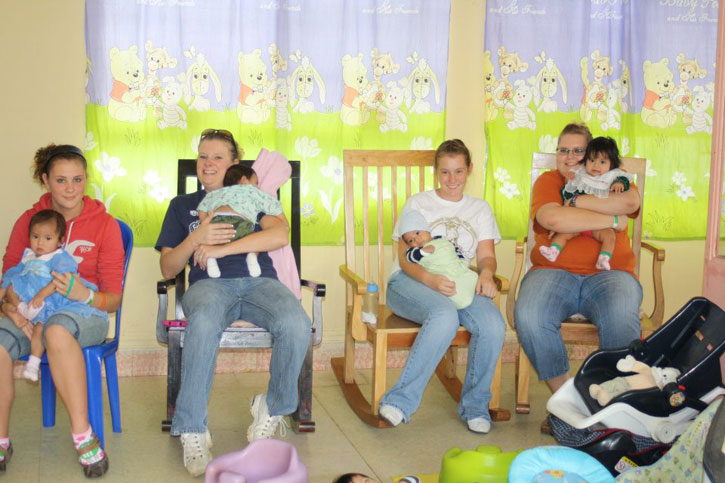
Pictured: Highland Baptist Church’s mission trip to Guatemala. Photos for NorthEscambia.com, click to enlarge.
In His Honor: Fallen Soldier’s Fiancé Joining The Marine Corps
November 12, 2011
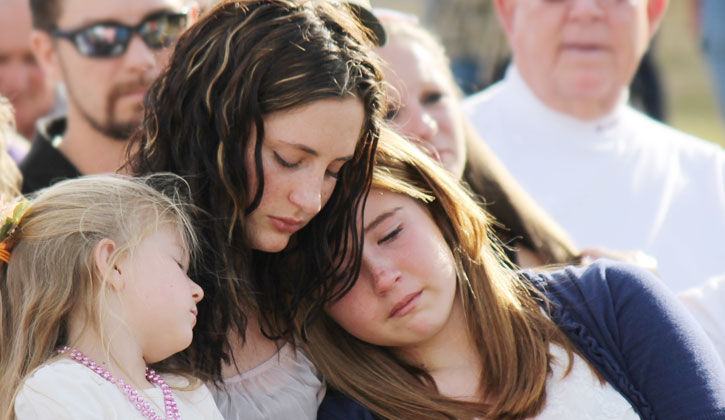
As Americans paused and honored those that served on Veterans Day, Madeline Cates was making plans to honor her late fiancé by following in his footsteps into the Marines.
Madeline was to marry LCpl Travis Nelson when he returned from service with the Marines in Afghanistan. She had picked out her dress just before he lost his life serving his country half a world away in August.
“It wasn’t suppose to happen,” Madeline Cates said about the death her soulmate. “He was the love of my life.”
 She was unimaginably heartbroken, her world torn apart. LCpl. Nelson had reported to duty but would never finish his tour. The marriage she had dreamed about would never happen.
Then Madeline began to think. What if she joined the Marines and finished LCpl Travis Nelson’s tour? She had never, ever in her life considered joining the military.
“Something just drove me to do it; it was driving me crazy. I could not just keep sitting here,” she said. “”I have to do something with my life, and I couldn’t think of a better way to honor him than to follow in his footsteps.”
Madeline Raye Cates, 21, took her oath to the United States Marines recently. She’s due to report to boot camp in Paris Island, South Carolina, on March 5 of next year.
She will be on two missions — the mission assigned by her Marine superiors, and a mission to complete the tour of LCpl. Travis Nelson.
“I want to finish what he started,” Madeline said.
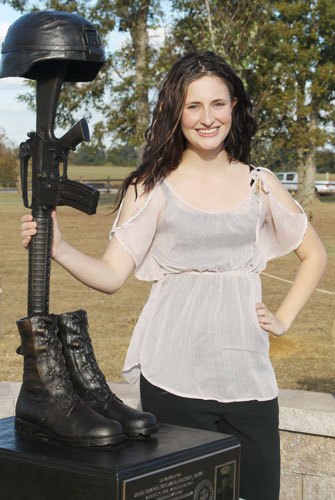
Pictured top: During a ceremony Tuesday to dedicate a Bratt park in the name of LCpl. Travis Nelson, his fiancé Madeline Cates (center) comforts his niece Amber Whitehurst (left) and sister Anna Nelson. Pictured inset: Madeline Cates with the memorial that honors her fiancé LCpl. Travis Nelson. NorthEscambia.com photos, click to enlarge.
Photos: Molino Park, Tate Join In Bookstore Veterans Program
November 12, 2011
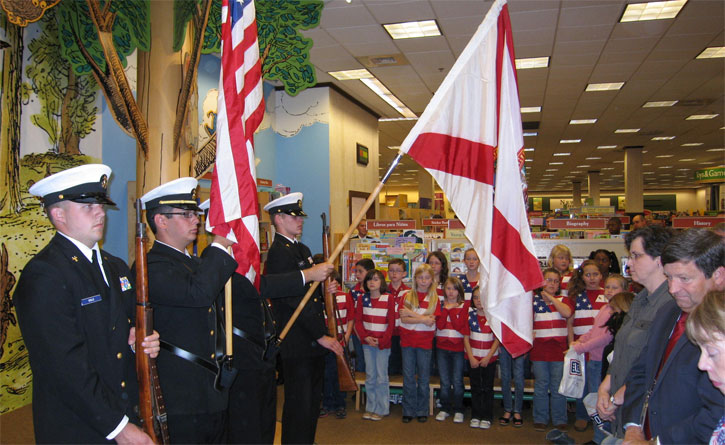
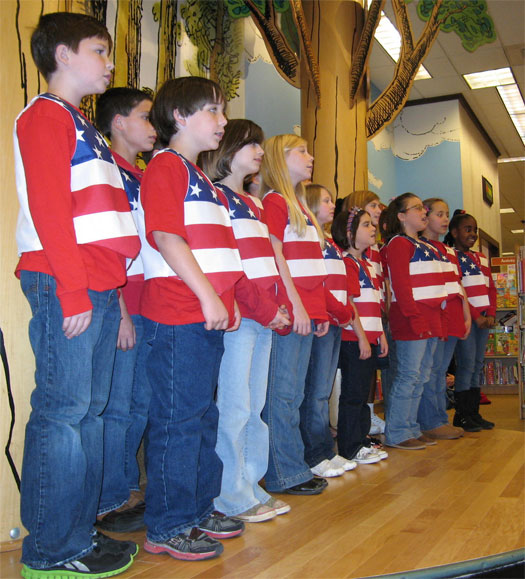
Reading is Fundamental held its third annual Veterans Day celebration Friday at Barnes and Noble Booksellers in Pensacola.
The day’s events began with a special children’s story time followed by a recognition ceremony with guest speakers Escambia County School Superintendent Malcolm Thomas; Lt. Col. Julie Eldred, who is retired from the Army Nurse Corps; and Phyllis Pia of the Pensacola USO.
The program also included a performance of “Taps” by members of the Tate High School band, a color guard display by students from the Washington High School NJROTC and patriotic songs from Molino Park Elementary students.
For a photo gallery from the event, click here.
Pictured: Molino Park Elementary School students perform Friday during a Veterans Day celebration at Barnes and Noble in Pensacola. Submitted photos for NorthEscambia.com, click to enlarge.
Photo Gallery: Northview Band And Dance Team; West Florida Band
November 12, 2011
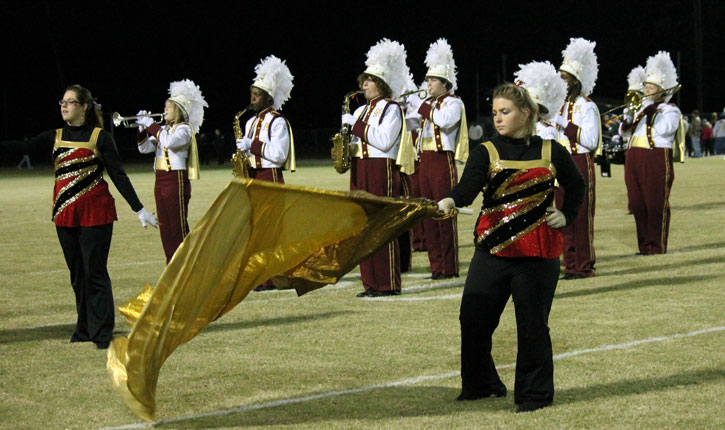
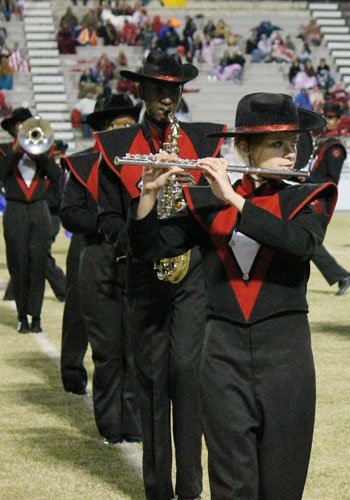
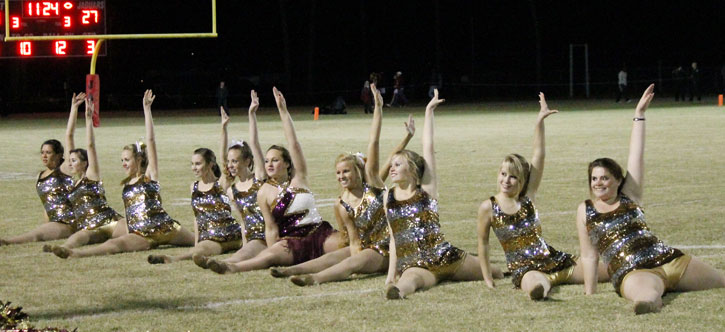
For a photo gallery of the Northview and West Florida High School bands from Friday night, along with the Northview dance team, click here.
Pictured top: The Northview High School band. Pictured inset: The West Florida High School band. Pictured below: The Northview dance team. NorthEscambia.com photos, click to enlarge.
Perdido School Honors Veterans
November 12, 2011
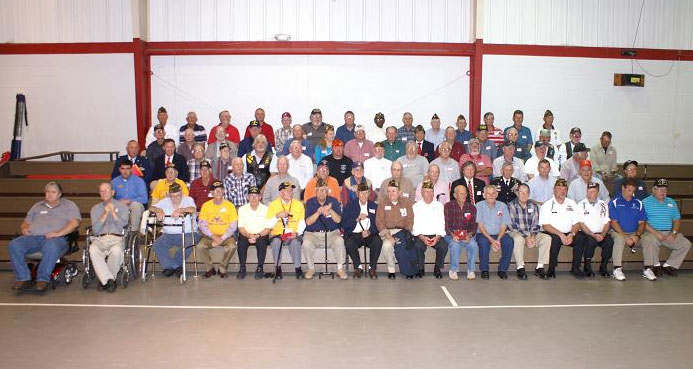
Over 100 veterans and family members attended the annual Salute to Veterans at Perdido Elementary/Middle School.
Submitted by Perdido Elementary/Middle School
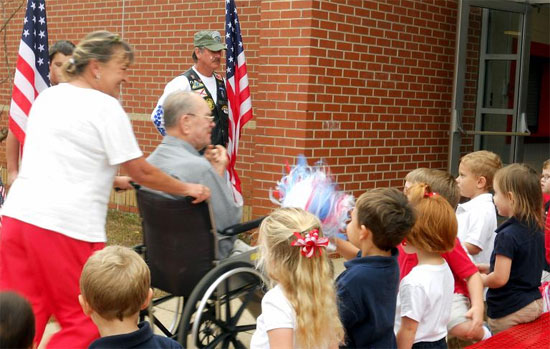
The annual event began with veterans and their guests being greeted at their cars and assisted by the members of Perdido’s football team. Once they reached the front of the gym, Pre-K and Kindergarten students welcomed them with cheers, flags, pom-poms and pin-wheels. Members of Alabama’s Patriot Guard stood at attention as all of the guests entered.
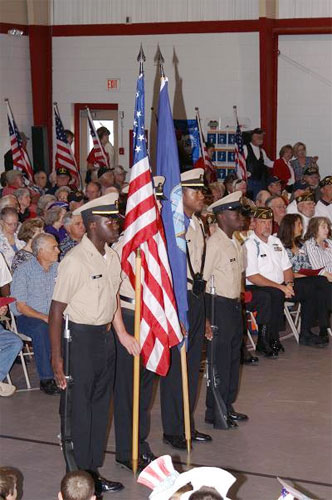 Inside, the Escambia County High School NJROTC posted the colors. The Pledge of Allegiance was led by Perdido Cub Scouts; Mason Smith, JT Clay and Christopher Johnson. This was followed by the playing of the “Star Spangled Banner by the Perdido Band, under the direction of Ms. Melanie Brannon. The band also performed “God Bless America” and “America the Beautiful”. Special guests; Alabama Representatives, Alan Baker and Harry Shiver, Dr. Barry Booth – South Alabama Honor Flight Director, members of the Atmore VFW, and American Legion, members of the Alabama Patriot Guard, and Major Arthur Byrne, representing the Baldwin County Sheriffs Department and were recognized by Principal, Craig Smith, The Perdido Chorus, under the direction of Mrs. Dell Edwards sang, “Blue, Red and White,” and “Alabama”.
Perdido Middle School students have participated in the annual Patriots Pen Essay Contest for the past six years, and the top three students shared theirs. Those students were: Evan Williams, Ashley Presley and Tori Clark. Their essays have been submitted to the Atmore VFA, where they will compete against other middle school students throughout the area.
Guest speaker, retired Major Gaston Jones, challenged and inspired students, teachers and Veterans alike, as he shared of his experiences from: growing up in a military family, to playing football at Marion Military Institute. He then pursued a full-time military career until his retirement as a Chaplin in the United States Air Force. He is currently the Commander of the AFJROTC at Baldwin County School.
A special presentation was made to the family of Lance Cpl Bruce Ferrell, Jr. USMC. Representative Baker spoke of the dedication and sacrifice made by the former Perdido student, who made the ultimate sacrifice for the United States, on August 10, 2009, with his life. He then presented the family with the Alabama State Flag and the United States Flag which was flown over the Capital in memory of Lance Cpl Ferrell.
Closing remarks were given by Assistant Principal Ms. Karen Dyess and were followed by the playing of “Taps” by Perdido students Corbin Hill and Wesley Rabren.
Everyone then enjoyed a reception held in honor of those men and women who faithfully served the United States, our veterans.
Submitted photos for NorthEscambia.com, click to enlarge.
Photos: Northview Honors Veterans
November 11, 2011
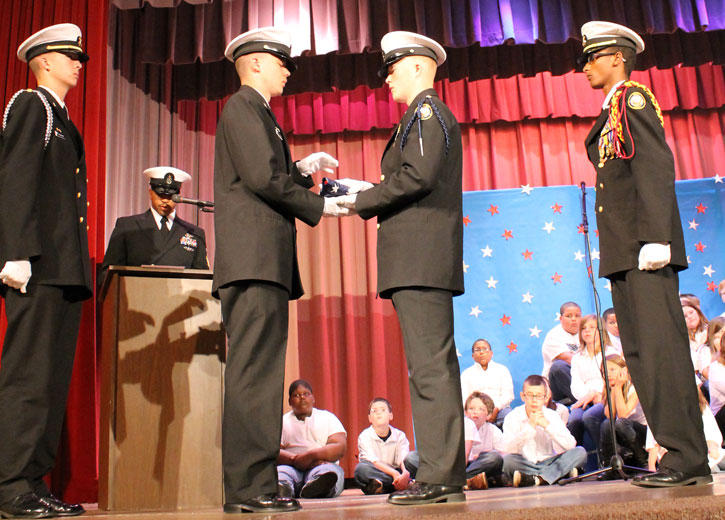
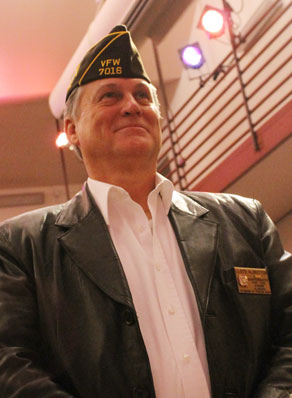 Northview High School held their annual Veterans Day Program Thursday morning.
“Life, liberty and the pursuit of happiness,” are due to veterans, guest speaker Capt. Frank Smith, USN (Ret.) told the students. “That’s the freedom, the one precious asset that we have.”
The Byrneville Elementary and Northview High School choirs and the Northview NJROTC also took part in the program.
For a NorthEscambia.com photo gallery from the event, click here.
Pictured top: A flag ceremony during the annual Veterans Day Program Thursday morning at Northview High School. Pictured inset: Lloyd Albritton was one of many veterans honored during the program. Pictured below: A combined Byrneville Elementury and Northview High chorus performance. NorthEscambia.com photos, click to enlarge.
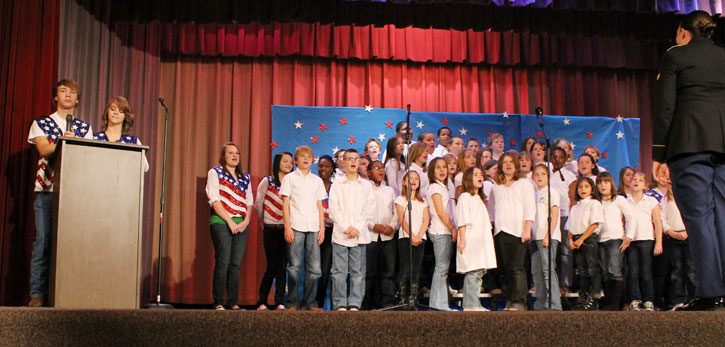
Photos: Camp Fire USA Kids Join Century Care In Veterans Day Program
November 11, 2011


Covenant Hospice held a special Veterans Recognition Ceremony Thursday morning at Century Care Center. Veterans were honored for their service and presented with a pin and certificate .
Children from the Camp Fire USA Century Youth Learning Center also took part in the ceremony to recognize veterans. The children made a large “Happy Veterans Day” banner and individual cards for the veterans.
Pictured above and below: A special Veterans Recognition Ceremony Thursday morning at Century Care Center with children from the Camp Fire USA Century Youth Learning Center. Submitted photos by Pam Townson for NorthEscambia.com, click to enlarge.

Photos: Bratt Elementary Holds Fall Festival
November 11, 2011
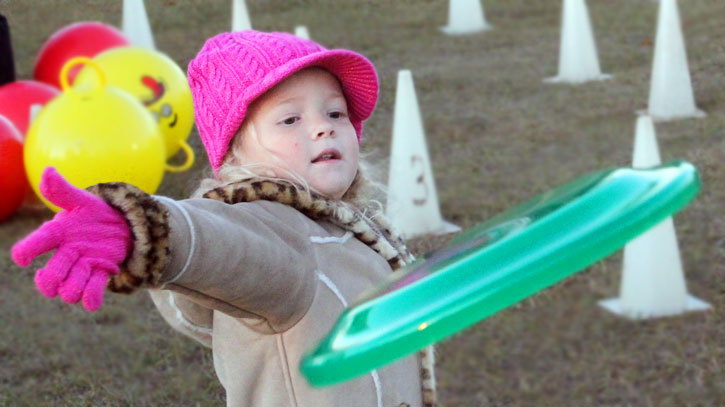
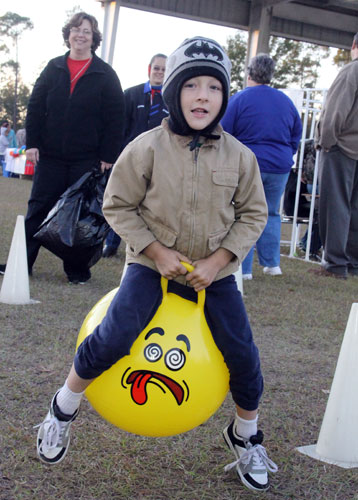
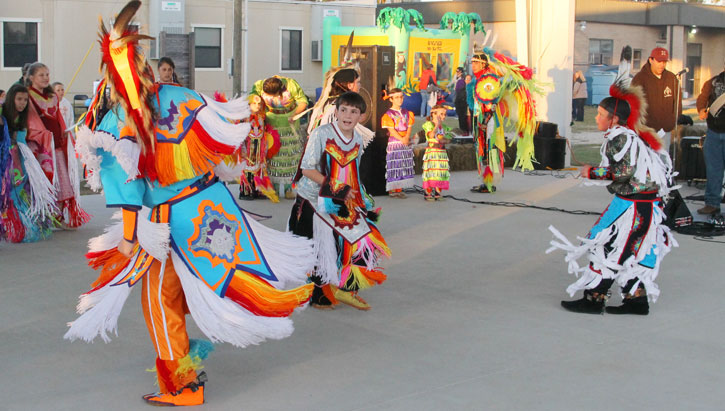
The annual Fall Festival was held Thursday afternoon at Bratt Elementary School, featuring games, food and fun for the children.
For a photo gallery, click here.
Picture above: Children take part in games during the annual Fall Festival at Bratt Elementary School Thursday afternoon. Pictured below: Poarch Creek Indian dancers perform. NorthEscambia.com photos, click to enlarge.
Inventor Shipping Bracelets To Elementary Students To Replace Racy Image Prizes
November 10, 2011
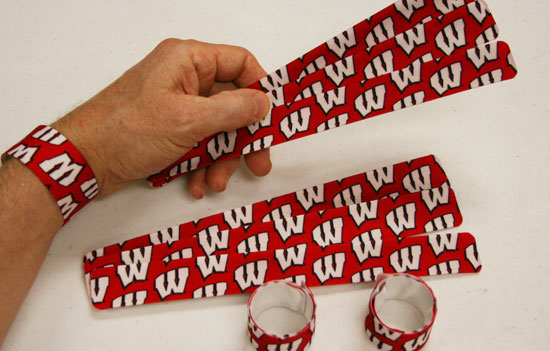
Stuart Anders, the inventor of the “Slap Wraps” bracelet, has shipped more than 200 of his original bracelets to Jay Elementary School to replace the unexpected tasteless version students received recently as a prize in a school fund raising drive.
When students received the slap bracelets last month, some discovered that racy images (pictured below) were hidden beneath the fabric. The bracelets, which were not produced or licensed by Anders or his company, were made out of recycled tape measure materials, and at least four of them depicted women in various poses and stages of dress.
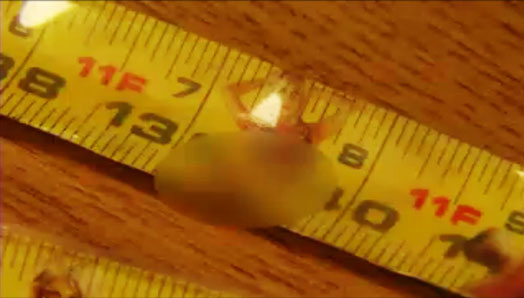
Anders heard about the situation in Jay when the story hit NorthEscambia.com and other media last month and immediately thought to send replacements to the school of his original products.
”As the original inventor of the Slap Wraps toy and as a former school teacher, I felt compelled to step in and make right the situation,” Anders said.
Anders was able to get his message to Jay Elementary Principal Danny Carnley who was thrilled by the offer. “I never expected a call like this from the inventor of the toys,” said Carnley. “It’s so nice that he wants to do this for our students.”
“I’m thrilled they are still popular, but very disappointed that the kids at Jay Elementary received such a poor example of this toy. It’s just one of the many knock-off products that are available for sale.” Anders said he has had issues related to companies producing low quality knock-offs of his product since they originated. “It’s a shame when that happens, which is why I want to send the original Slap Wraps to these students to give them the reward they earned – in a form they can wear proudly.”
About 200 hundred of Anders’ bracelets are expected to arrive today at Jay Elementary for distribution to the students.
 With each bracelet, Anders is enclosing a note to the parents and students explaining how he created the product and encouraging students to find their own passion when it comes to the work they will do.
“I’ve been so lucky,” he said. “I’ve been able to make a great life doing work I thoroughly enjoy. I hadn’t planned on being an inventor. It just happened when I followed my instincts and my heart. I wish the same for all of these students.”
The original Slap Wraps are produced about 500 miles from Jay in Titusville, Florida. The only bracelet currently in production at the present time is a NCAA licensed Bucky Badger Slap Wraps.
“I’m happy to send a little piece of Wisconsin to the students in Florida,” said Anders, who currently lives in Sun Prairie, Wisconsin. “They are made in Florida and represent Wisconsin – it’s a cool connection.”
Anders, who received his education degree im 1983, said he is particularly pleased to do something positive for students because his original plan had been to be a teacher.
“I always like doing something special for schools and students,” said Anders. “Sharing my story with students and inspiring them to follow their dreams is passion of mine and this is a perfect way to do that.”
Pictured top: The inventor of the “Slap Wraps” bracelet is sending about 200 of these bracelets to Jay Elementary School. Pictured inset: These bracelets with racy images were unknowingly distributed to Jay Elementary students last month. The product inventor called them unauthorized “knock-offs” of his original product. NorthEscambia.com and courtesy images, click to enlarge.
Ernest Ward Middle Thanks Veterans, Honors Memory Of LCpl. Travis Nelson
November 10, 2011
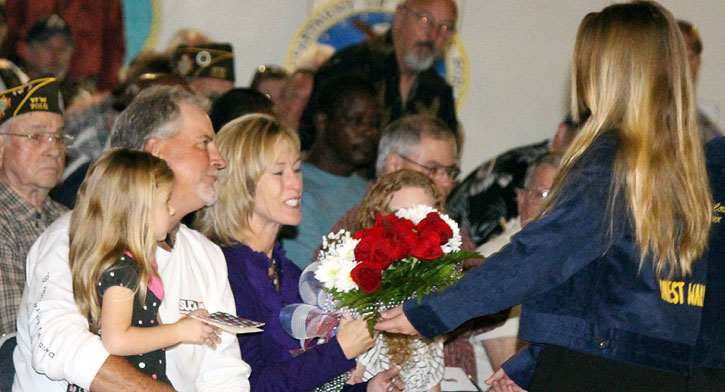
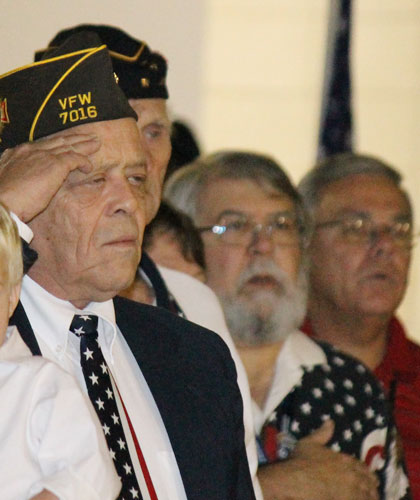
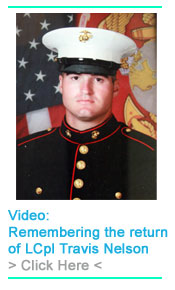
Ernest Ward Middle School paused to honor veterans from across the area Wednesday in a very big way, while remembering LCpl. Travis Nelson who was killed in action in August in Afghanistan. Nelson attended middle school at Ernest Ward.
The school honored Nelson with a special video and presented flowers to his parents, Scott and Beckie Nelson, who are both veterans.
It was not the first time Ernest Ward students honored Nelson’s memory. When his remains were transported in a motorcade from Pensacola NAS to Atmore, hundreds of Ernest Ward students dressed in red, white and blue lined Highway 97 and waved American flags. As Nelson’s remains passed his middle school alma mater, the students stood in total silence, hands over their hearts.
“I applaud you Ernest Ward,” guest speaker Malcolm Thomas, Escambia County School superintendent said, ” for what you did that day, the most proud moment I’ve had since I’ve been superintendent.
 “As long as there are young people that understand what you understand,” Thomas told the EWMS student body, “I believe that the future and hope of our country is great. You paid the best tribute you could pay that day, by pausing and sacrificing for a fallen hero — someone that was once one of your own.
“He knew that freedom would not be free; he would stand in the gap and fight the fight so we could grow up and enjoy all the freedoms we enjoy in this country.”
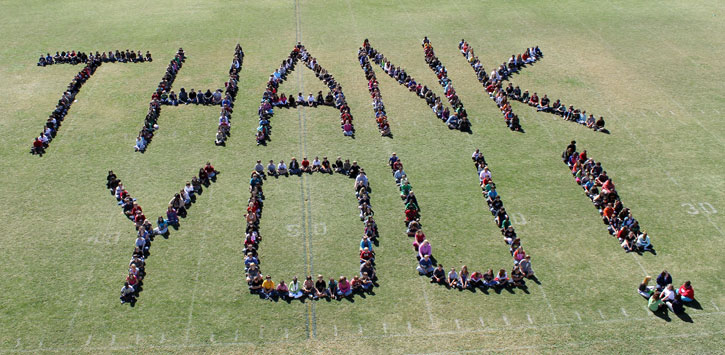
The students also took part in a unique “Thank You” video — presenting the words “Thank You” spelled out in various ways across the campus. The video ended with hundreds of Ernest Ward students spelling “Thank You!” on the school’s football field.
For a photo gallery from the event, click here.
For the LCpl. Travis Nelson video, click here.
For a portion of Malcolm Thomas’s address, click here.
Pictured top: Flowers are presented to Scott and Beckie Nelson, parents of fallen Marine LCpl. Travis Nelson, during a Veterans Day program Wednesday morning at Ernest Ward Middle School. Pictured inset: Veteran Mike Hanks salutes the American flag during the program. Pictured below: Hundreds of Ernest Ward students spell out a “Thank You!” to veterans on the school’s football field. NorthEscambia.com photos, click to enlarge.