
Pretty Paper: Family Displays Paper Nativity Set For Over 40 Years
December 25, 2011
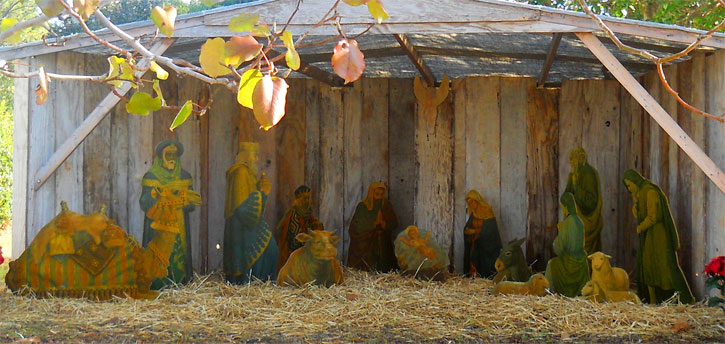
 For over 40 years, the Cowen family has displayed his $2 paper nativity set on his lawn each Christmas.
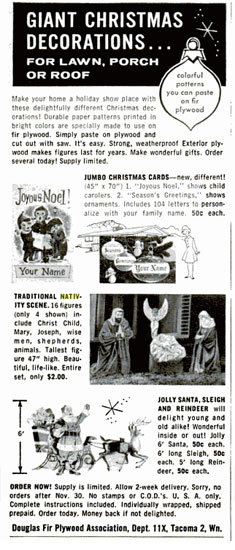
Hugh Cowen’s grandfather purchased the do-it-yourself kit — a printed paper nativity designed to be glued to plywood and then varnished. It was sold for just $2 in the late 1950’s by The Douglas Fir Plywood Association of Tacoma, WA.
“Durable paper patterns printed in bright colors are specially made to use on fir plywood,” is how an ad in a 1959 Popular Science magazine describes the set. “Simply paste on plywood and cut out with saw…Exterior plywood makes figures last for years.”
“My dad says it is his last year putting it up,” Susan Cowen Langston said of her 78-year old father. “He is passing the baton to me. I help him every year and have learned just how he likes it done.”
The set is displayed at corner of Ninth Avenue and Keating Road, just north of Creighton Road.
Pictured top: A paper nativity scene that has been displayed for over 40 years. Pictured inset: A 1959 Popular Science advertisement offering the set for sale. Courtesy photos for NorthEscambia.com, click to enlarge.
Photo Gallery: FBC Bratt Presents “Search For The King”
December 25, 2011
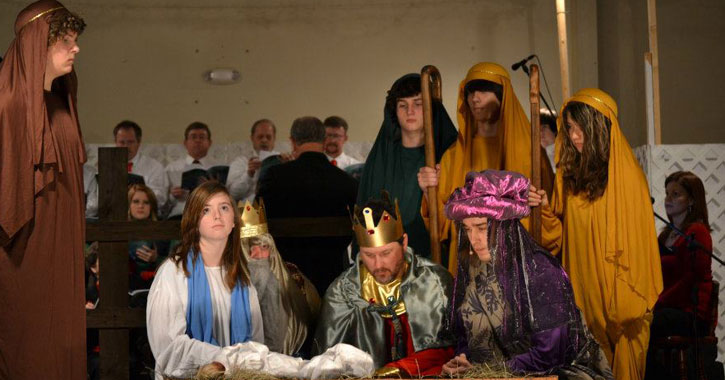
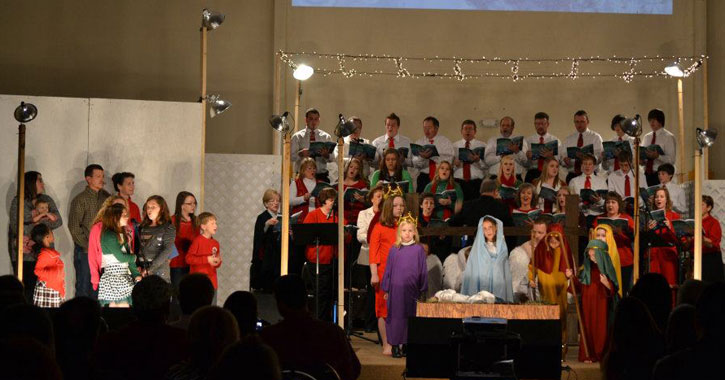
The First Baptist Church of Bratt recently presented the cantata “Search for the King”.
For a photo gallery, click here.
Submitted photos by Marcella Wilson, click to enlarge.
Northview Students Provide Christmas Food For Needy Families
December 25, 2011
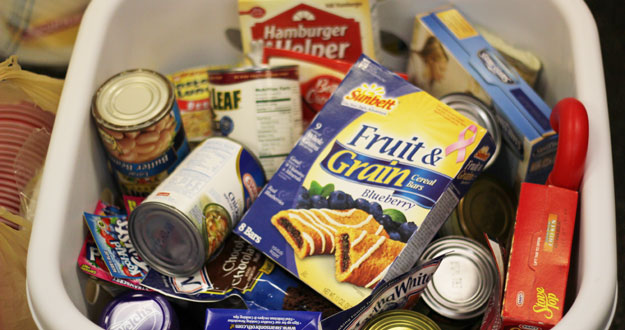
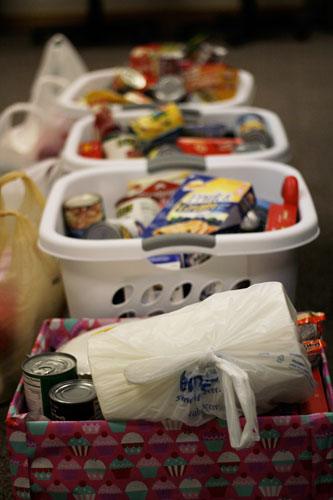 Northview High School students collected over 500 canned and nonperishable food items during the last week of classes before Christmas break.
The items were distributed to needy families in the Northview community in Christmas food baskets. The event was sponsored by guidance counselors Heather Crumm and Kimblery Corcoran.
Pictured: Some of the more than 500 food items donated by Northview High Students. Submitted photo for NorthEscambia.com, click to enlarge.
Have A Holly Jolly – Century Care Residents Celebrate Christmas
December 25, 2011
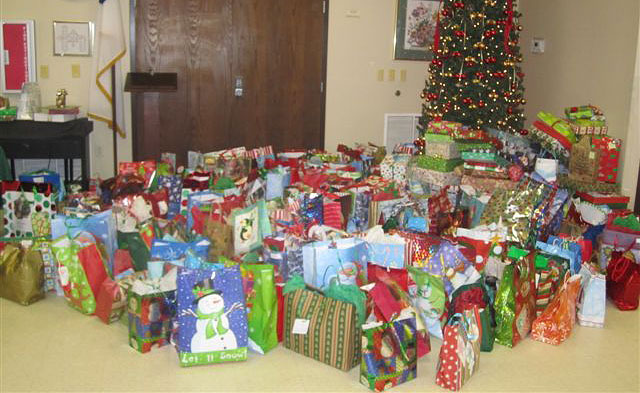
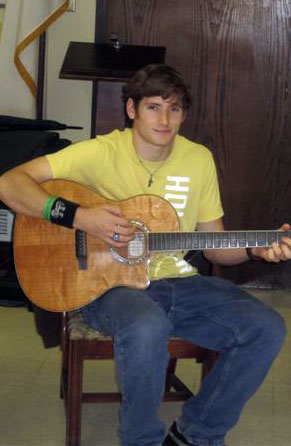 The Christmas season has been a busy and exiting time at the Century Care Center.
At a recent event, Sawyer Hudson of Jay High School, and Bobby Holland and Keith Faulk performed prior to a residents’ Christmas party.
“We all send out a heart-felt thank you for all who contributed time, money and gifts,” said Century Care Center Activities Director Mae Hildreth. “This is a wonderful and generous community. Thank you to all and Merry Christmas from the Century Care Center staff, the residents and their families.”
Pictured top: Gifts galore, many donated by the community, at Century Care Center’s annual Christmas party for residents. Pictured inset: Sawyer Hudson of Jay High School performs. Pictured below: The CCC resident Christmas party. Submitted photos for NorthEscambia.com, click to enlarge.

Christmas Recipes: Rice Krispie Treats, Oatmeal Cookies, Hot Chocolate
December 25, 2011
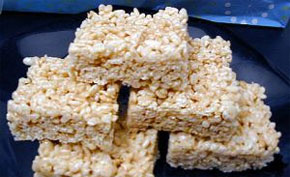 We are continuing our Christmas recipe series today with some family time favorites.
Today’s recipes include Traditional Oatmeal Cookies, Crockpot Candy and Rice Krispie Treats — perfect recipes for the family to make together. And what would Christmas be without Hot Chocolate? Our quick and easy recipe can easily be increased to make enough for everyone, plus it’s easy to include some extra cocoa powder for a deeper, darker treat.
To submit your recipes to share with our readers, email them to news@northescambia.com.
Crock Pot Candy
submitted by Brooke Mixon
- 16 oz Salted Peanuts
- 16 oz UnSalted Peanuts
- 4 oz German Chocolate Bark
- 1 pkg Almond Chocolate Bark
- 1 pkg Butterscotch Morsels
Put all ingredients into crock pot. Cook on low for 2 hours. Do not stir or open lid. After 2 hours, turn off crock pot, stir candy and drop in clusters onto wax paper. Let cool and enjoy. This recipe will make 70-90 pieces of candy, depending on the size.
Traditional Oatmeal Cookies
- 1 cup (2 sticks) salted butter, softened
- 1 cup firmly packed brown sugar
- 1/2 cup granulated sugar
- 2 eggs
- 1 teaspoon vanilla extract
- 1 1/2 cups all-purpose flour
- 1 teaspoon baking soda
- 1 teaspoon cinnamon
- 1/2 teaspoon salt (optional)
- 3 cups of Quaker Oats (Quick)
- 1 cup raisins (optional)
Preheat oven to 350° F. Beat together butter and sugars until creamy. Add eggs and vanilla extract; beat well. Add combined flour, baking soda, cinnamon and salt; mix well. Slowly stir in oats. Drop by rounded tablespoon onto an ungreased cookie sheets. Bake 10 to 12 minutes or until golden brown. Cool 1 minute on sheet, remove to wire rack.
Rice Krispie Treats
- 1/4 cup butter
- 1 (10 oz., about 40) pkg. regular marshmallows or 3 cups miniature marshmallows
- 6 cups Kellogg’s Rice Krispies cereal
In a large saucepan, melt butter over low heat. Add the marshmallows and continue to stir until the marshmallows have completely melted. Remove from heat. Stir in the Kellogg’s Rice Krispies cereal coating them well with the melted marshmallow mixture. Using a buttered or silicone spatula, press the mixture evenly into a 13 x 9 x 2 inch pan which has been buttered or sprayed with non-stick spray or lined with wax paper. Cut into squares when the mixture cools. Makes 24 squares.
MICROWAVE DIRECTIONS:
Microwave butter with marshmallows on high setting for 2 minutes in a microwave safe mixing bowl. Stir together when melted. Microwave again on high for 1 additional minute. Stir in cereal, mixing until well coated. Press into pan as above.
Hot Chocolate
- 1 tbsp. cocoa powder
- 2 tbsp. sugar
- 2 tbsp. water
- 1 c. milk
- a bit of vanilla, if desired
Combine cocoa, sugar, and water in a small saucepan. Heat it on low heat, stirring occasionally to prevent the paste from sticking to the pan. After about 1 to 2 minutes, add milk and vanilla. Mix it all together until it reaches your preferred temperature.
Christmas Recipes: Apples, Sweet Potatoes And A Quick Breakfast Brunch
December 24, 2011
 Today’s Christmas recipes feature an Apple Caramel Pudding and a Sweet Tater Cheesecake. We also have a Farmer’s Omelet Casserole that’s easy to cook and would provide a hearty Christmas morning breakfast or brunch for everyone.
To submit your recipes to share with our readers, email them to news@northescambia.com.
Farmer’s Omelet Casserole
by Terri Brown
- 3 cups frozen cubed hash brown potatoes
- 1 cup chopped green pepper, divided
- 1/3 cup chopped onion
- 1 tablespoon oil
- 18 large eggs, beaten
- 2 1/3 cups chopped cooked ham
- 1 1/4 cups chopped tomato, divided
- 1/2 teaspoon salt
- 1/2 teaspoon black pepper (coarse grind is best)
- 1 1/2 cups (6 oz) shredded Cheddar or Monterey Jack cheese
Cook potato, 3/4 cup green pepper and onion in oil in a large skillet over medium high heat, stirring constantly, 8 min. or until tender. Cool potatoes if preparing the night before. Combine potato mixture, eggs, ham, 1 cup tomato, salt and black pepper in a large bowl; stir well. Pour mixture into a lightly greased 13 x 9 inch baking dish. Bake, uncovered at 325 for 40 minutes or until golden. Top with remaining 1/4 cup green pepper and 1/4 cup tomato. Sprinkle evenly with cheese. Bake 5 more minutes until cheese melts.
Apple Caramel Pudding
by Janet Smith
- 1/4 cup flour
- 1 tsp. cinnamon
- 1/2 cup granulated sugar
- 1tsp salt
- 1 tsp baking powder
- 1/2 cup milk
- 1 1/2 cups chopped peeled apples
Combine first five ingredients; then add apples and milk. Blend thoroughly and pour into 8″ square pan.
Combine:
- 3/4 cup packed brown sugar
- 1/4 cup butter
- 3/4 cup boiling water
Mix sugar, boiling water and butter and pour over the batter already in pan. Bake
at 375 degree oven for 45 minutes. Seeve warm with ice cream or whipped cream. Very simple but rich dessert. Serves 4 to 6
Sweet Tater Cheesecake
- 4 packages (8 ounces each) cream cheese, softened
- 1 cup sugar
- 4 large eggs
- 3 egg yolks
- 3 tablespoons flour
- 2 teaspoons cinnamon
- 1 teaspoon ginger
- 1 cup whipping cream (cool whip will work if no cream handy)
- 1 1/2 cups sweet potatoes, mashed (NOT CANNED)
Graham Cracker-Pecan Crust
- 2 cups finely crushed graham cracker crumbs
- 1/2 cup melted butter
- 1/4 cup finely chopped pecans
- Preparation:
- Preheat oven to 425°.
Crust:
Combine crust ingredients thoroughly; press into a 10-inch springform pan.
Beat cream cheese, sugar, and eggs until smooth; beat in flour, cinnamon, and ginger. Beat cream and well-mashed sweet potatoes in on medium speed of a hand held mixer just until well-combined. Pour the batter into the prepared crust. Bake at 425° for 15 minutes; lower heat to 275° and bake 1 hour longer. Turn heat off and leave in the oven to cool for several hours, or cool on a wire rack. Serve with sweetened whipped cream or caramel sauce.
Photos: Century’s Old Fashioned Christmas Light Display
December 24, 2011
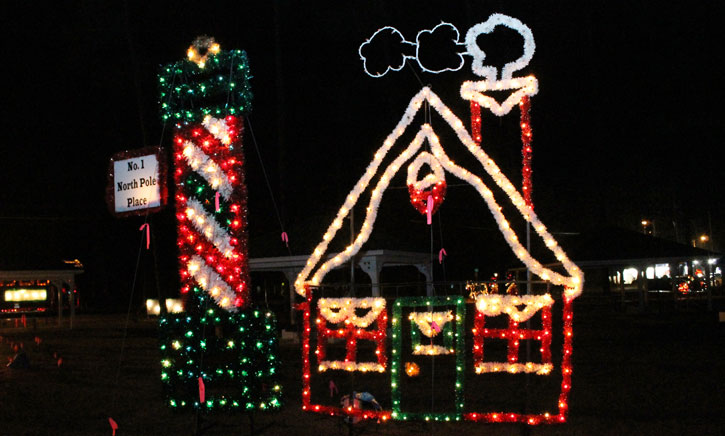
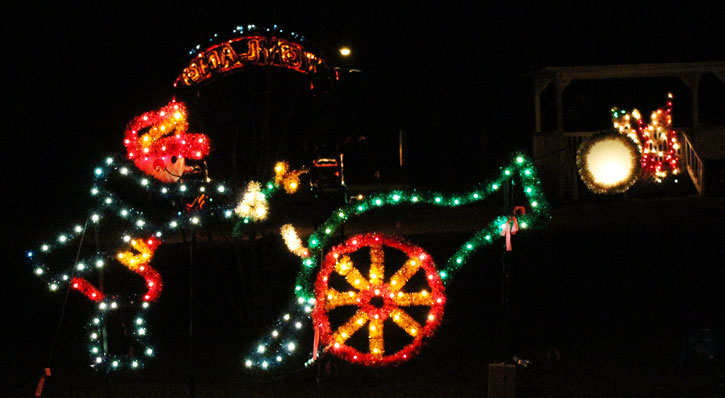 Thousands of cars pass the Century Roadside park each evening, very few stopping to enjoy the old-fashioned Christmas lights.
The lights, which became Century’s after the City of Pensacola upgraded some number of years ago, include a large North Pole house, “The Jolly Trolley”, and Santa with his sleigh and reindeer.
Today, we take you inside the park at North Century Boulevard (Hwy 29) and Hecker Road for an up close and personal look at the lights.
For a NorthEscambia.com photo gallery, click here.
Pictured top: No. 1 North Pole Place, part of the Town of Century’s Christmas lights display. Pictured inset: A clown fires and “animated” cannon. Pictured below: The Jolly Trolley. NorthEscambia.com photos, click to enlarge.

Video: Animated Christmas Lights In Bogia
December 23, 2011

A Bogia family has a Christmas light display that is animated to music.
The display is located at 200 Cotton Creek Road, just west of Highway 29 between Bogia Road and Highway 164. The display is open to the public from dark until 9:00 nightly.
NorthEscambia.com photo/video.
(If you do not see the video above, it is because your home or work firewall is blocking external videos.)
Photos: Bluff Springs Double Rainbow
December 23, 2011

 Thursday’s rain and storms gave way to rainbows in some parts of North Escambia. Philip Bell photographed this double rainbow about 4:45 Thursday afternoon in Bluff Springs.
Photos by Phillip Bell for NorthEscambia.com, click to enlarge.
Photo: Bells Will Be Ringing
December 22, 2011
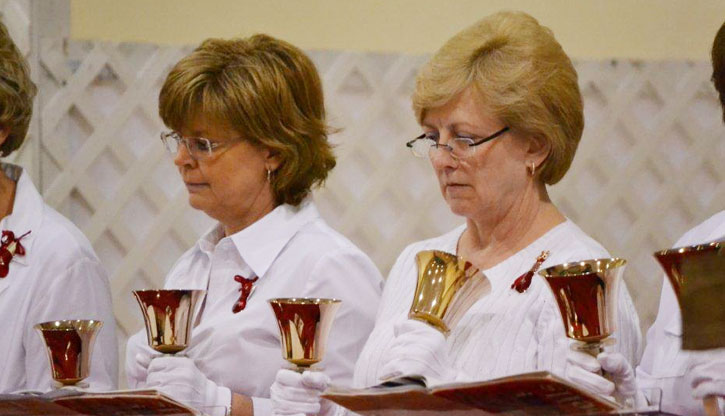
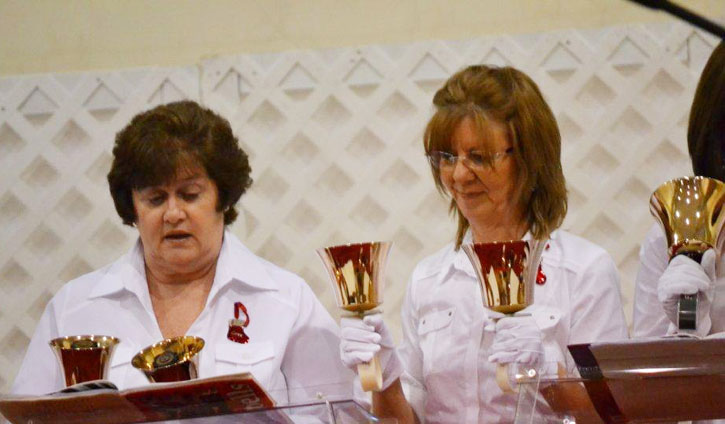
The bells were ringing with the spirit of Christmas Wednesday night as a newly formed hand bell team at the First Baptist Church of Bratt performed for the church’s annual Christmas dinner.
The “Belles of Bratt” were led by Dianna Hawsey in songs such as Angels We have Heard on High, Silent Night, Carol of the Bells and Gentle Mary Laid Her Child.
Team members are Susan Amerson, Kasey Baggett, Karen Brown, Laura Chavers, Brenda Dunsford, Wille Jean Edwards, Patricia Gregory, Gayle Hanks, Debbie Hester, Star Pugh, and Kim Sanders.
Submitted photos by Marcella Wilson for NorthEscambia.com click to enlarge.