
Weekend Gardening: Spots On Your Crape Myrtles Can Be A Problem

July 20, 2013

theresafriday.jpgAs the heat and humidity increases in Northwest Florida, expect to see some diseases appear in the landscape. One problem that is popping up on crape myrtles is Cercospora leaf spot. While not a deadly problem, it can greatly detract from the beauty of crape myrtles.

The initial symptom on crape myrtles is the appearance of tan to dark brown spots randomly scattered on yellow to red discolored leaves. The spots develop first on the lower leaves and progress upward in the canopy. Spots will continue to develop from mid-summer through fall. The color change is due to the production of a toxin by the fungal pathogen.

Infected leaves will drop prematurely and serve as a source to spread the pathogen causing further disease development. As the summer progresses, many infected trees will have dropped all but the newest leaves.

Older varieties of crape myrtles are more susceptible to this disease than newer varieties. The crape myrtle varieties most tolerant to Cercospora leaf spot are Natchez, Muskogee, Basham’s Party Pink, Sioux and Tonto.

Long term, this disease is not detrimental to a tree, although it will slow down growth on younger plants. Plants growing in conditions that are not ideal will be more affected by the leaf spot disease.

The best control is selecting a planting site with good air circulation so that the foliage will dry quickly. Thinning interior branches will also promote air flow.

The use of fungicides to control this disease has not been very effective because they would have to be applied repeatedly on a regular basis throughout the growing season. If used, fungicide applications should be started in early summer when the spots are first noticed and continued at one to two week intervals when the weather is warm and wet. Consult your local Extension office for fungicide recommendations.

As always, be sure to read and follow all label directions. Fungicides can be classified by how they work on the fungus or how they work on the plant. Products that work in a similar way on fungi have the same mode of action (also referred to as chemical family or class).

Contact fungicides are sprayed onto plants and act as a protective barrier from pathogen infection. They prevent infections from occurring when applied before symptoms are visible, but infections that have already occurred will continue to develop.

Systemic fungicides move into the plant, but movement inside the plant is limited. The vast majority of fungicides only move upward in the plant vasculature, but not down. Some fungicides only move locally into the plant part treated. Some systemic products exhibit curative action, which means the disease is stopped during its development. For managing fungicide resistance, products with different modes of action should be used in rotations.

Since this disease will result in early defoliation or the loss of leaves, it is critical to practice good sanitation. Raking and destroying fallen leaves should be a routine practice in order to prevent the spread of the disease.

For more information, contact Theresa Friday at 850-623-3868 or email tlfriday@ufl.edu. Friday is the Residential Horticulture Extension Agent for Santa Rosa County.

Florida Health Program Encourages Early Infant Screening

July 20, 2013

All expectant mothers agree on one thing: keeping their baby healthy during and after pregnancy is a primary focus. While new moms understand the role prenatal vitamins and healthy eating play in their child’s health, many may be unaware of the various disorders that can be prevented by a simple screening once the baby arrives. The Florida Department of Health (DOH) encourages all moms to consider how they can give their babies the healthiest life possible.

The Department and its new health initiatives are making strides toward increasing the number of Florida’s babies that receive proper screenings for uncommon genetic, metabolic, or enzymatic defects. The Florida Newborn Screening Program is one initiative that aims to prevent impairments by screening newborns for diseases that might not be immediately apparent, but can affect a child’s development later on. The program works with affiliated organizations like Newborn Screening Lab, Children’s Medical Services, and the greater community to guarantee an increased percentage of infants screened and cured of defects such as Severe Combined Immunodeficiency Syndrome (SCIS), cystic fibrosis (CF), and, hearing loss.

SCIS is an immune deficiency that makes children vulnerable to dangerous  infectious diseases including pneumonia and meningitis, during the early months following birth.Early treatment for the disease involves replacing a child’s immune system through blood transplants, a process which has high success rate when detected early. The same may also be said of cystic fibrosis, a genetic disorder that critically affects  the lungs, pancreas, liver and intestines. Despite having no official cure, a diagnosed infant can live unaffected by the condition if it is detected and treated early.

According to the summer 2012 issue of Baby Steps, the Florida Newborn Screening Newsletter, nearly 50 percent of babies that require additional screenings do not complete the program, and are therefore unable to receive a proper diagnosis or treatment  The Florida Newborn Screening Program encourages mothers to adhere to their “1-3-6” policy, which suggests babies be screened within a month of their birth, diagnosed within three, and enrolled in an early intervention program by month six, should their results require treatment. It is an initiative based on prevention, detection, and high-quality treatment services.

Take A Guess: How Far Away Was This Cool Cloud?

July 18, 2013

A rather unique looking “mushroom cloud” was visible across the North Escambia area just before sunset Wednesday. It was the only major cloud in the skies, visible from Walnut Hill (above, NorthEscambia.com photo) and even from Mobile (below, National Weather Service photo).

How far away do you think this cloud was? Scroll down the page for the answer.

As shown on this radar image from the National Weather Service is Mobile, the cloud was actually about 40 miles from the location of the top photo taken in Walnut Hill. It was about 80 miles away from the bottom photo taken by the National Weather Service in Mobile.

Chloe Channell Advances To NYC On ‘America’s Got Talent’

July 18, 2013

Chloe Channell of Pace has moved on to the next round of “America’s Got Talent” in New York City.

Chloe, just 11 years old, covered the Reba McEntire  song “Turn on Your Radio” is Las Vegas to earn her ticket to the Big Apple.

“I want to go to the live show in New York City more than  I want to catch a 100 pound snapper, and that is a lot,” she explained Wednesday night on national television before her performance.

After performing “Turn on Your Radio”, a classic country break up song,  celebrity judge Howie Mandell asked Chloe if she understood the song, and if she’s had break-ups.

“My dad says boys are the devil,” she said in a confident voice. “Your dad is a very smart guy,” judge Howard Stern said.

Chloe has been a regular around the Pensacola area for years, becoming a full-time member of  The Sawmill Band at the Chumuckla Farmer’s Opry at the age of seven.

“I’m so thankful to GOD for giving me this wonderful opportunity and to all of you for all the support and I promise u in NY!! I’m gonna bring it!! I can’t share but totally love the song I’m getting to do!! So please when it’s time vote for me and thank u all so much!!”, she wrote on her Facebook page after Wednesday’s show.

The next episodes of American’s Got Talent will air next Tuesday and Wednesday from Radio City Music Hall. There’s no word yet on which night Chloe will appear.

Courtesy photos for NorthEscambia.com, click to enlarge.
Part 4: Inside Century Correctional – Medical And Dental

July 18, 2013

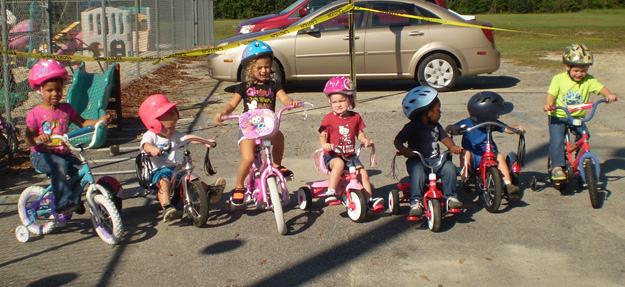
Today, we continue our  look inside the Century Correctional Institution with a look inside the medical and dental operation. Our series will continue Monday inside the prison’s most secure housing unit and more.

Need a cleaning? A filling? Dentures? Just $5 from your inmate account will get you fixed up in Century Correctional Institution. Inmates can get a cleaning about every six months, and there’s no charge for emergency dental services.

The Medical Department at CCI includes medical, dental and psychological services with a total staff of 28 and annual budget around $2 million. The facility includes a doctor’s office, dentist and urgent care clinic rolled into one.  Inmates line benches in the waiting room, facing windows  away from the front desk. They sit quietly, no television and no magazines. There’s a dentist on staff.  There’s always at least an LPN or RN present, allowing CCI to operate an infirmary. Inmates that are transported to a hospital for services not provided are able to return to the infirmary for recovery.

Heading to the clinic is not an easy out from a prisoner’s cell — there’s a copay from their prison accounts unless it’s a medical emergency. Century CI houses and cares for inmates up to medical grade 3 and psych grade 2. That means no wheelchairs and no inmates on continuous psychiatric drugs (those inmates are transferred to the Santa Rosa Correctional Institution).

The State of Florida is in the process of privatizing prison health services, leaving current medical department employees uncertain about their  future at the prison.

Our series “Inside Century Correctional Institution” continues Monday on NorthEscambia.com.

Pictured top: The medical facility inside Century Correctional Institution. Pictured inset: Dental facilities. Pictured below: A medical exam room. NorthEscambia.com photos, click to enlarge.

Part 3: Inside Century Correctional – Food For The Body, Food For The Soul

July 17, 2013

Today, we continue our  look inside the Century Correctional Institution with a look at food for the body and food for the soul. Our series will continue  inside the medical unit,  the prison’s most secure housing unit and more.

How about fresh summer tomato salad? Or a watermelon bowl with fresh cantaloupe?  Or fresh from the field sweet corn or summer squash? Those are just a few of the items on recent menus at Century Correctional Institution.

Those fresh items are served to inmates for one simple reason — cost.  The fresh fruits and vegetables are grown by prisoners at CCI, at the Berrydale Forestry Camp and at the University of Florida IFAS facility in Santa Rosa County. And they grow a lot. Already this year, CCI inmates have consumed 12,000 tons of corn.

Fresh inmate-produced produce keeps the cost per inmate down to about $1.45 per day. The food service department works twos shifts per day, providing over 4,000 trays per day. Almost all inmate food is baked or boiled — no frying.

The food service facility is a point of pride at Century Correctional.

The facility serves 1,400 inmates in about an hour and a half, including service for medical special diet prisoners at the beginning or end of a food shift. The noise at a meal is best described as a low murmur — inmates are allowed only to talk to one of the three others at their table. There’s no conversation or food sharing with neighboring tables.

Expectations of a cool, comfortable dining experience are out the window during the summer — there’s no air conditioning.

(story continues below)

The chapel is as nondescript as the other buildings in the compound. Unlike most churches when viewed from the outside, there’s nothing ornate and no religious symbols. Just a simple “Chapel” over the door and the number “10617032″ in one corner — the state’s building number.

The inside of the chapel appears a lot like any small country church — wooden pews, a mural of a river flowing from down from the hills.  But still very little in the way of religious symbols — one simple cross on a table, no Star of David, no Menorah. That’s because the State of Florida recognizes over 100 different religions, any one of which can be practiced in the chapel.  Christian, Jewish and Islamic services are common in the non-denominational chapel.

There’s a small room for a fellowship hall or meetings with a small kitchen. It’s used by faith based groups that may serve coffee or light food, or for the preparation of foods called for in specific religious practices.

Anywhere from 90 to 250 volunteers may enter the institution to help provide services on a monthly basis. During a one year period ending in April 2013, there were 5,170 total hours accrued by volunteers and a total of 1,390 program offered in the chapel for the inmate population.

Our series “Inside Century Correctional Institution” continues  on NorthEscambia.com.

NorthEscambia.com photos, click to enlarge.


Northview NJROTC Cadets Complete Basic Leadership Training

July 16, 2013

The Northview NJROTC cadets participated in Basic Leadership Training with 73 cadets from seven Escambia and Santa Rosa county high school NJROTC programs last week on board Naval Air Station Pensacola.

“Our cadets represented Northview High School and this community with the usually pride and winning spirit of the Chiefs,” said Chief Jeffrey Simpkins, NJROTC instructor. The cadets were assisted by Graduate Assistants (GA) that had previously completed the Basic Leadership Training.

Northview cadets received the following awards:

  • Lakelynn Parker — 1st in personnel inspection and room inspection; Alpha platoon Motivation Award
  • Moriah McGahan –3rd in the mile run; 4th in sit-ups
  • Kyle Smith — Bravo platoon’s Distinguish Cadet award
  • Douglas Dunkle — 5th place in academics
  • Jason Perritt — 7th place in academics.

Pictured: Northview High School NJROTC cadets (front, L-R) Zacarra Davis (GA), Kuper Harkness, Ureil Codrington, Moriah McGahan, Lakelynn Parker Emily Walston, Jenyia Odom (GA), (back row) Lane Carnley (GA), Kyle Smith, Andrew Clemmons, Douglas Dunkle, Jason Perritt, Triston Reaves and, Mason Solchenberger. Not pictured:Victoria Wright (GA). Submitted photo for NorthEscambia.com, click to enlarge.
Part 2: Inside Century Correctional Institution

July 16, 2013

Today, we continue our  look inside the Century Correctional Institution with a look at how prisoners are educated and prepared for release. Our series will continue this week inside the medical unit, the chapel, the prison’s most secure housing unit and more.

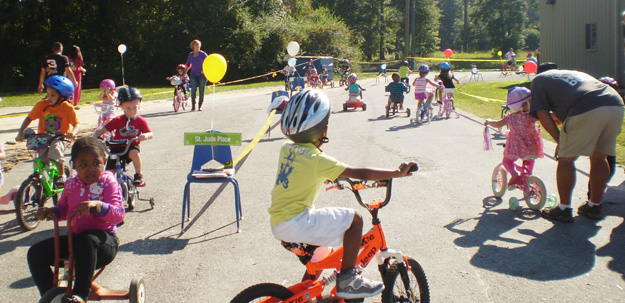
Inside the prison, a big focus is put on what happens to an inmate once he’s back on the outside with the rest of society. One instructor, Jimmy Rawlinson, heads up Century Correctional’s education programs. (Pictured top are computer work stations in the education department. The inmate computers do not have internet access.)

Over 50 inmates have earned their GED’s this year, and 28 have earned a Florida Ready To Work certification. The Ready to Work program is reserved for inmates that are just a few months away from their release, preparing them to become productive members of society.  A English as a Second Language class is also available. and the Mavis Beacon software program is used to teach inmates typing.

A garden has been established withing the perimeter of the prison. Not only does it provide food; it also provides discipline.

Inmates receive time in the garden as a disciplinary action. In the garden, they weed and water by hand.

(scroll down below photo)

During our visit to the prison library, inmates worked quietly, shelving books.

Inside the Century CI Library is a room (pictured above) that offers a glimmer of hope to inmates looking to get out of prison.   It’s a complete law library available to inmates wishing to file motions or formulate their appeal. Several inmates serve as trained law clerks, providing assistance to other inmates. Approved inmates can conduct law research on computers, but there is no internet access on the machines.

In the main library, there was bulletin board celebrating America’s 237th birthday. And a large red sign that seemed very ironic in a prison — “Sign Out Here”.

The remainder of library contains thousands of volumes like any ordinary library. Inmates can check out books and return them in a couple of weeks.  But at the Century CI library, the books and magazines have been screened with no descriptive material about prison escapes or weapons, and no sexually suggestive images.

(scroll down below photo)

Next to the CCI Library is the Residential Therapeutic Community. There are 14 employees that provide counseling and substance abuse programs to 160 inmates a day, based upon a community participation approach. The entire program takes just over a year to complete.

The program includes 10 classes geared toward re-entry into society after release, education and self-improvement.  The participating inmates are segregated from the general population to avoid reinforcement of negative behaviors.

The Residential Therapeutic Community is all about positive re-enforcement.  The building’s walls are lined with motivational signs and paintings, all created by the inmates. Several are pictured below.

Our series “Inside Century Correctional Institution” continues this week on NorthEscambia.com.


Relay For Life Seeks Volunteers

July 16, 2013

Relay For Life of Greater Escambia is seeking volunteers – community leaders, cancer survivors, caregivers, and all others – to join the 2014 Steering Committee. Relay Steering Committee members are essential to the planning and implementation of this life-saving fundraising event.

The Steering Committee is made up of local volunteers that want to help the American Cancer Society fight cancer. Committee members have the opportunity to take on a variety of roles, including team or sponsor recruitment, fundraising, survivor and caregiver recognition, publicity, mission education, and more. The Steering Committee meets throughout the Relay season to plan all aspects of the event and coordinate a unique and special community experience.

Greater Escambia’s 2013 event was held at Tate High School on May 3-4 and has raised more than $70,000. Plans for 2014 are underway, and the 2014 committee will hold its first meeting in early September.

Relay For Life is the signature fundraiser for the American Cancer Society, with events in more than 5,200 communities and 20 countries. Every year, the Relay For Life movement raises more than $400 million which helps fund groundbreaking research and free information and services for cancer patients and their caregivers.

Relay For Life events are held overnight as individuals and teams camp out at an athletic track, park or other gathering area. The events are held overnight to honor and symbolize a cancer patient’s journey through treatment. Teams do most of their fundraising before the event and many host entertaining fundraisers during the event. All funds raised through Relay For Life help the American Cancer Society save more lives by helping people stay well, get well, by finding cures and by fighting back.

For more information about joining the fight against cancer with Relay For Life, contact Event Chair Pat Clements at (850) 776-2944 or Ashley Marg with the American Cancer Society at (850) 266-2280.

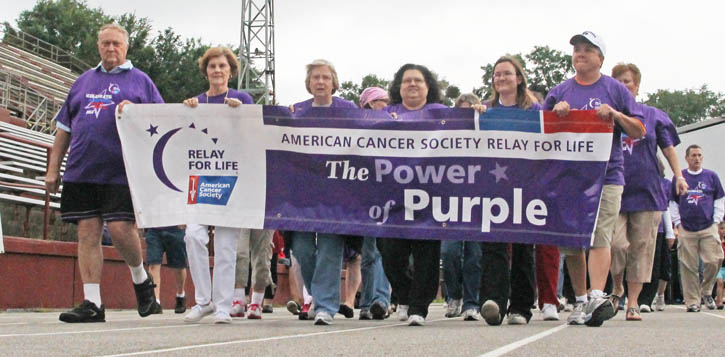
Pictured top and below: The survivor and caregiver laps kick of the Greater Escambia Relay for Life last May at Tate High School. Pictured inset: Tate senior Halee Boyd, who is battling cancer, addresses the Relay crowd. NorthEscambia.com file photos, click to enlarge.
Registration Event Scheduled For Danceworks Classes

July 16, 2013

Registration is underway for Heather Leonard’s Danceworks, and a registration event will be held Monday in Byrneville.

The registration will be from5:30 until 6:30 p.m. Thursday  at the Byrneville Community Center, or students can register by mail.

Ballet, tap, jazz and hip hop classes will be taught by Heather Leonard beginning the week of August 20 for girls ages 3 and up, including classes for teens. Leonard has taught dance to hundreds of girls from North Escambia and surrounding areas. She is also the coach for the Northview High School Dance Team.

For a printable information sheet, schedule and registration form, click here. For further information, contact Heather Leonard at (850) 529-1358 or email hldanceworks@gmail.com.

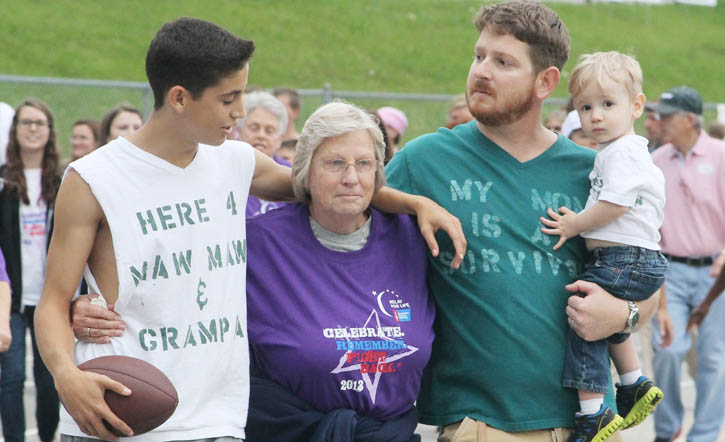
Pictured: Scenes from the Heather Leonard’s Danceworks recital “Dancing at the Movies” last May at Northview High School. NorthEscambia.com file photos, click to enlarge.

« Previous PageNext Page »