

Atmore Native Serving Up Authentic Air Force BBQ
January 12, 2014
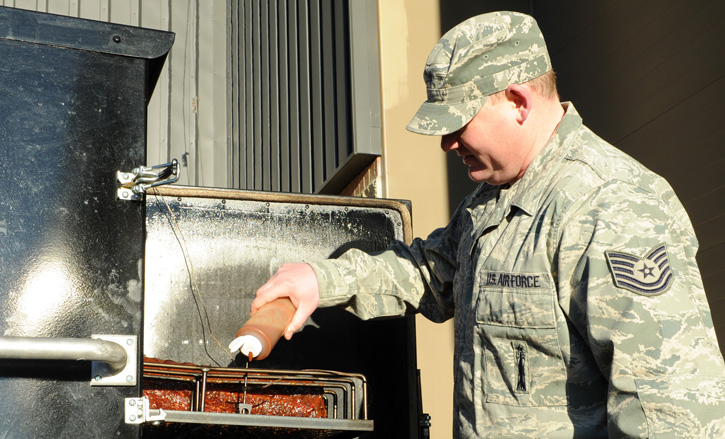
When some people think of barbecue, they may imagine a simple hamburger thrown on a grill slathered in sauce on the Fourth of July. But for others, authentic barbecue is an extensive process that involves imported wood, secret ingredients, exact temperatures and up to 20 hours – all in hopes of perfecting the combined flavors of smoke, meat juices, spices and rub.
For Tech. Sgt. Sheldon Mason, 341st Maintenance Operations Squadron mechanical pneudraulics section assistant NCO in charge, perfecting barbecue is what the Atmore native does best.
“I started cooking when I was really young because my grandmother was a chef,” Mason said. “She didn’t really do barbecue as opposed to other cuisines, but I took to cooking at a young age.”
Mason has always been accustomed to large family gatherings of more than 100 people. But it wasn’t until his teenage years during these get-togethers when he learned “whole hog cooking,” that his love for barbecue took off.
“It’s just one of those things I’ve always wanted to do,” Mason said. “Within the past five years I’ve been able to get all the equipment I need to actually pursue this one day because barbecuing is really where my heart lies.”
Although Mason hails from the south in a place where barbecued pork is the food of choice, his specialty is beef brisket.
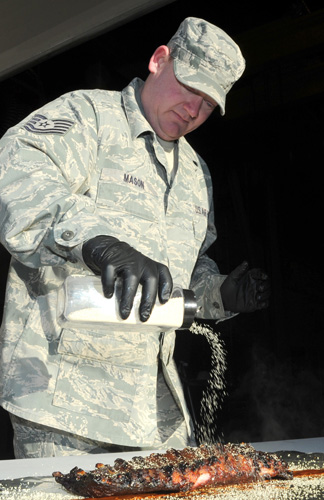 “It’s funny because I’m a southern guy and I cook brisket, which is very popular in Texas,” he said. “It’s a little different to cook something that’s not from where you’re from, but I figured once I mastered brisket, which is one of the hardest things to cook, I felt like I could take on anything.”
Today, Mason uses a gravity-fed smoker for low and slow cooking, which can cook up to 200 pounds of meat. Through trial and error, he has perfected his sauces, cooking time and wood type in the past decade.
“Length [to cook] depends on what the meat is and the size,” Mason said. “Ribs can take anywhere from four to six hours and pulled pork and brisket can take upwards of 12 to 16 hours; but each one is temperamental so I just have to go by the feel and the color. It’s not an exact science – it’s something I’ve learned based on experienced.”
Mason says he aims to satisfy the taste buds of all barbecue lovers from various regions in the U.S.
“I try to cater to everyone,” Mason said. “I don’t have one particular style of barbecue but I put my own spin on it to try to hit all the regions. From the east coast, to the west coast, to the Carolinas and Kansas City, every region has a different flavor of barbecue sauce and specialty meat.”
As an NCO who’s spent 14 years at Montana’s Malmstrom Air Force Base in various maintenance sections, Mason is accustomed to working with and supervising Airmen of different backgrounds. Mason’s vision to stay true to regional barbecue calls for importing wood directly from various states.
“The wood infuses different flavors into the meat,” Mason said. “Wood reacts with the different types of rubs and the different meat used. In order to cook true barbecue, I import all of the wood – from California to Georgia to Washington to stay true to that type of barbecue.”
For hopeful or avid lovers of making their own barbecue, Mason has a few suggestions.
“As far as wood, never use pine,” he said. “Fruit woods add a sweet flavor to the meat; whereas woods like hickory and oak infuse strong flavors, so it’s important to be careful. Mixing those with sugars can create a very robust flavor. Some people don’t know that they don’t need as much smoke as they may think they need. Although [the meat] is smoked, it doesn’t need 12 to 15 hours of straight smoke because it’ll darken the meat too much. Depending on the kind of meat – pork, ribs or brisket – it needs just enough smoke to give it that smoked flavor because the heat is what gives it the true smoke flavor.”
Although Mason typically barbecues for 10 to 50 people, he hopes to one days cook for the masses.
“I’ve done squadron functions, going-aways, retirements – I’ve done a little bit of everything,” he said. “Anyone that requests barbecue usually comes to me. It doesn’t really matter what the occasion is; the more the merrier.”
While Mason intends to pursue barbecuing as a full-time career in the future, his current life as an active-duty Airman continues to be his number one priority.
“I currently plan on retiring at 20 years to pursue this venture, but anything could happen,” Mason said, adding that he plans to open a barbecue place in Great Falls, Montana.
Although creating a business is Mason’s ultimate goal, he finds satisfaction in simply bringing friends, family and Airmen together on the principles he was raised on.
“Honestly, I think food is what brings people together,” he said. “Food, to me, is something everyone can relate to because everyone has to eat. The time it takes to barbecue is something a lot of people don’t understand because it takes such a long time to make this sort of food. It’s a simple food, but it’s not a simple science. Not a lot of people do this because it’s very time consuming and I’m very particular about how I make it. But I really enjoy doing it and that’s why I truly do it; that’s the passion I have.”
Pictured top: Tech. Sgt. Sheldon Mason of Atmore, 341st Maintenance Operations Squadron, pours barbecue sauce on ribs during an office lunch on Montanta’s Malmstrom Air Force Base. Pictured inset: Mason seasons his barbecue ribs. Photos by Senior Airman Katrina Heikkinen for NorthEscambia.com, click to enlarge.
High School Seniors: EREC To Award Two $4K Scholarships
January 12, 2014
This April, EREC will award scholarships to graduating seniors in Escambia County and Santa Rosa County whose parent or guardian is a member of the cooperative. Two $4,000 scholarships, one in each county, will be offered.
Seniors in EREC’s service area should check with their high school guidance counselors or click here to download an application. Deadline to submit scholarship application is March 3. Winners will be announced at EREC’s Annual Meeting on April 26.
The students must show proof of enrollment and maintain a GPA of 2.5 to continue to receive the funds each year.
This is EREC’s 17th year of offering scholarships to high school seniors. In the past, those capital credits issued by EREC that were unclaimed had to be turned over to the state. But state legislation now allows such funds to be deposited into a qualified, educational charity fund. The EREC membership voted to use these funds in the form of scholarships for graduating seniors in EREC’s service area.
Cantonment Teacher Is Finalist For Trip To Mars
January 11, 2014
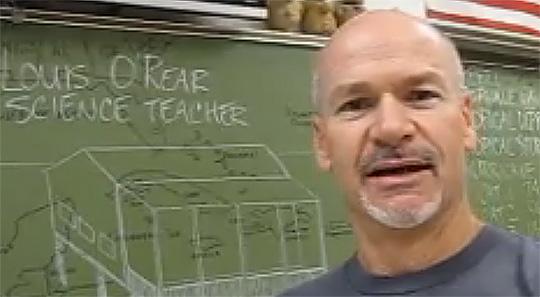
A Cantonment teacher is among 1,058 hopefuls that have been selected from 200,000 applicants as candidates to begin human life on Mars in 2025.
Louis O’Rear, a 49-year old science teacher at Ransom Middle School, is hoping for that ticket to ride from the Mars One program.
“I want my students to know that it’s important not what your dream is but to have a dream. And I’ve always wanted to explore space, always,” the father of two said.
“After all, the universe is the best classroom,” the teacher of 20-plus years said.
“The next several selection phases in 2014 and 2015 will include rigorous simulations, many in team settings, with focus on testing the physical and emotional capabilities of our remaining candidates. We expect to begin understanding what is motivating our candidates to take this giant leap for humankind. This is where it really gets exciting for Mars One, our applicants, and the communities they’re a part of,” said Norbert Kraft, M.D.
Details of the 2014 selection phases have not been agreed upon due to ongoing negotiations with media companies for the rights to televise the selection processes. Expect further information to be released in early 2014. Lansdorp says, “We fully anticipate our remaining candidates to become celebrities in their towns, cities, and in many cases, countries. It’s about to get very interesting.”
O’Rear’s application video for the Mars One program is below.
Space Available For Beginning Spring Into Vegetable Gardening Classes
January 10, 2014
If you have ever considered planting a spring vegetable garden, now is the time register to attend a four-week series to learn how to get started. T
he workshop “Spring into Vegetable Gardening,” will be held Tuesday evenings from 6 – 7:30 p.m. starting January 14 until February 4. The cost is $30 per person or $45 per couple and includes numerous handouts.
Classes will be held at the Milton and Jay locations of UF/IFAS Extension Santa Rosa County. The Milton office is located at 6263 Dogwood Drive. The Jay office is located at 5259 Booker Lane. Register on online at: http://spring-into-vegetable-gardening-2014.eventbrite.com.
Topics for the workshop include:
- Jan. 14 – Homeowner Vegetable Garden Expectations: what to grow and seasonal information, site selection and improving soils
- Jan. 21 – Growing Tomatoes, Peppers, Squash and Cucumbers; Seeding and Transplanting Basics
- Jan. 28 – General garden Maintenance: watering, fertilizing, integrated pest management
- Feb. 4 – Harvesting, Troubleshooting Vegetable Garden Problems
For more information please contact Mary Derrick at (850) 623-3868 between 8 a.m. and 4:30 p.m. weekdays or via email at maryd@santarosa.fl.gov.
Ernest Ward Names Students Of The Month
January 9, 2014
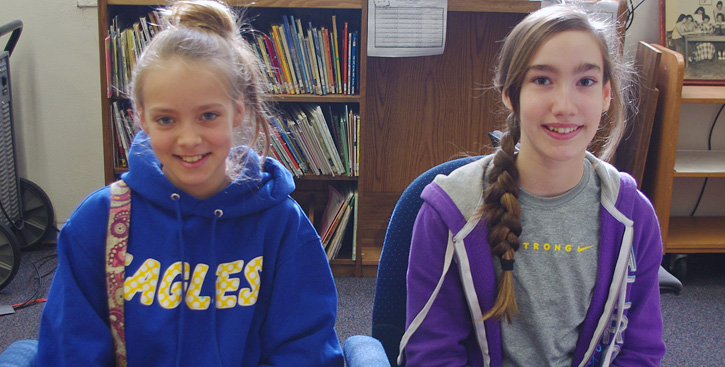
Ernest Ward Middle School has named their December Students of the Month. They are Shelby Bashore (left), Baily Van Pelt (right) and Lari McCann (not pictured). Submitted photo for NorthEscambia.com, click to enlarge.
Cogongrass In The Panhandle Workshop Planned
January 9, 2014
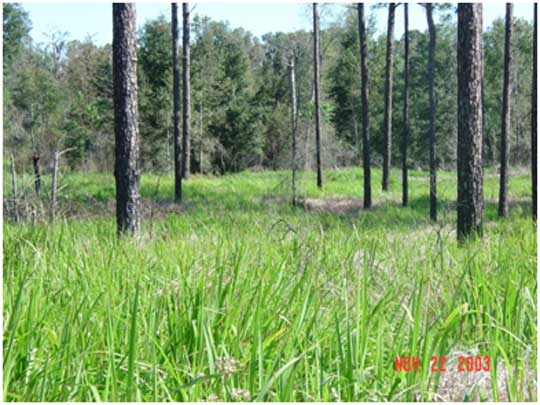
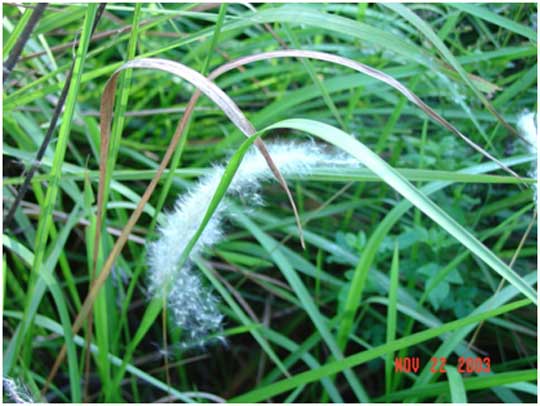
Escambia County University of Florida/IFAS Extension will hold a Cogongrass in the Panhandle Workshop on Tuesday, January 14.
Held at the Escambia Extension Office, 3740 Stefani Road in Cantonment, from 8:30 a.m. to 4:30 p.m. EST attendees will discuss identification and biology of cogongrass in Northwest Florida and current methods being used for control.
Pre-register by calling Escambia Extension, or by clicking here (specify which location you wish to attend).
The $25 cost of the program also includes lunch.
For more information contact Libbie Johnson, Escambia County Extension at (850) 475-5230 or libbiej@ufl.edu.
Courtesy photos for NorthEscambia.com, click to enlarge.
GED Classes Offered In Molino
January 8, 2014
GED classes will resume Monday January 13 from 6-8 p.m. at the Molino Community Center. Classes will be on Monday and Thursday evenings.

New students can take the TABE (Test of Adult Basic Education) on Tuesday, January 14 and complete registration at the Molino Community Center, Room 123. Applications for enrollment are available at the Molino Branch Library in the community center. For more information, call the Molino Library at (850) 435-1760, or George Stone at (850) 941-6200, ext. 2121 or 2117.
More Local Winter Photos, Including Snow
January 8, 2014
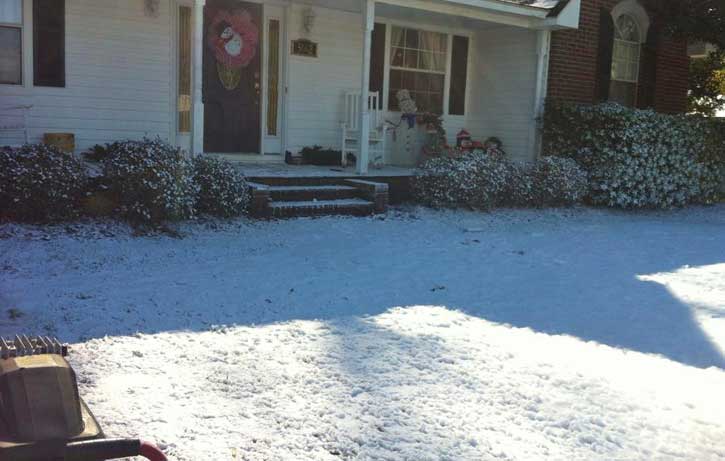
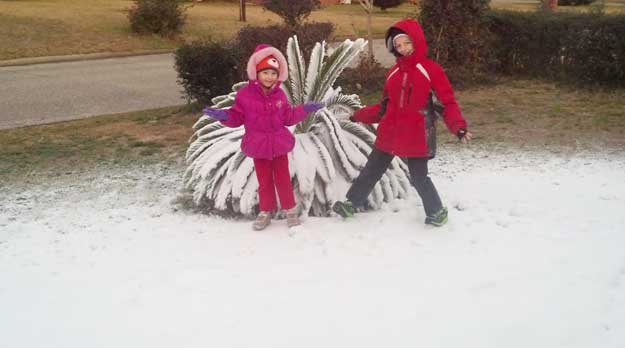
Here are more winter weather pictures from North Escambia readers.
Homemade snow fell at the home of Kevin Goodson on Spring Street in Jay (top) and at the home of Bill Linhardt in West Pensacola (below).
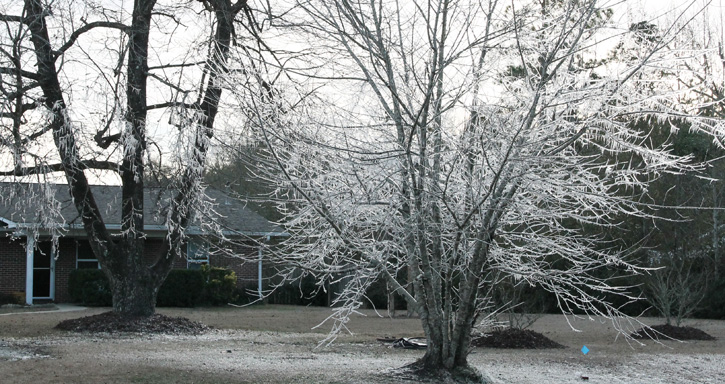
Frozen tree and yard in Walnut Hill. (NorthEscambia.com photo)
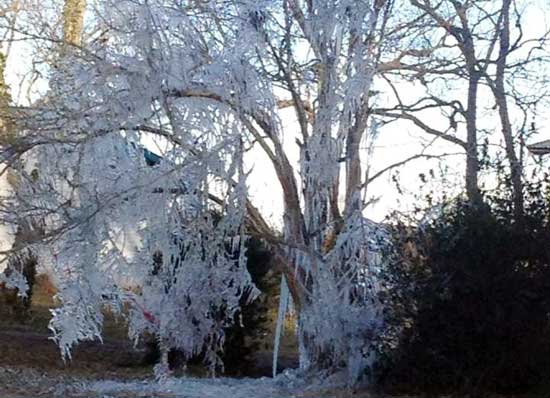
An icy tree in North Escambia. (Courtesy Kay McCormick)
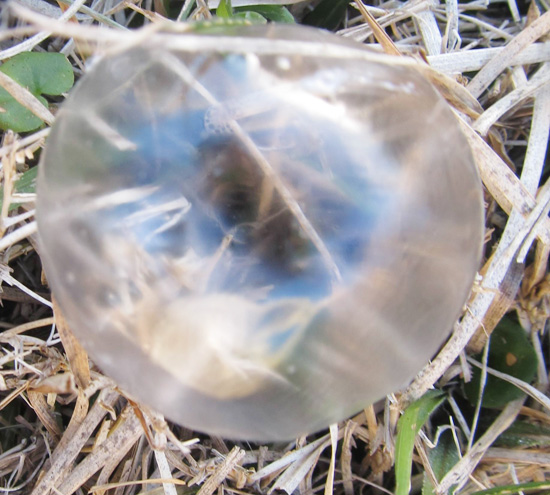
“So I read online the other day about blowing bubbles when it is in the teens or colder. Said they’;; freeze. Decided to try it this morning. They really do freeze!” — Becka Peebles, Walnut Hill
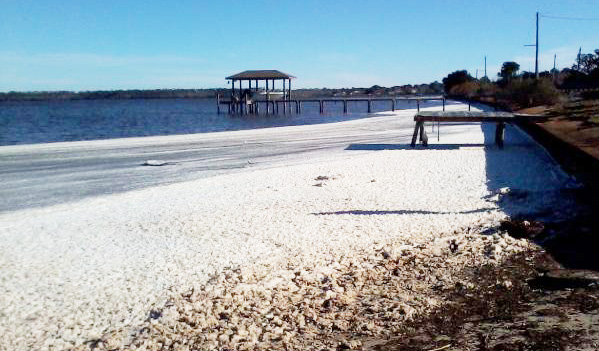
Perdido Bay along Lillian Highway. (Courtesy Mitch Mosley)
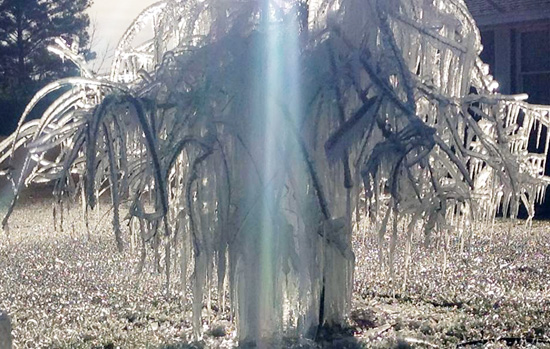
A frozen tree in Walnut Hill. (Courtesy Josh Scott)
Photos: Florida’s Frozen Winter
January 8, 2014
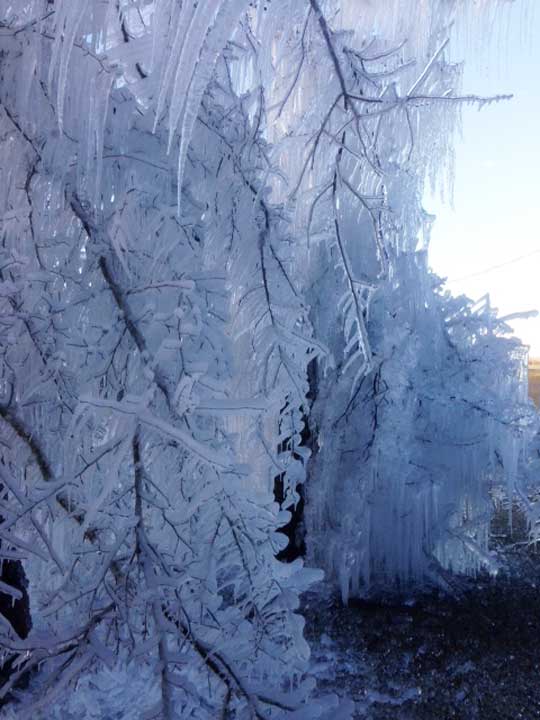
With lows in the middle teens, there were some interesting photo opportunities around the North Escambia (Florida) area this morning. Like, pictured above, this tree on Highway 164 in Walnut Hill. (Courtesy Brandy White)
We received lots of winter photos from readers, scroll down for more.
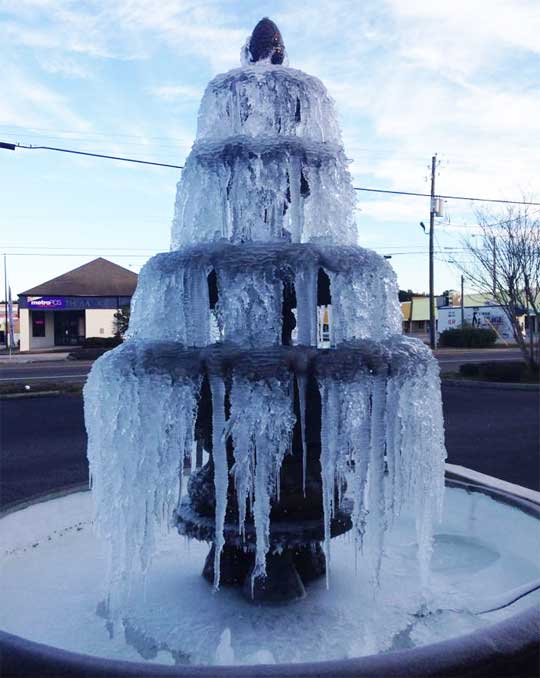
Above: The fountain at Dr Gene Terrezza Optometry at the corner of Lillian Highway and Fairfield Drive. (Courtesy Justin Dukes)
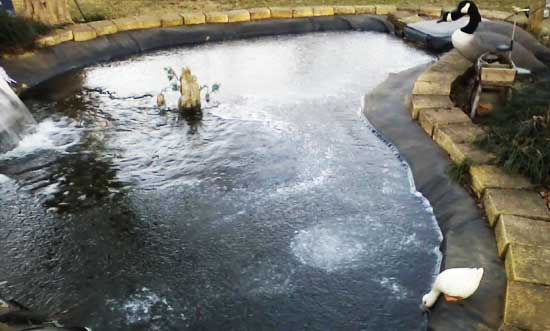
Above: A frozen over fish pond in Bratt. (Courtesy Janie Beasley)
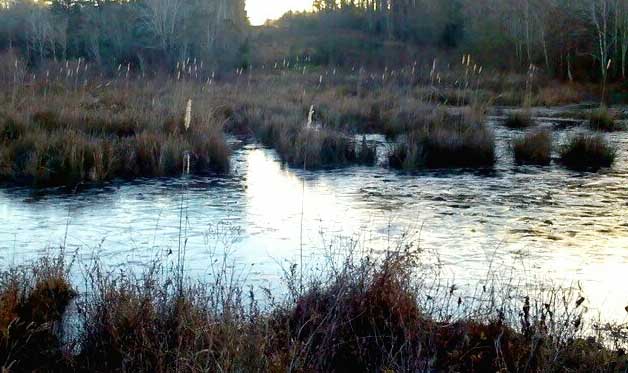
Above: Ice on a lily pad pond near Pollard McCall Junior High School where it dropped to 14 degrees this morning. (Courtesy Jennifer Smith)
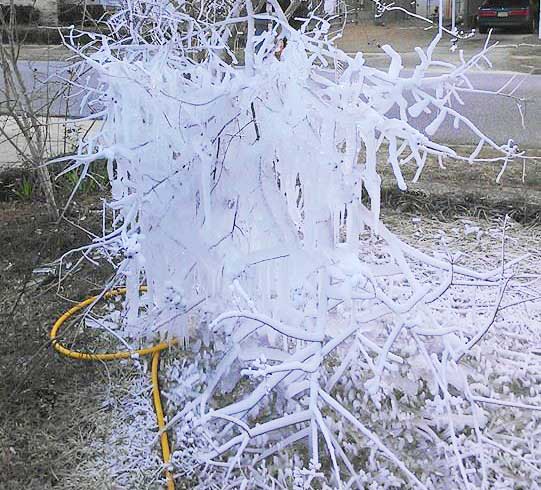
Above: Frozen small tree in Molino. (Courtesy Lisa Weaver)
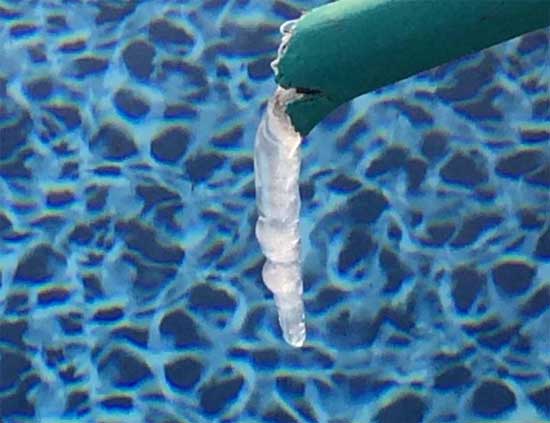
Above: Frozen hose into a pool, Molino. (Courtesy April Pawless)
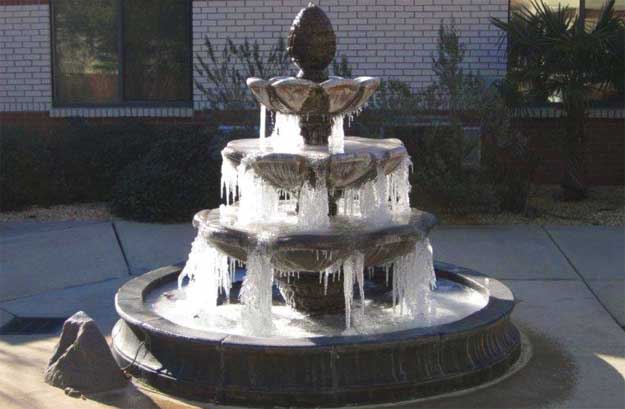
Above: The fountain this morning at Century Health and Rehabilitation Center. (Courtesy Mae Hildreth)
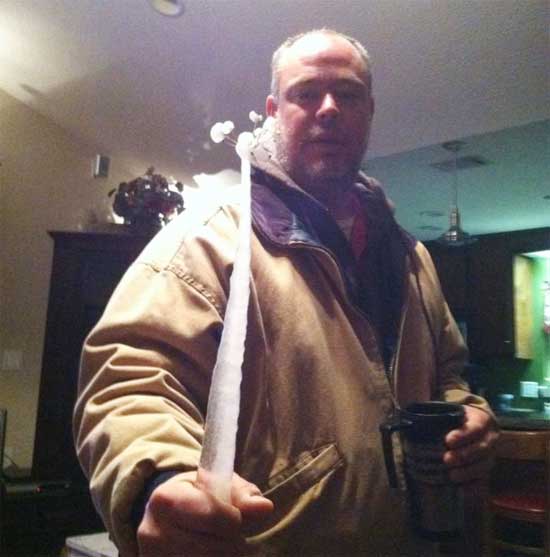
Above: We saved this one for last. Seems that Rodney Colvin of Molino brought his wife Jennifer an “ice flower” from outside this morning. We are hoping to see how he tops this for Valentines Day.
Helpful Hints To Prevent Frozen Pipes
January 6, 2014
The following recommendations, from ECUA, are a few simple measures residents can take to ready their home’s plumbing for our potentially record breaking freezing cold.
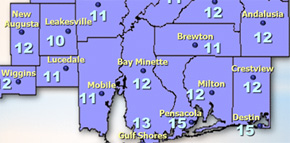 External, exposed pipes are naturally the most vulnerable to freezing. Homeowners may:
Insulate Pipes or Faucets in Unheated Areas: Pipes located in unheated areas of your house, such as a garage or crawl space under the house or in the attic, are subject to freezing. If you have time to do this before freezing temperatures arrive, wrap these pipes with insulation materials made especially for this purpose. These materials can be found in most hardware stores or home improvement centers.
Disconnect And Drain Outdoor Hoses: Detach all hoses from faucets and allow them to drain. This will prevent the water in the hose or pipe from freezing and bursting the faucet or pipe to which it is connected.
Run a Trickle of Water: When forecasts call for sustained and / or severe freezing temperatures, run thin trickles of water from the faucet furthest from the water line coming to your house. Usually this is in a room at the back of the house or outside, in the yard. Allowing the water to circulate through your home’s plumbing helps to keep it from freezing. Some consider this a waste of water, but the cost of the water used is extremely slight compared to that of repairing broken pipes and the resulting water damage.
Remember the Backflow Preventer: Residents and business owners who have backflow preventers on their properties for water lines, fire lines, irrigation systems, and swimming pools need to protect their backflow preventers from freeze as well. Extended freezes can burst the body of the backflow assembly, rendering it useless. Wrap these pipes with insulation materials, made especially for this purpose. These materials can be found in most hardware stores or home improvement centers. If the device and the water lines are not in use at this time (i.e., irrigation system or swimming pool lines), shut off the water supply line and drain the backflow device.