
Helping Haiti Part II: Local Disaster Relief Team Visits Ravaged Country
March 7, 2010
 Today we have the second installment of a three-part series “North Escambia: Helping Haiti”. We are taking you to Haiti through the eyes of two area men that just returned from a disaster relief mission. We will hear about their work in Haiti in their own words, and we’ll see the country through their eyes via their photographs. We will also look at how you can be a part of the effort to provide relief in the earthquake ravaged country.
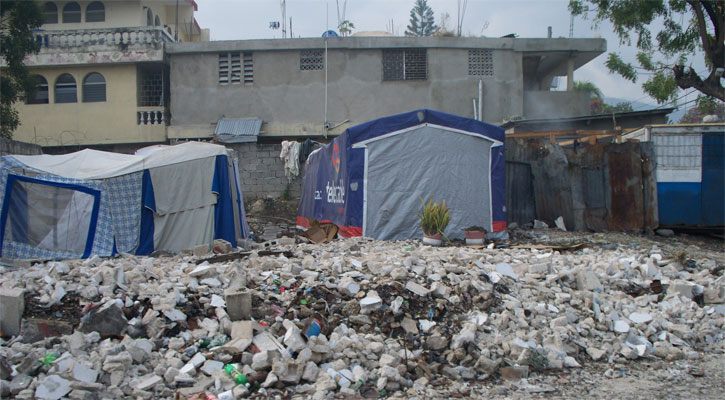
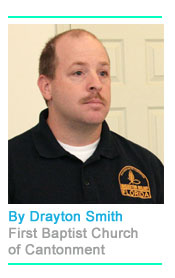
Today, in his own words, Drayton Smith from the First Baptist Church of Cantonment describes his recent Pensacola Disaster Relief team visit to Haiti. Monday morning, we will learn how you can do you part to help Haiti. The photographs that accompany this article were taken by Smith in Haiti.
 On February 8th I received a call from Florida Disaster Relief wanting a group of four to travel to Haiti for building inspection and Chaplaincy. They wanted us to leave on the 12th. I could not leave that soon so we left on the 17th. At that time no flights were able to go into Port-Au-Prince so we flew into the Dominican Republic. On the 18th we traveled to Haiti by bus. A trip that was about 200 miles would take all day. The roads are inferior to say the least. We left around 4 a.m., as the sun peaks over the mountain range we can see the banana plantations along with the sugar cane fields.
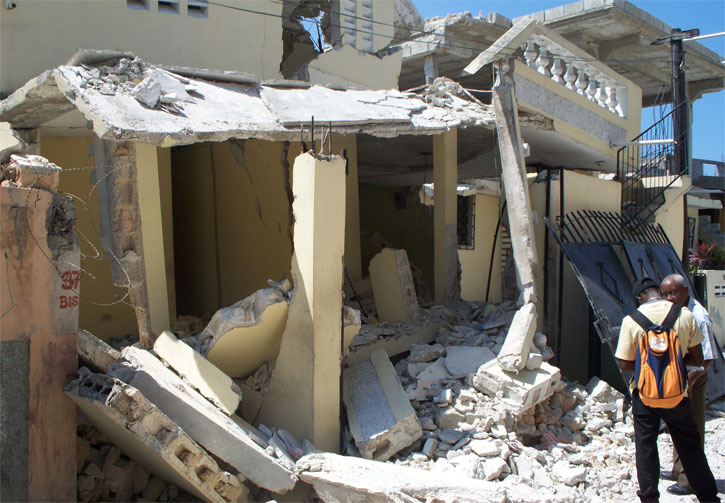
As we approach the border things become very chaotic. It is very crowded and large trucks with supplies are blocking the road way. Our driver goes in to take care of all the paperwork and we are on our way again. The roads continue to be very crowded for quite some time. Check points are set up all along the way. As we get closer to Port au Prince congestion gets worse. We see many military vehicles from all over the world. The streets are filled with people. Some selling fruits and vegetables, others begging for money. All along the edge of the roads we see tents and temporary shelters made from scrap lumber, tin, tarpaulins bearing names like USAID, RED CROSS, and other symbols and emblems. We approach our destination where we will be calling home for the next week. It seems to be in tact. Running off of batteries during the day and a generator to charge the batteries at night. Across the alley we see a home that has collapsed and hear of a 2 year that has lost their life from the falling roof. This hits home with me, I have a two year old.
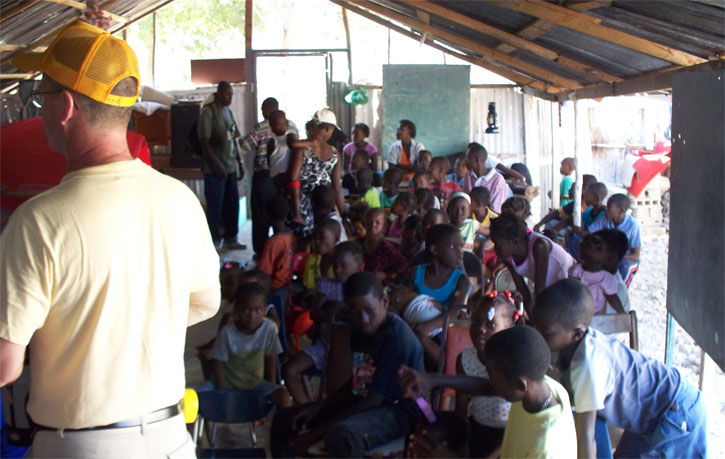 As we get up on our first day we visit with local pastors who welcome us with open arms and somewhat of a smile. We inspect several homes and churches that day. We find out that everyone is petrified to return back into their homes, even if they are safe to go in. “What if it happens again?” That seems to be the question everyone asked. As we pray for those and try to minister to them, we struggle to find the words to say, “its going to be okay.” Its hard because we do not know when and if another quake will happen. Everyone knows someone who lost someone.
As the week progresses we meet several new friends from all over the US. They all have come as part of the SBC Disaster Relief. Some are doctors, nurses, pharmacist, others are building inspectors and Chaplains. Each having left their families, jobs and homes to minister to those in need. Over and over I recall the scripture Matthew 22:34-40 “love the Lord and love your neighbor as yourself” (paraphrased). That is what we are doing, Haiti is our neighbor.
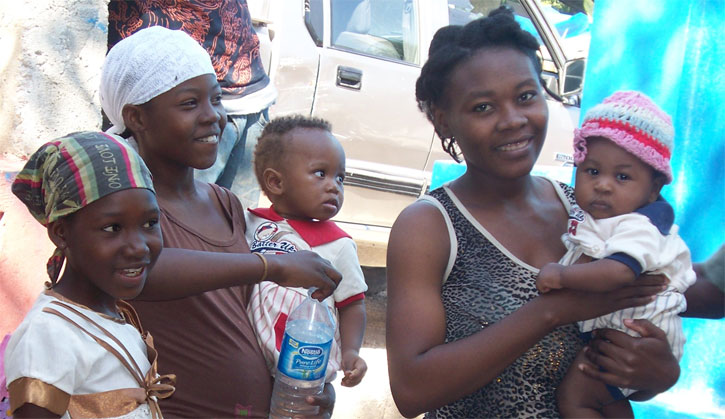 During the week we spend time with parents who have lost children, children who lost parents. We met one lady whose daughter had been kidnapped for seven days before the authorities were able to catch the criminals that took her. We continue to hear the stories of people losing everything. One lady shares of her daughter in nursing school where 300 nurses perished wqhen the roof collapsed. We see where a small hole has been dug out when a 26 year old boy lost his life. I hear from the parent of a nine and three year old who lost their lives. That’s the hard part for me, what to say to these parents.
There is no equipment at all, men are removing rubble and tearing down buildings with make-shift tools and bare hands. Carrying rocks and busting down walls. It is taking hours and days to do what we could do in just a few minutes in the states with our technology and heavy equipment.
 All we can offer is hope, 1 Peter 5:7 states “cast all your anxiety on Him because He cares for you.” And Philippians 4:19 “My God will meet all your needs according to His glorious riches in Christ Jesus.” What can your offer was our question, Jesus was the answer.
While we were there we heard chanting from the voodoo and heard the loud speakers of the Satanist wanting the churches torn down. We kept our eyes on Jesus and shared Him when we could. That was the best comfort for them. (2 Corinthians 1:3-11)
During the nights when the aftershock and tremors would wake us up I would remember the scriptures in Psalm 18 and Isaiah 24 where it speaks of the earth shaking. My mindset was to go and help and be a blessing to the people of Haiti, the blessing was for me. I thank God for how He opened my eyes and provided and protected me.
Photos by Drayton Smith, First Baptist Church of Cantonment, for NorthEscambia..com, click to enlarge.
Helping Haiti: Local Disaster Relief Team Visits Part I
March 6, 2010

Today we begin a three-part series “North Escambia: Helping Haiti”. We will take you to Haiti through the eyes of two area men that just returned from a disaster relief mission. We will hear about their work in Haiti in their own words, and we’ll see the country through their eyes via their photographs. We will also look at how you can be a part of the effort to provide relief in the earthquake ravaged country.
Today, in his own words, Sonny Davis from Hillcrest Baptist Church describes his recent Pensacola Disaster Relief team visit to Haiti. Sunday morning, we will learn more about the trip from Drayton Smith of the First Baptist Church of Cantonment. The photographs that accompany this article were taken by Smith in Haiti.
 The Pensacola Disaster Relief team consisted of two chaplains and two assessors — Sonny Davis, Doug Dickerson, and Scott Baisden from Hillcrest Baptist and Drayton Smith from First Baptist Church of Cantonment. Because the Port-au-Prince airport was stilled closed to commercial traffic at the time of our departure, we flew from Pensacola to Santa Domingo, Dominican Republic.
There, we were met by Doug Roberts, IMB missionary. Doug and his wife were our hosts at the mission house in Santa Domingo. When ground transportation could be arranged, we traveled by bus from Santa Domingo to Port-au-Prince. Accommodations were provided at the FL Mission House, which can hold about 55 people. The Mission House receives power from a generator and has running (although not hot) water. The generator is used to pump water from a well to a large cistern on the roof. Water is then available via gravity for showers and toilets. With that many people staying at the house, the cistern could not hold enough water for everyone to take a shower at once. Those arriving back to the mission house later than others would often have to wait at least an hour to repeat the process of filling the rooftop cistern.
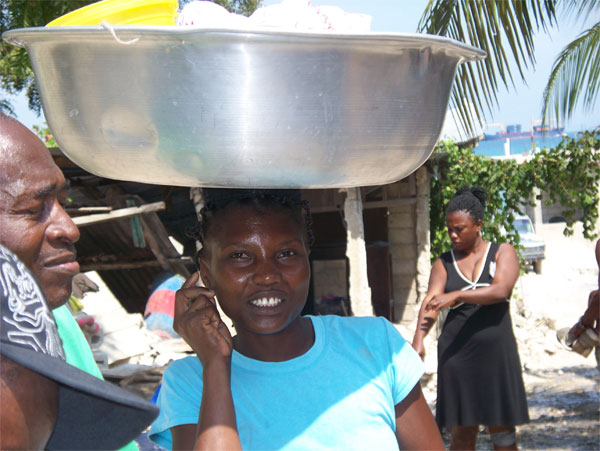 Each morning, our team of four would be assigned to a Haitian pastor, an interpreter, a security person and a driver. Each pastor wanted his church building inspected first, then we would move on to members of his congregation, and further into the community. If the church was determined to be safe, it was then a viable location for a future medical clinic to be staffed by DR medical teams.
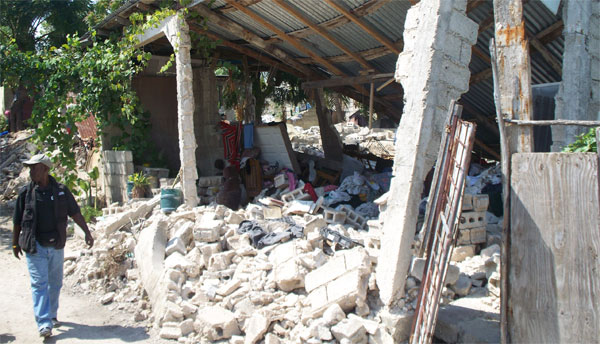
Maneuvering between houses down narrow lanes was a challenge for even our experienced drivers. Debris littered the streets, and tents were set up in almost any empty space. There are only a few street signs or house markers, so we used portable GPS units to mark the location of each structure that we inspected. Most of the structures that we inspected the first two days were habitable; although almost all needed some sort of repair.
The people have very little money for repairs. For those who did have livable homes, it was more difficult to convince them to sleep inside that it was to do the actual inspection. Each family was pleased that we were there and welcomed the prayers that we offered before moving on to another location. For those of you who have been to third world countries, you are probably familiar with seeing homes constructed primarily of concrete and blocks. No building codes are in effect, and construction materials are inferior; consequently, homes with concrete roofs were more susceptible to destruction than those with tin roofs. There is virtually no glass for windows, almost no running water, and little use of electricity. Many of the homes look like they were built in the 1950s. Some had plumbing fixtures, but they were no longer in use due to the lack of a working water system. Most families had access to a nearby well.
 The Haitians buy food and a crude form of charcoal daily and cook on small grills that resemble hibachis. They cook in a small room on the outer edge of the house. Food was being cooked in nearly every home; however, the quantities were always small. Women and girls wear dresses, and men wear long pants. This seems to be a cultural practice, not a religious requirement. The Haitians we visited were clean and had clean clothes, despite having only a kitchen wash pan to bathe and wash their clothes in. None of the families that we visited on the first two days of our adventure had experienced any loss of life in their homes. They all had family members that had been injured or died in the area.
On Sunday, we attended Pastor Joe’s church. His was one of the first churches that we inspected. Even without musical instruments, the church produced a beautiful harmony while singing hymns in Creole. Pastor Joe preached, and an interpreter helped us understand what he said, then Drayton preached and the interpreter helped the congregation understand, and then Pastor Joe preached again. In all, the service lasted almost three hours. Their “pews” were the narrowest, wooden benches that I have sat on. After the service, LA DR volunteers set up a medical clinic and saw close to 300 patients. Most of the patients suffered from respiratory illnesses, high blood pressure, or infections. Many wounds also needed redressing. The people were appreciative and friendly both in the clinic and in the homes we visited. We were surprised by the number of Haitians that spoke some English, but not nearly enough spoke English to allow us to do without the interpreter.
On the last three days of our visit, we traveled with Pastor Pierre for about an hour and a half to the outskirts of Port-au-Prince in the back of a small truck. The truck had been outfitted with wooden benches on both sides of the bed. It also had a raised camper shell with open sides allowing air to flow through, but providing some protection from the elements. Vehicles of this manner are called tap-taps; the Haitian version of a taxi. Our security man always sat on the rear corner of the truck to keep residents from jumping on for a ride. This area had suffered a lot more damage. Very few homes did not suffer significant damage or were totally destroyed. Several families had lost members of their immediate family or close neighbors. It was difficult to tell the people that their home should be torn down.
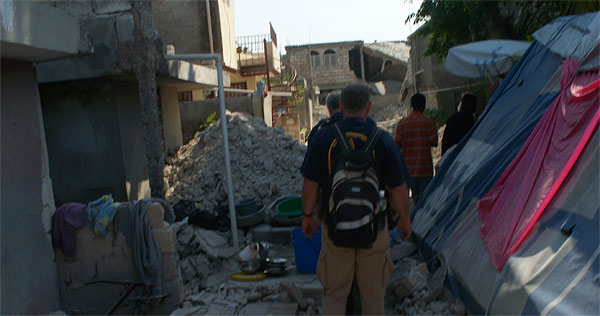 Our job was to inspect and make notes about needed repairs; it was not to make actual repairs. We assured the people that many Christians in the United States were praying for them. We hoped that others would come to help with repairs, although we could not promise that. Often, our prayers were the only hope or comfort we could offer. While inspecting a house in that area, we led five girls and a boy to the Lord, ages 5 – 13. One lady, however, refused to get saved because she said her clothes weren’t good. The pastor promised to go back and visit with her again.
Later that same day while we were inspecting a church, Drayton led sixteen more people to Christ. The next day, seven additional Haitians were saved. Before agreeing to pray, most of the women would find a scarf or handkerchief to cover their heads. Those with bare arms would put on another shirt or wrap a towel around themselves before praying. What a blessing it was to see people eager to come to know Christ. Isn’t it true that tragedy often prods people, no matter where they live, to re-examine their lives? In total, our team inspected 7 churches and over 50 homes. Although the people we visited welcomed us with open arms, Haiti remains a very dangerous country. Our security guard kept a watchful eye on us constantly. He made sure that he stood between us and any possible confrontation. Only women are allowed to stand in line for food. The government is trying to prevent riots by excluding men from food distribution lines.
The Haitian people are very poor; the work to be done is overwhelming; and the Haitians need help to rebuild their lives and their country. Many relief agencies are visible in the country now, but FL Baptists will remain in Haiti long term. The FL Baptists were there for 15 years prior to the earthquake, and they plan to be there indefinitely. Through the efforts of FL Baptists almost 900 churches in Haiti have been established that are now led by Haitian pastors. Since the earthquake 40,000 people have come to know Christ through DR volunteers, Haitian pastors, and a 3-day call to prayer and fasting. The five year vision of the Haitian pastors is for an additional 1.5 million Haitians to come to know Christ. Through your financial help, your prayers, and your time as a volunteer this is possible.
Photos by Drayton Smith, First Baptist Church of Cantonment, for NorthEscambia..com, click to enlarge.
Don’t Be In A Hurry To Fertilize Your Lawn
March 6, 2010
Warmer weather is arriving, but don’t be in a hurry to fertilize your lawn — that’s the word from the University of Florida IFAS Extension office.
Even though it is still winter, now is the time of year that local garden centers begin major advertising campaigns to sell lawn fertilizers. It is too early to fertilize your lawn.
Fertilize when the lawn is actively growing
 Warm-season lawns, including St. Augustinegrass, zoysiagrass, and centipedegrass go dormant in winter in Northwest Florida. Fertilizing now would be a waste of time and money. Why shouldn’t you fertilize warm-season grasses when they are dormant? First, when grasses are dormant, their roots are not able to absorb or use the nutrients from fertilizers. By the time the grass does begin actively growing, most of the nitrogen you applied will have been lost from the soil. A safe time to apply your first lawn fertilizer is around April 15th.
Don’t feed the weeds
Fertilizing while the grass is dormant actually encourages more winter weeds, because you are fertilizing the weeds instead of the lawn. Without competition from the lawn, these weeds will grow faster and become more prolific as a result of dormant fertilizer applications.
Lastly, fertilizing lawns during their transition into dormancy in the fall or out of dormancy in the spring may encourage lawn growth that is more likely to be injured from winter kill. Bare spots and thinning of the lawn as well as delay in spring green-up may occur when lawns are forced to grow when they should be dormant.
Combo products not the answer
 Many of the products available are convenient “weed and feed” products that combine a pre-emergent herbicide and fertilizer in one application. Unfortunately, the ideal time to apply a pre-emergent herbicide is very different than the ideal time to apply fertilizer for warm-season lawns.
In northwest Florida, the recommended application window to maximize the effectiveness of preemergent herbicides is typically between February 15 and March 5.
The application timing for these products is critical since they must be applied before summer annual weeds germinate in spring. It’s always better to apply preemergent herbicides a little earlier rather than too late. And don’t forget to activate them by watering them into the lawn.
For St. Augustine grass, centipede grass, and other warm-season grasses, buy fertilizer that is separate from the pre-emergent herbicide. Apply each at their recommended times.
Finding a separate pre-emergent herbicide, not in weed-n-feed form, may be difficult. Some ones to look for include: benefin (Sta-green Crabgrass Preventer, Hi-Yield Crabgrass Preventer), pendimethalin (Pre-M, Pendulum, Turf Weedgrass Control, Halts Crabgrass Preventer), and bensulide (Green Light Betasan Crabgrass Preventer).
Start with a soil test
A soil test is always a good starting point before investing in fertilizer or lime. Your local University of Florida County Extension office can help you get started.
Theresa Friday is the Residential Horticulture Extension Agent for Santa Rosa County.
Century Care Center Unveils New ‘Person Centered’ Care Model
March 4, 2010
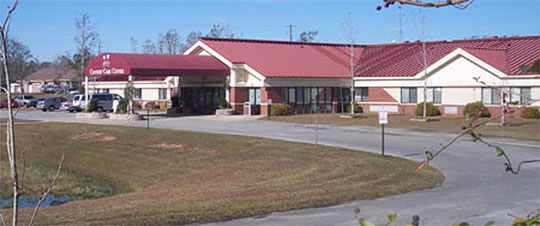
Whether it be at the Teaspoon Cafe or down on Dogwood Lane, there’s a new way of taking care of residents at Century Care Center called the “Person Centered Care Model”.
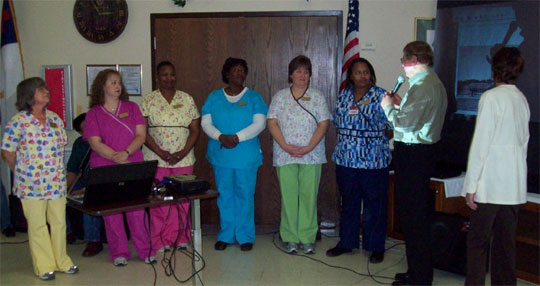 “Our goal is to keep our residents safe, happy, healthy and as active as possible. The Person Centered Care Model gives them more choices, self-respect, independence and keeps them physically and mentally active as possible,” said Don Ripley, Century Care Center administrator.
Under the Person Centered Care Model, residents are allowed to reasonably keep their lifelong daily rituals. Now, residents get choices like their waking or bedtime, what time they want to eat and their dining preferences.
“They will be asked when they want to take a bath or shower, when they want to get their room cleaned and how they want to decorate their room. People are asked what they want to do each day, activities of their choice that are of interest to them, like going shopping, going for a ride through their old neighborhoods, going to the church of their choice, picnic in the courtyard or by the Ole Mill Pond, doing a little fishing in their own stocked fish pond, card games, painting, music…or any other thing that would help pass the time away.”
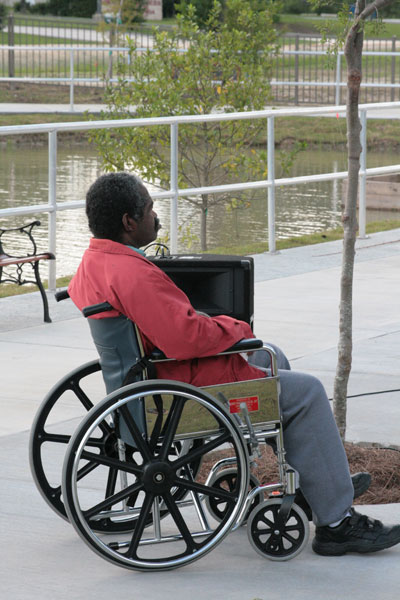 New “communities” and “neighborhoods” have been established within the facility. Hallways and rooms like therapy, dining and showers have been given familiar names from the Century area. Jerry Fischer and Don Sales of the Alger-Sullivan Historic Society assisted Century Care Center in selecting some historic names, such as Spanish Moss Road, Mystic Springs; Dogwood Lane, Country Lane, Teaspoon Cafe, The Spot and Paradise Place.
The Century Care Center staff has been trained by Eric Haider, CEO and president on Person Centered Care, Inc. and founder of the Person Centered Care Model.
“People who live in long term care communities are not second class citizens. They have worked hard for us. They have fought in the wars and risked their lives to protect our freedoms … let’s not take their freedoms away,” Haider said. “Person Centered Care gives personal attention to the people who live in long term care and empowers staff to be a resident advocate.”
Ripley said the changes “should make Century Care Center the best place to work and will, especially provide our treasured Residents with the happiest and best care, both physically and emotionally, for the rest of their lives”.
Century Care Center was recently named as the Business of the Year by the Century Area Chamber of Commerce The 88-bed facility is ranked by the U.S. Department of Health and Human Services as the number one of 69 nursing homes within 100 miles of Century
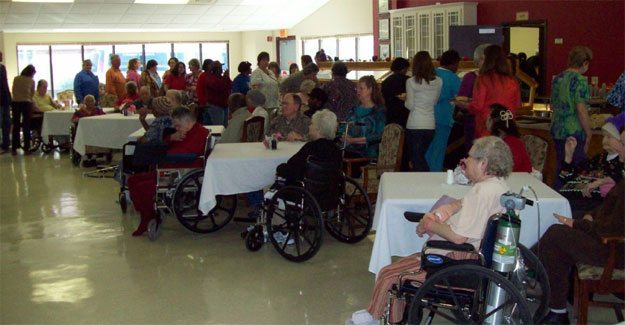
Pictured top: Century Care Center. Pictured top inset: The Person Center Care Model is introduced. Pictured bottom inset: A Century Care Center resident enjoying time by the Old Mill Pond. Pictured below: Residents in the “Teaspoon Cafe” at Century Care Center. Submitted and NorthEscambia.com photo, click to enlarge.
NHS Digital Design Students Win Pageant Poster Contest
March 4, 2010
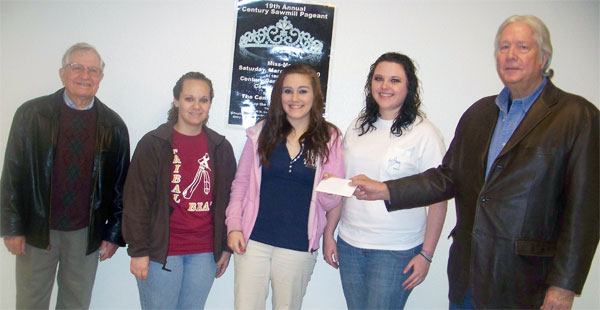
Northview High School’s Digital Design classes participated in a 19th Annual Century Sawmill Pageant poster contest sponsored by the Century Lions Club.
Alissa Fiellin placed first in the contest to create the best poster to promote the pageant. Alex McDonald placed second in the poster contest, and Erin Fremin placed third. Fiellin received a $25 prize for her efforts.
The posters will be used to promote the annual Century Sawmill Beauty Pageant on Saturday, March 27 at 10 a.m. at Carver/Century K-8 School. Registration forms are available at Whataburger in Century.
Pictured: (L-R) Century Lions Club member Edsol Smith, Century Sawmill Pageant Poster Contest winners Erin Fremin, third place; Alissa Fiellin, first place; and Alex McDonald, second place; and Lions member Don Sales. Pictured below: Posters by (L-R) Alex McDonald, Alissa Fiellin and Erin Fremin. Submitted photos for NorthEscambia.com, click to enlarge.



Hospital Employee Named A ‘Legend’ For Helping Others
March 3, 2010
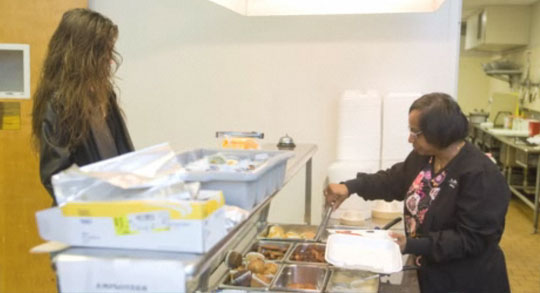
Baptist Health Care has recognized employees who go above and beyond to improve the quality of life for people in the communities served by the organization, including an employee at Atmore Community Hospital.
The health care company recently honored the employees as part of the their “Legends” program.
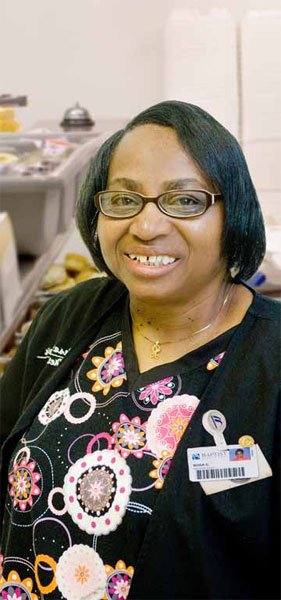 Rosa Davis is a dietary aid and cook in the food services department at Atmore Community Hospital.
Davis is a woman of small stature, but has a big heart and strong commitment to helping many people in her community through some challenging situations.
When one neighbor’s home was destroyed by fire, Davis immediately offered her home as a source of shelter. She gathered clothes, food and necessary household items to help comfort and support the family. A few weeks later, one of the family members suddenly became ill. The family did not have the resources to get a much-needed prescription filled, so Davis went to the drug store, purchased the medication and delivered it to the family.
When Davis got news that another neighbor was unable to pay her electric bill, Rosa paid the bill and the power was returned to her neighbor’s home.
Lastly, Davis’ brother had to leave his home when it became flooded with more than a foot of water. Again, Davis was on the scene with food for the family. She arrived with cleaning supplies, too, and went to work putting the house back to order. Davis also serves the community-at-large through local churches.
“Rosa Davis has helped many people in her community through some challenging situations,” said Donna Rogers, director of food services. “Rosa…stands out as a Legend to all of the staff at Atmore Community Hospital.”
Other area Baptist employees nominated for “Legends” status included Stephanie Bain, a nurse manager in the operating room at Jay Hospital and Darren Flott, director of cardiopulmonary services at Atmore Community Hospital.
Pictured: Rosa Davis of Atmore Community Hospital, a Baptist Health Care “Legend”. Courtesy photos for NorthEscambia.com, click to enlarge.
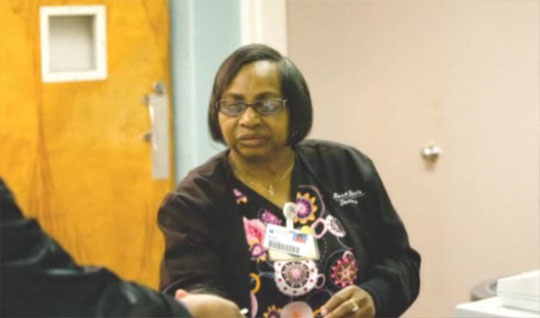
Making History: Molino Park Students Recognized At County History Fair
March 3, 2010

Several Molino Park Elementary School students were recognized during the recent Escambia County History Fair.
“We were so proud of our students,” said Ester Robinson, fourth grade teacher. “All of our 4th grade students participating in the History Fair worked hard on their projects.”
The following Molino Park Elementary School students were recognized:
Elementary Individual Exhibits
- 2nd Place Kyle Lovell (Garrett Morgan Project)
- Honorable Mention: Hunter Rogers (Jackie Robinson Project)
African American Heritage Awards, Individual Elementary
- 1st Place: Kyle Lovell
- 2nd Place: Carson Lowery
- 3rd Place: Hunter Rogers
African American Heritage Awards, Group Elementary
- Sabra Stewart & Devin Abrams (African American Women: Seeds of Greatness Project)
The Holly Benson Women’s History Award
- Elementary: Carson Lowery (Harriet Tubman Project)
Historical Exhibit Awards: Elementary
- 2nd Place: Kyle Lovell
Escambia County Council of PTA/PTSA Awards
- Sabra Stewart
- Devin Abrams
T. T. Wentworth Museum Best in Show Awards
- Kyle Lovell
- Hunter Rogers
Pictured: Molino Park Students participating in the recent Escambia County History Fair were: (front L-R) Devin Abrams and Sabra Stewart; (back L-R) Kyle Lovell, Carson Lowery, Hunter Rogers, and Ali Carter. Submitted photo for NorthEscambia.com, click to enlarge.
Students Of The Month Named
March 2, 2010
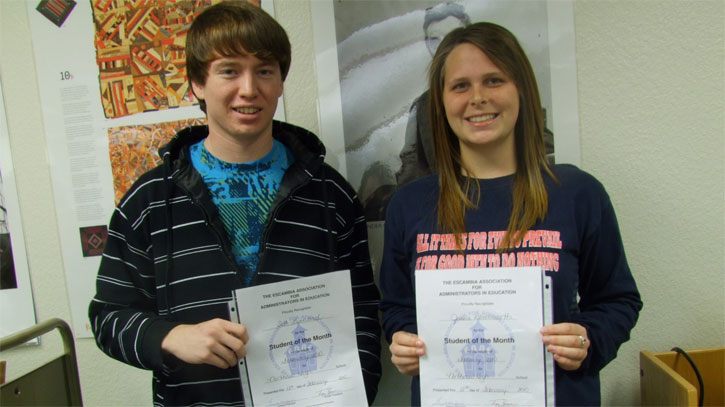
Escambia County Students of the Month for February have been named by the Escambia Association for Administrators in Education. The awards are presented monthly to two students from participating schools.
The following students were named from North Escambia area schools:
- Bratt: Kendrell B. Lowery, third grade; Jaylee S. Redmond, kindergarten.
- Jim Allen: Hunter L. Myrick, kindergarten; Kendall E. Newton, kindergarten.
- Molino Park: Reagan G. Daniels, kindergarten; Jaden I. Lewis, kindergarten.
- Ernest Ward: Kelton J. Wooten, seventh grade; Kyle A. Wood, eighth grade.
- Ransom: Britton S. Dunn, eighth grade; Anna M. Del Gallo, eighth grade.
- Northview: Jessica N. Bloodsworth, senior; Seth M. Leonard, senior.
- Tate: Amy E. Sapp, freshman; Tyler D. Emmons, senior.
Pictured top: Seth Leonard and Jessica Bloodsworth, Northview High School’s Students of the Month for February. Submitted photo for NorthEscambia.com, click to enlarge.
Ernest Ward Students Awarded At History Fair
March 1, 2010
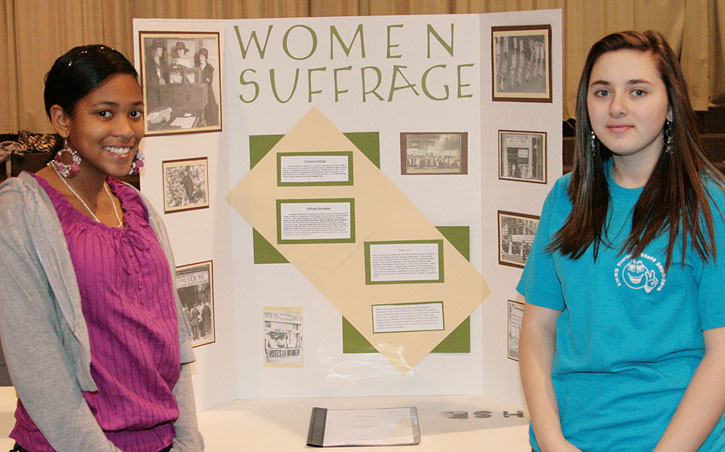
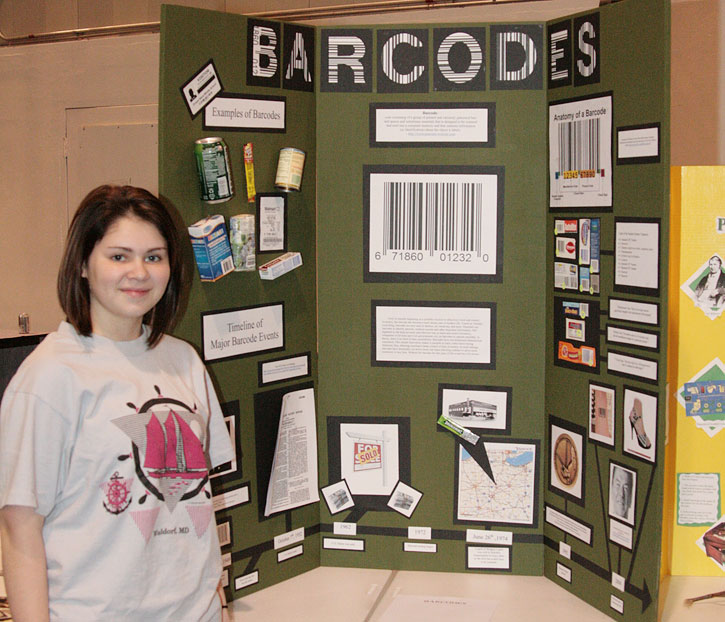
Several Ernest Ward Middle School students received awards Saturday for their National History Day projects in a district competition in Pensacola. Victoria Wright’s “Barcode” project won a NSDAR Excellence in History Award, and she received Honorable Mention in the county competition. She also received a T.T. Wentworth Museum Best in Show Award given by West Florida Historic Preservation, Inc.
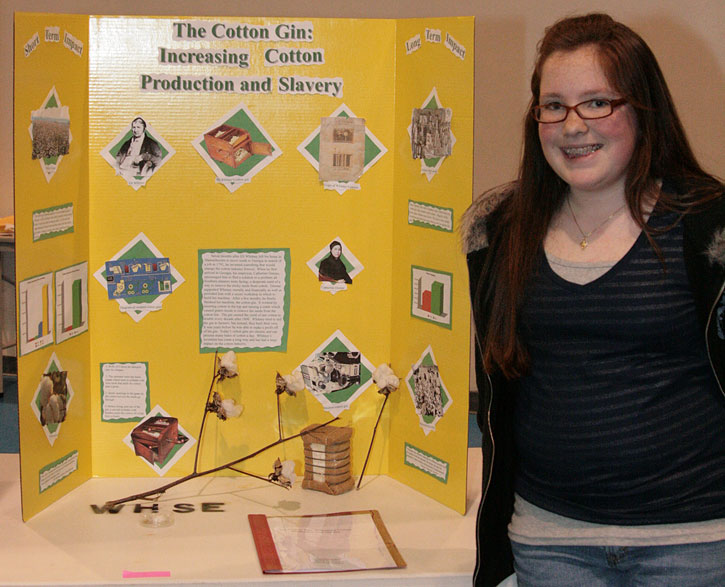
Courtney Solari’s “Cotton Gin” project won third place in the African American Heritage Awards given by the Omega Psi Phi Fraternity.
Samantha Barrow and Tamara Green’s “Women’s Suffrage” project won a Holly Benson Women’s History Award and they also received $50 each for their win.
“I was very proud of all of our students,” said Ernest Ward geography teacher Laura Chavers.
The top seven projects from a Ernest Ward History Fair headed to the district competition. EWMS students were required to do research into a topic on the theme Innovation in History: Impact and Change. The research was presented in exhibit form, much like the typical science fair. Students complete projects either individually or in teams of two.
Pictured top: Tamara Green (left) and Samantha Barrow – Womens Suffrage. Pictured below: Courtney Solari – The Cotton Gin: Increasing Cotton Production and Slavery. Pictured bottom: Victoria Wright — Barcodes. NorthEscambia.com photos, click to enlarge.
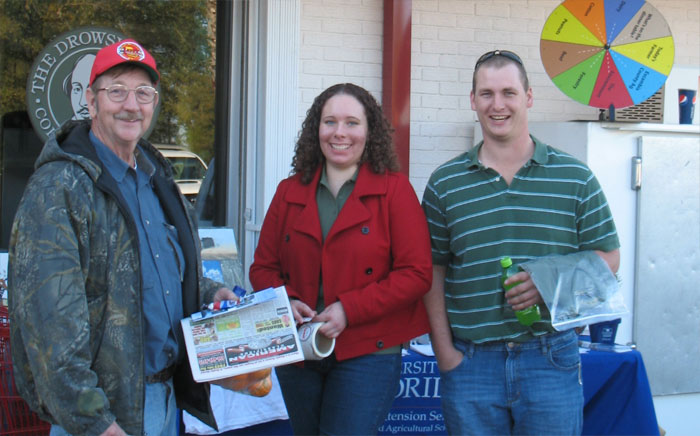
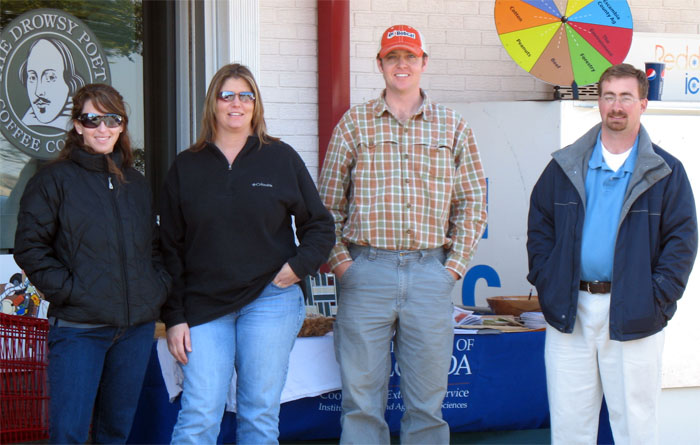
EscaRosa Young Farmers and Ranchers Reach Out To Grocery Shoppers
March 1, 2010
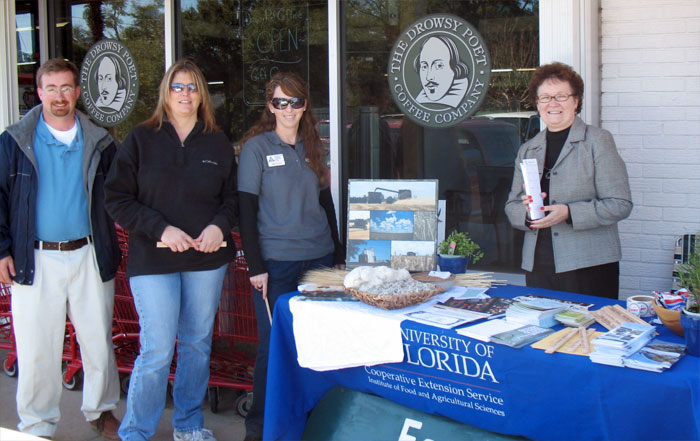
The EscaRosa Young Farmers and Ranchers recently worked over the weekend to educate Pensacola residents about the economic value, diversity, and importance of agriculture in Escambia and Santa Rosa counties.
The group set up an informational display outside of Apple Market Grocery on Scenic Highway in Pensacola. Store owner David Apple, known for his support of local products, generously allowed the group to continue to spread the message about agriculture.
Over a six hour period, the EscaRosa Young Farmers and Ranchers introduced more than 100 people to our counties’ rich agricultural heritage and focusing on the positives of agriculture. Dorothy Lee, Escambia County Family and Consumer Science agent, developed a “Grocery Shopping List and Tips” to help people stretch their food dollar, while other members of the group tempted passersby with peanuts, “Test your Ag Knowledge game”, “I met a Farmer” stickers, and hosts of other goodies.
EscaRosa Young Farmers and Ranchers display was in partnership with UF IFAS Escambia County Extension and Escambia County Natural Resource Conservation Division, and it was made possible by the generous donations of the Escambia County Farm Bureau and Farm Credit of Northwest Florida.
Pictured top: (L-R) Jacob Gilmore, Young Farmers and Ranchers member from Gizmo Angus Farm; Debbie Williams, Escambia County Natural Resource and Conservation Division; Abbie Rolph Young Farmers and Ranchers chairwoman; and Dorothy Lee, UF IFAS Escambia County Family and Consumer Science agent. Pictured below: Tab Jernigan, Andrea Byars, and an agricultural enthusiast pose for the camera. Pictured bottom: Abbie Rolph, Debbie Williams, Cheyenne Gibbs, and Jacob Gilmore smile for the camera during a brief lull from visitors. Submitted photos for NorthEscambia.com, click to enlarge.