
Photos: Ernest Ward Holds Womanless Beauty Pageant
December 15, 2010
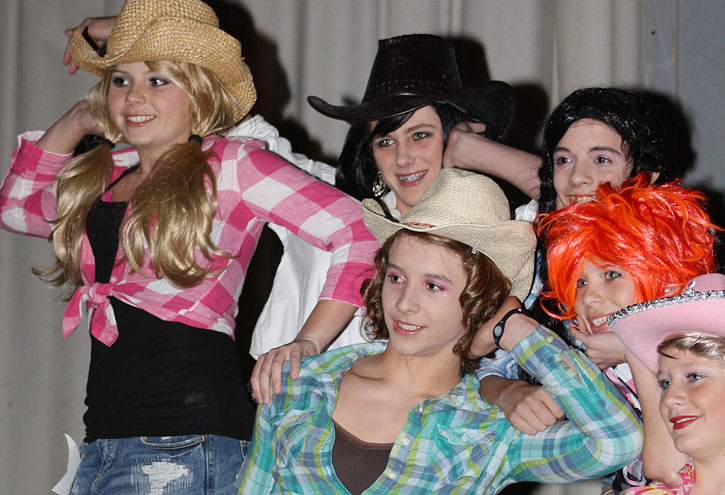
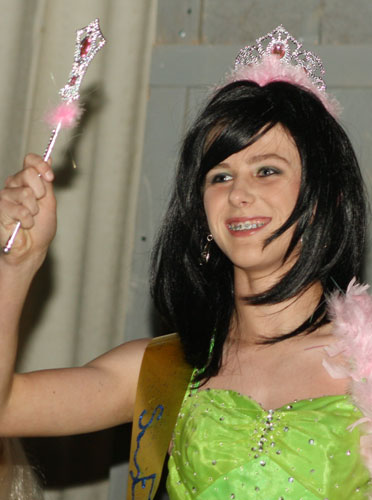 Aaron “Amanda” McDonald was named Junior Mr. Miss Ernest Ward Middle School in a womanless beauty pageant Tuesday night. First runner up was Austin “Autina” Cunningham; second runner-up was Tristan “Trista” Portwood; and third runner-up was Jacob “Joselyn” Weaver. Tristan “Trista” Portwood was named Miss Congeniality, while Austin “Autina” Cunningham received the Physical Fitness Award. The Poise and Appearance Award was presented to Aaron “Amanda” McDonald, and the People’s Choice Award went to Tristan “Trista” Portwood. The womanless pageant was the school’s first ever, with proceeds benefiting the school’s cheerleaders. For a photo gallery with all of the contestants, click here. Pictured top: Contestants in a womanless beauty pageant Tuesday night at Ernest Ward Middle School. Picture inset: Junior Mr. Miss Ernest Ward Middle School Aaron “Amanda” McDonald. NorthEscambia.com photos, click to enlarge.
Ernest Ward Drama Students Compete At Districts
December 14, 2010
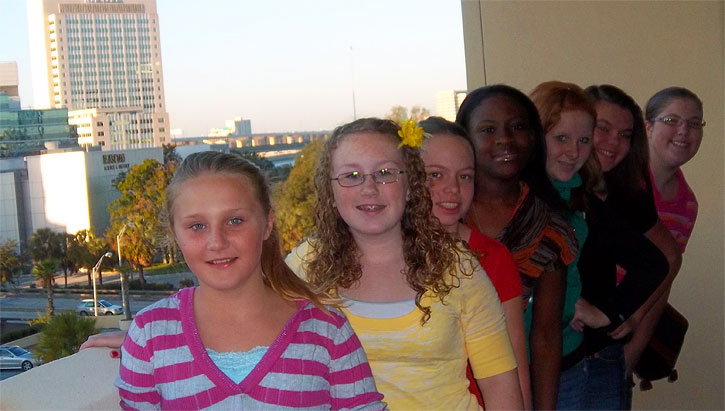
Seven Ernest Ward Middle School students recently attended the District 1 Florida Junior Thespian Festival in Jacksonville, with three students advancing to the State Festival.
Megan Bryan, Morgan Packer and Katelyn Born will participate at the state level in Melbourne in February.
“Many of the schools we performed against are prep, fine arts schools or academies so it is an honor to have our students compete,” said Katie Ward, Ernest Ward drama instructor. “It was tough judging this year, but all the girls did their best and made Ernest Ward proud.”
Ernest Ward students participating in the District 1 Florida Junior Thespian Festival were:
- Katelyn Born, performing a monologue entitled “Wedding Woes”
- Danielle Suggs, performing a monologue entitled “A Curse Upon You Sister”
- Amber Freeman, performing a monologue entitled “Class Pictures”
- Kendral Langford, performing a monologue entitled “Don’t Believe a Word I Say”
- Liberty Peebles, performing a monologue entitled “I Hate My Middle Name”
- Megan Bryan and Morgan Packer, performing a duet entitled “The Sister”
Pictured top: Ernest Ward Middle School drama students in Jacksonville: (L-R) Katelyn Born, Amber Freeman, Kendral Langford, Danielle Suggs, Megan Bryan, Morgan Packer and Liberty Peebles. Submitted photo for NorthEscambia.com, click to enlarge.
Nominate North Escambia Persons Of The Year
December 13, 2010
NorthEscambia.com will honor several North Escambia residents as North Escambia Persons of the Year as 2010 comes to a close, and we need your help.
We are asking our readers to nominate individuals that they believe made a difference in North Escambia during 2010. We will choose several of them to be named as a 2010 North Escambia. Person of the Year. The awards are our way of saying thanks to those that have worked to improve our lives in the North Escambia area during the past year.
We are not necessarily looking for a person with a long list of accomplishments. We are looking for people that have given of themselves to help others and the communities of North Escambia during 2010.
To nominate someone, please email their name, contact information (if known), and the reason why you believe they should be a Person of the Year. The person must either be a resident of North Escambia, work in North Escambia or otherwise have significantly impacted North Escambia in some way. For the purposes of this award, we define North Escambia as being Cantonment north to the Alabama line.
Entries should be emailed to news@northescambia.com by Monday, December 20. We need your email and phone number just in case we have questions, but your name and contact information will not be published.
The 2010 North Escambia Persons of the Year will be named after Christmas.
Last year, the following were named 2009 North Escambia Persons of the Year:
(These persons are not eligible for the 2010 Persons of the Year.)
- Jerry Fischer [Read more...]
- Sonja Luker [Read more...]
- Rev. Willie H. Carter [Read more...]
- Charles Williams [Read more...]
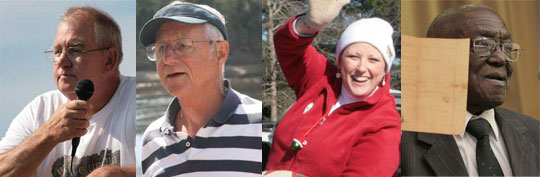
Pictured top: The 2009 Persons of the Year (L-R) Charles Williams, Jerry Fischer, Sonja Luker and Rev. Willie H. Carter. NorthEscambia.com photos, click to enlarge.
Church Uses Cardboard Testimonies To Share Stories Of Faith
December 13, 2010
They say a picture is worth a thousand words. But a few words on piece of plain brown cardboard can tell a life story and story of faith in a way a thousands words could not touch.
The concept is simple. A piece of cardboard. A permanent marker. On the first side of the cardboard for all to see is the story of a sin, a trial, a struggle or battle. On the flip side is where the person stands today though Christ.
A young woman walks into the spotlight at Highland Baptist Church in Molino with a few simple words written on a piece of cardboard. Words that perhaps would be hard to verbally express about childhood abuse in front of strangers, much less friends, family and neighbors in a rural church.
“Innocence Taken as a Young Girl,” one side of her cardboard says. The other side: “By God’s Grace Finally Healing. One Step Closer to Peace.”
Her “Cardboard Testimony” was one of many shared at a recent service at Highland. The biggest challenges, hurts, prayers of a lifetime condensed into moments in the spotlight on plain cardboard.
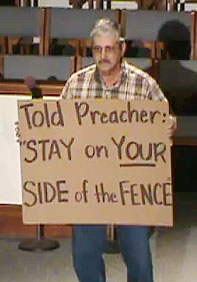 “Told Preacher – Stay On Your Side of the Fence,” one man’s Cardboard Testimony read. The other side: “God Removed the Fences”.
Removing fences – that’s what Cardboard Testimonies do in a figurative manner , according to Highland Baptist Pastor Brian Calhoun.
“People that might not be able to step up and speak out their testimony in words in front of others can do a cardboard testimony without speaking,” he said. And sometimes the visual is the evidence of the powerful.
“Only child born with severe (heart) defects. 2 cardiac arrests. 4 heart surgeries. Gave Her Back to God,” a mother’s cardboard reads. Her child’s cardboard: “8 Year Old Heart Survivor. Standing here by God’s grace and love.”
“The point is that even in the darkest hour, there’s a time a strength and God provides,” Calhoun said.
Watch the Highland Baptist Church “Cardboard Testimonies” in the YouTube video at the top of the page. If you don’t see the video, it is because your church, school, home or work firewall is blocking external videos.
Submitted photos for NorthEscambia.com, click to enlarge.

Move That Bus: Pensacola Extreme Home Makeover
December 12, 2010

 The Emmy award-winning reality show Extreme Makeover: Home Edition episode in Pensacola aired nationwide Sunday night, as well as locally on WEAR TV 3.
On October 18, Finis Gaston and his family received news from special guest Mariah Carey that they were recipients of Extreme Makeover: Home Edition. While the Gaston family vacationed in Disney World, EM: HE design team, local builder Heritage Homes and thousands of community volunteers built their 3,600-square-foot dream home located at 1301 Rainbow Avenue in Pensacola.
 The volunteer partners included several from the North Escambia area, and the Tate High School Showband of the South was featured in the “big reveal” parade.
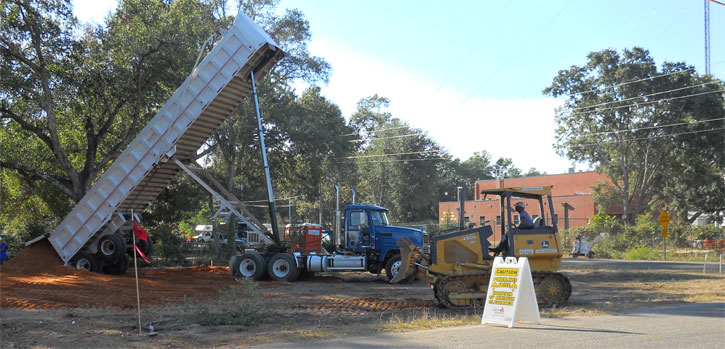
The red dirt used for foundation was donated by Campbell’s Sand & Gravel in Century owned by James Campbell. Four dump trucks and seven 18-wheelers each dumped two loads of dirt at the construction site on Rainbow Avenue.
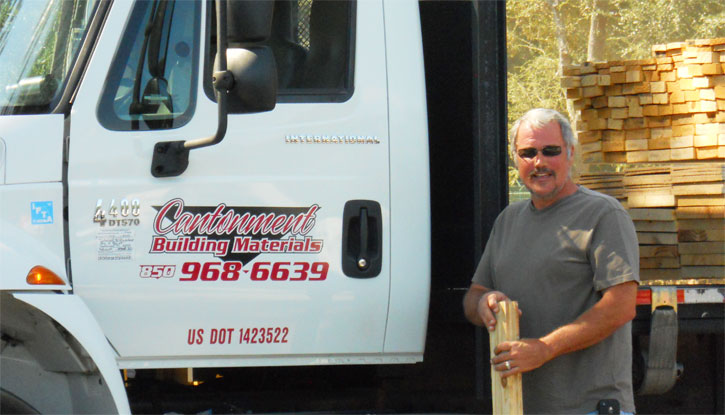
American Concrete, located in Molino, donated the concrete for the foundation of the home, and lumber for the house was donated by Cantonment Building Materials. Both companies are owned by Billy Campbell.
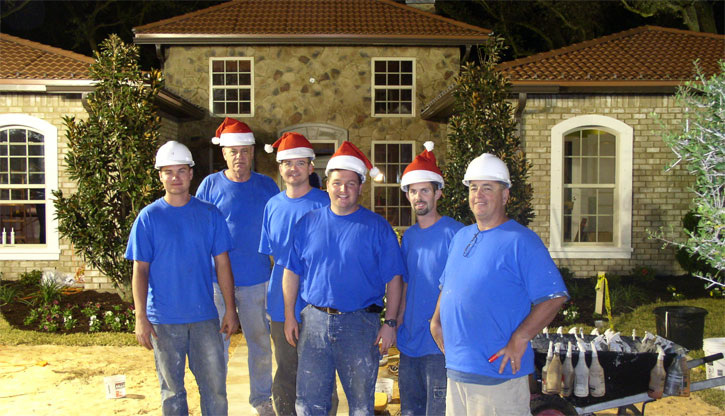 Rock Solid Surfaces in Cantonment, the exclusive training facility and distributor of Granicrete for south Alabama and Northwest Florida, did the front walkway and courtyard. Granicrete is a decorative concrete designed to adhere to concrete, tile, and even laminate countertops producing the look of natural stone (field stone, slate, marble, etc.) with the consistency and durability of concrete.
“We are excited for the nation to see the story of Finis and this Pensacola community,” said Frank Lott, III, president of Heritage Homes. “Together, we built a great home for Finis and his family, and weʼre ready to gather again with all the volunteers and partners to enjoy the experience together.”
The newly completed home is 3,600 square feet total with 3,100 square feet heated and cooled and a 500 square foot garage. Layout includes four bedrooms and a nursery as well as three bathrooms.
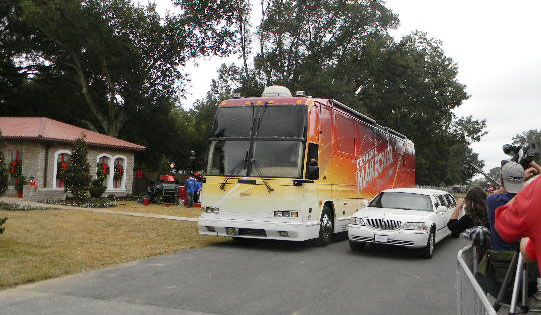
Pictured top inset: The Tate High School Showband of the South marches in the “Big Reveal” parade. Pictured middle inset: Cantonment Building Materials donated lumber for the home. Pictured bottom inset: Tyler Hochstetler (Atmore), Steve Gaier (Orlando), Berry Nall (Atmore), Rocky Williams (Cantonment), Matt Cummings (Cantonment) and Mike Mathews (Pensacola) of Rock Solid Surfaces in Cantonment. Pictured below: Campbell’s Sand & Gravel of Century dumps a load of dirt for the foundation of the ABC Extreme Home Makeover house. Pictured bottom: “Move That Bus!”. Submitted photos for NorthEscambia.com, click to enlarge.
Merry Christmas Y’all
December 12, 2010

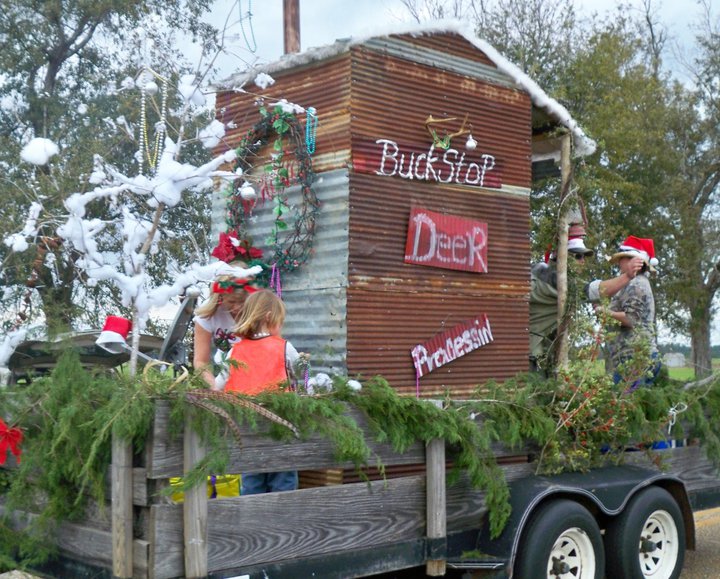
 Our redneck friends and neighbors in north Santa Rosa County celebrated Christmas with their annual Chumuckla Redneck Christmas Parade Saturday. An estimated 18,000 people attended the parade and BonfireJam with Rodney Atkins and Little Big Town.
Deer, camo, trucks and tractors were a common theme, along just good redneck fun.
For more photos from the Chumuckla Redneck Christmas Parade, click here.
Pictured above and below: The annual Chumuckla Redneck Christmas Parade was held Saturday afternoon in north Santa Rosa County. Submitted photos for NorthEscambia.com, click to enlarge.
Sims, Golson To Wed
December 12, 2010

Darryl and Ellen Sims of Bogia announce the engagement and forthcoming marriage of their daughter, Chelsea Sims, to Ethan Golson, the son of Ricky and Cheryl Golson of Bratt.
Chelsea is the granddaughter of Buck and Glenda Kelley of Bogia and Gene and Gwen Sims of Brewton. She is a 2009 graduate of Northview High School and is currently attending Pensacola State College. She is pursuing a degree in education. She is employed with Heather Leonard’s Danceworks as a dance instructor.
Ethan is the grandson of Marlene Forester of Atmore and the late Curtis Forester, and the late Walter Lee Golson and Doris Oline Hopkins. He is a 2008 graduate of Northview High School. He is currently serving in the U.S. Navy and is stationed in Norfolk, Virginia, aboard the U.S.S. Scranton.
The wedding will be at 4:00 p.m. on Saturday, January 1, 2011, at Highland Baptist Church in Molino. All friends and relatives are invited to attend.
Local Residents Celebrate Christmas At Sabal House
December 12, 2010

The Sabal House Adult Living Facility in Pensacola recently held their annual Christmas Family Night. Residents Gail Fillingim (seated, left) from Bay Springs and Betty Meadows (seated, right) of Davisville, were joined by their daughters, Susan F. Purvis and Sheila M. Bass, and other family members. They were treated to a delicious prime rib dinner and entertained by The Silvertone Summer Band with a special appearance by Santa Claus. Submitted photo for NorthEscambia.com, click to enlarge.
Featured Recipe: Impressive Athenian Chicken Rolls
December 12, 2010
This weekend’s featured recipe from Janet Tharpe is a “Athenian Chicken Rolls”, flavorful little bundles of chicken, feta and spinach.
To print today’s “Just a Pinch” recipe column, you can click the image below to load a printable pdf with a recipe card.

Here is the sauce that omitted from the recipe card above:
ATHENIAN CHICKEN SAUCE
2 Tbsp butter
3 Tbsp mushrooms, chopped
1 Tbsp flour
1 c chicken broth
3/4 c white wine, dry
1/2 lemon, juiced
1 Tbsp capers, drained
To make sauce, drain most of oil from frypan, leaving brown bits on bottom of pan; add butter and melt over medium heat. Add mushrooms and saute about 2 minutes. Add flour, stirring to blend and thicken. Add chicken broth, wine, lemon juice and capers. Cook about 4 minutes or until thickened.
Photo Gallery: Byrneville Elementary Presents Jingle Bell Jukebox
December 11, 2010

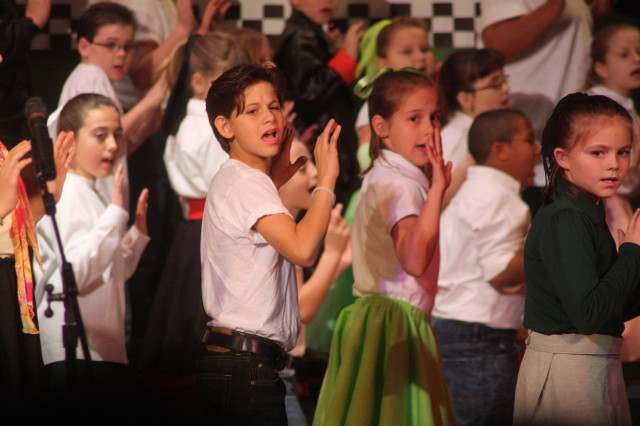
The third, fourth and fifth grade students at Byrneville Elementary School presented their annual Christmas play with “Jingle Bell Jukebox” Friday night at Northview High School. The play was under the direction of Elaine Holk.
For a photo gallery, click here.
Pictured above and below: Byrneville Elementary presented “Jingle Bell Jukebox” Friday night. Submitted photos by Heather Leonard, click to enlarge.