

Civil Rights In Her Words: People Were Ready To Die
January 18, 2011


People weren’t playing.
People were ready to kill.
But people were ready to die so we could so we could go where we want to go today.
So we could sit where we want to sit today.
Profound words for a young Century girl that dreamed a dream of people overcoming.
Born and raised in Century — a product of the segregated Carver High School and Pilgrim Lodge Baptist Church — there was a fire inside Mercy E. Moore.
At 17 she would ride with other youth in the back of an ambulance from Morris Funeral Home to the sit-ins at Woolworth’s Lunch Counter in Pensacola.
“They put mustard and ketchup on our heads and on our back and write notes…’N***** Stew’,” she said of the hours standing for equality at that lunch counter. “We just sat there…We were praying quietly.”
Now 72 and a retired attorney, Moore reflected on her experiences during a Martin Luther King, Jr. service in Century Monday morning.
Her story is in the video below, in her own words…
(If you do not see the video above, it is because your firewall
or filtering software is blocking YouTube videos.)
Carrigan Graduates Basic Training
January 17, 2011
 Air Force Airman Christopher K. Carrigan graduated from basic military training at Lackland Air Force Base, San Antonio, Texas.
The airman completed an intensive, eight-week program that included training in military discipline and studies, Air Force core values, physical fitness, and basic warfare principles and skills.
Airmen who complete basic training earn four credits toward an associate in applied science degree through the Community College of the Air Force. Carrigan earned distinction as an honor graduate.
He is the son of Curt and Linda Carrigan of Azel Scott Lane, Jay, Fla. Carrigan graduated in 2010 from Jay High School.
Following His Calling: Dentist Helps Those In Need
January 16, 2011
Dr. T.J. Morris is engaged in the work he loves at his dental clinic in Atmore, a full-time practice made possible largely by tuition loan repayment assistance from the National Health Service Corps.
Morris (his full name is Terry Jack Morris, Jr., but he goes by T.J. to avoid confusion with his father) has treated both adults and children at the clinic since the spring of 2010. “I fell in love with the people and the community here,” said Morris. “It has been a blessing from God to be able to serve these people, do what I love, and be compensated for it.”
 Morris is one of the few Medicaid providers in the tri-county area. He sees patients from neighboring counties, which is a big help to those who cannot afford to pay for dental care. Payments are charged on a sliding scale based on income, but no patient is turned away. Patients have shown their appreciation by offering him squash, fudge and homemade cakes.
“This is what God has called me to do,” he said. “I have never enjoyed working like this before.”
Atmore is located in a dental health shortage area, which is defined as an area where there are not enough dentists to serve the needs of patients in a particular geographic region.
After the death of Dr. Thomas Rice and the closure of another dental practice in Brewton, there was a definite need for dental services in Atmore and surrounding areas. Dr. Morris learned about the opening through a dentist in Mobile.
With special permission granted by the Alabama Board of Dental Examiners, Morris was able to purchase the established practice from the estate of the late Dr. Rice. He said this would not have been possible without federal financial support because he had a sizable student loan debt. Without the repayment assistance, he would not have qualified for additional loans.
For almost 40 years the National Health Service Corps has helped thousands of healthcare professionals practice in communities where they are most needed because of the financial assistance provided through student loan repayments and scholarships. Thanks to the American Recovery and Reinvestment Act of 2009, an additional $300 million was allocated to assist more professionals repay student loans.
Pictured: Dr. T.J. Morris provides dental care to a young patient at his Atmore office. Courtesy photo for NorthEscambia.com, click to enlarge.
Featured Recipe: A Twist On Grilled Cheese And Tomato Soup
January 16, 2011
This weekend’s featured recipe from Janet Tharpe is “Grilled Cheese And Tomato Soup”. No popping a can and American cheese here — wholesome ingredients are used for a homemade tomato soup and a blend of cheese combine for the sandwiches.
To print today’s “Just a Pinch” recipe column, you can click the image below to load a printable pdf with a recipe card.

Stop Crape Murder: Don’t Cut Back Your Myrtles
January 15, 2011

 Proper pruning is one of the most misunderstood of all gardening practices, yet it is one of the most important procedures in a landscape. A common victim of bad, improper pruning is the crape myrtle. Crape myrtles will occasionally need pruning to obtain the desired landscape effect, but many times these plants are butchered for no good reason.
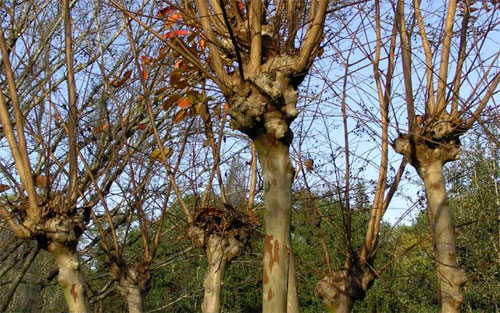
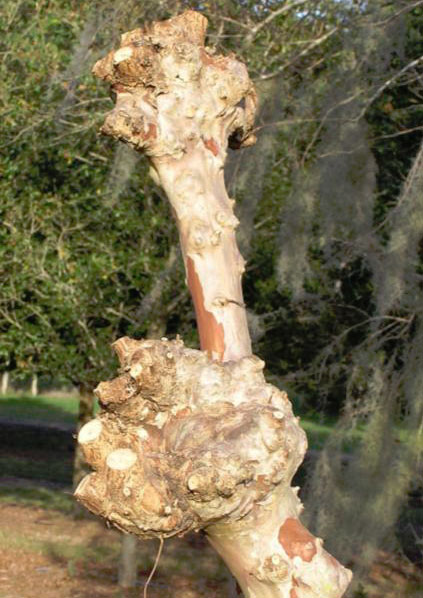
According to Dan Gill, LSU AgCenter Horticulturist, an unfortunate trend in crape myrtle pruning is to lop off their tops, which results in a tree reduced to large branches ending in stubs. The lush growth that occurs at these cut sites appears vigorous but is actually structurally weak and more susceptible to fungus diseases such as powdery mildew. And when pruning is conducted improperly over several years, unsightly large, swollen knobs form at the point where pruning is done each year.
Flowers are not the only virtue of this tree. Many varieties have beautiful bark and growth habits that can be enjoyed all year if trees are not heavily pruned.
Crape murder
This unsightly, ugly pruning known as crape murder is not recommended. Once it’s done, it ruins the tree’s graceful natural shape for the rest of its life.
Often gardeners think they are supposed to prune their crape myrtles that way, and nothing could be farther from the truth. Many think that crape myrtles need to be cut way back to bloom well. This is not accurate. The flower clusters may be larger on lopped trees, but the added weight on the ends of long branches causes them to bend over awkwardly, especially after it rains. And since the tree is smaller, it actually produces fewer flower clusters.
 Many people say they need to cut a crape myrtle back because of its size. If the height of the crape myrtle is not causing a problem with a nearby structure or power lines, there is little reason to reduce the tree’s height. To cut a crape myrtle back for the vague reason of “it just seems too large” ignores the fact that these plants are trees. They are supposed to be large.
To prune a crape myrtle properly, first decide if it needs to be pruned. As with any pruning project, you must have a specific, valid purpose in mind before you begin. In other words, if you can’t come up with a good reason to prune your tree – leave it alone. If you do see something that calls for pruning, study the tree carefully and determine what needs to be pruned to accomplish the specific purpose identified.
There are a few valid reasons for pruning a crape myrtle. One reason is to eliminate crossed and rubbing branches because rubbing branches can lead to open wounds.
Over time, branches that are too low on the trunk will need to be pruned to raise the canopy. We often need to remove weak, thin branches from the inner part of the tree to produce a cleaner-looking tree. Selected branches may need to be pruned back to a side branch or the trunk to create a shapelier tree. Of course, you need to prune to keep suckers removed from the base of the trunk.
 Generally, avoid cutting back or shortening branches much larger than your finger, although cutting larger branches back to a side branch or to the trunk when needed is fine.
Visitors to our area often marvel over our crape myrtles. During summer, their colorful flowers, attractive bark and beautiful shape make them among our most valuable landscape plants. Please appreciate this – and stop the unfortunate trend of hacking them back.
Theresa Friday is the Residential Horticulture Extension Agent for Santa Rosa County.
Pictured top: Crape myrtle trees do not need pruning for new growth. Pictured below: These Crape myrtles were ruined with unnecessary topping. Submitted photos for NorthEscambia.com.

Local Art Students Honored During Mask Exhibit
January 14, 2011

Several North Escambia students were month those honored during the fourth annual mask exhibit by Escambia county School students.
The exhibit is January 11-21 at the Artel Gallery, 223 Palafox Place in the first floor of the old Escambia County Courthouse.
Northview students Kiani Okahashi, Charles Rolin and Katelyn Garrison where awarded first through third places, while Tate student Mercedez Rocheblav’s ceramic piece “Dragon” was named Best of Show.
The names of North Escambia area winners and participants are listed below, along with their award, title of their piece, medium and school.
High School
- Mercedez Rocheblave, Best of Show, “Dragon”, Ceramics, Tate
- Kiani Okahashi, First Place HS, “L’homme Ridicule”, Mixed, Northview
- Charles Rolin, Second Place HS, Itcho Tastanagi (Deer Warrior), Mixed, Northview
- Katelyn Garrison, Third Place HS, “Octavius”, Mixed, Northview
- Hailey Garrison, “Foreign Body”, Mixed, Northview
- Elizabeth Wright, “Recycle, Reuse, Renew”, Mixed, Northview
- Katelyn Varhalla, Steel Magnolia, Ceramics, Tate
- Shane Sahli, “Big Al”, Ceramics, Tate
- Saber Gipson, “Tribal Love”, Ceramics, Tate
Elementary:
- Lauren Mills, “The Crazed Mask”, Paper and yarn, Jim Allen
- Alexanderia Harrison, Honorable Mention, “Coco Crazy”, Paper and yarn, Jim Allen
- Brooklyn Jensen, “The Crazy Mask”, Paper and yarn, Jim Allen
- Corey Ryland, “The Crazy Mask”, Paper and yarn, Jim Allen
- Paige Owen, “The Mystery Mask, Paper and yarn, Jim Allen
Pictured top: Katelyn Garrison and her mask. For other students and their masks, scroll down this page.

Kiani Okahashi (above).

Hailey Garrison (above).

Elizabeth Wright (above).

Charles Rolin (above).
Submitted photos for NorthEscambia.com, click to enlarge.
Featured Recipe: Irish Nachos
January 9, 2011
This weekend’s featured recipe from Janet Tharpe is “Irish Nachos”, a satisfying take on traditional nachos that will fill up even the hungriest sports fan. Control the heat by adding or adjusting the jalapenos.
To print today’s “Just a Pinch” recipe column, you can click the image below to load a printable pdf with a recipe card.

Yes, You Can Grow Potatoes In North Escambia
January 8, 2011

These cold winter days make gardeners yearn for the warmth of April to be able to get their vegetable garden started, but they needn’t wait so long. Late January through February are ideal times for establishing some potatoes in the garden. When you are eating YOUR home-grown, fresh potatoes in May, you won’t even think of those the day you braved a cold, brisk wind and drizzly skies to get your potatoes planted.
For those not familiar with growing potatoes, you don’t plant the typical seed to get more of the wonderful vegetable. What growers call “seed” is actually a portion cut from a potato tuber that has an active growing point called the “eye”. Many gardeners plant seed potatoes that they cut themselves from potatoes purchased at grocery stores, but it is better to purchase seed potatoes that have been certified. Certification insures that the seed tubers are free of disease. You can usually purchase seed at farm and garden supply stores in our area, and you can usually order seed. If you are unsure of where you can buy the seed, call the Extension office.
 Before you plant any new crop, a soil test should be taken to determine soil fertility. Based on University of Florida fertilizer recommendations about 0.75 lbs of nitrogen(N) and about 0.5 lbs of potassium(K) are required per 100 ft of row at planting. This is roughly equivalent to 7.5 lb of a 10-0-10 complete fertilizer at each application. The remaining nitrogen and potassium fertilizer (0.75 lb N and 0.5 lbs K per 100 ft of row) should be placed in a band about four to six inches to either side of the plant approximately three to four weeks after planting. The fertilizer should be buried about two inches deep.
Mark the day you plant your seeds on the calendar. You will need to keep track of the age of your young potatoes. Plants should be spaced at about 6-8” within the row with at least 36” between rows. Seed pieces should be planted 4” below the soil surface. Seed pieces should be planted with the cut side down and eyes (or sprouts) facing up. Hilling is the act of adding soil to the top of the potato row. Since the seed piece was only planted 4” below the soil surface, there is the possibility that new potatoes will push up above the soil surface. Add about two or three inches of additional soil on the potato row when the sprout emerges from the soil (the sprout generally emerges around ten days to two weeks after planting). Soil can be moved from the furrows between rows and used for hilling.
Once you have your potatoes up and growing, you should see gradual growth of the vines. If we continue to have very cold temperatures, you might have to provide frost/freeze protection for the plants. Plants that are smaller than four to six inches can be covered with more soil if freezing temperatures are forecast. You can also cover them with fabric. Some people loosely mound hay over young plants and move the hay to the furrow when temperatures improve.
Should you start to see distortions in the leaves (from an insect, animal, or disease), don’t hesitate to contact your Escambia Co. Extension office. We can help you determine the cause of the problems and often provide a solution.
Potatoes that grow well here usually mature and ready for harvest 80-115 days after planting. Home gardeners who will be consuming their potatoes within a month or two can dig up their potatoes when they are ready, being careful to limit damage to the tuber when using tools. Most people don’t grow enough potatoes to be concerned with storing them for long periods of time, but if you do, please contact the Escambia Co. Extension office to learn more about how to keep potato tubers.
For more information about growing potatoes in the Home Garden, please visit http://edis.ifas.ufl.edu/pdffiles/HS/HS18300.pdf As always, you can contact the Escambia Co. Extension office at (850) 475-5230.
2010 Persons Of The Year
January 2, 2011

NorthEscambia.com is naming several Persons of the Year for 2010. The recipients are being named daily during the first week of January. Those named so far include:
(Additional recipients will be named each day this week.)
Featured Recipe: Pineapple Sweet and Sour Chicken
January 2, 2011
This weekend’s featured recipe from Janet Tharpe is a “Pineapple Sweet and Sour Chicken”, a simple dish with exotic flavors that will appeal to most any palette.
To print today’s “Just a Pinch” recipe column, you can click the image below to load a printable pdf with a recipe card.