

Robots Bring Out The BEST In Local Students
October 30, 2011
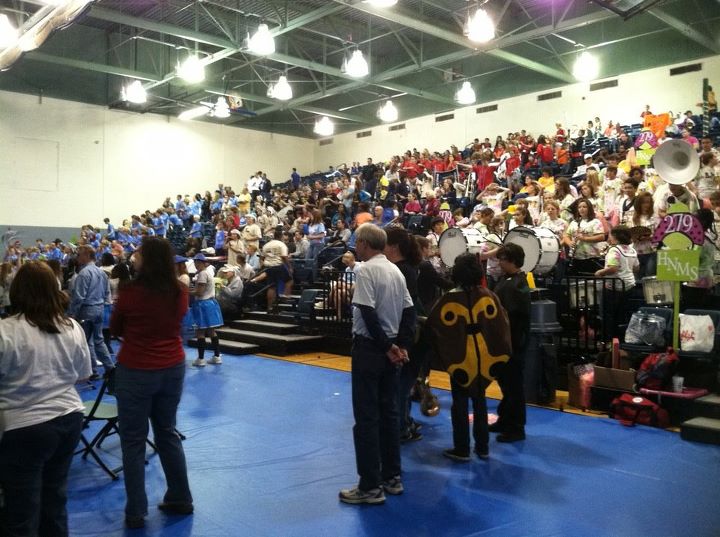
A cheering crowd, referees, mascots and cheerleaders – no, it’s not another football game.
On Saturday morning the University of West Florida Field House buzzed with activity and the Emerald Coast BEST Robotics competition whirred to a start.
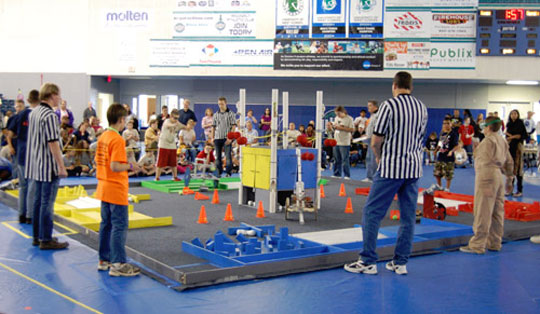 The competition plays out in an arena setting as 20 area high schools and middle schools compete against each other with their robots. Gulf Power Company is the major sponsor for the Emerald Coast BEST Robotics competition, which is held annually.
This year’s theme for the competition, BUGS, refers to a conceived disaster of genetically engineered bugs escaping from a BEST lab. The goal for the robots is to recover and contain the bugs before they create a potential health and environmental crisis.
Students had six weeks to build their robots and teams were judged on robot performance, oral presentation, table display, project notebook, spirit and sportsmanship.
It’s all a part of an initiative to inspire students to pursue careers in engineering, science and technology through participation in a sports-like, science and engineering-based robotics competition each fall. Student teams are judged on robot performance, marketing presentation, team exhibit/interview, project engineering notebook, and spirit and sportsmanship.
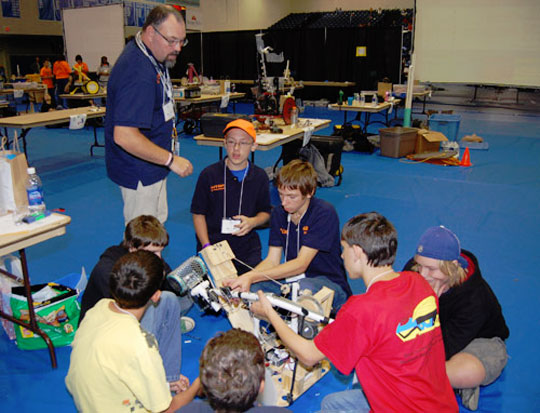 Introduced by two MIT students, BEST — Boosting, Engineering, Science, and Technology — has grown into a nationally recognized competition challenging more than 50,000 participants since its start in 1993. Area schools have been competing since 2004, when Gulf Power sponsored eight local teams in the regional competition in Mobile.
Dallas Rich, a math and science teach from Workman Middle School, said the competition encompasses everything they want to teach the students.
“This is the best program I’ve ever seen. It involves problem-solving, sportsmanship and gives the kids a real-world aspect of life,” said Rich.
Austin Scharer, eighth grader from Workman Middle School, said he will definitely compete again next year. “The competition is nerve-racking, but as long as the team sticks together, we’ll be alright.”
“There is a lot of camaraderie between the competing schools as well,” said Rich. “It’s a great positive atmosphere.”
Four schools in Northwest Florida were among the winners that will advance to the finals at Auburn University December 2-3 – Milton High School, Pensacola High School, Seaside Neighborhood and Woodham Middle School.
Winners:
BEST Award
1. Seaside Neighborhood School
2. Woodham Middle School
3. Woodlawn Beach Middle School
Game Award
1. Milton High School
2. Pensacola High School
3. Seaside Neighborhood School
4. Hobbs Middle School
Best T-shirt Design Award
1. Deane Bozeman K-12 School
Web Page Design Award
1. Seaside Neighborhood School
Founders Award for Creative Design
1. Workman Middle School
2. Seaside Neighborhood School
3. Hobbs Middle School
Most Robust Robot
1. Milton High School
2. Woodlawn Beach Middle School
3. Seaside Neighborhood School
Most Photogenic Robot
1. Bethlehem K-12
2. Hobbs Middle School
3. West Florida High School
Best Team Exhibit and Interview
1. Seaside Neighborhood School
Best Marketing Presentation
1. Seaside Neighborhood School
Best Project Engineering Notebook
1. Holley Navarre Middle School
Best Spirit and Sportsmanship
1. Seaside Neighborhood School
Hub Director’s Pit Friend Award
1. Pensacola High School
HEXBUG Busy Bee Award
1. Woodlawn Beach Middle School
Gulf Power- Blood, Sweat and Duct Tape Award
1. Brown Barge Middle School
This year’s teams:
Bay County: Deane Bozeman K-12 School
Escambia County: Bellview Middle School, Brown-Barge Middle School, Escambia High School, Newpoint Pensacola High School, Pensacola High School, Ransom Middle School, Tate High School, West Florida High School, Woodham Middle School, Workman Middle School
Holmes County: Bethlehem K-12 School
Jackson County: Cottondale High School
Santa Rosa County: Avalon Middle School, Hobbs Middle School, Holley-Navarre Middle School, Milton High School, Pace High School, Woodlawn Beach Middle School
Walton County: Seaside Neighborhood Middle School
Courtesy photos for NorthEscambia.com, click to enlarge.
Eubanks, Herrington To Wed
October 30, 2011
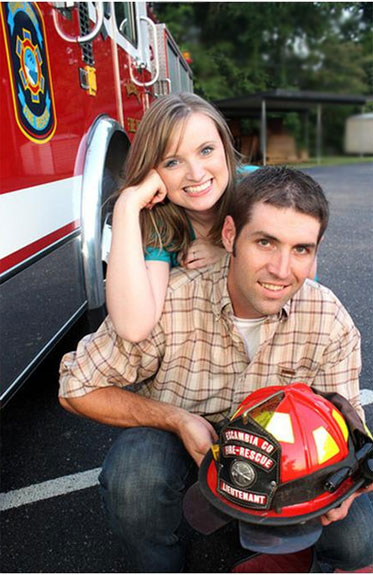 Philip Eubanks and Tiffany Herrington of Oak Grove are pleased to announce their engagement.
Tiffany is the daughter of Angela Williams of Pensacola and the late Bryan Herrington of Pensacola. She is the granddaughter of Rod and Shirley Newman of Pensacola and the late Cidrick Herrington and the late Shirley Bonds of Pensacola.
Philip is the son of George W. and Marilyn Eubanks Jr., both of Oak Grove, and the grandson of Jeannine Eubanks & the late George W. Eubanks Sr. of Oak Grove and the late Junior and Dorthy Chavers of Davisville.
Tiffany and Philip are both graduates of Northview High School. Philip is currently a firefighter for the Department of Defense.
Their wedding will be held Saturday, November 5, 2011, at Walnut Hill Baptist Church . All friends and family are invited to attend the joyous occasion. Reception to follow.
Alabama Vs. Auburn Pumpkins
October 30, 2011
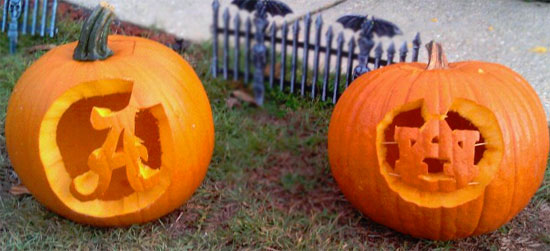
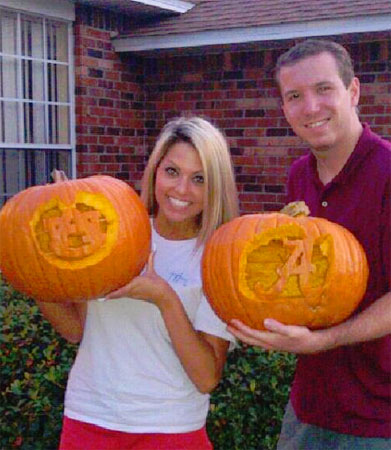
Lots of folks have been busy carving pumpkins the last few days. For Jessica Killam and Trey Johnson, pumpkin carving time was a bit of a rivalry — a relationship divided of sorts.
“We carved our own pumpkins since I am an Auburn fan and my boyfriend is an Alabama fan,” Killam said.
For football fans looking to support their favorite team in orange fruit glory, Killam said it’s easy.
“I printed logos off the internet then taped them on the pumpkins to carve with carving tools,” she said.
Submitted photo for NorthEscambia.com, click to enlarge.
28 Years: Longtime Nursing Center Employee Retires
October 30, 2011
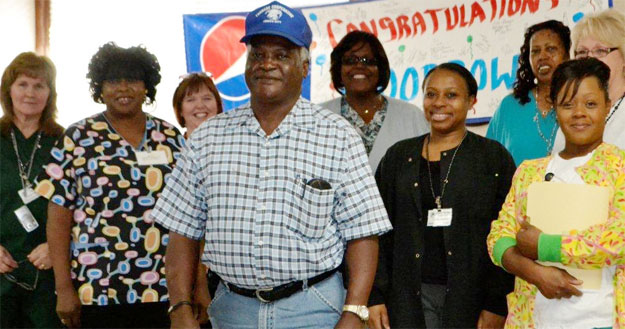
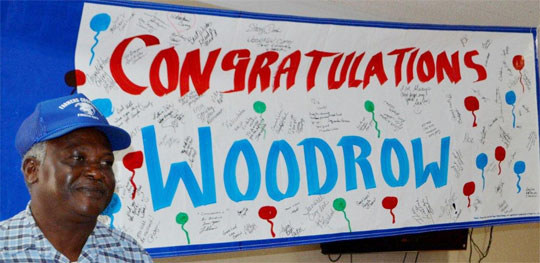
Atmore Nursing Center celebrated the retirement of longtime employee Woodrow Curry.
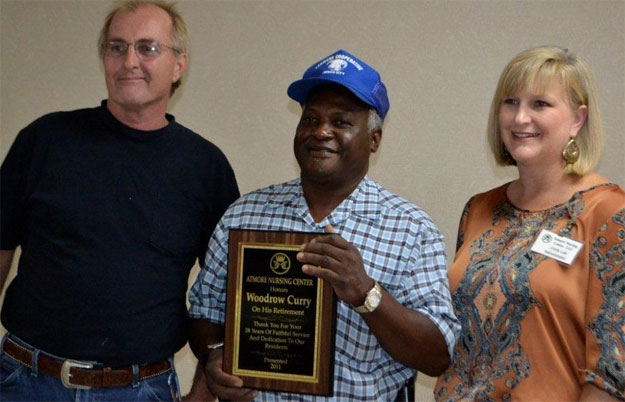
Last Friday was a long time coming, marking the end of 28 years of service by Woodrow Curry to the residents at Atmore Nursing Center.
In a room filled with his co-workers saying goodbye, Curry said his job had been good to him and he loved all the residents and everybody else.
Coworker Eric Grant told the group when he would hear Curry say “well if I can’t help you I ain’t gonna do nothing to hurt you”, it made him respect Curry even more. According to Greg Wilson his favorite saying from Curry was, “if the Lord willing and nothing happens I’ll see you tomorrow”.
Curry says one thing he wants to do during his retirement is go fishing with his brothers.
Pictured above: Woodrow Curry retired from the Atmore Nursing Center after 28 years of service. Pictured below: Woodrow Curry was presented a plaque by Administrator Cindy Lee and Director of Maintenance Greg Wilson .
Photos: Tate Senior Night
October 29, 2011

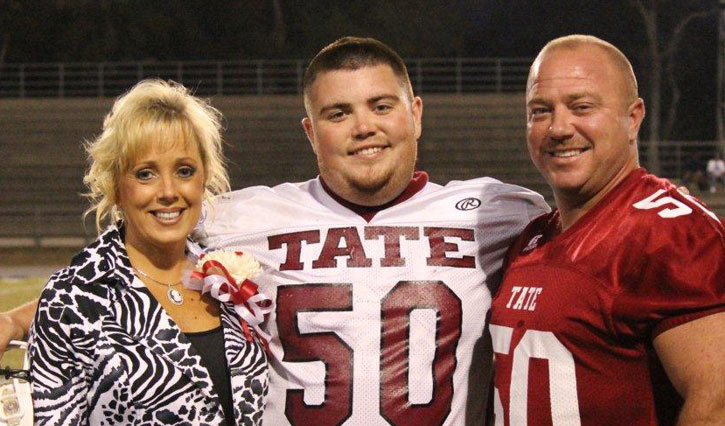
The Tate High School Aggies held Senior Night Friday to recognize the football players, band members and cheerleaders from the Class of 2012.
For game details and photos, click here.
Pictured: Tate High School’s Senior Night. NorthEscambia.com photos by Gary Carnley, click to enlarge.
Escambia County’s October Students Of The Month Named
October 27, 2011
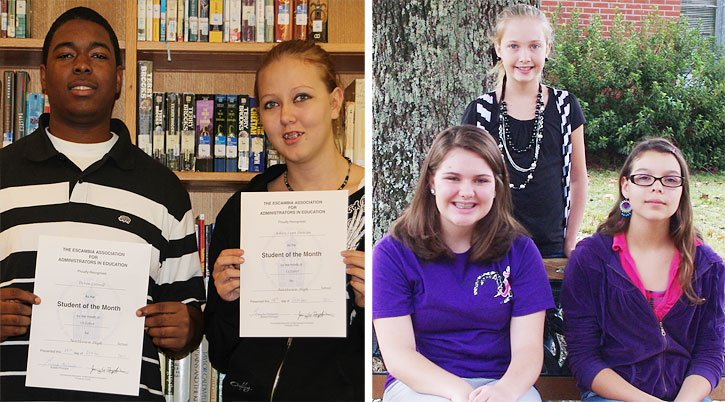
Escambia County Students of the Month for October have been named by the Escambia Association for Administrators in Education. The awards are presented monthly to two or three students from participating schools.
The following students were named from participating North Escambia area schools:
- Bratt: Justin Cruce, fifth grade; Zykuria Fountain, kindergarten.
- Jim Allen: Christopher Daniel, fourth grade; Austin Skipper, fourth grade.
- Molino Park: Lillian Hatch, kindergarten; Brier Thompson, kindergarten.
- Ernest Ward: Ashley Davis, seventh grade; Bailee Hinote, sixth grade; Allison Woodfin, eighth grade.
- Ransom: Maurice Hendricks, sixth grade; Emma Jenkins, sixth grade.
- Northview: Devon Cottrell, 11th grade; Ashley Duncan, 11th grade.
- Tate: Madison Bell, 11th grade; Isaac Heller, 11th grade.
Here is the complete list from across Escambia County:
ELEMENTARY SCHOOL
- Bellview: Marissa Balkum, kindergarten, Zharius Mayes, third grade.
- Beulah: Myah Harne, fourth grade; Kaitlin Weeden, fourth grade.
- Blue Angels: Brayden Miculka, first grade; Olivia Wells, first grade.
- Bratt: Justin Cruce, fifth grade; Zykuria Fountain, kindergarten.
- Brentwood: Jonathan Cook, first grade; Drake Kelley, first grade.
- Cordova Park: Joel Lett, fourth grade; Ashley Van Matre, fourth grade.
- Ferry Pass: Ayden Bailey, first grade; Julianna Reagin, first grade.
- Global Learning Academy: Joshua Jones, kindergarten; Isaiah Turner, kindergarten.
- Helen Caro: Jazlyn Caza, fourth grade; Brianna Cox, fifth grade.
- Holm: Everett Audorff, fifth grade; Michelle Luther, fifth grade.
- Jim Allen: Christopher Daniel, fourth grade; Austin Skipper, fourth grade.
- Lipscomb: Maddison Harte, third grade; Railynn Hughes, second grade.
- Longleaf: Kaetlen Hamlet, fourth grade; Tiera Robinson, fourth grade.
- McArthur: Jacob Caldwell, fourth grade; Nicholas Piazza, third grade.
- Molino Park: Lillian Hatch, kindergarten; Brier Thompson, kindergarten.
- Montclair: Trevor Tucker, fourth grade; Charlize Wilson, fourth grade.
- Myrtle Grove: Zachary Batten, fourth grade; Breanna Ellard, fourth grade.
- Navy Point: Jada Johnson, fourth grade; Jeffrey Sinclair, first grade.
- Oakcrest: Jasmyne Davis, fourth grade; Jessica Jones, fourth grade.
- Pine Meadow: Angelina Adams, first grade; Skyler Matson, first grade.
- Pleasant Grove: Emily Johnson, kindergarten; Alexander Mejia, kindergarten.
- Semmes: Dilan Adams, fifth grade; Dajuan Thomas, fifth grade.
- Sherwood: Isaiah Brown, fourth grade; Jaynessa Westfall, fourth grade.
- Suter: Chloe Eads, fourth grade; Danielle Ward, fourth grade.
- Warrington: Abrianna Skipper, third grade; Amayia White, third grade.
- Weis: Teya Baldwin, fourth grade; Arianna Riley, fourth grade.
- West Pensacola: Gabriela Guillen-Guillen, first grade; Joshua Smith, first grade.
MIDDLE SCHOOL
- Bailey: Jeffrey Nelson, seventh grade; Maya Woods, seventh grade.
- Bellview: Kayla Knight, eighth grade; Joseph Milsteen, eighth grade.
- Brown Barge: Thomas Cummins, eighth grade; Allyson McGuffin, seventh grade.
- Ernest Ward: Ashley Davis, seventh grade; Bailee Hinote, sixth grade; Allison Woodfin, eighth grade.
- Ferry Pass: Allison Davies, seventh grade; Austin White, seventh grade.
- Ransom: Maurice Hendricks, sixth grade; Emma Jenkins, sixth grade.
- Warrington: Cassandra Harrison, eighth grade; Ti’quilla Hosea, eighth grade.
- Woodham: Da’shawn Clark, seventh grade; Leslie Degraaf, seventh grade.
- Workman: Maximilian Levesque, seventh grade; Lindsey Mitchell, seventh grade.
HIGH SCHOOL
- Northview: Devon Cottrell, 11th grade; Ashley Duncan, 11th grade.
- Pine Forest: Alyssa Enrile, 10th grade; Joseph Gammons, 12th grade.
- Tate: Madison Bell, 11th grade; Isaac Heller, 11th grade.
- Washington: Victor Nall, 11th grade.
- West Florida: Joseph Clark, 12th grade; Amber Reeves, 10th grade.
Pictured top left: Northview October Students of the Month Devon Cottrell and Ashley Duncan. Pictured top right: Ernest Ward Students of the Month for October Bailee Highnote (standing), Allison Woodfin (left), and Ashley Davis. Submitted photos for NorthEscambia.com, click to enlarge.
Ernest Ward Showcases Talent
October 26, 2011
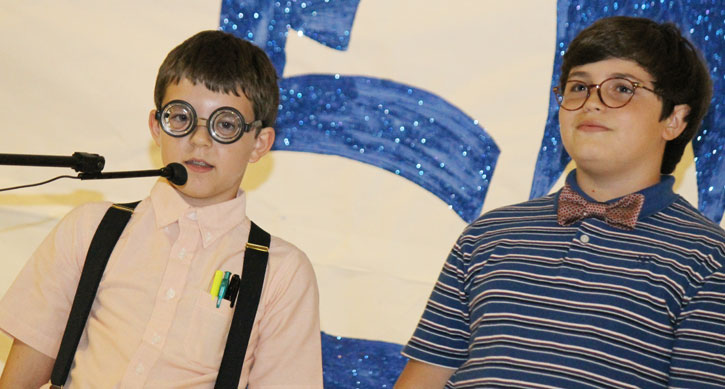
Ernest Ward Middle School held their annual talent show Tuesday night.
For a NorthEscambia.com photo gallery from the event, click here.
Awards presented were:
- Kenral Langford, Honorable Mention
- Logan Doremus and Trace Franklin, Honorable Mention
- Abbie Johnson and Liberty Peebles, Audience Choice Award
- Lorri Harrell, Critics Choice Award
The complete list of participants was as follows:
- Koriaun Lewis, played piano and sang “Well Done”
- Alayna Brown and Ashtyn Pressley, sang “The Revelation Song”
- Abbie Johnson and Liberty Peebles, performed skit “The Dud Wars”
- Amber Freeman, sang “Somebody”
- Elizabeth Wright and Amy Branch, performed skit “The Boy Book”
- Reagan Harrell, performed human video routine “Gone without Goodbye”
- Kayla Galvan, sang “Hero”
- Renee McGahan, sang “Sparks Fly”
- Morgan Wiggins, baton routine to “The Way You Make Me Feel”
- Harmoni Till, sang “Never Along”
- Bethany Reynolds, sign language routine to “Bless the Broken Road”
- Kenral Langford, monologue “The Chill”
- Logan Doremus and Trace Franklin, performed skit “Nerd USA”
- Evon Till, sang “Fireflies”
- Lorri Harrell, sang “What Love Really Means”
- Colby and Aaron Dees, performed classic skit “Who’s on First”
- Loudon Leatherberry, sang “Our Song”
Pictured top: Logan Doremus and Trace Franklin perform the skit “Nerd USA” during a talent show Tuesday night at Ernest Ward Middle School. Pictured below: Abbie Johnson and Liberty Peebles performed skit “The Dud Wars”. NorthEscambia.com photos, click to enlarge.
Dogwood Dulcimers Entertain Century Care Residents, Hold Jam Session
October 25, 2011
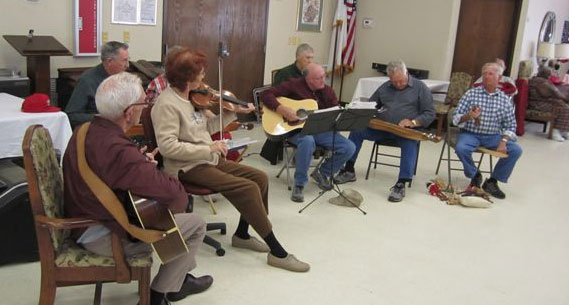
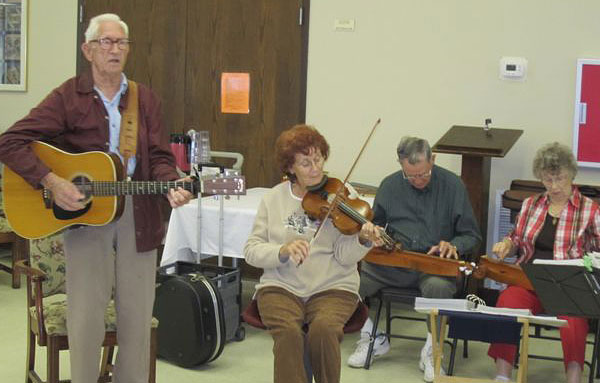
The Dogwood Dulcimer Association entertained the residents of Century Care Center late last week before holding a weekend jam session at Lake Stone.
The Dogwood Dulcimers invites anyone, including beginners, to play a dulcimer or traditional instrument with them for free. The group meets every Monday at 7 p.m. at Trinity Presbyterian Church at 3400 Bayou Blvd., Pensacola and the third Thursday of each month, 7 p.m. at Cottage Hill United Methodist Church at 229 Williams Ditch Road in Cantonment.
Click here for the Dogwood Dulcimer website.
Pictured: The Dogwood Dulcimers perform at Century Care Center. Submitted photos for NorthEscambia.com, click to enlarge.
Weekend In 500 Photos
October 24, 2011
There were a lot of happenings over the weekend in the North Escambia area, and NorthEscambia.com was there with over 500 photos published. Click an item below to view the corresponding story and/or photo gallery.
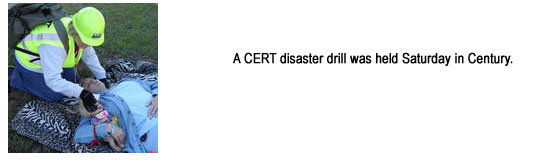
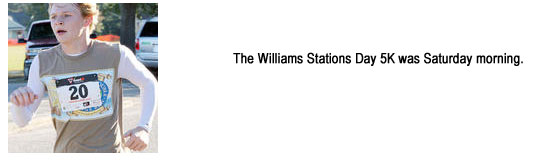
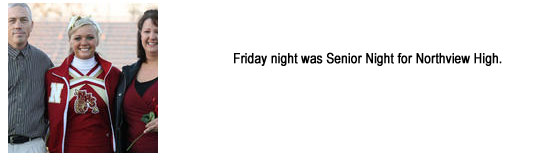
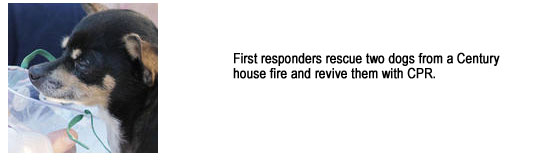
Photos: Hundreds Attend Williams Station Day
October 23, 2011
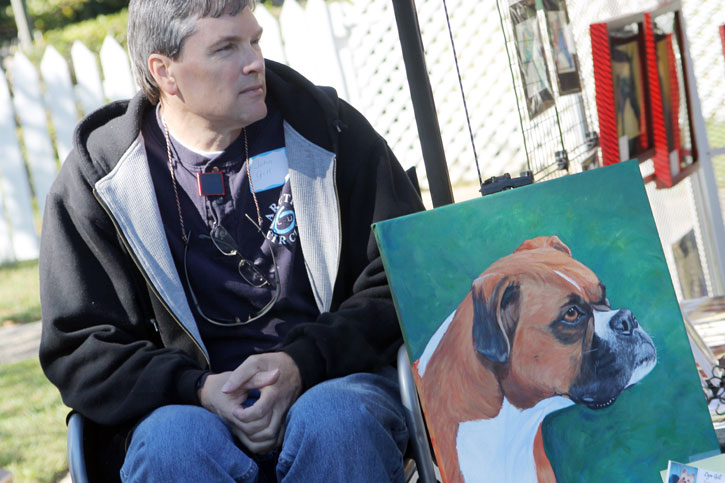
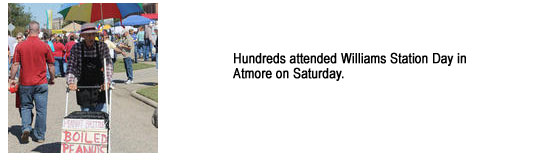
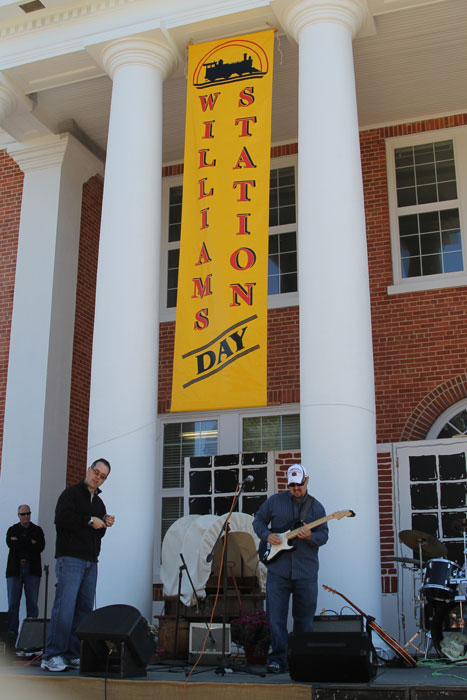 Hundreds from across South Alabama and Northwest Florida enjoyed Williams Station Day Saturday in Atmore.
Williams Station Day takes its name from Atmore’s early history when in 1866 the community was a supply stop along the Mobile and Great Northern railroad.
Festival-goers were entertained by a wide variety of musical acts, and a wide variety of arts and crafts were also available.
Click here for a NorthEscambia.com photo gallery.
Pictured top: Artist John Gill displayed his works at Saturday’s Williams Station Day in Atmore. Pictured inset: Entertainment during the event. Pictured below: Hundreds attend the annual Williams Station Day. NorthEscambia.com photos, click to enlarge.