

Weekend In Photos
October 10, 2011
Here’s a look back at over 425 photos from the weekend on NorthEscambia.com. Click a photo to read the story and see the corresponding photo gallery.



NorthEscambia.com photos.
Hundreds Of Local Students Take Virtual Trip To Russia
October 9, 2011
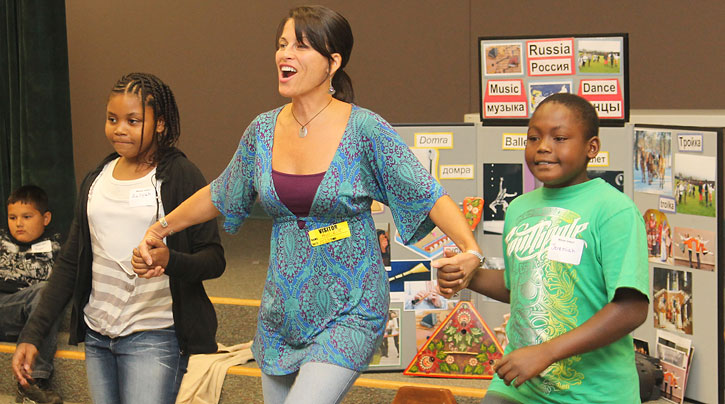
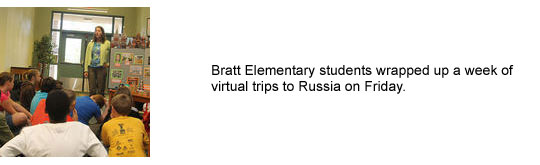
Hundreds of local students have been given a passport to Russia, thanks to the Global Corner Learning Center.
This past week, students at Bratt Elementary School had the opportunity to take a virtual trip to Russia — learning about the language, arts, culture, geography and more of a unique land half a world away.
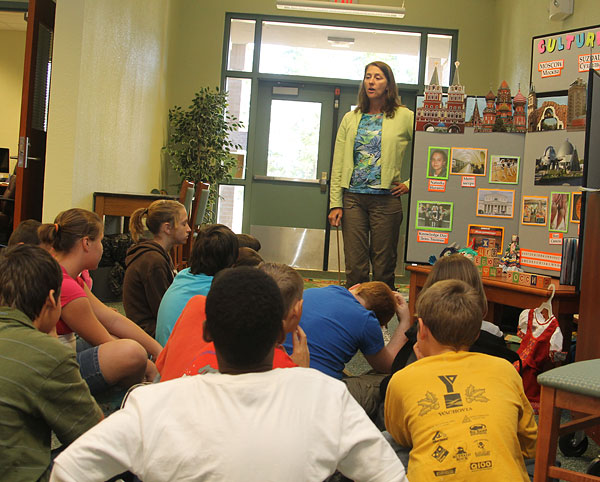 Each year, The Global Corner teachers take students from their classroom virtually to another country. Through The Global Corner, local students have “visited” Japan, Spain, Egypt, Brazil, in addition to this year’s trip to Russia.
The Global Corner was conceived by its director, Lee Hansen, as part of her vision for the Pensacola area to become a player in the global economy and to have Northwest
Florida become an international business hub and the Center of Excellence for International Learning by 2025.
Last week, The Global Corner announced a partnership with Target in recognition of its efforts in providing its Passport to Russia program to local elementary students. The grant monies will be used to support the cost of bringing the program to thousands of area students this school year.
“This is our fifth year of bringing the world to local elementary school students. We provide hands-on activities that help children understand the language, geography, culture, arts, heritage, and literature of countries around the world,” Hansen said. “We’re thrilled to partner with Target to help create a future workforce that understands the world around it.”
Bratt Elementary’s virtual trip to Russia ended last week. Other North Escambia area students will participate in the program later this school year — including home school students on October 25, Byrneville Elementary School on October 26 and 27, Jim Allen Elementary students January 9-12, 2012, and Molino Park in March, 2012.
Pictured top: The Global Corner’s Kitt Lough teaches Russian music and dance to students at Bratt Elementary School Friday morning. Pictured inset: Lisa Crowdus teaches Russian culture at Bratt Elementary. Pictured below: The Global Corner’s Erika Twitchell teaches Bratt students about Russia geography. NorthEscambia.com photos, click to enlarge.
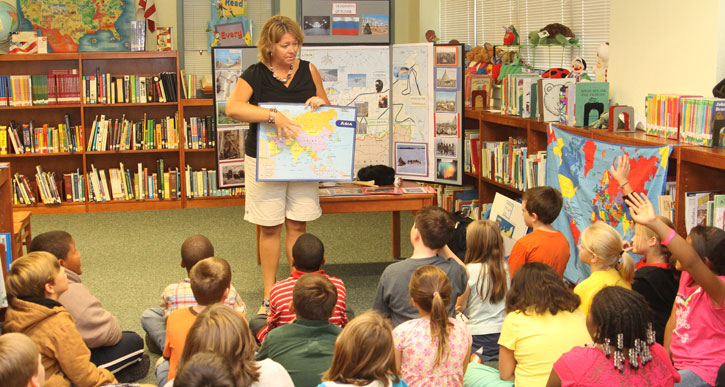
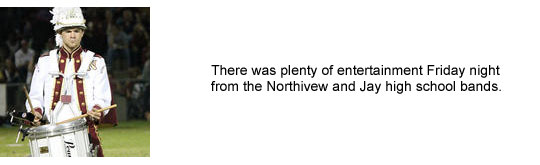
Photo Gallery: Northview, Jay High School Bands Perform
October 9, 2011

For a photo gallery of the Northview and Jay high school bands as they performed Friday night in Jay, click here.
Pictured above: The Northview High School Tribal Beat band performs. Pictured below: The Jay High School band performs a variety of “Car Tunes” Friday night. NorthEscambia.com photos, click to enlarge.

Fall Gardening: Time To Tackle The Chaos And Prepare For Winter
October 9, 2011
Towards the end of the growing season, many landscapes are overgrown and untidy. Allowing plants to tower over others can mean the demise of the smaller plant. It’s time to tackle the chaos and prepare for winter.
 First and foremost, take a good look at your landscape. If a plant has outgrown its allotted space, perhaps it was the wrong plant in the wrong place. Avoid these types of problems by becoming familiar with a plant before you plant it. While you can try to control the size of the plant to fit its space, it will never be a happy, stress-free plant.
Information on the mature size of a plant and their site requirements can be found in several Extension publications. The Florida-Friendly Landscaping™ (FFL) “Guide to Plant Selection and Landscape Design” is intended for homeowners who want to take the next step and design their own Florida-Friendly landscapes. Included in this book is information on landscape design strategies, a landscape planning worksheet, and the FFL plant list containing many of the UF/IFAS recommended Florida-Friendly plants for each region of the state. It’s available online by clicking here.
Even in a well-planned landscape, though, the gardener’s controlling influence is important. The most useful methods for dealing with especially enthusiastic plants are removing, pruning, supporting or creating barriers to prevent unwanted spreading.
Removing and replacing
Autumn is an excellent time to establish shrubs and trees. Consider removing oversized plants and replacing them with carefully chosen ones that will happily fit within your defined boundaries. Plants that are installed late in the year will develop strong roots systems before hot weather arrives next spring.
Pruning
 When it comes to pruning, it’s good to remember that it’s better to prune lightly occasionally as needed, than to allow a plant to get way overgrown and then cut it back severely. A few prudent snips here and there will help keep more vigorous plants from overwhelming their less vigorous neighbors.
Emphasis must be placed on the word “light.” It’s important to remember that late summer pruning may stimulate an additional flush of shoot growth on species which flush several times each year. These shoots could be damaged by an early frost.
Supporting
Another technique to improve the look of an overgrown landscape is staking. Staking or otherwise supporting plants keeps them from leaning or falling over onto others. It helps the tall plant look better, and obviously benefits the plants that would otherwise be covered. The stake should be tall enough to do the job but not be too obvious.
Stakes may simply be placed in such a way that the plant is supported by leaning up against it. On the other hand, it may be necessary to tie the plant to the stake. Typically, twine or plastic ties are used for this purpose. Make sure you tie the lower and upper parts of the plant to the stake to provide proper support.
Other techniques for support include tying twine in a loop all the way around a plant, using a wire cage – this is best done early in the growing season to allow the plant to grow into it – tying a plant to a sturdier, nearby plant or using one of the commercially available support systems.
Barriers
Many perennials and tropical plants spread by underground structures called rhizomes. If growth shows up outside the area you’ve allotted for that plant, promptly dig out the unwanted growth and replant it somewhere else.
Barriers extending at least one foot down into the ground around aggressive spreaders can sometimes help keep them under control. Digging, dividing and replanting clumps of aggressive spreaders annually is another good way to make sure they stay put.
Overgrown shrubs can cause a house to lose its curb appeal. Proper, regular control measures should be employed to keep a landscape looking its best.
Theresa Friday is the Residential Horticulture Extension Agent for Santa Rosa County.
Photos: Bratt Elementary Students Learn Fire Saftey
October 8, 2011
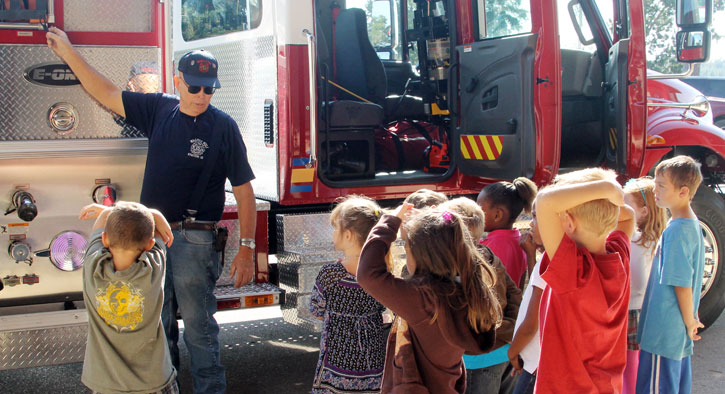
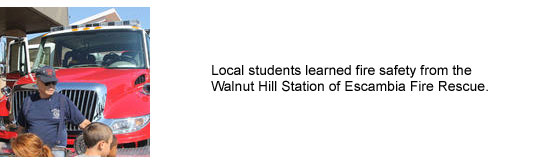
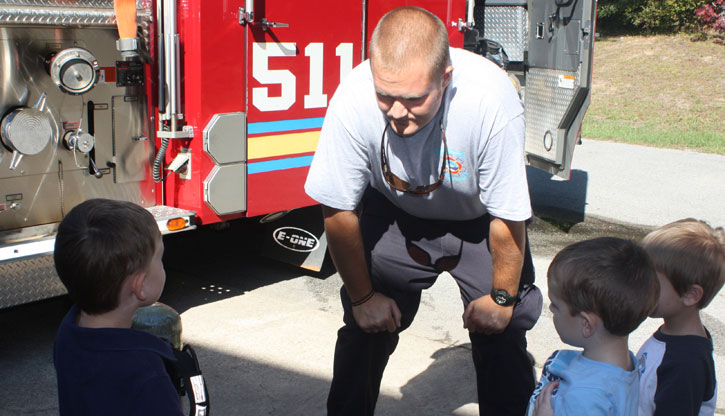
Students at Bratt Elementary School learned all about fire safety Friday morning from members of the Walnut Hill Station of Escambia Fire Rescue.
For a photo gallery, click here.
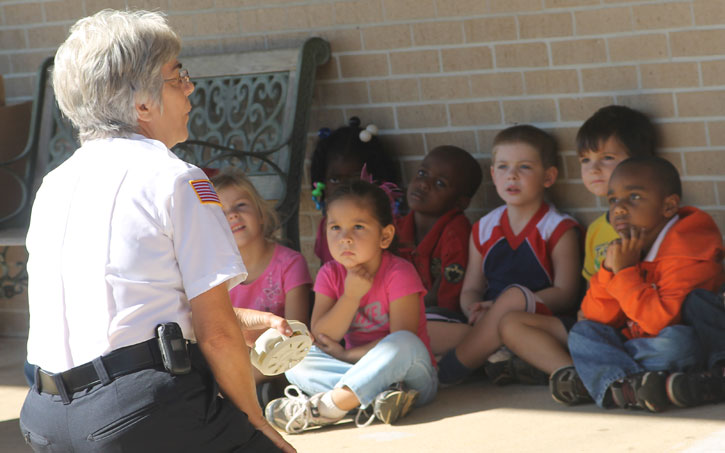
Pictured above: Robert Stewart explains a fire engine and firefighting to a class at Bratt Elementary School Friday morning. Pictured below: Diann Stewart explains fire safety. NorthEscambia.com photos, click to enlarge.
Health And Hope: New Clinic Offers Free Medical Care
October 6, 2011
 A new clinic is providing health and hope for North Escambia residents unable to afford medical care.
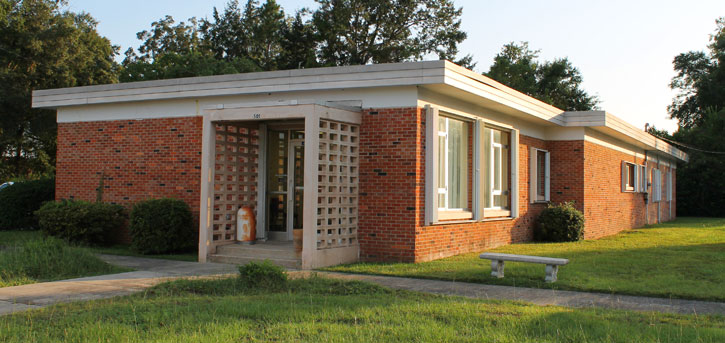
The Health and Hope Clinic has opened in the old health department building at 501 Church Street in Century. It is the second location for the clinic, which was first established in Pensacola back in 2003 by the Pensacola Bay Baptist Association to meet the needs of uninsured and medically underserved in Escambia County. The clinic is entirely volunteer and donor supported.
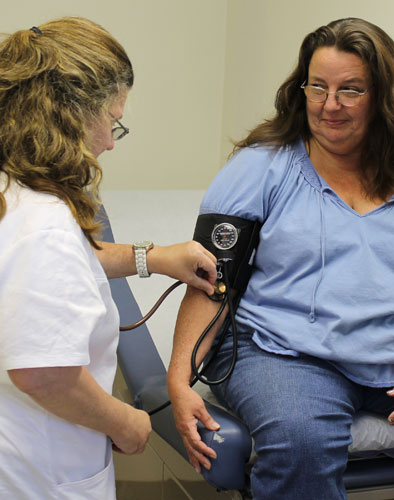
“It’s a real blessing,” Tammy Lewis of Bratt said on a recent visit to the new Century Health and Hope Clinic. “I found out about it from the church. It’s great to see doctors and people that will see you anyway without insurance.”
Since 2003, the Pensacola Health and Hope Clinic has provided over $8.5 million in healthcare services and 12,000 patient-provider visits as it carries out its mission of “providing health and hope to the hurting”.
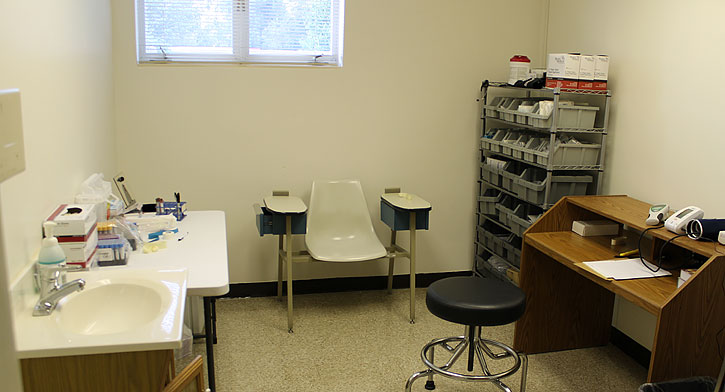 Through the primary Pensacola location, the new Health and Hope Clinic offers primary medical care, preventative care, specialty care – including rheumatology, neurology, women’s health, chiropractic services and minor office surgery, full laboratory services, prescription assistance and pharmacy services and referrals to community social services.
The new Health and Hope Clinic in Century is open on Tuesdays from 5-8 p.m. For appointments, call (850) 256-6200 or (850) 479-4456. For more information on the Health and Hope Clinic and services, visit www.healthandhopeclinic.org.
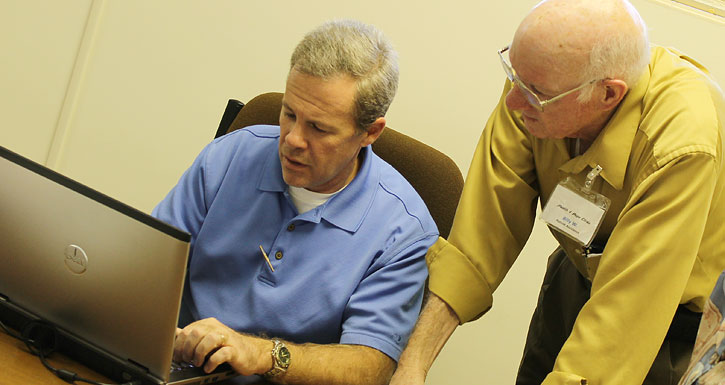
Pictured top: The new Health and Hope Clinic is located in the former Escambia County Health Department building in Century. Pictured top inset: Nurse Michelle Benauer checks the blood pressure of Tammy Lewis of Bratt on a recent visit to the new Health and Hope Clinic in Century. Pictured bottom inset: An exam room at the clinic. Pictured below: Executive Director Rick Hollis discusses clinic details with volunteer Billy R. Ward of Bogia. NorthEscambia.com photos, click to enlarge.
Camp Fire Kids Visit Fire Station
October 6, 2011
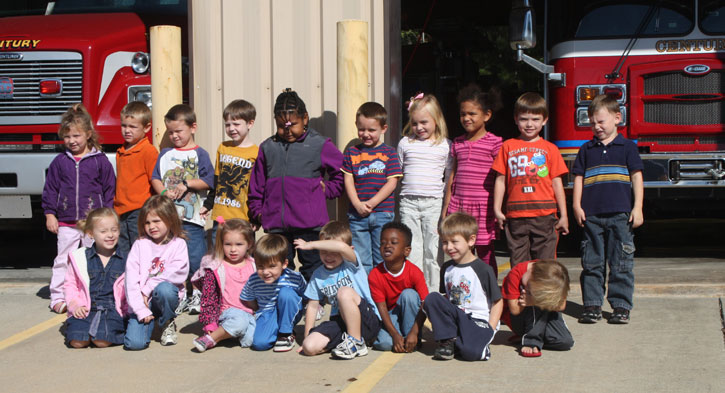
 Students from the Camp Fire USA Century Youth Learning Center visited the Century Station of Escambia Fire Rescue Wednesday to learn about fire safety and firefighting.
Pictured: Campfire USA students visited the Century Station of Escambia Fire Rescue on Wednesday. Submitted photos byMarion Miller for NorthEscambia.com, click to enlarge.
Thousands Attend Jay Peanut Festival (With Photo Gallery)
October 2, 2011
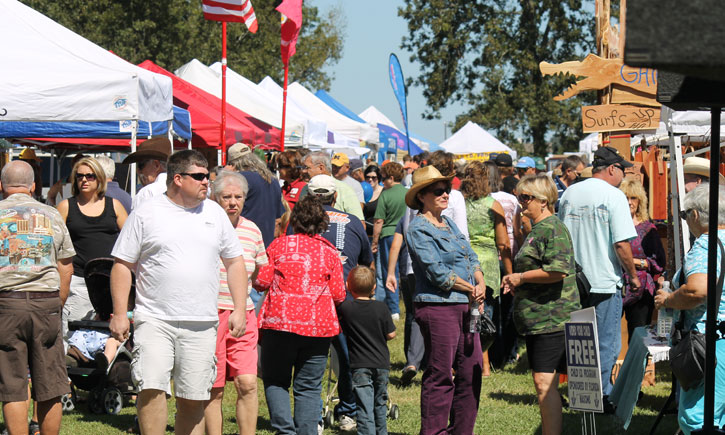
The 22nd annual Jay Peanut Festival attracted thousands to the Gabbert Farm this past weekend.
For a photo gallery, click here.
For more than 20 years, the Jay Peanut Festival at the Gabbert Farm has been a fall tradition on the Gulf Coast — showcasing the history, agriculture, food and fun of Santa Rosa County. What started as a chance for local kids and farmers to show off their best of the season has become an annual event covering 15 acres and drawing about 70,000 people over two days.
The event included the 1930s Farm Museum, food booths, dozens of arts and crafts vendors, pony rides, games and fun. There were more than 150 vendors in all.
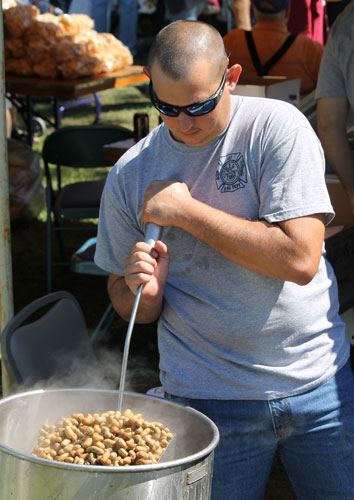
The Jay Peanut Festival was also a chance to try all varieties of peanuts – boiled, green, fried, candied and more.
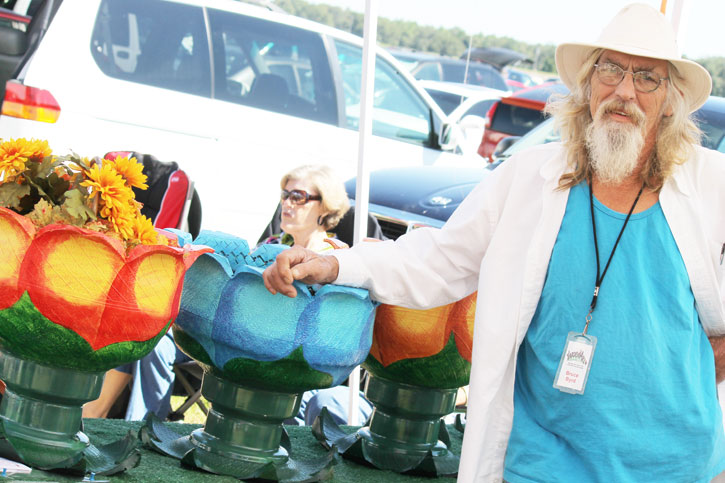
Pictured top: Tens of thousands of peopled visited the Jay Peanut Festival on Saturday. Pictured inset: A Jay Volunteer Fire Department member serves up boiled peanuts. Pictured below: Bruce Byrd of YardenArt in Milton displays planter/party coolers made from recycled tires and rims Saturday. NorthEscambia.com photos, click to enlarge.
Homemakers Craft Flower Pens For Molino Park Teachers
October 2, 2011
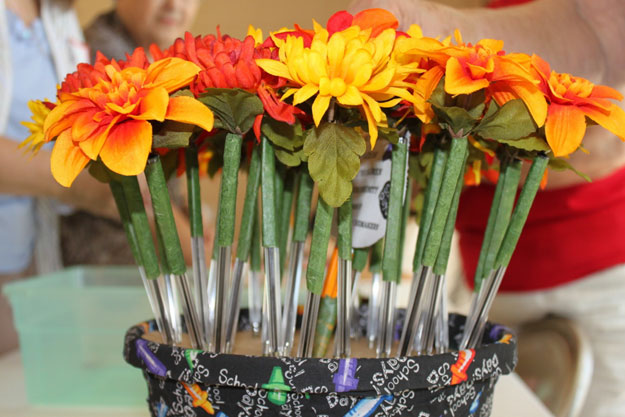
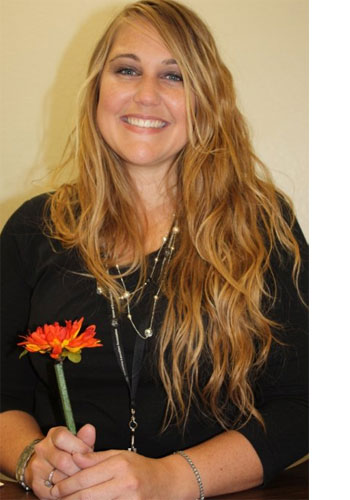
The Molino Homemakers made flower pens at a recent meeting to present to the teachers at Molino Park Elementary School.
Club member Terri Brown explains how to make your own flower pens as demonstrated by club member Frances Cheney:
- Depending on how many pens you would like to make will determine how many bouquets of flowers to buy.
- Ink pens and green floral tape will also be needed.
- Cut the tops of the flowers off leaving about 3 inches of stem below the flower.
- Approximately nine inches of floral tape will be used to wrap the flowers to the pen.
- Starting at the top, place flower against the pen and start wrapping the stem with floral tap until the stem is covered.
The Molino Homemakers meet on the first Wednesday of each month at 10 a.m. at Aldersgate United Methodist Church in Molino. The next meeting will be October 5 . Visitors are welcome; dues are $5 per year.
Pictured top: Flower pens created by the Molino Homemakers Club for teachers at Molino Park Elementary School. Pictured inset: Molino Park teacher Rachel Venable with her flower pen. Submitted photos by Terri Brown for NorthEscambia.com, click to enlarge.
Weekend Gardening: Time To Plant Those Fall Vegetables
October 2, 2011
The slightest hint of fall is in the air. But this doesn’t mean that the vegetable gardening season is over. Fall is an excellent time to grow cool-season vegetables.
Florida is unique in that we have multiple growing seasons. There is something that can be grown in the vegetable garden all year round. Knowing which vegetables to grow during which season is the key to having a successful harvest.
In the summer, gardeners are somewhat limited in the different types of warm-season vegetables that can be grown and will survive the heat. Now with cooler days approaching, we have a much wider selection of cool-season vegetables to plant.
In September many vegetables can be planted in the garden including beets, broccoli, Brussels sprouts, cabbage, carrots, cauliflower, collards, kale, kohlrabi, leek, lettuce, mustard, onions and radish. In October, you can plant Chinese cabbage, spinach and strawberries.
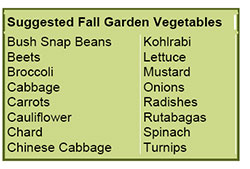 These vegetables are best started from transplants but many can be direct-seeded. If you seed them directly into the soil, keep the ground moist while it’s still warm to give them a good start. Keep them well watered if you transplant, too. The later you start, the smarter it becomes to transplant to cut the time to maturity. Preparing the garden properly is as important as selecting the right plants.
Choose a sunny location. Most vegetables perform poorly in shade. An area that receives at least eight hours of sunlight per day is best. Some vegetables such as broccoli, collards and spinach will tolerate partial shade. Avoid locating your garden near hedges or trees. They not only create too much shade but also compete with the garden for moisture and nutrients.
Locating the garden near the house will make it easier to periodically check the garden for insect pests and disease. And, it is easier to keep an eye on the garden for larger pests such as birds, squirrels and rabbits. Closeness to the house will make it convenient in tending to the garden chores.
 Locate the garden near a water supply so it can be watered as needed. You’ll get only moderate results if you try to grow a garden without supplemental irrigation.
Of course, it’s important to prepare beds properly before planting. To do that, clear the site of all weeds or finished vegetable plants. Turn the soil with a shovel, fork or tiller to a depth of at least 8 inches, and spread a 2-inch to 4-inch layer of organic matter (leaves, grass clippings, aged manure or compost) over the tilled soil. This helps to maintain a high level of organic matter in the soil, which encourages a strong, healthy root system, improves drainage, retains moisture, provides nutrients and promotes vigorous plant growth.
Mix the organic matter thoroughly into the soil. Turn the soil by digging with a shovel, garden fork or a tiller until the materials you’ve added are evenly distributed in the soil. When using fresh organic amendments, it’s best to wait a couple of weeks before planting your transplants or seeds.
By this time of year, insects and diseases have had all summer to build up their populations. Insects such as whiteflies, stink bugs, aphids and caterpillars are commonly seen. Since insect and disease pressure often is greater in the late summer/early fall than in the spring, watch plants carefully for problems and use appropriate control measures promptly when needed. Contact your local Extension Office for control recommendations.