

College Students Spend Their Spring Break Helping Others
March 6, 2012
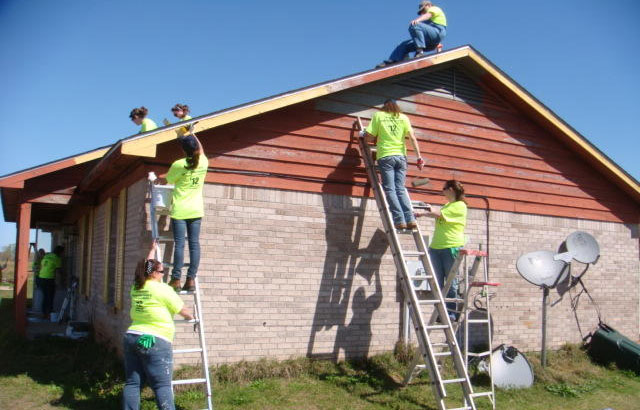
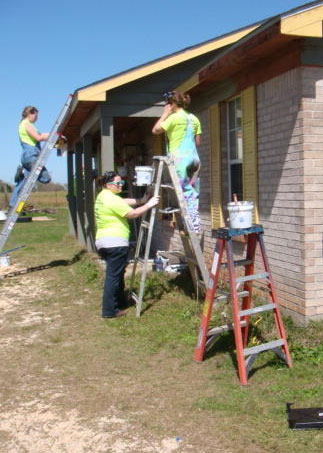 A group of college students from Philadelphia are spending their spring break doing volunteer work for the Escambia County (Ala.) Habitat for Humanity. The 18 students from Holy Family University are spending their nights at the Brewton YMCA and their days repainting the homes of two elderly widows in Atmore.
The students are working at the Smith home on Peacock Lane in Robinsville and and O’Farrell home on Old Bratt Road.
The students will be working hard but will also get a taste of” Southern hospitality”. Tuesday, they will have a short day of work and then enjoy a picnic , hayride and “History of Atmore” tour hosted by the Atmore Area Chamber of Commerce. Thursday evening, they will be treated to a beach theme meal and painting party at the Hourglass in Brewton. Friday, the students plan to enjoy a day at the beach before beginning their trip back home.
The students are participating in Habitat’s national alternative break program, Collegiate Challenge. This is the fifth year Escambia County Habitat has hosted college volunteers through the Collegiate Challenge program.

Photo: Azaleas In Bloom
March 5, 2012
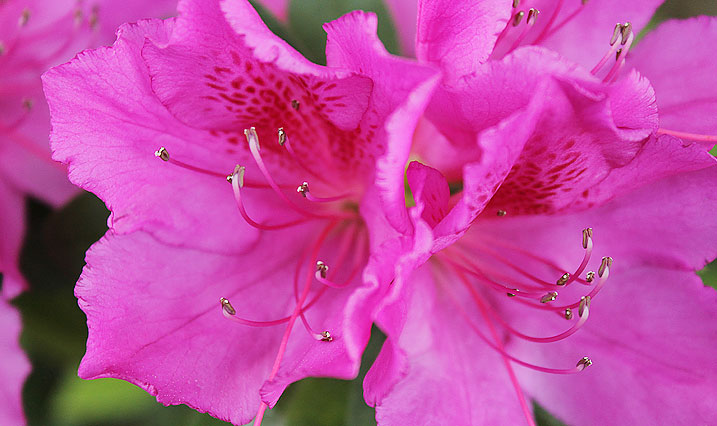
Unusually warm winter weather has the North Escambia area looking a lot like spring. Azaleas, like this one in Bratt, are beginning to bloom across the area. NorthEscambia.com photo, click to enlarge.
Bratt Students Honored For ‘Diversity’ Poem, Photograph
March 5, 2012
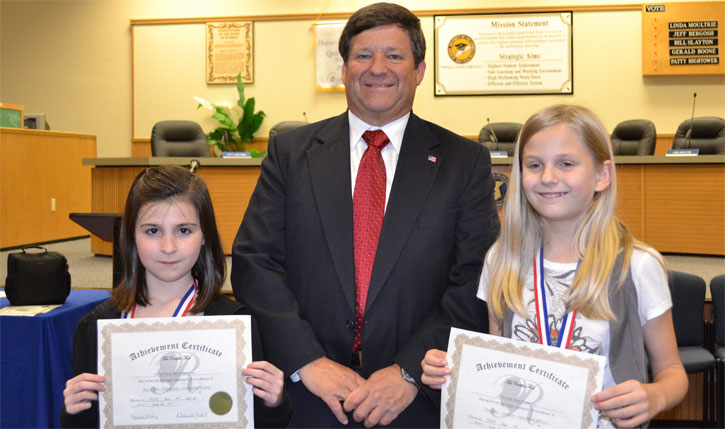
The Escambia County School District held a reception for District PTA Reflections winners recently at the Hall Center. Two students from Bratt Elementary placed in the district contest and their work will go to the state level for judging.
Lydia Smith received first place on her literary entry (reprinted below) and Juliana Bryan placed second for her photography entry (pictured bottom of page). The theme of the reflections program this year was “Diversity”.
Different people
In this world,
Various looks
Everywhere around you,
Red, yellow, black, and white,
Small and big, man and woman,
In every way you’re different
To everyone else
You have diversity.
………………………– Lydia Smith
Pictured top: Bratt PTA Reflections second place winner Juliana Bryan (left), Superintendent Malcolm Thomas and first place winner Lydia Smith. Submitted photos for NorthEscambia.com, click to enlarge.

Correction: Byrneville Community Center
March 4, 2012


A few hours after we published photos of a misspelled sign on the Byrneville Community Center, the sign was repainted last Thursday. The misspelled sign can be seen in the photo to the left; the corrected sign is pictured above and below. NorthEscambia.com photos, click to enlarge.

Weekend Gardening: Caring For Camellias
March 3, 2012
One of Northwest Florida’s most reliable and rewarding shrubs is the camellia. Providing dark green leaves throughout the year, gardeners are rewarded in late winter or early spring with a variety of beautifully colored and shaped flowers. Camellias tend to thrive in our acidic soil but they do require some routine maintenance.
 Pick up the fallen flowers. A fungal disease known as petal blight will rapidly turn entire flowers brown. If a camellia has petal blight, remove and dispose of all blighted flowers both on the plant and on the ground. You may also consider discarding the old mulch around the shrub and apply a layer of fresh mulch. This practice sometimes helps prevent fungal spores from blowing back onto new flowers. One of the best ways to prevent this disease is to pick up and destroy fallen blooms. Flowers will continue to drop for several weeks, so it’s important to pick up blooms several times a week.
Scout for tea scale. One of the most common insect pests of camellia is a scale insect known as tea scale. Check the underside of leaves regularly for this annoying pest. These small, sessile, white, thin, sap-sucking insects can build up large numbers if you do not regularly inspect your plants and take corrective measures when scale is first found. Often your first clue will be spotty yellowing on the upper surface of the leaves. Horticultural oil can be used in the winter time if used before blooming or in spring after blooming. Do not apply horticultural oil when near-freezing temperatures may be expected. Always carefully read and follow pesticide label directions before use.
Expect some leaves to fall in the spring. Camellias are “evergreen” meaning that they have leaves on the shrub year round. However, as individual leaves age, they will fall from the shrub and are replaced with new leaves in the spring. It is not unusual for camellia to drop up to 30 percent of their leaves. As long as new leaves are developing, there is no need for concern.
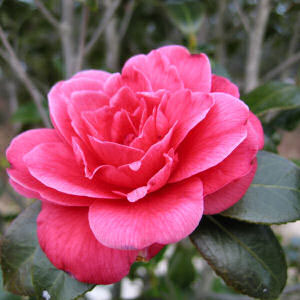 Camellia can be pruned after they flower. The most important reason for pruning camellias is to improve the overall health of the plant. Many times, camellias that have not been pruned in a few years will develop dead or deteriorating twigs. Removing the dead and dying limbs will minimize the possibility of diseases such as “dieback” and will also allow the plant to re-concentrate its energies. In many instances, camellias that have been neglected for a number of years will become infested with scale insects. Pruning is an effective way to provide for better coverage of chemical sprays and increase air circulation.
Lichens are warning signs. Lichens are gray-green to green mossy growths on the stems of old, neglected camellias. The lichen is a combination of a fungus and an alga that grows symbiotically. They are not parasitic to the camellia. Affected plants usually need fertilizing, watering, and mulching for better growing conditions.
Fertilizer applications help to achieve maximum performance. Apply fertilizer in the spring after blooming but before new growth starts. With many fertilizers, small amounts at frequent intervals are better than heavy applications. Special camellia fertilizers are available at your local stores. One application in early spring after blooming should be followed by a second application in mid June to early July. Scatter the fertilizer evenly on top of the mulch and away from the main stem of the plant. Water the fertilizer into the soil. Do not fertilize after July, so the plants will have a longer time to harden off and avoid freeze damage.
Theresa Friday is the Residential Horticulture Extension Agent for Santa Rosa County.
Junior Miss Ernest Ward Middle School Named (With Photo Gallery)
March 3, 2012

 Jadlyn Agerton was named Junior Miss Ernest Ward Middle School Friday during the school’s annual pageant.
First runner-up was Raegan Harrell; second runner-up was Lillie Allen; and third runner-up was Alexys Smith. Elizabeth Wright was named Miss Congeniality, while Agerton received the Physical Fitness Reward. The Poise and Appearance award was presented to Harrell.
Picture top: (L-R) Second Runner-up Lillie Allen, First Runner-up Raegan Harrell, Junior Miss Ernest Ward Middle School Jadlyn Agerton and Third Runner-Up Alexys Smith. Pictured left: Agerton awaits the judges’ decision backstage during Friday night’s Junior Miss Ernest Ward Middle School pageant. Pictured below: Allen is crowned third runner-up. NorthEscambia.com photos, click to enlarge.

Spelling Counts: Can You Spot What’s Wrong With This Sign?
March 1, 2012
The sign over the entrance at the county-owned Byrneville Community Center was recently repainted — with a spelling error. Can you spot what’s wrong with the sign in these photos?
NorthEscambia.com photos, click to enlarge.

Oranges In Escambia County?
February 26, 2012
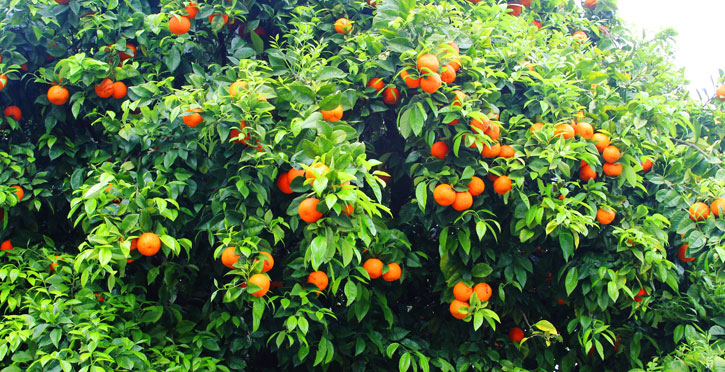
The few orange trees located in Escambia County are currently full of fruit. Pictured is a tree in front of the Pfeiffer House on Zaragoza Street in the Historic Pensacola Village, directly behind the old Christ Church.
It is a Seville orange, native to Spain with trees planted in several downtown Pensacola locations. Seville oranges are known for being sour and bitter and are often made into a sweet and tart marmalade.
The Pfieiffer House, home to the orange tree, is an example of a simple folk cottage, or shotgun house. It was built in 1876 by Bavarian immigrant John Pfeiffer, who established a successful baking business and also sold children’s toys. Originally located on Government Street, the Pfeiffer House was moved to Zaragoza Street in 1997 and serves as additional space for Old Christ Church functions.
Pictured: Oranges growing in downtown Pensacola as seen Saturday afternoon behind the Old Christ Church on Zaraboza Street. NorthEscambia.com photo, click to enlarge.
Hundreds Attend Annual Walnut Hill Ruritan Auction (With Gallery)
February 26, 2012
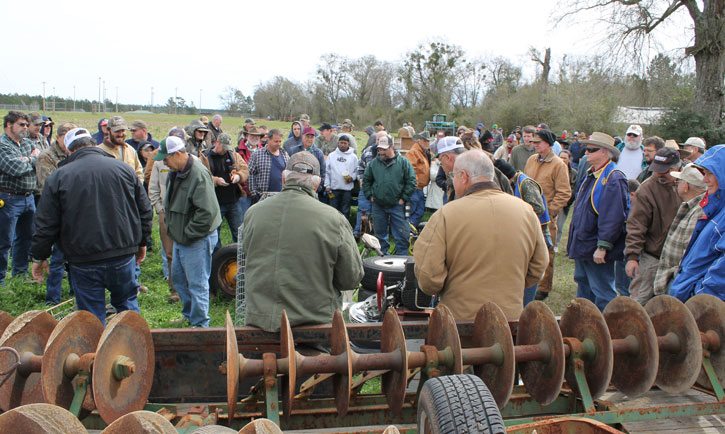

Hundreds of people attended the 38th Annual Walnut Hill Ruritan Club Farm Equipment Auction Saturday in Walnut Hill.
Items sold included farm equipment, lawn and garden equipment, vehicles, household items and more during the event, which is held each year on the last Saturday of February. All proceeds from the auction benefit the Walnut Hill Ruritan Club’s community service projects in the Walnut Hill area.
For a photo gallery from the event, click here.
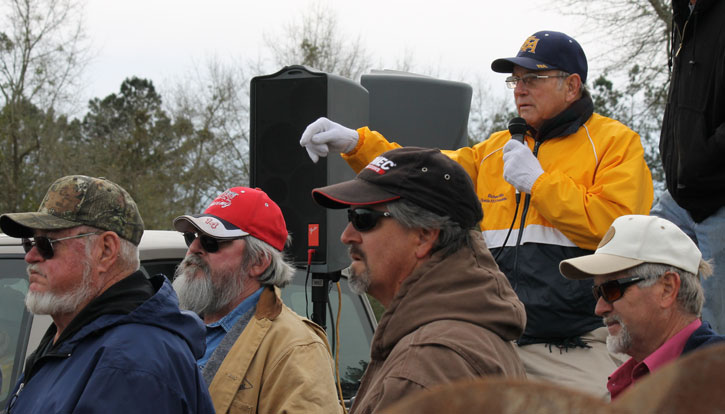
Pictured top: Hundreds attended the annual Walnut Hill Ruritan Club farm equipment auction Saturday in Walnut Hill. Pictured inset: Ruritan member Curtis Amerson tracks bids. Pictured below: Auctioneer Richard Gibbs taking the final bids on a plow Saturday morning. NorthEscambia.com photos, click to enlarge.
Grenier Named To President’s List At Mississippi State University
February 26, 2012
 Daniel Grenier of Molino was recently named to the President’s List at Mississippi State University.
Grenier is a 2011 graduate of West Florida High School and attended Ernest Ward Middle and Molino Park Elementary schools. He is son of Tina and Jeff Grenier.